Disclaimer: This watch prototype was sent to me to review. This is not a sponsored post, but the brand will send me a Jui Bauhini production unit in the future. All opinions here are my own, and Selten, WatchHo&Co. had no influence over the opinions stated here.
Selten x WatchHo&Co. Jui Bauhinia Purple: https://seltenwatch.com/products/jui-%E8%81%9A-bauhinia-cnc-guilloche-mop-whc-x-selten-purple?variant=51511801544836
Selten x WatchHo&Co. Jui Bauhinia Pink: https://seltenwatch.com/products/jui-%E8%81%9A-bauhinia-whc-x-selten-pink?variant=51511800987780
Video
Review
At this point you probably already know that I’m a huge fan of Selten, a Hong Kong based microbrand founded by Leonardo Tsai, who comes from a family of watch dial manufacturers. And that pedigree shows in the brand’s dial-first approach, from meteorite slices and hand-patinated bronze to guilloché mother-of-pearl. I’ve reviewed several of their releases (Series 00 Meteorite, Salvage Bronze, M1 Moonphase, Grand Feu Enamel, and the original Jui), and their early Kickstarter success helped establish a track record, but they now deliver their ambitious designs without any crowdfunding drama. The Jui itself was also a departure in the best way: a collaboration with Hong Kong’s enthusiast club Watch Ho & Co. (WH&C), co-founded by Jackie Ho, a “good vibes only” community known for frequent collector meetups and creative limited editions, including prior collaborations with other brands.
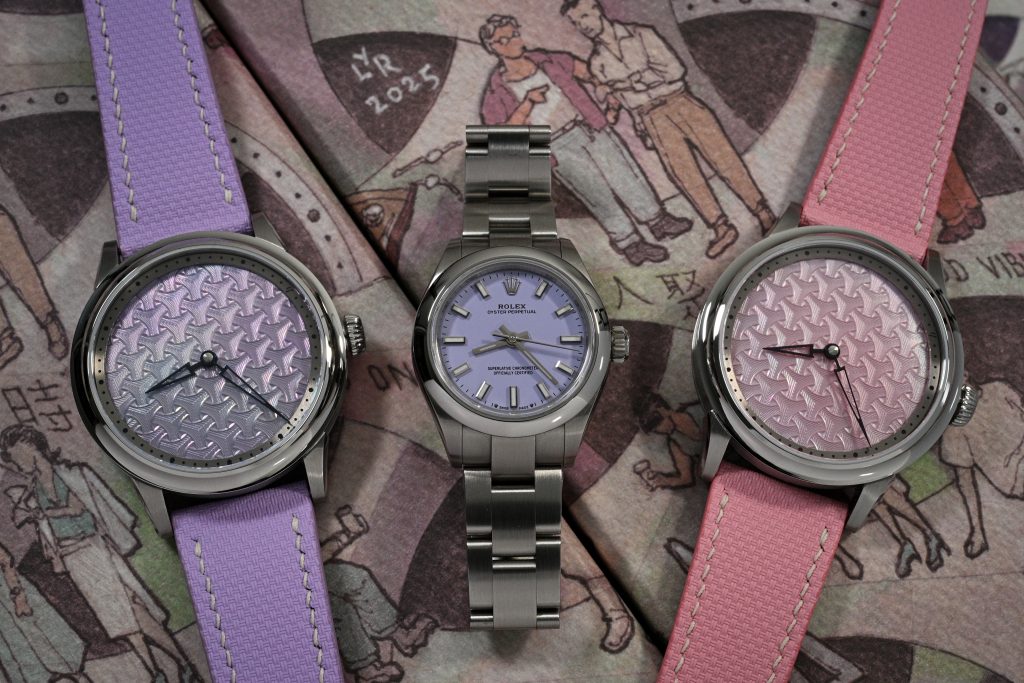
What’s different this time is that I’m coming into the Bauhinia editions with more than just first impressions. I’ve owned and worn the original Jui since reviewing it about six months ago, and it’s genuinely been a great addition to my collection. And as I’ll get into later, the recently announced bracelet option has been a meaningful upgrade too, particularly because I prefer bracelet watches in general. These new pink and purple Bauhinia dials also feel like the natural next step for them: Selten had early prototypes on hand at WindUp NYC, and every time I stopped by their booth I saw people hovering, pointing, and praising them… so it’s not at all surprising that those “teaser” dials from the first release evolved into full production variants. I’m also glad Selten didn’t force a single choice, because the truth is both dials are gorgeous in different ways. And as with the last release, the accompanying artwork was designed by Lee Yuen-Rapati (@onehourwatch).
The new Jui Bauhinia pieces are limited to 200 per color, with 100 pieces of each available for immediate delivery, priced at $1,250 USD, with an additional $150 if you add the bracelet (which, in my opinion, you absolutely should). And if you’re wondering why these come in about $150 higher than the original, I’m sure tariffs and exchange rates played their part, but I also suspect the move to thermally treated hands contributed to the jump as well.
Let’s check it out!
Dial
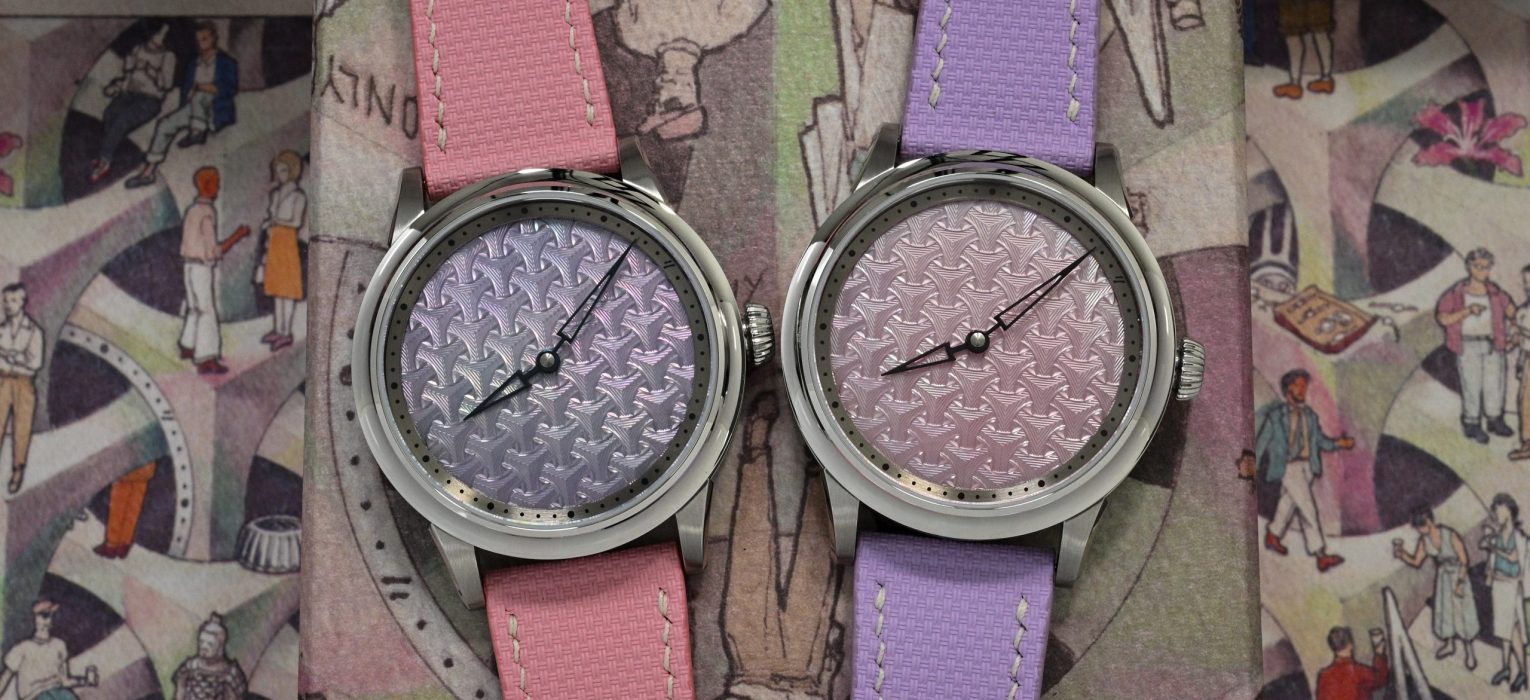
The dials follow the same playbook as the original Jui: same Escher-esque tessellation, CNC-engraved pattern (fans of Micke Mechanic will know this one), and the same satisfying sense of depth that only really reveals itself when you get the watch moving under light. Instead of a natural black Tahitian mother-of-pearl base, Selten starts with a white mother-of-pearl and tints it into either purple or pink, in an iridescent candy-coated way. The geometry remains razor crisp, with clean valleys and sharply defined edges that could easily look muddy on a temperamental substrate like MOP. They are both dials that refuse to sit still, and as with the original, their dynamic nature is hard to capture in photographs but feel genuinely alive in person.
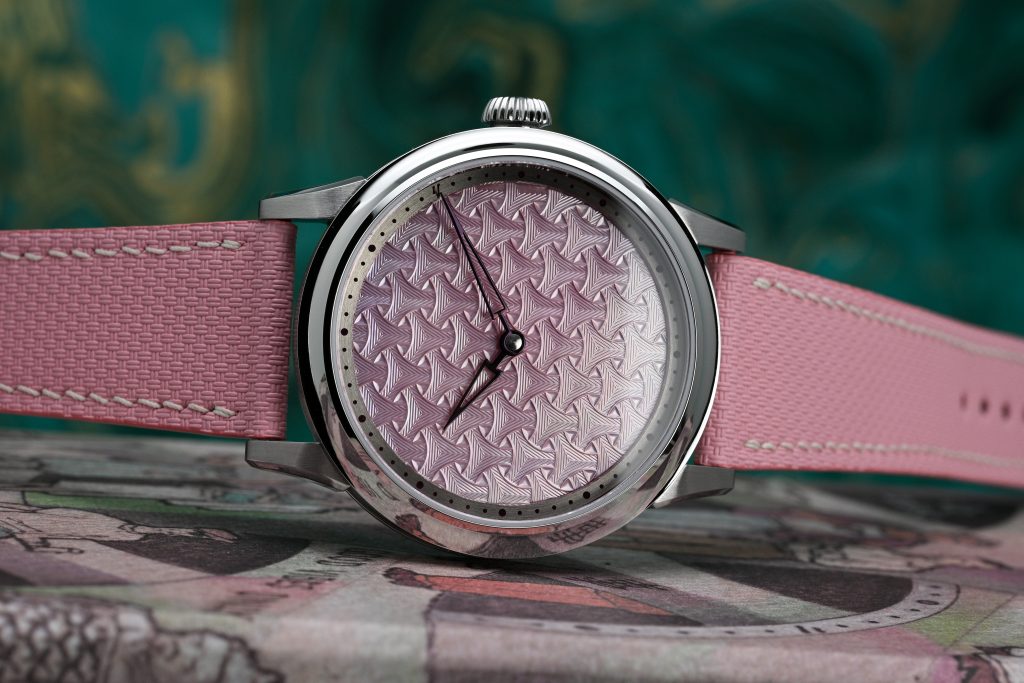
The other big shift, and the one that’s easiest to underestimate until you try to photograph it, is the handset. Where the original Jui used matte, media-blasted, skeletonized triangular hands that were all about legibility and understatement, the Bauhinia editions upgrade to polished hands that are thermally colored: blue on the purple dial, and purple on the pink. This isn’t paint or PVD; it’s the old-school process of heating polished steel in air so a controlled oxide layer forms on the surface. That oxide layer is microscopically thin, and its thickness determines the perceived color through light interference… so you’re not “dyeing” the metal so much as carefully stopping the tempering process at the exact point where the spectrum lands where you want it.
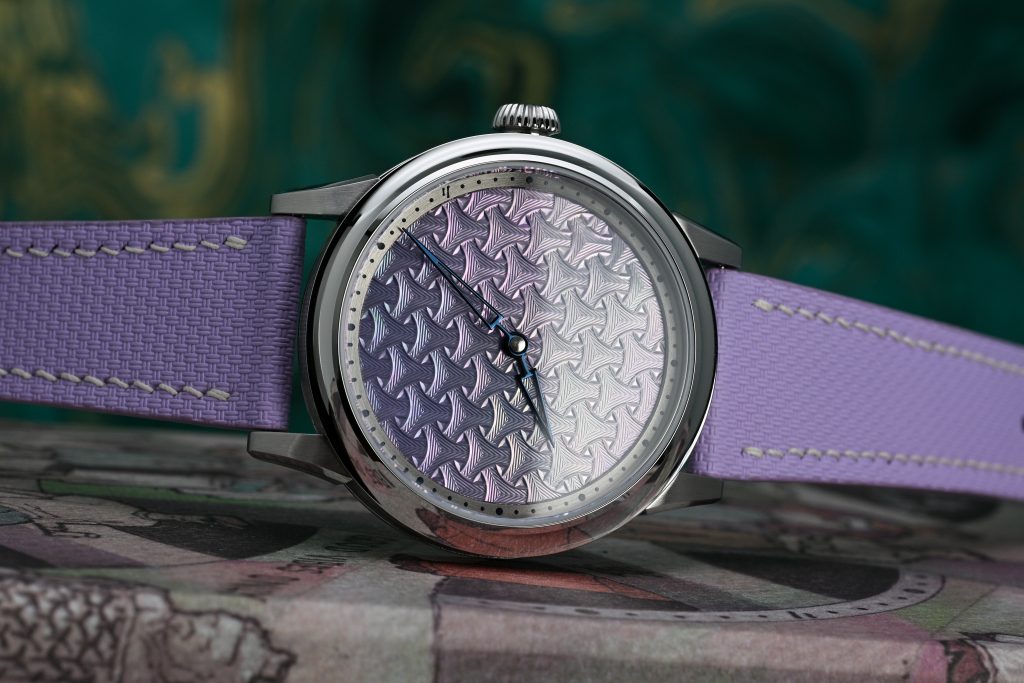
Blue is the classic destination most people associate with heat-treated hands, and while it still requires care, it’s relatively forgiving because the blue stage tends to be easier to identify and hold consistently. Purple, on the other hand, lives in a narrower window: stay a touch too cool or stop a moment too early and you’re flirting with bronze tones; push it slightly too far and it begins marching toward blue. On hands this thin, with their mix of edges, facets, and varying mass, maintaining uniform color from hub to tip is not easy, and any uneven heating or tiny difference in polishing can show up as a subtle shift in hue, especially at purple.
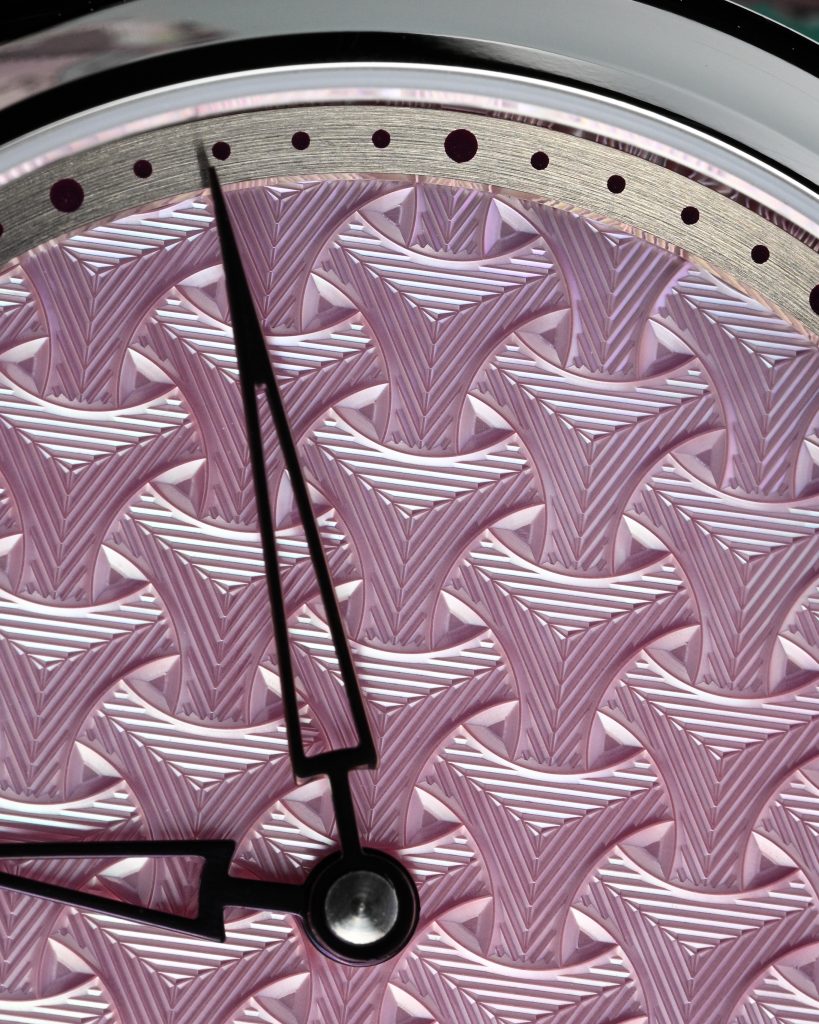
Both sets of hands show excellent consistency in tone and finish, with no obvious patchiness, blotching, or “rainbowing” along the edges. And the way the hand color interacts with the tinted MOP is just…perfect. The blued hands on the purple dial swing from a deep inky navy to electric cobalt depending on angle, while the purple-treated hands on the pink dial can read almost black in low light, then suddenly flash violet when a highlight catches the polish.
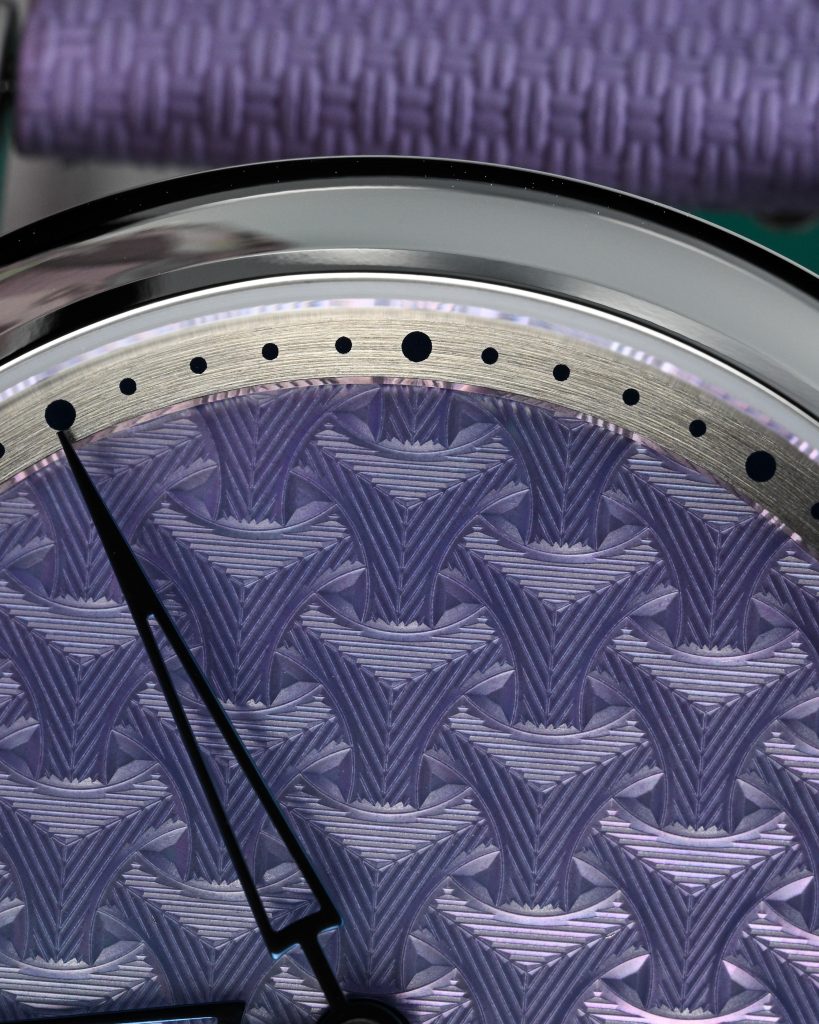
It’s beautiful, but it’s also why these watches are a bit frustrating to photograph: the dial’s iridescence is already a moving target, and the hands add another challenge, because the polished surfaces can either disappear into the dial or blow out into bright reflections depending on the light source and camera angle. Macro helps, but even then you’re chasing the moment where the dial’s texture, the MOP’s color shift, and the hands’ thermal tone all land in harmony: something that’s easy to experience in person but elusive through a lens.
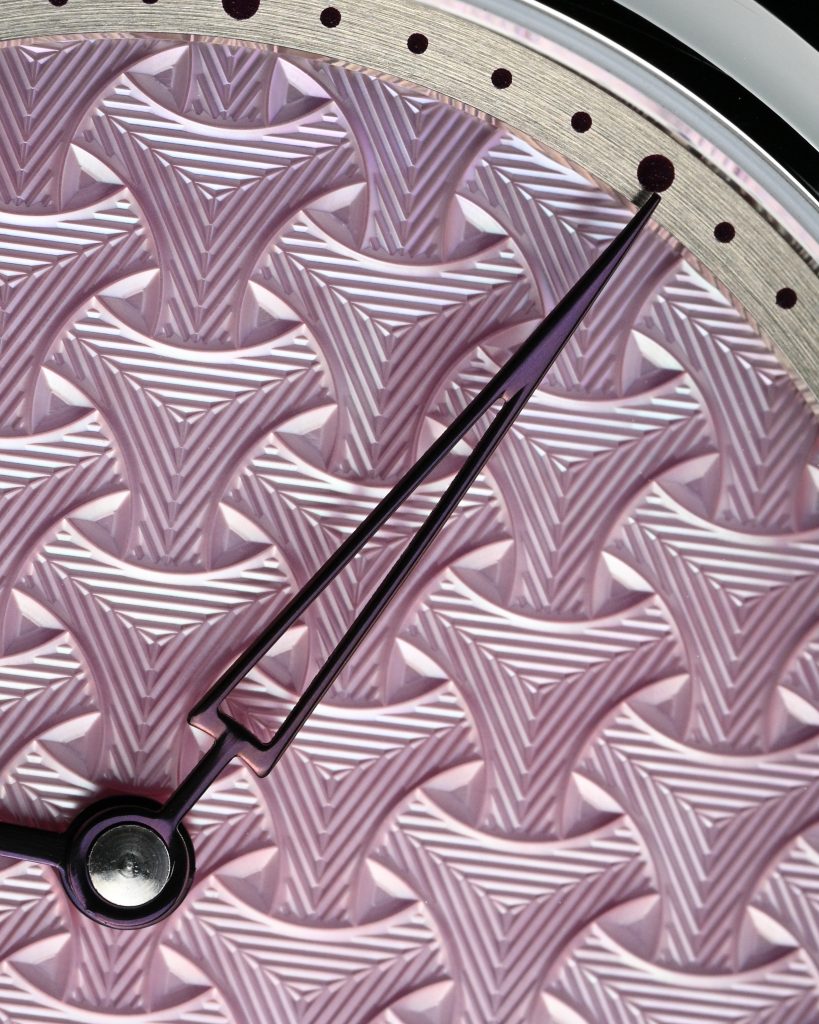
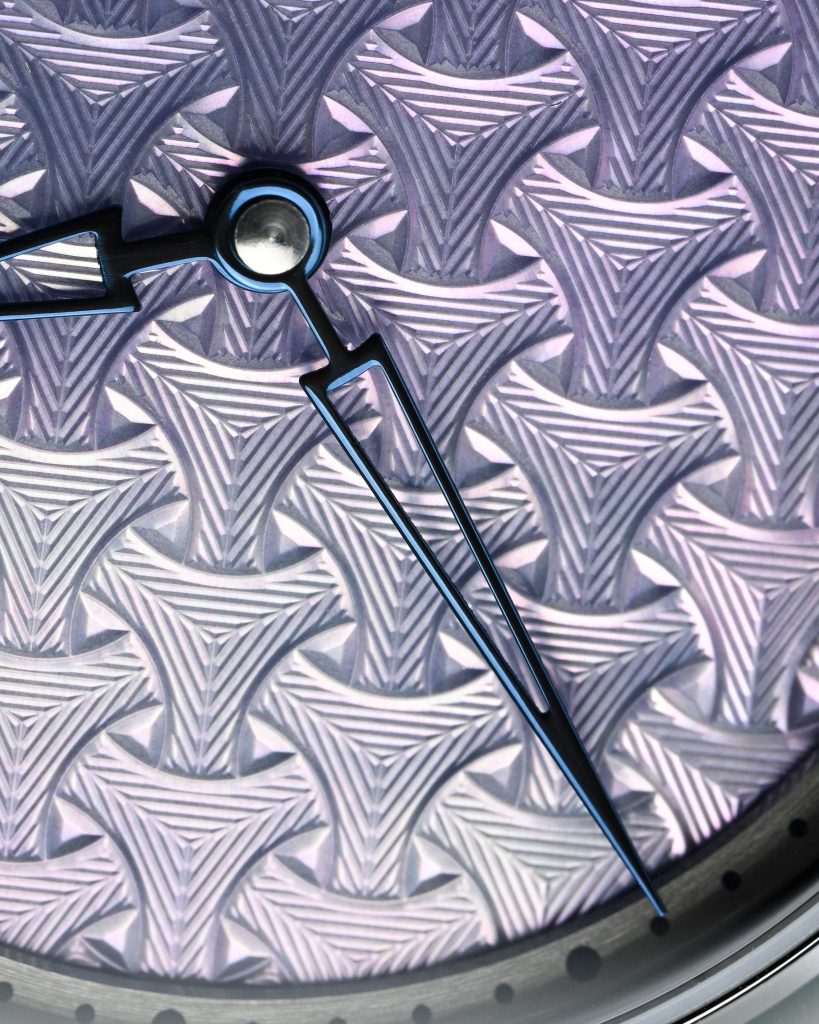
Compared to the original’s media-blasted hands, which were excellent in their own right, and arguably the right choice for a darker dial, the Bauhinia handset feels like a deliberate step up. You can see the added work that goes into polishing, and in the controlled thermal treatment. It’s hard to come away disappointed by the quality of execution here, and the pricing starts to feel very compelling the moment you put these dials under a macro lens. This is usually where more affordable watches begin to show the little shortcuts or compromises that keep costs in check, but the Jui holds up remarkably well.
Case & Movement
Because the purple and pink Bauhinia editions share the exact same case and movement as the original Jui, I’m not going to sound too much like a broken record. So for a full deep-dive into these aspects, you can refer back to my original review. But I’ll quickly revisit the specs and highlights…
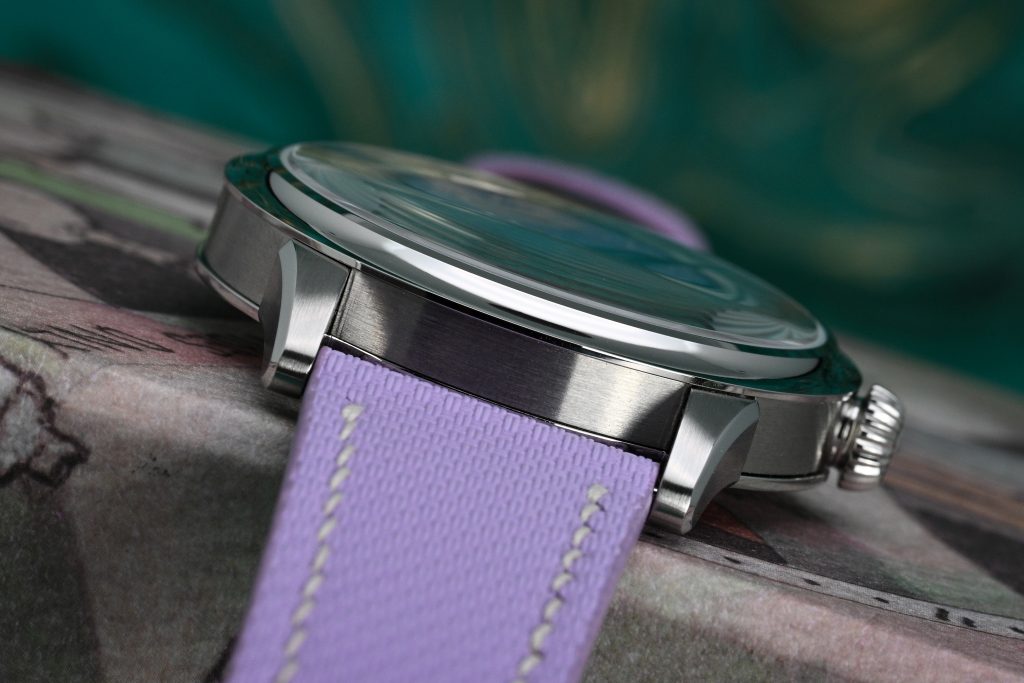
The stainless steel case still measures 39mm in diameter, 45mm lug-to-lug, and a very slim 9.9mm thick, and it remains one of the most convincingly “balanced” executions Selten has produced: a polished, concave bezel framing a flat, AR-coated sapphire crystal, horizontally brushed case sides with the mid-case tucked slightly inward for added depth, and lugs that blend satin-brushed planes with broad polished bevels before flowing cleanly into the fully polished case-back.
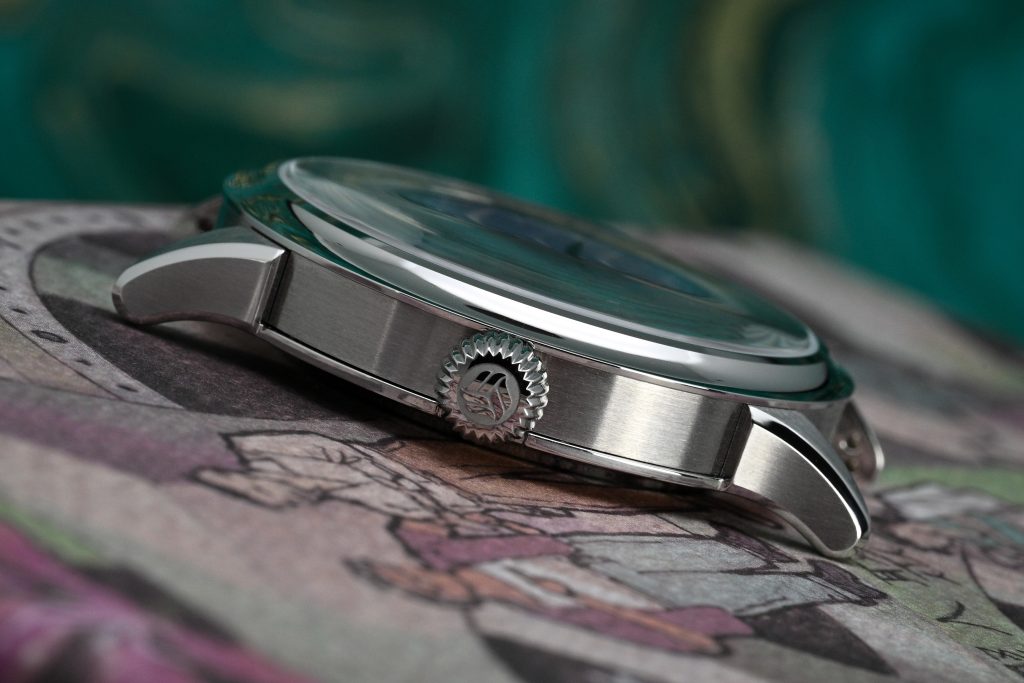
The 6mm signed push-pull crown is still gently recessed, protected, and genuinely easy to operate, and water resistance remains 50m (100m would’ve definitely been a crowd-pleaser), but still perfectly reasonable for a watch of this style. The only visual change on the back is the engraving: rather than referencing the 2nd anniversary, it now indicates the watch is one of 200 pieces.
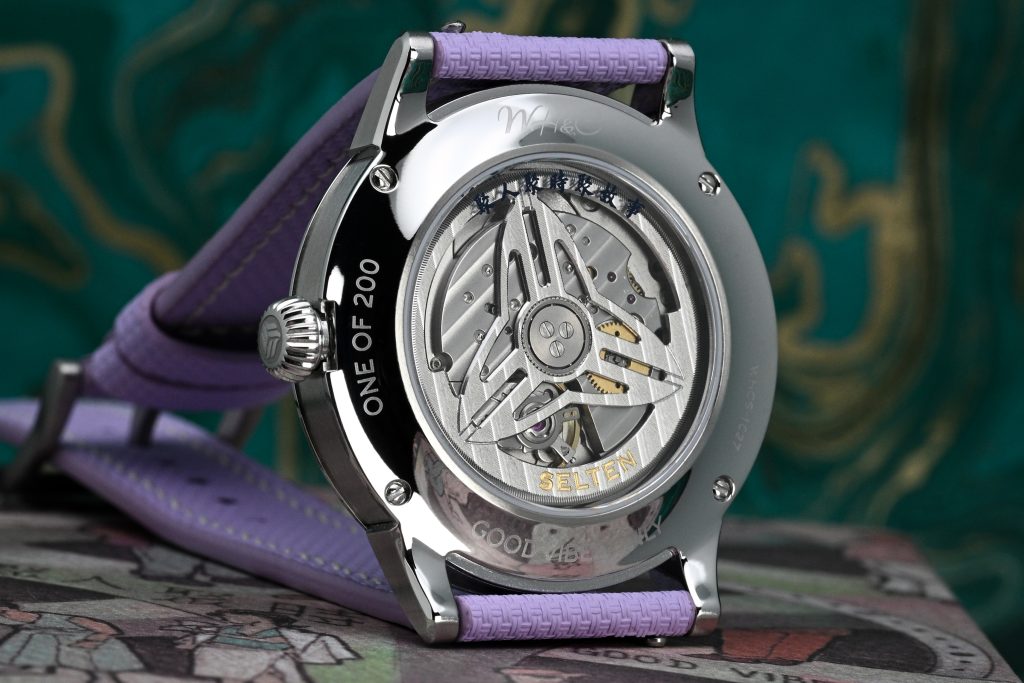
Inside is the same Miyota 9039 time-only automatic, and it continues to make a lot of sense here: reliable, slim, and a big part of why the Jui wears as sleekly as it does. Selten still dresses it up with a custom rotor with the brand’s logo and gold-tone engraved name, visible through the sapphire exhibition window, and the overall presentation feels thoughtfully “finished” without pretending to be something it isn’t.
On The Wrist
On the wrist, the Jui hits a sweet spot that’s almost impossible to fault. Its 38.75mm diameter still feels just right on my 6.75″ wrist, landing in what I consider the ideal sizing zone for a watch that walks the fine line between slightly dressy and slightly sporty. The 45.25mm lug-to-lug is spot-on for a wide range of wrists, and the 9.9mm overall thickness continues to wear even slimmer, thanks to the concave bezel and the subtly sculpted caseback that helps it sink into the wrist rather than perch on top of it. Combined with Selten’s case design, these proportions make for one of the most comfortable and balanced wrist experiences the brand has delivered to date, and the Bauhinia editions don’t change that fundamental recipe at all.
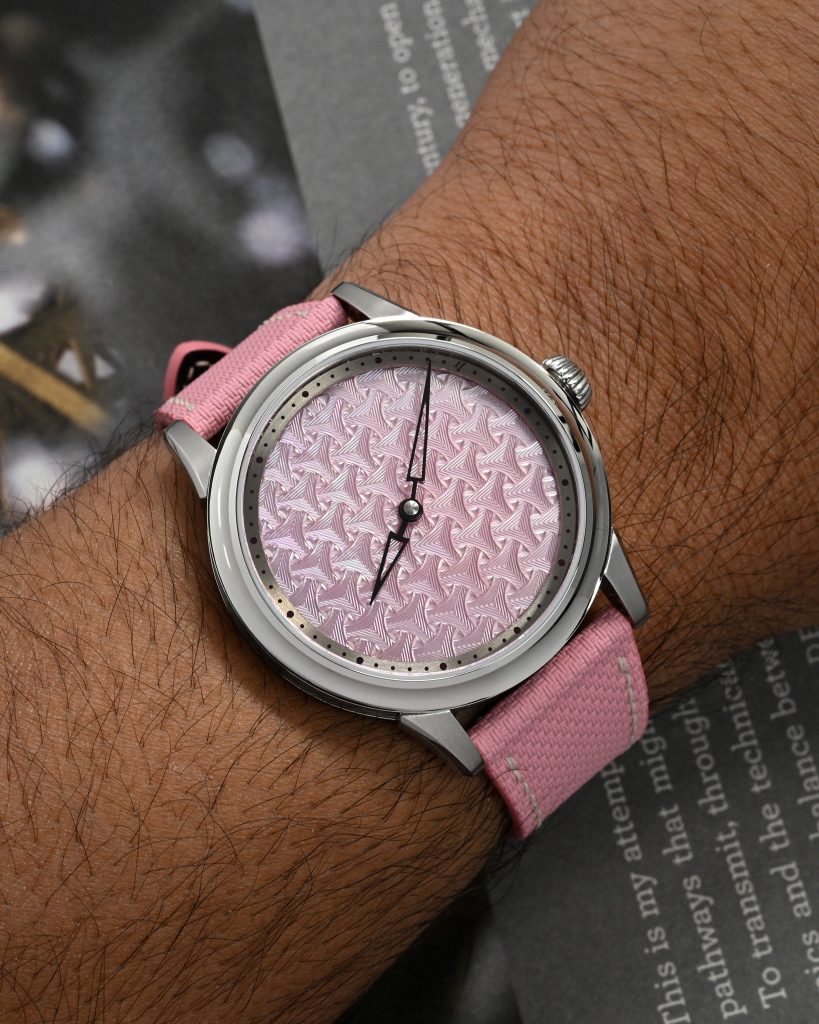
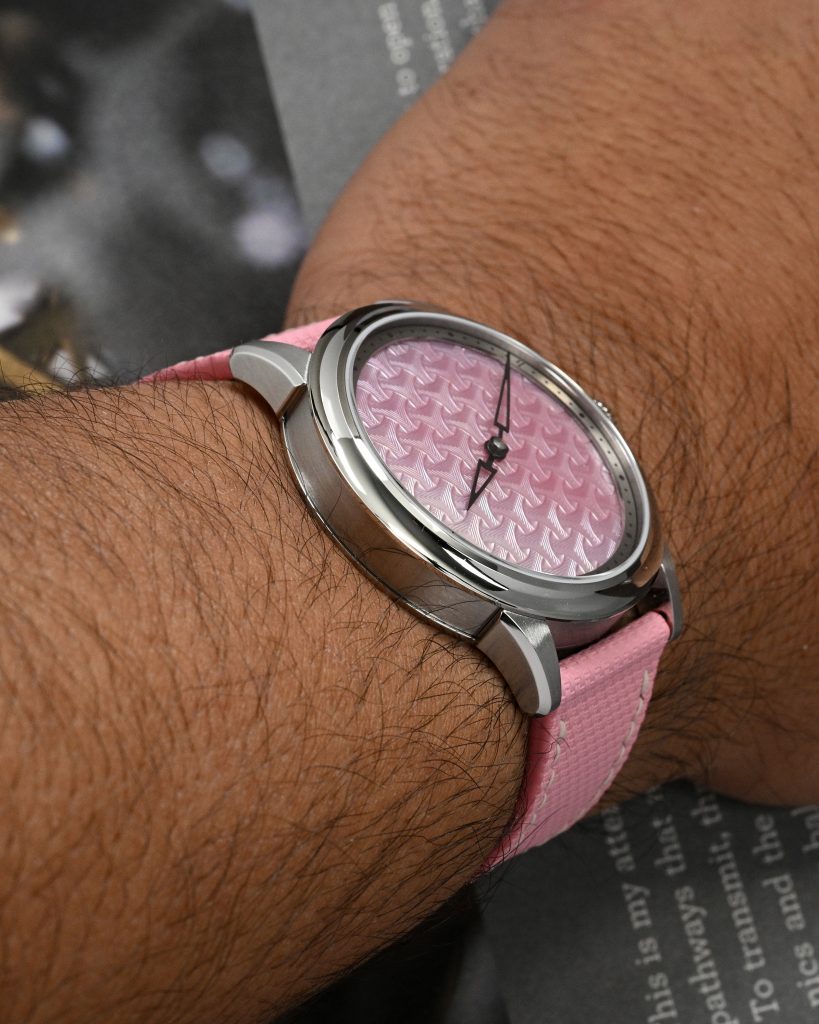
What does change is how you can wear the watch. Instead of the French Epsom leather strap from the original release, the pink and purple Jui Bauhinia ship with hand-stitched FKM sailcloth-style rubber straps made by HasNoBounds, and as someone who generally prefers rubber to leather, I’m a big fan. They’re soft, flexible, and immediately comfortable, and the colors are perfect, and they suit the playful-but-refined personality of these dials better than a more formal leather would.
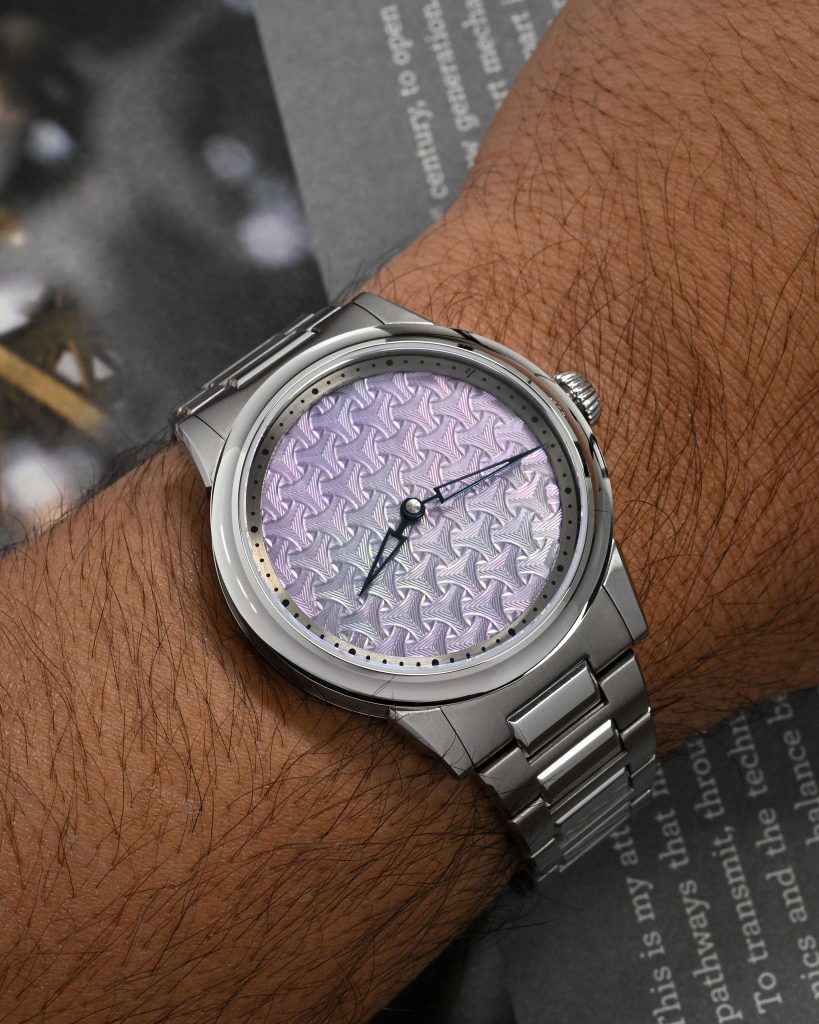
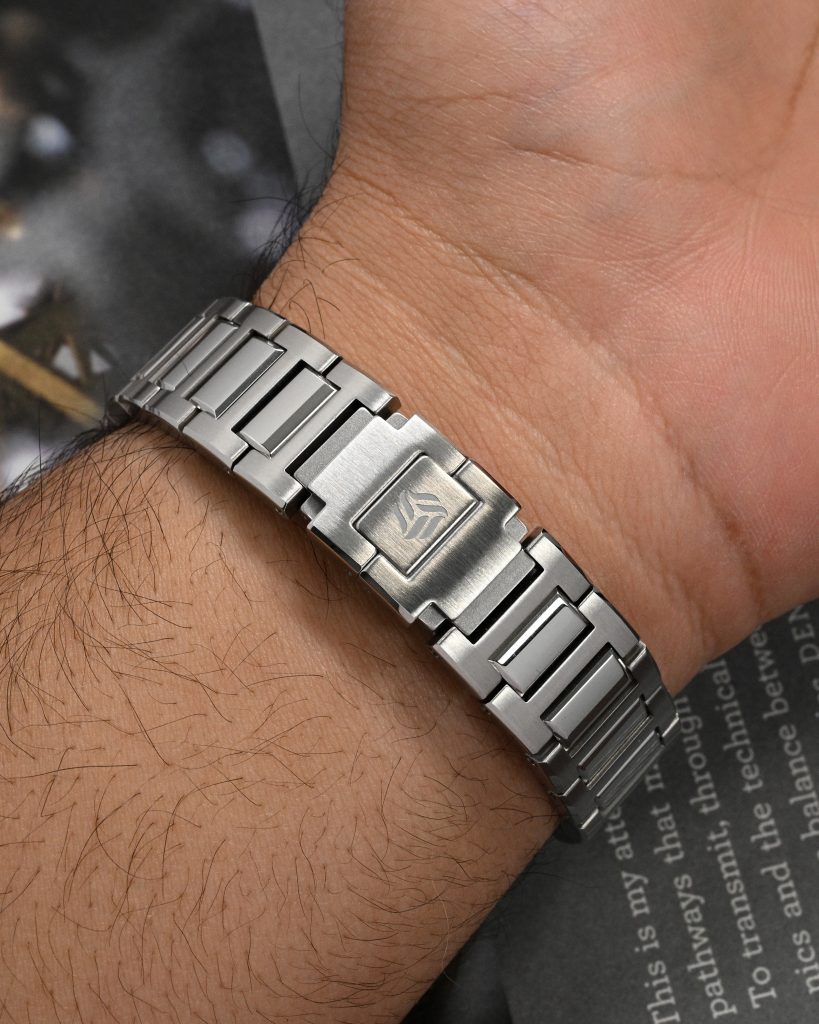
And then there’s the bracelet, which was released a few months after the original Jui and honestly, I think it’s absolutely worth the additional $150. It uses quick-release spring bars, and the end links integrate perfectly with the case, sitting flush and clean without awkward gaps or mismatched geometry. The build quality and finishing is exceptional for the price: the links have excellent brushed surfaces accented by crisp polished bevels that mirror the case’s own high-quality transitions. Sizing is straightforward too, with links that can be added or removed via screws, and the icing on this already delicious cake is the butterfly-style clasp with on-the-fly adjustability on both sides, giving you about 2mm of range per side. The adjustment mechanism is impressively well integrated from a design standpoint, no clunky external hardware or obvious “afterthought” engineering, but it does take a little getting used to when operating it on-wrist. Still, that’s a very small price to pay for how much it elevates the overall wearing experience, especially at such a reasonable upcharge.
Wrapping Up
The Jui Bauhinia editions feel like a strong follow-up for both collaborators, and they sit comfortably among Selten’s best work to date. You’re getting the same well-proportioned, thoughtfully finished case and the same reliable movement, but with two dials that push the concept in a brighter direction, and the bracelet option genuinely rounds out the package. At $1,250 USD, the value still holds up once you look closely at the dial work and finishing, even with today’s pricing realities.
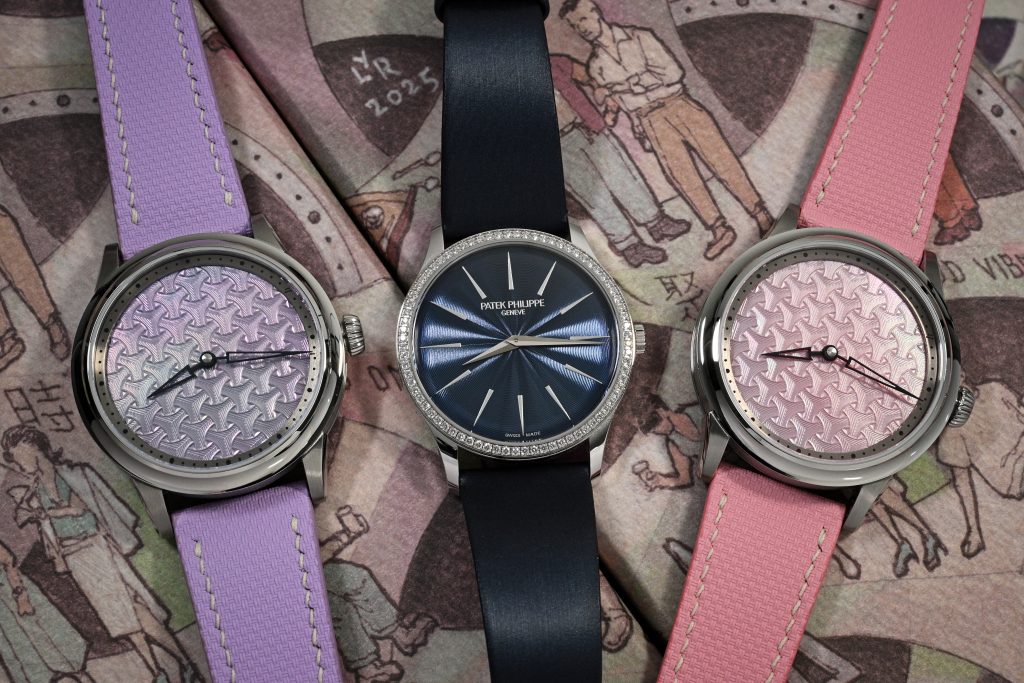
As with the original, the only real question is whether the design language speaks to you. If you want a more conventional dial layout, stronger branding, or a seconds hand, these won’t change your mind. But if the aesthetic clicks, I think you can be confident that these Bauhinia editions will deliver in person, because none of my photographs or videos do them justice.