Disclaimer: Both of these watches were sent to me to review, and I do not need to return one after my review is complete. This watch was given to me without restriction and is not contingent upon a particular outcome for my review. All opinions here are my own, and Archimede, Ickler, etc. had no influence over the opinions stated here.
Video
Archimede SportTaucher Review: The Case for Ickler
Some watch companies build their reputations around movements; others around one iconic design. Ickler is a bit different. For more than a century, the family’s identity has been tied to the part of a watch easiest to take for granted: the case. Ickler has been very important to German watchmaking, but also relatively invisible. Some enthusiasts might know about brands like Archimede, Limes or Defakto without fully appreciating the manufacturer behind them.
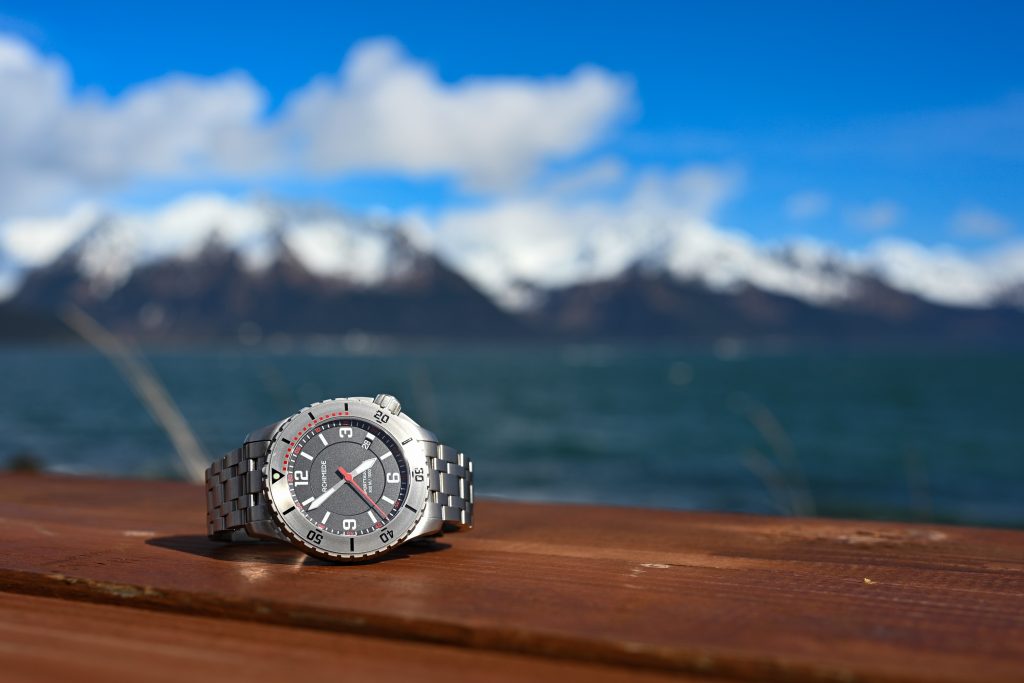
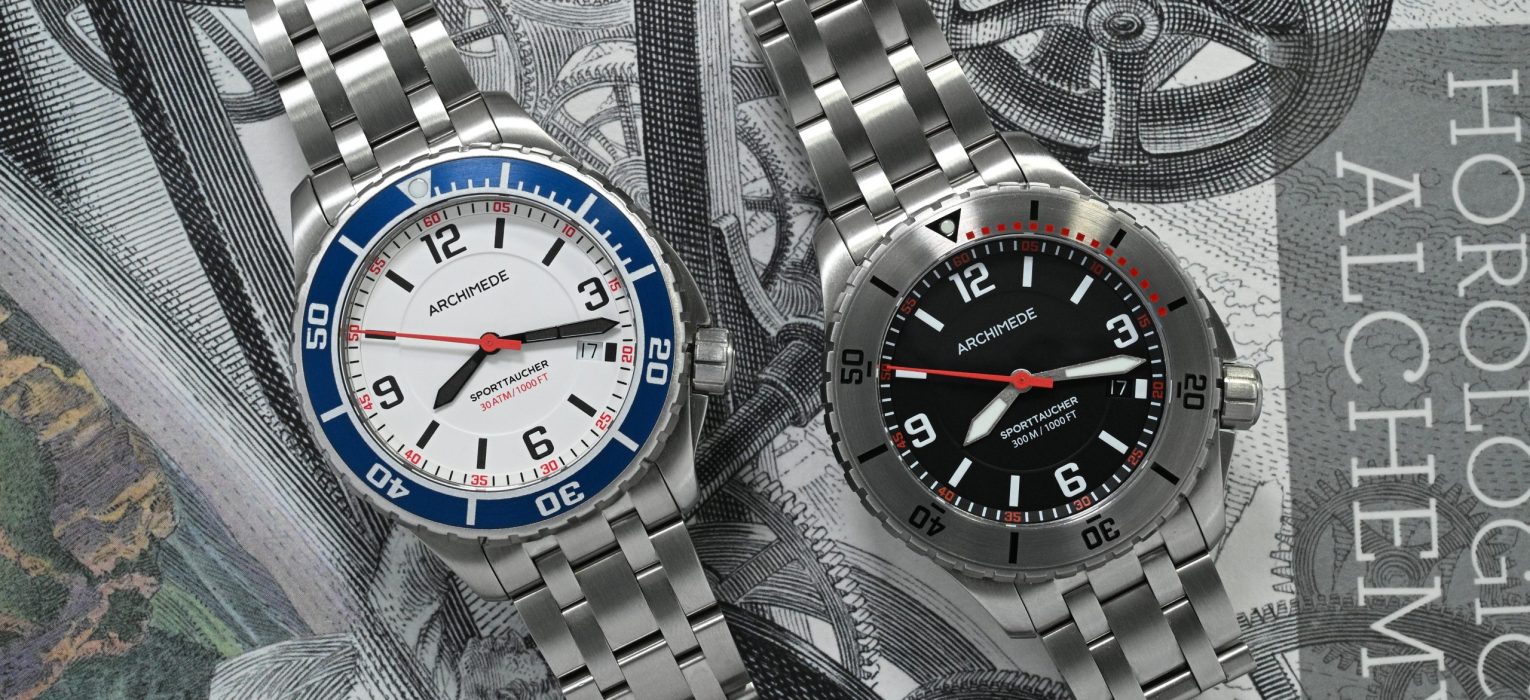
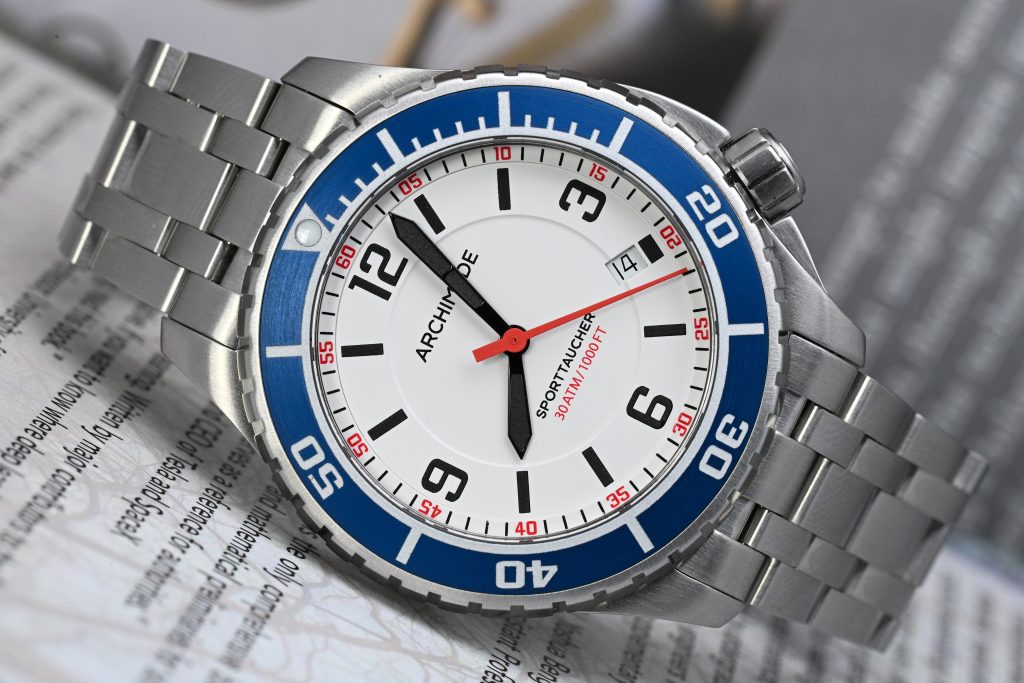
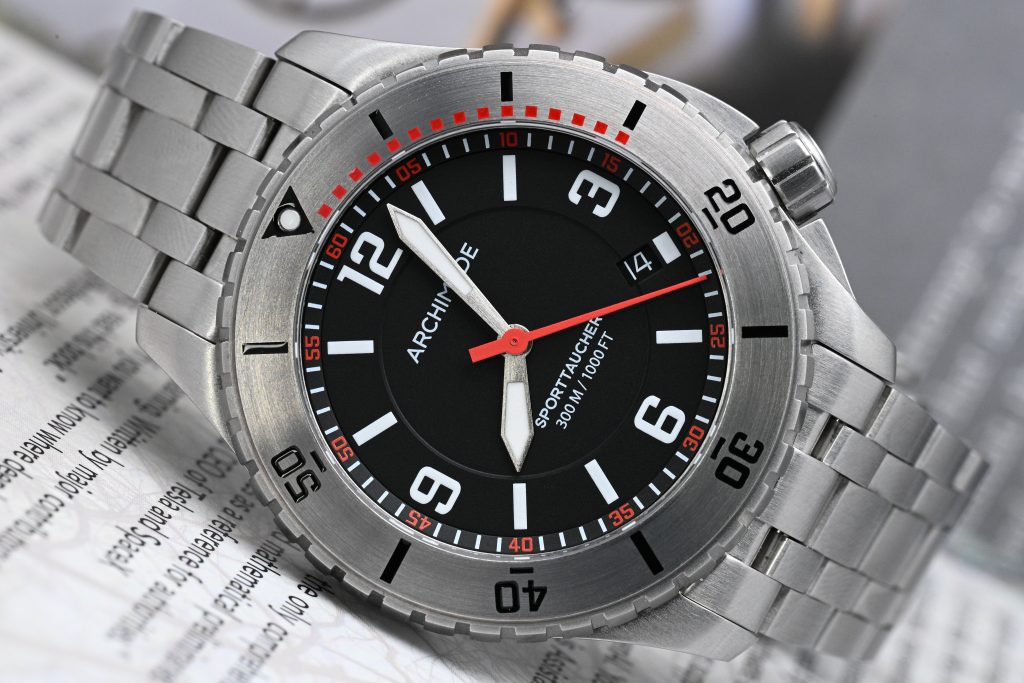
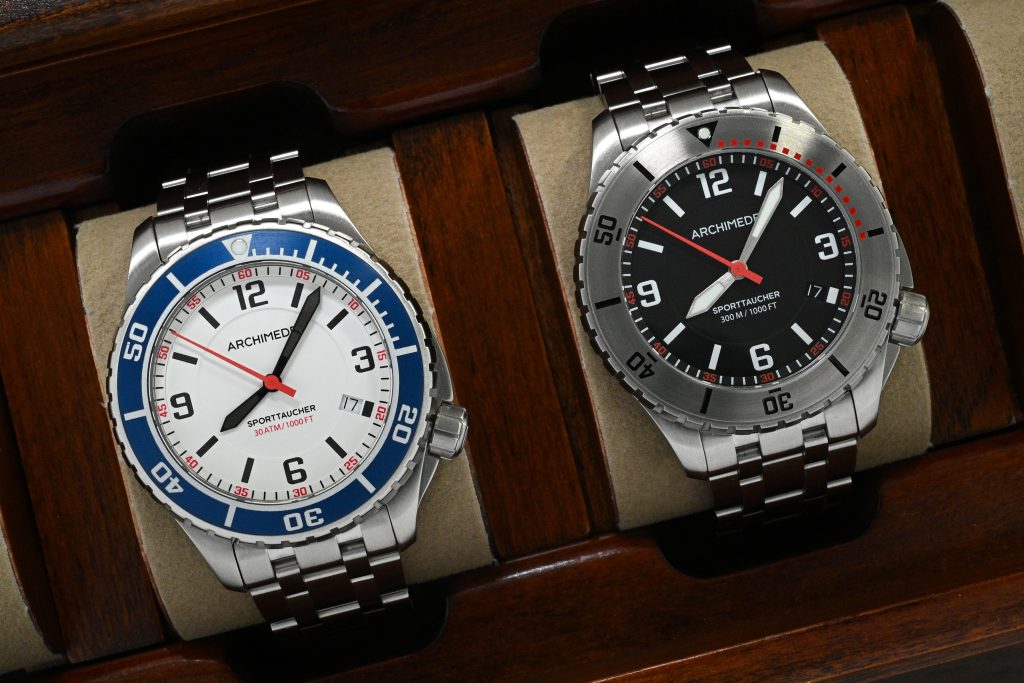
This review of the SportTaucher hopefully will help to understand that legacy. I am reviewing two versions: a black-dial watch with a solid steel bezel and matching black date wheel, and a limited-quantity white-dial version with a blue bezel and matching white date wheel. They are simple, slightly old-fashioned German divers, but the longer I wore them, the more obvious it became to me that their appeal is not primarily about decoration, but engineering and intention.
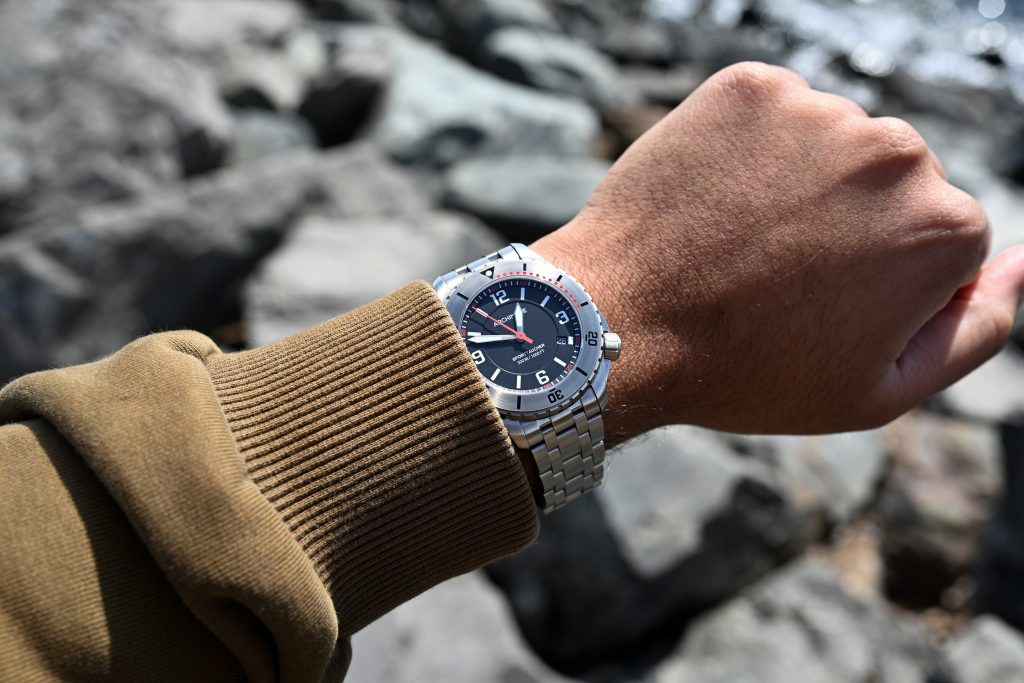
These watches have a retail price of around $1250 USD, and can be configured in a variety of ways, with different case options, dial options, date window options and bezel options.
Pforzheim, Ickler and Archimede
Pforzheim’s watch and jewelry industry dates to around 1767. Unlike Glashütte, whose modern identity is closely tied to movement manufacture and luxury finishing, Pforzheim developed a network of specialists in cases, dials, jewelry and industrial production. Its Technical Museum still presents that history through the tools, machines and crafts that helped the city’s watch and jewelry industries compete globally. And if you’ve ever investigated designing and making your own watch, you’ve probably encountered many parts manufacturers from Pforzheim.
Karl Ickler founded his case company there in 1924 after working as a production manager for other international brands. Production stopped during the war, and his sons Heinz and Kurt rebuilt it in 1947. Today the business remains family-run in its fourth generation, with design, engineering, prototyping, machining, surface finishing, engraving, assembly and inspection handled within the Pforzheim operation.
That base now supports Archimede, Limes, Defakto and Autran & Viala. Archimede is the most utilitarian expression: pilot watches, deck watches, Outdoor models and divers that showcase Ickler cases without much luxury theater, and is currently owned and operated by Lisa Ickler.
The SportTaucher Platform
The SportTaucher has seen gradual evolution, but not so much a reinvention, and that might be why it feels like it has a lot of soul. Archimede added a 12-hour GMT bezel in 2014, followed by CuSn8 bronze models with 60-minute, compass and GMT bezels. In 2020, the company introduced the solid stainless-steel bezel seen on one of these watches. The current range also includes standard steel, anthracite PVD and bronze cases with multiple dial, bezel and strap combinations.
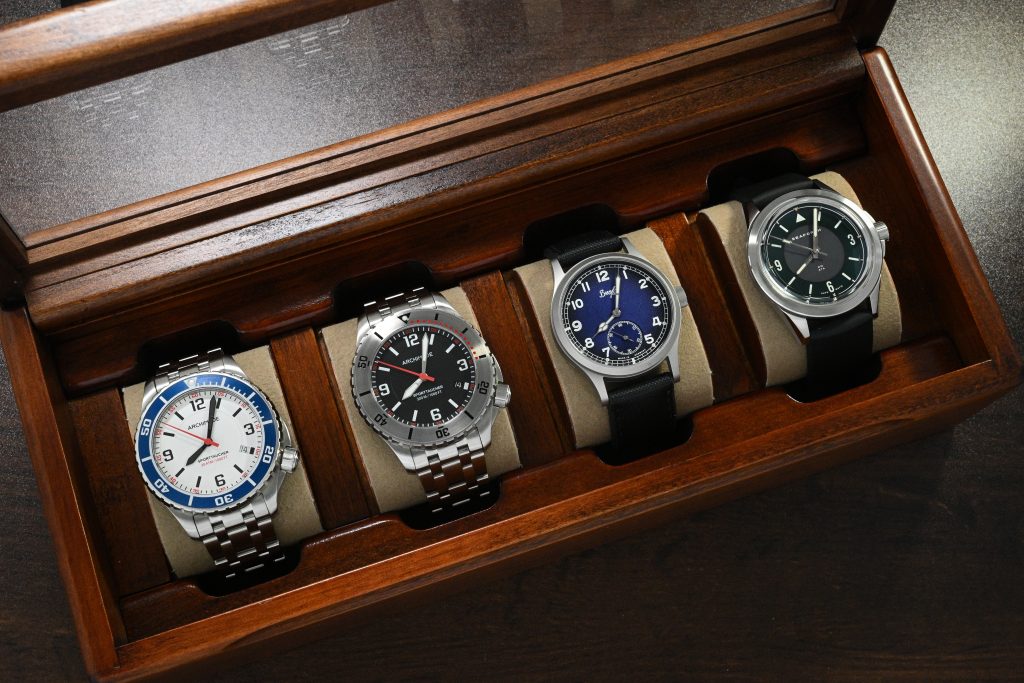
At roughly $1,250 on bracelet, it can be viewed as an inexpensive alternative to Sinn or Damasko. But it also has to compete with enthusiast divers offering ceramic bezels, elaborate dials and tool-free clasps. And if you’re spec chasing, you are probably better suited for one of these alternatives. Archimede instead leans on a 300-meter sleek and impeccably engineered Ickler case and, in the current catalog, a 65-hour Sellita SW200-2 Power+ movement.
Case and Bezel
I measured both watches at 40.90mm in diameter, 48.7mm across the full span including the end links, 11.8mm thick and 20mm between the lugs. That thickness is impressive for a mechanical diver rated to 300 meters. The mid-case accounts for about 4.5mm, the bezel another 3.5mm, and much of the remaining height is hidden in a nicely curved, svelte caseback. The watch sits low and wears like a genuinely slim diver.
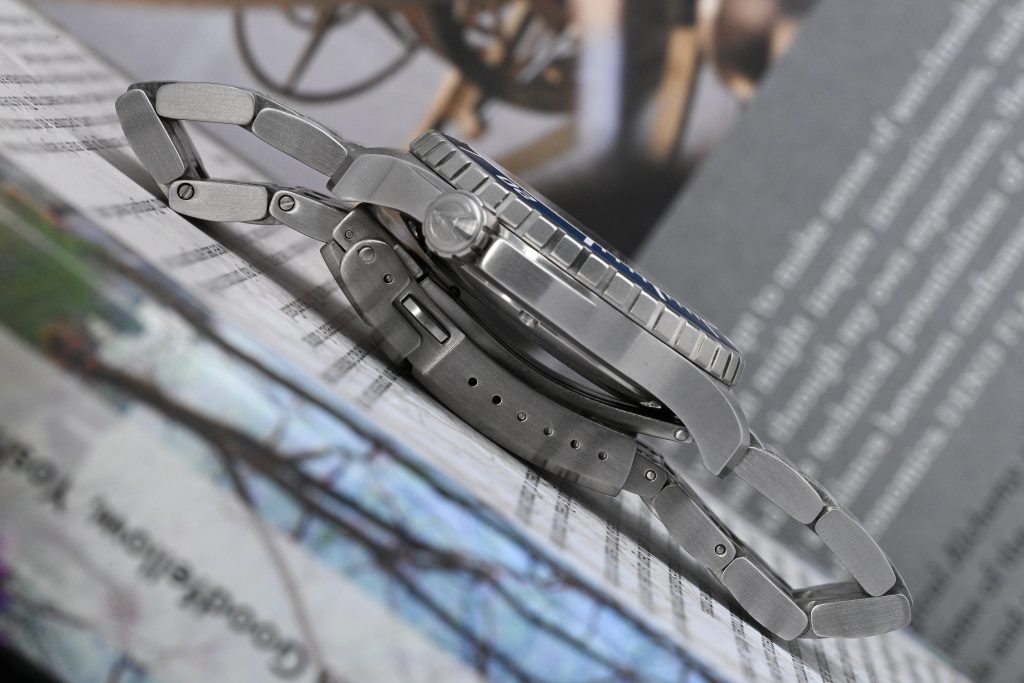
The 48.7mm span may sound intimidating, but the end links articulate downward immediately. That figure is effectively the maximum footprint rather than the beginning of a longer fixed bracelet section. On my 6.75-inch wrist, both versions sit extremely well without overhang.
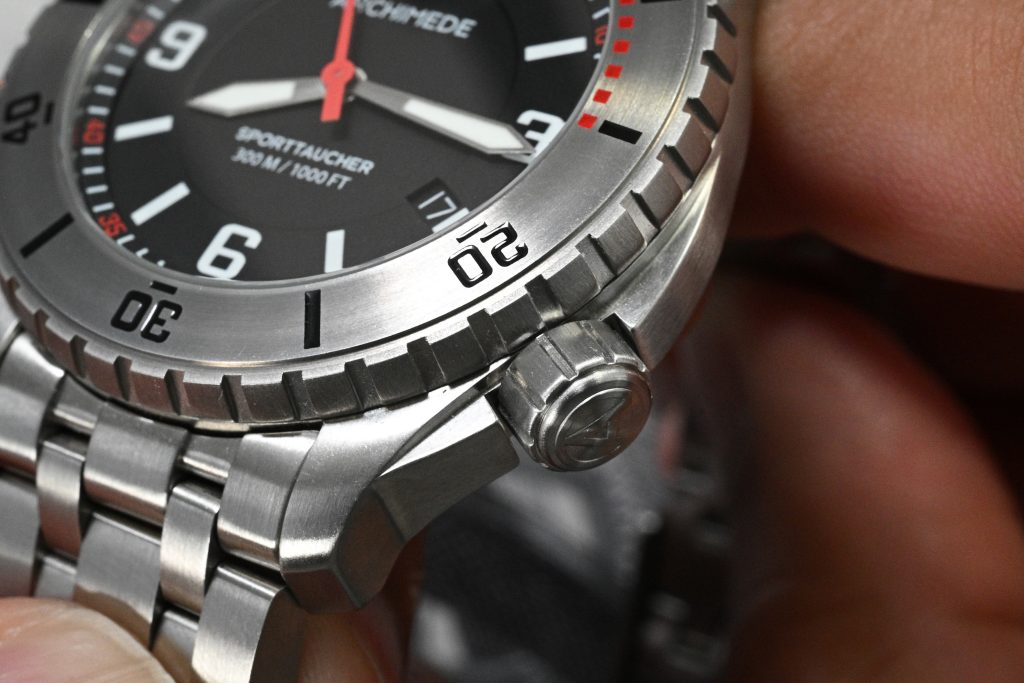
As expected from Ickler, the build quality, fit and feel are excellent. Everything is brushed, but there are no sharp corners or unresolved edges. The transitions between lugs, guards, bezel and caseback feel deliberate. The 6.35mm signed screw-down crown is easy to grip, operates smoothly and mates with the threads and crown tube with unusual precision. The guard design, crown stability and clean threading are subtle details, but also clear signs of a well-manufactured case.
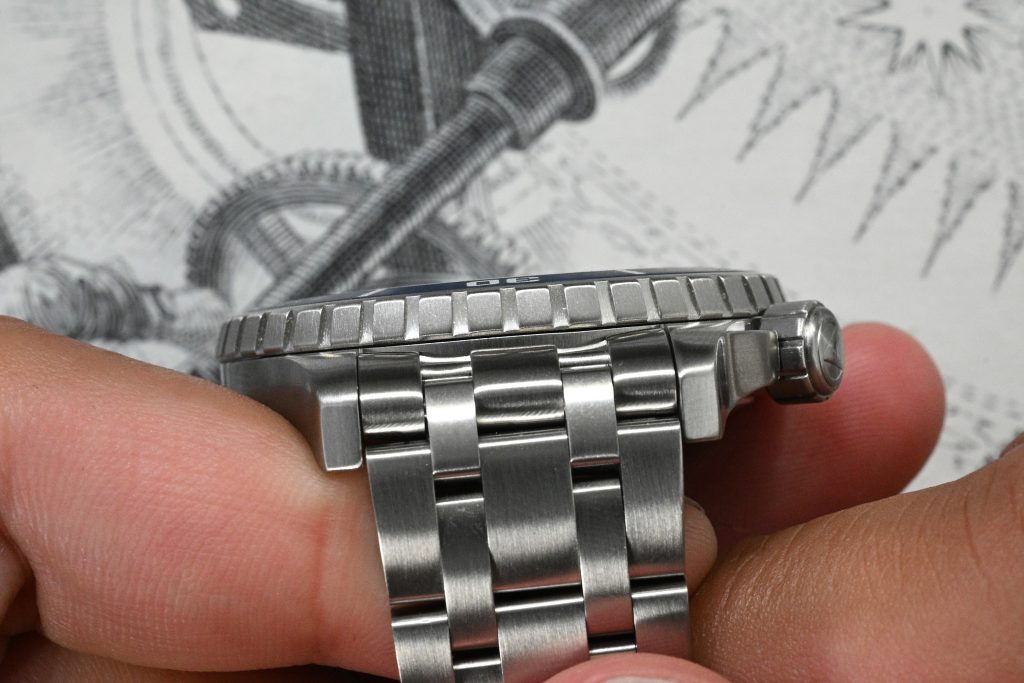
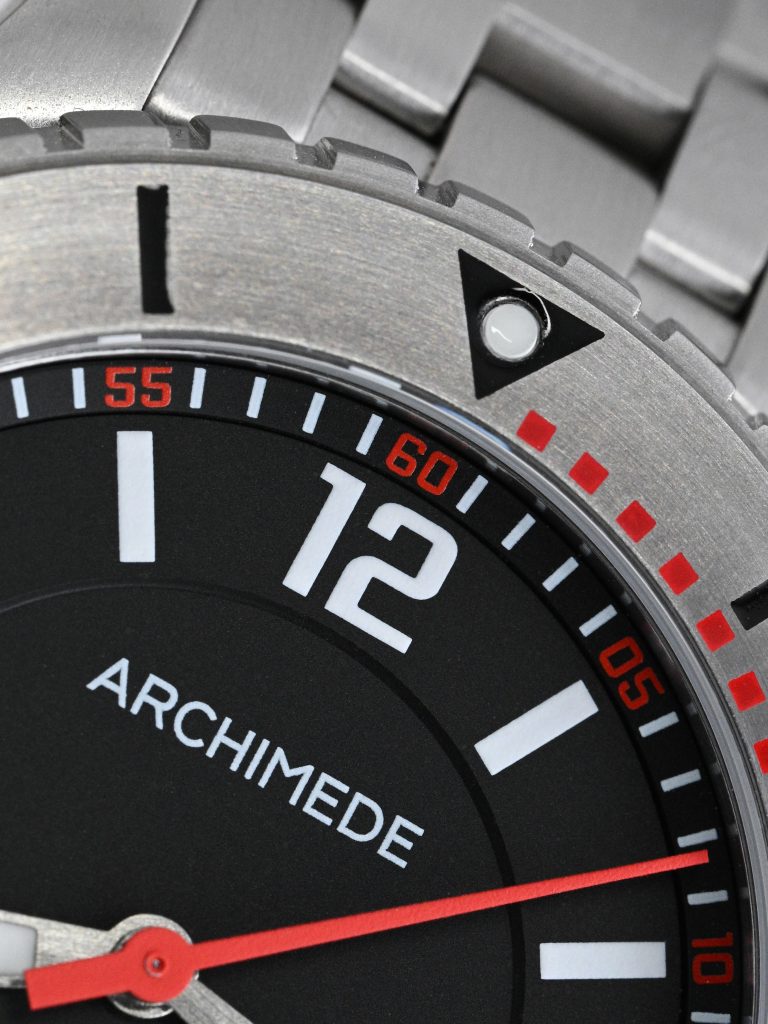
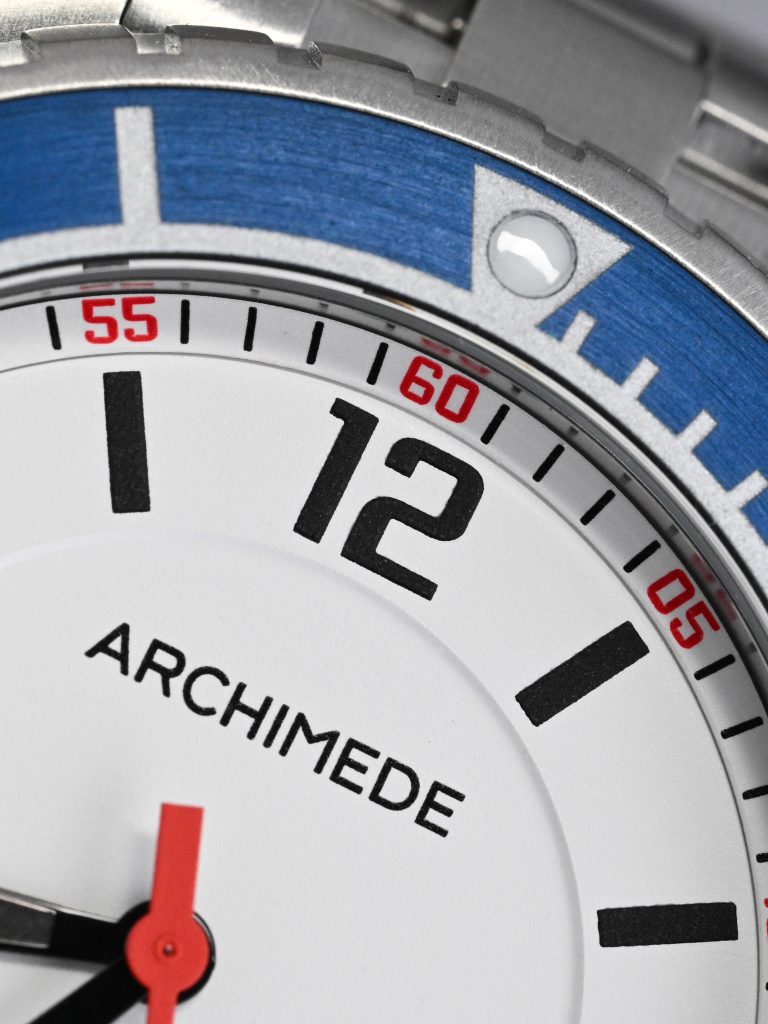
The bezel uses 120 unidirectional clicks that are loud, sharp and precise, with excellent alignment. Both executions appear to be metal: the solid steel version obviously so, and the blue insert, as far as I can determine, metal rather than ceramic. That suits the old-school character, though ceramic would resist scratches and fading better. Only the pip is lumed; I would prefer additional luminous bezel markings.
Dial and Lume
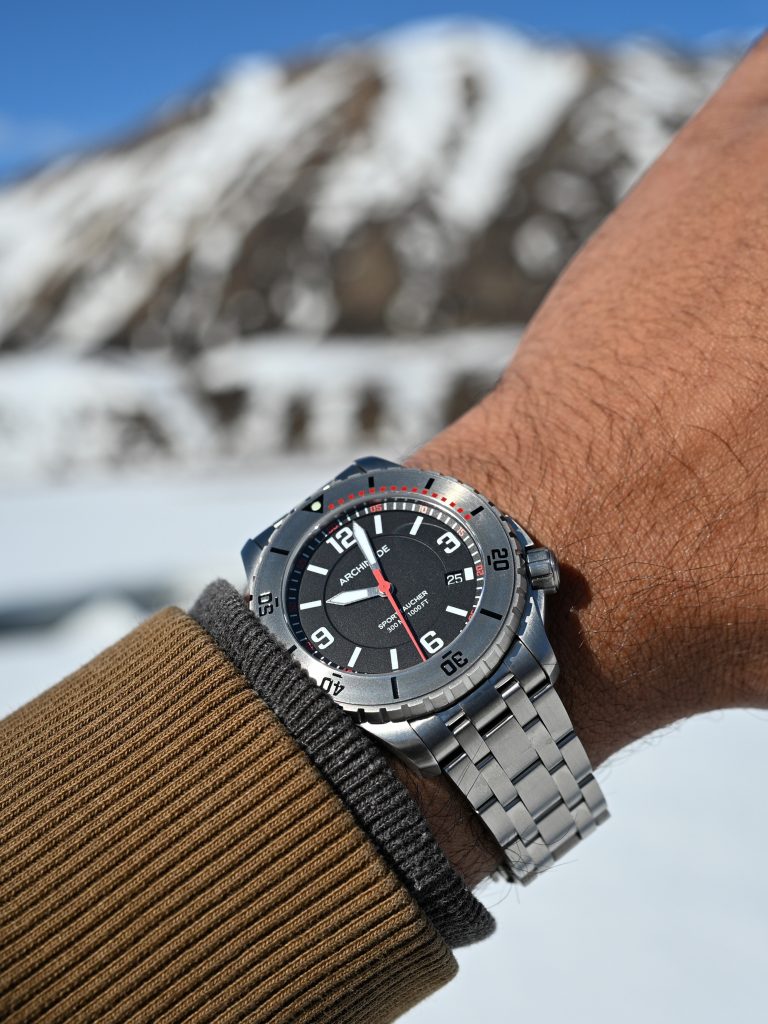
The dials share the same architecture but reverse the contrast. The steel-bezel watch uses a black dial with white numerals, markers and elevated chapter-ring printing. Its brushed metal hour and minute hands contain large lume plots, while a red seconds hand supplies the color accent.
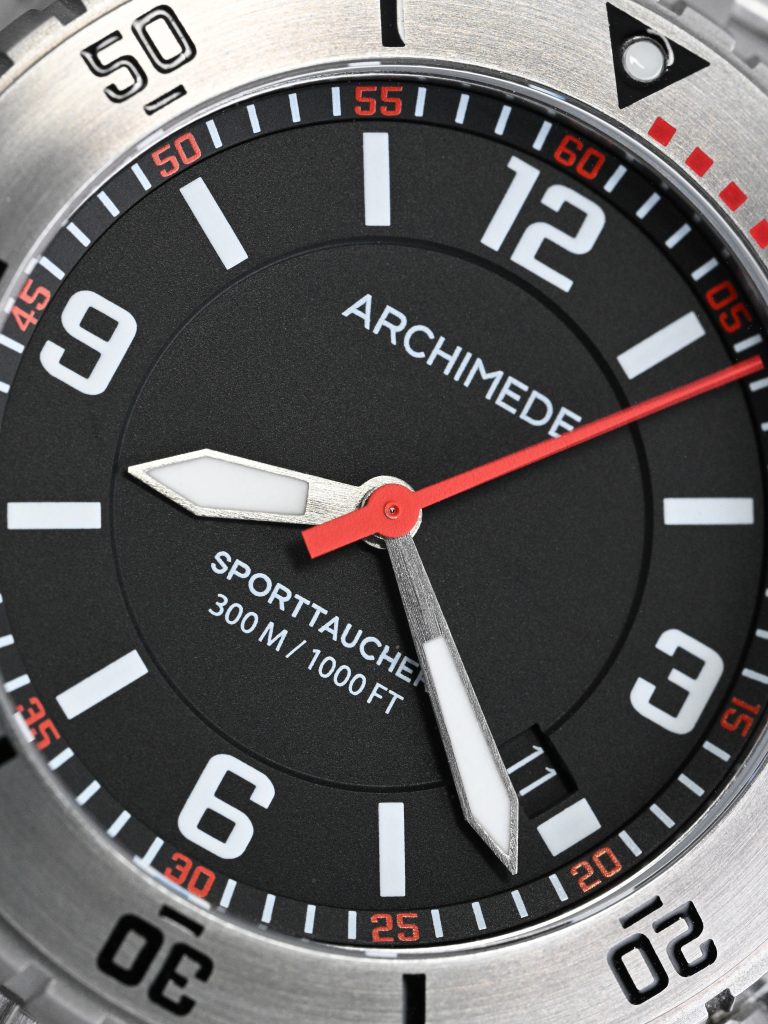
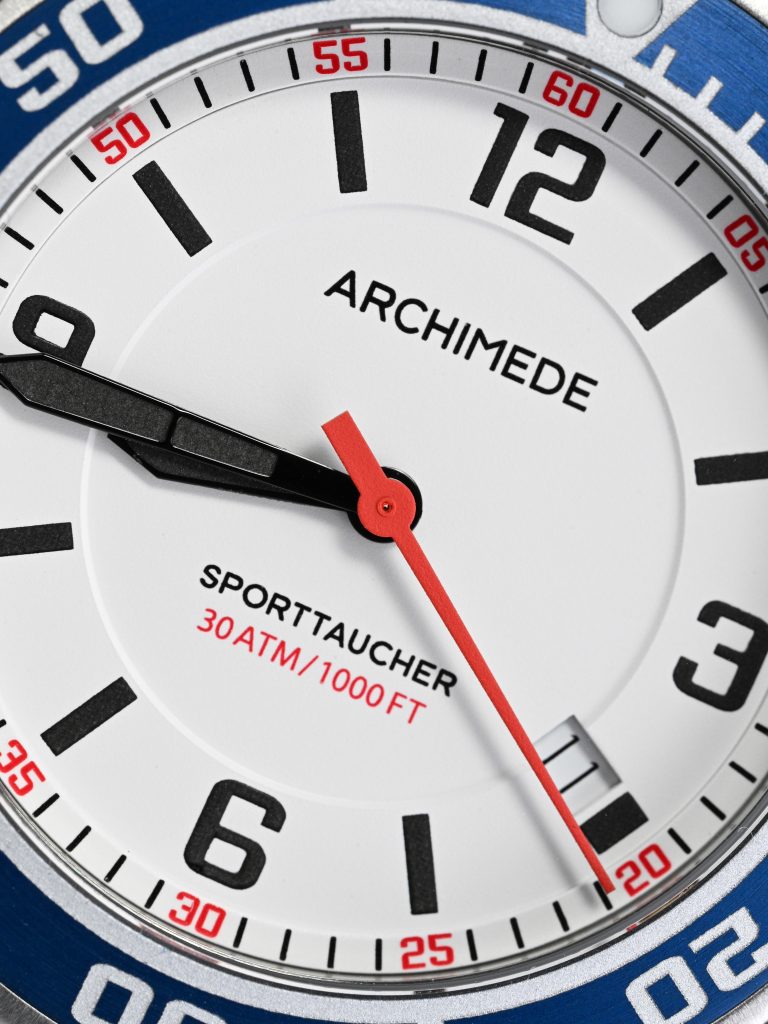
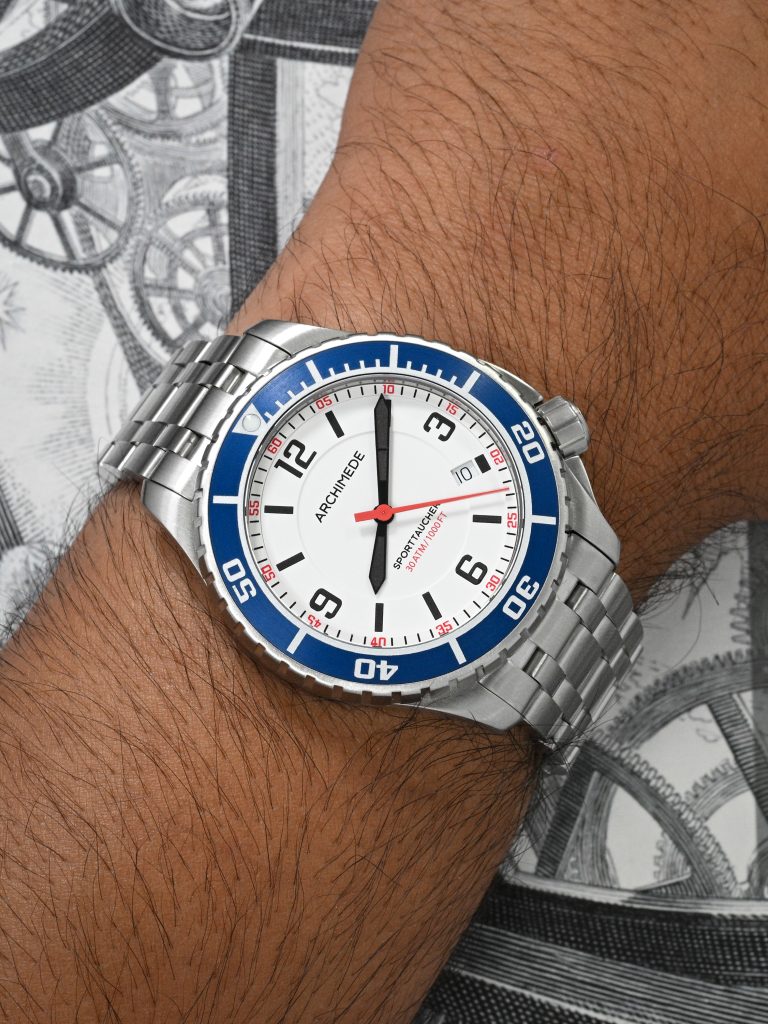
The blue-bezel version is almost the photographic negative: a white dial with black numerals, markers and chapter-ring details, stark black hands and the same red seconds hand. Printing is good, the hands are clean, and both watches are exceptionally legible. The aesthetic is unapologetically utilitarian and distinctly German. There are no applied markers or decorative textures; the dial exists to communicate time.
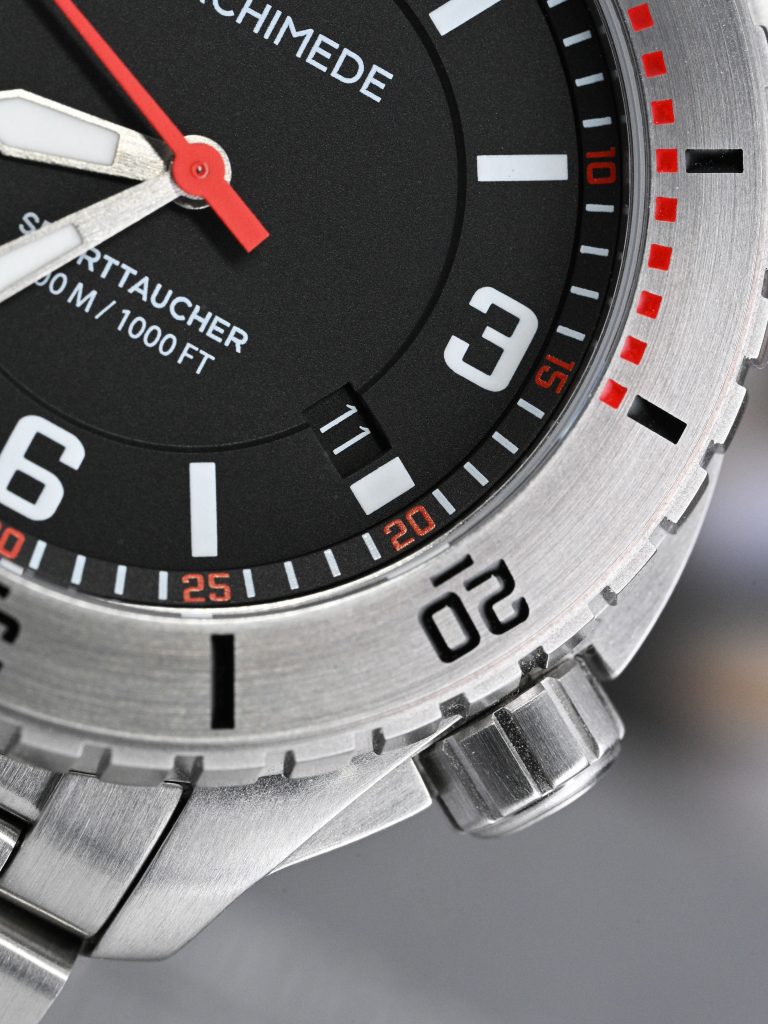
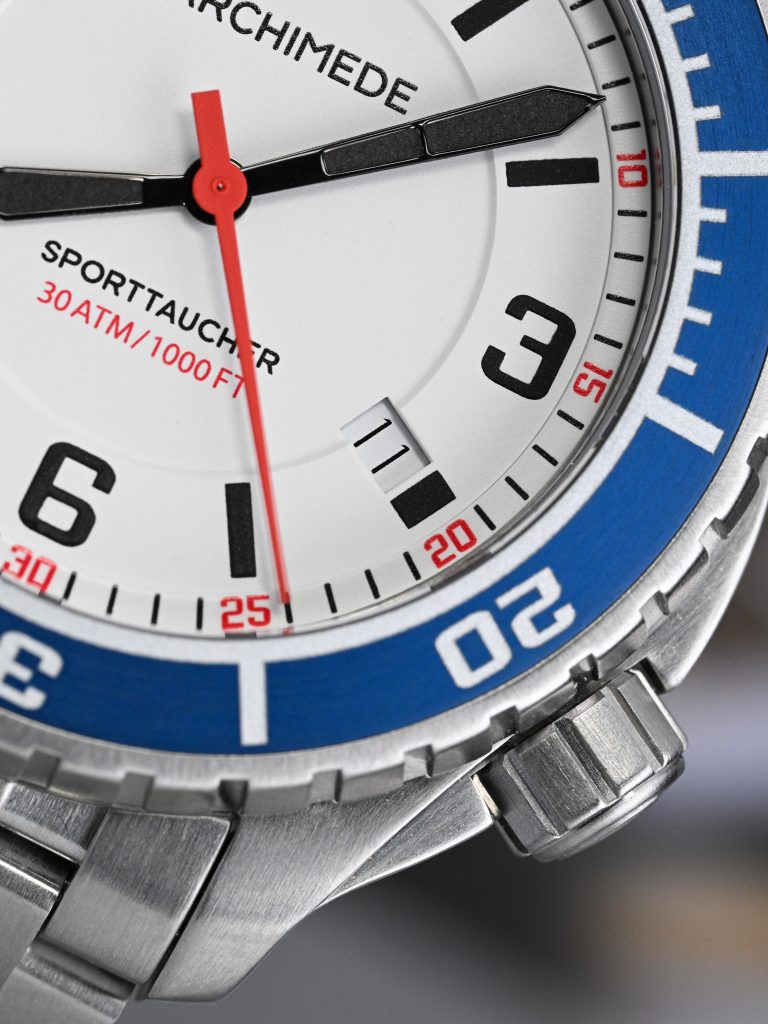
Both date windows sit around four o’clock, a position I generally dislike. I asked Archimede to fit matching date wheels, however, and that makes a substantial difference. The black wheel recedes into the black dial and the white wheel blends into the white one, keeping the apertures from becoming offensive.
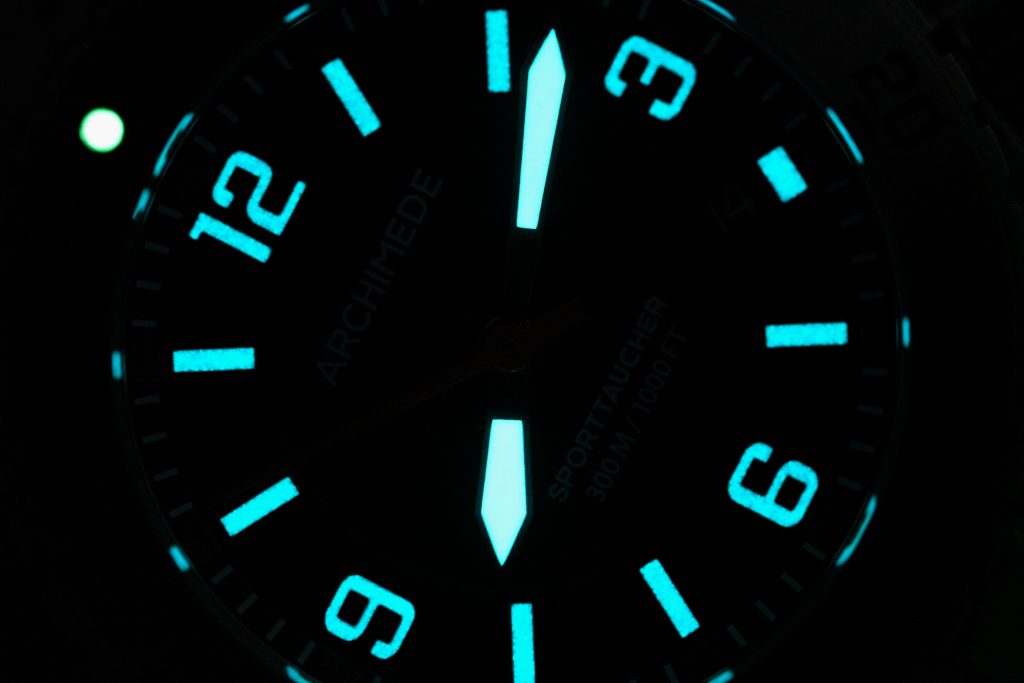
The black-dial watch has good rather than exceptional lume. Its behavior reminds me of Sinn: it is not especially bright initially, but remains readable through the night. It will not overwhelm you with intensity or endurance, but you will not struggle to read it after waking up.
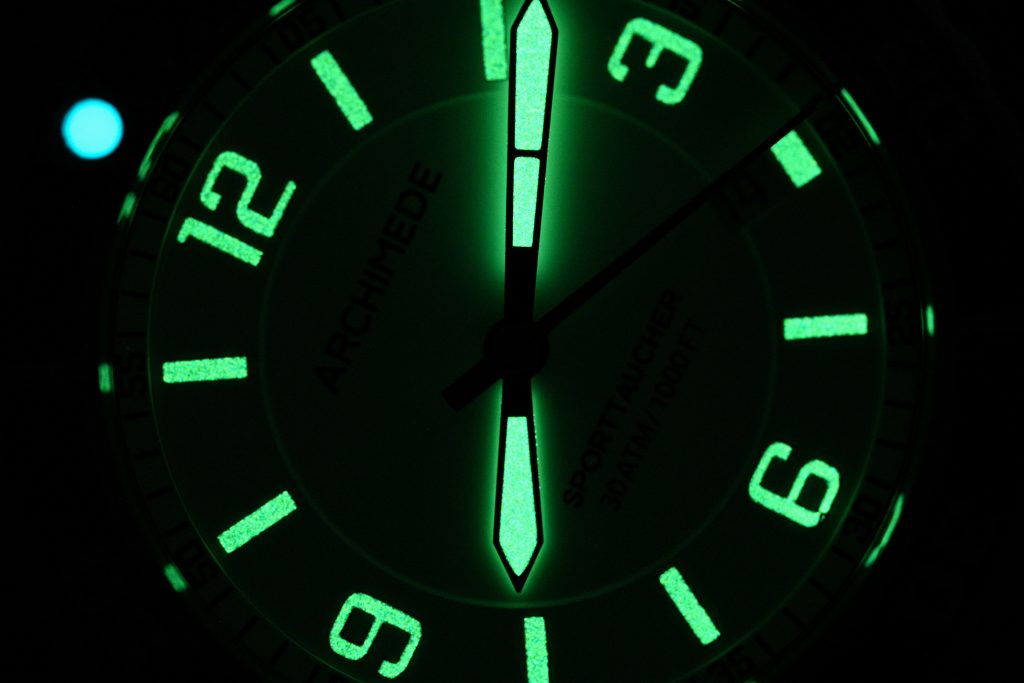
The white dial uses black luminous pigment to preserve its daytime contrast. Predictably, it performs much worse in darkness because black lume does not remain bright for long. That is the cost of the design: excellent daytime clarity and a cleaner black-on-white appearance in exchange for materially weaker nighttime performance.
Bracelet and Wrist Experience
The bracelet links are well made, comfortable and articulate smoothly over the wrist. The construction feels robust and old-school, the tolerances between case and end links are excellent, and the finishing is well matched. Sized for my wrist, the steel-bezel watch weighs 165 grams, giving it substance without becoming cumbersome.
The bracelet is not as refined as the case, and I suspect it is made overseas, though I have not confirmed that. The clasp is the familiar milled design used by many microbrands before tool-free adjustment became common. It is secure and functional, but now feels dated. This is my one strong criticism.
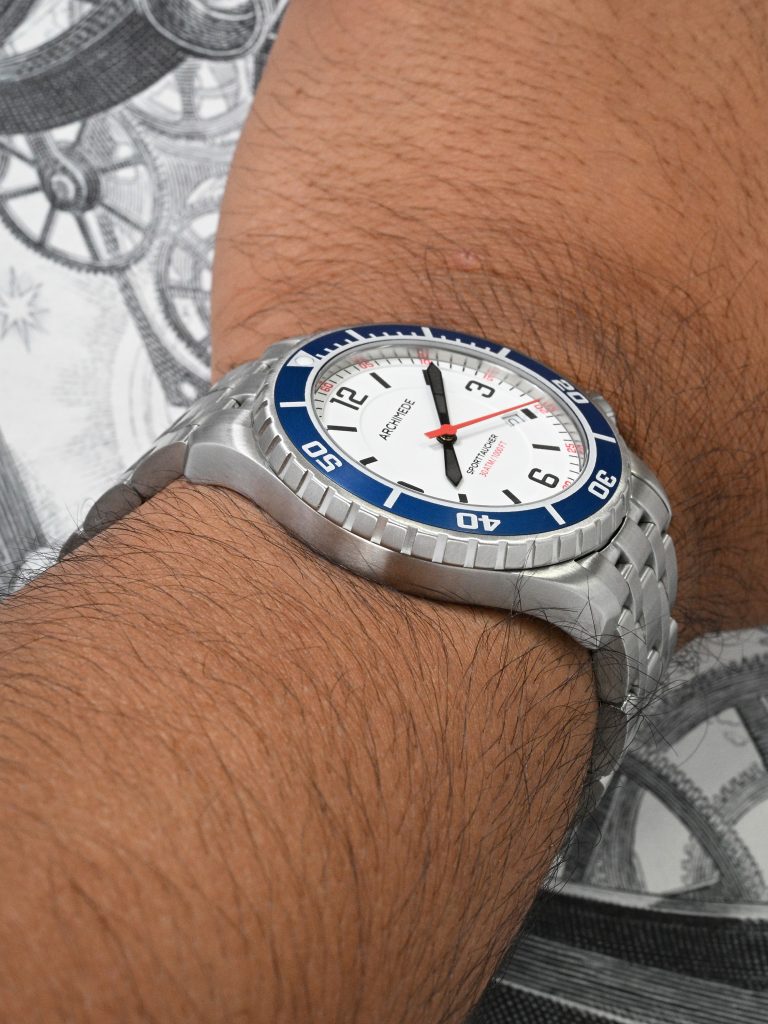
I took the SportTaucher to Alaska through widely varying temperatures and weather. I only needed to resize it once, but doing so required finding a pin-like object to move the micro-adjustment. I would happily pay another $50 to $100 for a more sophisticated clasp. Given Ickler’s case-making ability, I believe an in-house bracelet and clasp would be excellent.
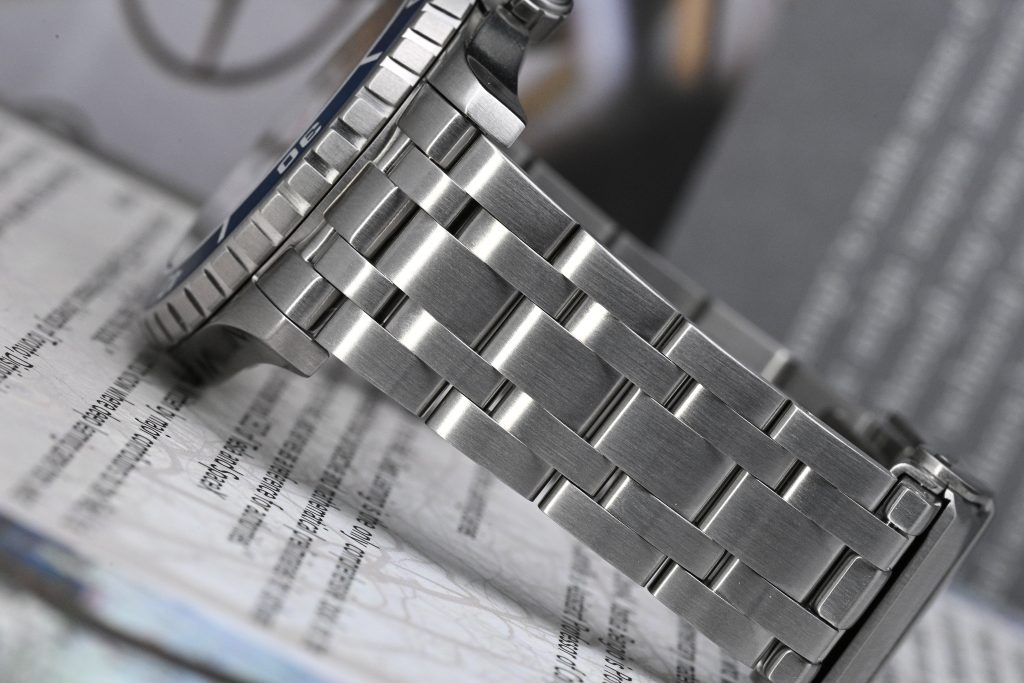
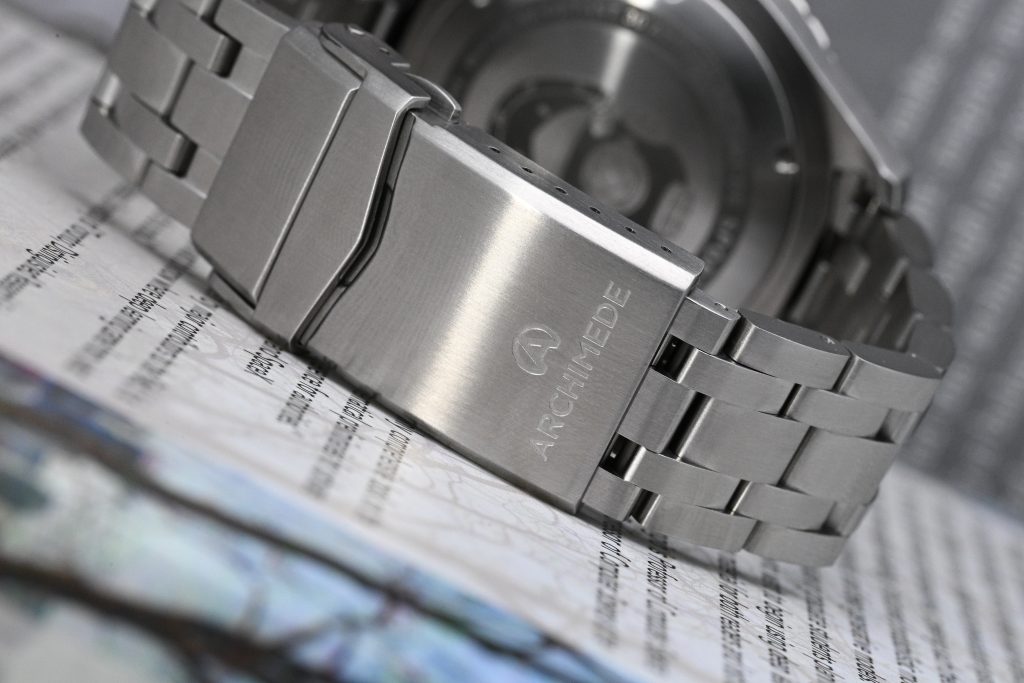
That should not imply the current bracelet is bad. It is comfortable, secure and visually appropriate, and it carries the rugged theme of the watch convincingly.
The Black Version Feels Right
I have had both watches for roughly three months, and despite my predictable attraction to white dials and anything blue, the steel-bezel, black-dial version is the one I keep choosing. There is something appealing about the unapologetic nature of traditional German tool watches. I feel it with Sinn too, although modern Sinn watches increasingly feel polished and luxurious.
Archimede, like Guinand, seems more frozen in time. Perhaps some of my response is nostalgia for when I wanted watches like this but could not own them, but the enjoyment is real. The black SportTaucher has some of the utilitarian character of an Explorer II, along with the same impression of ruggedness and near-bulletproof construction. And I think I might just prefer the fact that it is a bit more boring than the more attractive and visually compelling white dial sibling.
The clasp needs updating, the bezel could use more lume, and overall lume is only adequate. But the case is exceptional, the proportions are unusually good for a 300-meter diver, and the watch never seems interested in becoming more luxurious than its purpose demands. That is what makes it feel honest, and what makes the SportTaucher such a convincing expression of Ickler.