Disclaimer: This watch was sent to me to review, and I do not need to return it after my review is complete. This watch was given to me without restriction and is not contingent upon a particular outcome for my review. All opinions here are my own, and VERO had no influence over the opinions stated here.
Disclosure: This post contains an affiliate link (like the one below). If you click and make a purchase, I do not earn a commission, but it helps brands like VERO track the impact of reviews & articles like this one, so if you are interested in this watch, please use the link below to make your purchase. It will ensure that more VERO watches are reviewed here.
VERO Watches: https://verowatch.pxf.io/c/7068581/3091803/38163
Video
Review
VERO is a brand I have covered before, and my first experience with them left a strong impression. When I reviewed the VERO x WindUp Granite 38 over five years ago, what stood out most was the brand’s original ambition: to produce watches in America, to experiment with genuinely interesting technical ideas such as their proprietary piston-sealed crown system, and to offer something in the microbrand space that felt more engineered than assembled. That early positioning gave VERO a distinct identity.
This review, however, centers on a different kind of VERO. In the years since I last owned and reviewed one of their watches, the brand appears to have become considerably more successful and more commercially established. Their current production approach is also different, with VERO now describing its watches as designed in Portland and manufactured externally rather than pursuing the more vertically integrated American-made model that originally defined much of the brand’s appeal. That shift removes some of the novelty that first drew me to them years ago, but it has also coincided with a broader and seemingly very successful expansion of the brand’s catalog and reach.

The watch being reviewed here is the Smokey ’44, an officially licensed collaboration built around one of the most recognizable public symbols in the United States. Smokey Bear first appeared in 1944 as part of the U.S. Forest Service’s wildfire prevention campaign, and he has since become an enduring symbol of wildfire prevention and stewardship of America’s forests and wildlands. VERO also states that 10% of proceeds from the Smokey Bear collection are donated to the U.S. Forest Service to support wildfire prevention education and forest conservation efforts, which gives the collaboration a more meaningful foundation than the average character-based release.
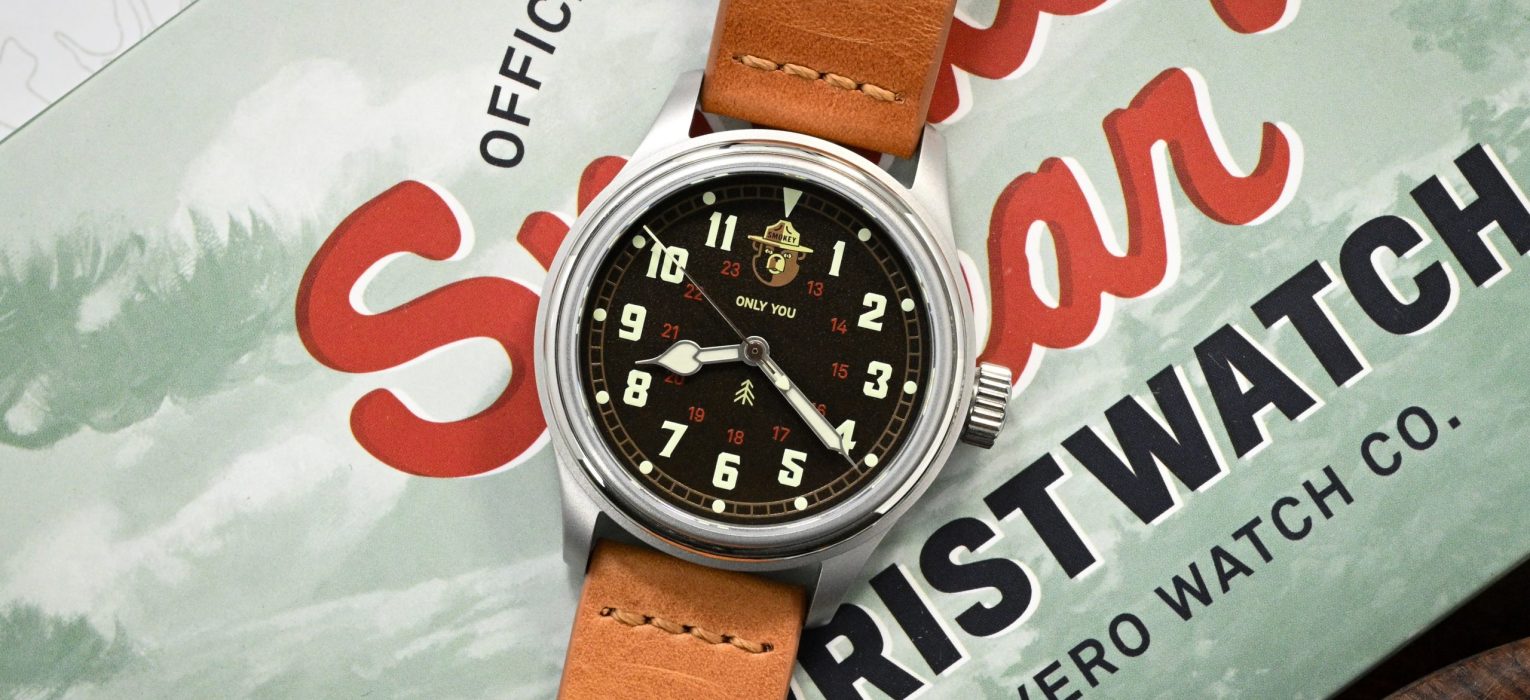
The Smokey ’44 is the more vintage-leaning execution of the concept, taking inspiration from field watches of the mid-1940s and pairing that with a dial centered around Smokey Bear himself. It is currently priced at $525, and VERO positions it alongside other Smokey Bear variants including the more modern Smokey ’64, the Campfire Edition, and the bronze-cased Smokey 80th Edition. The ’44 itself comes with both a leather strap and a canvas NATO, and on paper it sits in a very competitive part of the market where design, execution, and overall charm need to do a lot of the work. Fortunately, this is a watch that does a lot right.
Let’s check it out!
Case
The Smokey ’44 features a 38mm stainless steel case that I measured at 46.25mm from lug tip to lug tip and 12.15mm in overall thickness, with a 20mm lug width. The 7mm screw-down crown is signed and includes subtle polished accents, giving it a slightly more refined look than the otherwise utilitarian case design might suggest.
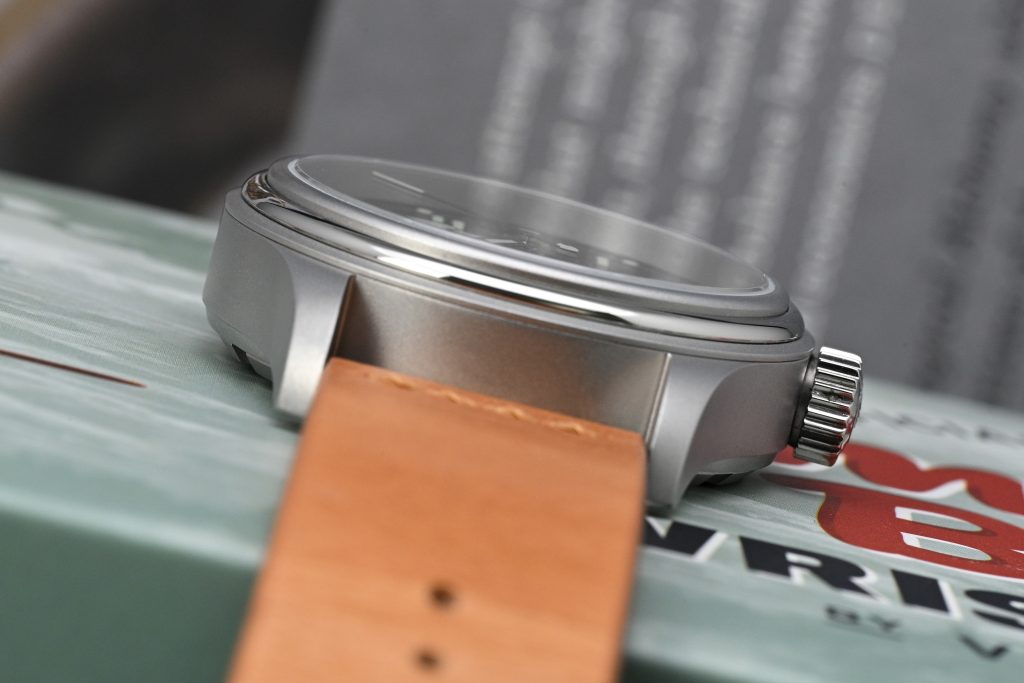
The case finishing is mostly matte, with a bead-blasted treatment across the mid-case and case-back that gives it a distinctly tool-watch character. In that sense, the overall aesthetic reminds me somewhat of watches from Sinn or Damasko, where functions take priority over decorative flourish. The watch is not especially thick on paper, but it is a bit slab-sided and does wear with a slightly stout visual profile. VERO helps offset that somewhat with a triple-stepped bezel that mixes matte and polished surfaces, which adds a bit of visual interest and does help break up the height.
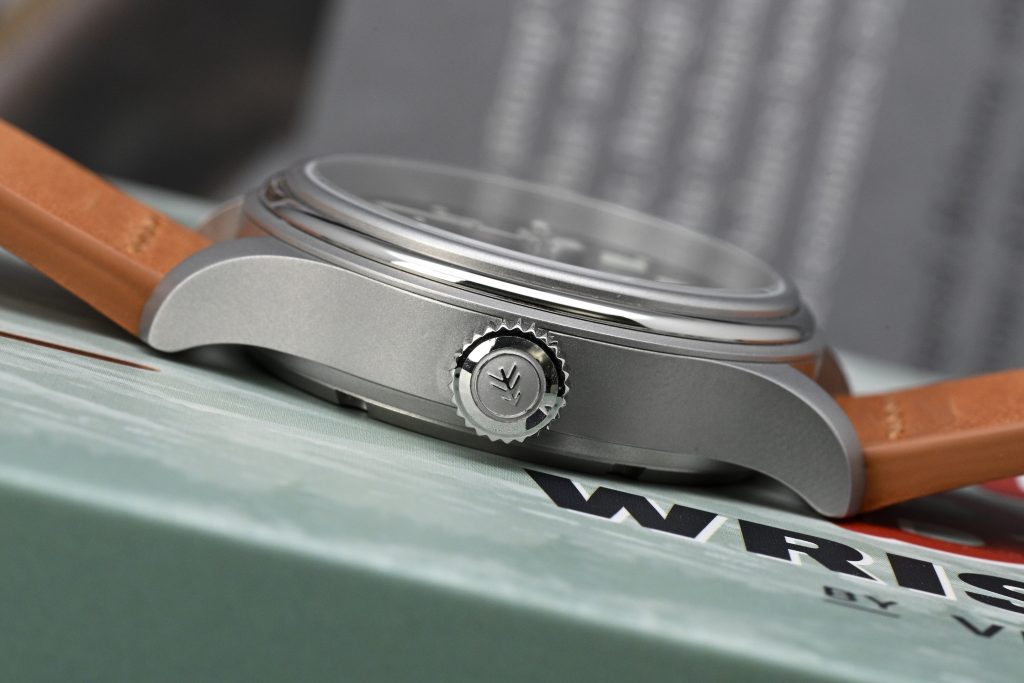
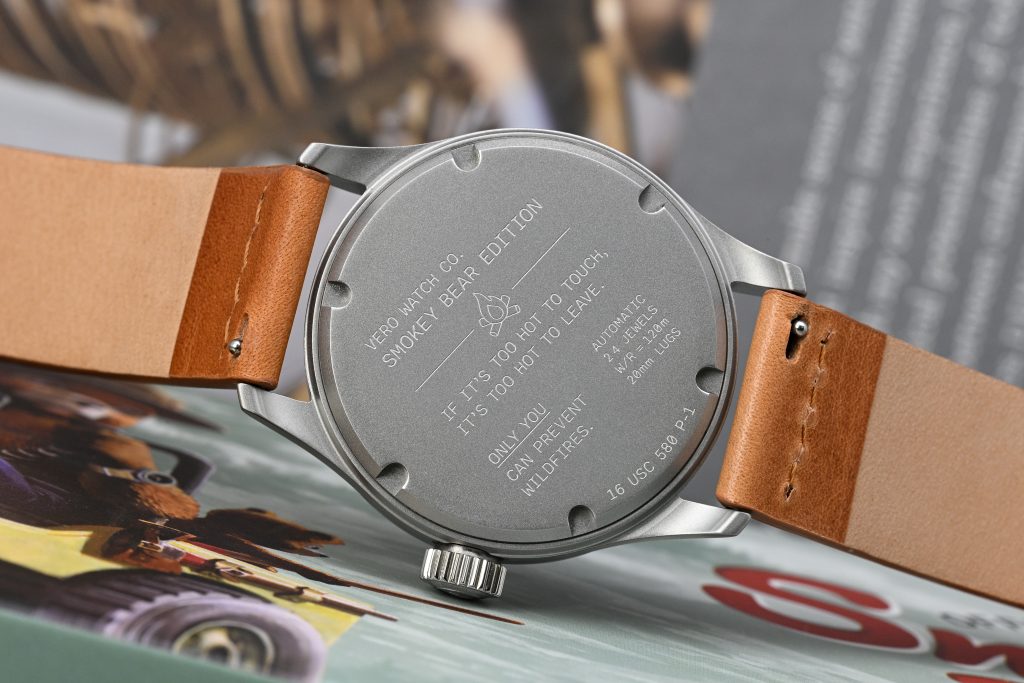
A flat sapphire crystal sits on top with a good amount of anti-reflective coating, while the screw-down case-back sits nice and flat against the wrist. Combined with the screw-down crown, the watch carries a water resistance rating of 120 meters, which is more than adequate for the kind of field watch this is trying to be.
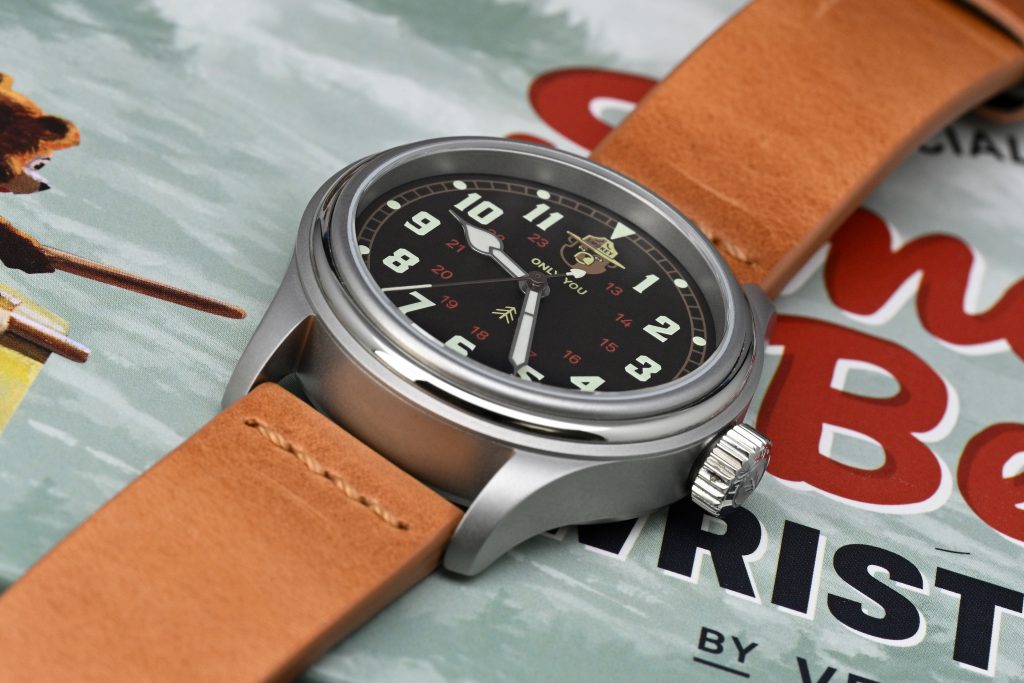
Overall, the Smokey ’44 feels well built and appropriately robust. Its design is mostly sterile and functional, but the few polished accents keep it from feeling overly plain. The proportions do lean a bit stout visually, even if the actual thickness is quite reasonable.
Dial
The ’44 has an excellent dial. The overall design is simple, highly legible, and thematically coherent, but it still manages to feel distinctive rather than generic. Just as importantly, the execution is excellent. The quality control on this example is remarkable, and noticeably better than the previous VERO I reviewed. The base of the dial has a fine matte texture that gives the surface a soft granular look, somewhat reminiscent of dials like the Patek Philippe 5226G, and it adds a subtle sense of depth without distracting from the utilitarian layout.
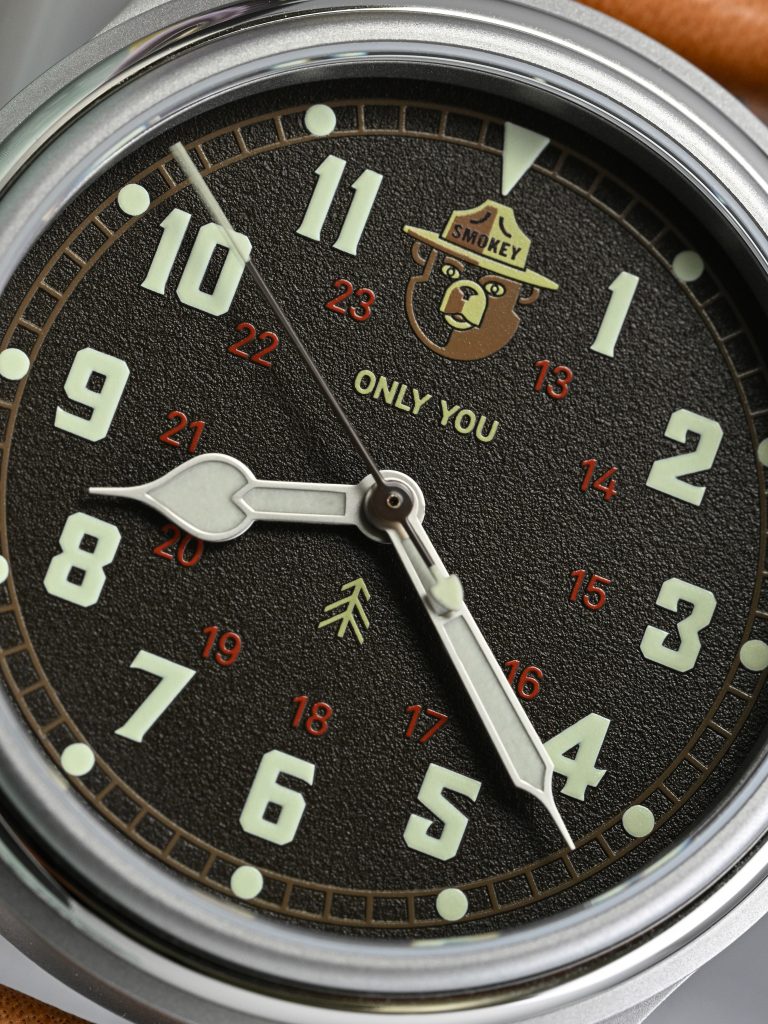
Legibility is handled very well. Around the outer edge is a brown railroad-style minute and seconds track, paired with large lumed circular pips at each hour and a small triangular marker at 12. Moving inward, Smokey Bear sits beneath 12 o’clock, acting as the thematic centerpiece of the watch. The main hour markers are large lumed Arabic numerals, while a muted red 13-24 hour ring sits further inward, reinforcing the military and field-watch character of the dial.

The handset is also excellent. I will admit that I am very biased toward cathedral-style hands, but these are beautifully executed. The hour hand reaches cleanly toward the numerals, while the minute hand aligns very well with the outer track, giving the watch a precise and easy-to-read display. Combined with the lume layout, it is both visually engaging and functionally strong.
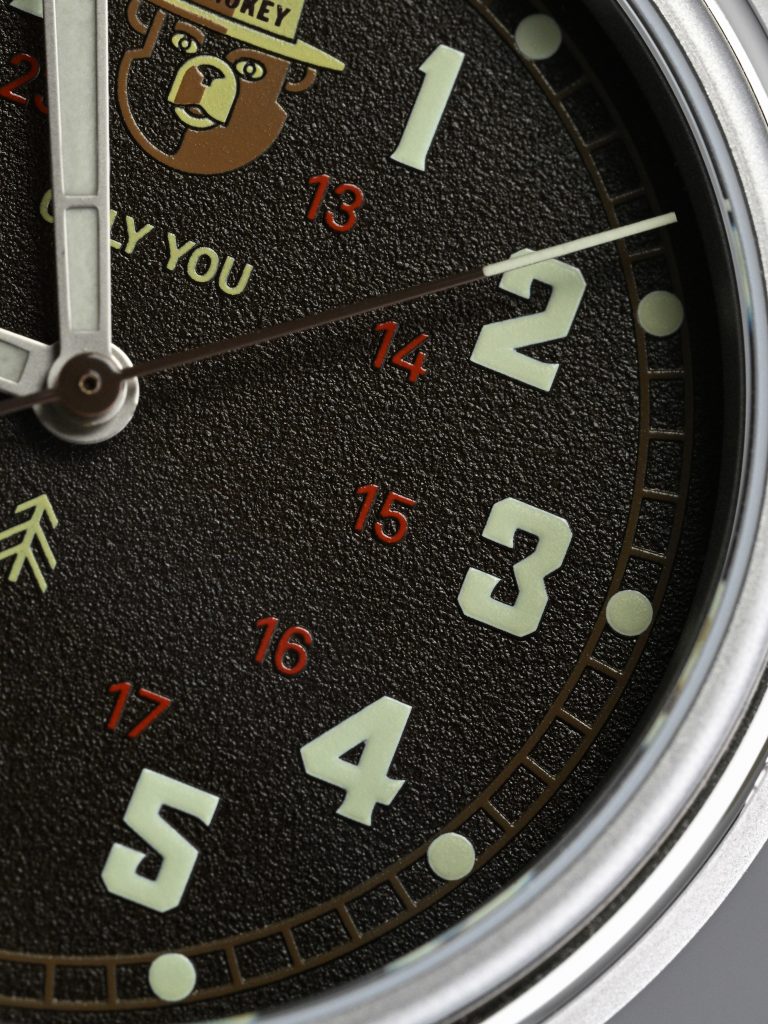
From a design standpoint, I think this is a perfect dial. It takes a serious and highly usable field-watch layout, combines it with an unusual theme, and somehow makes the whole thing feel natural. That would already be impressive on its own, but the strong finishing and quality control elevate it further. Compared with the Granite 38 I reviewed previously, this feels like a more resolved and more confidently executed dial.
Lume
The ’44 delivers stronger lume performance than I expected. Given the watch’s overall style, I anticipated something more restrained, closer to the Buser Freres GSTP 38, but VERO has been much more generous with the luminous elements than that comparison would suggest. The dial is pad printed, yet the lume application is still notably dense. Each numeral has a substantial lume plot, with additional circular lume blobs marking the hours and a triangular marker at 12 o’clock. For a dial in this style, that is an impressive amount of luminous material.
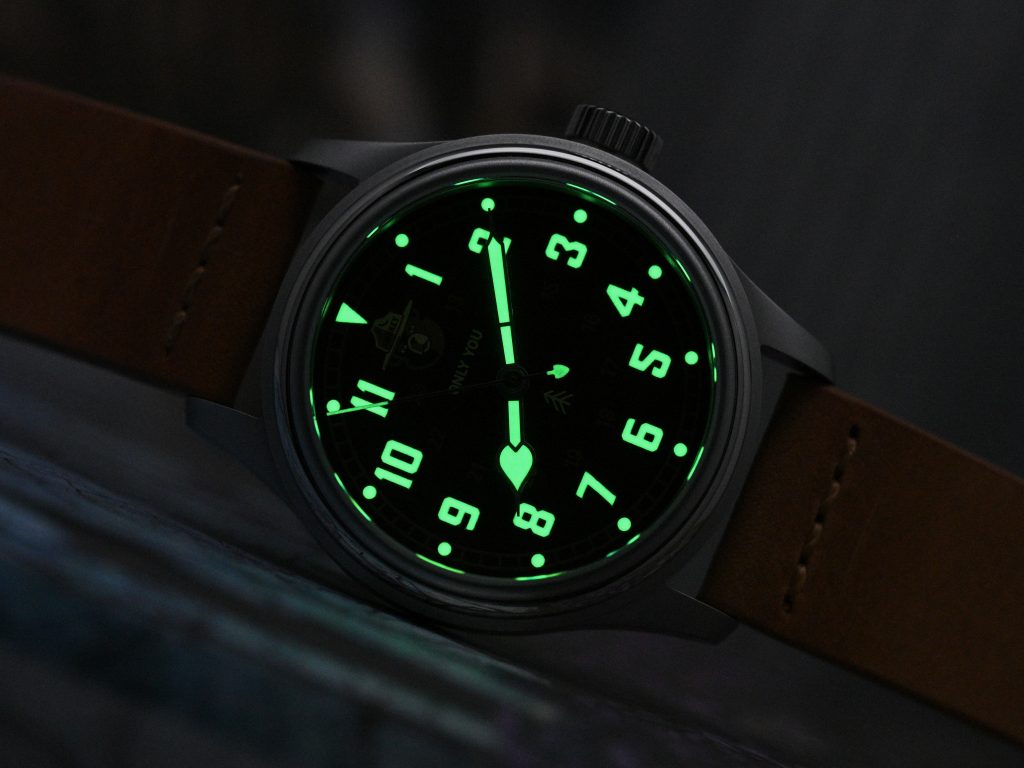
The hands are also well executed. Both the hour and minute hands have large lumed sections with a generous fill, and the cathedral-style hour hand looks especially impressive in the dark. The seconds hand uses a printed lumed tip and base, which looks great, though it fades sooner than the rest, as expected.
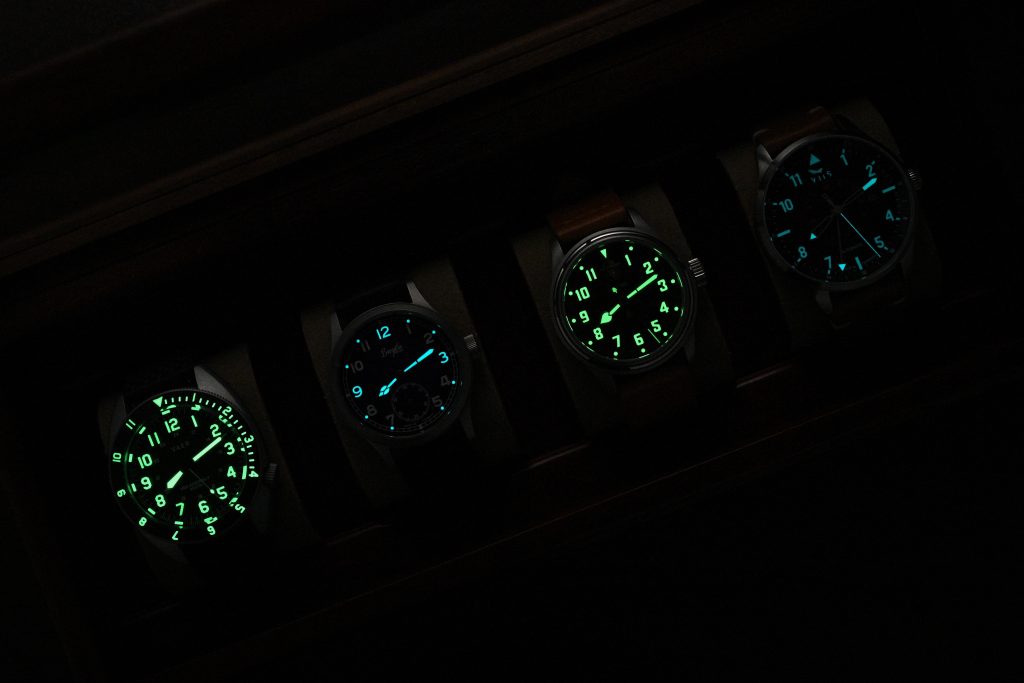
In practical use, the overall performance is excellent for this type of watch. It glows bright, lasts a good amount of time, and remains fairly legible through the night. Compared with similarly priced watches such as the Vaer Solar Field (using ceramic lume blocks for its numerals), Buser Freres GSTP 38, and VIIS Flieger 42, the VERO performs very well.
Movement
The ’44 is powered by the Seiko NH38A, a no-date variant of the familiar NH35 architecture. Being a true no-date movement, it avoids the phantom date position, so that is always a welcome detail.
I’ve covered Seiko’s 4R/NH family many times at this point, and my broader opinion has not changed much. These movements are generally robust, inexpensive, and easy to service or replace, which helps explain why they remain so common in the micro-brand space. But Seiko’s official accuracy tolerances are still far too lenient for a modern mechanical movement, and the overall architecture is not interesting to look at or refined to operate. In general, once pricing begins moving toward the upper end of the affordable segment, I start expecting higher beat rates, and tighter regulation standards.
With the VERO, I think the choice is acceptable, though I would have preferred something like a Miyota 9 Series, which could have also helped make the watch slimmer overall. Most of my criticism here is directed at Seiko rather than VERO. VERO has regulated this example well, and in my testing it has run at around +5 seconds per day, which is a good result for it.
So while the NH38A would not be my first choice in a watch around this price point, the reality is that it performs well here, offers a clean no-date user experience, and brings with it the durability and serviceability that continue to make these Seiko calibers appealing despite their shortcomings.
On The Wrist
The ’44 wears well on my 6.75″ wrist, and with its 38mm diameter and 46.25mm lug-to-lug measurement, I would also feel comfortable recommending it to those with smaller wrists. The overall footprint is compact and sensible for a field watch, and it sits with the kind of balanced presence that should work across a fairly wide range of wrist sizes.
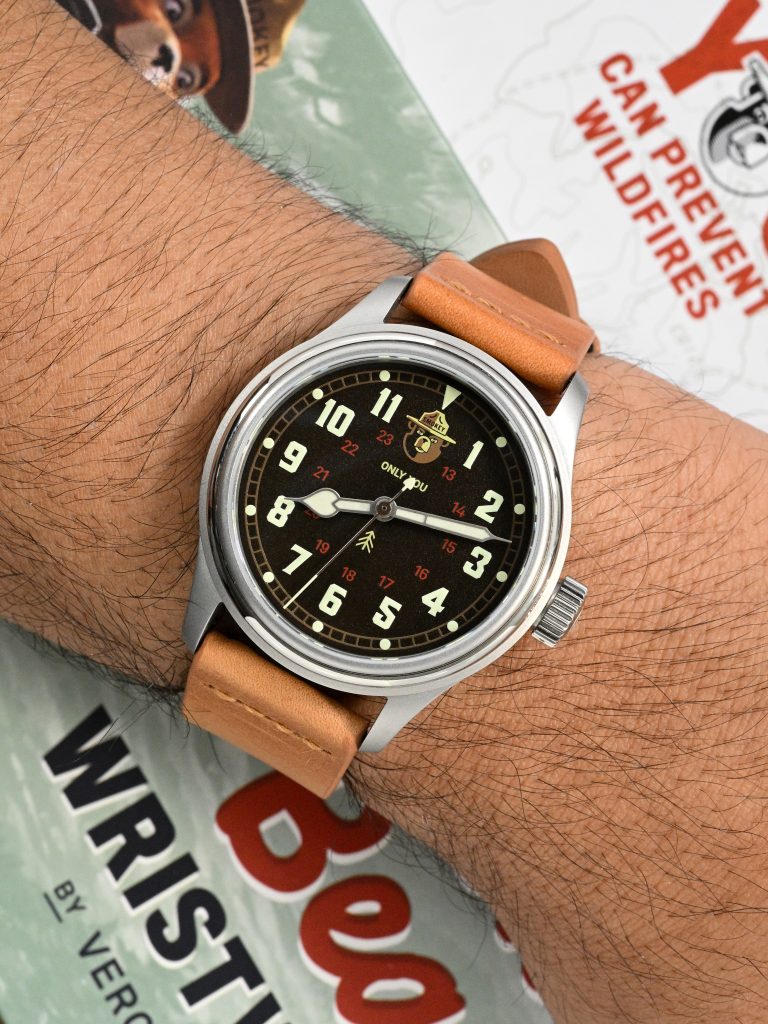
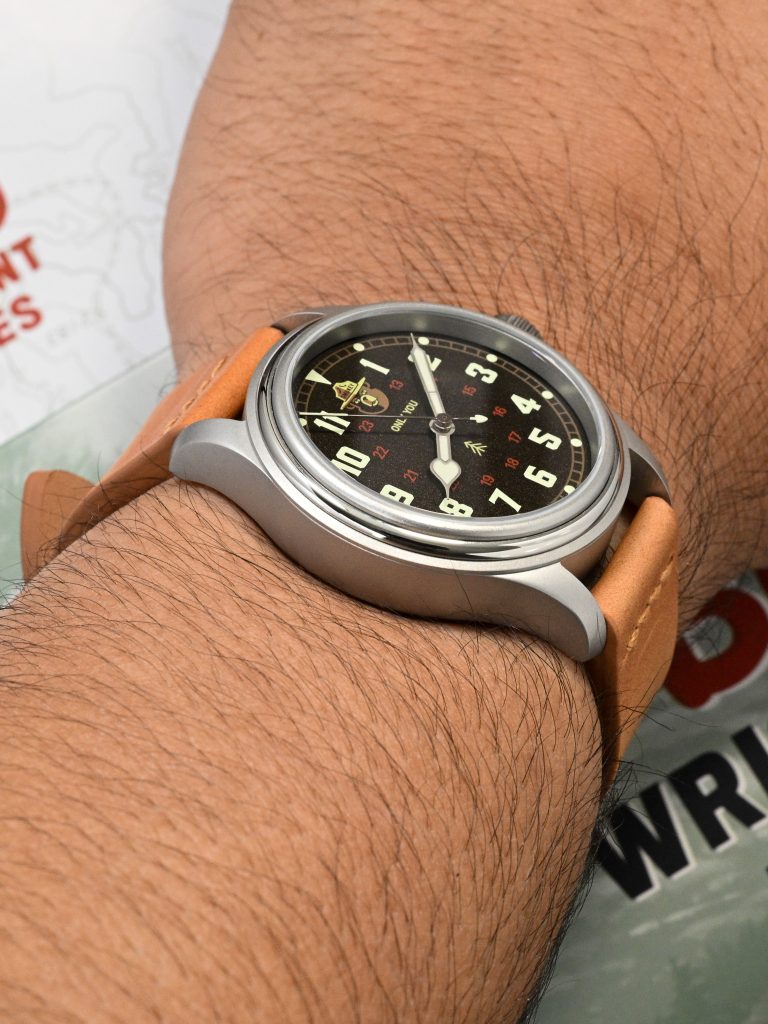
While the watch is not especially thick in absolute terms, it does wear a bit thicker than the specifications might initially suggest. That is mostly a result of its proportions and somewhat slab-sided case profile rather than any truly excessive height. So although it has a slightly stout visual presence, it never feels overly bulky on the wrist.
The head weighs a reasonable 63 grams, and the strap adds roughly another 9 grams. The supplied strap is quite thick and does require some break-in, but it feels durable and well suited to the overall character of the watch. Once softened up, it seems like the kind of strap that should hold up well to years of use and abuse, which makes it a fitting choice for such a tool-oriented design. I also appreciate the signed tip, though the buckle itself is a bit generic and could have been given a bit more attention.
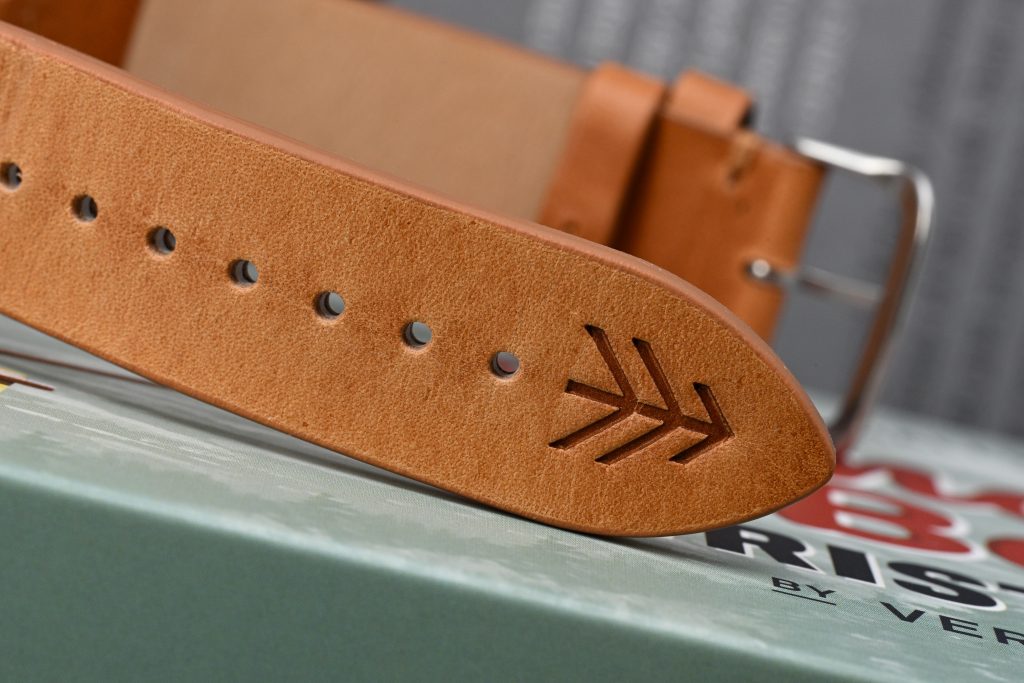
Overall, the wearing experience is a positive one. Compared to the VERO x WindUp Granite 38, which benefited from a lighter titanium case and a thinner profile, the Smokey ’44 feels a bit more substantial, but it remains comfortable and well proportioned for everyday use.
Wrapping Up
Overall, I find the VERO Smokey ’44 to be a solid watch. It combines a highly distinctive theme with a genuinely strong field watch layout, excellent legibility, impressive lume, and very solid overall build quality. While I would still prefer a more compelling movement at this price point, VERO has regulated this example well, and the rest of the watch is executed strongly enough that the choice remains acceptable in practice.
Compared to the previous VERO I reviewed, this feels like a less technically novel watch, but in some ways a more complete and resolved product. The dial is better executed, the lume performance is far stronger, and the overall design comes together in a way that feels both charming and highly functional. For anyone drawn to the Smokey Bear theme, VERO has done a terrific job translating it into a watch that still feels serious, usable, and well considered.