Disclaimer: This watch was sent to me to review, and I do not need to return it after my review is complete. This watch was given to me without restriction and is not contingent upon a particular outcome for my review. All opinions here are my own, and Tool Watch Co. had no influence over the opinions stated here.
Tool Watch Co. Lumecore Chronograph: https://toolwatchco.com/TWCO-Lumecore-Chronograph
Video
Review
I love tool watches, and I use that phrase a lot, so it’s kind of cool (and a bit hilarious) to see a micro-brand just plant their flag right in the middle of it and call themselves Tool Watch Co. The name sets the bar high. If you’re going to build your entire identity around “tool watch”, then I’m going to show up expecting clarity, practicality, and a design that looks like it has a job to do… even if that job is mostly just timing the pizza in my oven.
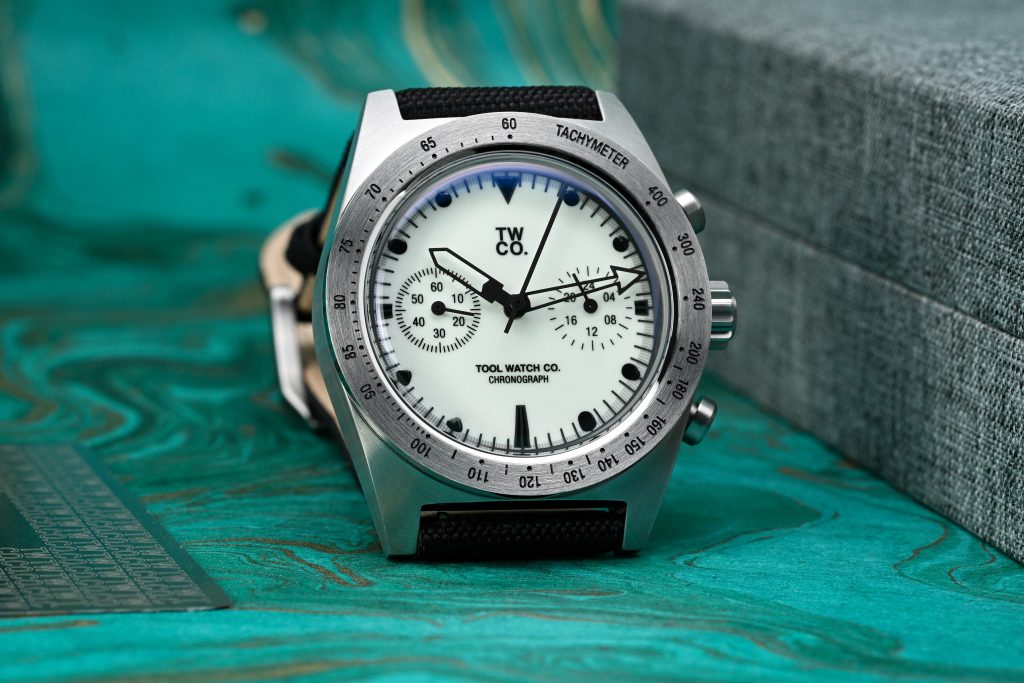
Tool Watch Co. was founded in 2021 by Pieter Jansen van Rensburg, and I still clearly remember when the brand first popped onto my radar with the Arctic Field: especially that somewhat unusual, spiky seconds hand that made it instantly recognizable in a sea of forgettable micro-brand watches at the time. I remember thinking it was a great-looking watch with strong value at the time, and since then they’ve filled out the catalog with releases like the AMA Diver, Rally Chronograph and more recently the Goodman GMT, keeping that same “purpose-driven” design language intact. But despite having watched the brand from the sidelines, this is actually my first hands-on experience with anything they’ve made.
And that brings us to the Lumecore Chronograph: a fully-lumed, meca-quartz chronograph priced at $295 USD, positioned as a limited-production piece. That doesn’t necessarily mean “hard to get”, because as of writing this review it’s still available through the brand.
Let’s check it out…
Case
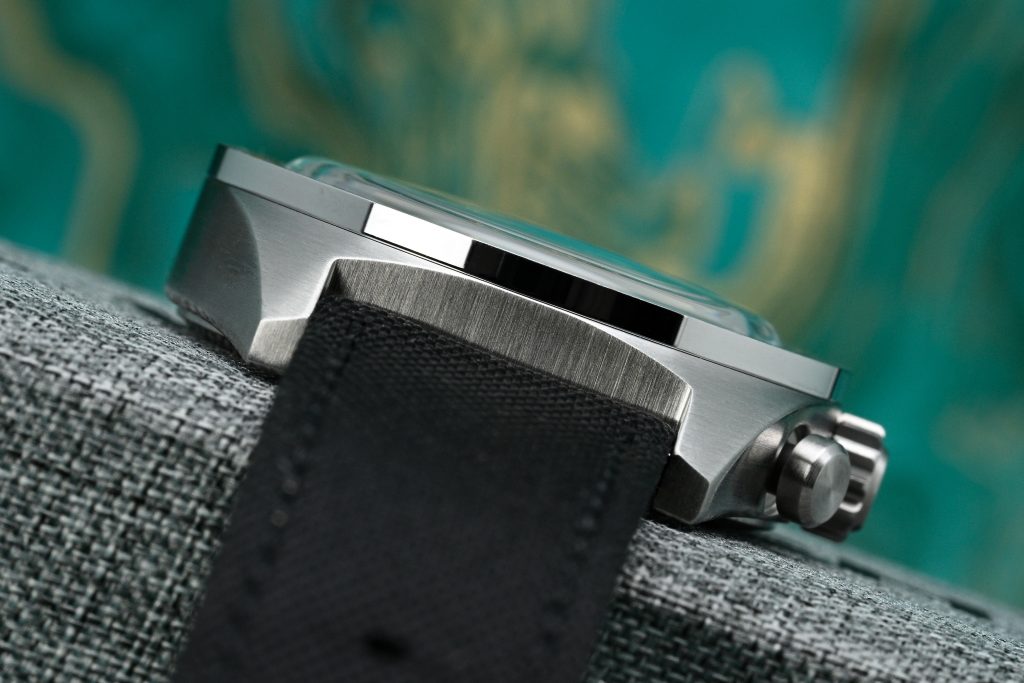
I measured this case at 37.75mm in diameter, 46mm lug tip to lug tip, and about 12mm in overall thickness including the crystal and case-back, with a 20mm lug width. The case design also feels like it’s following the brand’s design template, and to my eye it borrows from that skin-diver era playbook: the kind of mid-century, no-nonsense case geometry you associate with watches like the Seiko 62MAS or the broader “compact diver case” lineage.
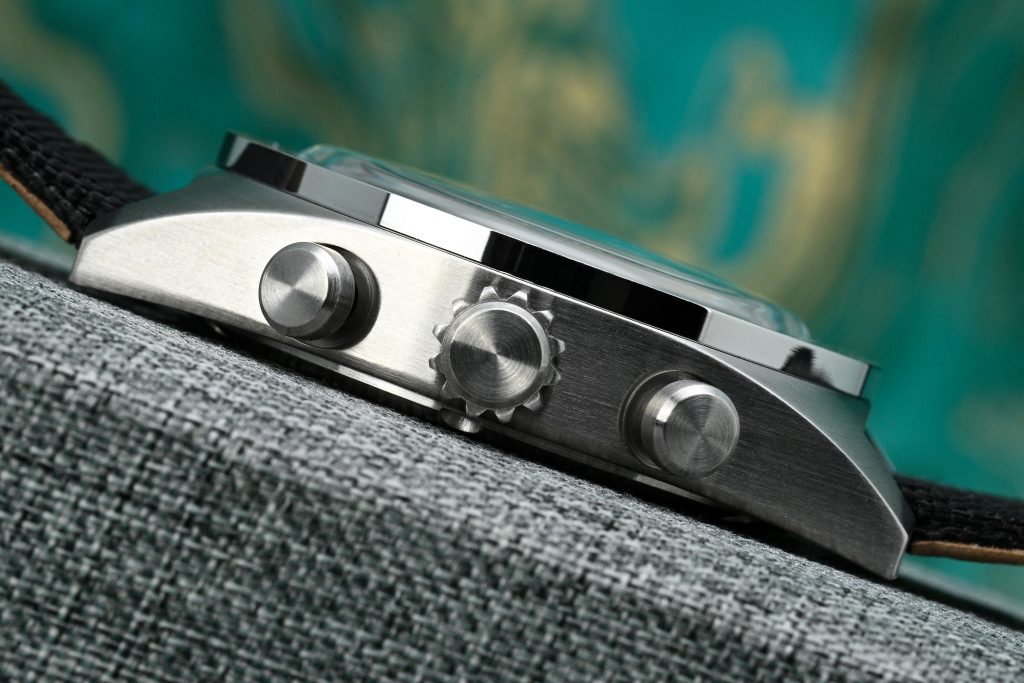
Finishing-wise, it’s exactly what you would expect it to be given the watch’s utilitarian inspiration: almost entirely brushed, with one deliberate little hit of polish: a single polished surface along the side of the bezel. It’s simple, coherent, and it makes the watch feel like it can take a few knocks without looking out of place.
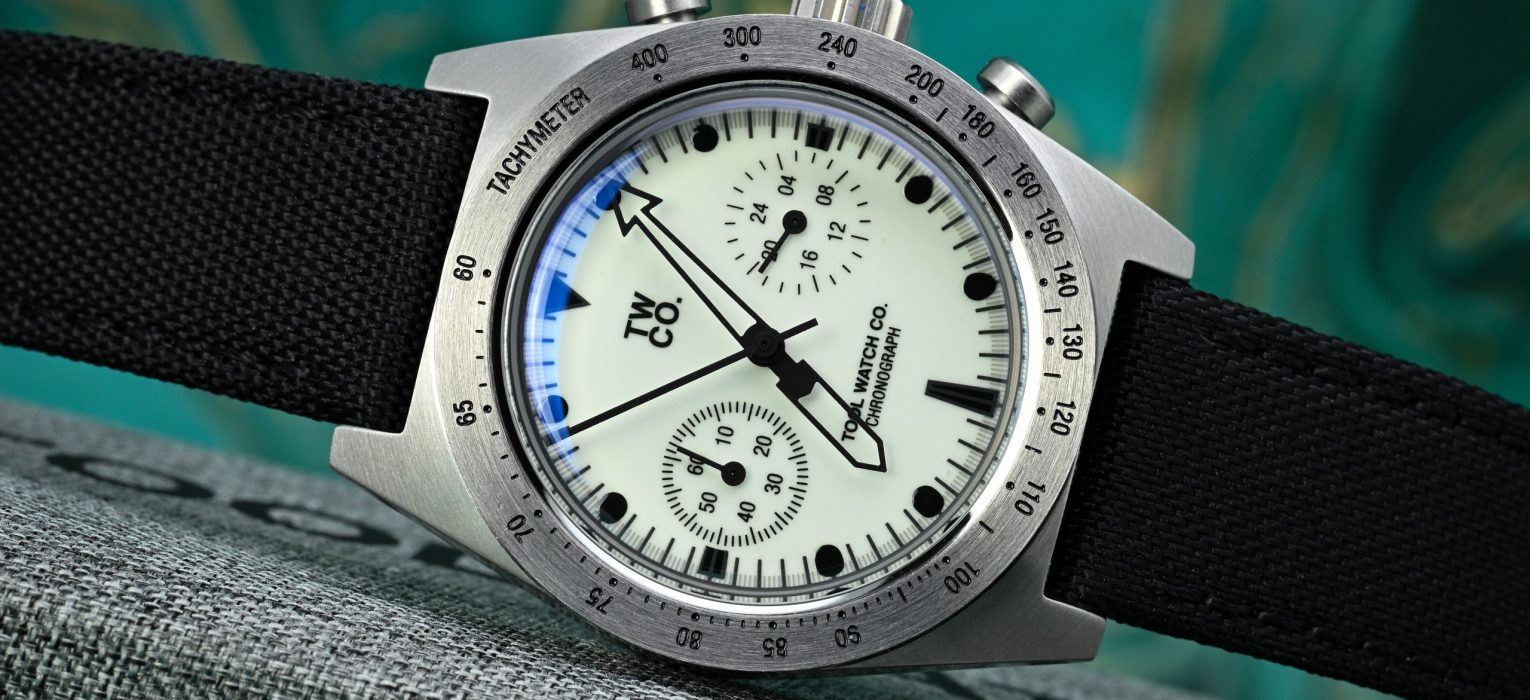
Hardware and ergonomics are well considered. You get traditional chronograph pushers flanking the crown, and the crown itself sits in the middle with excellent grip that is easy to operate. I measured the crown to be 6.4mm. The bezel is a fixed tachymeter, and importantly, it’s all steel like the rest of the case: brushed on top, with black-filled markings that keep things crisp and legible.
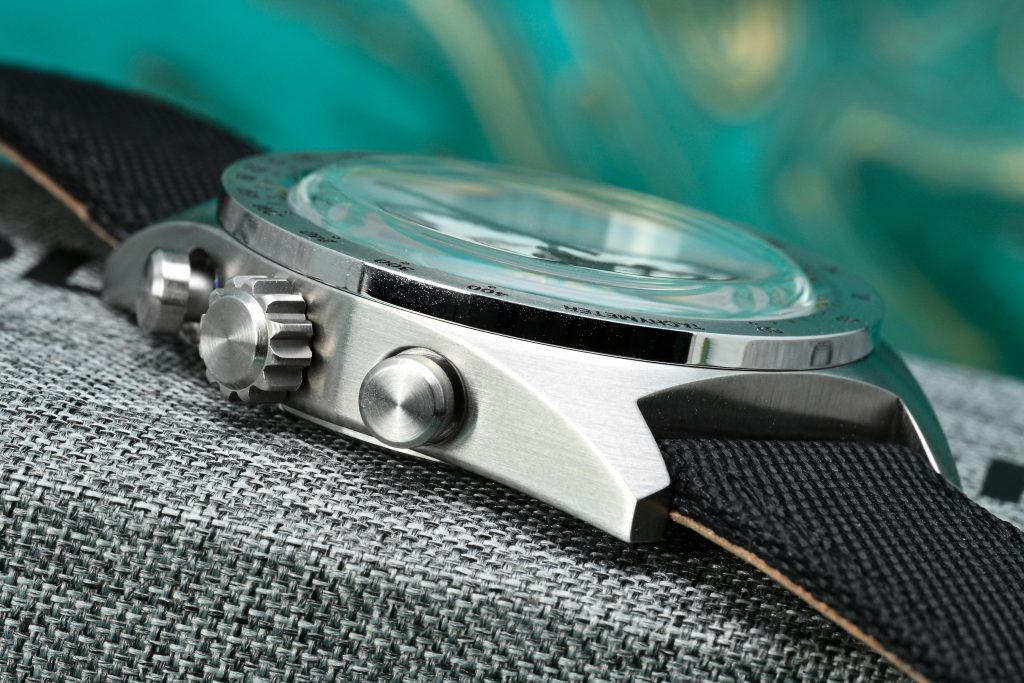
Sitting above that is the brand’s double-domed box AR-coated K1 crystal, and yeah… I know. K1 will be a deal-breaker for a lot of people at a glance. But at $295, on a watch that’s leaning into a tool-ish, value-first identity, I actually think it makes sense. And selfishly, I love what it does to the watch: that edge distortion you get from a domed crystal is part of the charm here, and it’s the kind of visual character that’s hard to replicate convincingly with sapphire.
Flipping it over, the case-back is solid and screw-down, and the watch is rated to 30m. This is probably my only real criticism of the watch. Sure, tons of chronographs get away with 30-50m, but not all chronographs have to, and there are plenty of 100m chronographs out there that manage it without requiring screw-down pushers. So for a brand literally called Tool Watch Co., I can’t help but feel like pushing toward a higher rating, even 50-75m, would’ve been worth pursuing.
Dial
The Lumecore’s dial distills the entire point of the watch: a fully lumed surface presented in a clean, high-contrast black-and-white layout that leans hard into legibility. Up close, the dial has that familiar semi-gloss / semi-matte look you tend to get with fully lumed dials: not flat and chalky, but not quite glossy either, with a slightly “coated” texture that catches light in a soft, even way.
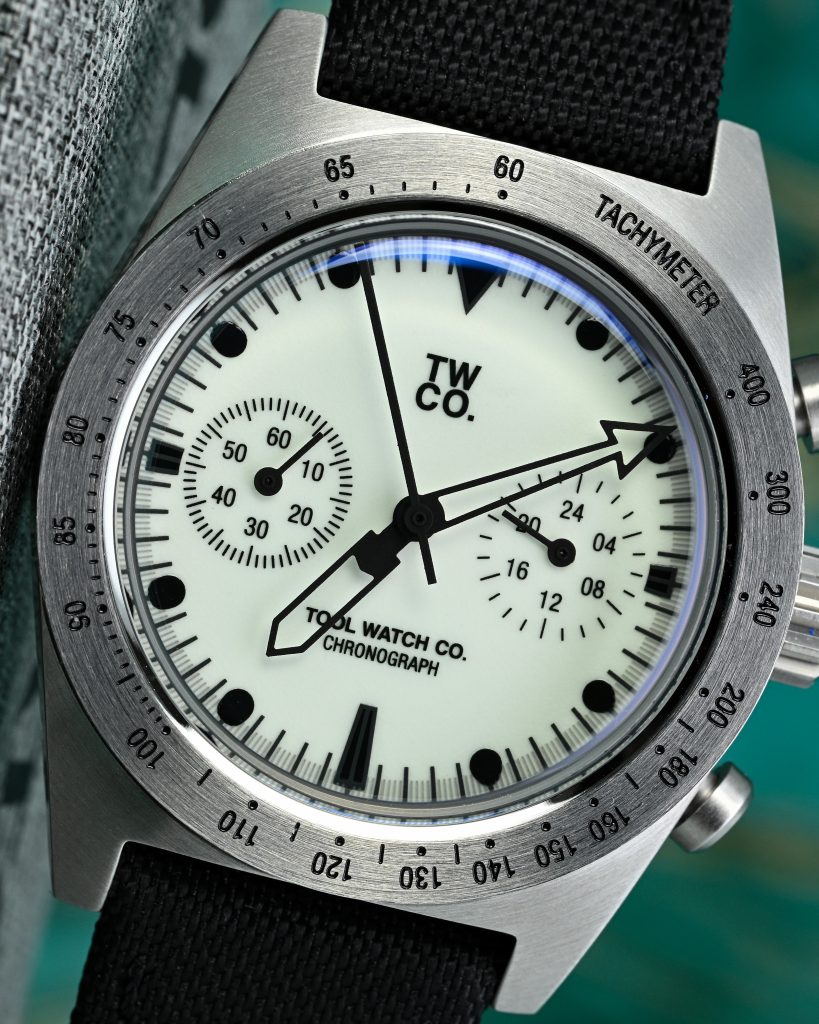
Hour markers are kept simple, but not monotonous. Most of the markers are circular plots, while the cardinal axes get slightly different treatment, which gives your eye some quick reference points when you’re reading the time. Around the edge, the minute track is well proportioned and easy to follow, with clear minute markers and lighter fractional ticks that handle the seconds without cluttering the dial or overpowering the rest of the layout.
The two sub-dials are straightforward – both clearly labeled with legible markings and hands that feel appropriately sized for the registers, so they read quickly without looking like they’ve been squeezed in as an afterthought. Branding is also restrained: the Tool Watch Co. logo is printed neatly under 12, while the brand and model name sits above 6.
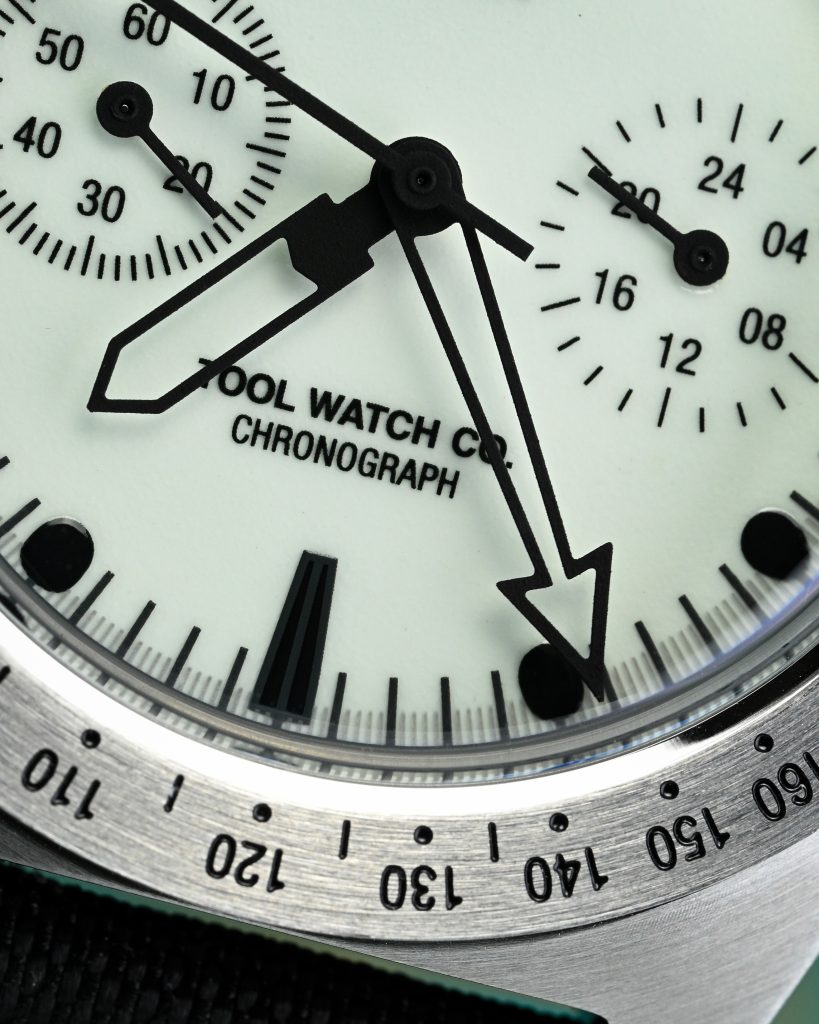
But to me, the hands are what make this watch work. The hour and minute hands are painted entirely in black and use a skeletonized design, which sounds simple until you realize how easy it is to get wrong on a watch like this: the proportions and contrast have to be considered from the start or you end up with hands that either disappear or become overpowering. Here, I think they’ve nailed it. The proportions of all three hands feel spot-on, and the result is a watch that you can read precisely if you actually need to.
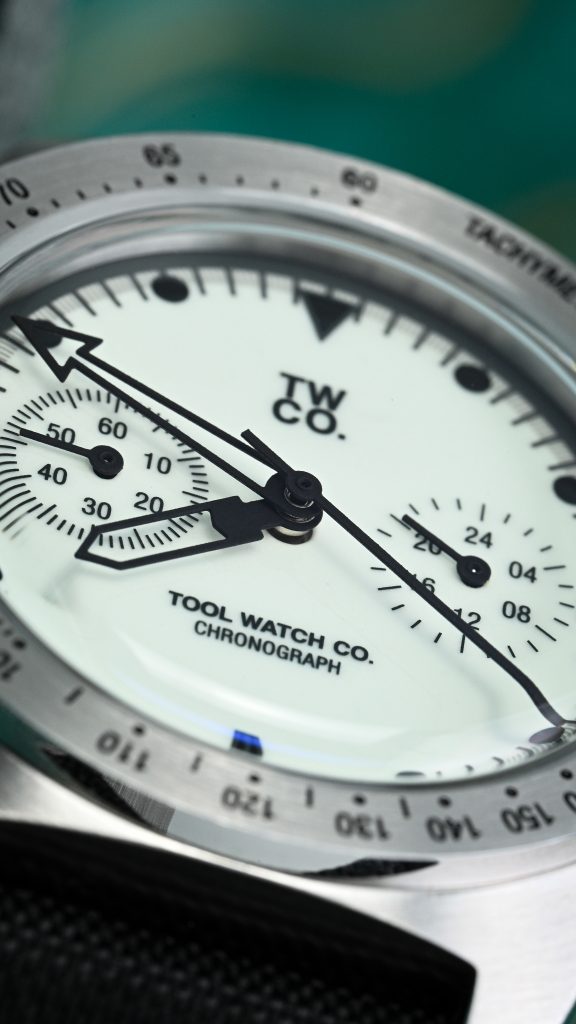
And yes, I can see someone looking at this and calling it boring, and many did when I reviewed the Sinn U50 SL. It’s essentially a black-and-white dial with minimal ornamentation. But to me, that restraint is part of the appeal. It looks intentional, it suits the watch’s tool-y character, and it delivers a dial that’s simple, attractive, and easy to live with.
Lume
Speaking of the Sinn U50 SL, that may still be the best fully lumed watch I’ve owned or reviewed: its entire dial base is made from a ceramic luminous mixture, and it charges and glows with a very even, high-intensity look. But there was one quirk that always bothered me: because the hour and minute hands are solid with a lot of surface area, when you move from light to dark you can sometimes notice a very obvious shadow on the dial where the hands were just before you entered that low-light environment.
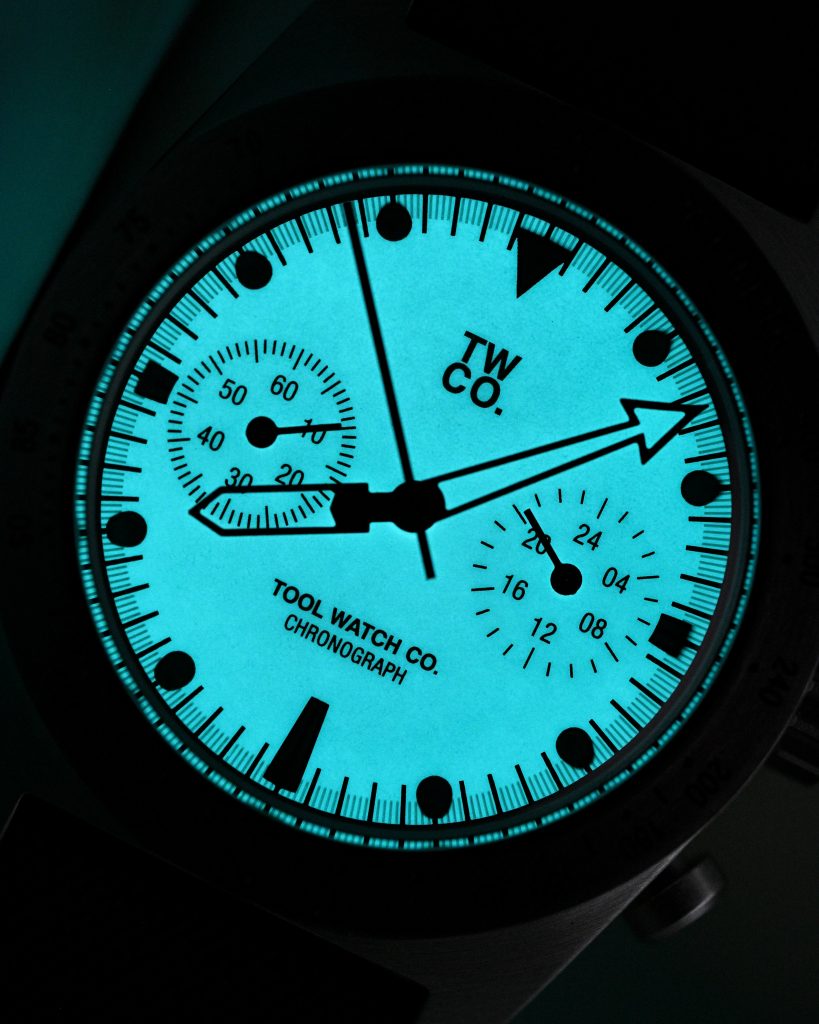
The Lumecore avoids that by using fully skeletonized hour and minute hands, so the dial continues to glow more uniformly during that transition. The tradeoff is that skeletonized hands can get washed out against a bright dial, so they need enough thickness and black presence to stay visible, and this watch does that well. Even fully charged, the hands remain easy to pick out, and the black printed dial elements stay crisp against the bright background.
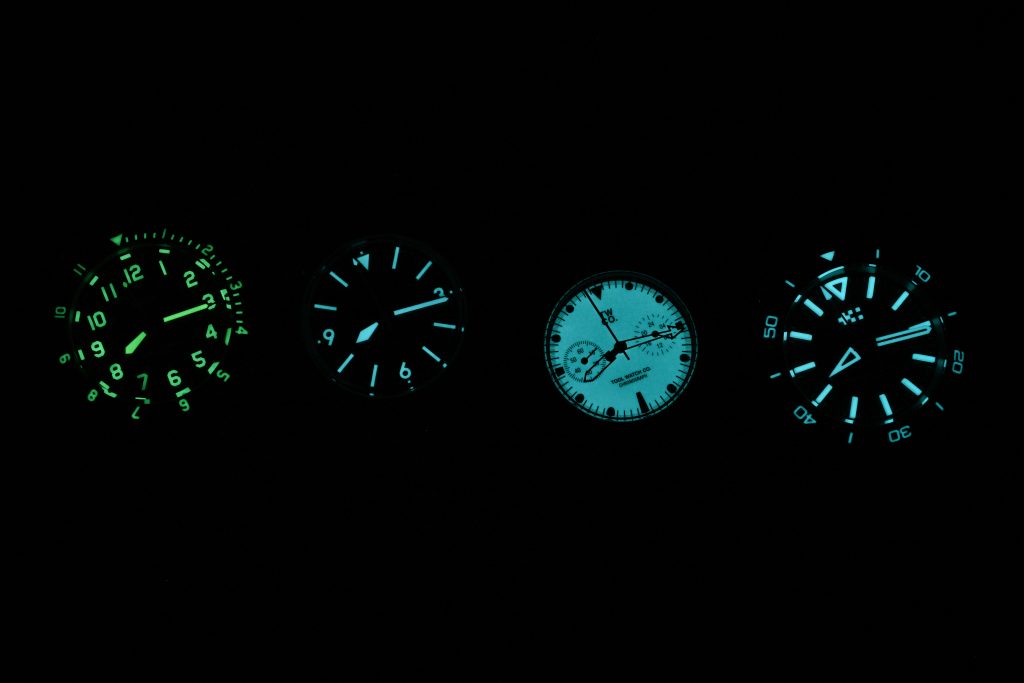
Overall, the lume is sufficiently potent, glows bright, and lasts through the night with excellent legibility. I also compared it against a few ceramic lume block-equipped watches, the Vaer C4 Tactical Field Solar, Traska Summiteer 38, and the Christopher Ward Lumière, and the Lumecore holds up very well, especially given its added surface area of lume.
Movement
It is powered by the Seiko VK64, a hybrid meca-quartz movement, and if you’ve read any of my affordable chronograph reviews, you probably already know I tend to gravitate toward this movement if you want something robust and reliable, as you would from a “tool watch”. I’m biased in favor of these movements over mechanical chronographs like the Seagull ST19, because the VK64 is just more robust, low-maintenance, and it doesn’t undermine the whole “wear it hard” premise the way a finicky mechanical chronograph can.
On a watch that’s trying to be a tool (or at least tool-adjacent), the movement choice matters, and this one feels pragmatic. If you want to experience the romanticism of a vintage chronograph architecture and the mechanical quirks of such a movement, the Seagull ST19 starts to make more sense. The VK64 also delivers on the stuff you actually interact with. You get a sweeping central chronograph hand and no ticking seconds hand, which keeps the dial experience clean and the chrono usage feeling ‘mechanical’.
On The Wrist
On my 6.75″ wrist, the Lumecore wears well. The roughly 38mm diameter and 46mm lug-to-lug keep it feeling compact and well-contained, and it sits naturally without the lugs overreaching. At around 12mm thick (including crystal and case-back), it does have a slightly slab-sided profile that comes with this skin-diver inspired case shape, but the bezel section and the height of the domed crystal add enough visual breakup that it doesn’t read as tall as the number suggests.
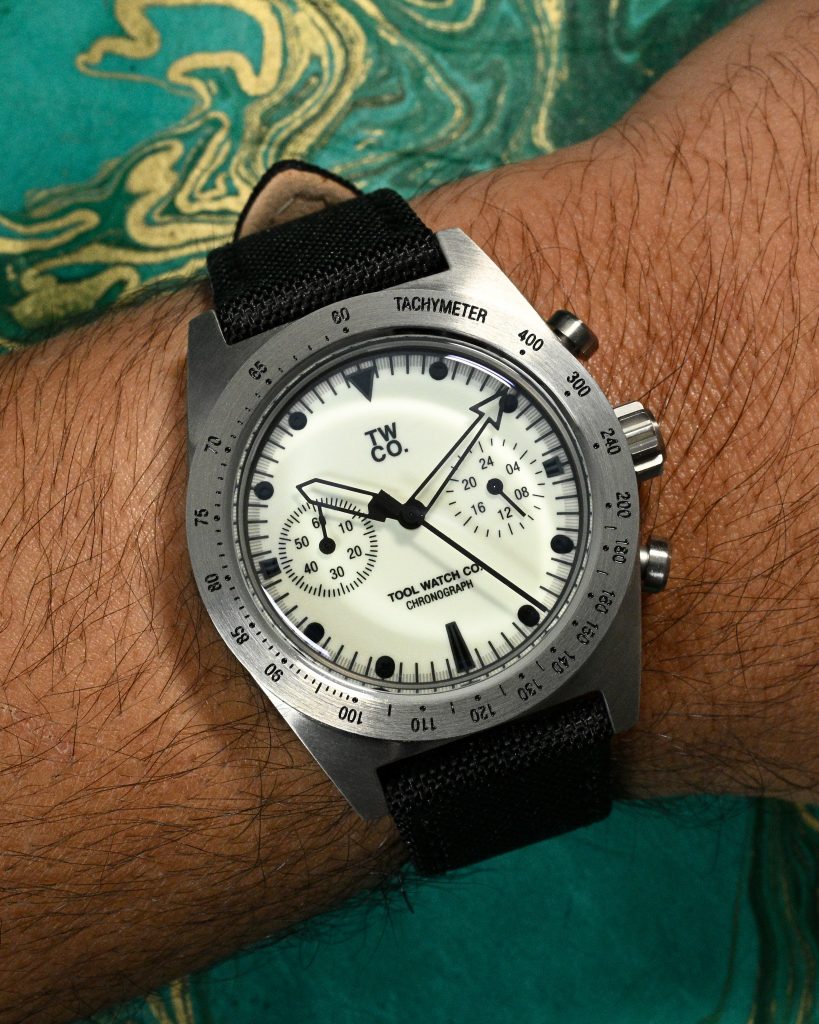
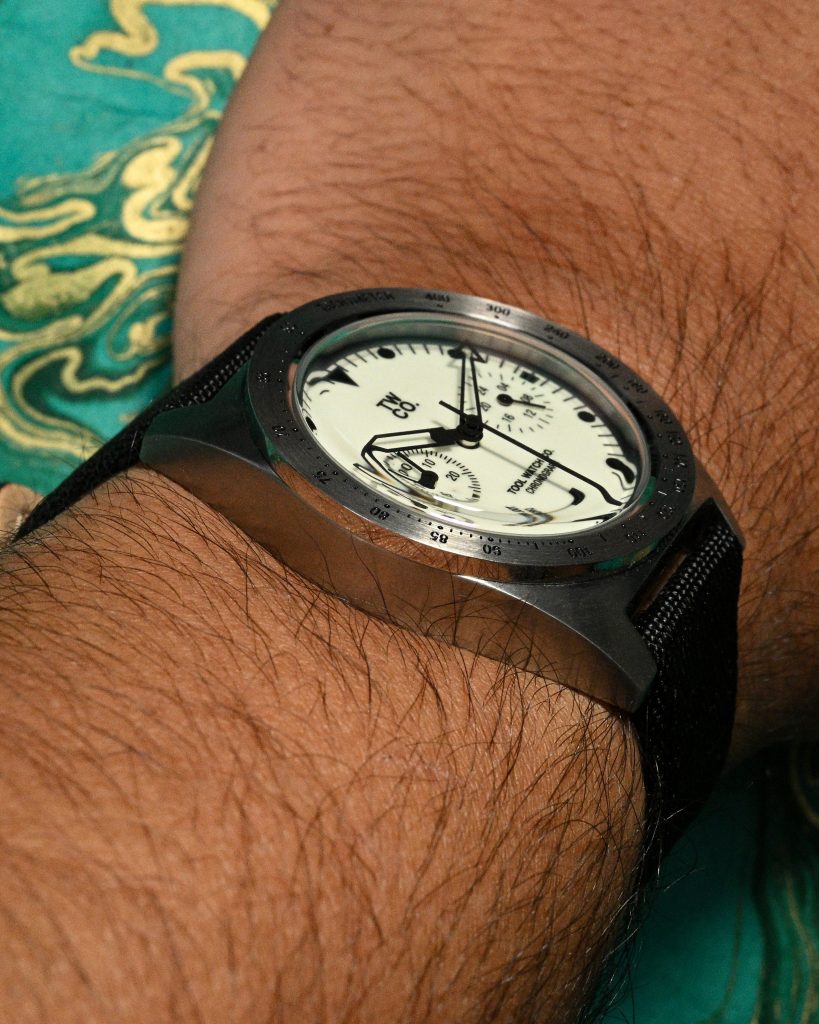
Weight is also very manageable, with the head at about 54g, and 63g on the included canvas-and-leather strap. And while I don’t usually expect much from straps in this price category, this one is perfectly usable: well made and comfortable enough, and I didn’t feel the need to swap it immediately. The buckle is a nice touch too, with decent finishing that doesn’t feel like generic off-the-shelf hardware.
Wrapping Up
To wrap things up, the Lumecore mostly does what it sets out to do. It’s a good-looking, very legible watch with solid build quality and finishing for the money, and at $295 it feels priced in a way that’s easy to justify if you’re drawn to the concept. The best part is that the design decisions actually support the premise: the high-contrast skeletonized hands are a smart choice on a fully lumed dial, avoiding the shadows that result on most lumed watches when transitioning from light to dark. On the wrist it has a convincingly tool-y presence, and even the included canvas/leather strap is comfortably wearable and doesn’t feel like an immediate “replace me” afterthought.
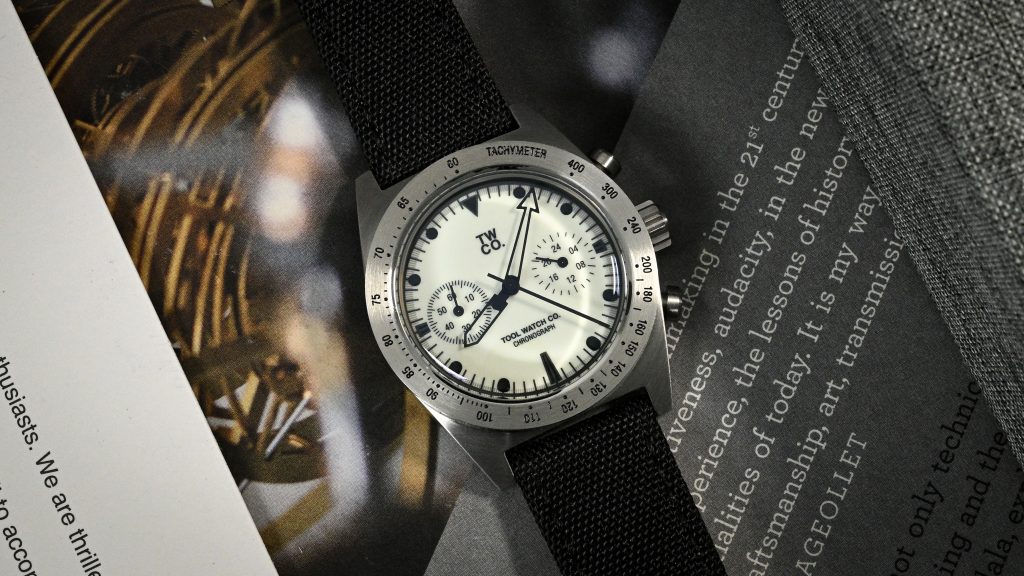
My only real criticism is the 30m water resistance, which does hold it back a bit, especially with a brand name like Tool Watch Co. That said, it’s hardly the first chronograph to ship with a weak water rating, and it won’t be the last. But I’d still like to see the brand push for a more aggressive rating in the future. Overall though, this is still a compelling chronograph: straightforward, well-executed, and easy to recommend if you’re shopping in this genre and want something that feels purposeful and won’t do too much damage to your wallet.