Disclaimer: this video/review was not sponsored by MING or any other entity.
MING Polymesh 20mm Curved (Regular): https://www.ming.watch/featured-product/ming-polymesh
Video
3D Printing & Horology
The watch industry is often described as traditional, but what that really means is that this industry is old, slow and resistant to change. We celebrate decade old construction methods, while modern manufacturing techniques remain confined to prototypes and concept pieces. 3D printing has been one of those technologies. While Apple produced millions of 3D-printed titanium watch cases without any romanticism, it has appeared sparingly in watchmaking through titanium cases from brands like Panerai, Apiar and Holthinrichs, and it is rarely used in a way that fundamentally changes how a watch component behaves.
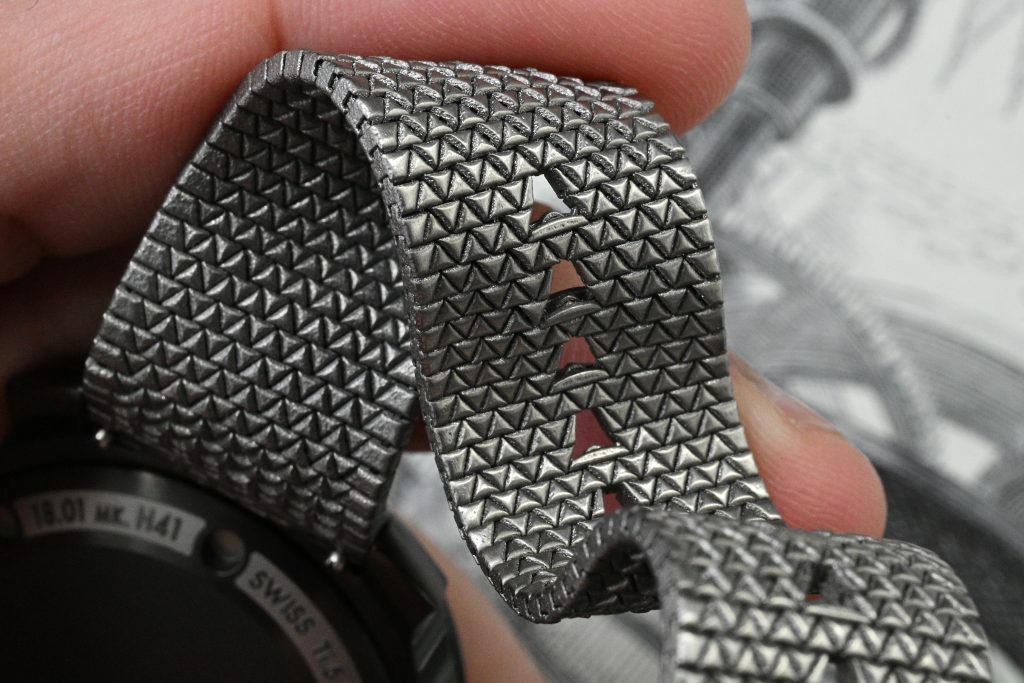
In our little world of watchmaking, Holthinrichs may be one of the few brands that has used 3D-printed titanium case making in a way that feels genuinely innovative, reasonably priced and aesthetically impressive. Their cases embrace the raw, architectural qualities of additive manufacturing instead of hiding them, and while I don’t personally love their printed bracelet design, it is undeniably innovative because it continues the same design story told by their cases. The MING Polymesh is different again, because it isn’t trying to 3D print a bracelet – it is trying to create a completely new experience for a watch accessory.
The broader science behind this is fascinating. Engineers have been exploring 3D-printed chainmail and fabric-like structures for applications far beyond watches. NASA JPL developed a metallic “space fabric” using 3D-printing techniques, with different functionality on each side of the material, while Caltech and JPL researchers later developed a chainmail-inspired material that can transform from a foldable, fluid-like state into a rigid shape under pressure. These are sometimes called architected or programmable materials, because their behavior comes as much from geometry as from the base material itself.
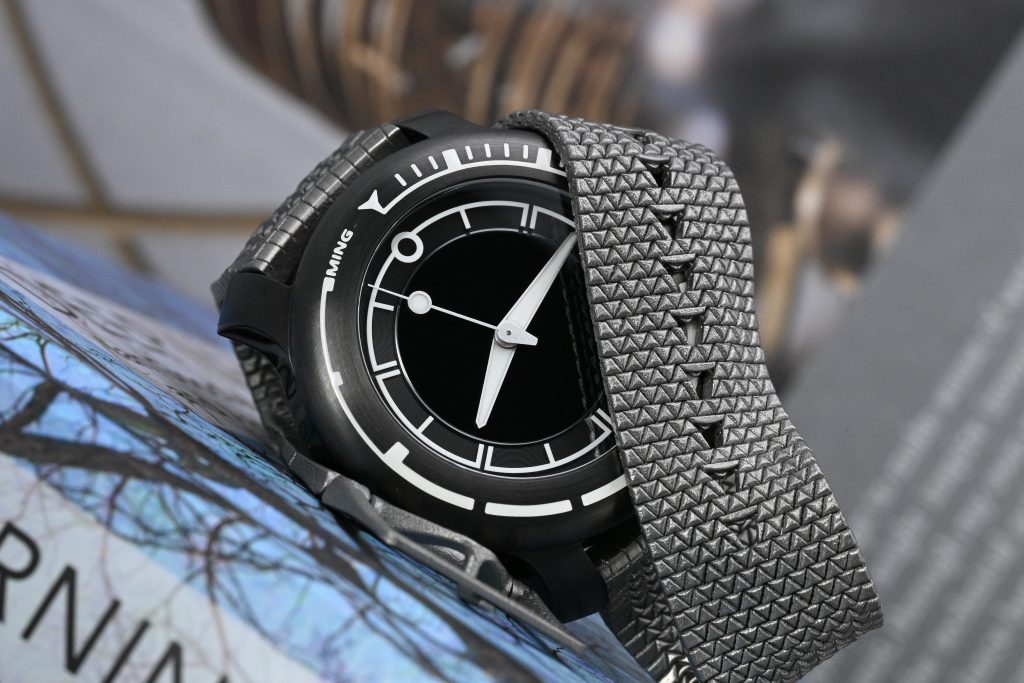
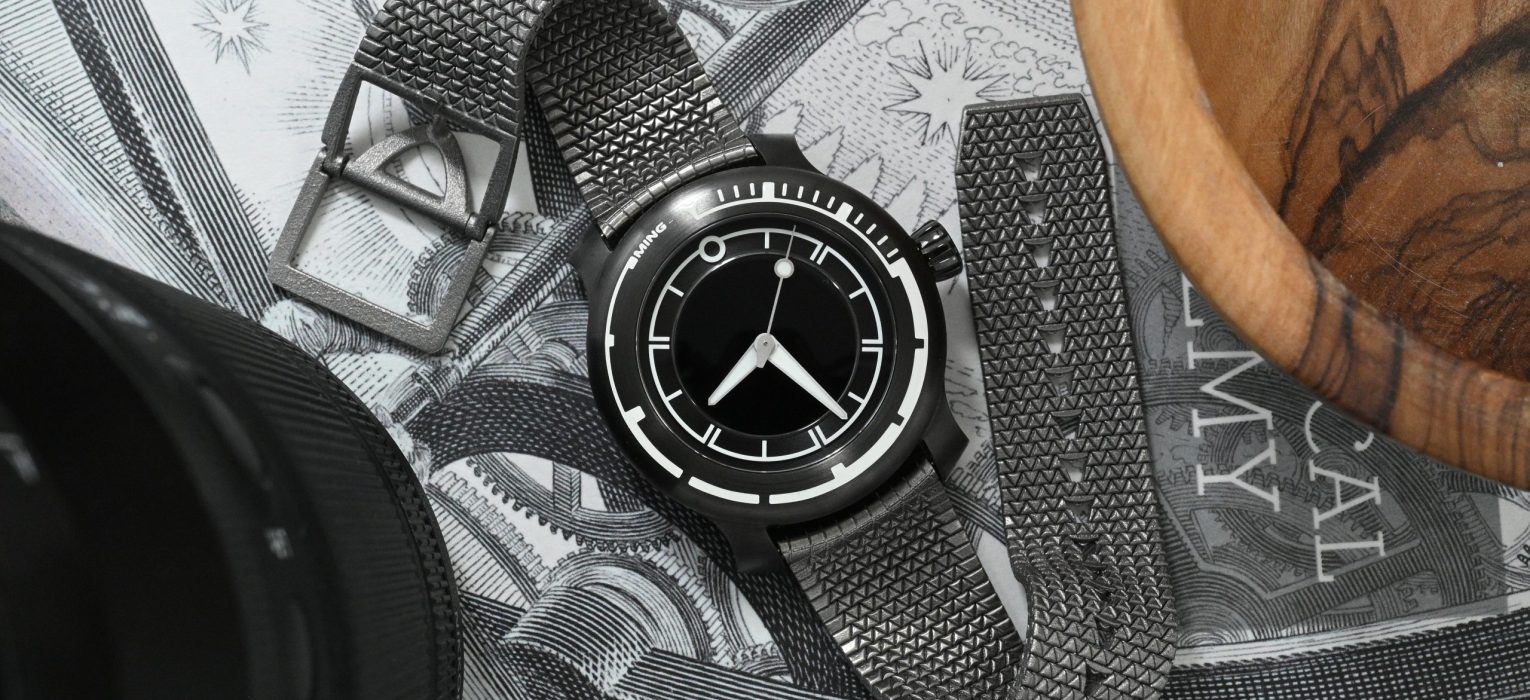
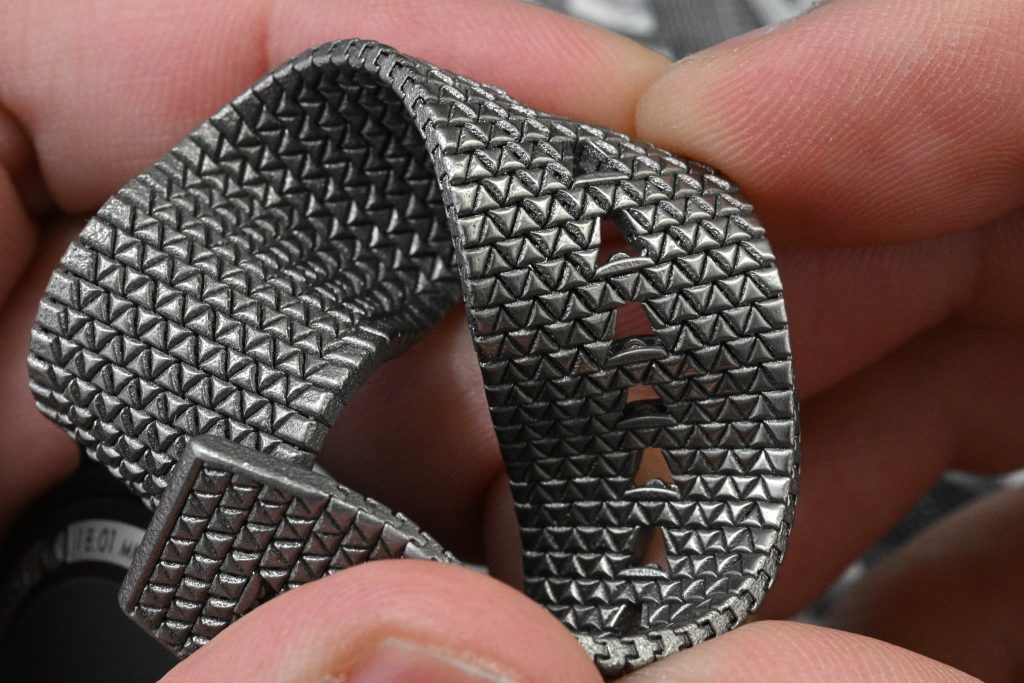
The Polymesh applies that idea to something familiar: the watch strap. The curved-end version is made from laser-sintered grade 5 titanium, uses curved-end quick-release 20mm spring bars, and is a one-piece construction made of 1,693 sub-components, including the integrated tuck buckle system. MING recommends the short size for wrists under 6 inches or 152mm, and the regular size for wrists from 6 to 7.8 inches, or 152 to 200mm. It weighs 20g. The Straight version expands the concept beyond MING watches, using quick-release straight-end 20mm spring bars and 1,742 interconnected elements. Both versions are priced at CHF 1,500 excluding taxes.
Challenges
Most bracelets are mechanically simple objects, even when they are beautifully made. The Polymesh behaves closer to a metallic textile. Each individual element moves only a tiny amount, but across the full structure, that motion becomes fluid. MING works with SISMA s.p.a and ProMotion s.p.a, who produce it through powder-bed laser sintering, requiring more than 1,000 printed layers, and have tolerances between moving components as tight as 30 microns. Too tight, and the links fuse together. Too loose, and the articulation loses its intended fluidity.
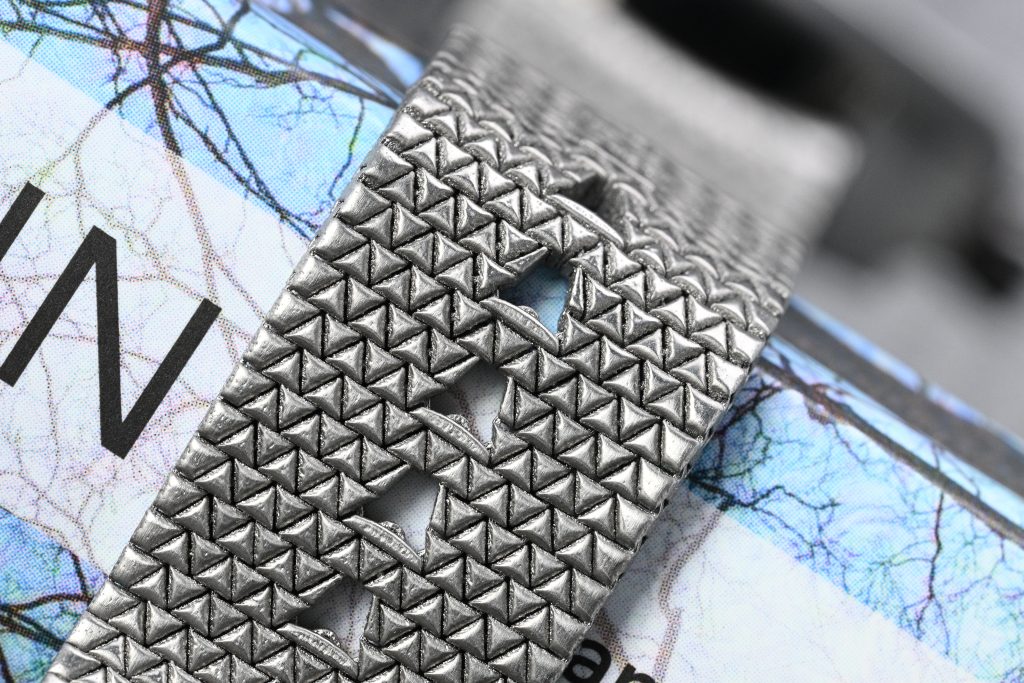
And that is only part of the challenge. In a print-in-place chainmail structure, the geometry has to account for laser heat spread, partially sintered powder, surface roughness, shrinkage and post-processing. The object is built inside loose titanium powder, and a dense mesh creates hundreds of small pockets where powder or debris can become trapped. Any remaining burrs or roughness could make the structure gritty, stiff, abrasive, or prone to wear. Unlike a static 3D-printed case, the Polymesh is a moving object with countless contact points constantly rubbing, rotating and loading against one another.
Is it a bracelet? Is it a strap?
To describe the Polymesh as a metal bracelet version of a strap does a disservice to everyone involved. It truly feels like nothing else. It looks vaguely like a mesh, has the material character of a bracelet, and is worn more like a strap, but that is about where the similarities end. On wrist, it drapes with an almost silk-like fluidity, but with the density and presence of titanium. There is weight and structure here, but not in the way you expect from metal. It is soft, but not limp; flexible, but not loose; technical, but still surprisingly organic. And it terms of flexibility, the inner structure can result in configurations that even most straps can’t get into.
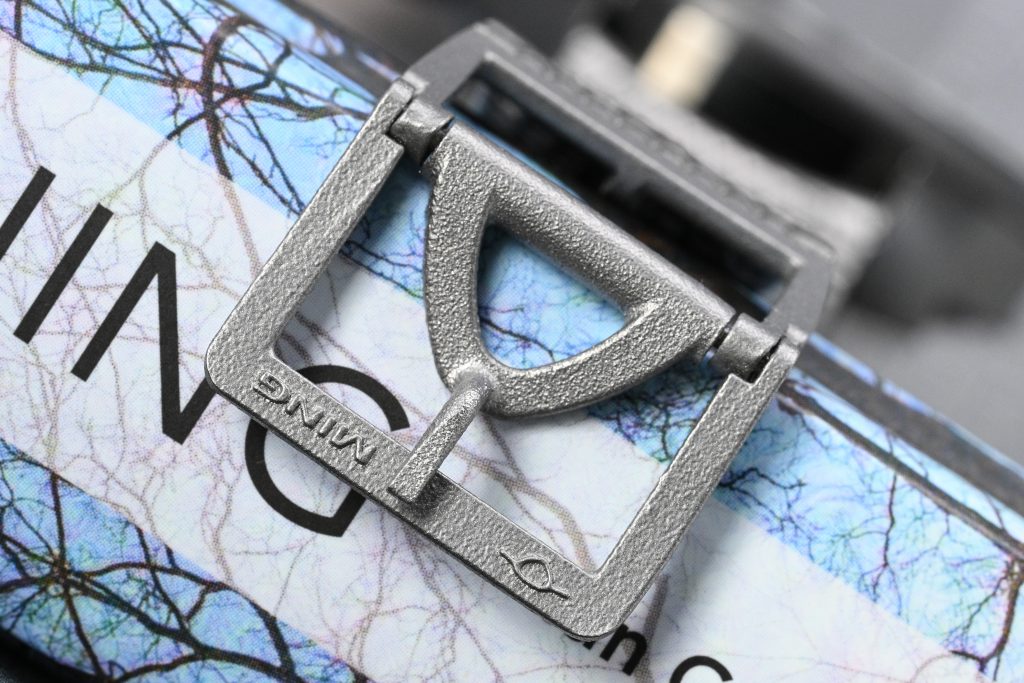
There are no sharp corners, no obvious pinch points and no rough edges against the wrist. That alone is impressive for a product built around so many tiny moving contact surfaces. But what still amazes me is that, except for the spring bars, this entire product is additively manufactured. The joints, edges and buckle are all part of the same manufacturing story. The entire buckle was created together, meaning the interconnected parts that make up this three-piece buckle construction were fabricated at once rather than conventionally assembled.
Learning Curve & Appearance
If I had to criticize the Polymesh, it would be the learning curve. I remember a similar adjustment period when MING first introduced their keeper-less straps, and the Polymesh asks for the same kind of behavioral reset. It works best when sized slightly longer than you might instinctively choose, giving you enough room to tuck the tail comfortably. Removing it is less intuitive, because the locking pin that keeps the strap secure requires lifting the bottom half of the buckle and pulling the strap out. It feels unnatural at first, but becomes easy enough after a few attempts.
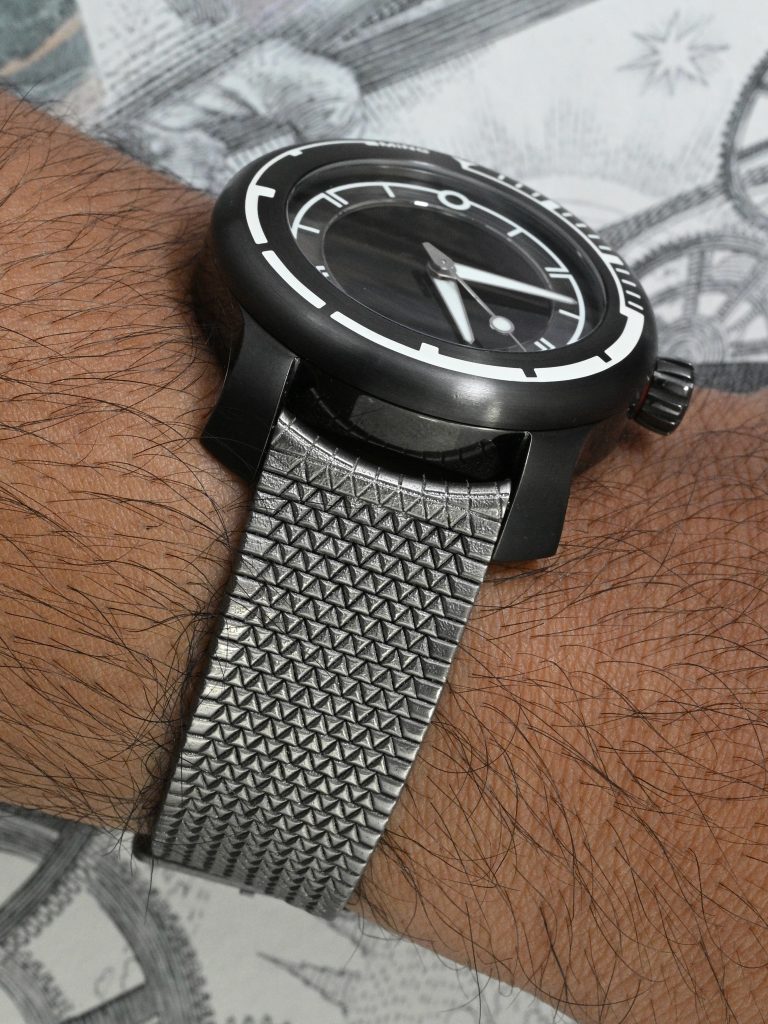
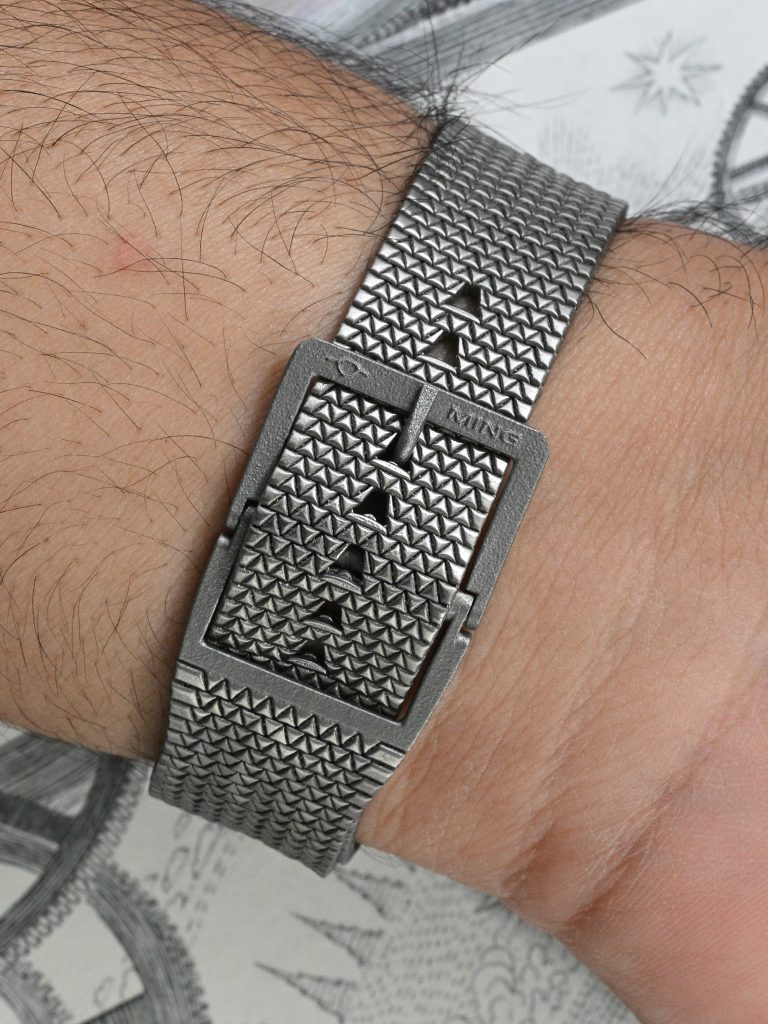
The finishing and aesthetic are acceptable to me, especially given how little precedent exists for this product. Of course, I would love to see it offered in every material and finishing combination imaginable. But a few months ago, nothing like this really existed in the watch world. A few years from now, this first generation may look primitive compared to what follows, and speaking as an engineer in research, that is exactly what progress looks like.
Final Thoughts
A lot of people will criticize the price, because viewed as a strap or bracelet, the Polymesh is very expensive. But I don’t think that is the right way to understand it. This is a radically new piece of technology being made available surprisingly early in its product cycle. If you want a mature accessory like a rubber strap or conventional bracelet, this probably is not the thing to buy. But for the right collector, the Polymesh will feel like a very reasonable price to pay for something extremely unusual and extremely impressive.
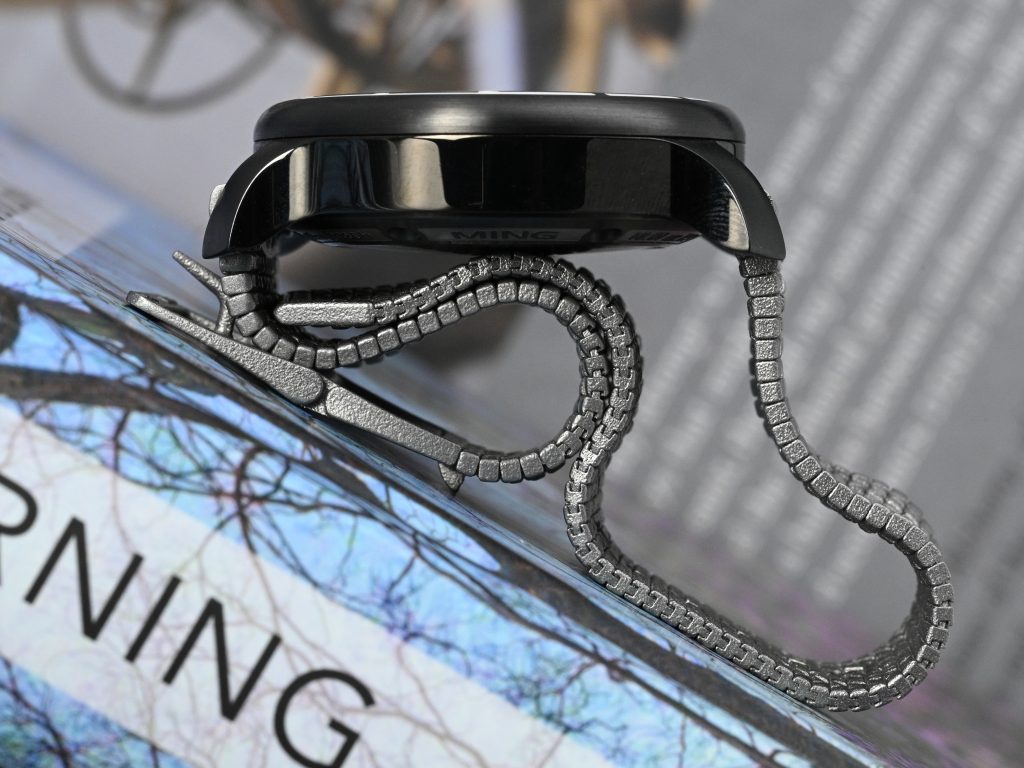
It will not suit every watch, every case design, or every material. But as an object, it is remarkable. It is expensive, niche and visually assertive, but it delivers an experience few watch accessories can offer. MING has taken state-of-the-art manufacturing and applied it to a very conservative corner of a laggard industry. For that reason alone, the Polymesh is worth celebrating.