Disclaimer: this video/review was not sponsored by Habring, Infinity Watches CZ or any other entity.
Josef at Infinity Watches CZ: https://infinitywatches.cz/produkt/habring%c2%b2-josef/
A huge thank you to Bhanu Chopra at Infinity Watches for introducing me to Habring and this Josef!
Video
Habring²
If you’ve been collecting watches for long enough, you eventually run into a strange truth: some of the most influential watchmakers in modern horology are almost invisible to the wider audience. Their ideas get absorbed into the industry, their inventions get normalized, their problem-solving becomes part of the background… their names don’t trend, and their brands don’t get treated like the “hot” independents. Richard Habring is one such example of that phenomenon, but there are others too, like Andreas Strehler, Jean-François Mojon, just to name a few. Habring² is the kind of brand that, once you understand it properly, makes you wonder why it isn’t discussed in the same breath as a lot of louder independents.
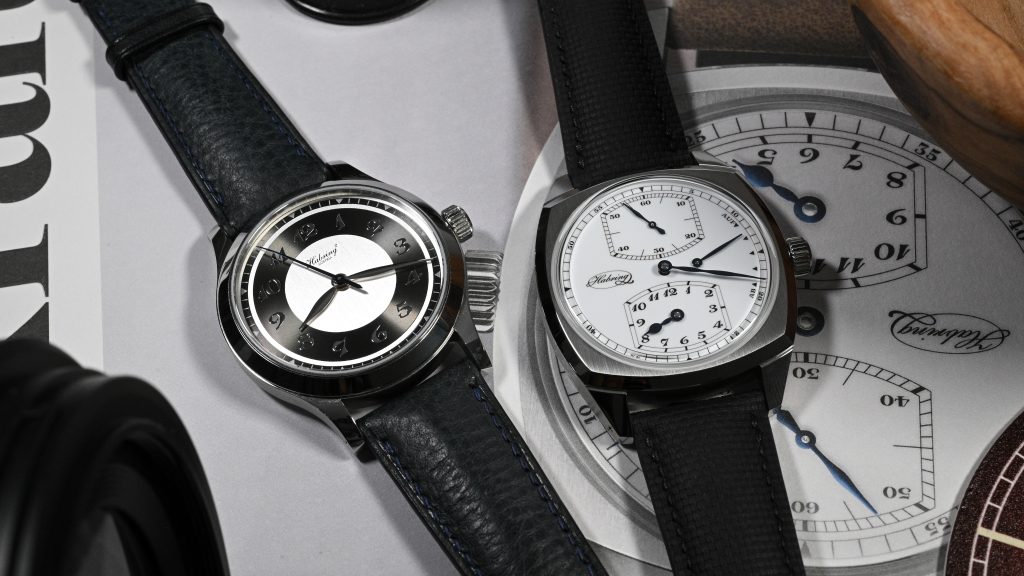
That’s what I want this two-part series to be about: not just reviewing two lovely watches, but using the Josef and the Erwin Tuxedo to explain why the Habrings matter, what Richard’s legacy actually is, and why I honestly believe they’re one of the most underrated independent watchmakers working (in silence) today.
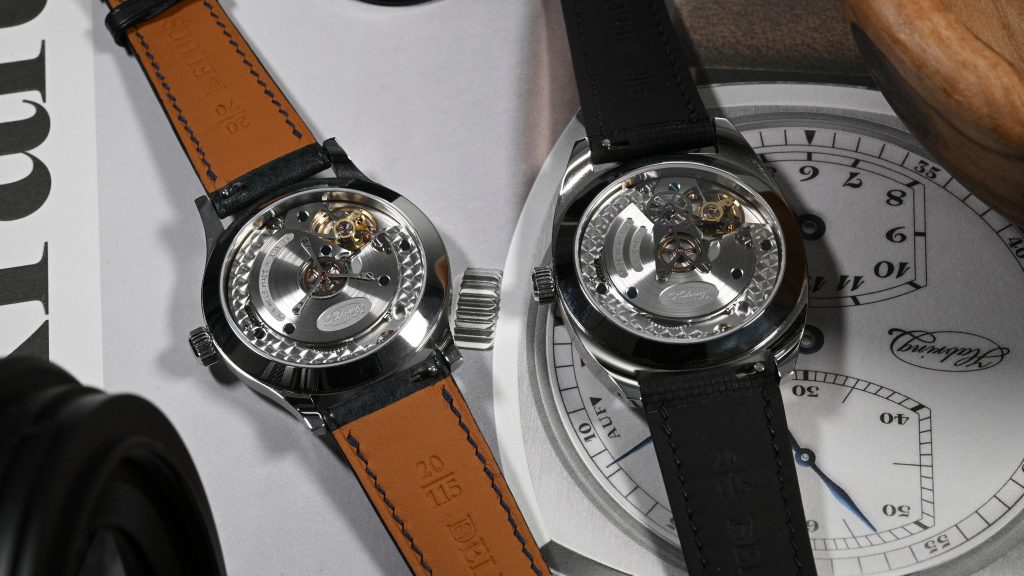
Part one starts with the Josef, because it’s not just “another model” in the line. It was released to mark the 20th anniversary of Habring², and it feels like a thesis statement: quirky in a purposeful way, historically literate without being imitative, and engineered with a stubborn practicality that tells you exactly what kind of watchmaker Richard Habring is. And as a byproduct, it should also tell you exactly what kind of an enthusiast a Habring² enthusiast is.
Richard Habring: the kind of watchmaker the 1990s produced
To understand why Habring² watches feel the way they do, you need to understand where Richard came from. He wasn’t born out of the Instagram-era indie boom. He’s a product of a very specific time in modern watch history… the late 80s and 90s, when Swiss mechanical watchmaking was rebuilding its identity and complication work was suddenly becoming a statement again. But very much grounded in the realities of cost, scale and practicality.
Richard trained as a watchmaker in Austria, and he entered the professional world at a time when mechanical watchmaking was evolving rapidly, and he ended up inside one of the most important ecosystems of the era: the network around Günter Blümlein. Blümlein’s name comes up constantly when you talk about the modern revival of brands like IWC and A. Lange & Söhne, and what’s fascinating is how many major talents were forged in his orbit. Richard is often described as one of the watchmakers Blümlein personally supported and mentored; someone whose technical instincts were put to use in real projects, at scale, during a period where watchmaking was redefining itself. And the project that put Richard Habring on the map, whether collectors realize it or not, is the one that quietly shaped a huge part of modern chronograph culture: the IWC Doppelchronograph. And a quick patent search will see Richard Habring’s name alongside more popular industry greats like Giulio Papi (Audemars Piguet Renaud & Papi, Richard Mille: RM004 Split Seconds Chronograph), Dominique Renaud (Audemars Piguet Renaud & Papi, Renaud Tixier), Kurt Klaus (IWC), etc. who also contributed to much of IWC’s work during that era, particularly in high end complications.
The Doppelchronograph
The split-seconds chronograph, or rattrapante, has always been one of those complications that sounds romantic but is traditionally expensive, delicate, and difficult to industrialize. Richard’s breakthrough at IWC was to create a rattrapante concept that could be produced and serviced more practically. The result became the IWC Doppelchronograph, and the reason this matters is simple: it made a split-seconds chronograph less mythical. It moved that complication closer to the realm of reality for a lot of collectors and proved you could engineer it with a different philosophy than the traditional haute horology rattrapante playbook.
That idea was protected by an IWC patent until recently, which is why we now see Habring² able to explore rattrapante work in their own way. Whether you like the Doppelchronograph itself or not, Richard’s work there speaks to his philosophy as a watchmaker and engineer: taking a complication that was precious and rare, and turning it into something robust and attainable. It is clear that this ethos has carried over to the Habring² brand as well – Richard doesn’t develop complications to flex complexity. He chases complications to solve them, like a true engineer would… and then makes them wearable, serviceable, and real.
The LMH Orbit: IWC, Jaeger-LeCoultre, Lange
Richard’s career isn’t a single brand story, as with most great watchmakers, engineers and designers. He is connected to the wider high horology world in a way a lot of people don’t realize because Habring² itself is so understated. Beyond IWC, he’s frequently linked through work and projects to brands like Jaeger-LeCoultre and A. Lange & Söhne, part of that broader sphere that many people associate with the Blümlein era and its aftermath.
And what’s particularly interesting is that Richard’s relationship to Lange is often described less as “he designed a famous watch/movement for them” and more as involvement in the real machinery of a luxury brand: support, repair, and service network development; work that is crucial, not glamorous, and absolutely central to long-term brand credibility. It’s the kind of detail that tells you a lot about Richard. He built his career on the reality of making complicated mechanical objects function in the real world, for real customers, long-term. And while not sexy and Instagram worthy, that is the sort of philosophy that got me into watches and keeps me interested in them many decades later. It is not romantic watchmaking performed for a display case. It is watchmaking that respects ownership, something brands have entirely lost sight of these days.
The Habring² Ethos: Pragmatic Independence
When Richard and Maria established Habring², the brand didn’t follow the modern indie script. It didn’t launch with extreme finishing and insane prices and a “limited drop” culture. Habring² became known for something else: engineering-driven watchmaking, small scale, and a kind of honesty about what matters. They don’t pretend to be vertically integrated for the sake of sounding pure. Instead, they openly embrace a practical approach to sourcing while keeping the identity where it counts: movement architecture, complication design, escapement work, assembly, adjustment, and final quality control. I highly recommend watching their lecture video at the Horological Society of New York.
That pragmatism is exactly what makes the Josef such a perfect anniversary watch. Because the Josef is not trying to look like a commemorative edition. It’s trying to explain the Habring² mindset in a single object: “Here’s something odd, historical, and mechanically specific… and we’re going to make it wearable and not unattainable”.
Josef
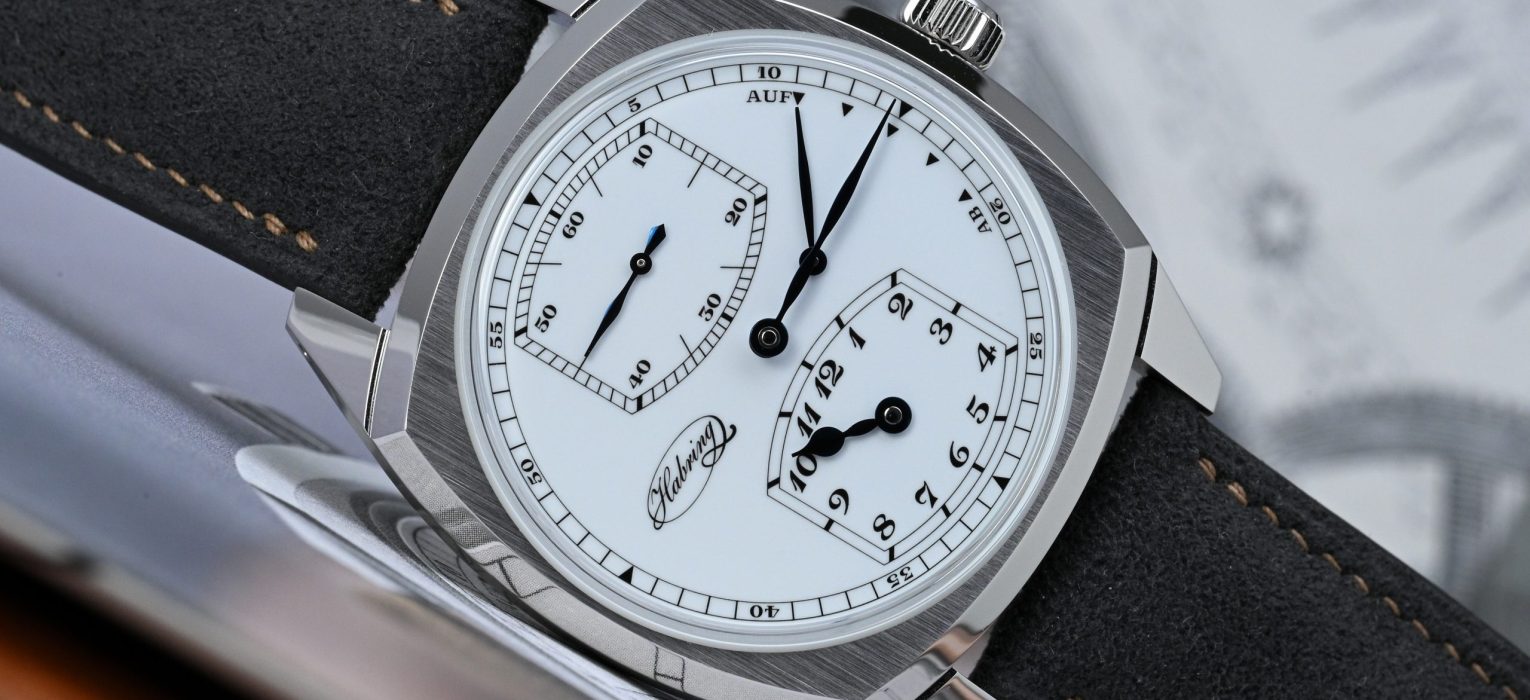
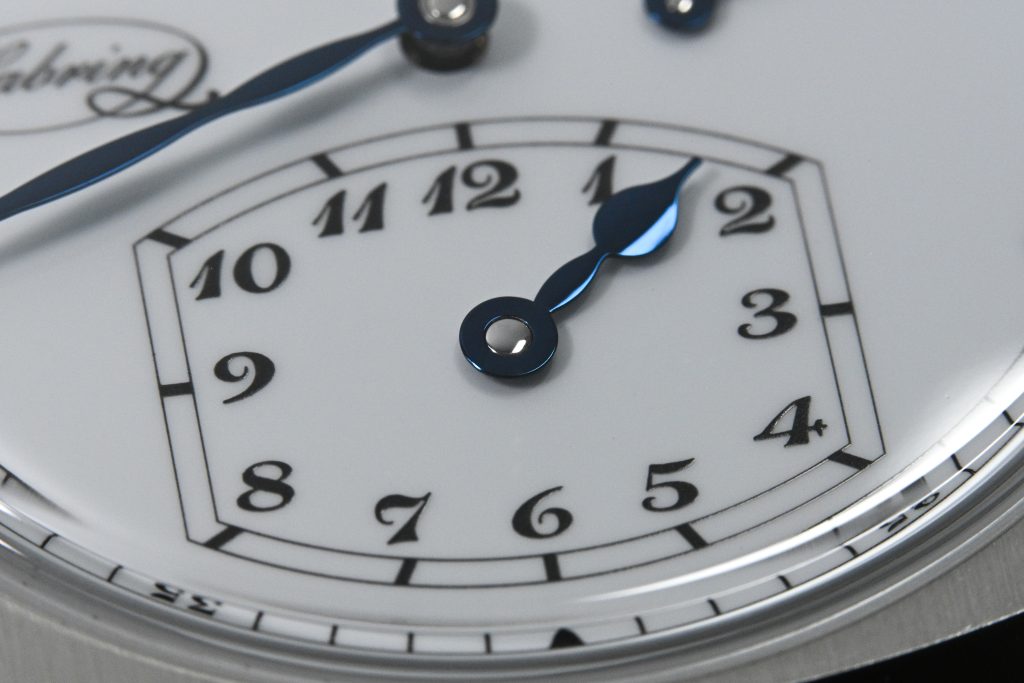
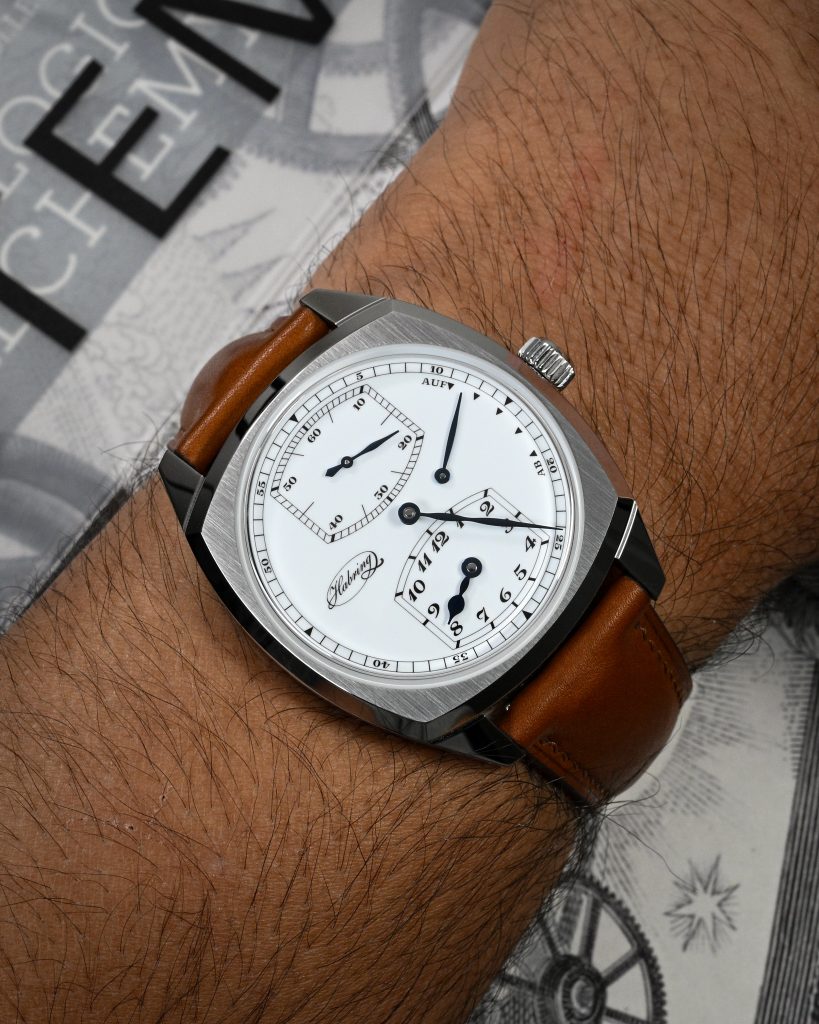
At its core it’s a regulator with deadbeat / jumping seconds, powered by Habring²’s A11-based movement family. Regulators are already unconventional in 2026. Most brands avoid them because the layout can feel unfamiliar and un-intuitive, and unfamiliar can be risky. But Habring² is comfortable leaning into unfamiliarity.
And then there’s the deadbeat seconds, which makes it even more niche. A jumping seconds complication is one of those things that’s mechanically nerdy but visually immediate: the seconds hand doesn’t sweep, it ticks with precision. On a regulator, that effect becomes almost philosophical. Again… this is the perfect kind of quirky for me. It doesn’t exist to impress people at a table. It exists because someone cared enough to build it. To everyone else, it could be nothing more than “an unremarkable quartz watch”.
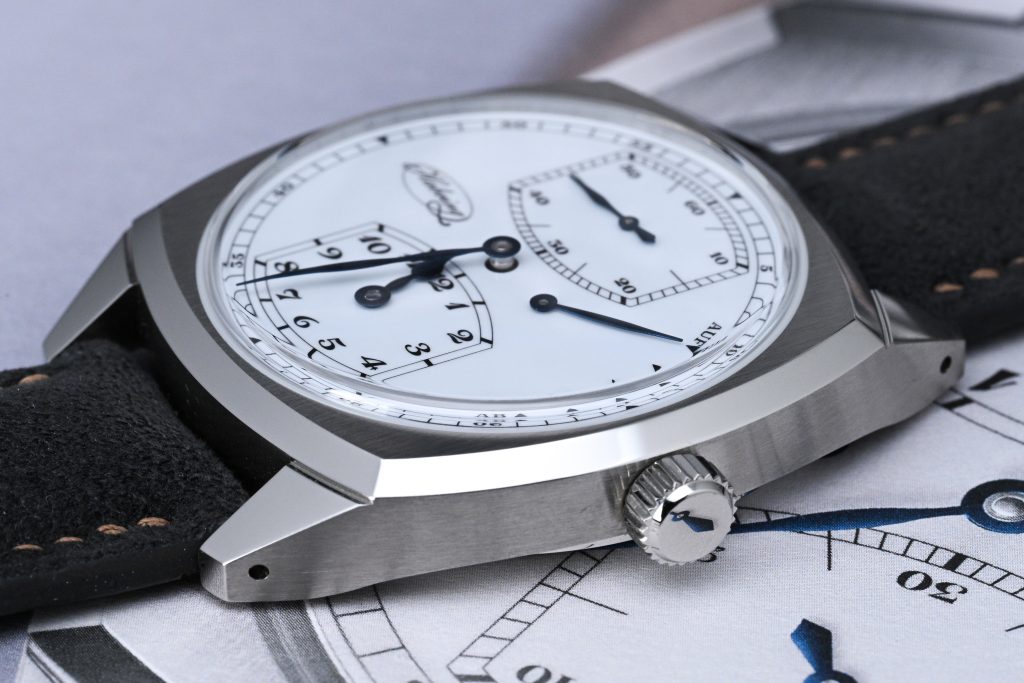
The design layout reminds me of the Gallet Multichron Regulator monopusher chronograph, the one that used the Venus 140, which is such an iconic movement in vintage chronograph culture. And I particularly like how they married that design layout into a tonneau style case.
A big part of why the Josef doesn’t come across as overly vintage is that it’s sized like it actually wants to live on a wrist with modern preferences. At 38mm with a 46.5mm lug-to-lug, it has that sweet-spot footprint where the regulator layout feels intentional rather than cramped, and the watch never feels like it’s wearing you. Even with the protruding boxed crystal it stays lean at 10.75mm, and the 51g head weight keeps it feeling light and nimble. You get a 5.4mm push-pull crown, 20mm lugs, and a modest 30m water resistance that’s enough for daily life without pretending this is a sports watch.
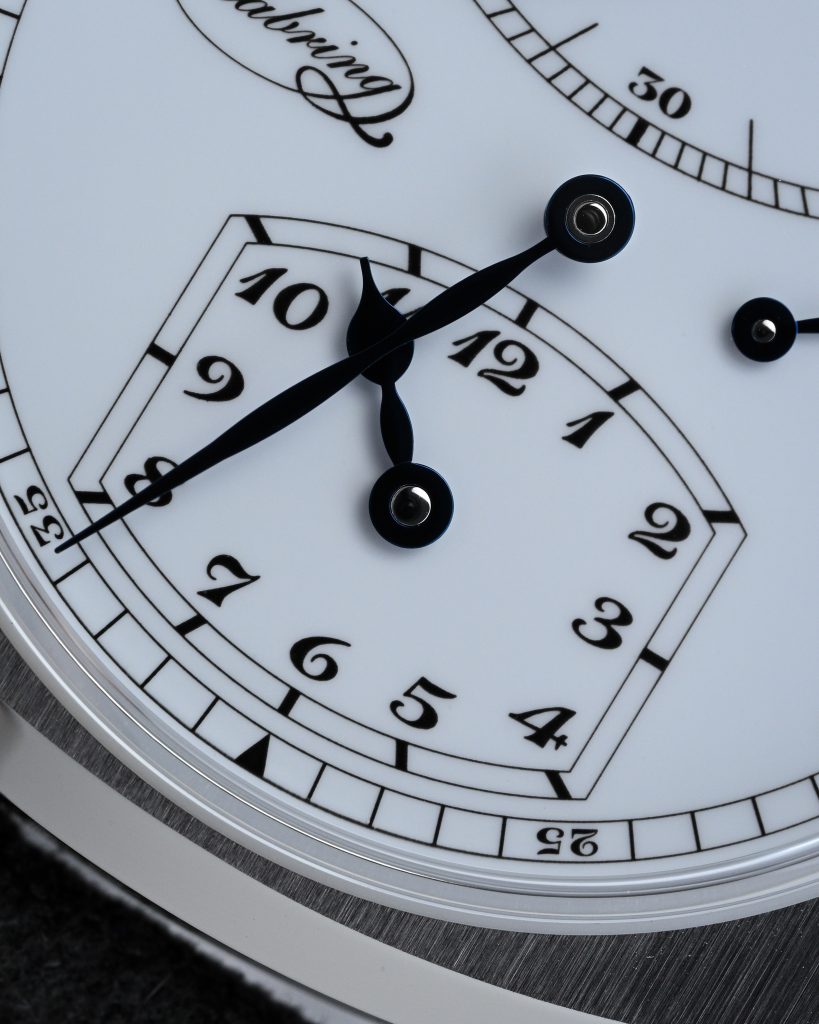
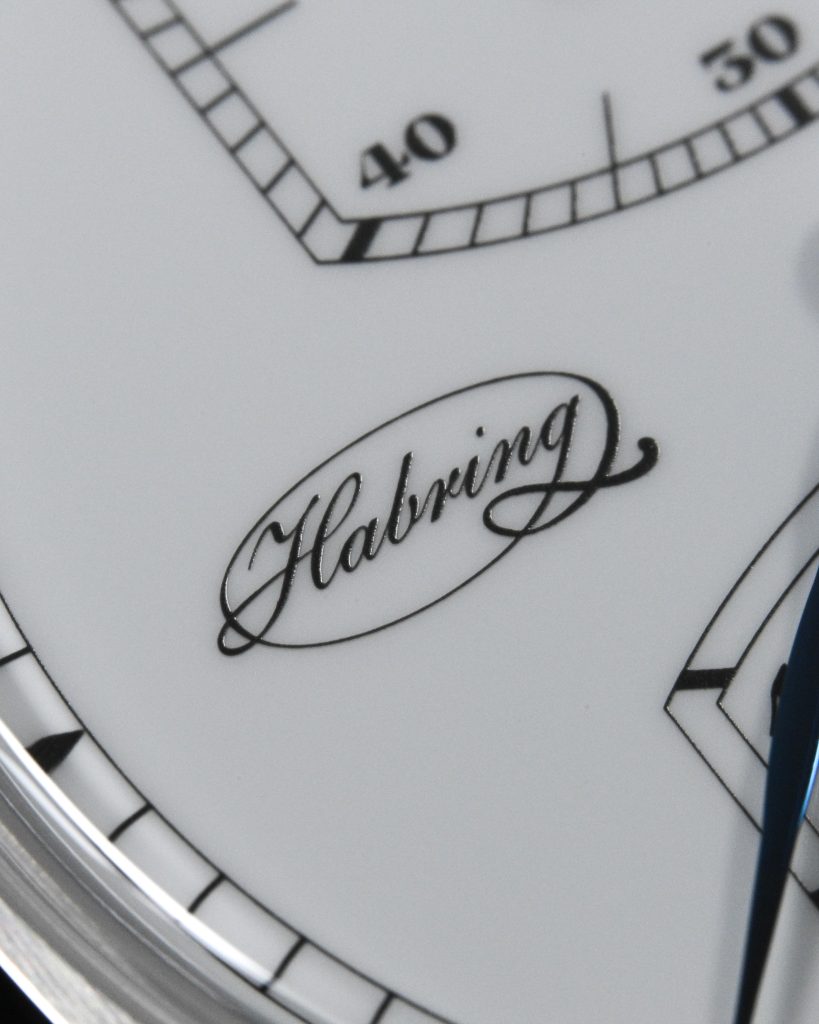
A huge part of the Josef’s cohesion comes down to the dial design by Lee Yuen-Rapati (@onehourwatch), who am I a huge fan of. If you aren’t familiar with his work, I highly recommend you do so. The watch uses his Ancad Upright typeface. It is structured and legible, yet still carries a subtle personality that makes the dial feel designed rather than merely arranged. Pair that typography with the glossy lacquered dial and the crisp pad printing, and the whole surface feels unusually refined for a small-scale independent: clean, controlled, and consistently sharp. Then you add the exceptionally blued hands, the kind that shift between deep navy and almost black depending on the light, and you end up with a dial that feels understated at first glance but quietly impressive the longer you sit with it.
Calibre A11GSP
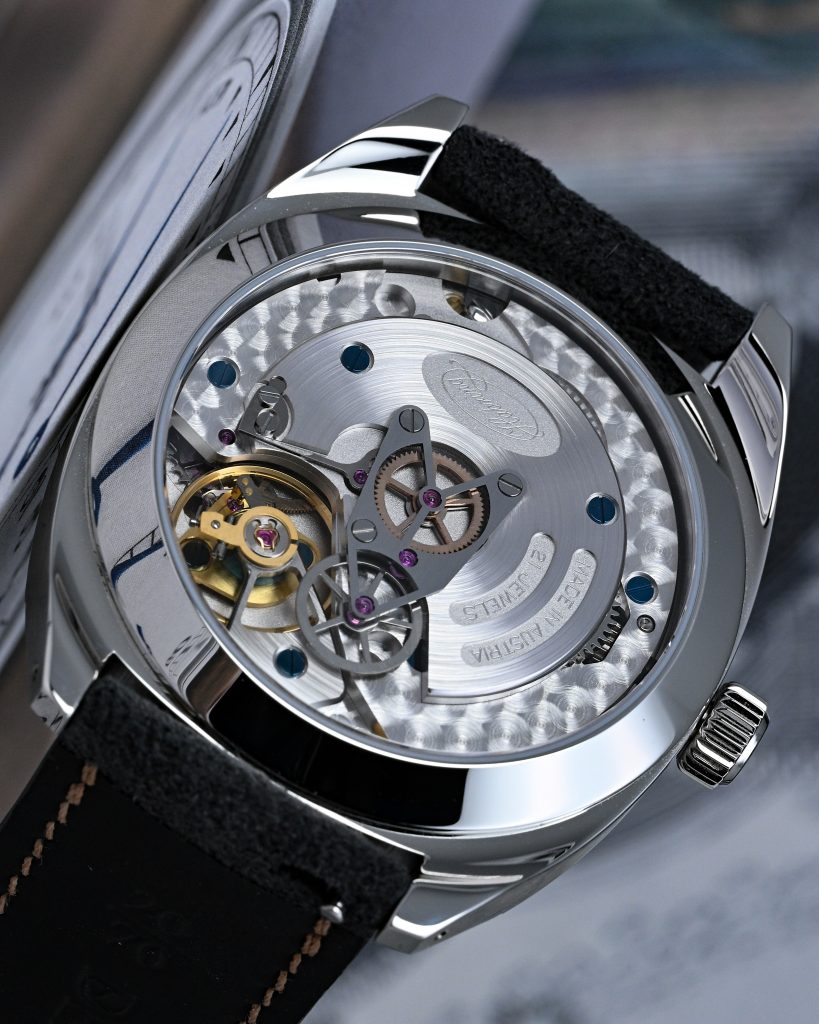
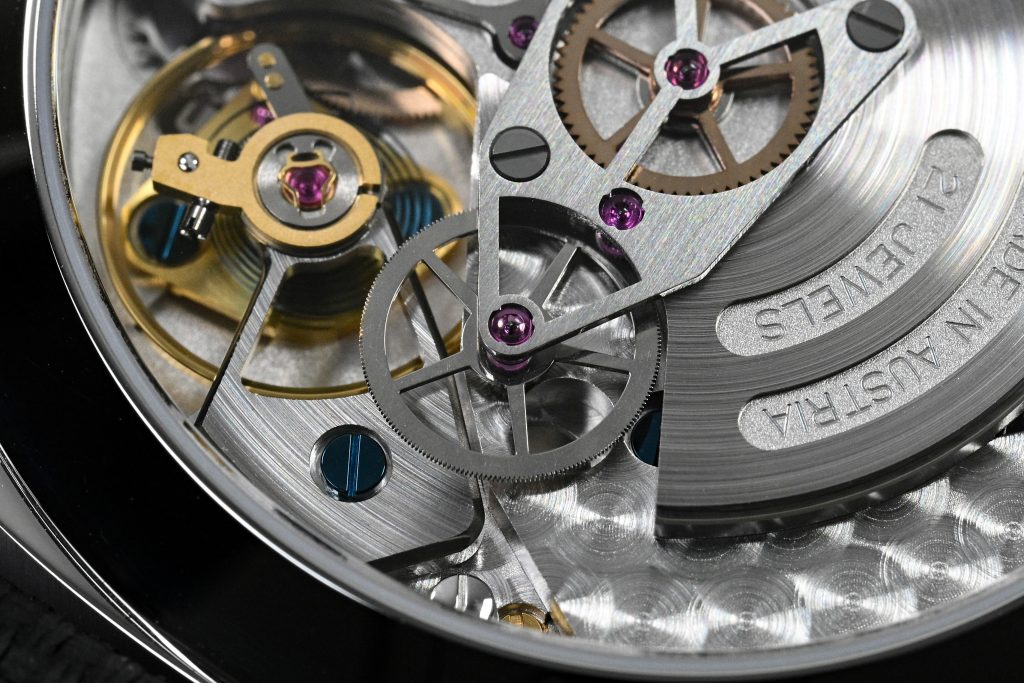
The Josef is powered by the A11GSP. The A11 family carries an architectural lineage that people like to connect to the Valjoux 7750, but once you’ve owned or handled one, you’ll realize that comparison falls apart almost immediately… because this movement simply doesn’t look, feel, or behave like one. The first tell is the winding: it’s smooth and deliberate, genuinely luxurious, with the kind of resistance that makes you want to interact with it.
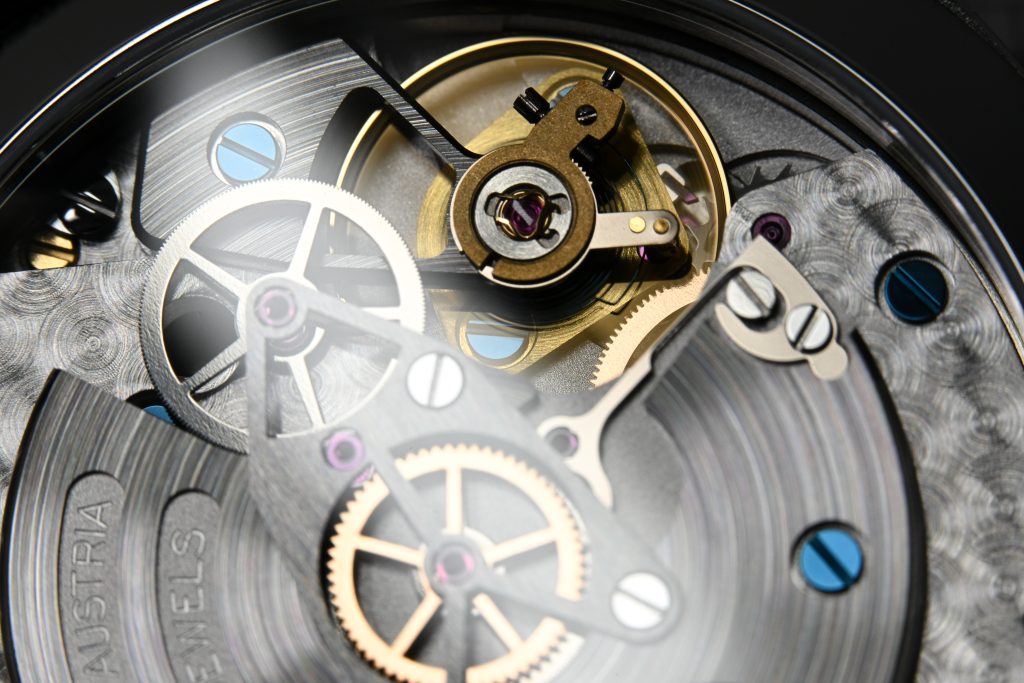
The A11GSP isn’t driving a standard three-hand display like the A11; it’s built to support a regulator layout with central minutes and offset hours and seconds, which means the display train and gearing have to do very specific work to make the whole composition function cleanly. Add the deadbeat seconds, with its unique energy demands, and the power reserve indicator, and the Josef starts to feel more like an integrated mechanical instrument.
More Josef
The Josef’s case design is fairly familiar and intentionally restrained, and I don’t mean that as a negative because simple shapes are where sloppy execution gets exposed fast. Here, the build quality and finishing are excellent: clean surfaces, crisp transitions, and a solidity in hand that makes the watch feel properly made rather than merely assembled. It’s consistent with the broader Habring² approach: no wasted gestures, no overwrought design theatrics, just competent, careful work.
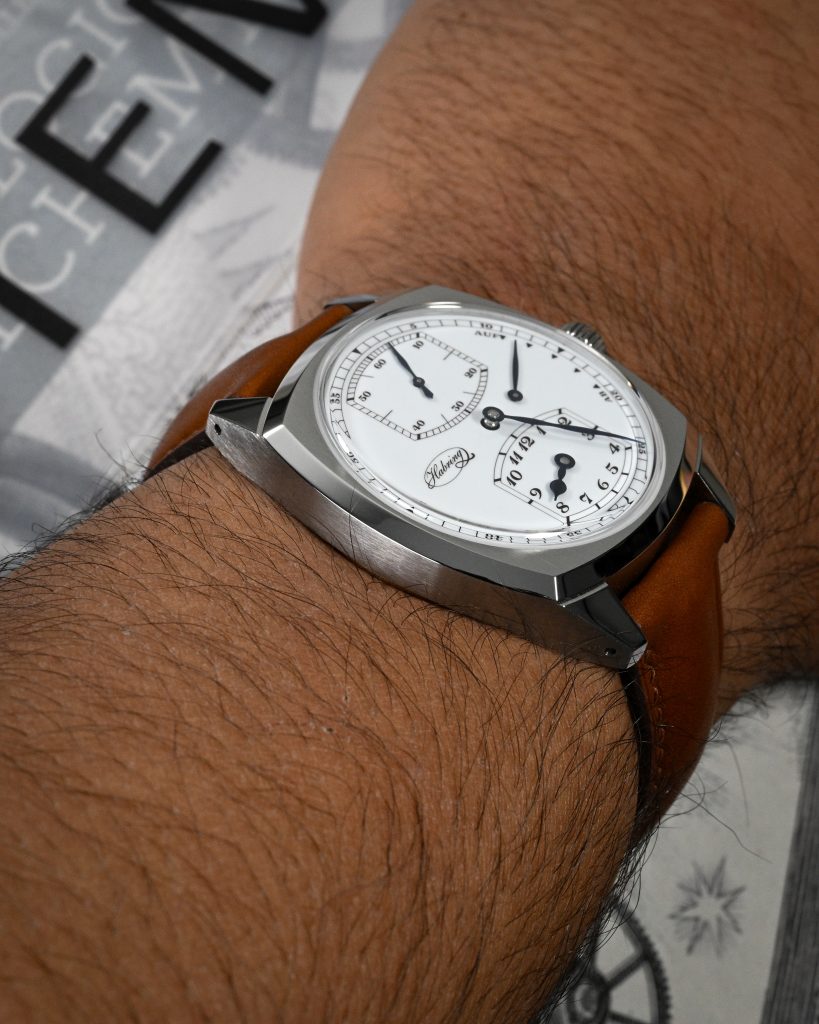
The Josef isn’t just a quirky regulator done well; it feels like a 20th anniversary watch that doubles as a mission statement. Richard Habring’s legacy isn’t one headline complication: it is a habit of engineering things in a way that makes them wearable, serviceable, and genuinely livable, and you can feel that mindset all over this watch. His career threads through IWC’s modern complication era, the broader Blümlein orbit, and the kind of behind-the-scenes infrastructure work that actually makes brands durable, and Habring² expresses that history without hype – through watches that feel built for owners.
Part 2 will continue this in depth exploration of the Habring² brand while using the Erwin Tuxedo as the centerpiece.