Disclaimer: this video/review was not sponsored by Fears, Studio Underd0g or any other entity.
Video
Review
Both Fears and Studio Underd0g have taken the watch world by storm in their own ways: Studio Underd0g with its wildly imaginative, slightly eccentric designs and sharp marketing, and Fears with its more restrained, classical approach that has nonetheless built a loyal following. I was fortunate enough to borrow an Archival 1930 a couple of years ago, but beyond that and a few brief hands-on encounters at watch shows, I hadn’t really spent meaningful time with either brand’s broader catalog.
So at New York Watch Week earlier this year, I decided to try my luck at picking up the Manhattan, and quickly learned that it was less about luck and more about endurance, as I spent nearly three hours in line before finally securing one. The watches were priced at $1,300 USD (about $1,415 after tax) and produced as a 300-piece limited edition for WindUp Watch Fair; they’re now sold out, though a non-limited Mimosa version followed shortly after.
Let’s check it out!
Case
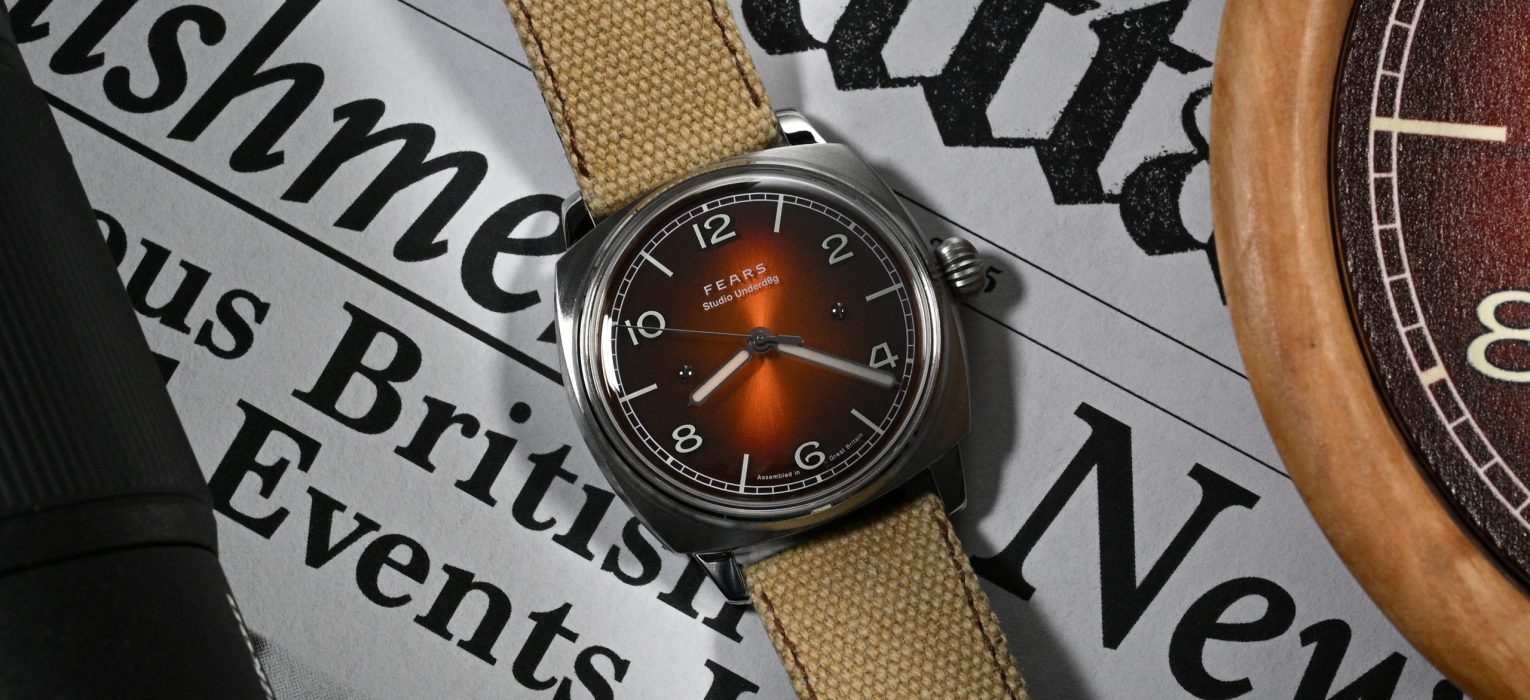
I measured the case at 37.5 mm across 3 to 9 o’clock, with a 42.75 mm lug-to-lug and a total thickness of 12.10 mm, thanks in part to the tall bezel and the curved sapphire crystal that rises above it. The steel case follows the familiar Fears Brunswick cushion design, one they can trace back to their 1920 catalog, albeit with different lugs, but here it’s manufactured and finished by Studio Underd0g.
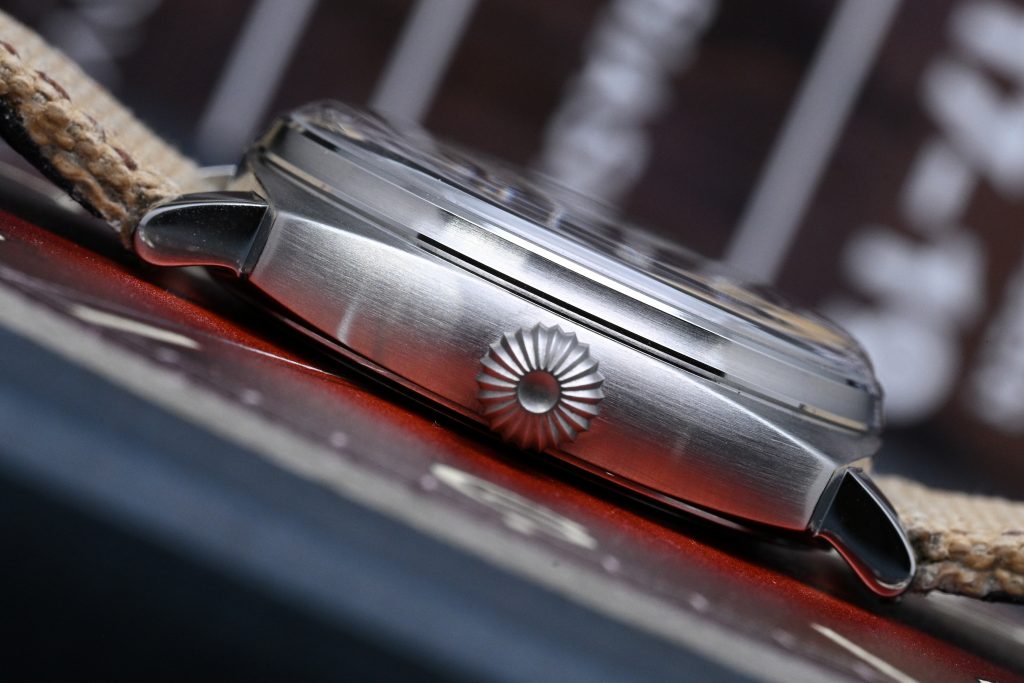
That difference is noticeable, with the finishing feeling a bit less precise than on a Brunswick and the transitions between surfaces not as sharply executed. The 5.8 mm push-pull crown has a matte finish, is easy to grip, and works particularly well on a manual-wind watch.
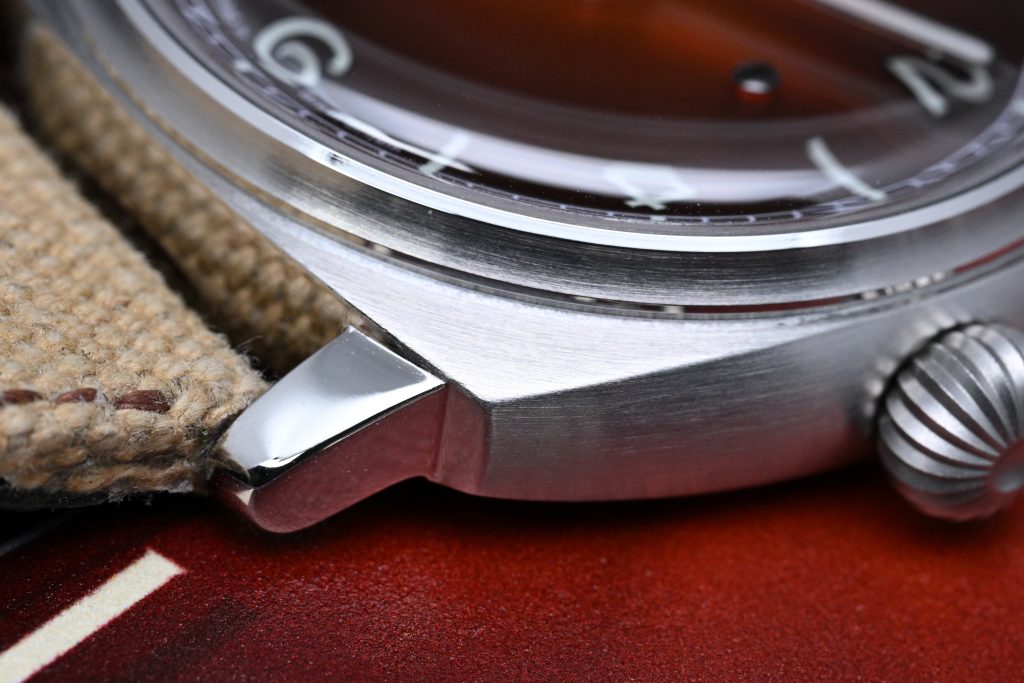
The bezel and crystal dominate the silhouette due to the dial’s multi-layered construction, and while the AR coating is decent, the curved crystal still picks up reflections that can be mildly annoying. Flip it over and you’ll find a solid screw-down case-back featuring the now-infamous (to those that were there) cherry motif, along with a reassuring 100 m of water resistance.
Dial
While the case leans heavily on Fears’ design language, the dial feels straight out of a Studio Underd0g catalog, and while I enjoy the Manhattan-themed aesthetic, what I appreciate most is the execution. It’s a two-layer construction, held together by the neatly aligned screws at 3 and 9 o’clock (something my mild OCD is grateful for) with a sunburst metallic base topped by an orange sapphire layer that carries a fumé gradient fading to black at the edges.
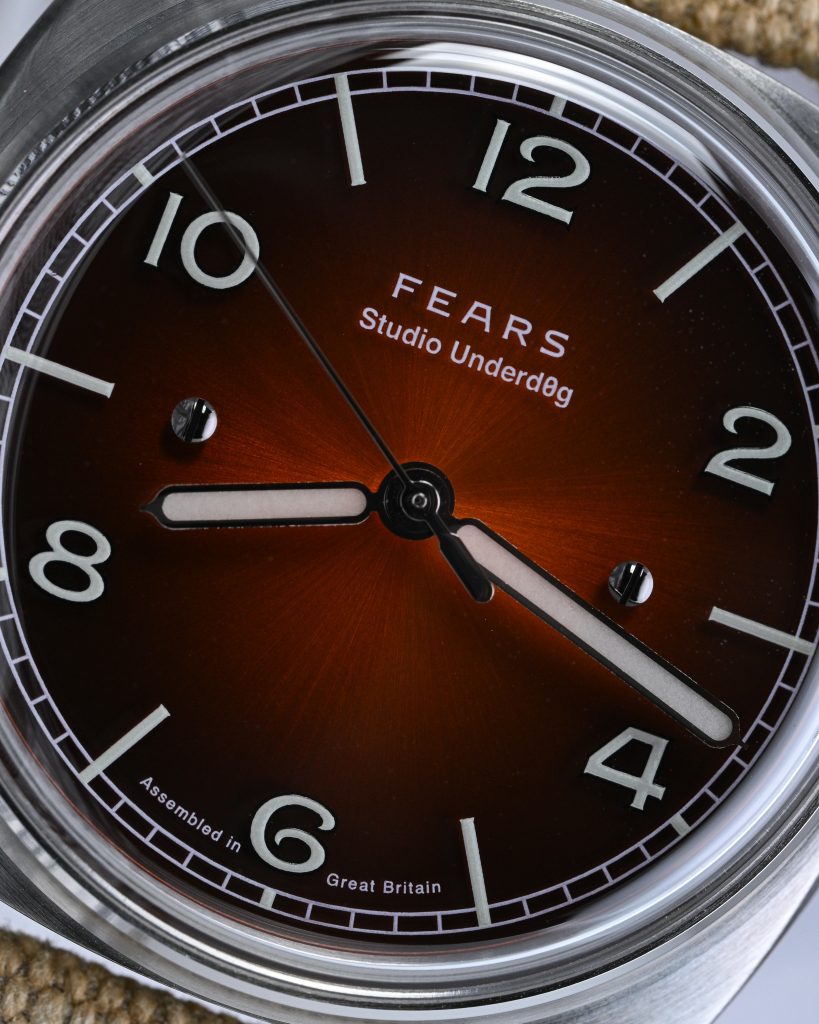
Pad-printed elements sit on this sapphire layer, including a railroad minute track and a remarkably well-designed set of even-hour numerals, each outlined in black and filled with lume. The two brand logos sit under the 12 o’clock marker; the printing is noticeably weaker than the numerals, but still prominent enough to cast a faint shadow onto the metallic layer beneath.
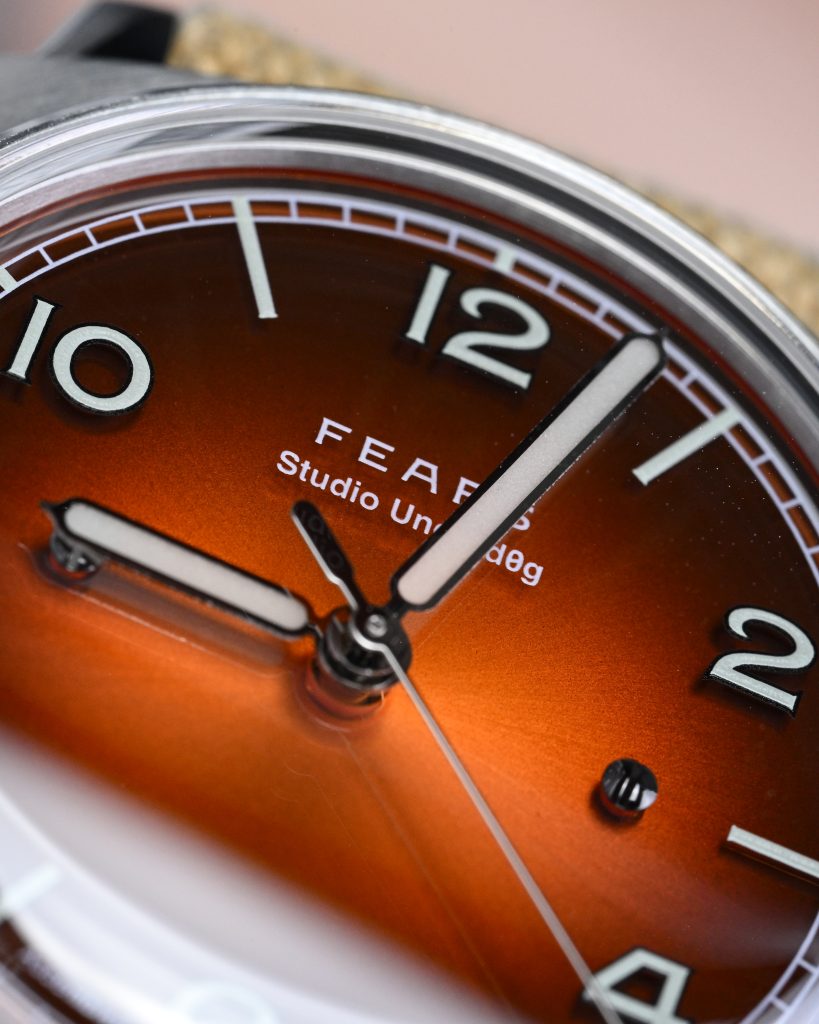
The handset, very much a Fears contribution, keeps the elongated tips for the hour and minute hands and adds a seconds hand with a matching counterbalance, though the finishing is rougher than on a typical Fears piece, something that becomes especially evident when lumed.
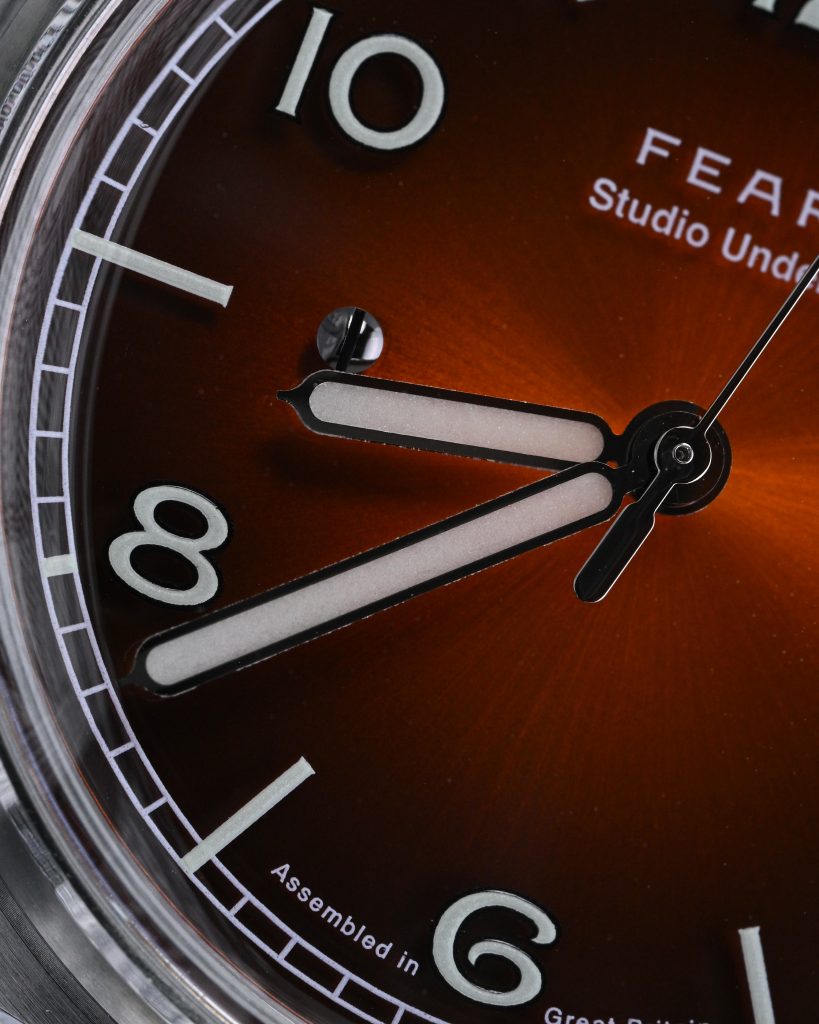
Overall, I love the aesthetic and think the design works well; while I usually prefer sapphire-dial sandwiches without screws (as brands like MING achieve with notched sapphire layers that slot into the case), the precisely aligned screws here don’t really bother me, which is far more important to me than their presence in the first place.
Lume
The steel hands feature large lume plots that are generously filled, though the seconds hand has no lume. Because the numerals are pad-printed on the sapphire layer, there’s only so much luminous material that can be applied, but given the limited real estate I think the performance is solid and very much in line with similar designs.
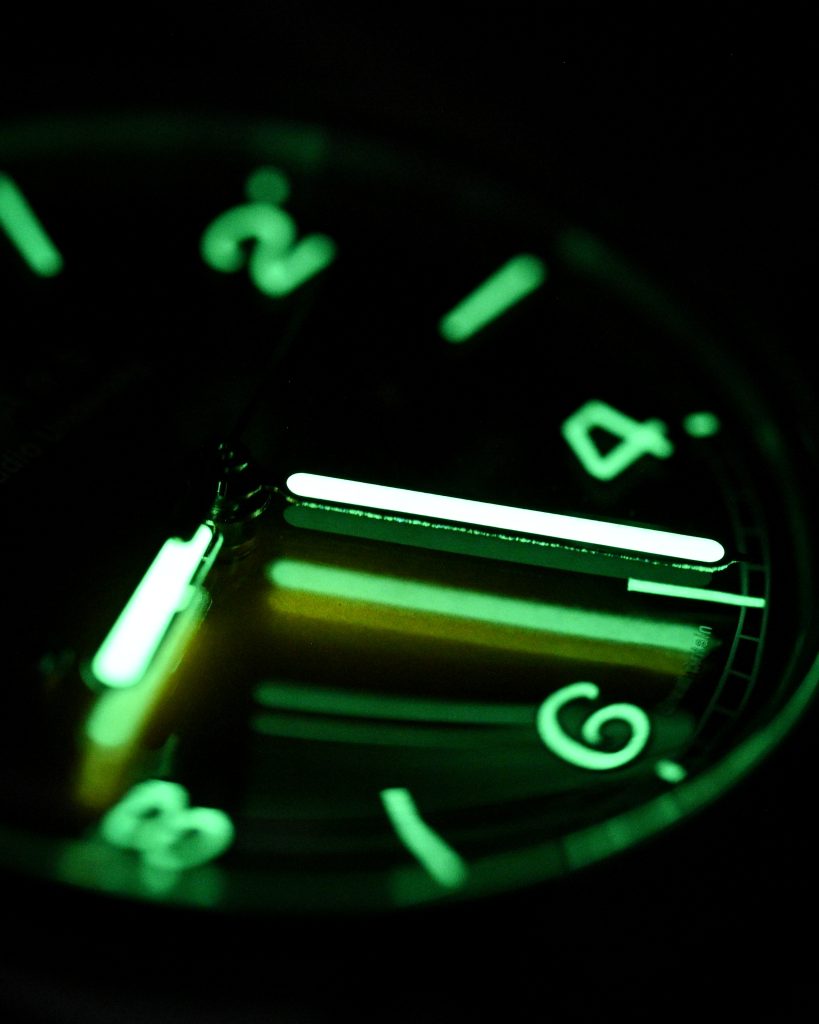
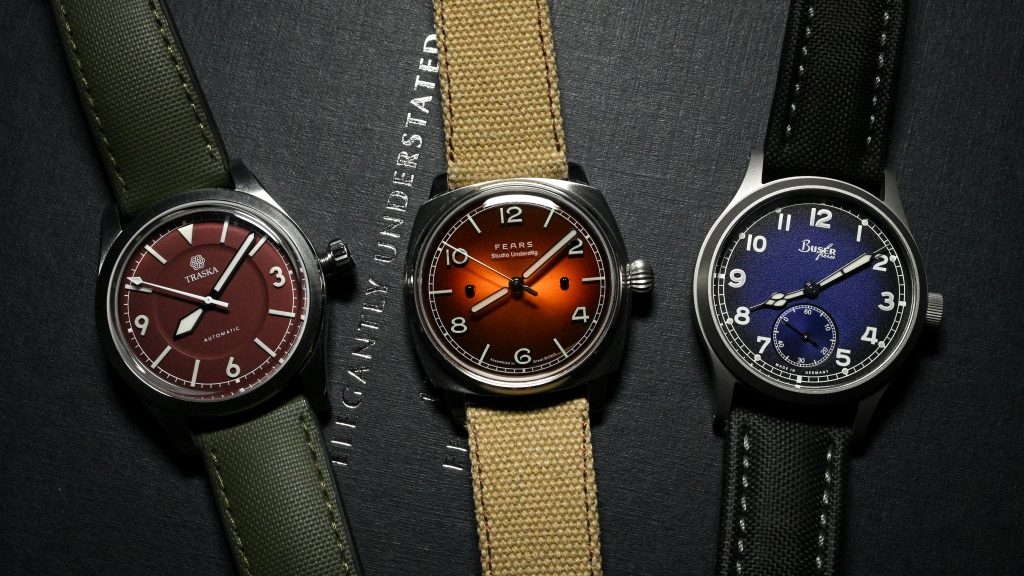
I compared the Manhattan against a few watches in a comparable-ish price bracket, including the Traska Summiteer and the Buser Frères GSTP; the Traska’s full lume blocks make it an unfair match-up, but the GSTP is a far better comparison, and the Manhattan holds up reasonably well.
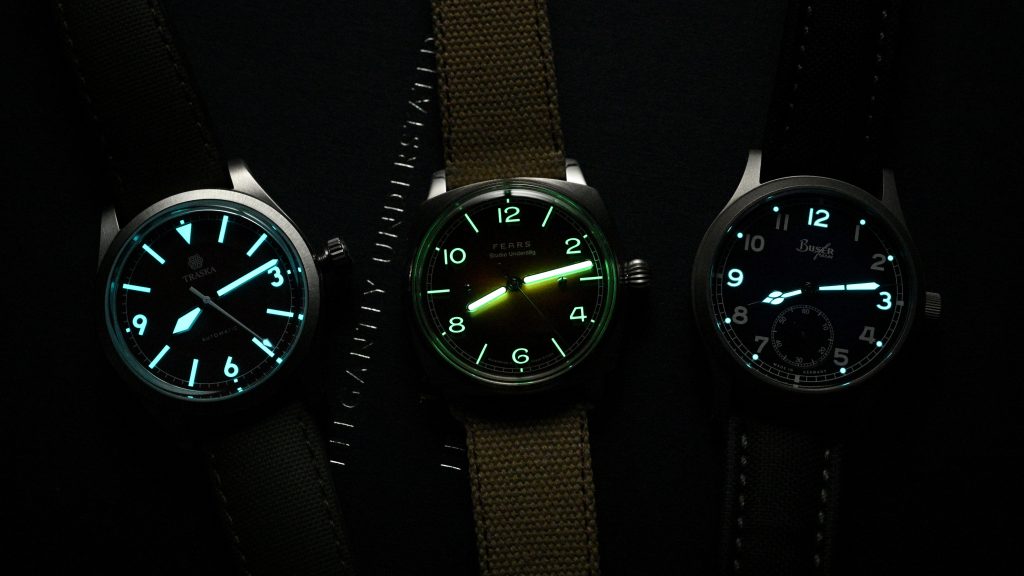
Overall, I’d say the lume here outperforms many watches but falls short of the best-lumed pieces, which is entirely fair for this genre. Most sane humans will be perfectly satisfied, though us lume junkies might walk away only moderately impressed.
Movement
The Manhattan is powered by the manual-winding Sellita SW210, and while my dislike for the Sellita SW200 is no secret, I have no such concerns here since the SW210 avoids the rotor-related issues that plague its automatic sibling. The brand doesn’t specify which grade they use, but given the advertised ±7 spd accuracy, I strongly suspect it’s the élaboré grade, which is perfectly acceptable in my book. This particular piece kept good time at around +4 spd on average, helped along by a certificate detailing the results of their in-house regulation or validation process. And unlike the rather hideous winding feel of the SW200, the SW210 offers crisp tactile clicks and a reassuring hard stop. Overall, it’s a movement choice that suits the character and style of the watch extremely well.
On The Wrist
The 37.5 mm diameter sits on the smaller end of what I usually wear on my 6.75″ wrist, but what pushes me further out of my comfort zone is the 42.75 mm lug-to-lug; paired with a 12.10 mm overall height, the Manhattan feels a bit more substantial than its footprint suggests, yet still smaller than what I’m typically used to. It weighs about 65g on this strap.
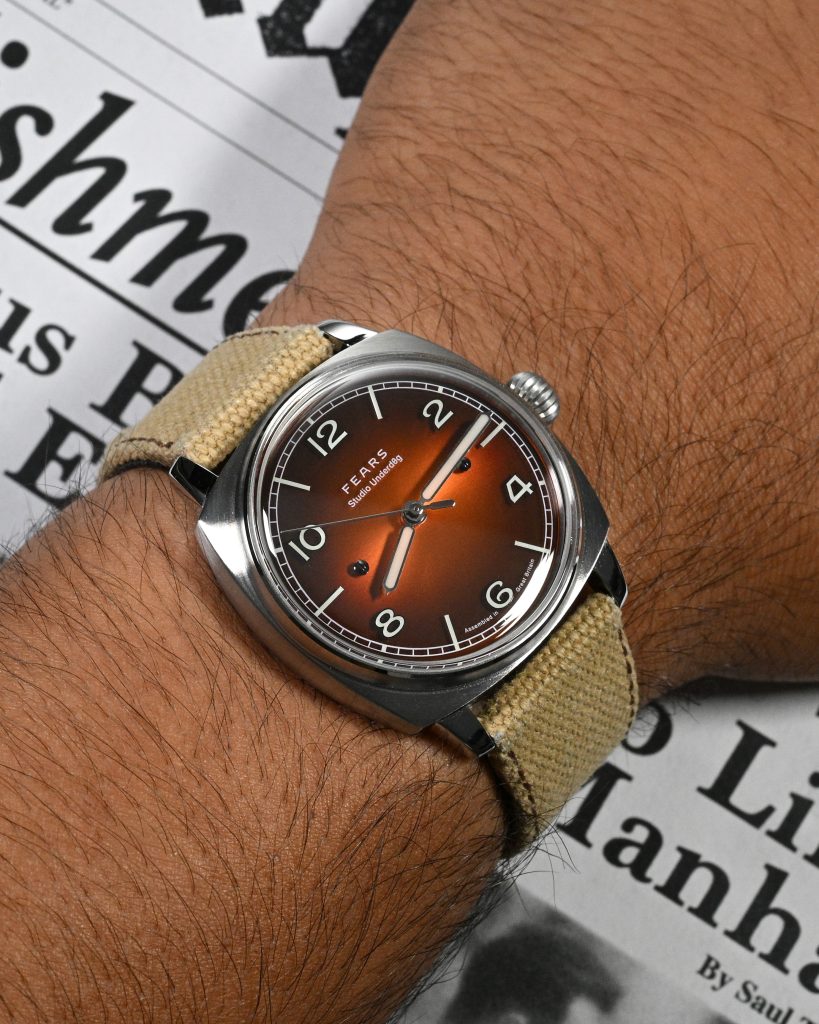
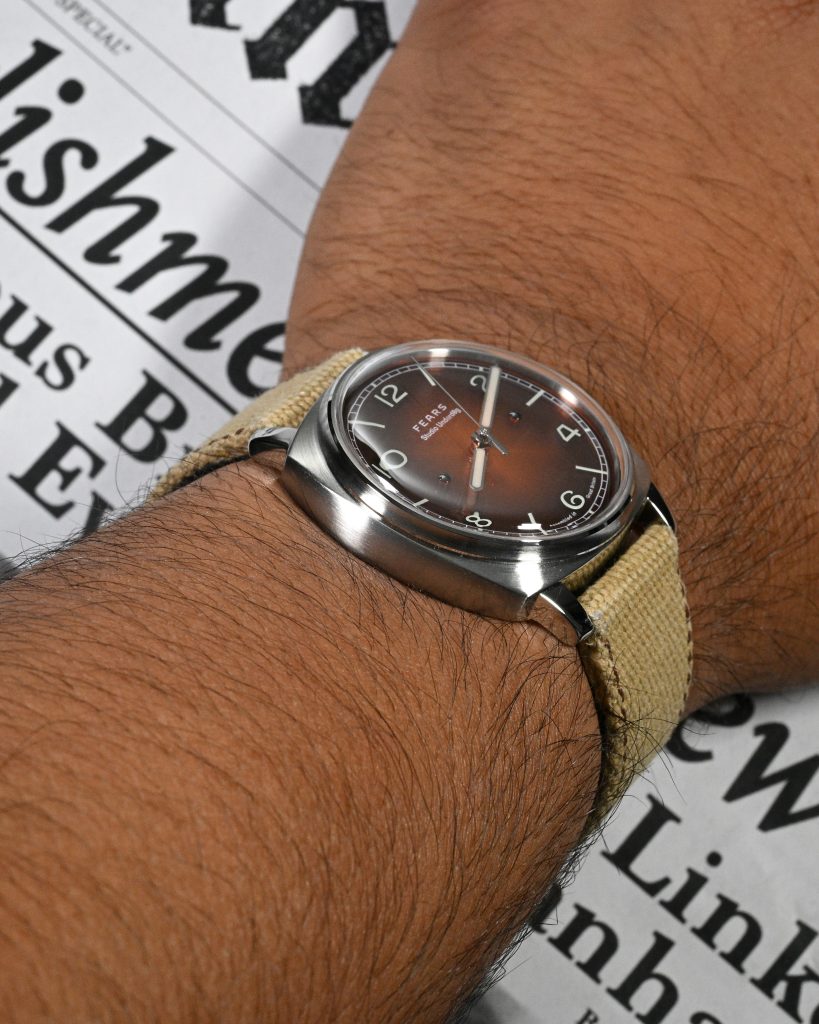
I’m not sure I’d recommend it for wrists over 7.5″ unless you enjoy the “small watch” aesthetic, but I could easily see it working well for wrists down to around 5.5″. It comes on a well-made tobacco-brown waxed leather strap, though I ended up wearing it mostly on a Veblenist canvas strap, where it felt right at home.
Wrapping Up
Overall, the Fears x Studio Underd0g Manhattan ended up being a far more enjoyable watch than I initially expected, even if it pushed me slightly outside my usual comfort zone with its proportions. The blend of Fears’ classical sensibilities with Studio Underd0g’s playful eccentricity creates something that feels genuinely fresh, and despite a few rough edges in finishing, the watch delivers a compelling mix of character, wearability, and charm.
And the experience delivered by the Fears and Studio Underd0g crew at the event made it an even more enjoyable experience. It doesn’t take itself too seriously, even with its somewhat brooding aesthetic, and it brings a bit of fun to the wrist without feeling gimmicky. It’s not perfect, but it doesn’t need to be… and for a collaboration piece at this price, I think it succeeds in all the ways that matter. At $1300 it is undeniably on the pricier side of things for a Studio Underd0g watch, but perhaps the fact that there were at least another 500 people in the line behind me is proof of the contrary.