Disclaimer: this video/review was not sponsored by Christopher Ward or any other entity.
Video
Review
The Christopher Ward C60 Trident Lumiere is perhaps one of the best dive watches I’ve owned and handled in my years as a dive-watch aficionado… not perfect, but as close as I’ve come without entering five-figure territory. It’s dominated so much of my wrist time that many of my other divers eventually felt redundant and were sold off.
So when the brand released the C63 Sealander Extreme GMT, my first thought was: the Lumiere gets the GMT treatment! And while there’s clear design and material overlap, it quickly became evident that the Extreme GMT is not meant to sit on the same tier as the Lumiere, and I’ll try to highlight where that distinction shows. Still, this watch is immensely impressive, delivering some of the wildest lume performance I’ve ever experienced, surpassing even the Lumiere.
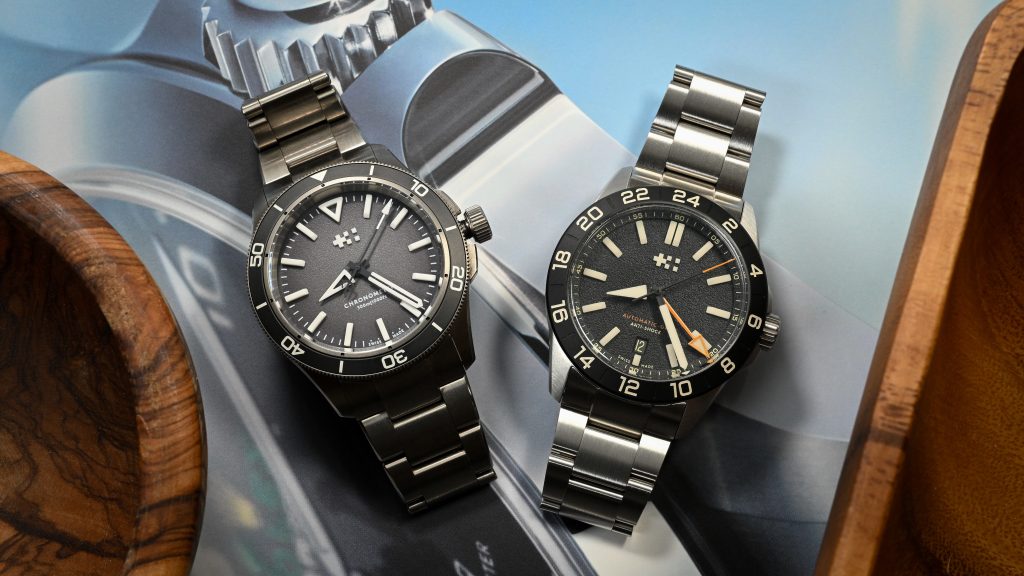
In terms of design, the C63 Sealander GMTs have never hidden their inspiration, clearly echoing the fixed-bezel sports GMT aesthetic made famous by the Rolex Explorer II. The Extreme GMT follows that lineage, but to me it feels less like an homage and more like a thought experiment: “What if we designed an accessible Explorer II for today’s market, using modern materials and performance expectations?” And by the end of this review, you might see it through that same lens too.
Where pricing goes, these watches have a retail price of $1,995 on bracelet or $1,785 on a V-strap, nearly $500 less than the Lumiere, which costs $2,470 USD on the bracelet.
Let’s check it out!
Case
The case measures 40.75mm across the diagonal, 47.5mm lug-to-lug, 51.3mm across the male end links, and 12mm thick, all in fully brushed steel. While it follows the familiar Sealander Light Catcher profile, every accent is brushed in different directions, keeping the case visually engaging despite its overall subdued aesthetic. Ergonomically, it’s excellent: the mid-case curvature wraps naturally around the wrist, much like the Lumiere, though that watch achieves an even slimmer and more refined feel.
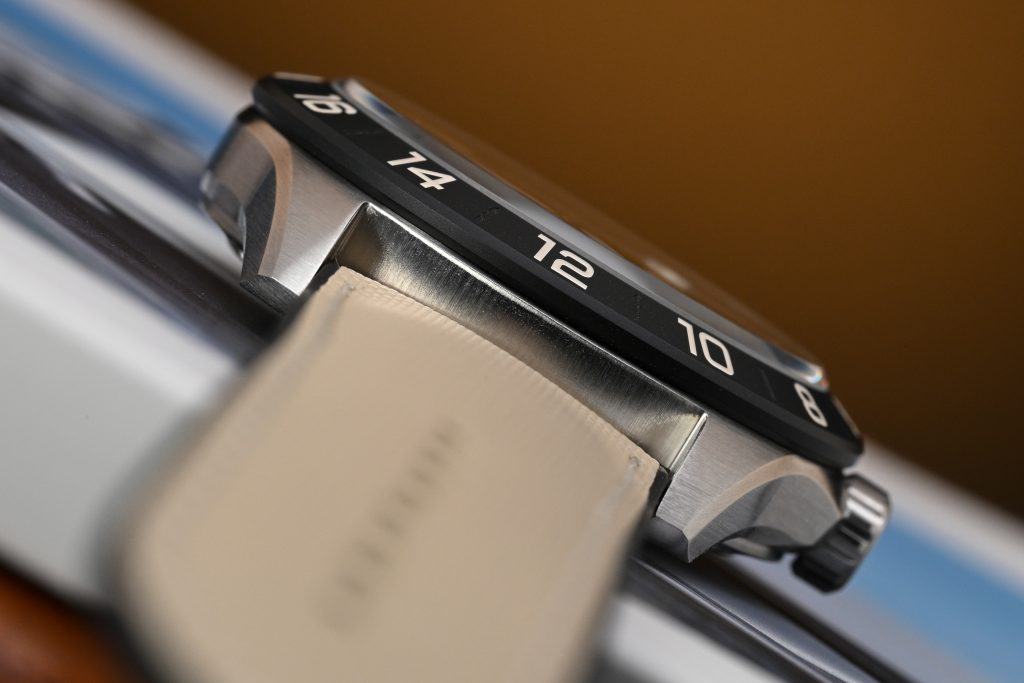
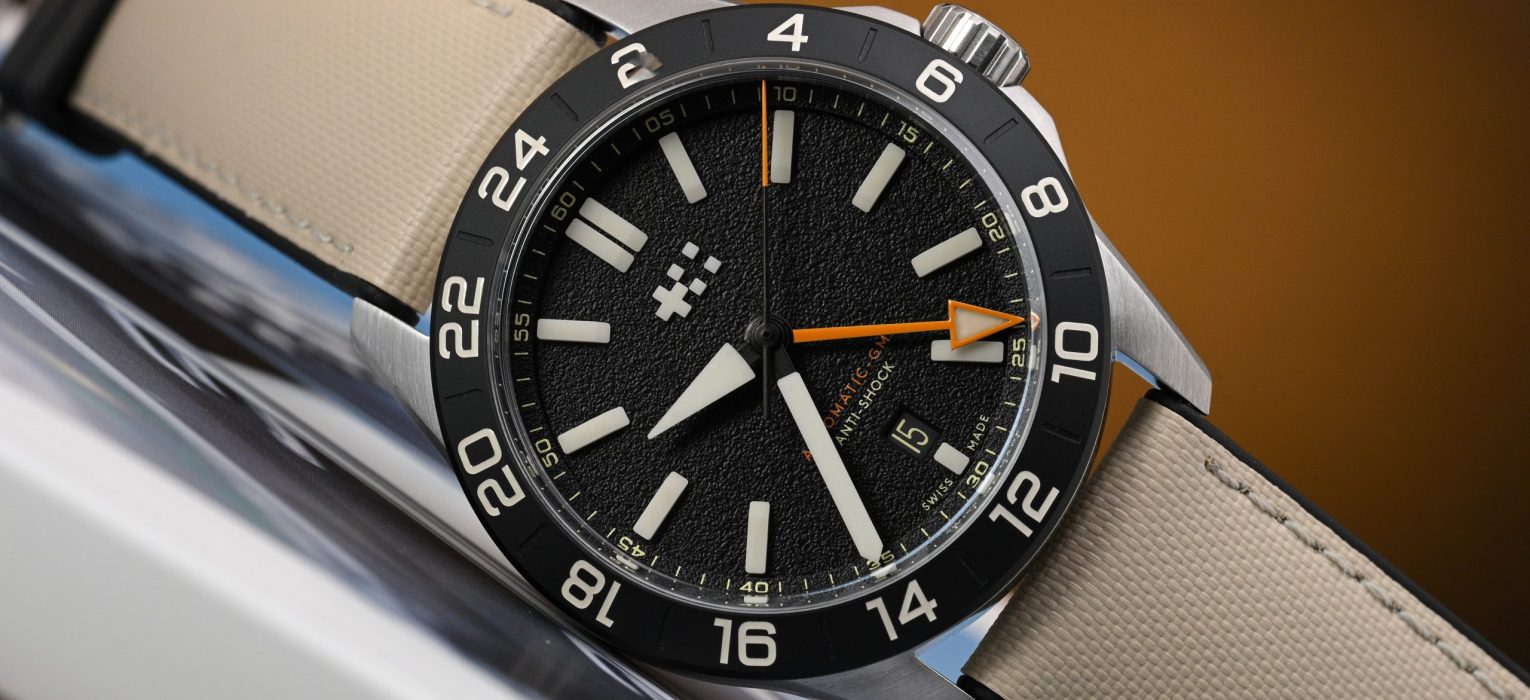
Christopher Ward also answers a long-standing wish from Explorer II fans by giving this watch a matte ceramic fixed bezel with lumed 24-hour markings, paired with a slightly raised flat sapphire crystal with superb AR that makes legibility on par with the Lumiere.
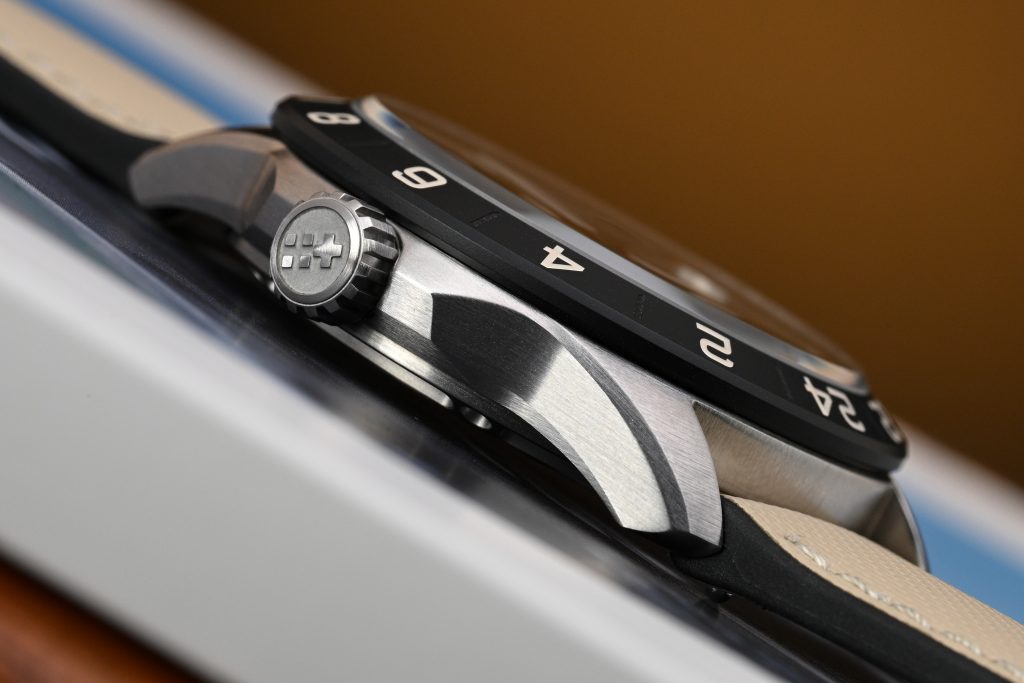
The integrated crown guards flow cleanly into a 6.65mm screw-down crown that’s easy to operate, and the movement benefits from an internal rubber shock absorber sleeve inside the case: a feature I’m genuinely happy to see and hope CW continues to develop, ideally with some form of published shock rating or certification, like Bremont did on some of their watches.
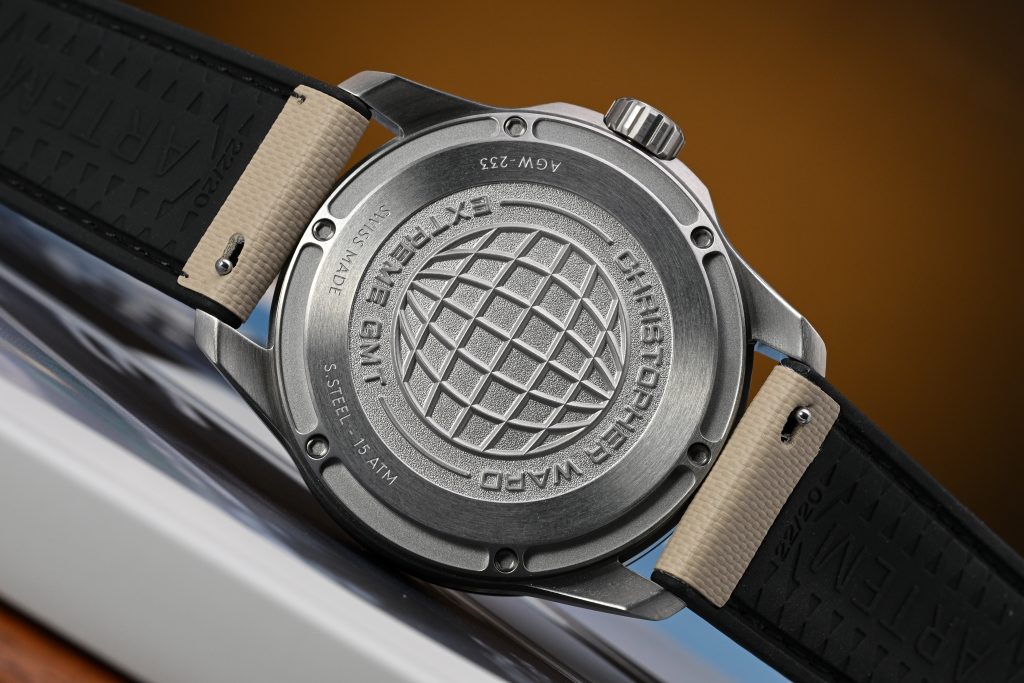
Flip the watch over and you’ll find a flat, nicely engraved screw-down case-back that offers enough texture to stay planted on the wrist without feeling rough, along with a solid 150m of water resistance.
Dial
The Lumiere’s slim profile and compact hand stack left limited real estate on its dial, but the SW330-powered Extreme GMT offers a much roomier layout, and Christopher Ward makes excellent use of that space. A raised chapter ring sits at the dial’s edge, with numerals at every five-minute increment and ticks in between, and in a pebbled texture similar to the dial, which slightly coarser and more tactile looking when compared with the Lumiere.
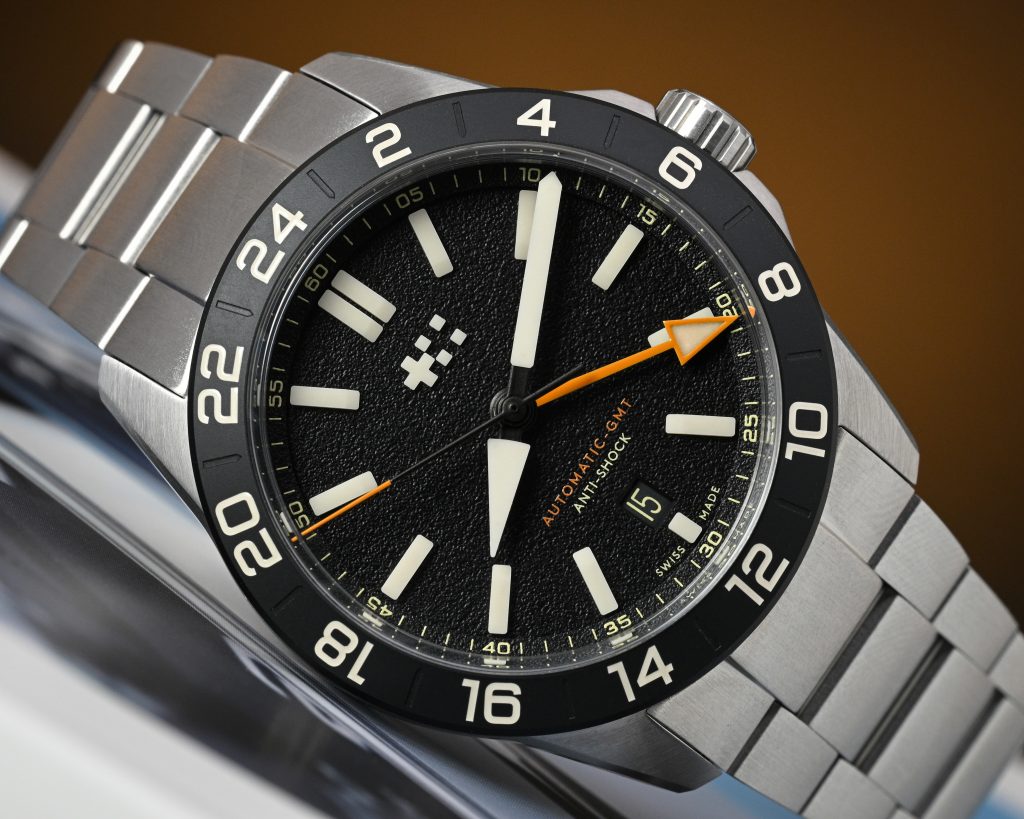
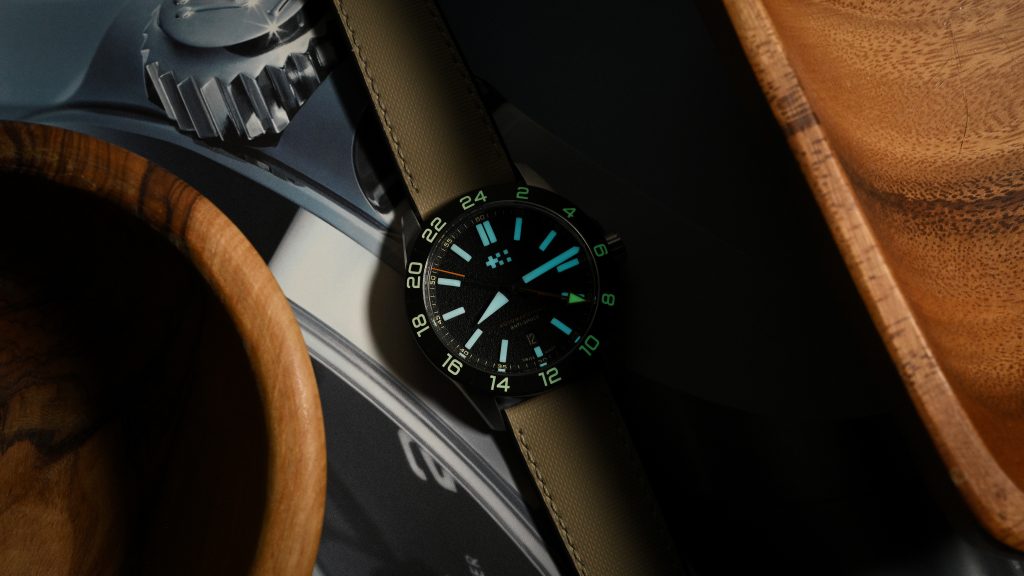
The dial is anchored by Globolight XP hour markers: including doubles at 12 and a shortened marker at 6 to accommodate a neatly color-matched date window, and the brand’s logo below 12 is also executed in Globolight XP, which is both impressive and genuinely fun to look at.
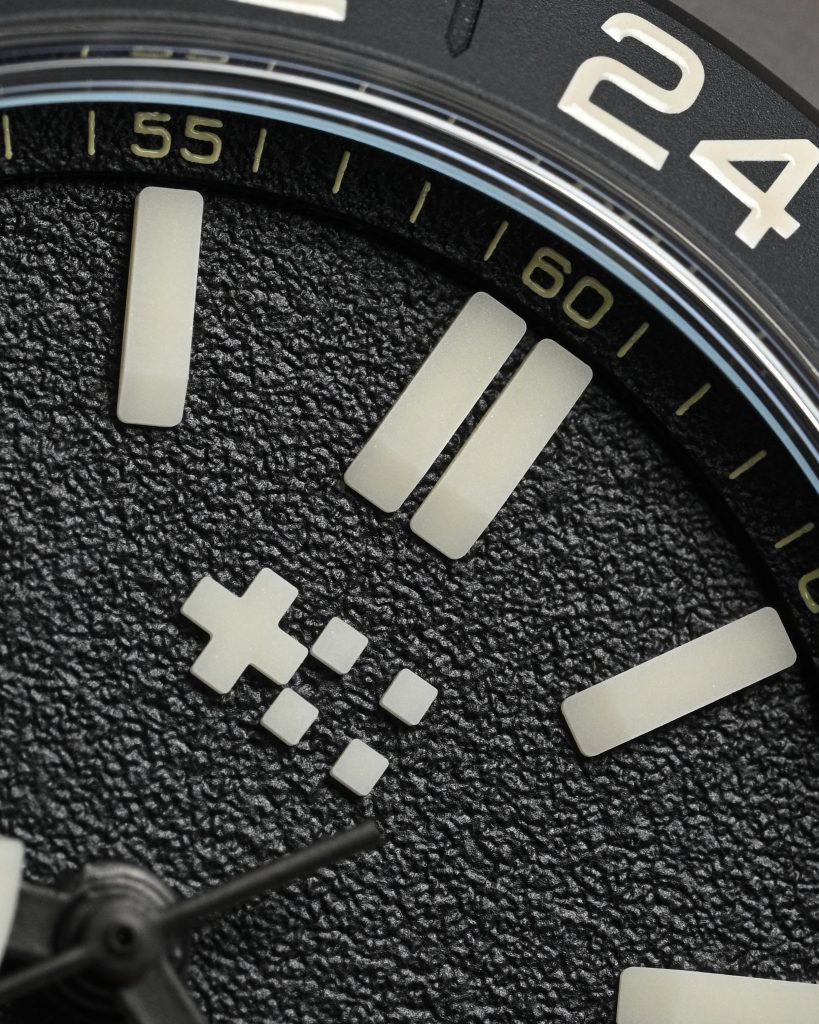
Unlike the Lumiere’s skeletonized hands, the Extreme GMT uses solid hour and minute hands with larger blocks of lume, paired with an orange-painted GMT hand with a traditionally lumed arrow tip; the seconds hand carries a matching orange painted tip but no lume.
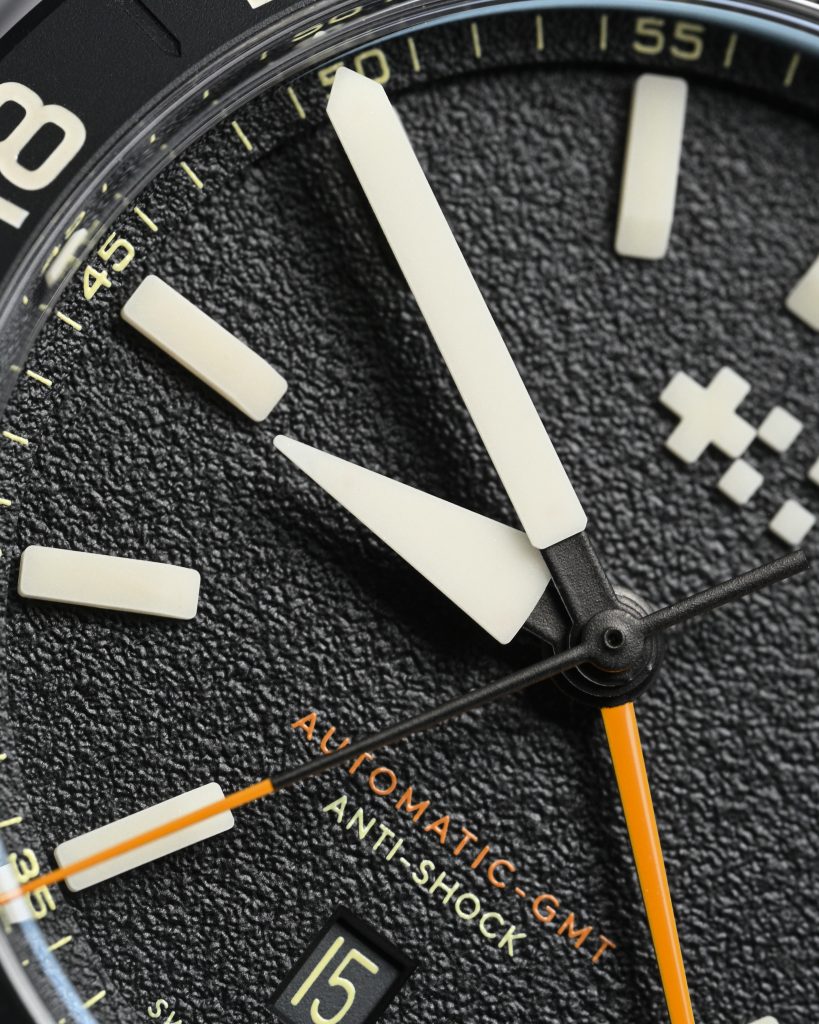
The overall design is simple yet attractive, and while it doesn’t push any boundaries in terms of novelty, it compensates with excellent materials, very good finishing, and consistently strong quality control.
Lume
Christopher Ward’s work with Xenoprint on the Lumiere set a high bar, with its Globolight XP indices, hands, and logo, complete with tiny bevels you only notice under a loupe, the kind of detail that gets us watch nerds unreasonably excited. The only minor drawback there, due to thickness and design constraints, was that the thinner Globolight hand segments faded a touch sooner than the large indices, though the lume was so strong overall that you’d never notice this outside time lapsed macro shots.
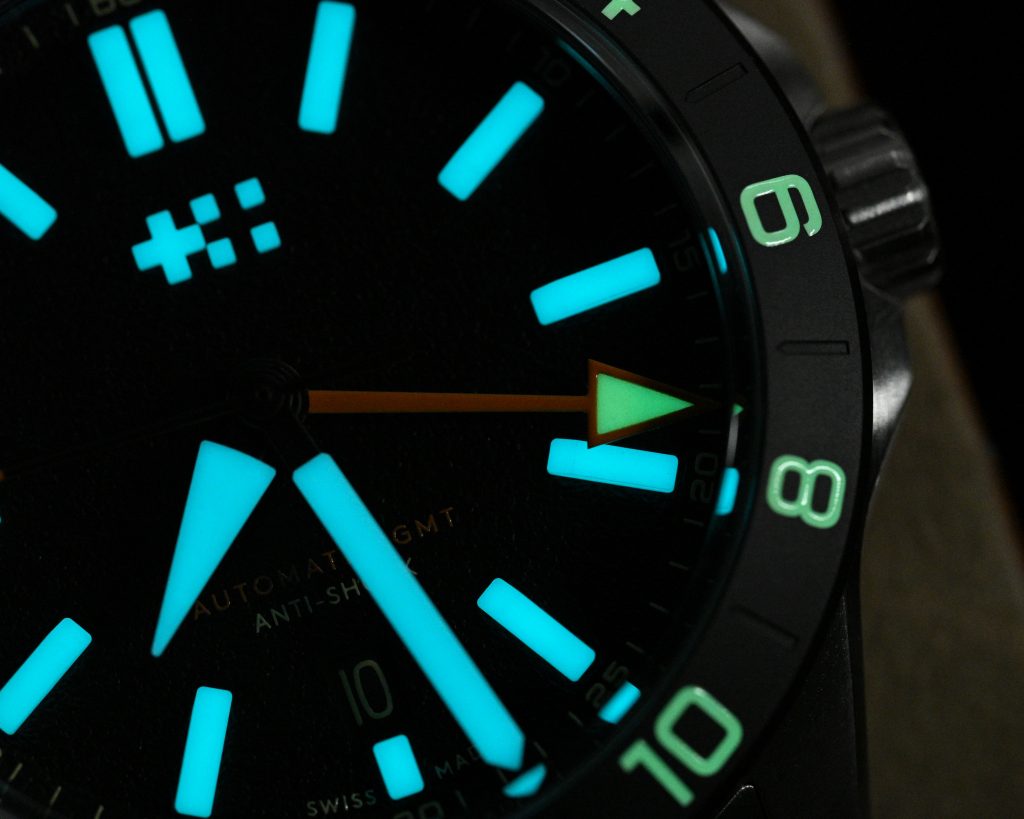
With the Extreme GMT, however, the lume takes a major leap forward: the indices are larger, the hands are solid rather than skeletonized and noticeably thicker, and while the micro-bevels are gone, the sheer brightness and longevity easily surpass the Lumiere. The GMT hand uses traditional lume, as do the ceramic bezel numerals, and their green glow contrasts nicely against the blue Globolight elements.
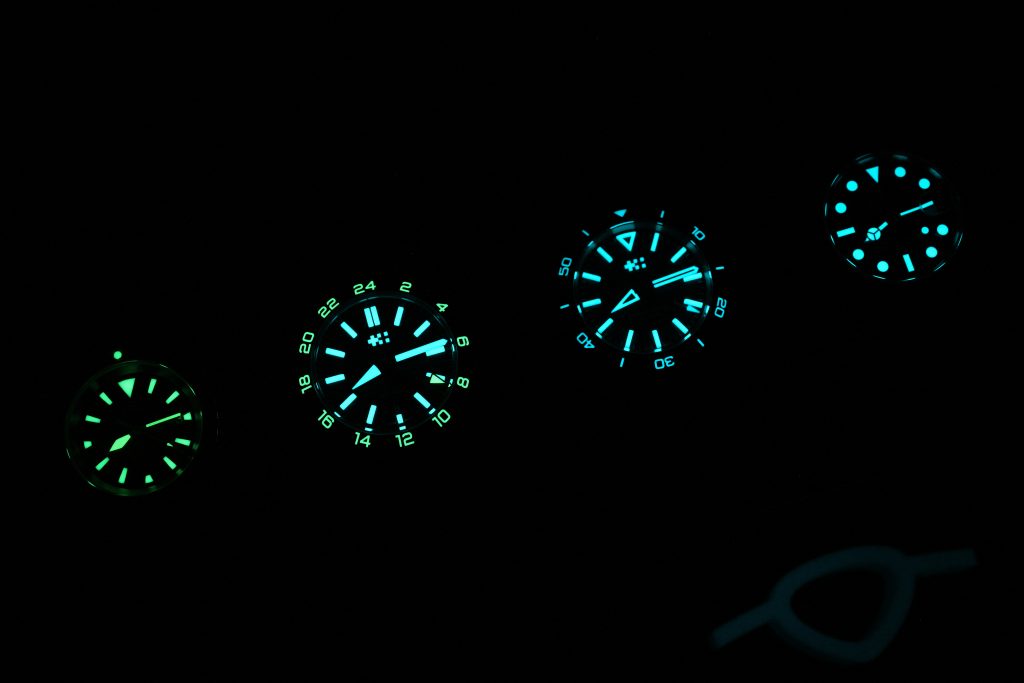
In comparisons with my CWC Royal Navy 300, Lumiere, and Rolex Yacht-Master Ti, the Extreme GMT was the obvious winner, and it outshone the MING 57.04 Iris and C12 Loco as well. Overall, even the pickiest lume fanatic will be more than satisfied… this thing performs incredibly well and might just light up your bedside table to the point where you “won’t want it this bright”. Kidding, of course… there’s no such thing.
Movement
This watch is powered by the Sellita SW330, the GMT variant of the SW300, a long-established caller-style GMT found (in either its ETA2893 or SW330 incarnation) across many mid-tier luxury Swiss watches like the Breitling Avenger, and even smaller independents like the MING 17.09, MING 22.01 and the recent 37.11 Odyssey.
While larger brands have moved toward developing their own “true GMT” calibers, independents and micro-brands are limited to caller GMTs or the Miyota 9075, an impressive and affordable option, but one that lacks the refinement of the SW300 family and can occasionally suffer from GMT-hand misalignment.
At around $2,000, I don’t think you’re going to do a lot better than this movement in a Swiss Made GMT watch from a brand that has to mostly rely on third party movements. And personally, I don’t mind the 2-3 extra minutes it takes to use a caller GMT while traveling. But maybe we’ll the brand develop their own in-house “true GMT” soon. While this movement is not chronometer certified like the Lumiere, it is keeping pretty good time at around +4 spd.
On The Wrist
On my 6.75″ wrist, the 40.75mm diameter and 47.5mm lug-to-lug fit beautifully, and even though the male end links extend the span to 51.3mm, the mid-case curvature that wraps gently beyond the caseback makes it wear far more compact than the numbers suggest. I’ve tried repeatedly to make the 42mm Rolex Explorer II work for me, but it has always felt a bit too large and better suited for wrists above 7.25″, so these more restrained dimensions and thoughtful ergonomics feel noticeably more versatile.
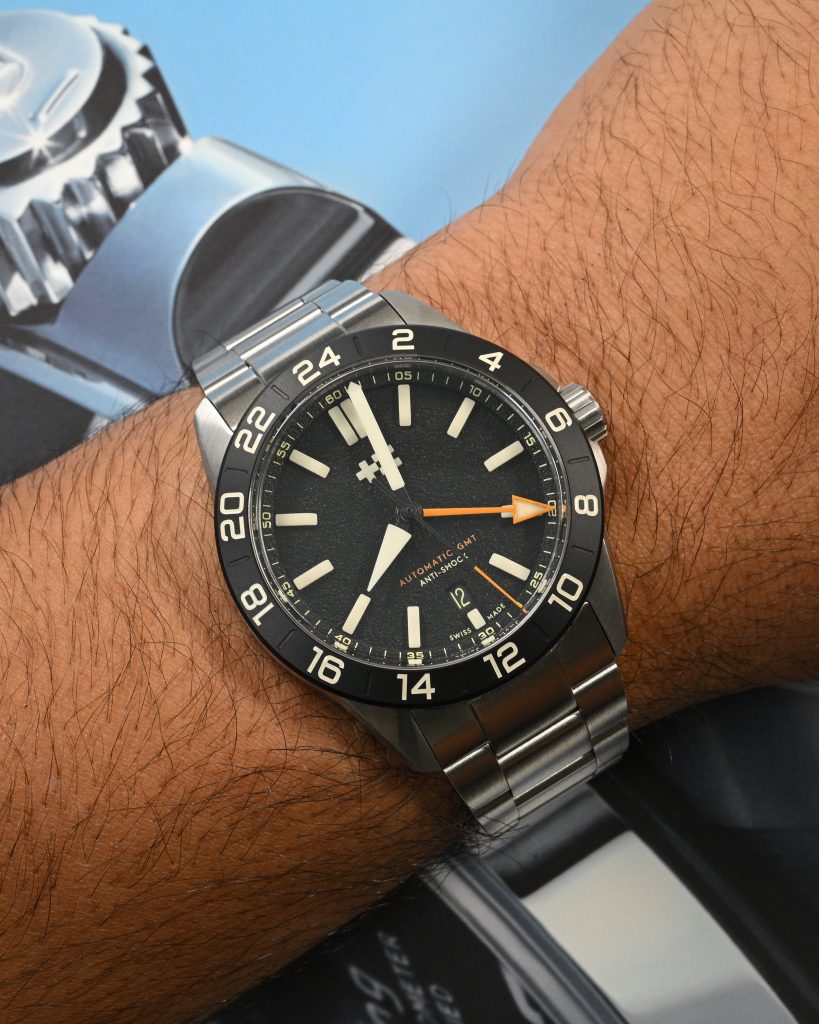
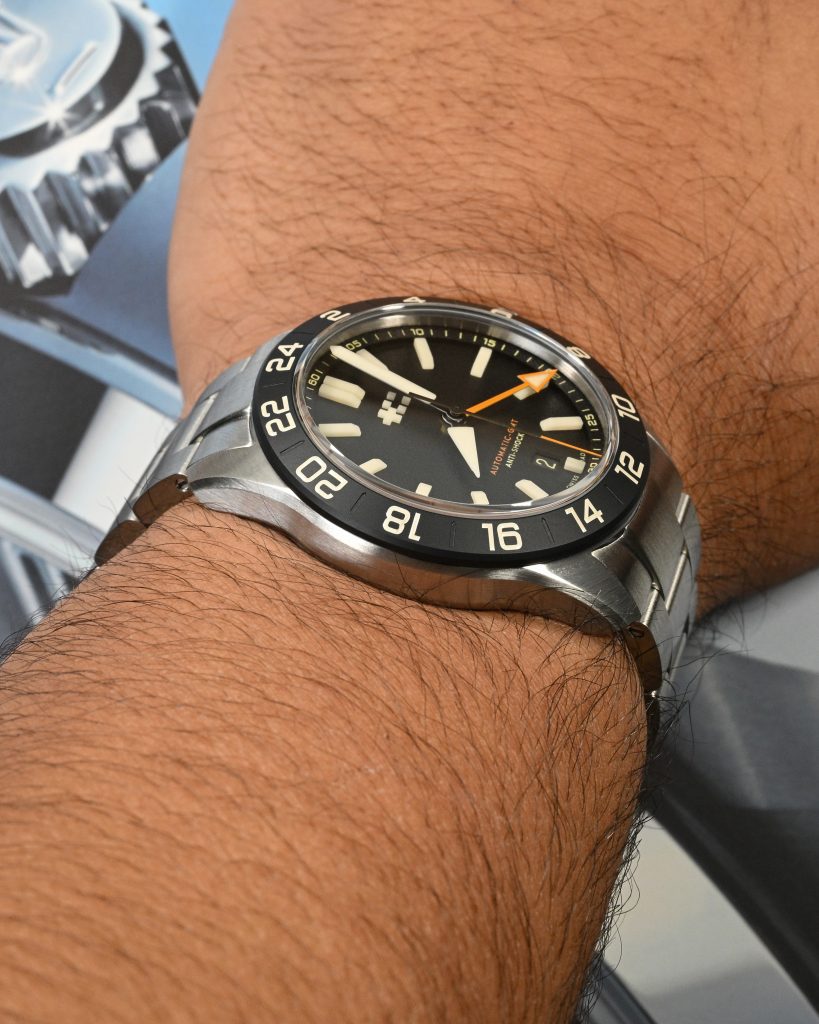
I won’t say the Extreme GMT is more comfortable than my Lumiere, because it isn’t, and that’s mostly down to steel versus titanium; at 70g for the head and 146g on bracelet, it’s simply heavier, and I admit my own bias toward titanium.
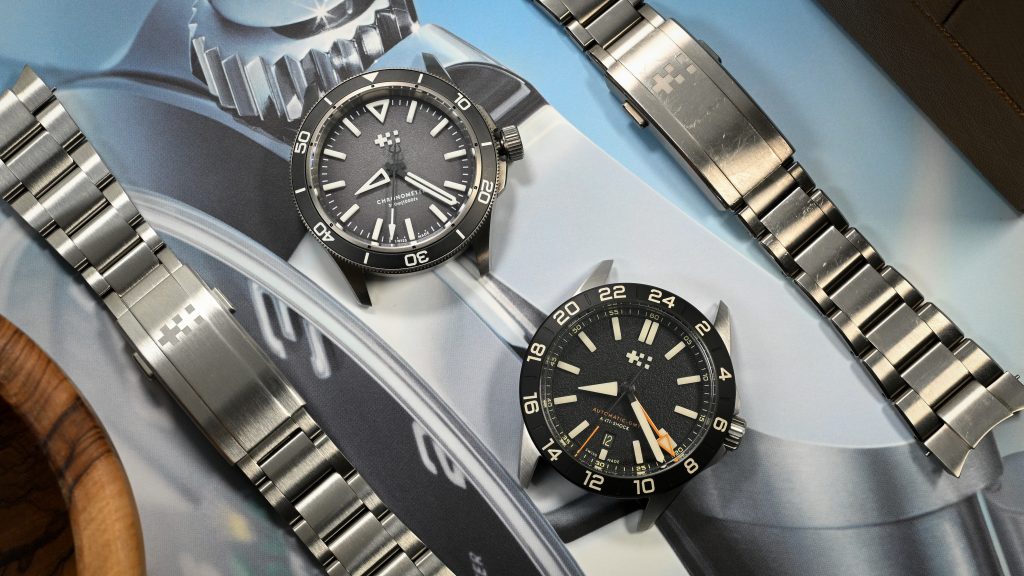
As for the bracelet, some aspects outperform the Lumiere, others fall short, and many land squarely on par: the fully integrated end links are a clear improvement without the slight protrusion that exists on the Lumiere, but the lack of beveled edges makes the links slightly sharper to the touch, nowhere near Czapek-level sharpness, but could use gentle micro-beveling to make it as soft to touch as the case and clasp. What remains excellent is the quick-adjust clasp carried over from the Lumiere. Overall, the bracelet comes close to matching the Lumiere’s, but it falls just short in tactile refinement.
Wrapping Up
To keep it brief, if you’re like me and don’t get hung up on the caller-vs-flyer GMT debate, and you’re comfortable with the design parallels to a certain icon from the Crown, you’ll likely enjoy the Extreme GMT a lot! Considering the expensive materials, from the extensive Globolight XP elements to the shock-resistant movement sleeve, along with the clean, well-executed finishing, the $2,000 price tag feels entirely reasonable to me, even knowing that my comment sections will inevitably feature someone who disagrees.
It’s not a perfect watch, though; bringing the bracelet fully up to Lumiere standards, upgrading the movement to a chronometer grade, and offering a titanium option would get it very close to ideal for me, and I wouldn’t be surprised if a real GMT-Lumiere evolution is already in the pipeline along these lines. And since we’re being honest, I never quite connected with the “Action Hero” marketing… its cheesiness undersold the fact that this is a legitimately rugged tool watch, but that may just be my own interpretation.