Disclaimer: this video/review was not sponsored by Breitling or any other entity.
Video
Review
The modern Chronomat has been one of my favorite Breitling watches, and one of the brand’s more interesting contradictions. It is not as singularly aviation-focused as the Navitimer, not as purpose-built as the Superocean, and not as dressy as the Premier. It sits somewhere in the middle: a large, confident, mechanical sports chronograph with aviation roots (thanks to the Frecce Tricolori), a lot of polish, and enough old and unique Breitling DNA to keep it from being forgotten.
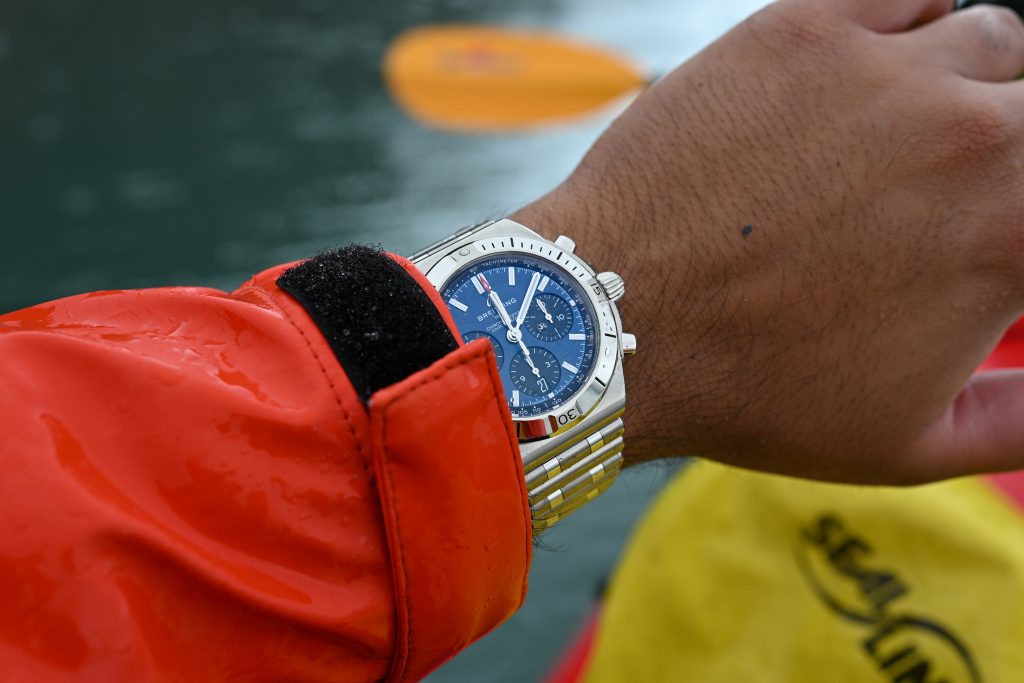
I did not plan to “field test” this new purchase, but it ended up being on my wrist for one of the most memorable trips I have taken lately, to Alaska. I wore it while flying into Denali National Park, landing on a glacier next to Mt Barrille, and walking around while the pilot logged a few takeoff and landing cycles. I wore it again while kayaking in Kenai Fjords National Park to see Aialik Glacier melt into the ocean. And then I wore it through hikes, boats, airports, cold weather, rain, snow, and a lot of ice. None of that makes the Chronomat an expedition watch, but it convinced me that underneath the polish, this is still a serious sports chronograph.

The Chronomat as we know it today begins with the 1983 Frecce Tricolori chronograph and the 1984 Chronomat, when Ernest Schneider’s Breitling was trying to make a mechanical chronograph relevant again in the quartz era. Under Georges Kern, Breitling has leaned heavily into that kind of back catalogue: not as strict reissues, but as modernized, more wearable, more lifestyle-oriented luxury. This latest Chronomat feels exactly like that. It keeps the Rouleaux bracelet, rider-tab “styled” bezel, B01 movement, and muscular case identity, but makes the whole package cleaner and easier to live with.
Let’s check it out!
Case
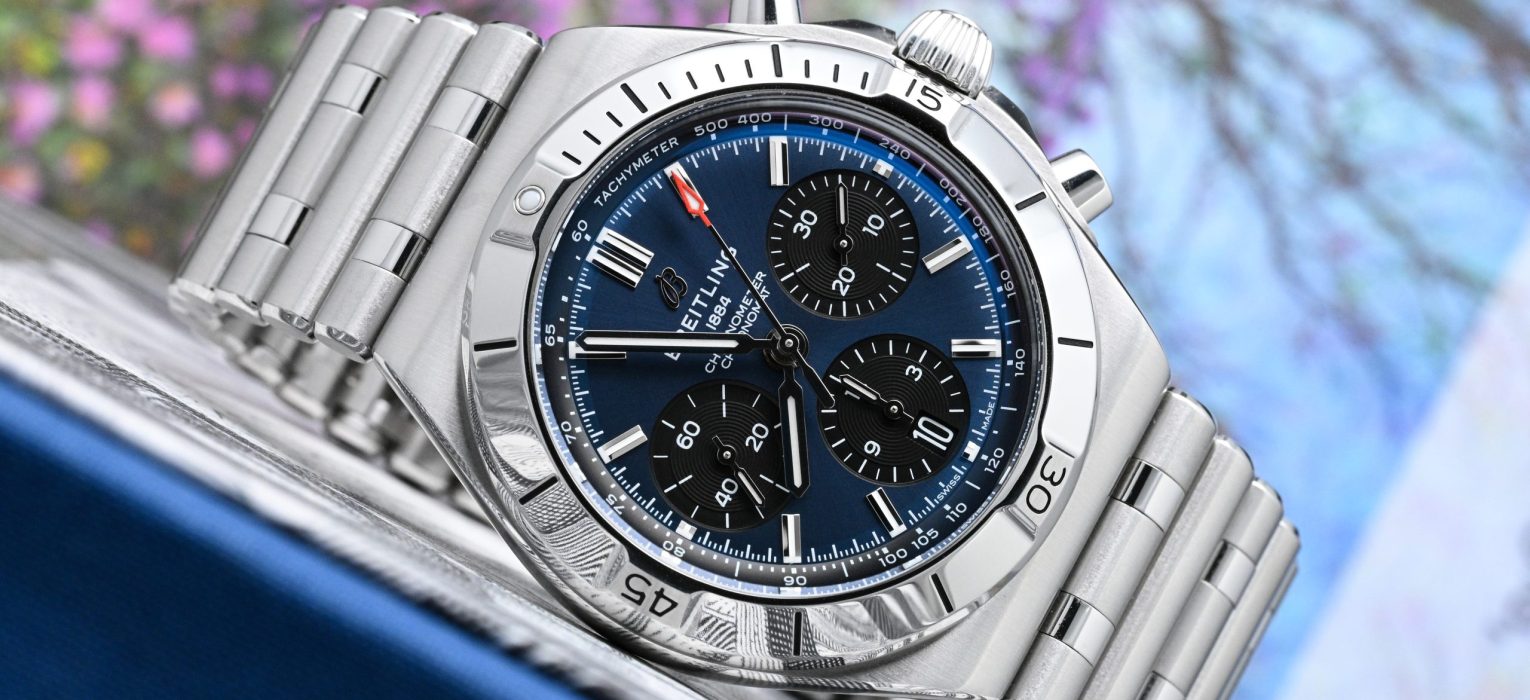
I measured the case at 42mm in diameter, 45.25mm across the case, and 13.75mm thick including the slightly curved top crystal. The screw-down crown at 3 o’clock measures 5.5mm at its widest and tapers slightly, while the oval pushers measure about 4.2mm at their widest. The crown guards and pushers are comfortably laid out, the crown is smooth to operate, and the entire construction feels secure in the way a good sports chronograph should.
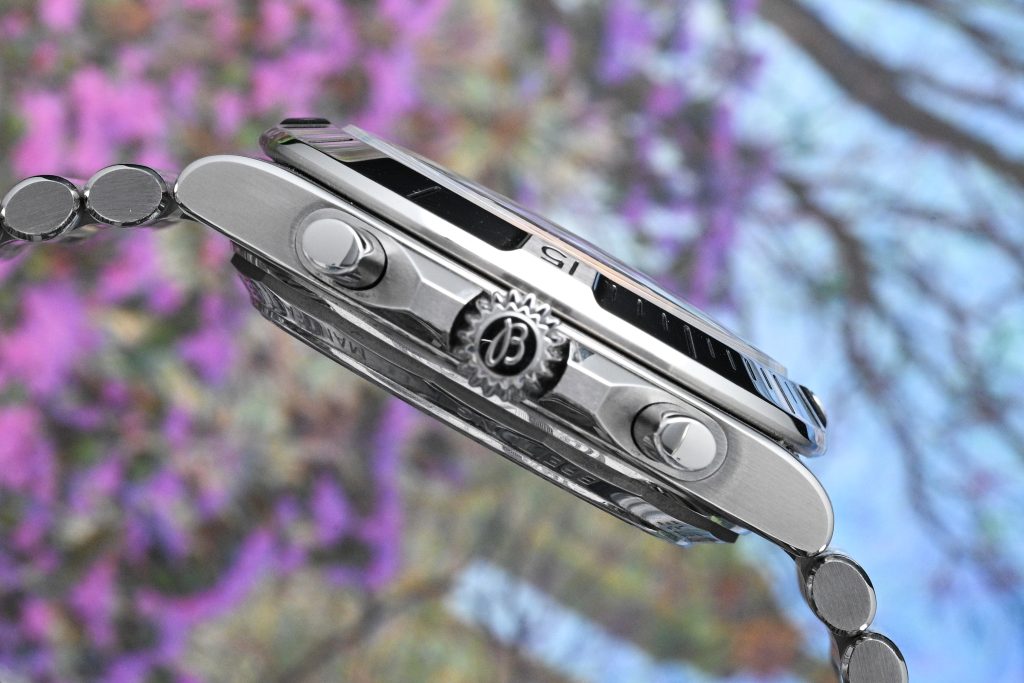
The biggest improvement is thickness, enough to convince me to buy this watch. Previous modern Chronomats always wore too large for me, but this version finally works on my 6.75-inch wrist. It is still bulky and still wears like a Breitling, but the case has been compacted and the mass is distributed well. I measured roughly 5.2mm for the mid-case, 4.25mm for the bezel section, with the remaining thickness in the caseback and crystal. The flatter, lugless case does make the watch sit a bit high, but the balance is better than the dimensions suggest.
Bezel & Bracelet
I believe the bezel is the most debated change on this updated version. I like the idea of the old captive bezel system and separate rider tabs because there is mechanical charm and functional value there. But the rider tabs themselves have not aged particularly well as a concept. Spend time in vintage Breitling groups and you will see a surprising number of watches missing tabs. So while I am usually skeptical when brands simplify construction, because that often means cutting complexity while preserving margin, this may be one of the rare cases where simplification makes ownership sense.
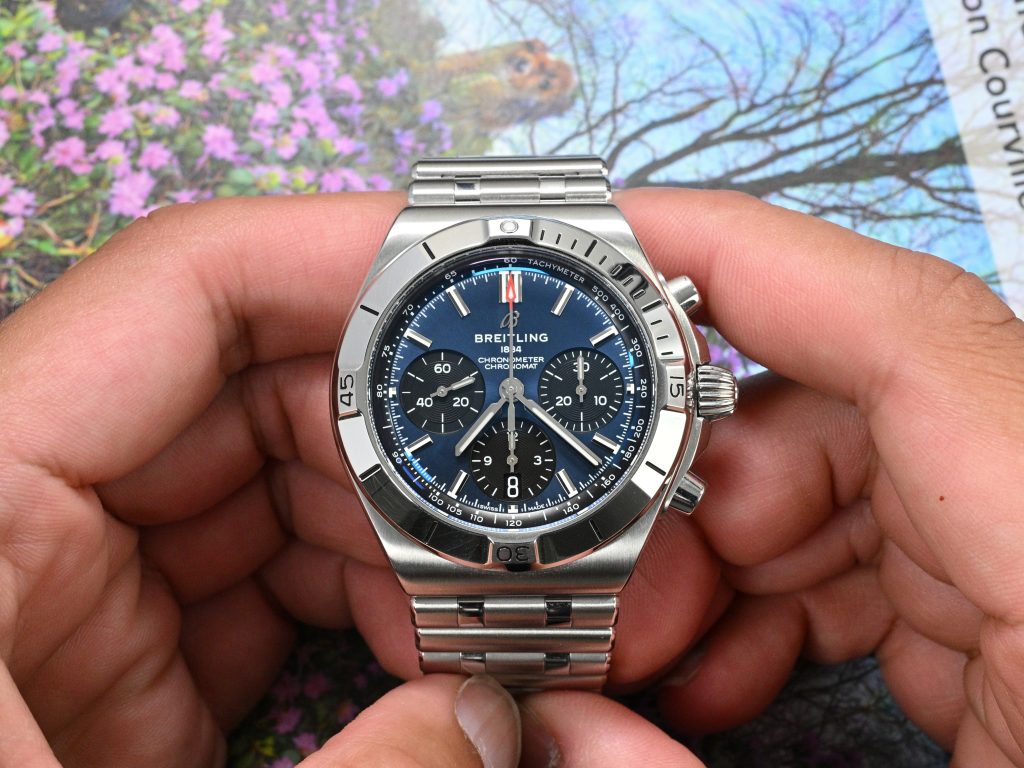
The new bezel loses some older mechanical charm, but it probably helped the watch become thinner, and more robust. To the obsessive among us, the fully polished steel surface is certain to be an issue. It looks great new, but it is absolutely a scratch magnet. After two months, mine already looks entirely scuffed. Earlier in my collecting journey that would have bothered me, but now I actually enjoy seeing the watch pick up evidence of use.
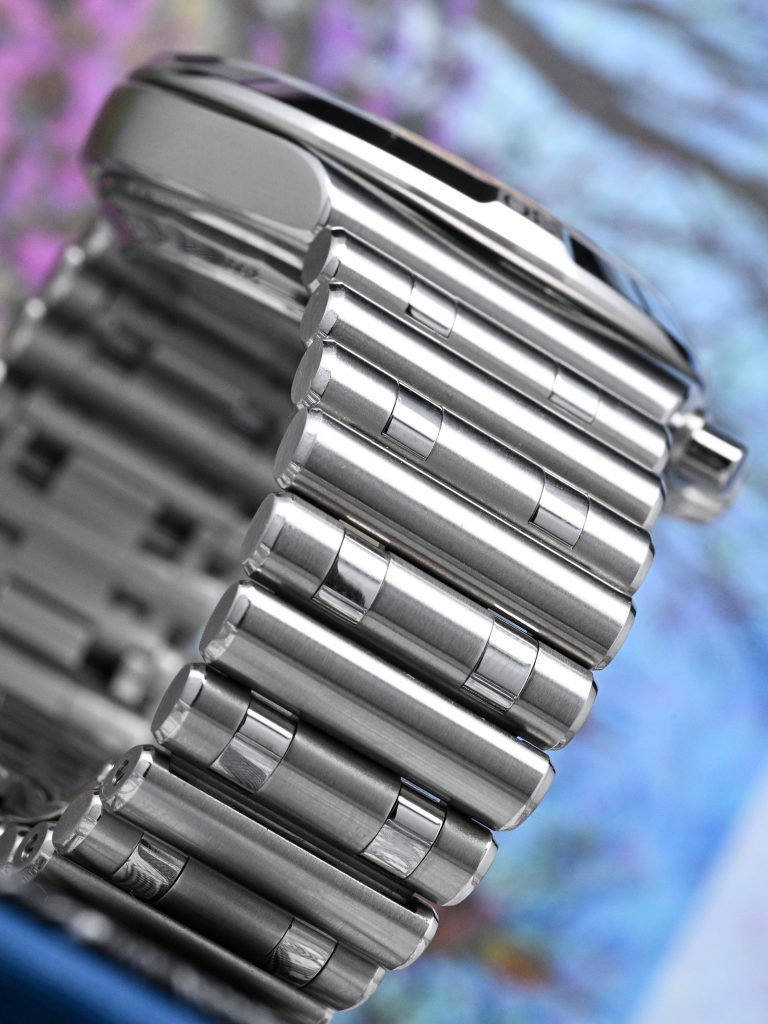
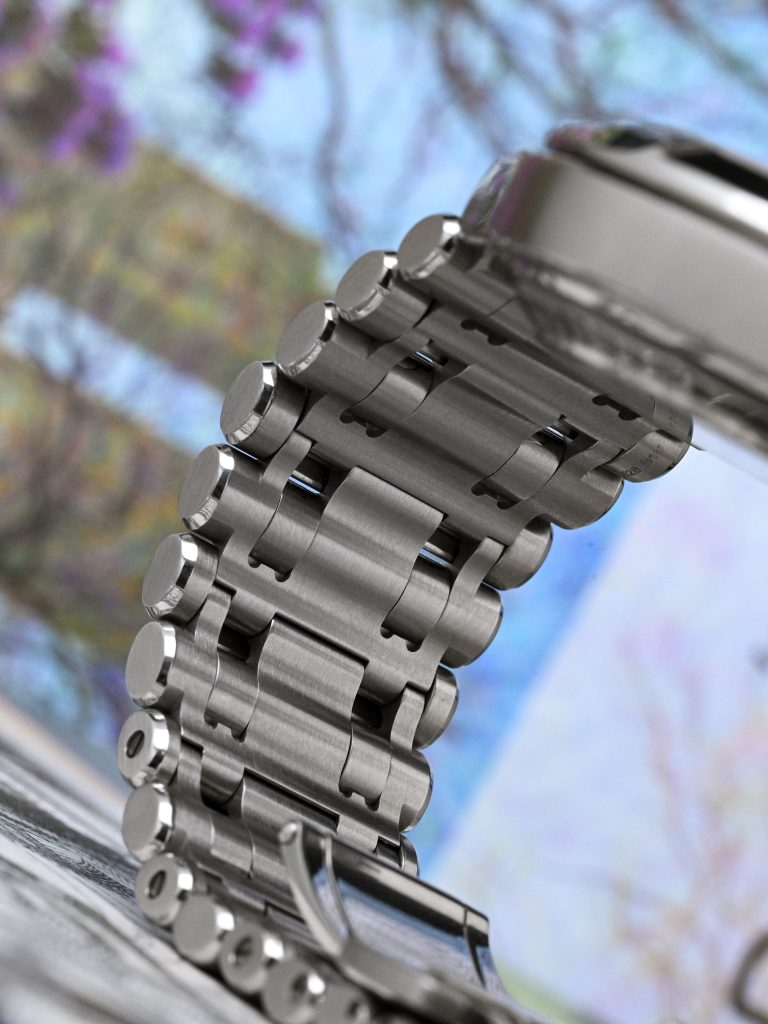
The Rouleaux, or bullet(?)-style, bracelet remains a huge part of the Chronomat’s personality. It starts underneath the case at a smaller width, flares outward to about 23.7mm at the case, and tapers to around 20mm at the butterfly clasp. The real dealmaker for me is the new adjustability, with 3mm of adjustment on both sides of the clasp.
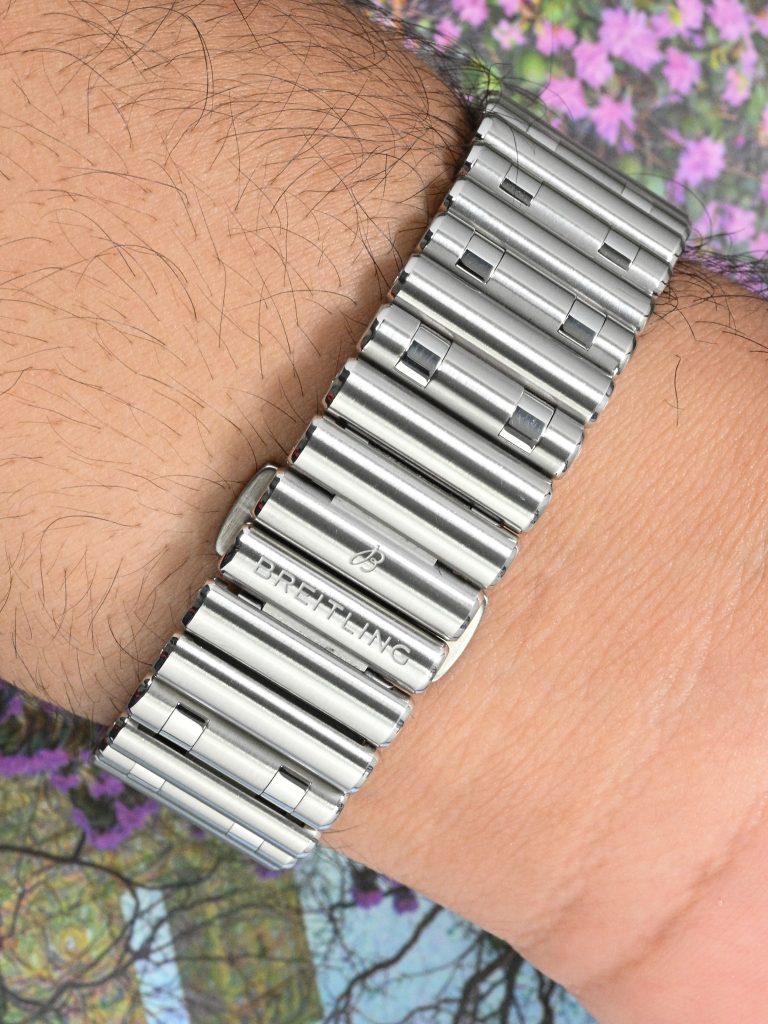
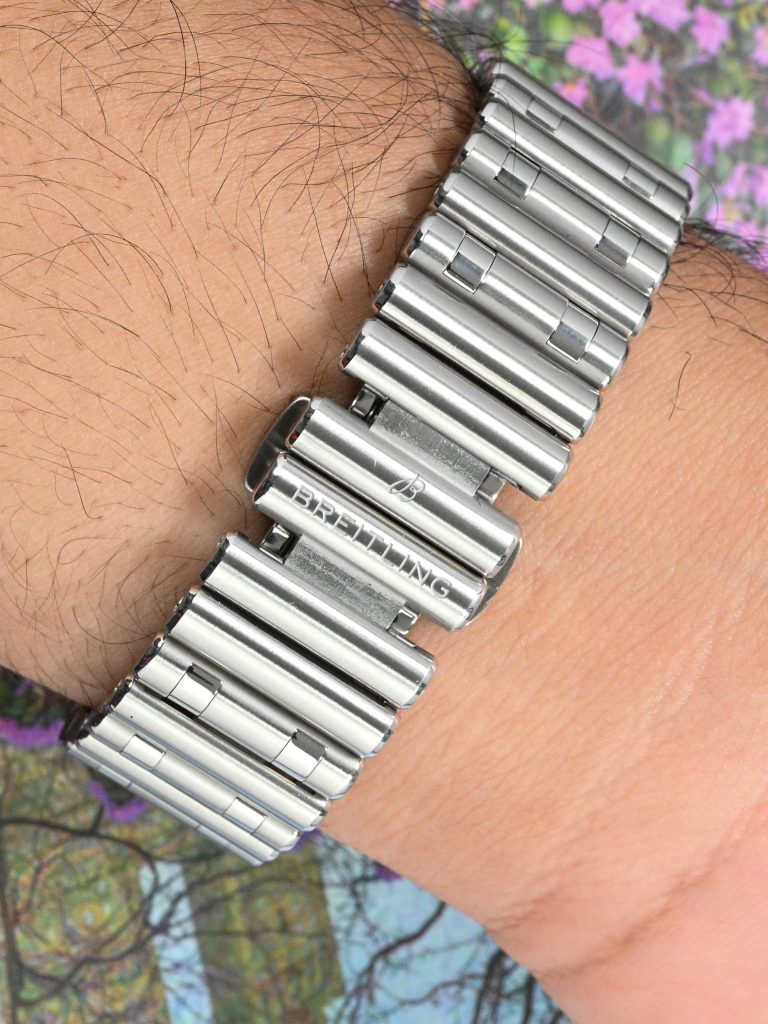
I have always loved this bracelet and the Chronomat in general, but this feature is what pushed me over the edge to buy one. On long travel days, in changing weather, and while moving between jackets, hikes, flights, and boats, that adjustability matters. Even more so when your travel diet involves potato chips and other sodium filled delicacies.
Dial & Lume
The dial design is clean, practical, and recognizably Chronomat, but the execution is where I have some criticism. The overall dial quality control on my watch is not at the level of a Rolex, or even a Speedmaster.
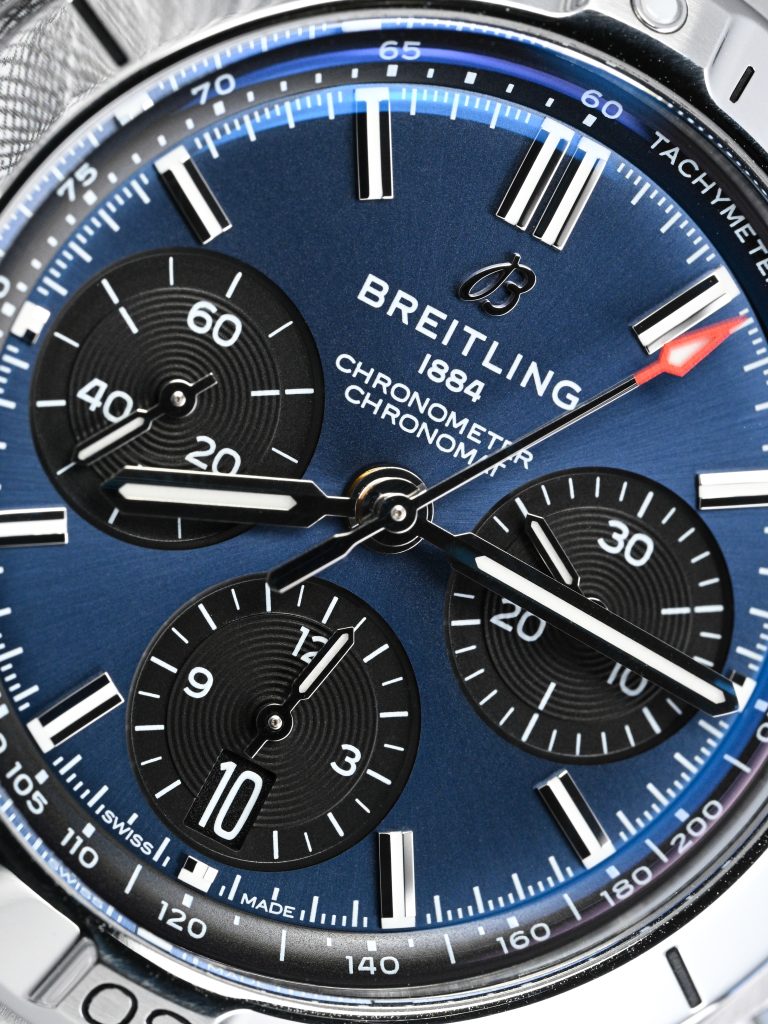
Under macro, I can see scratches and signs of handling on the hands, and the dial QC feels weaker than the case finishing, bracelet execution, and even the movement finishing. That is disappointing, because the rest of the watch feels very well made.
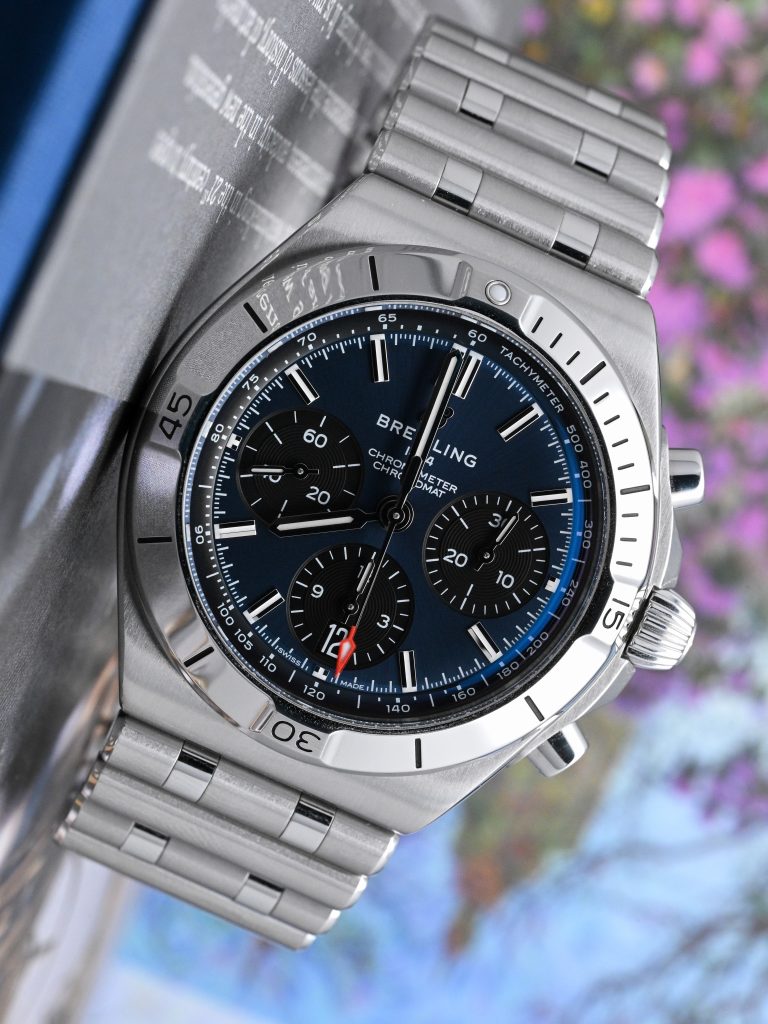
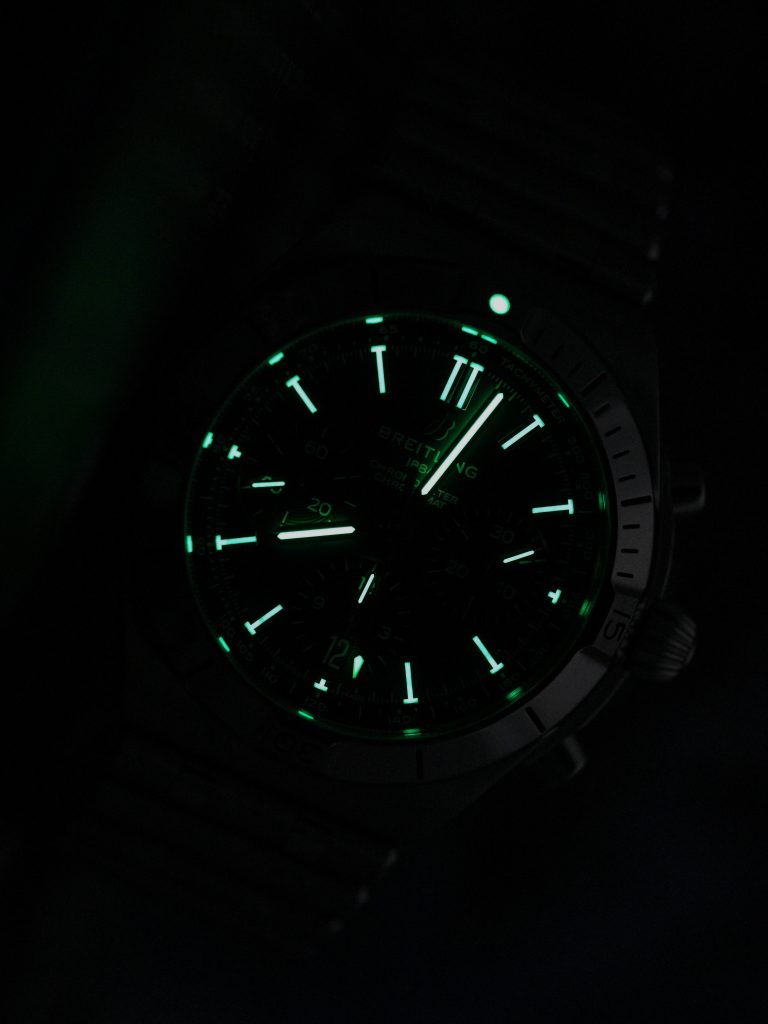
The lume is also not extraordinary. It glows reasonably bright at first, tapers quickly, and then stays dimly visible through the night. Practically, it does what it needs to do, but there is nothing impressive about the performance.
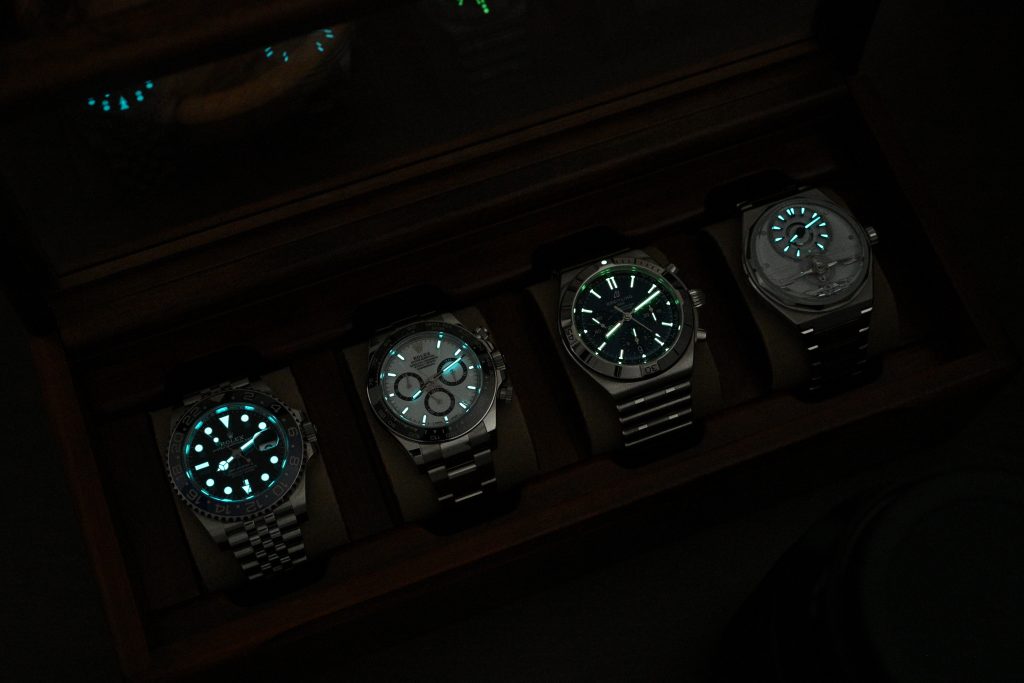
The one detail I really like is that all three sub-register hands are lumed. That is something many great chronographs, including the Speedmaster and Daytona, do not do, and it makes the Chronomat feel more thoughtfully equipped than its average lume performance might suggest.
Movement
This is my first real experience with the B01, and I understand the hype. This is not a soft, delicate, haute horology chronograph experience like you might expect from Patek Philippe or A. Lange & Söhne. It is the opposite.
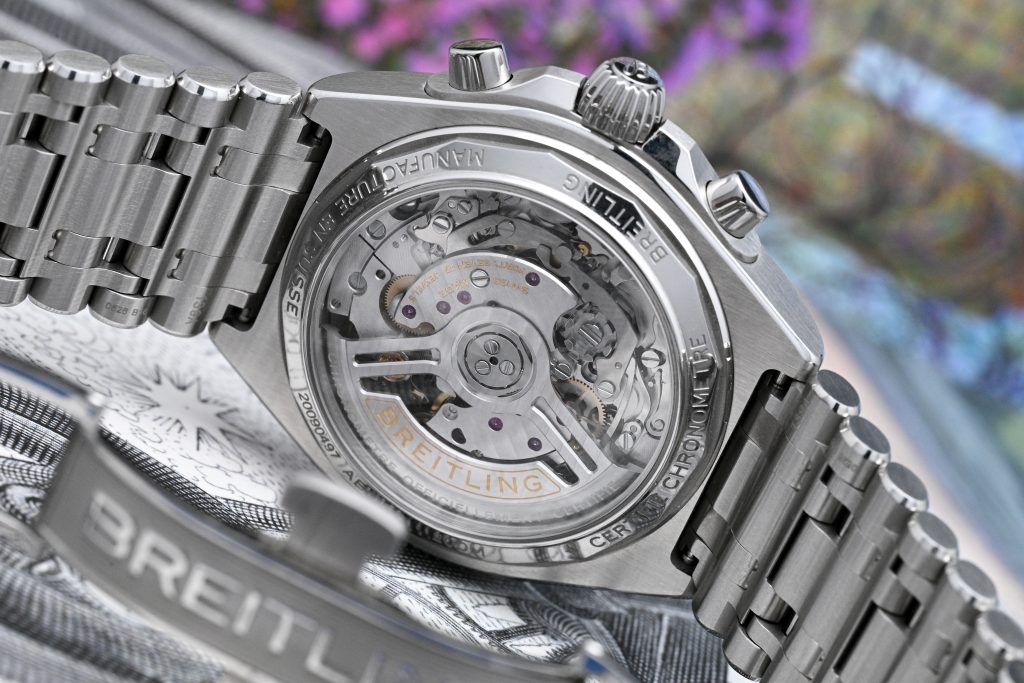
The B01 feels robust, mechanical, loud, secure, and very tool-watch in character. The closest comparison in feel is my Daytona. Each pusher press is strong and reassuring, with no stutter when the chronograph starts, smooth running, and precise resets.
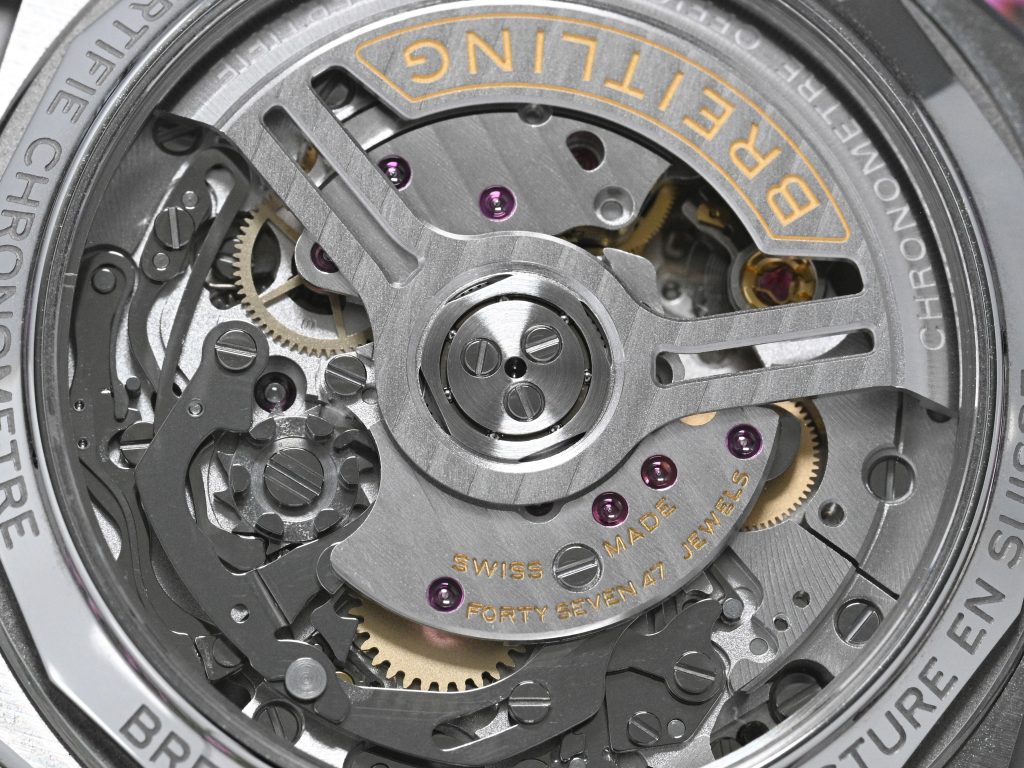
I also like the practicality of the layout, especially the elapsed-hour register and running seconds register. Visually, the movement is reasonably attractive rather than spectacular, but as a functional chronograph calibre it makes a lot of sense.
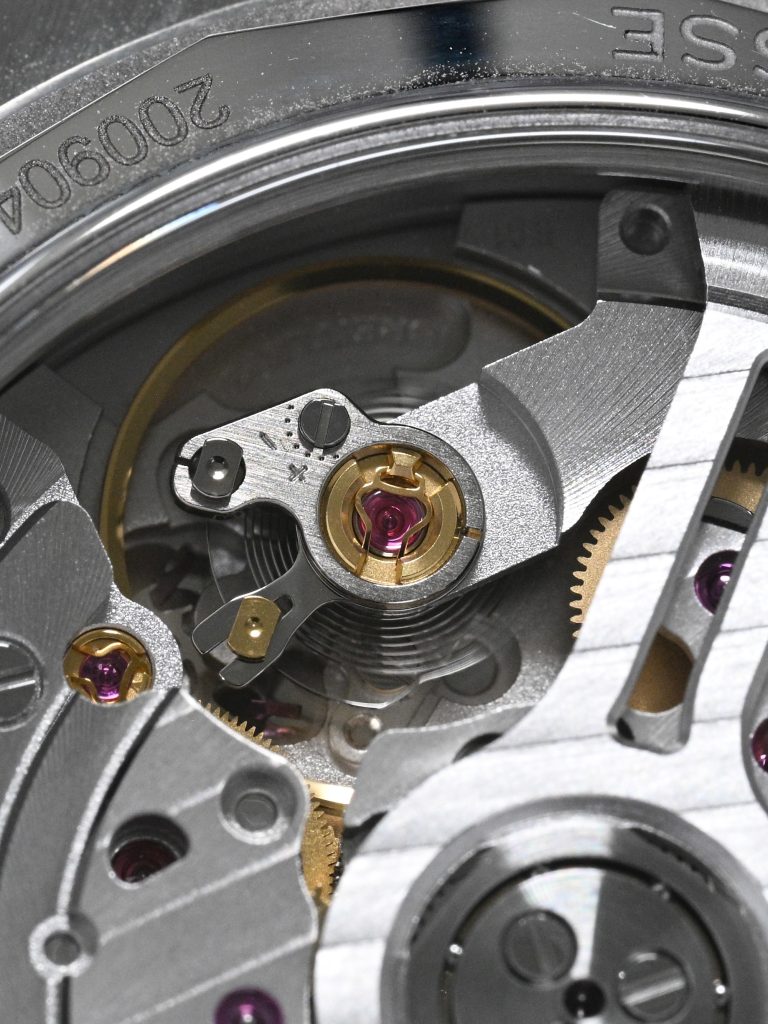
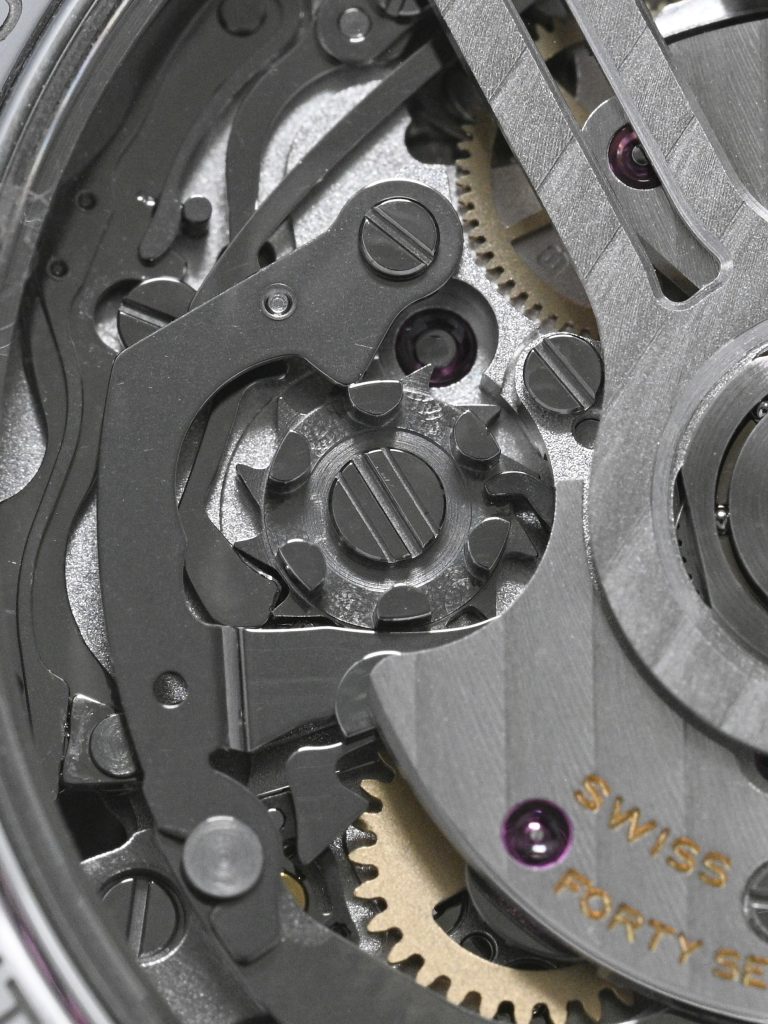
After spending time with it, I understand why Tudor wanted to integrate this architecture into its own chronograph lineup. The B01 is Chronometer certified and gives the Chronomat serious credibility because it feels like the kind of movement a serious tool watch should have: strong, practical, and slightly overbuilt.
On The Wrist
Sized for my 6.75″ wrist, this watch weighs 160g. That is substantial, and it is about 20g heavier than my Daytona sized likewise. So if you are expecting a sleek chronograph, this is not it. Even with the reduced thickness and lugless case, the Chronomat still feels like a big watch.
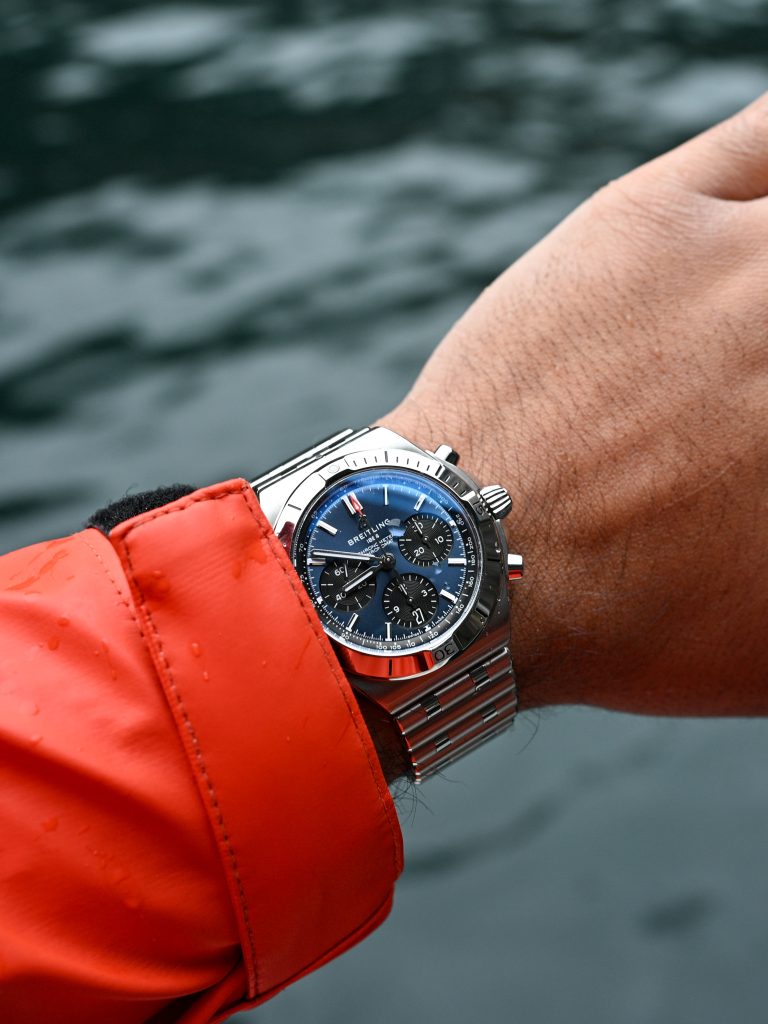
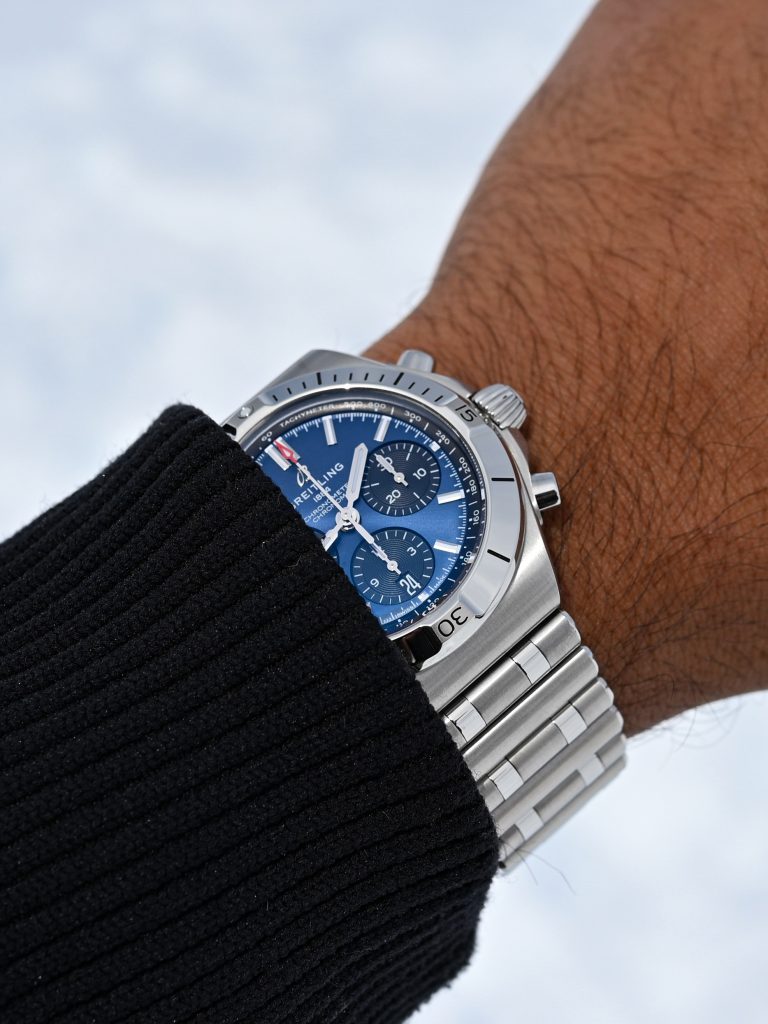
But it is now a big watch I can actually wear. Getting rid of the lugs is a choice I am still conflicted about. The original design was never perfectly cohesive, but I had seen it for so many years that the lugless version initially felt like an anomaly. At the same time, if Breitling had kept the old lug structure, the effective lug-to-lug span would probably make this watch unwearable for me. So I am torn on the design, but the practical result works.
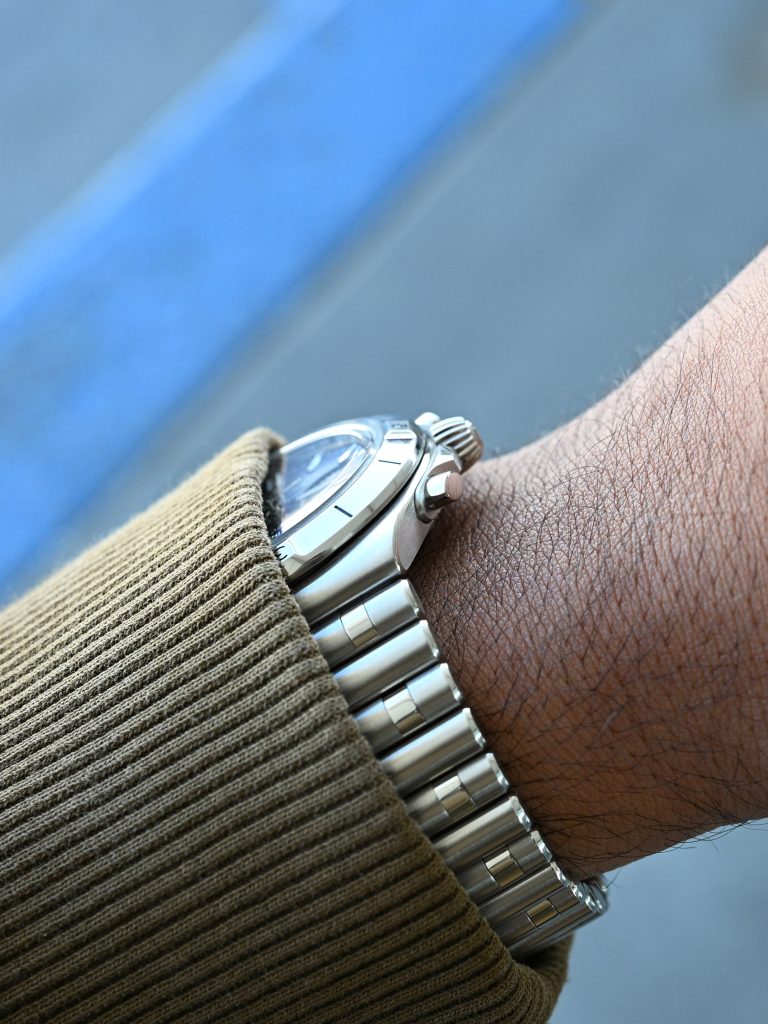
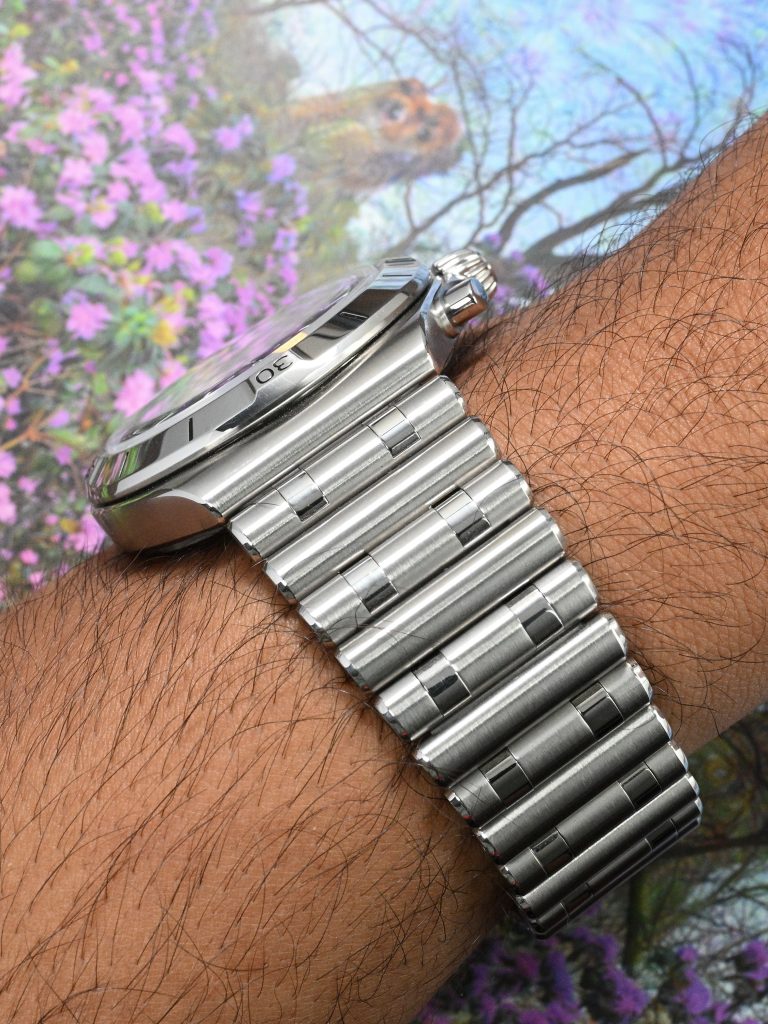
Compared to older Breitling sports watches, this feels much more luxurious. The case and bracelet fit and finishing are a step up, with a generous amount of polishing and a more upmarket presence than something like an older Superocean. It is still very much a Breitling, but a more refined and expensive-feeling one.
Wrapping Up
The new Chronomat B01 42 is not a small watch, not a subtle watch, and not a watch for someone who wants a polished bezel to stay perfect. It is heavy, shiny, somewhat bulky, and the dial QC on my example could be better. But it is also the first modern Chronomat that has properly worked for me.
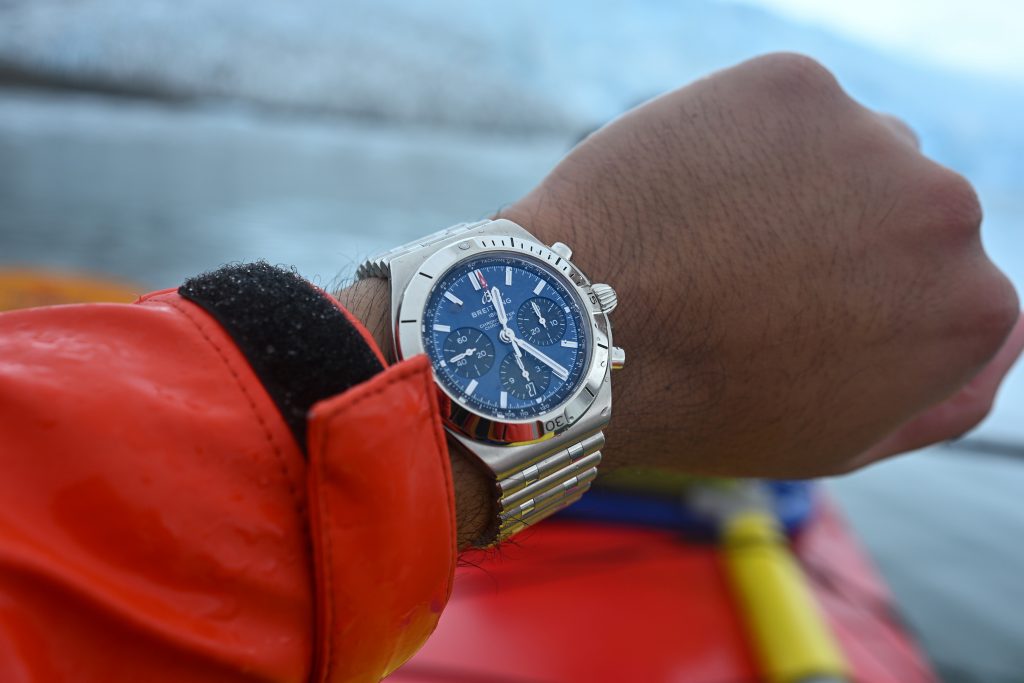
The thinner case, compact lugless architecture, improved bracelet integration, and clasp adjustability make this version far more wearable than the previous generation. The B01 movement is excellent in a practical, tool-watch way, and the watch held up very well through Alaska without ever feeling fragile or out of place. This is not an expedition watch, and I am certainly not an expedition-ing person, which is probably why I like this pairing so much. Neither of us needs to pretend to be more rugged than we are. But when the situation calls for it… glaciers, hikes, boats, flights, airports, and long days outside, both of us are capable enough. And that, to me, is where this new Chronomat finally makes sense: not as a hardcore tool watch, but as a luxury sports chronograph with enough real-world credibility to be worn properly, used often, and enjoyed without overthinking it.