Disclaimer: this video/review was not sponsored by Barrelhand or any other entity. This watch was generously loaned to me by my friend @watchsymmetry. Please check out his Instagram to see more photographs of this watch and other exceptional pieces.
Video
What Happens When an Engineer Designs a Watch?
I think it is fair to say that in the Swiss industry, most watches begin with an idea of how they should look. The Barrelhand Monolith appears to have begun with a list of ways it could fail. What happens to the crystal when it is struck? What happens to the movement when the case experiences extreme acceleration? Can you set the time in a vacuum, or repair the watch without specialized equipment? These are not the questions you would typically associate with independent watchmaking, but they more closely resemble the approach to development I’m used to in my day job as an engineer. And that is what drew me to the Monolith, even before my good friend Thomas let me borrow his and get it on my wrist.
From Student Project to Space
Barrelhand’s founder, Karel Bachand, did not arrive at watchmaking through the traditional apprenticeship route. Fascinated by an Urwerk UR-202, he reverse-engineered its mechanism in CAD and used 3D printing to produce a working interpretation. His engineering background also took him to NASA Ames Research Center, where he worked on a clinostat intended to simulate aspects of microgravity for biological research. That is an interesting résumé, and should get your attention.
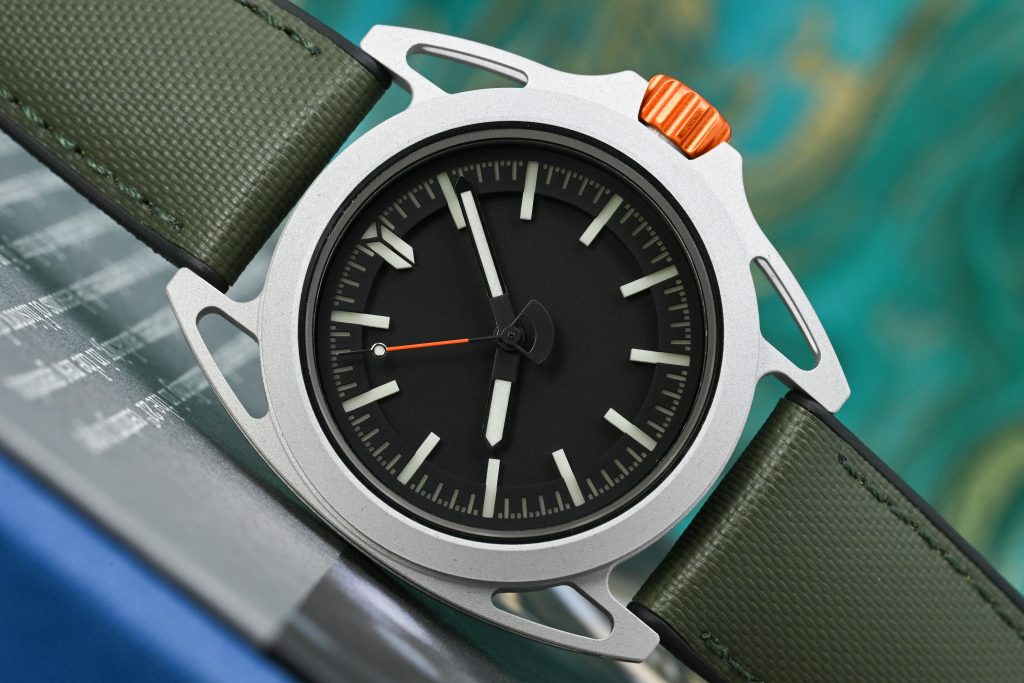
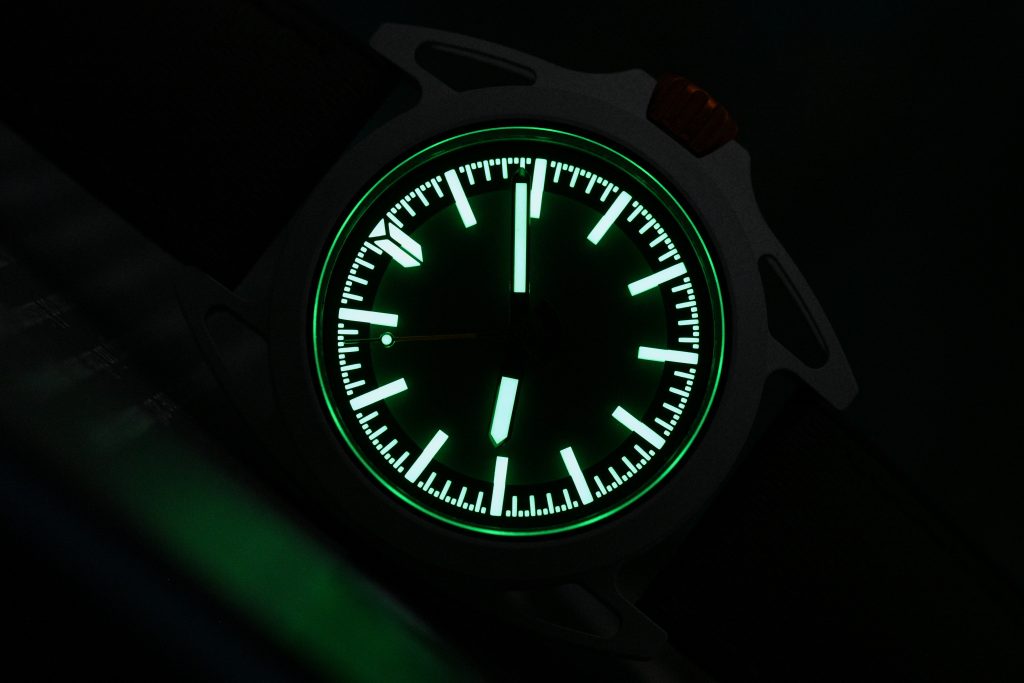
His experiments eventually became Project One, an extraordinarily ambitious small-series watch with a 3D-printed movement bridge and an unconventional time display. Through his work with additive manufacturing, he connected with Michael Sorkin, formerly of Formlabs, who became Barrelhand’s co-founder. Their next project would be almost the opposite of Project One: not an elaborate display demonstrating what modern fabrication could produce, but a simple three-hand watch designed around the demands of spaceflight.
The Monolith reportedly required six years and roughly 24 design iterations, including six fully metal prototypes. The team studied historical NASA watch-testing documents and the constraints of extravehicular activity, or EVA: vacuum, temperature extremes, impact, radiation, off-gassing, loose fragments and maintenance far from a conventional service center. I like this approach because it establishes a requirement before proposing a solution. But requirements, prototypes and successful qualification are three different things, and the Monolith’s story becomes more interesting when those distinctions are preserved.
A Case That Earns Its Unusual Construction
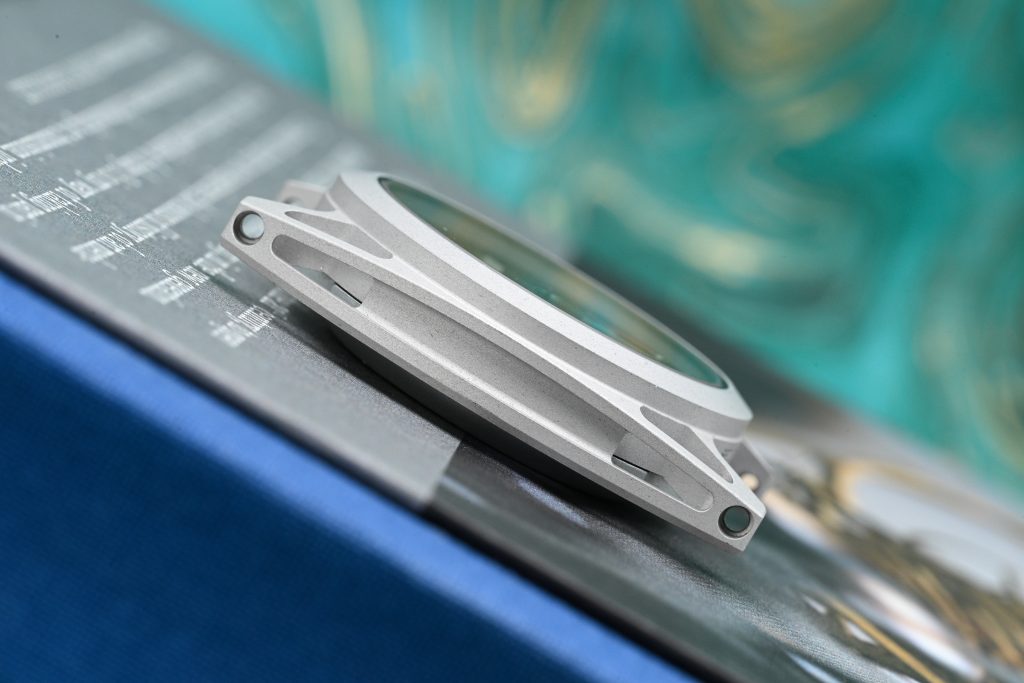
The chassis is laser-printed in Scalmalloy, an aluminium-magnesium-scandium alloy developed for aerospace applications, with manufacturing expertise from Materialise and APWORKS. Early prototypes used titanium, before the team moved to the lighter alloy.
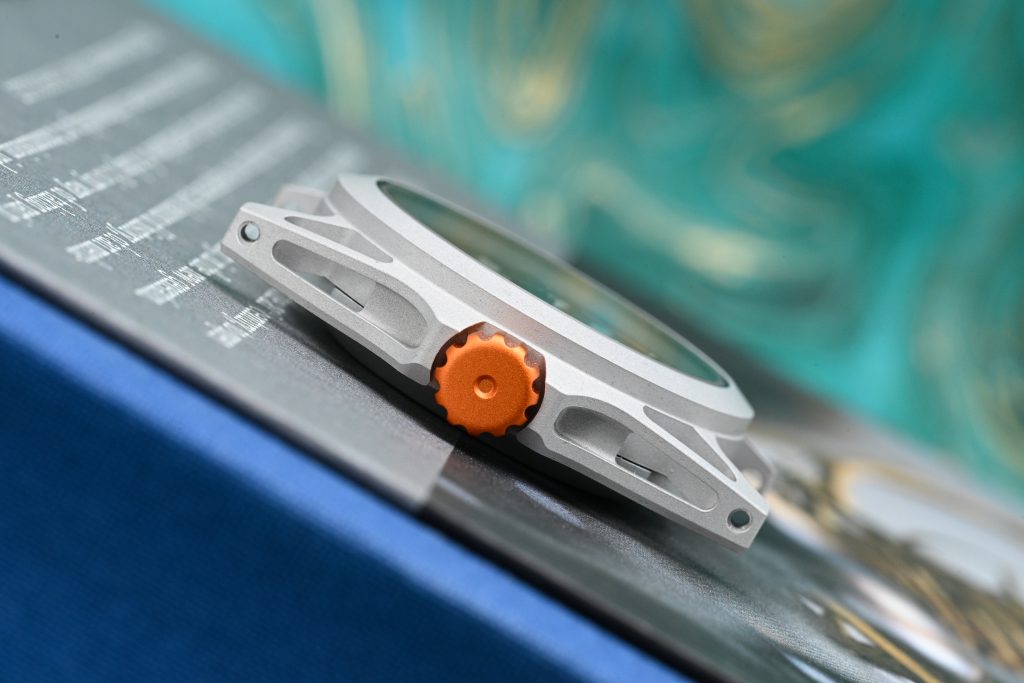
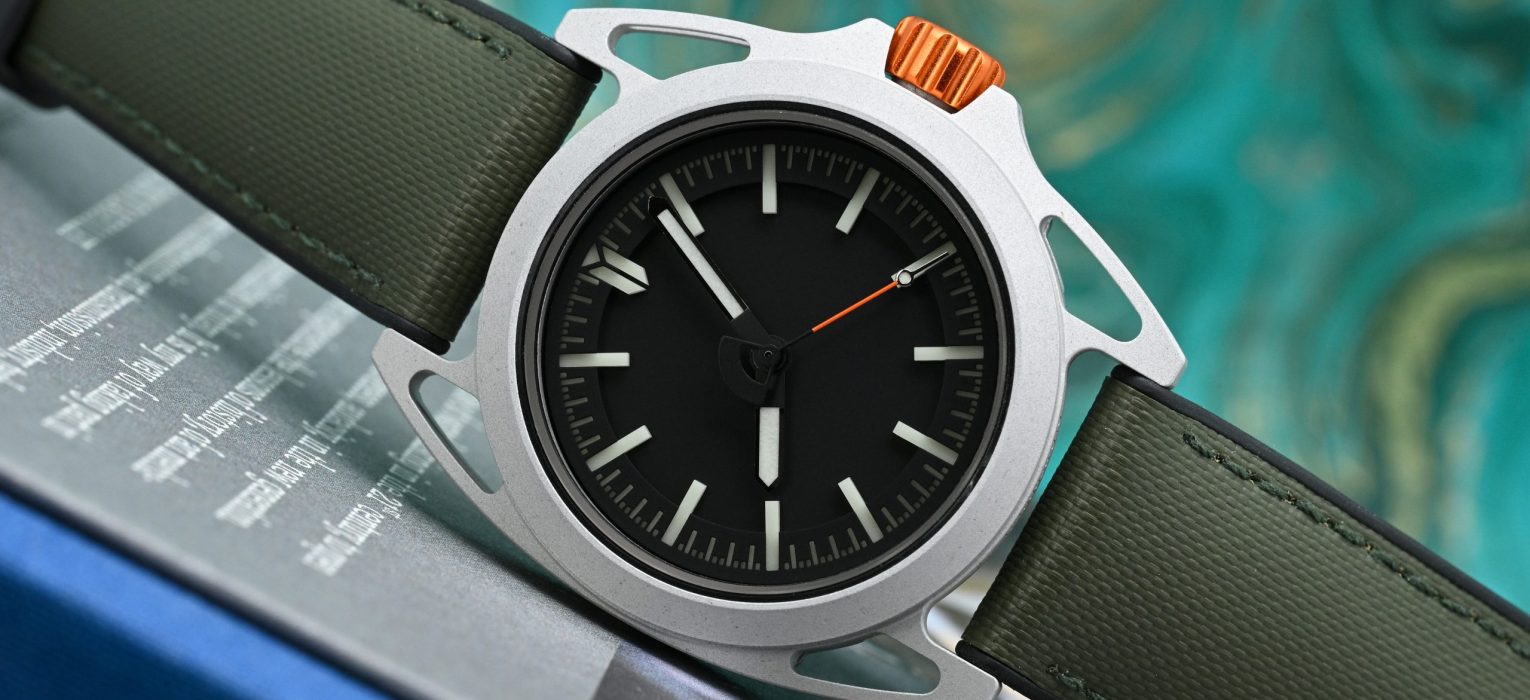
The hollow internal cavities, skeletonized lugs and self-supporting geometries remove mass and create an insulating air space around the movement. Barrelhand quotes just 6.5g for the chassis, which is impressive given its volume.
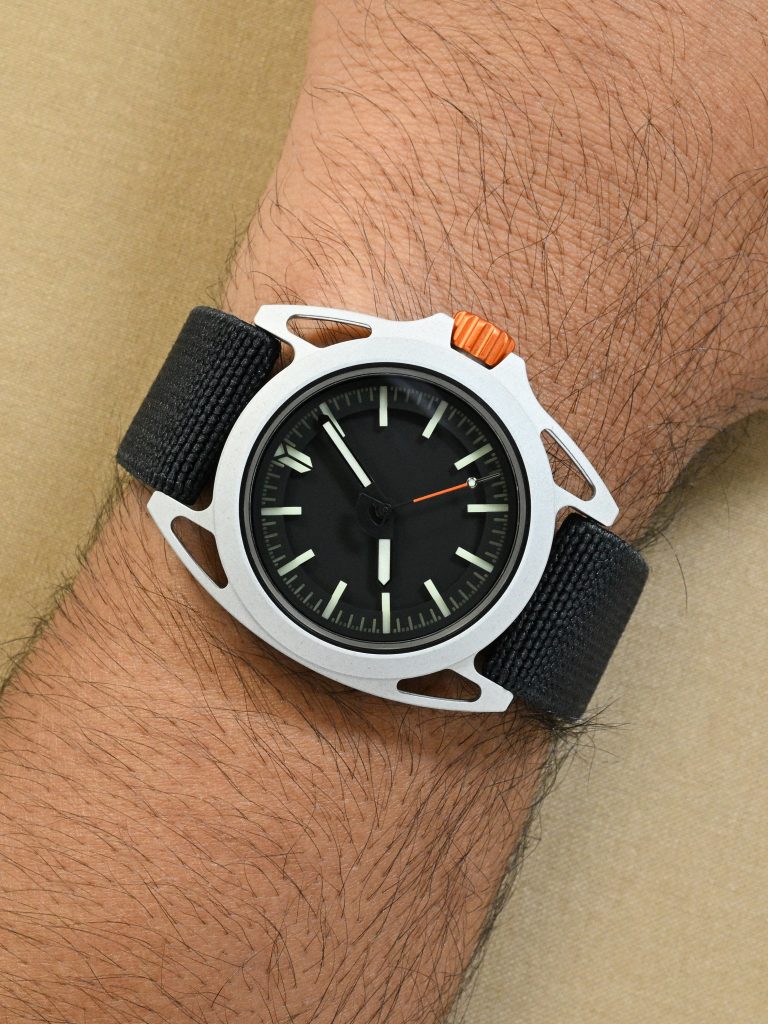
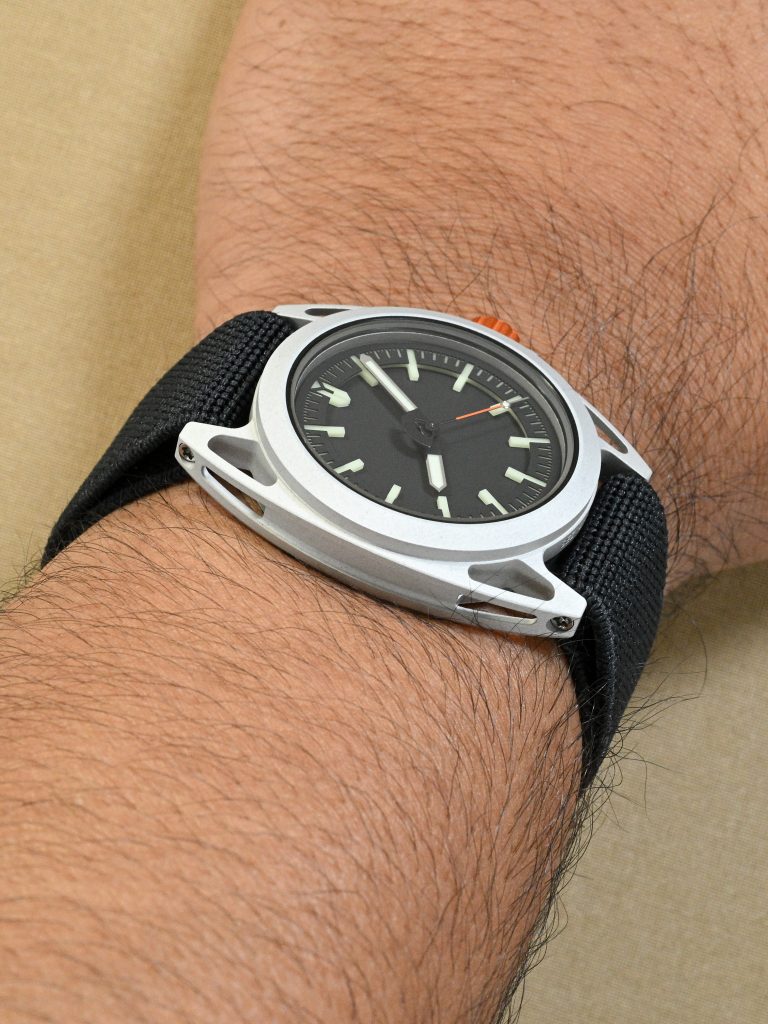
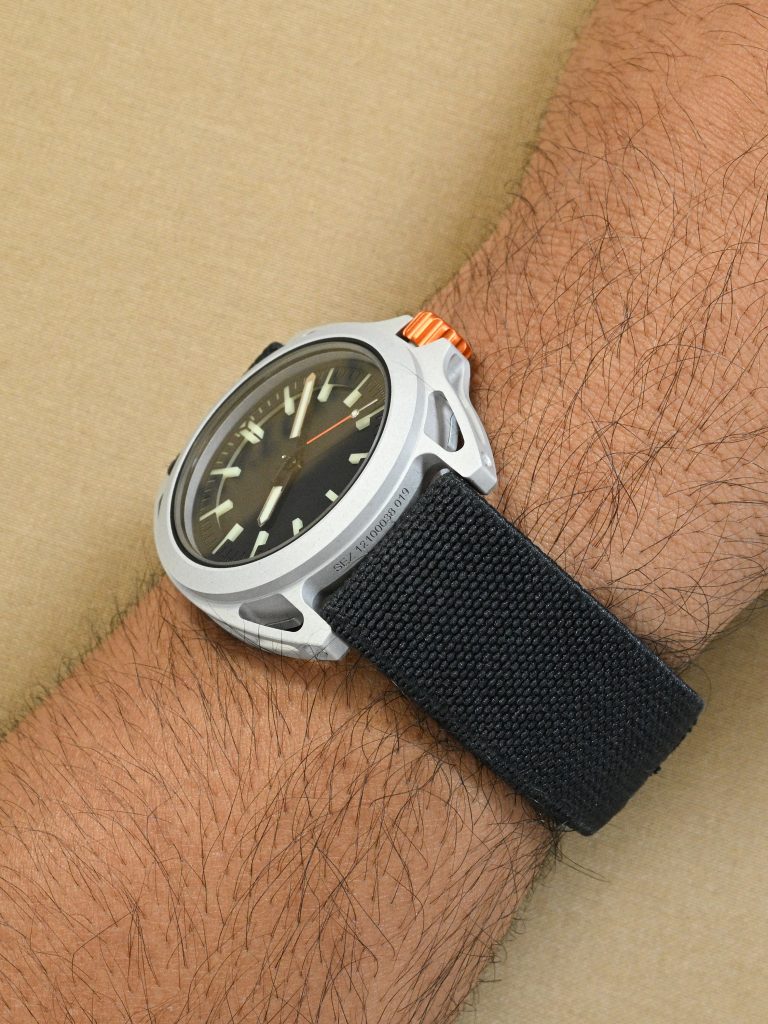
My measurements came to approximately 40.70mm across the widest diagonal, from 4 to 11 o’clock, with a 36.5mm bezel, 44.80mm lug-to-lug and 11.75mm thickness. On its Nick Mankey strap, the complete watch weighed only 42g. It has considerable visual volume but almost none of the corresponding heft, particularly on my 6.75-inch wrist. The finish and open architecture feel clinical and industrial rather than luxurious, which is arguably exactly the point.
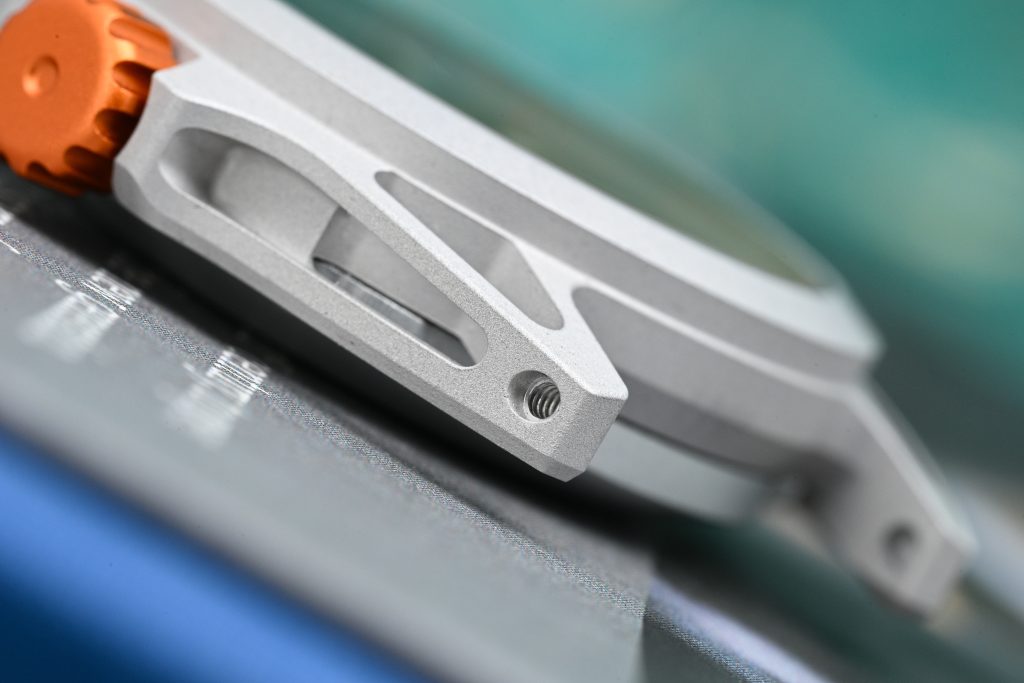
The 20mm lug spacing uses screw-secured bars instead of conventional spring bars. I love that choice, particularly the use of Torx hardware rather than decorative or proprietary screws. Barrelhand selected T6 and T15 with tool compatibility and secure servicing in mind.
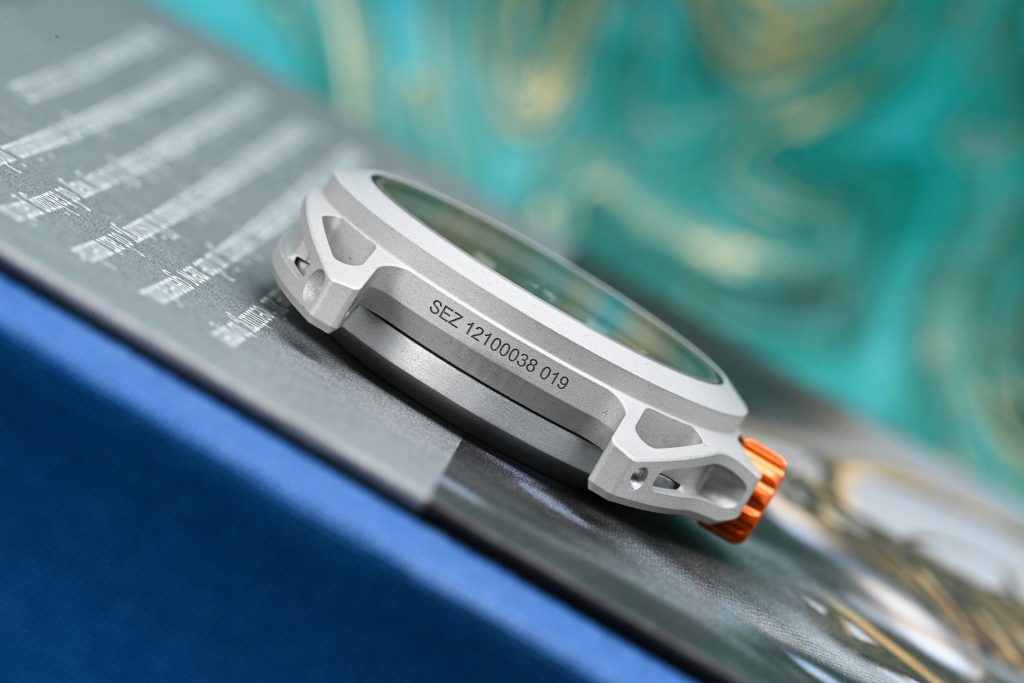
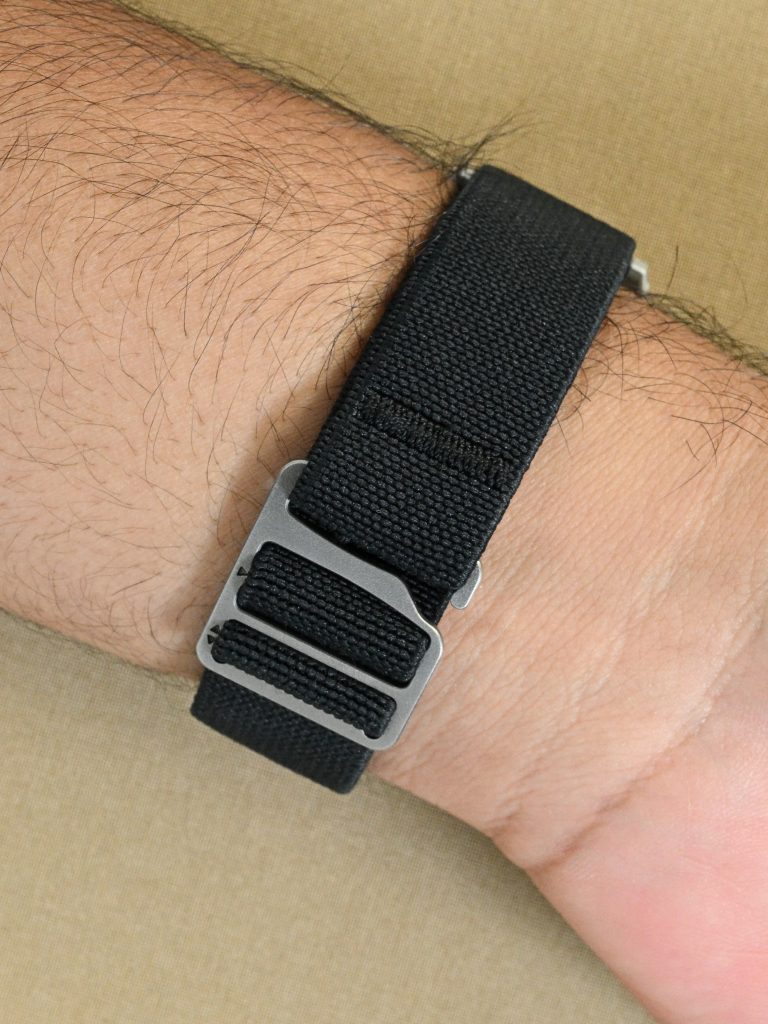
It is a robust solution, although it also means some ordinary two-piece straps require removing the bars. The supplied Chrono-Grip is more than a convenient pairing: its elastic webbing and titanium G-hook can be reconfigured to fit over a spacesuit cuff without relying on dust-sensitive hook-and-loop fastening.
A Movement That Is Allowed to Move
One of the more revealing development stories concerns the movement holder. Barrelhand first experimented with viscoelastic materials, then engineering polymers such as PEEK and PTFE. Those materials could absorb impact, but repeated deformation reportedly allowed the movement to settle out of alignment. The team eventually selected a rigid CNC-machined aluminum carrier isolated from the chassis by silicone O-rings, with mechanical stops permitting up to 0.3mm of travel in any direction. The idea is to increase the distance over which the movement decelerates while also interrupting direct heat conduction.
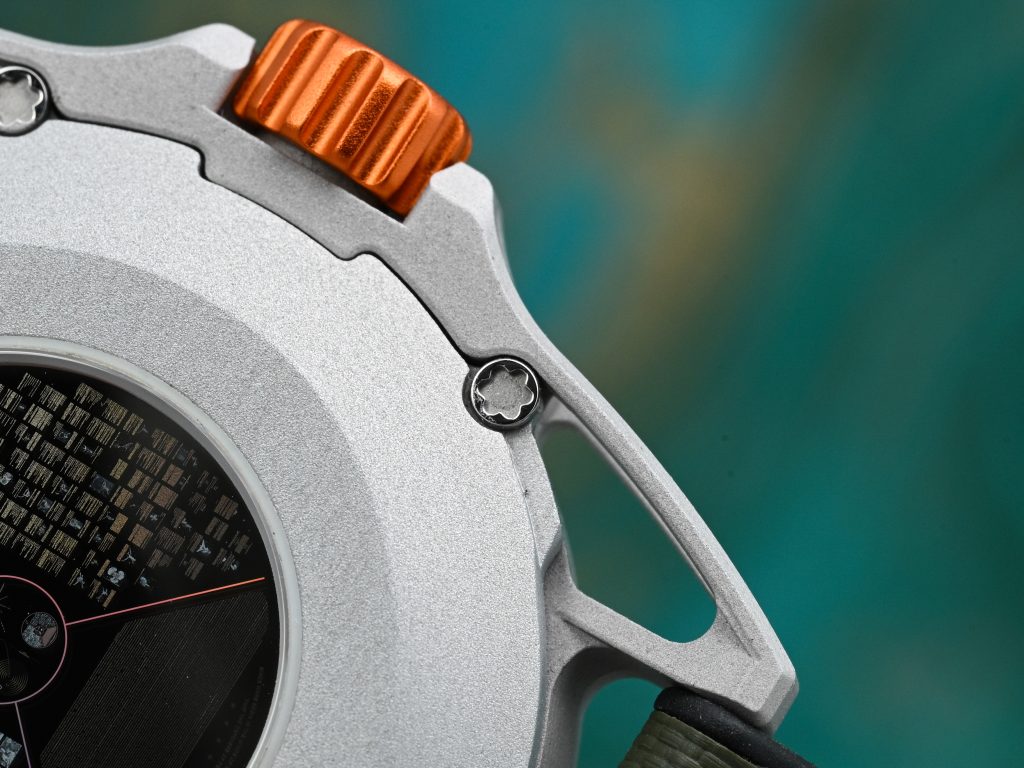
The crown is another detail I initially questioned. Why would an otherwise uncompromising tool watch lack a screw-down crown? Barrelhand’s answer is an Airlock system with dynamic seals, designed to permit winding and time-setting in vacuum or underwater, which made me recall Vero’s piston-sealed crown from back in the day. Its bright International Orange anodized aluminum construction is one of my favorite visual details, and the crown measured 7.45mm. I also wonder whether leaving the crown unlocked makes it easier to accommodate small movements of the suspended caliber without rigidly constraining the stem. In their tests, crown operation was demonstrated underwater to roughly 30m, separately from the watch’s 200m water-resistance rating.
An Experiment in Legibility
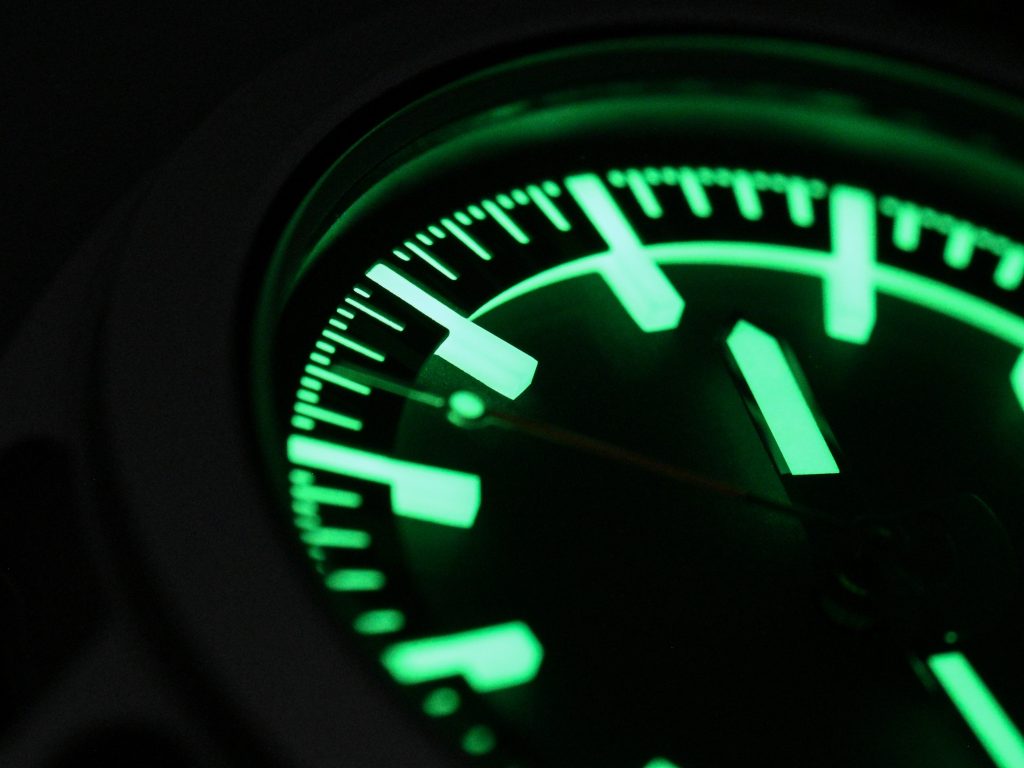
The dial takes a similarly unconventional route. Instead of painting lume onto individual markers, Barrelhand worked with RC Tritec, Black Badger and Les Cadraniers de Genève on a solid luminous ceramic structure. The watch uses this ceramic lume behind a precisely cut metal mask.
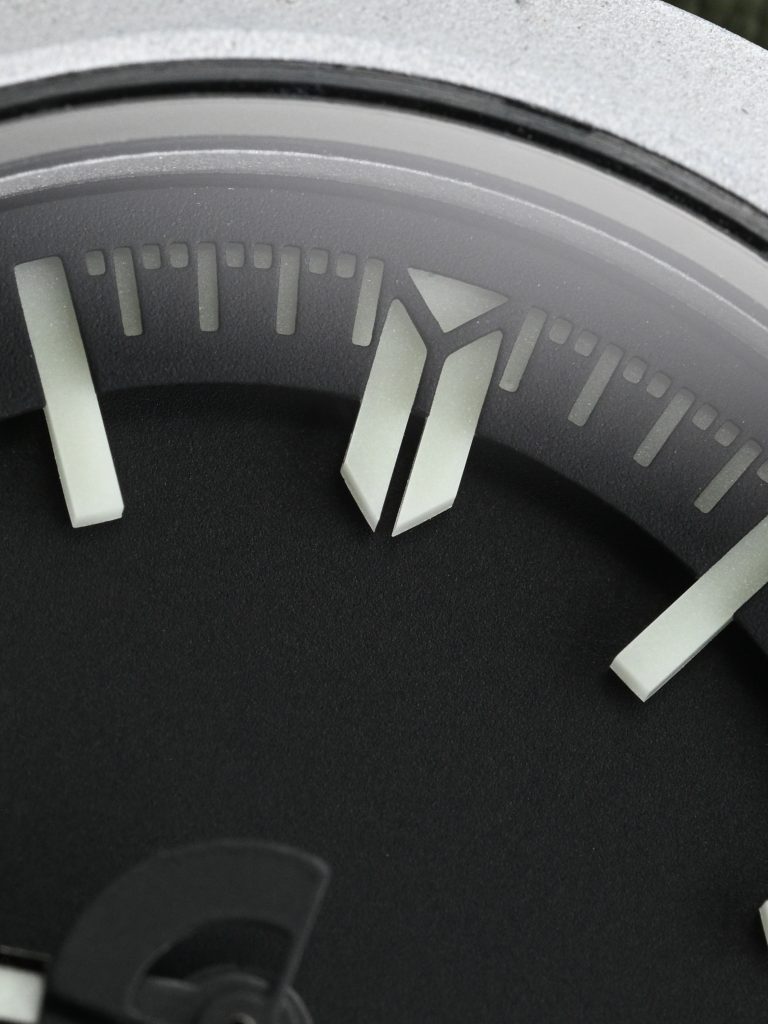
This ceramic luminous material has the benefit of being resistant to UV exposure, thermal expansion and off-gassing, while giving the tiny peripheral markings enough luminous material to remain visible. The brand dresses up this ceramic lume as Aerolight, but I’m not convinced it is that much different from the usual Lumicast or Globolight materials. The seconds hand is counterbalanced to reduce the risk of it shifting during impact.
The crystal involved a separate materials investigation. Acrylic resisted fragmentation but scratched easily; diamond and conventional sapphire were hard but brittle; laminated ballistic constructions introduced temperature and out-gassing concerns; and aluminium oxynitride was evaluated too. The selected C-plane sapphire performed better than conventional sapphire in Barrelhand’s impact comparisons.
A Familiar Engine, Not a New Calibre
The one aspect of the presentation I find less convincing is the movement marketing. Barrelhand calls its calibre the M1 Engine, but a Sellita SW300-1b is what it is. The SW300 is thin, reliable, serviceable and an excellent choice for this application. It does not need to be sold as something fundamentally new.
Barrelhand’s component selection is slightly different, but also can be selected from a movement manufacturer’s catalog: nickel-phosphorus escapement components, Incabloc shock protection in place of the usual Novodiac configuration, ruthenium-plated bridges, a lighter rotor and tighter factory regulation. The company reports Chronofiable testing and ISO 764 magnetic resistance at 4,800 A/m, the standard threshold for magnetic-resistant watches rather than an especially high-field rating. These are interesting, but the greater engineering achievement is the system surrounding the movement, particularly its suspension and thermal isolation. I would rather see the SW300 celebrated for being a sensible off-the-shelf choice than buried under a lot of marketing fluff that most enthusiasts will see through immediately.
Testing the Hypothesis
Perhaps my favorite aspect of Barrelhand is how publicly it has documented its experiments. The team built a centrifuge fixture around a washing machine to generate approximately 8g, and mounted the watch on an orbital sander to examine vibration. It performed 15 thermal cycles between approximately -20 C and +116 C in near vacuum, reporting a change of only -2 seconds per day in the six-position average after testing. Eighteen concrete drops produced a reported change of -16 seconds per day.
I find the resourcefulness delightful, but the methodology matters too. The headline 3,000g shock figure was calculated using an assumed stopping distance, not measured by an accelerometer at the movement. The orbital-sander experiment was not an exact reproduction of the historical NASA vibration protocol. Pure-oxygen and acoustic tests were not completed, and independent qualification remains outstanding. These are promising development tests, not evidence that the watch has passed every formal EVA requirement.
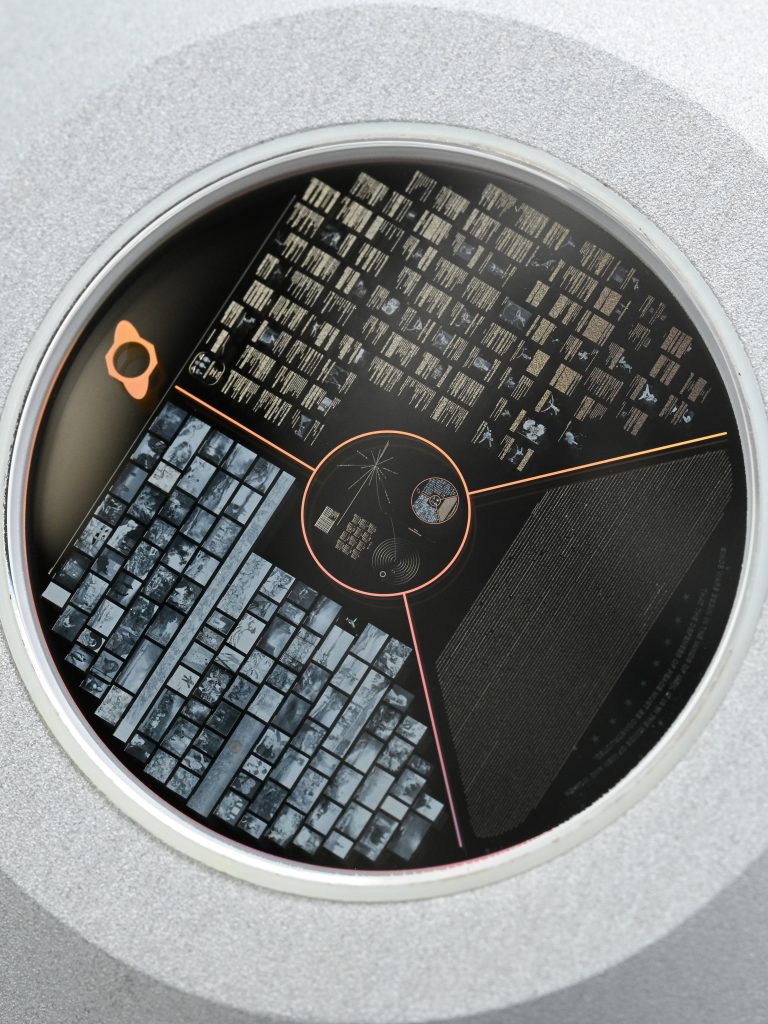
A Monolith prototype did fly beyond the Kármán line on Blue Origin’s NS-34 mission in 2025, although inside a pressurized capsule rather than during a spacewalk. Separately, Barrelhand’s extraordinary Memory Disc, a microscopic nickel archive of art, language and cultural records visible through the caseback, has reached the lunar surface as part of a payload. Both are real accomplishments, provided we distinguish the watch’s flight from the archive’s lunar journey.
The Memory Disc
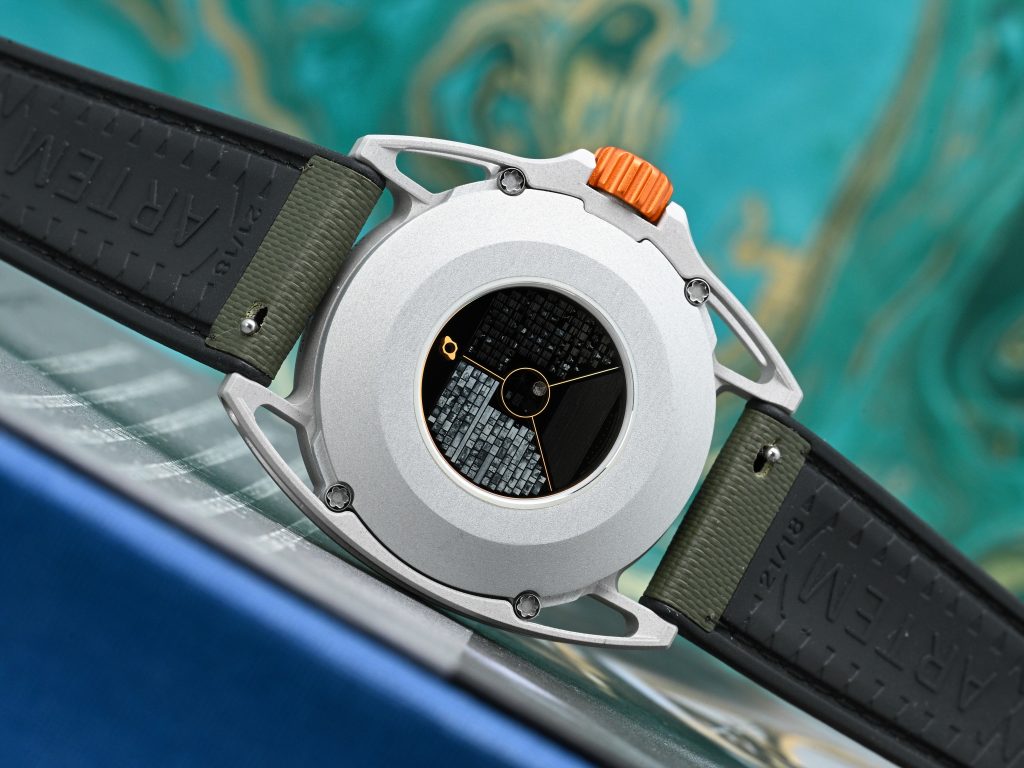
The Memory Disc is perhaps the most unexpected component of this otherwise utilitarian watch. Developed with Stamper Technology, it is a microscopic physical archive engraved into a nickel substrate, containing approximately 3GB worth of cultural information, including the UNESCO Constitution’s preamble in hundreds of languages, The Little Prince, artwork, and references to the Voyager Golden Record.
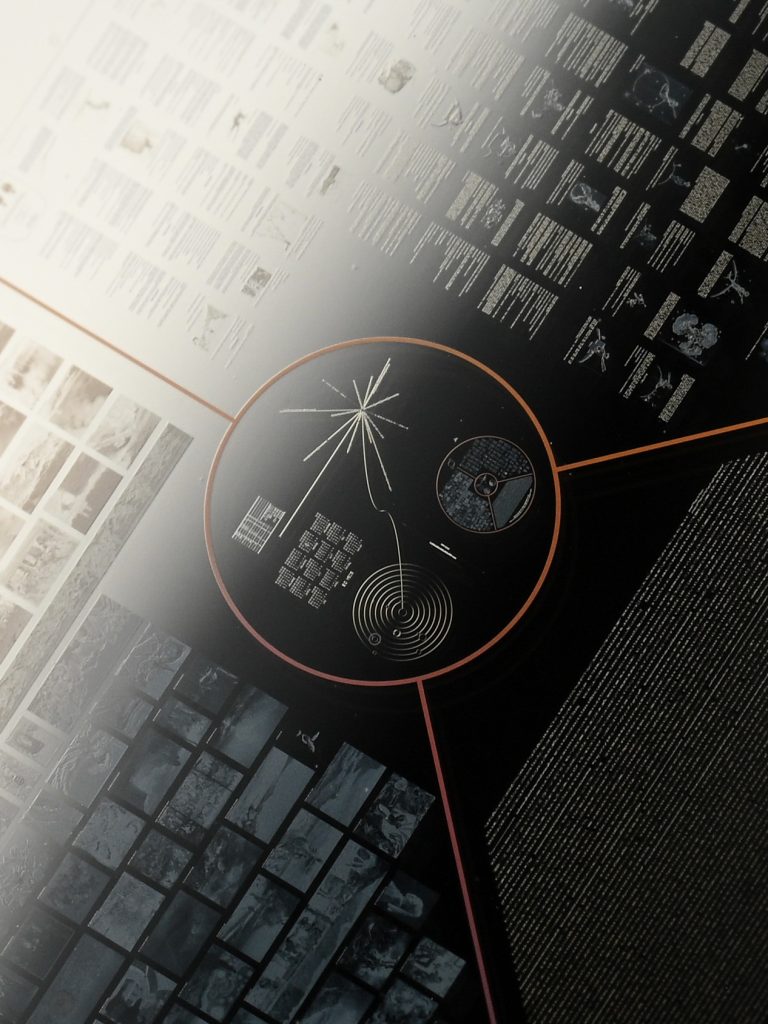
Its microscopic structures also produce the beautiful iridescent patterns visible through the caseback. Unlike digital storage, it requires no electricity to preserve its contents and is designed for extraordinary longevity. A version of this archival technology even reached the lunar surface aboard the Intuitive Machines IM-1 mission in 2024. I find this particularly charming because, for a watch so obsessed with mechanical survival, the Memory Disc introduces an entirely different ambition: preserving something of humanity itself.
What the Monolith Gets Right
At $9,750, the Monolith asks buyers to value engineering and development rather than a complicated movement or ornamental finishing. Visually, I find it a little too clinical and deliberately tool-like to be an immediate emotional favorite. But the more I learned about why individual decisions were made, the more I appreciated the finished object.
There is something refreshing about a watch whose makers can explain not merely what material they selected, but what they tried first, why it failed and how they tested the alternative. I do this sort of work professionally, so that process means more to me than another impressive specification. The Monolith has not yet proven every claim its ambitions invite, and I wish some of the marketing language showed the same restraint and humility as the engineering. Nevertheless, Barrelhand has created something uncommon: a watch that is genuinely more interesting to understand than it is to look at. And I mean that as a compliment.