Disclaimer: this video/review was not sponsored by MING or any other entity.
Video
Review
It has been a while since MING introduced a new case design in their under-$10k segment, with the past three years dominated almost entirely by variations of the 37 Series and a short lived 22 Series, an unusual lull for a brand that once seemed to debut new cases and concepts at a dizzying pace in their early years. So I was genuinely excited to see something fresh, and this new Art Deco-inspired design does not disappoint, especially for someone like me who appreciates both the geometry of Art Deco and the optical complexity of modern, futuristic styling.
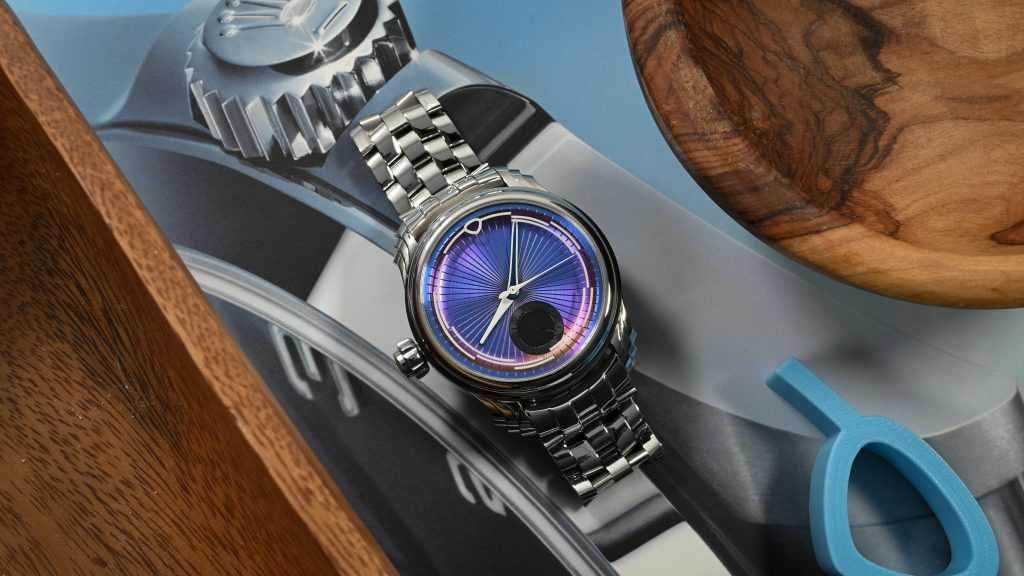
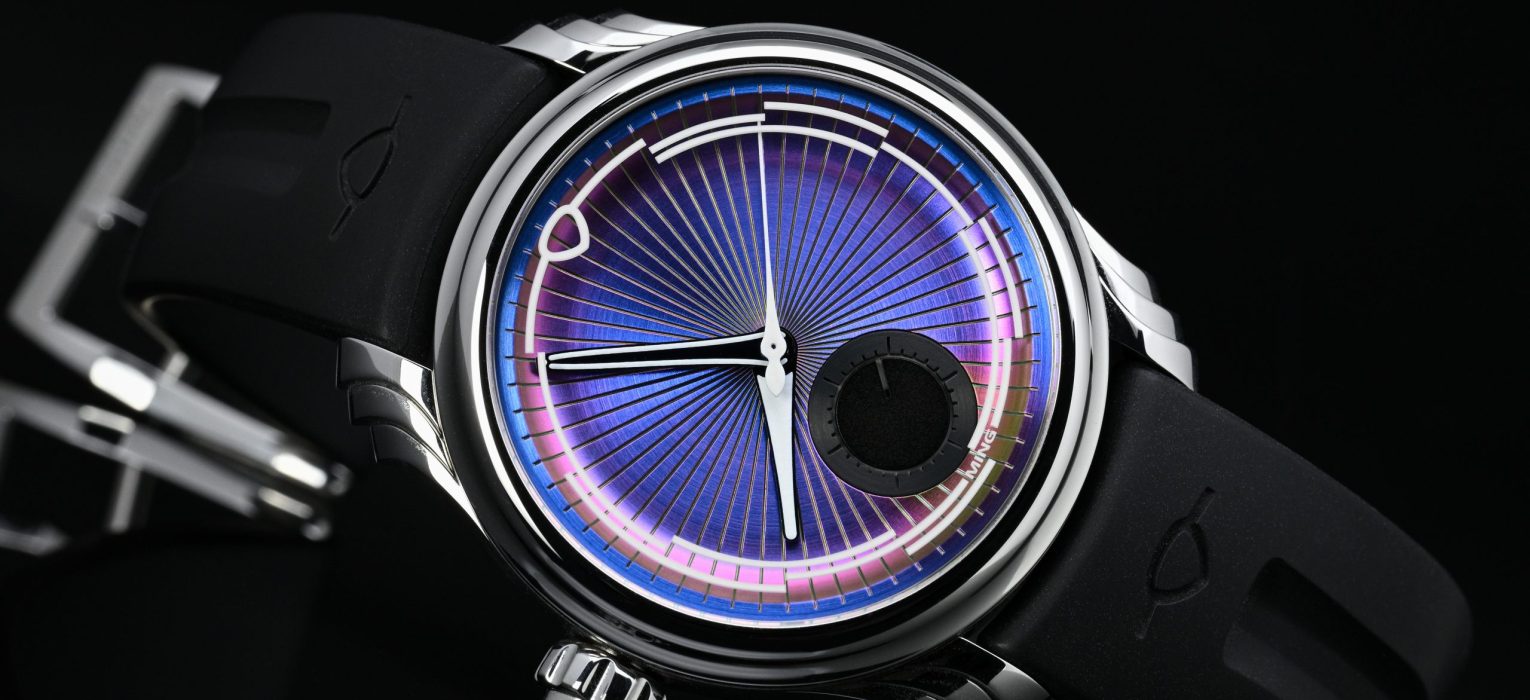
The 57.04 Iris debuts MING’s fifth-generation design language, marks their eighth anniversary, and finally answers the long-standing requests for a more “attainable” chronograph that doesn’t require a $30,000-plus budget. Limited to 100 pieces, it showcases a spectacular color-shifting dial achieved through a multiphasic coating, one of the most dynamic dials I’ve encountered, and its 6,250 CHF (about $7,800 USD) price didn’t stop it from selling out almost instantly. I’d be surprised if this case and complication didn’t return in a continuous-production variant soon. And yes, this is a $7,800 watch powered by a fairly generic, lightly modified Sellita monopusher movement, so the expectations from the rest of the watch are undeniably high; let’s take a look at how it measures up…
Case
I measured the case at 40 mm in diameter, 47.25 mm lug-to-lug, and 12.10 mm in overall thickness including both crystals, bezel, and case-back. As someone who has always been more drawn to case design than dials, and particularly to the ornate lugs of the Art Deco era, I knew immediately that the new 57-series case was something I had to experience.
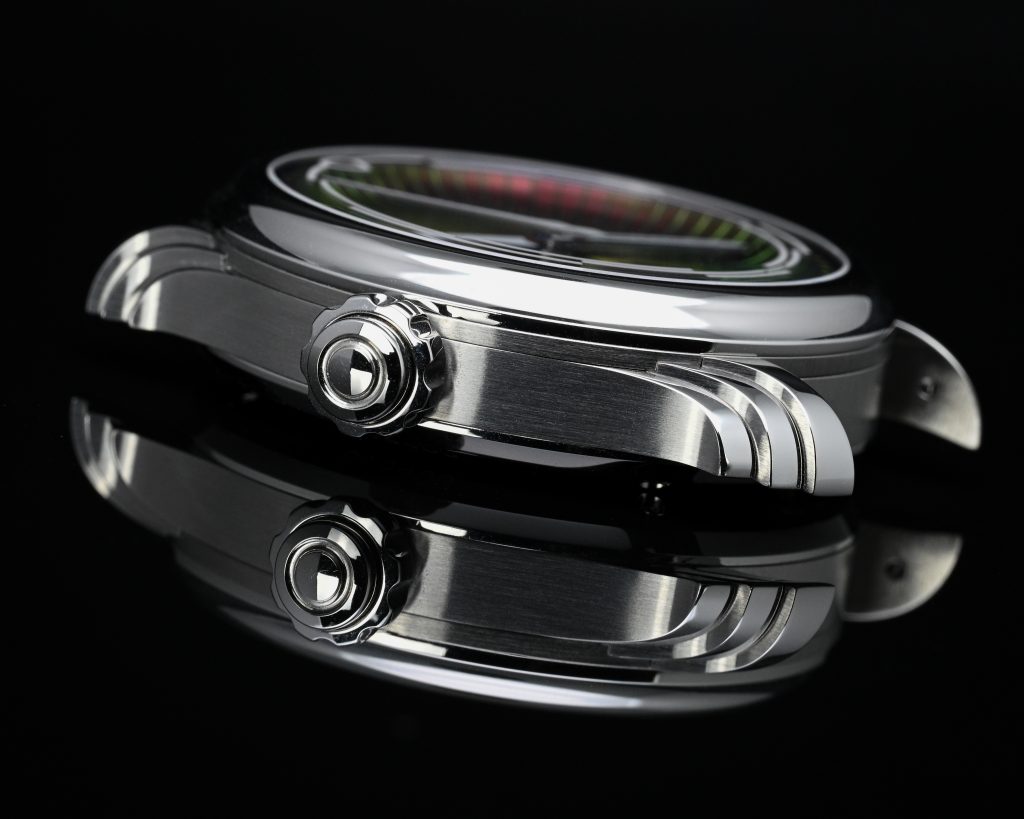
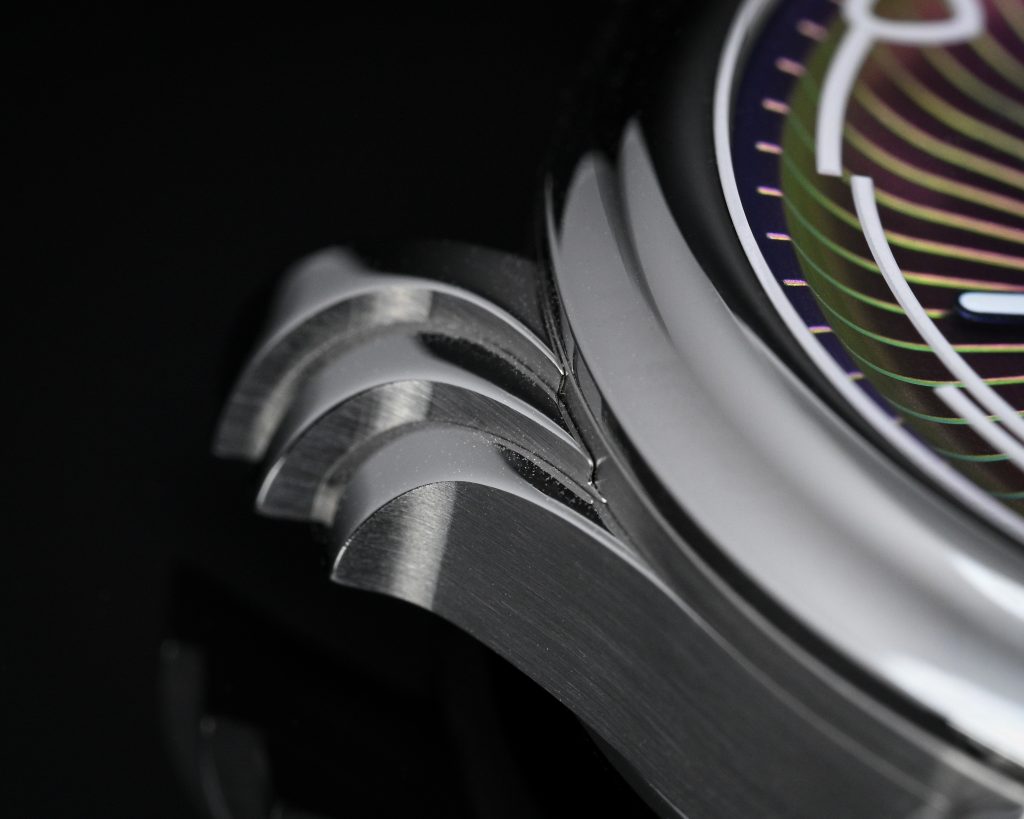
It delivers in every way: made from steel, the triple-stepped 20 mm spaced lugs may look familiar at first glance, but a closer look reveals that each of the three sections is a separate component, individually finished with brushed flanks and polished upper surfaces. The build quality and finishing are excellent, and it’s obvious to anyone familiar with watchmaking that producing a case this intricate costs significantly more than usual.
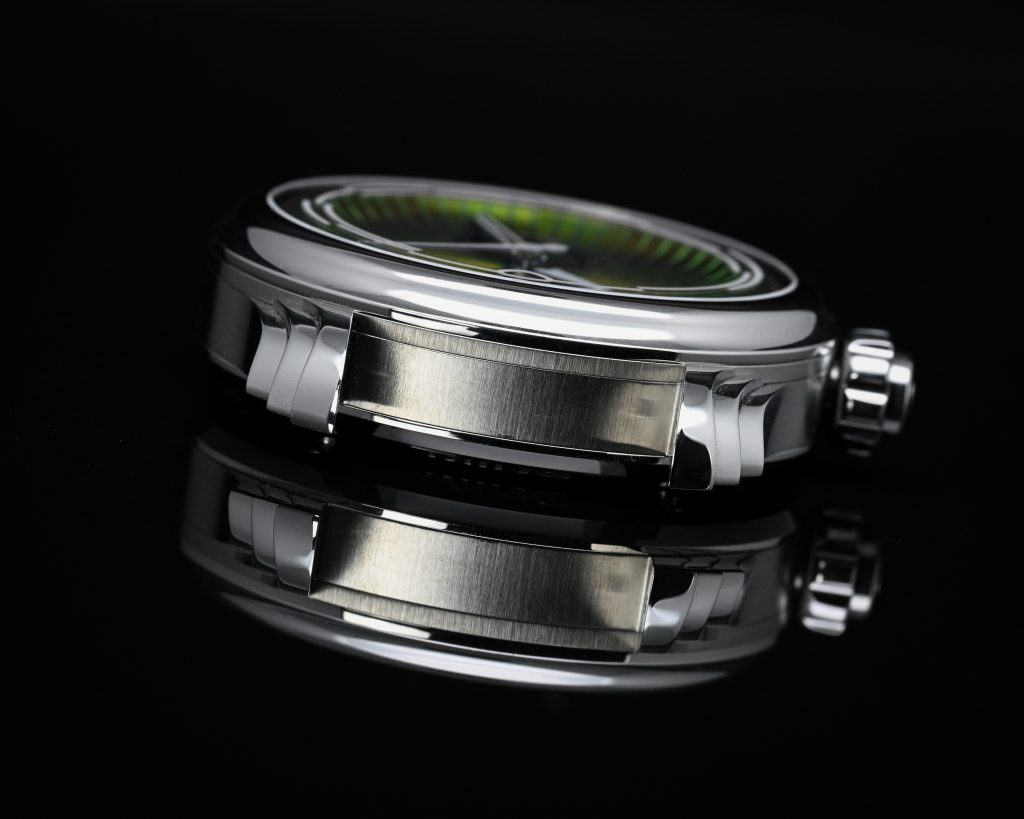
Despite the specs, the thickness is visually well balanced thanks to the way the lugs transition into the mid-case, and the even distribution of height across the mid-case, the S-shaped polished bezel, and the polished case-back. The bezel holds a flat sapphire crystal with generous AR coating, offering excellent reflection control: better, in my opinion, than the curved crystals on the 37 Series.
On the left side, a 7.4 mm push-pull crown in a destro configuration feels perfectly placed for a monopusher of this size, remaining comfortable and unobtrusive on the wrist. Around back, a screw-secured case-back features a sapphire exhibition window. This watch is rated for up-to 100m of water resistance. Overall, the design, build quality, and finishing are exceptional: the case looks incredible in person, the lugs are genuinely magical, the crystal provides superb legibility, and the crown placement enhances the ergonomics.
Dial
While the case may be the part of this watch that captivates me most, the dial is no less impressive. MING seems to have struggled to pick a single color, so they simply chose all of them: the multi-phasic coating shifts dramatically with the viewing angle, producing hues that range anywhere from purple to a greenish yellow.
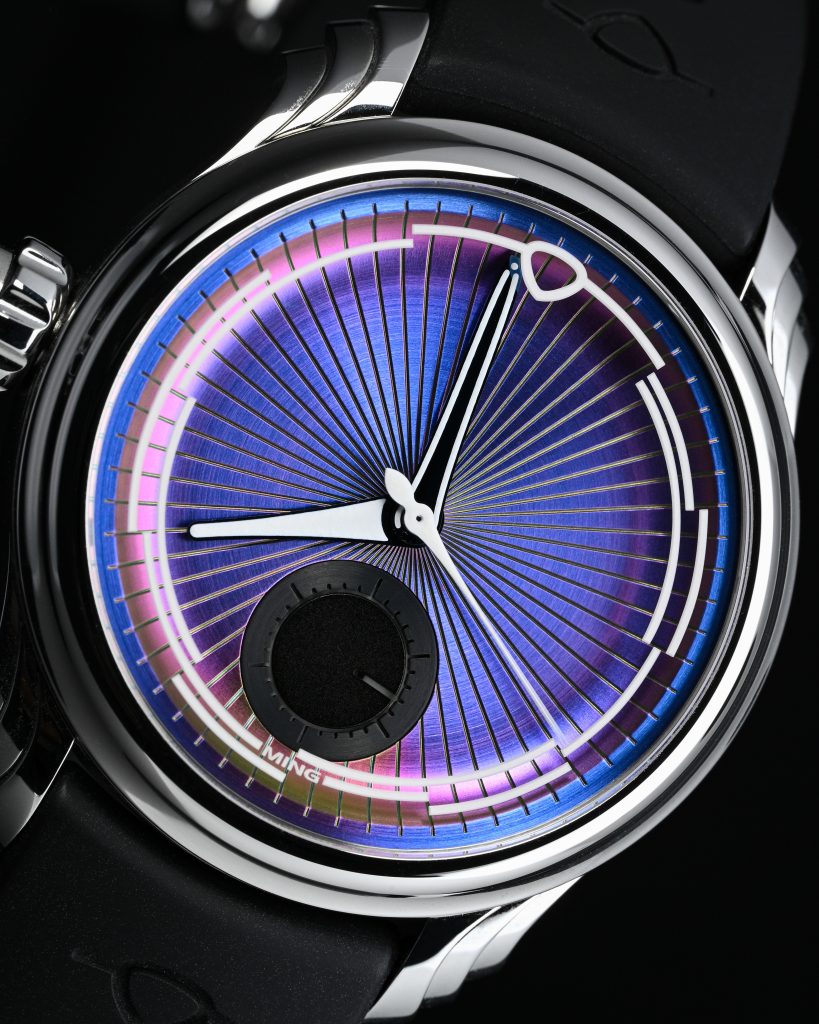
The dial has a deep-dish construction, with a raised upper flat surface that doubles as a highly legible seconds and minutes track before curving down into the bowl-shaped center. Sixty engraved markings add further structure radiating from its center, and the sandwiched elapsed-minute counter at 6 o’clock features 30-minute ticks and a rotating disc whose small cutouts make legibility a bit challenging, though the minute disc aperture remains readable throughout the day.
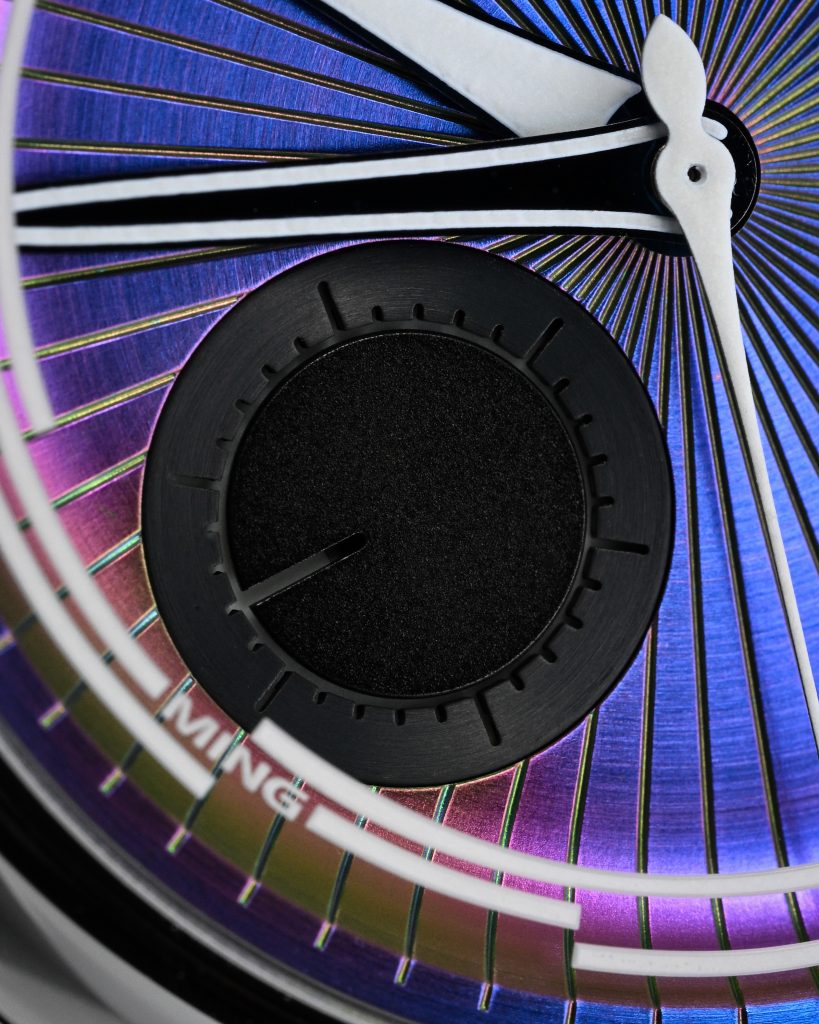
The crystal carries an hour ring engraved into its underside, filled with MING’s proprietary Polar White lume. A new handset rounds things out: metallic blue, beautifully proportioned, and generally very legible, with a generously lumed hour hand and a minute hand that extends beyond the hour ring with a thin lume border and a single lumed dot at the tip; though my particular piece showed a few small scratches at the base of the minute hand, which is unusual for MING from my prior experiences.
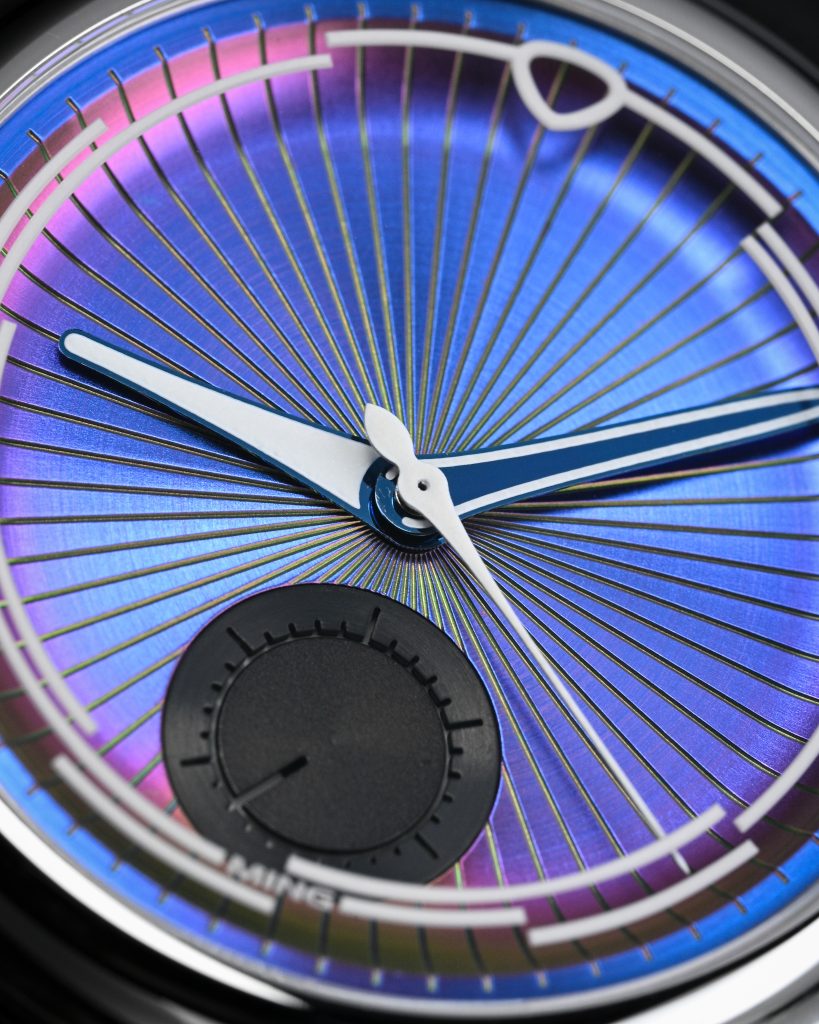
The fully lumed seconds hand is crisp and easy to track against the dial markings. Overall, the dial is visually stunning and delivers an exceptional experience, even if the elapsed-minute display isn’t the most practical and the quality control on the hands could be tighter.
Lume
The lume on the Iris is a bit of a mixed bag for me. All the hands are traditionally lumed with Super-LumiNova, as is the sandwiched sub-dial for the elapsed-minute counter, while the markers etched into the crystal use MING’s proprietary Polar White lume first introduced on the 37.02 Minimalist. A small disclaimer: my camera insists on rendering this almost-white lume as a soft purple, likely due to the white balance algorithm latching onto subtle violet tones in the mixture, but to the naked eye it stays convincingly white for quite a while before fading asymmetrically into its component colors, which is an expected behavior.
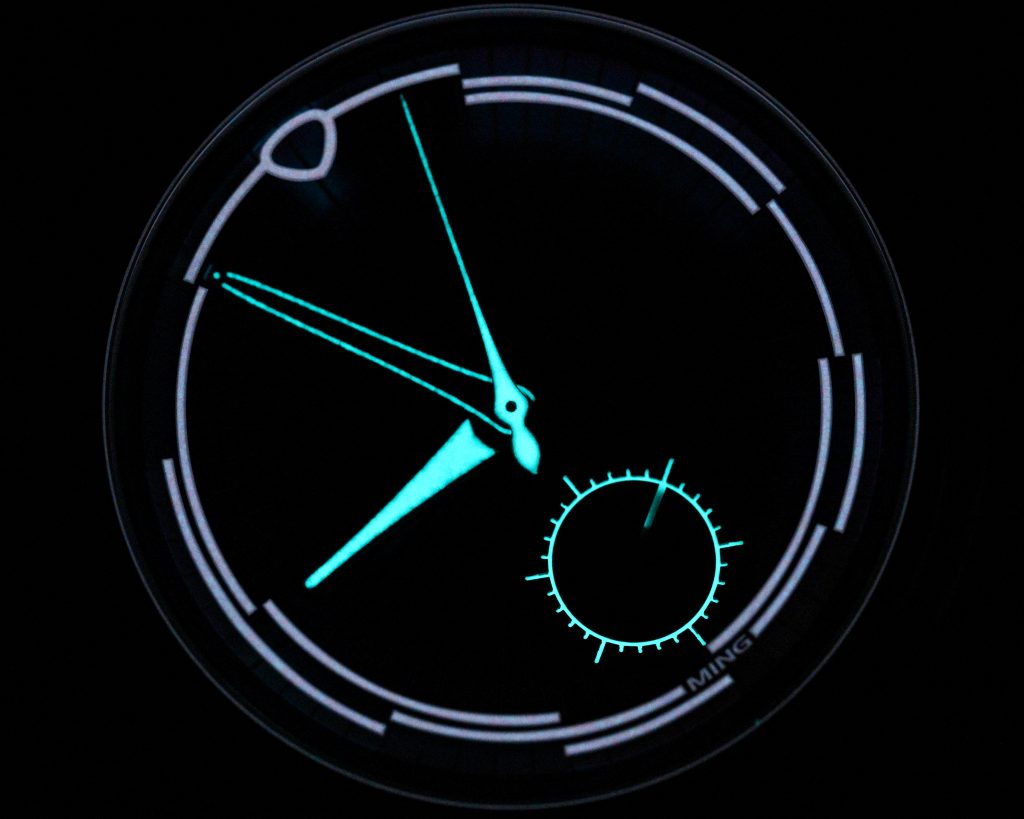
Unfortunately, function begins to take a back seat to form with the lume here, and as much as I admire the brand and the aesthetic of this watch, the performance leaves me wanting more. The Polar White lume fades too quickly, the thin lume border on the minute hand follows soon after, and before long only the hour hand and the base layer of the sandwiched elapsed-minute disc remain visible, with the disc itself staying legible for only a few minutes since its unexposed segments never fully charge.
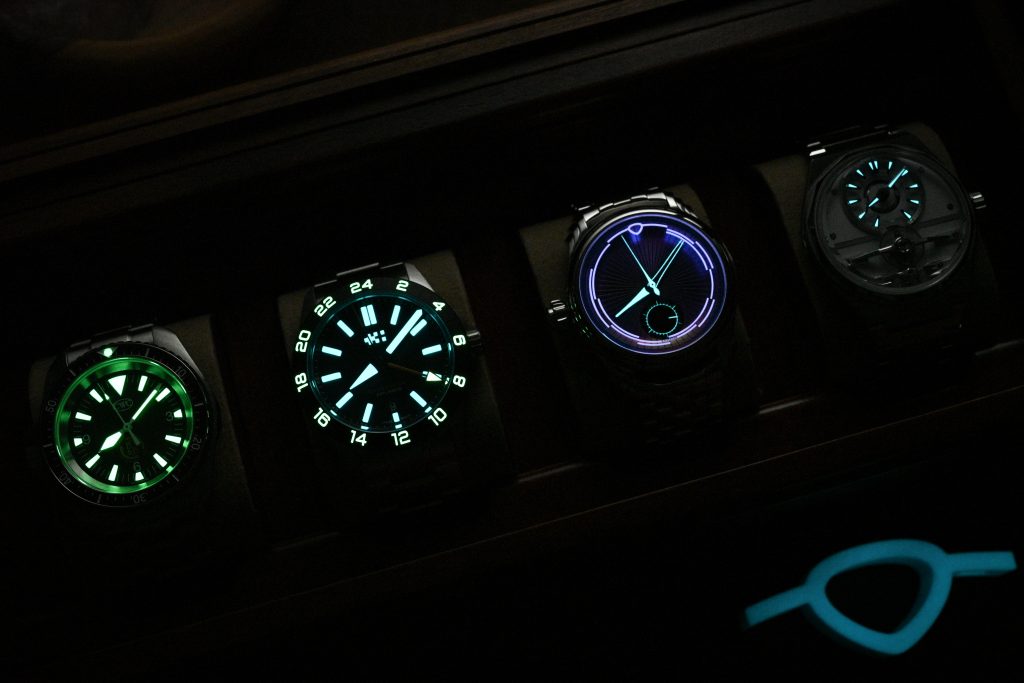
Compared to other watches in my collection, even traditionally pad-printed dials, and even watches with limited surface area like the Christopher Ward C12 Loco, the Iris’s lume is among the weakest, which is disappointing. Overall, the design is striking, but the performance is mediocre at best, and I suspect even those that aren’t irrationally passionate about lume will come away disappointed, given the expectations set by the overall genre of design.
Movement
The Iris is powered by the Sellita SW562 hand-wound movement, oriented with the monopusher on the left and offering only a 30-minute elapsed counter at 6 o’clock. For a $7,800 watch, relying on a Sellita chronograph movement will understandably draw criticism, and I think much of it is fair: at this price, you can find far superior calibers from other brands. If you want a historically rooted architecture with modern METAS certification, a free-sprung balance, and great operating feel, an Omega Speedmaster delivers all of that for roughly the same money; and if you prefer an automatic, there are excellent options from Breitling, Tudor, and IWC in this bracket.
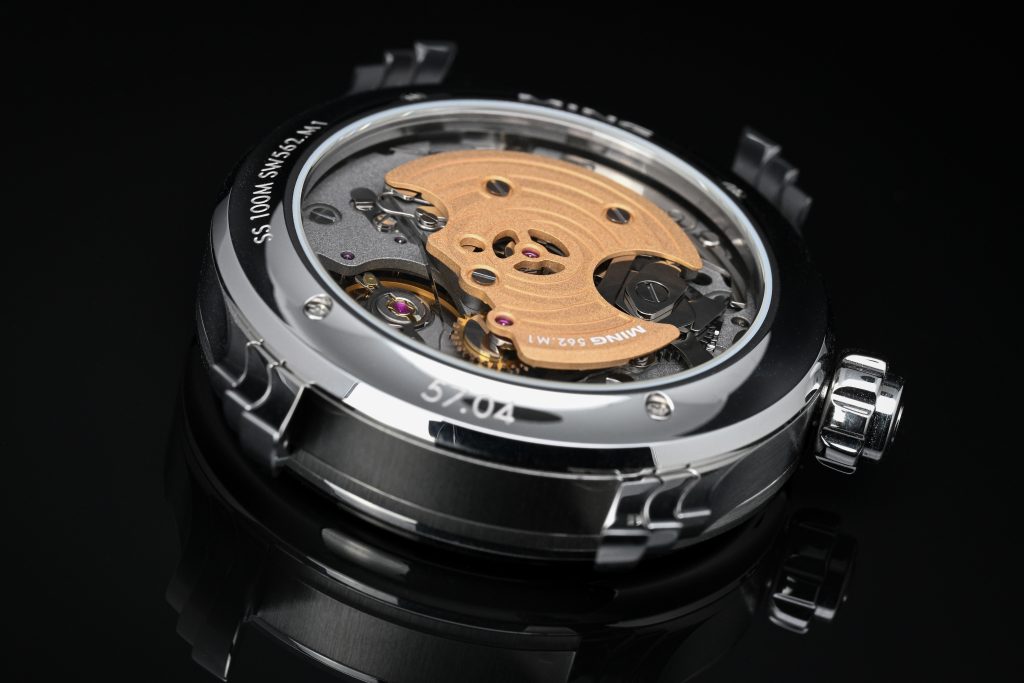
MING hasn’t done much to disguise the Sellita origins here, aside from aesthetic tweaks: the base components receive an anthracite finish, while the three-quarter plate is rendered in a lovely contrasting 4N gold tone with an engraved motif.
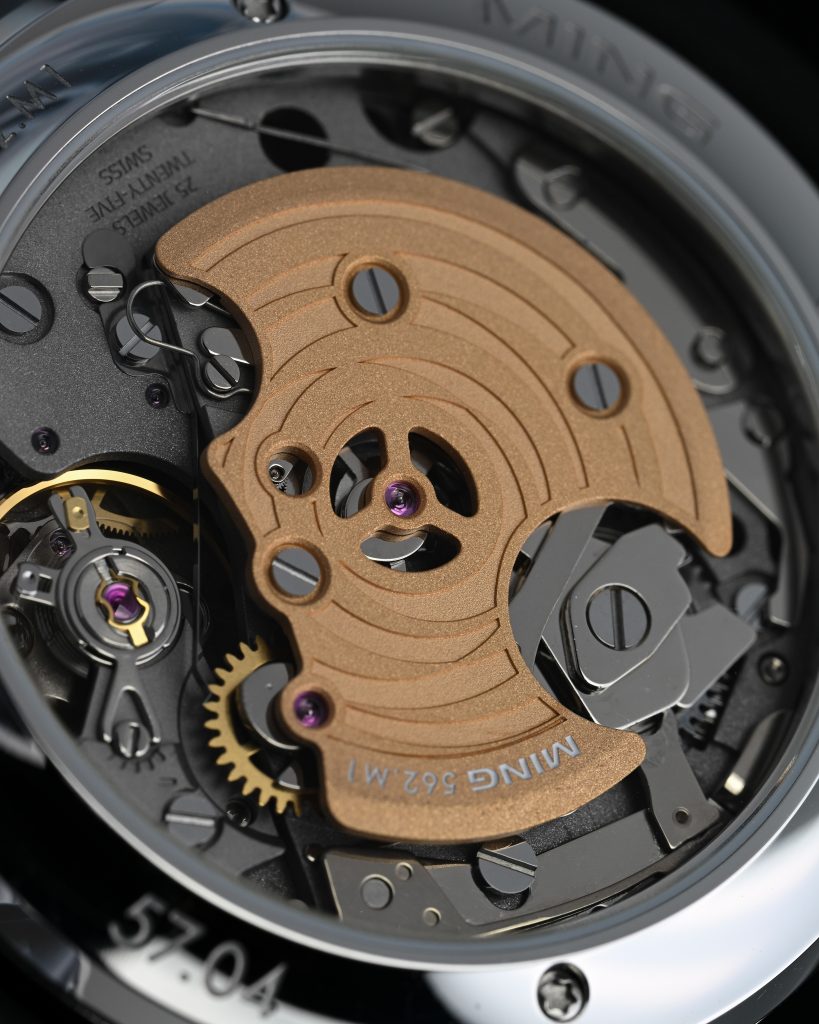
To be fair, the landscape for independent brands seeking a Swiss chronograph movement in this price range is bleak, essentially limited to Sellita and La Joux-Perret. Still, the result is a watch just shy of $8,000 with a chronograph feel that is merely average and a movement that unmistakably resembles its Sellita roots, especially when you consider how much effort Habring puts into elevating their Valjoux-based calibers both visually and mechanically.
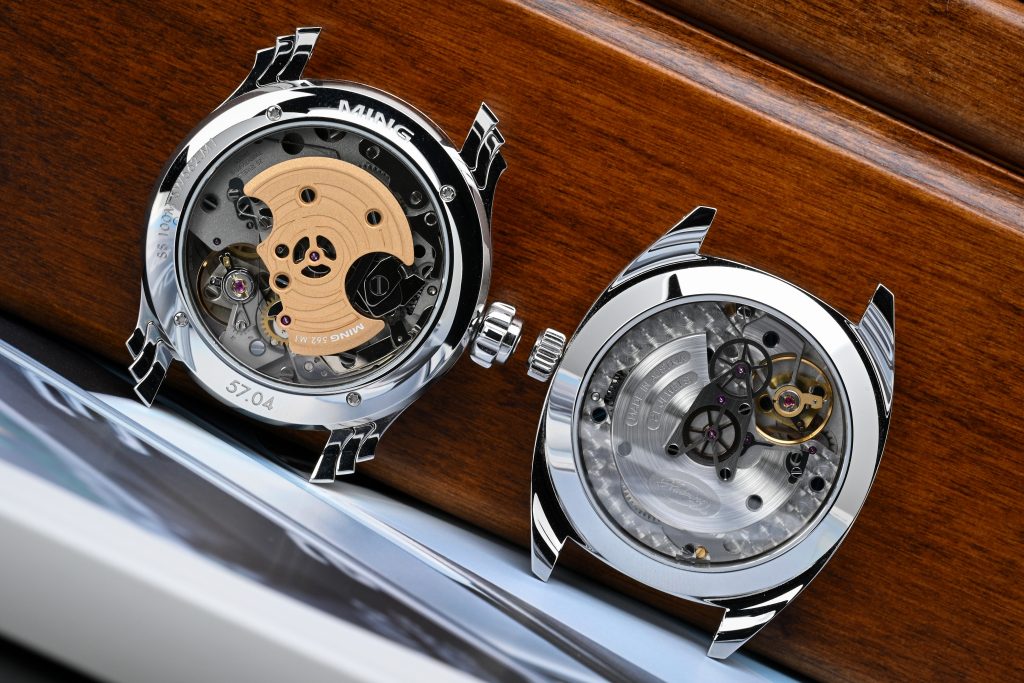
Accuracy on my piece was a respectable +6 spd, but overall I’m left mixed: at this price I can’t help but want more, yet I also recognize that realistic alternatives are scarce. If you love the watch, you’ll likely have to make peace with, if not eventually embrace, the movement powering it.
On The Wrist
The wrist presence, proportions, and overall wear-ability of the Iris is exceptional, very much in line with what I’ve come to expect from the brand. Even though the new case design steps outside MING’s usual 38 mm comfort zone, the 40 mm diameter and 47.25 mm lug-to-lug fit my 6.75″ wrist perfectly, and while the watch can look a bit thick and slab-sided in photos, the 12 mm height is well managed and never feels bulky; the left-hand crown only adds to the comfort.
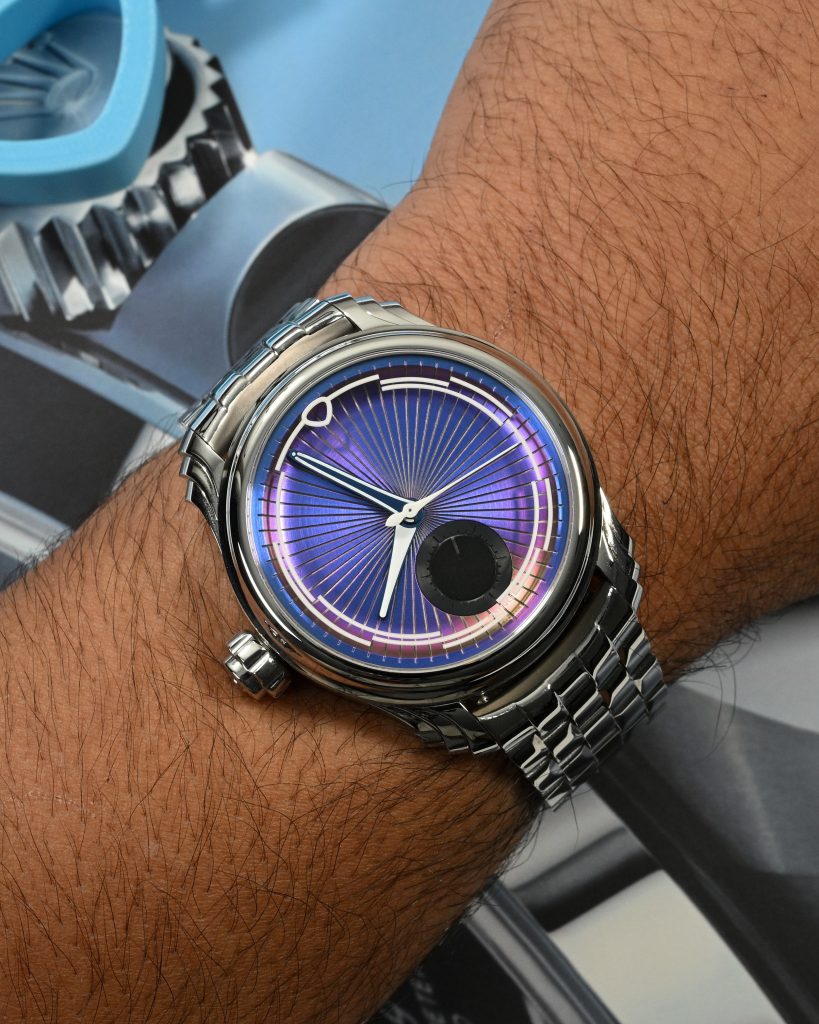
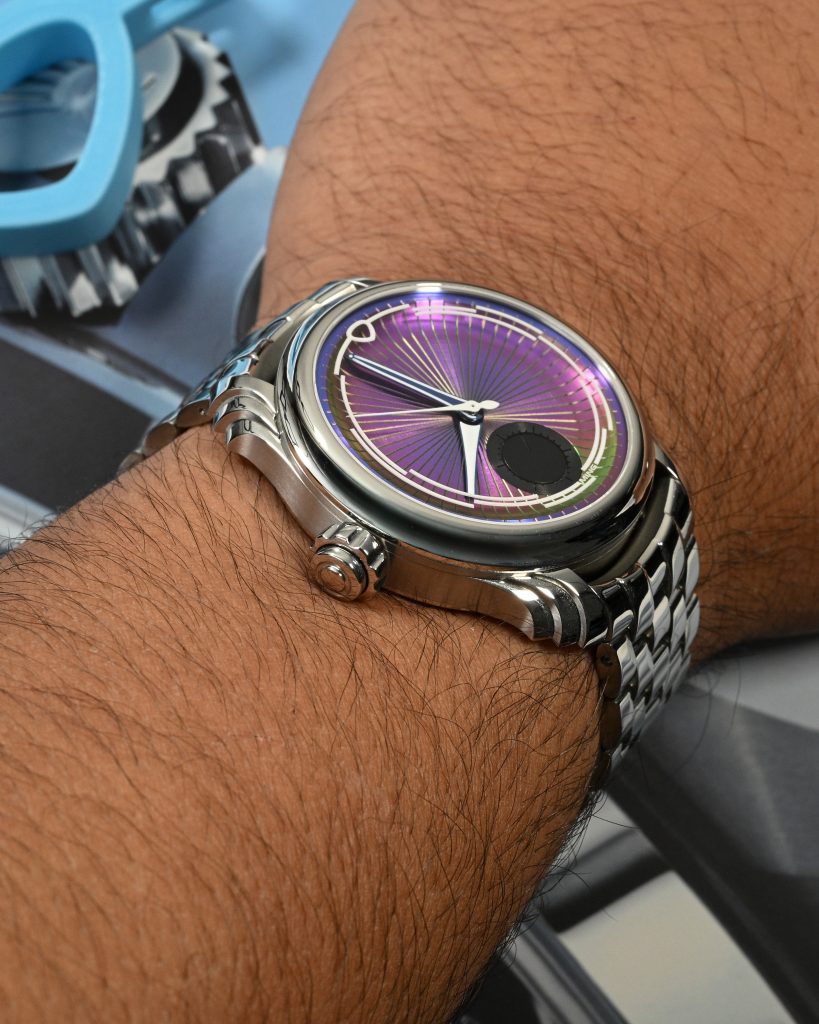
The included leather strap went back into the box almost immediately, as is often the case for me with the Jean Rousseau straps MING uses. And this one seems to exaggerate the perceived thickness more than it needs to. I’ve instead kept the watch almost exclusively on the polished stainless-steel second-generation Universal Bracelet or one of MING’s FKM rubber straps, both of which balance the case beautifully.
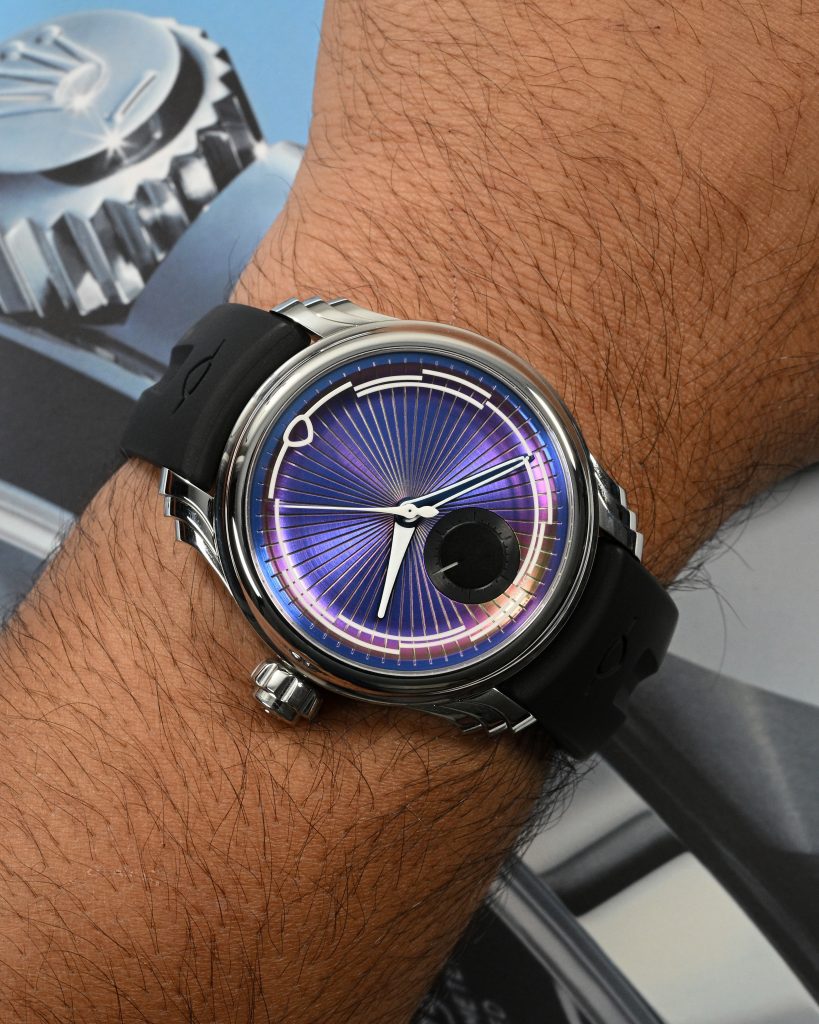
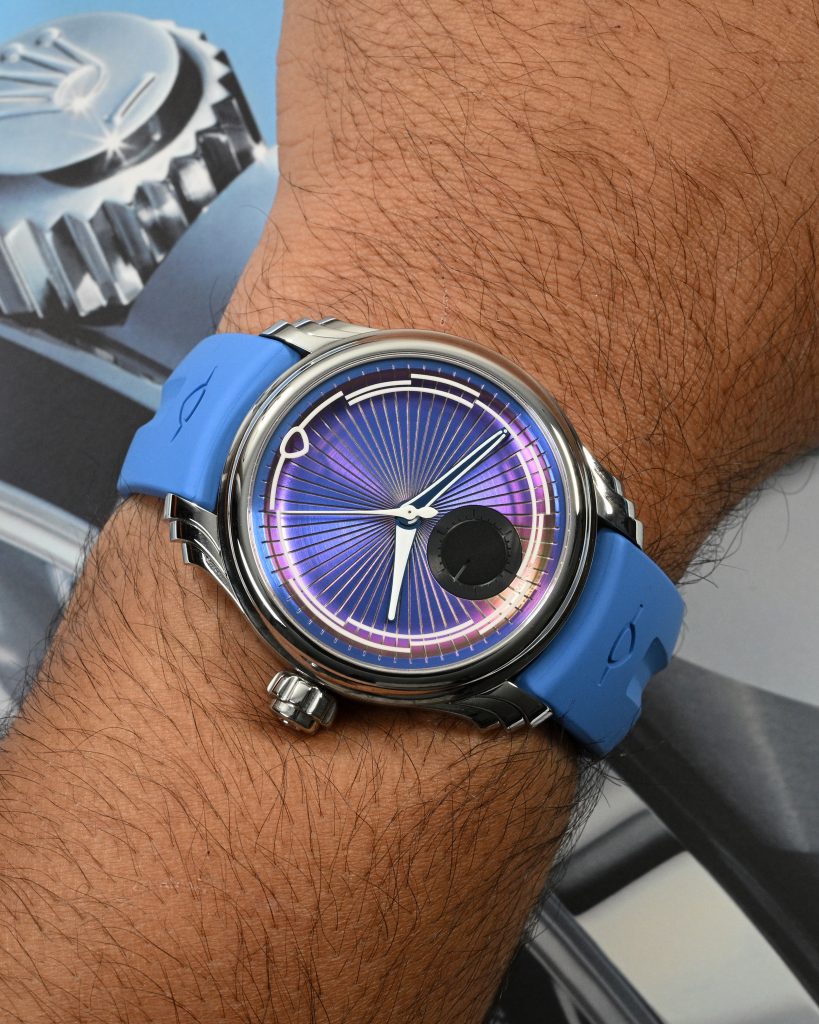
The bracelet itself is well designed and nicely finished, with a sleek deployant clasp that integrates cleanly, though I do find myself wishing for a more robust clasp and some form of on-the-fly adjustment, especially since this watch is slightly heavier than typical MING pieces, coming in at 80g for the watch head, an additional 20g for the rubber strap or another 56g for the bracelet sized to my wrist. The Iris should suit a wide range of wrists, leaning a touch larger than their usual design, but still delivering a comfortable and surprisingly refined wearing experience.
Wrapping Up
To wrap this up, the MING 57.04 Iris is a stunning watch with an exceptionally well-designed case and a magical, color-shifting dial that offers a genuinely unique experience; I love the way it puts a futuristic spin on the Art Deco design vocabulary. If you’re after strong lume performance or the best chronograph movement your money can buy, this won’t be the right fit. But if you want a watch with a spectacular dial, distinctive design identity, and a look unlike anything else, the Iris (or whatever follows it) may be exactly what you’re after. At $7,800, it sold out immediately, driven by that incredible dial, its 100-piece limited production, and the debut of a long-awaited new design language, making it a clear commercial success; still, I’m curious to see how this pricing will hold up as more 57-series variations arrive, much like the evolution of the 37 Series. Personally, I’m excited to see where MING takes this platform next: hopefully a time-only variant with a slimmer profile, and maybe even a titanium execution.