Disclaimer: this video/review was not sponsored by Lorier or any other entity.
Video
Review
It’s been over five years since I last wrote a full review of a Lorier watch, the Gemini Chronograph, a watch that I admired for its charming vintage aesthetic and overall thoughtful design, even if it left me with some reservations about its movement and proportions. Since then, I’ve come across many of Lorier’s releases in passing, and each time, I’ve walked away with the same impression: these are watches with genuine personality and an authentic appreciation for vintage design, all offered at remarkably fair prices.
So I’m pleased to be revisiting the brand with the updated Lorier Olympia Chronograph. This isn’t the first Olympia – the collection debuted a little over a year ago, but I found the original case design a bit awkward and unwearable after trying it on at WindUp. This new iteration, however, is a significant refinement and a clear sign of how far Lorier has come.
It’s powered by the Seiko NE88, a movement I find to be quite impressive for its robustness and smooth operation, and at $999, the watch represents a compelling value. Given how much of an upgrade this entire watch is over the $500 Seagull-powered Gemini, I felt it was absolutely worth buying one just to photograph and review, because this is a watch that deserves to be shared.
Let’s check it out!
Case
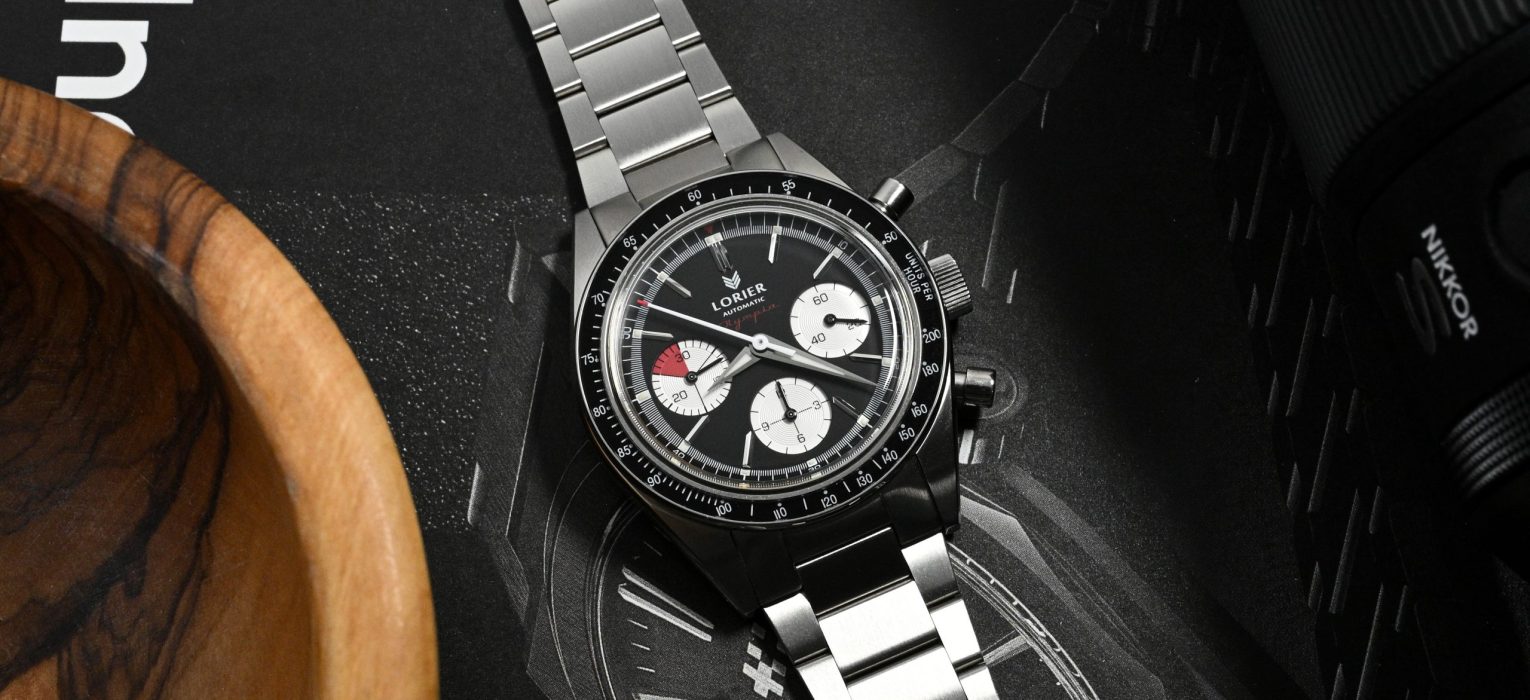
The case measures 38mm in diameter, 45.5mm from lug to lug, and 13.85mm in total thickness: with nearly 2mm of that coming from the tall, boxed Hesalite crystal that defines much of the watch’s profile. It’s crafted entirely from steel, and while the overall design language is fairly conservative, there’s plenty of visual interest here thanks to the contrasting finishes and thoughtful details.

The mid-case has a beautiful curvature with subtle breaks and transitions that make the watch appear noticeably slimmer than the numbers suggest. The bezel remains somewhat thick, but it’s been significantly refined from the previous generation, and the proportions between the crystal, bezel, mid-case, and case-back now feel far more harmonious.
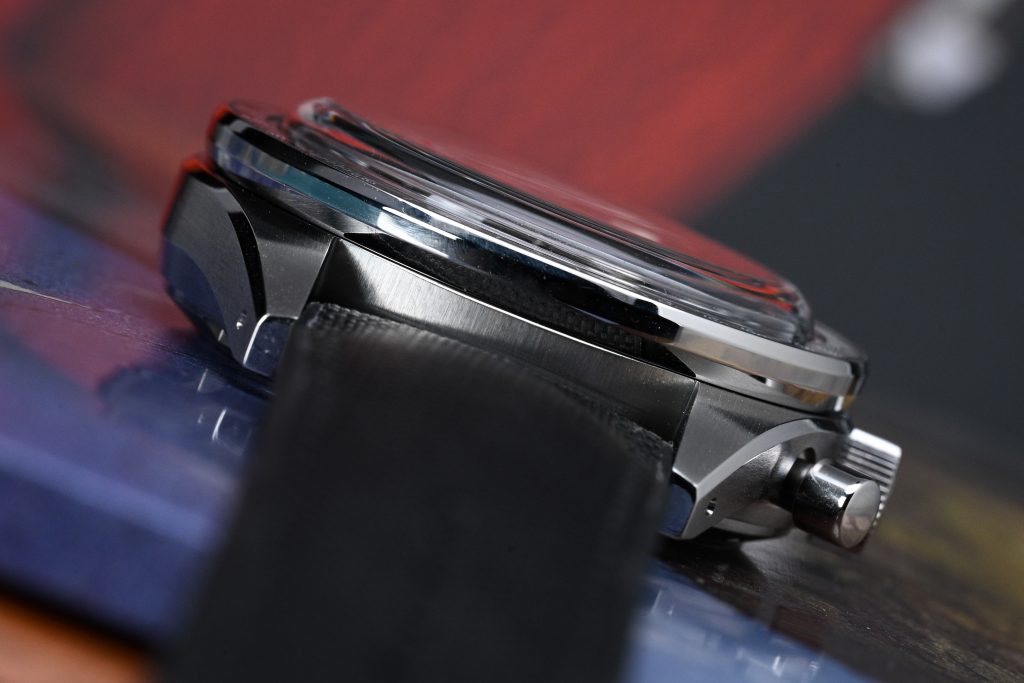
As for the crystal itself.. yes, it’s still Hesalite, and yes, people will continue to complain about it. But honestly, it’s time to move on. Lorier ships every watch with a tube of Polywatch for scratch removal, and I genuinely respect the brand for standing by this choice, staying true to their design inspiration despite the noise.
At 3 o’clock, there’s a 5.8mm screw-down crown embossed with the Lorier logo, flanked by well-sized pushers that are smooth and tactile; a huge improvement over what I experienced with the Gemini.
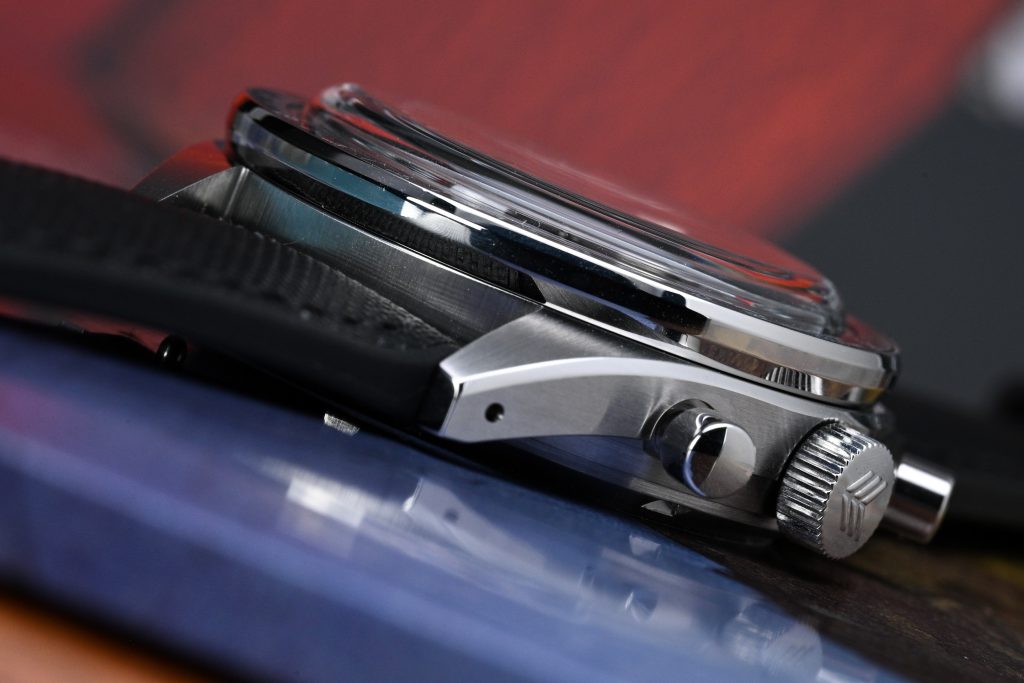
Flip it over, and you’ll find a flat, screw-down case-back offering 50m of water resistance. Just remember: admire it in the rain and in light water immersion if you must, but don’t press those pushers underwater!
Dial
The version I have here is the Contrasto dial configuration: a reverse panda layout featuring a black dial base with crisp white sub-registers. Lorier lists this as a “Special Edition”, though they don’t specify whether it’s produced in smaller quantities than the standard white-dial variant. Lorier is very open about their inspiration for the Olympia, citing legends like the Universal Genève Compax ref. 885103/02, Rolex Cosmograph Daytona ref. 6241, and Heuer Carrera ref. 2447 as direct design references.
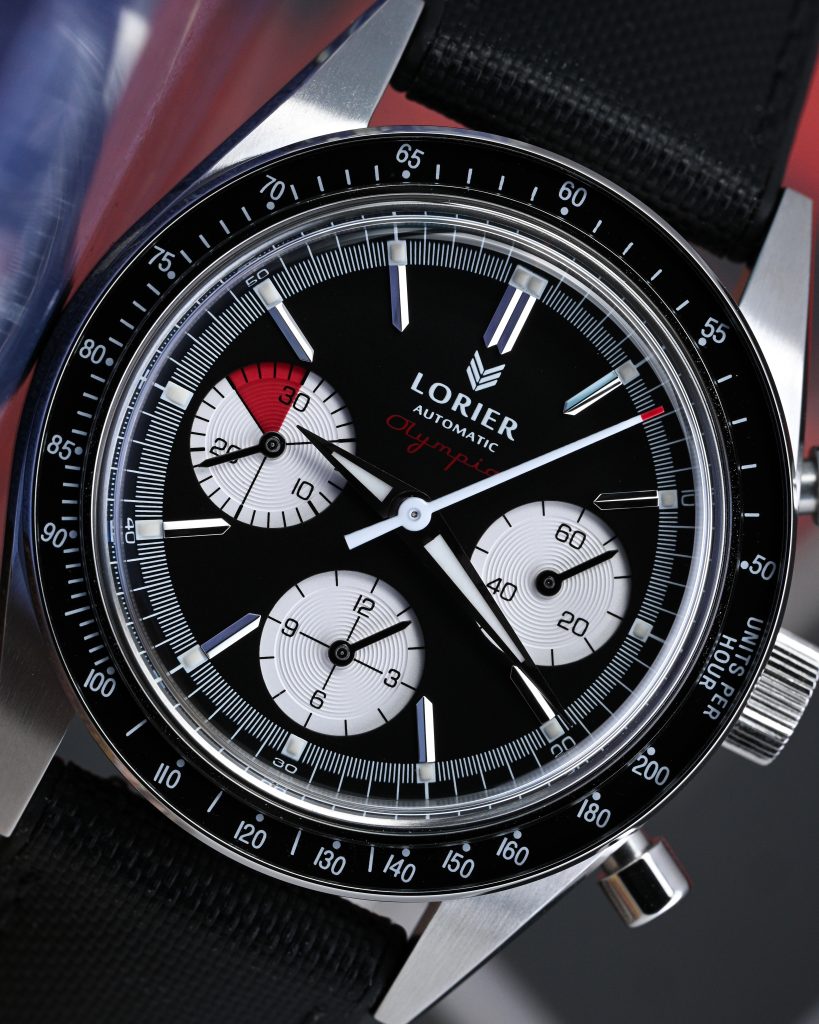
These are the cornerstone references of mid-century chronograph design, which explains why the Olympia looks instantly familiar, almost formulaic, yet charming if you appreciate this design blueprint. What I appreciate most is the restraint: the layout is clean, balanced, and faithful to its vintage roots without feeling derivative.
Around the periphery runs a precise minute and seconds track, complete with fine subdivisions suitable for chronograph timing. The applied, multifaceted hour indices are neatly polished, with lumed pips sitting above each on small white squares. Lorier’s logo and name are pad printed below 12 o’clock, with “Olympia” standing out in red for a subtle dash of color.
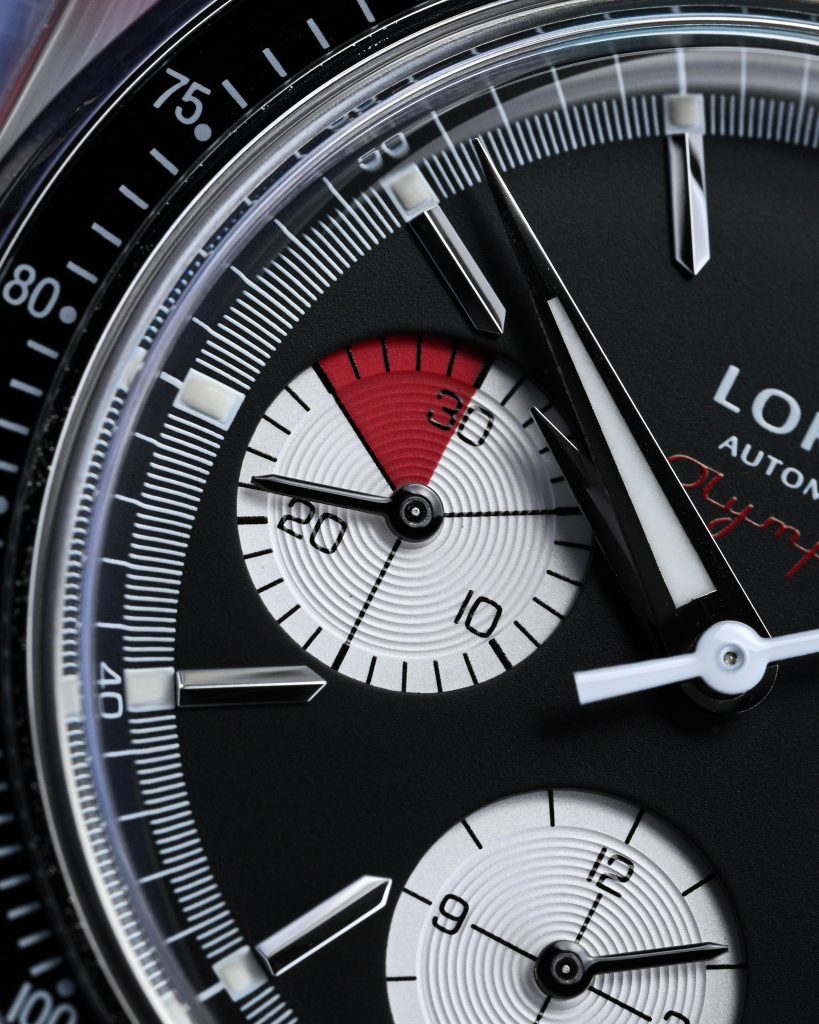
The three sub-dials are beautifully executed with concentric textures and clear, functional markings for elapsed minutes, hours, and running seconds: the 9 o’clock sub-dial gets an extra pop of red for emphasis.
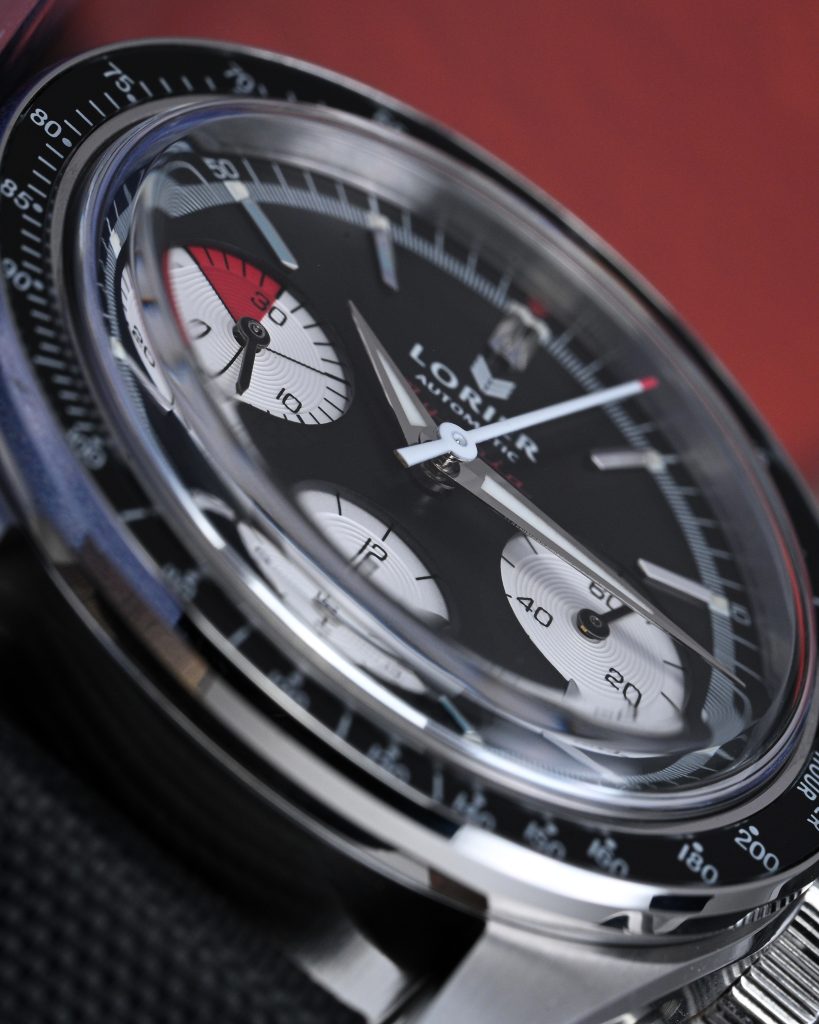
The sharp hour and minute hands feature generous lume plots and fine faceting that enhances legibility, while the white chronograph seconds hand with a red tip completes the vintage racing aesthetic. Overall, the finishing and printing are excellent and the proportions and layout are spot on.
Lume
Both the hour and minute hands feature large lume plots with a generous application. While the hour indices themselves aren’t lumed, Lorier has placed sizable lume dots just above each one, keeping the dial visually consistent without breaking from its classic aesthetic. These lumed markers glow reasonably bright for their size, though they do fade faster than the hands, which retain their visibility a bit longer.
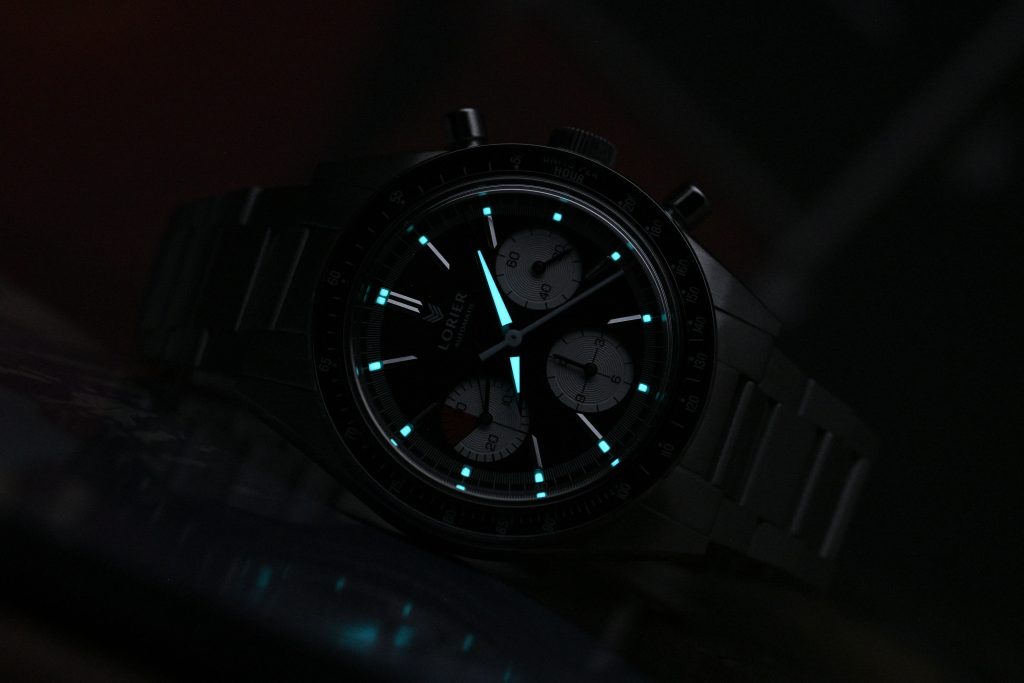
Overall, the lume performance is satisfactory and perfectly adequate for everyday use. Lume junkies like myself might wish for a bit more intensity or longevity, but the execution feels deliberate and well-matched to the watch’s overall design language.
Movement
There aren’t many mechanical chronograph calibers available in the sub-$10k segment that independent or small brands can realistically use. Most of them fall into one of three categories: the hand-wound Seagull ST19, which is charmingly vintage but temperamental and cheap feeling; the Valjoux 7750 and its many derivatives, which are reliable but ubiquitous and more expensive than this Seiko; and finally, the Seiko NE88/NE86, a modern, robust, and highly capable movement that remains surprisingly rare outside of Seiko’s own catalog but is also accessible in price. Lorier’s choice to go with the NE88 is therefore a very good one; it gives the Olympia a solid technical foundation that not only elevates the watch beyond its predecessor but also sets it apart from nearly everything else at this price point.
I’ve had prior experience with this movement in the Kurono Tokyo Chronograph, a watch that retailed for around $4,000 USD and left a strong impression for its smooth column-wheel actuation and overall refinement. Even Seiko’s own watches using the NE86/NE88 tend to cost at least two or three times more than this Olympia, which makes Lorier’s use of it at $999 quite remarkable. The movement itself is automatic, operating at 4 Hz with a 45-hour power reserve, and features both a column wheel and vertical clutch, specs often seen on more expensive chronographs. It’s a shame that the column wheel isn’t visible from the back since the chronograph mechanism sits on the dial side, but in this case that doesn’t really matter because of the closed case-back.
For a brand that once relied on the manually wound Seagull ST19, this feels like a leap across generations: from a charming but rudimentary vintage reissue to a genuinely modern, purpose-built chronograph. In short, this is a serious movement in a surprisingly attainable watch, and it delivers a technical experience far beyond anything they could make with the ST19.
On The Wrist
I was genuinely excited to try on the first-generation Olympia when it debuted last year, but my enthusiasm quickly faded once I got it on wrist at WindUp. The watch looked great when viewed head-on, but the case profile felt awkward and overly bulky, with proportions that just didn’t sit right. This new version, however, completely changes that impression.
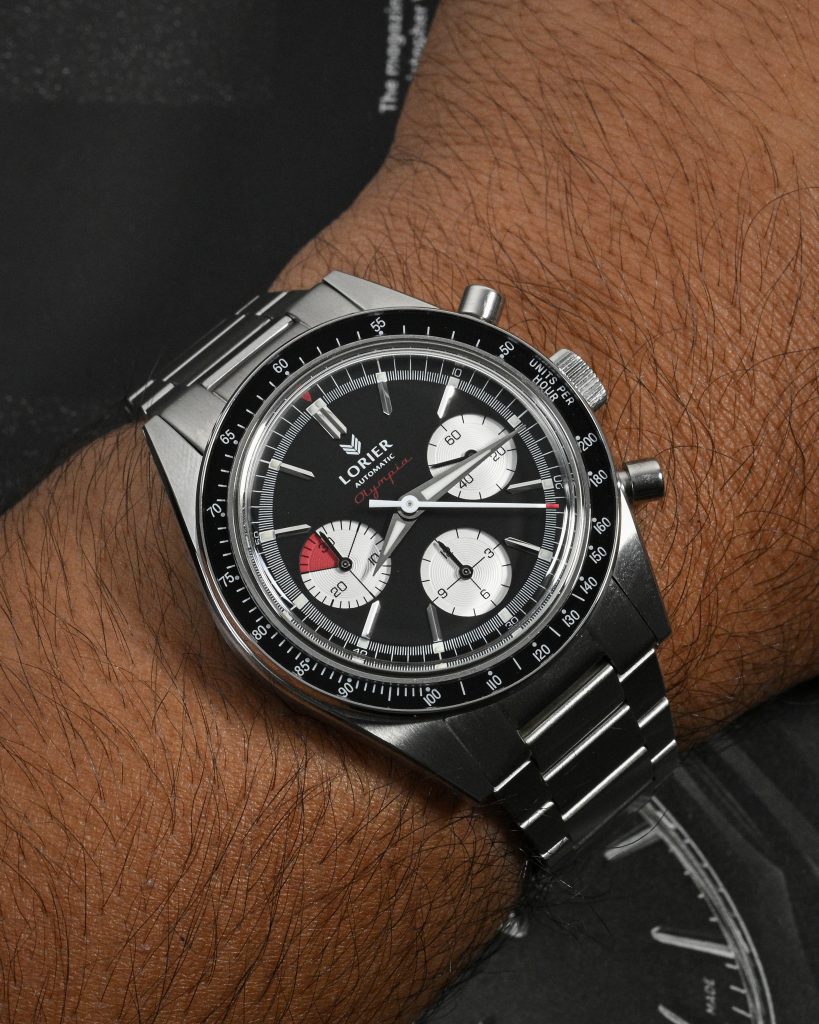
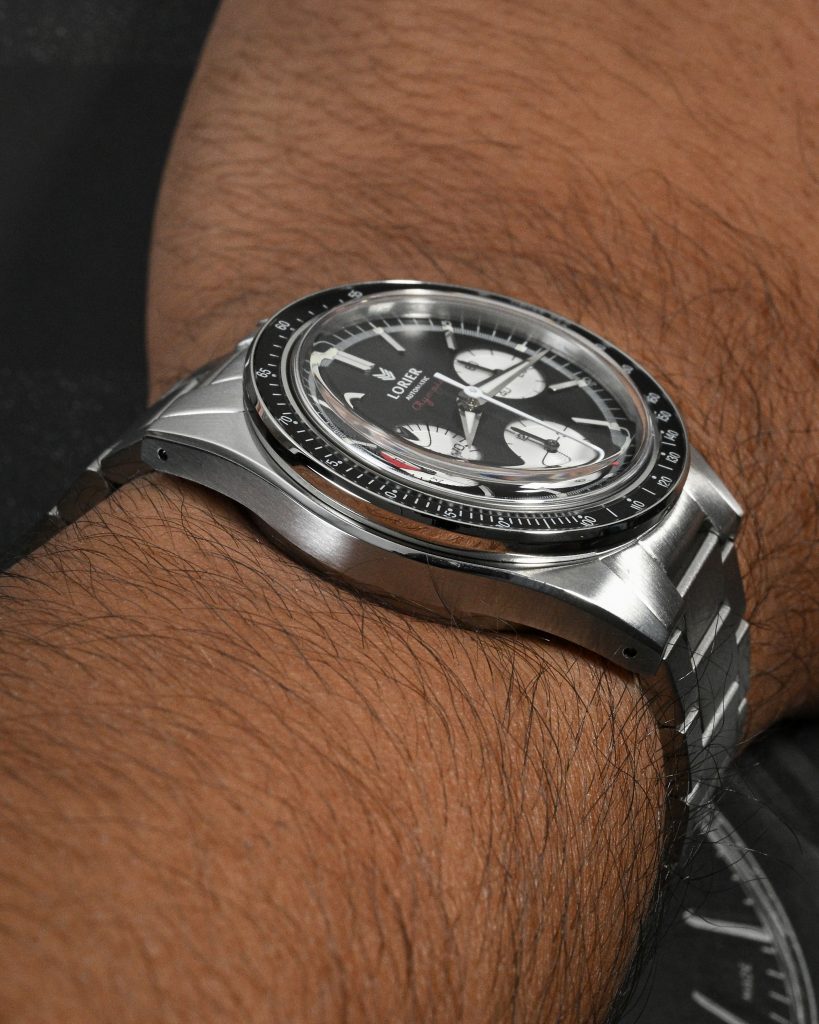
While the overall silhouette and dial proportions remain familiar, the redesigned case transforms both the look and the feel. On my 6.75″ wrist, the 38mm diameter and 45.5mm lug-to-lug wear beautifully, and the 13.85mm total thickness is cleverly managed so that it looks and feels at least 2mm slimmer.
Sized for my wrist, it comes in at 131g on the bracelet, which is comfortable and well-balanced. The bracelet itself isn’t the highlight of the watch… the finishing on the links and clasp doesn’t quite match the level of fit and finish of the case, but given the aggressive $999 pricing, this feels like a reasonable compromise.

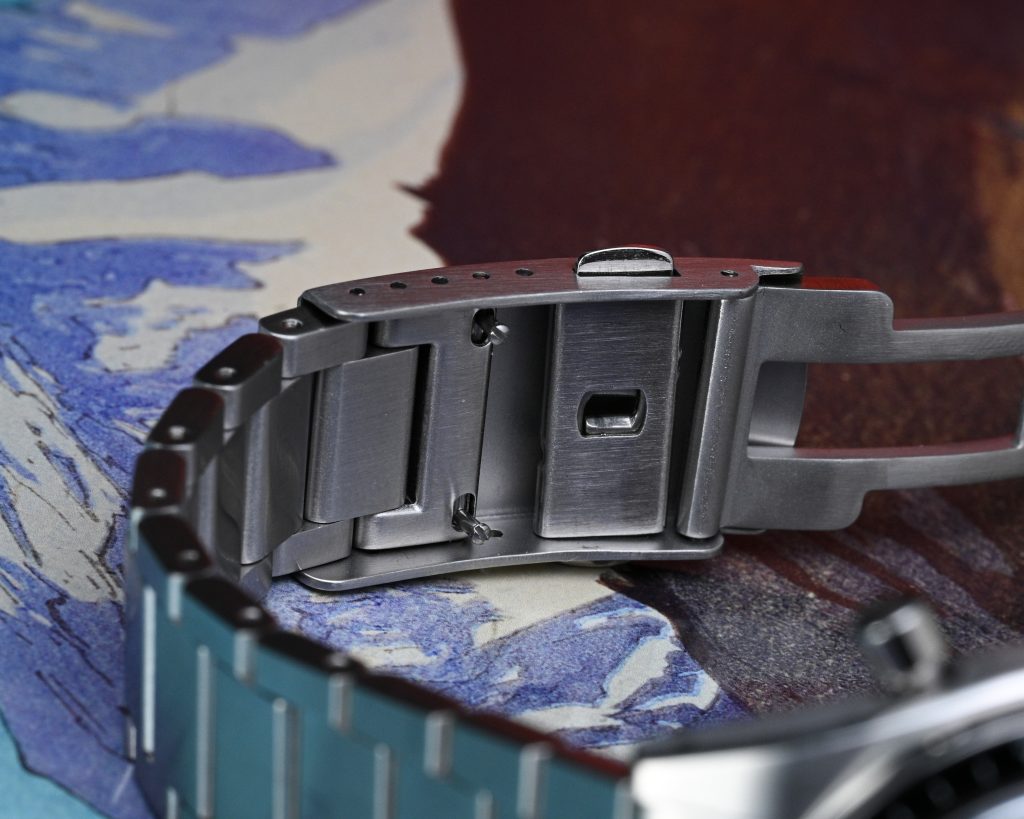
That said, functionality hasn’t been sacrificed, thanks to a smart tool-free micro-adjustment system on the clasp that uses quick-release spring bars to shift between holes, similar to NOMOS’ approach. Overall, while the bracelet may not compete with what brands like Zelos, Christopher Ward, or Halios offer at this tier, the wear-ability of the Olympia as a whole is excellent and is a massive leap forward from the first generation.
Wrapping Up
I’ll wrap this up by echoing the general theme of this review: the price is excellent, the design is familiar but very well executed, the case finishing is top-notch, the movement is solid, and the bracelet, while not perfect, is perfectly adequate for the package. Sure, if you spend enough time on AliExpress, you’ll probably find watches that offer more specs per dollar… and someone inevitably will point that out as they always do when I make a case for a well priced watch… but that completely misses the point.
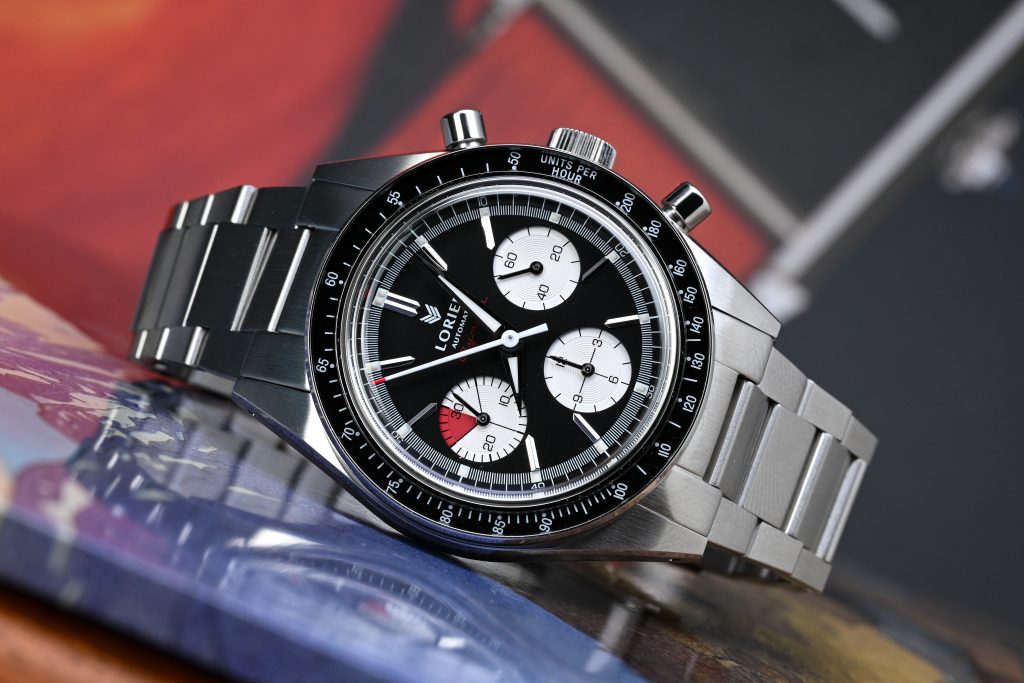
The Olympia isn’t about chasing raw spec sheets; it’s about delivering a thoughtfully designed, well-built chronograph that feels cohesive, refined, and genuinely enjoyable to wear. I’ve liked the Olympia since its debut, and with these updates to the case, I think Lorier has really nailed it this time. If you’re drawn to its design, there’s absolutely no reason not to pick one up… they’ve done great here!