Disclaimer: this video/review was not sponsored by Selten, WatchHo&Co or any other entity.
Video
Review
At this point, Selten and Watch Ho & Co(mmunity) have become one of my favorite microbrand pairings. Selten is a Hong Kong-based brand founded by Leonardo Tsai, whose family background in dial manufacturing has always been obvious in the brand’s dial-first approach. Watch Ho & Co., meanwhile, is a collector community founded by Jackie Ho, and the two previously collaborated on the original Jui and the more recent pink and purple Bauhinia editions. Those watches were already unusually thoughtful for watches at their price points, combining sharply machined mother-of-pearl dials, excellent proportions and increasingly ambitious hand finishing.
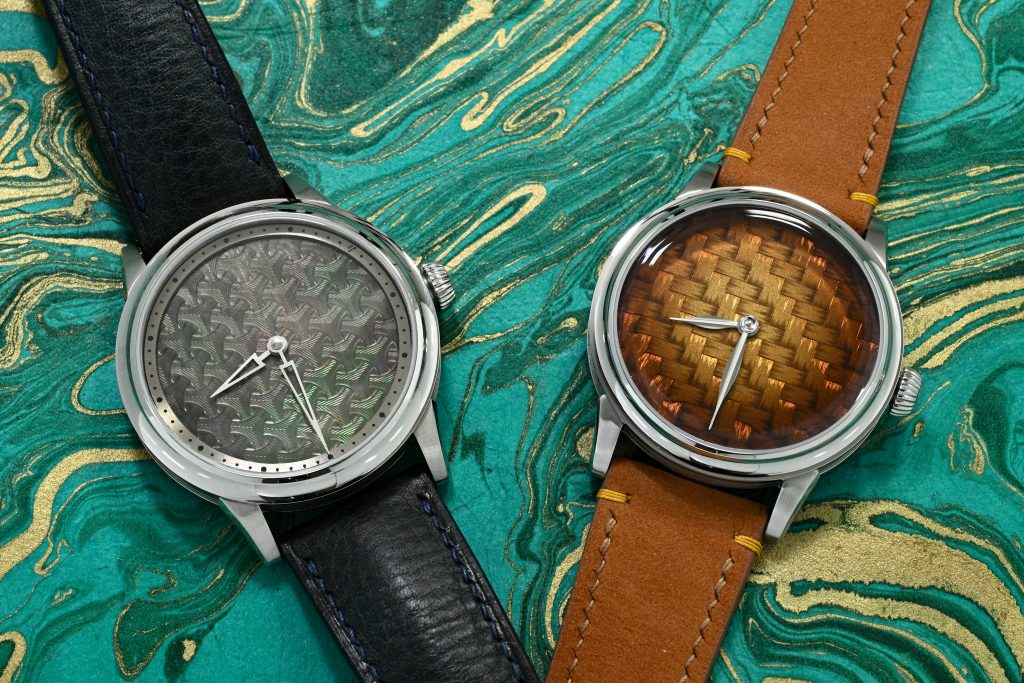
But the Yum Cha feels like a significant escalation. Created for Watch Ho & Co.’s third anniversary and limited to 100 pieces, it is priced at $4,950 USD and replaces the CNC-machined mother-of-pearl dial of the Jui with a hand-engraved silver dial covered in transparent Grand Feu enamel. It also introduces a smaller case, a dramatically different crystal, a completely new handset and the latest generation of Sellita’s manually wound SW200 architecture.
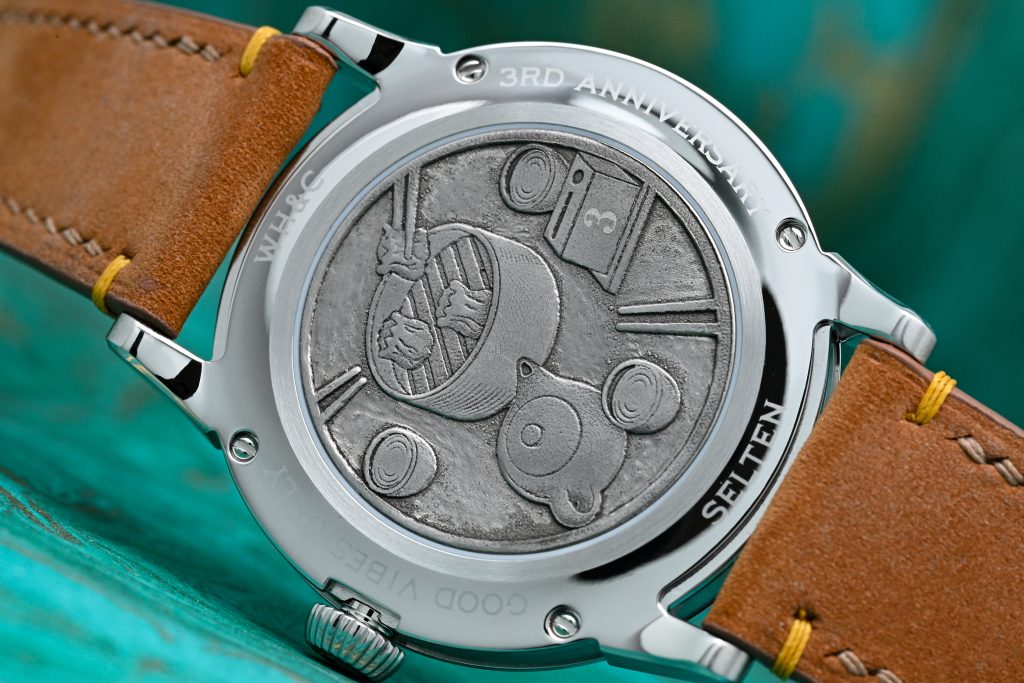
Yum Cha is Jackie Ho’s tribute to the grandparents who raised him, particularly his grandmother, and to the mornings they spent together in Hong Kong tea houses. The design is built around memories of dim sum baskets arriving at the table, tea being poured, conversations overlapping and his grandmother making sure his favorite dishes reached him before the trolley moved on. Yum Cha translates literally to “drink tea”, while Dim Sum means “touch the heart”, and the watch attempts to preserve both meanings without turning the dial into an obvious illustration.
Let’s check it out!
Case
It uses a 316L stainless steel case measuring 38mm in diameter, 44.5mm from lug tip to lug tip and 9.75mm in overall thickness, with a 20mm lug width that supports both curved and straight spring bars, and 50m of water resistance. Those numbers make it slightly more compact than both generations of the Jui, and it lands in what I consider the ideal range for a watch that leans dressy without feeling delicate or overly traditional.
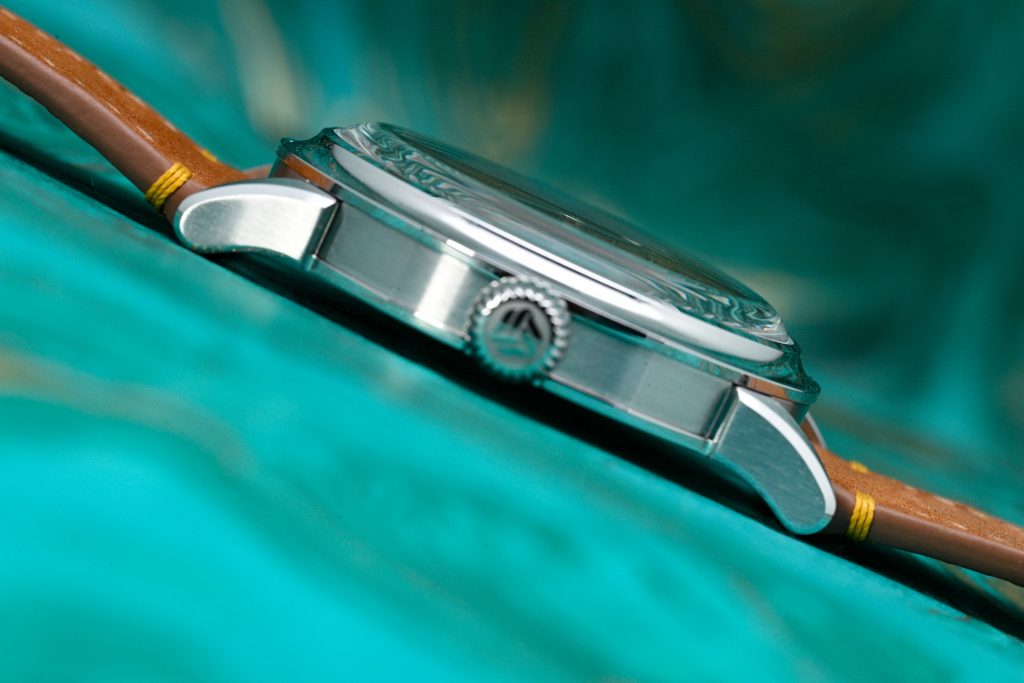
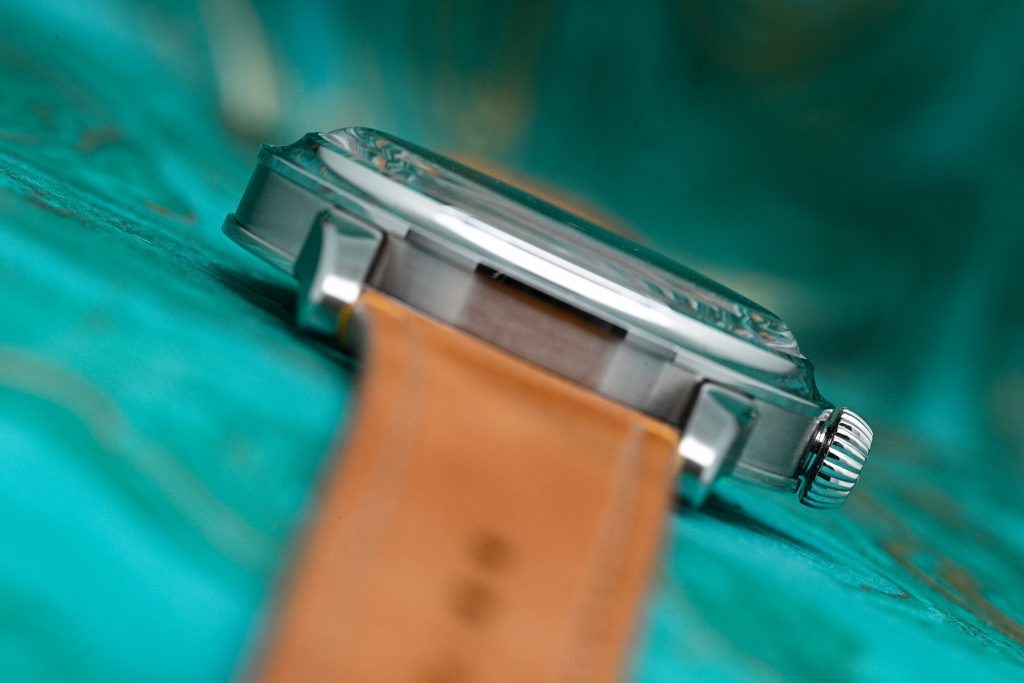
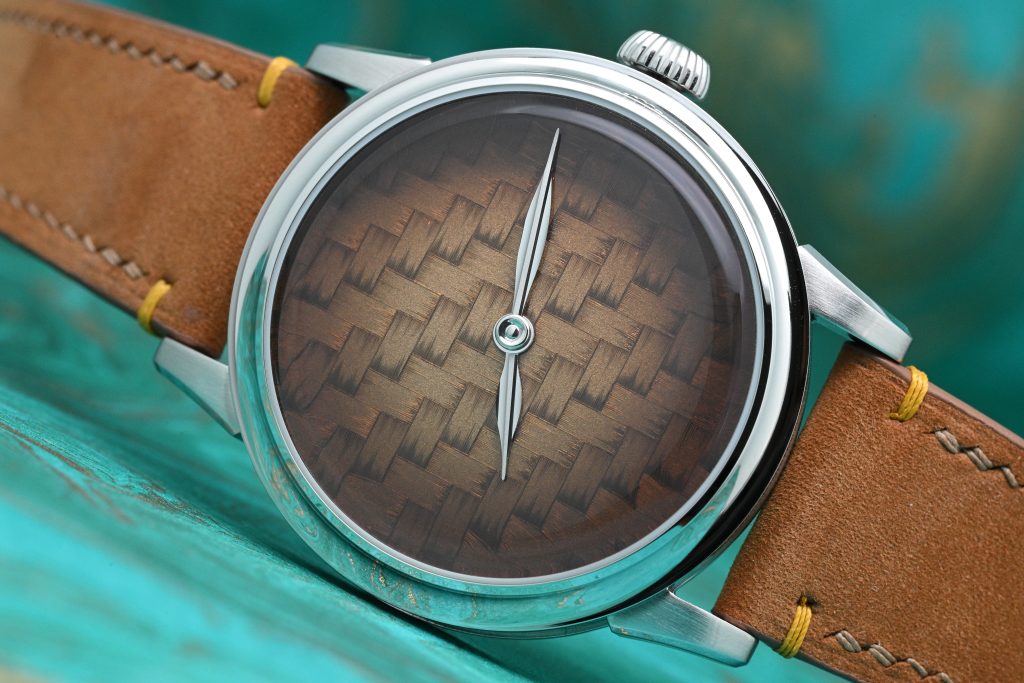
A substantial portion of the thickness comes from the crystal itself. That distinction matters because the Yum Cha does not use the restrained flat or gently domed sapphire normally associated with Selten’s watches. Instead, it has a tall top-hat sapphire crystal with an eight-layer anti-reflective treatment applied across its inner and outer surfaces.
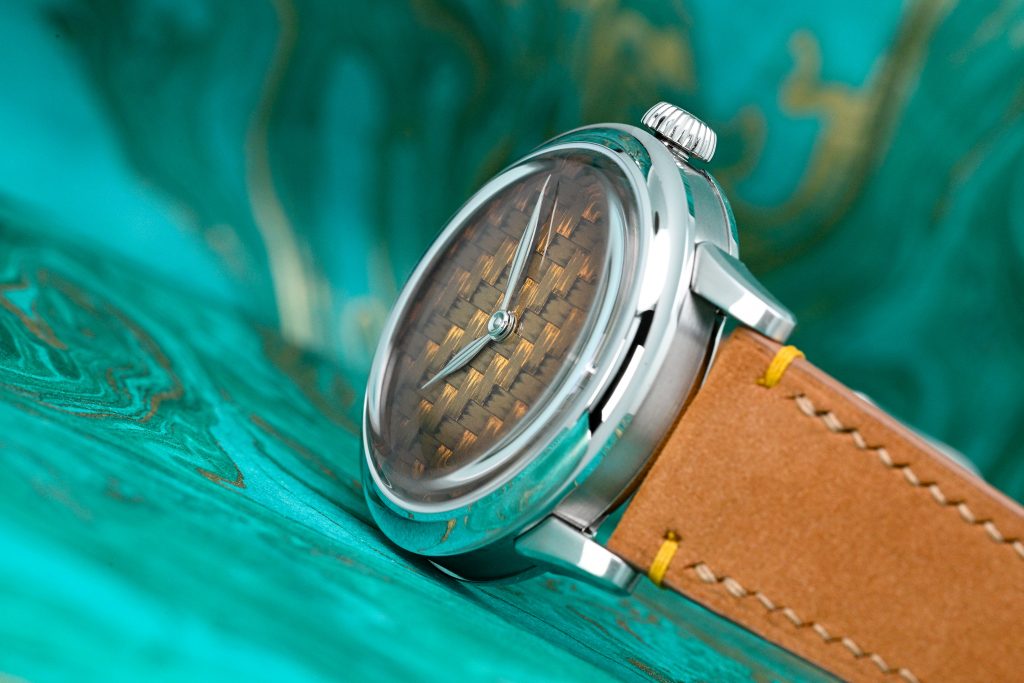
This changes the character of the watch more than the numbers suggest. The crystal stands proudly above the case and creates a visible layer of clear material around it. The vertical crystal wall adds depth without requiring a thick mid-case, and it gives the dial a great sense of warmth with wonderful but subtle distortion at the edges.
The Yum Cha also replaces Selten’s usual exhibition caseback with a solid steel back carrying a stamped illustration by Lee Yuen-Rapati, better known as @onehourwatch. The scene is presented from Jackie’s childhood perspective, and the number three is repeatedly hidden within the composition: table number three, three teacups, three siu mai and three pairs of chopsticks, marking the third anniversary of Watch Ho & Co.
Dial
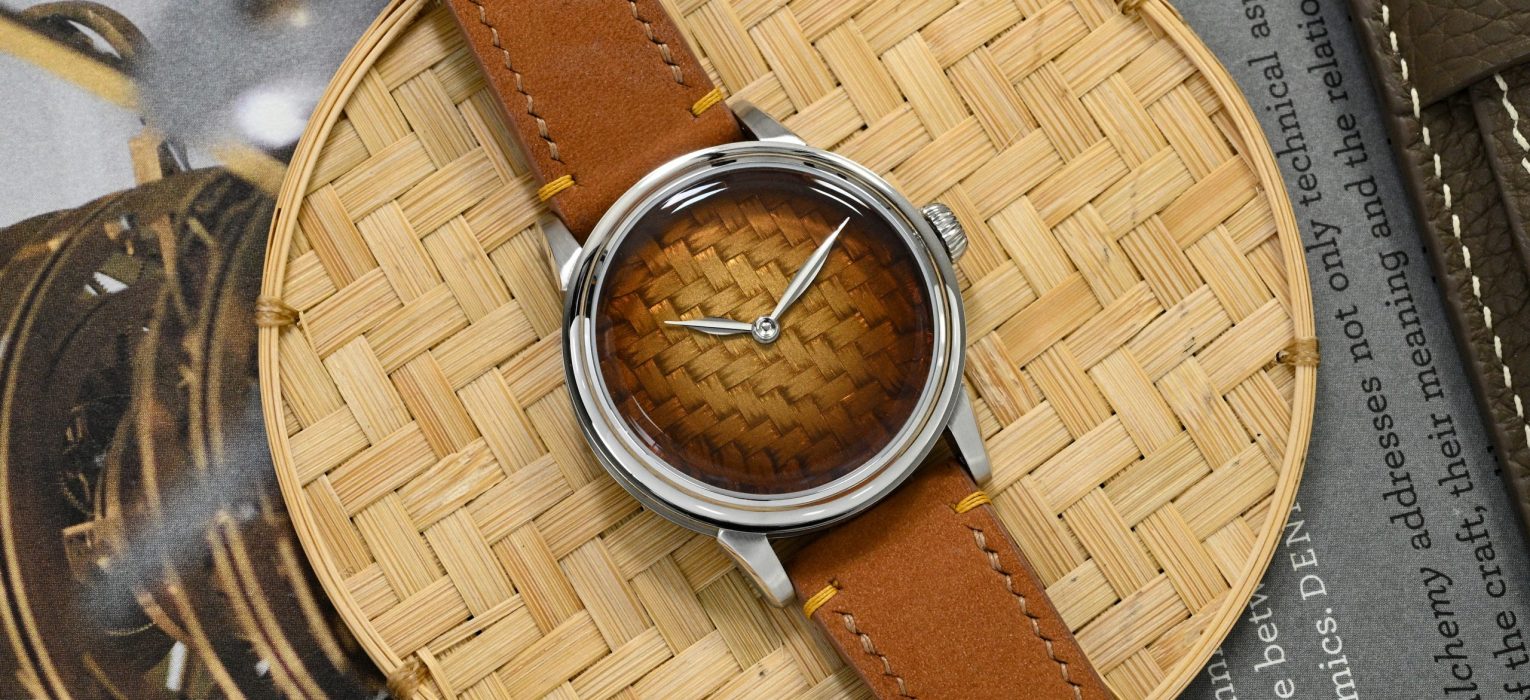
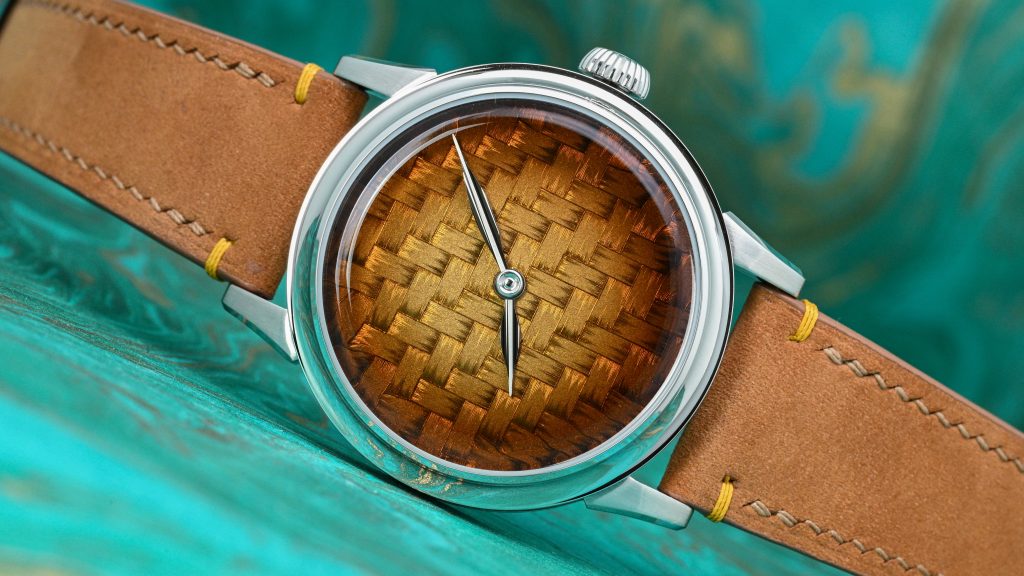
The dial is unquestionably the reason this watch exists, and its inspiration comes from one of the most ordinary objects at a dim sum table: the woven bamboo lid of a steamer basket. Bamboo traditionally represents resilience and endurance and the interlocking weave a fitting metaphor for family and friendship. Its fumé amber color is intended to resemble a steamer darkened by years of tea, heat and steam, transitioning from honey-gold at the center to a deeper brown around the perimeter.
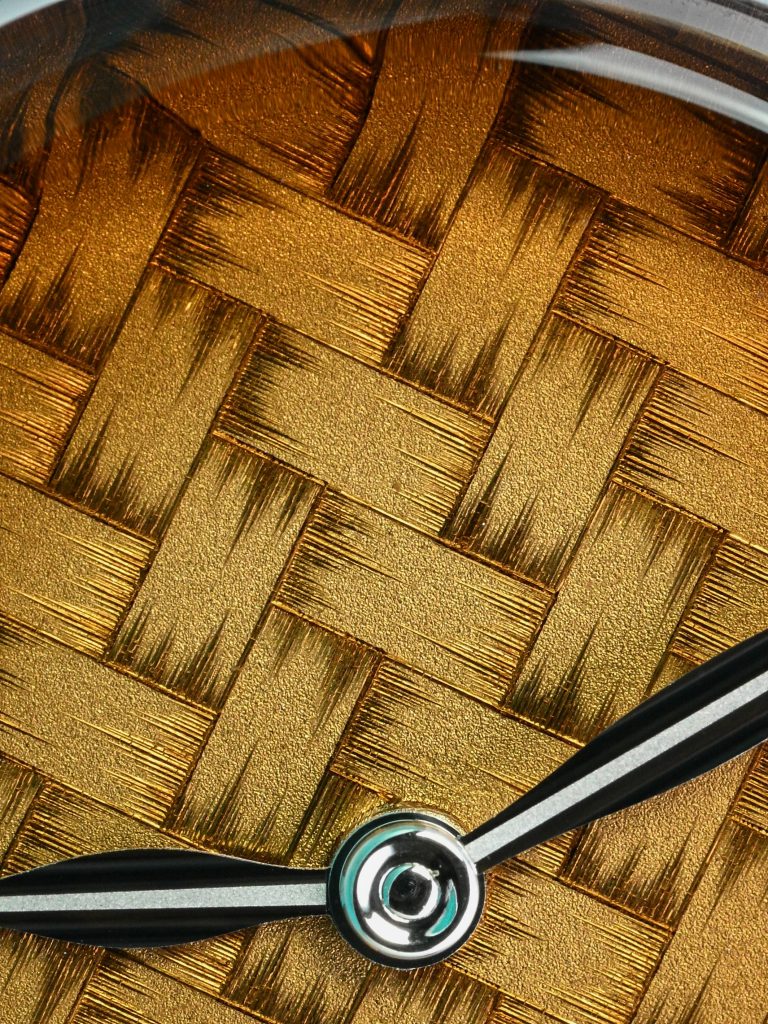
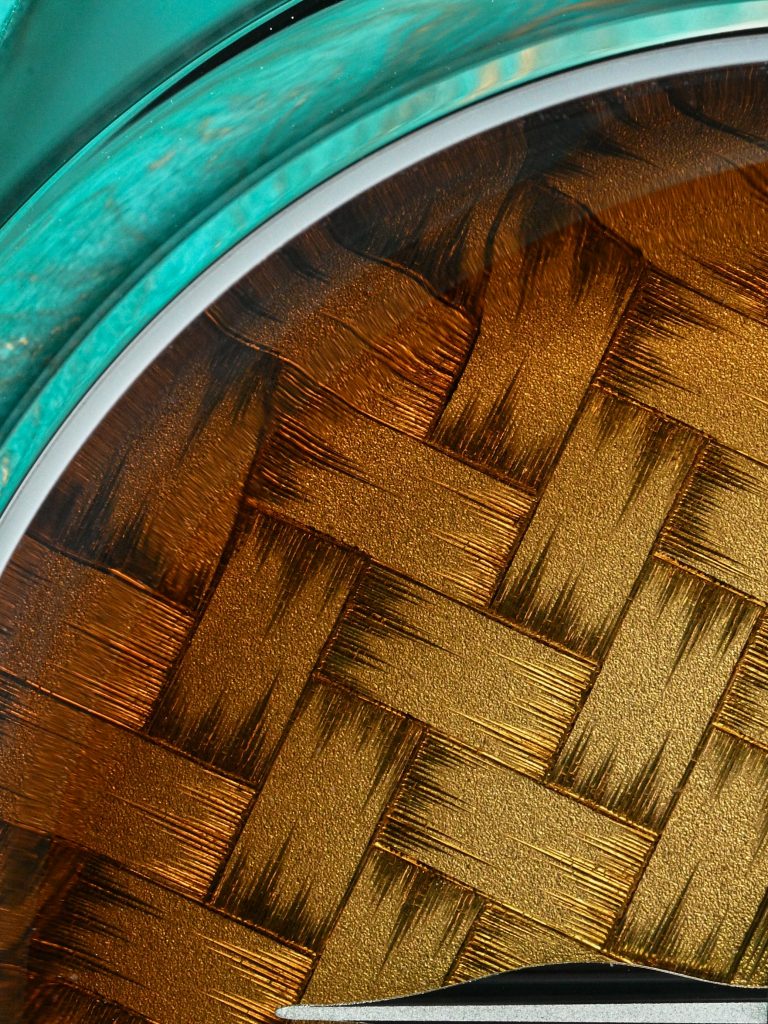
The dial begins as a fine-silver disc that Selten’s in-house engraver and enamelist, Master Qin, divides into approximately 80 rectangular sections. More than 40 parallel lines are cut into each rectangle using a tungsten graver, producing roughly 3,500 individual cuts. Every section is engraved in a different direction from the one beside it to recreate the alternating bamboo weave, while subtle variations in depth and pressure introduce additional shadows and highlights.
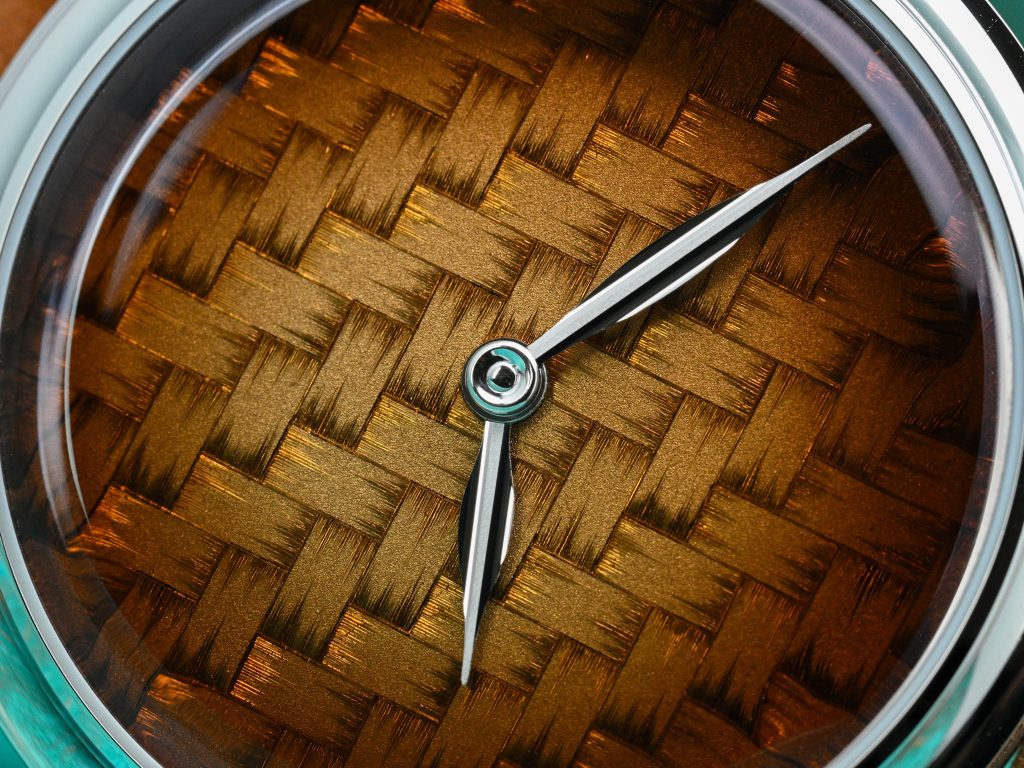
The engraving alone is said to take around eight hours, and one significant mistake can ruin the entire plate. The enamel is then washed, applied by hand and fired at approximately 800°C at least eight times. Each cycle risks bubbles, cracking, contamination or distortion, and even a technically successful dial may fail to achieve the intended clarity or fumé transition. The glass settles more thickly toward the curved perimeter, producing the darker amber edge, while the brighter silver center remains more optically active. A final 1.5 hours of hand polishing brings the surface to its finished lustre. In total, each accepted dial represents around 16.5 hours of work, with a rejection rate exceeding 40%.
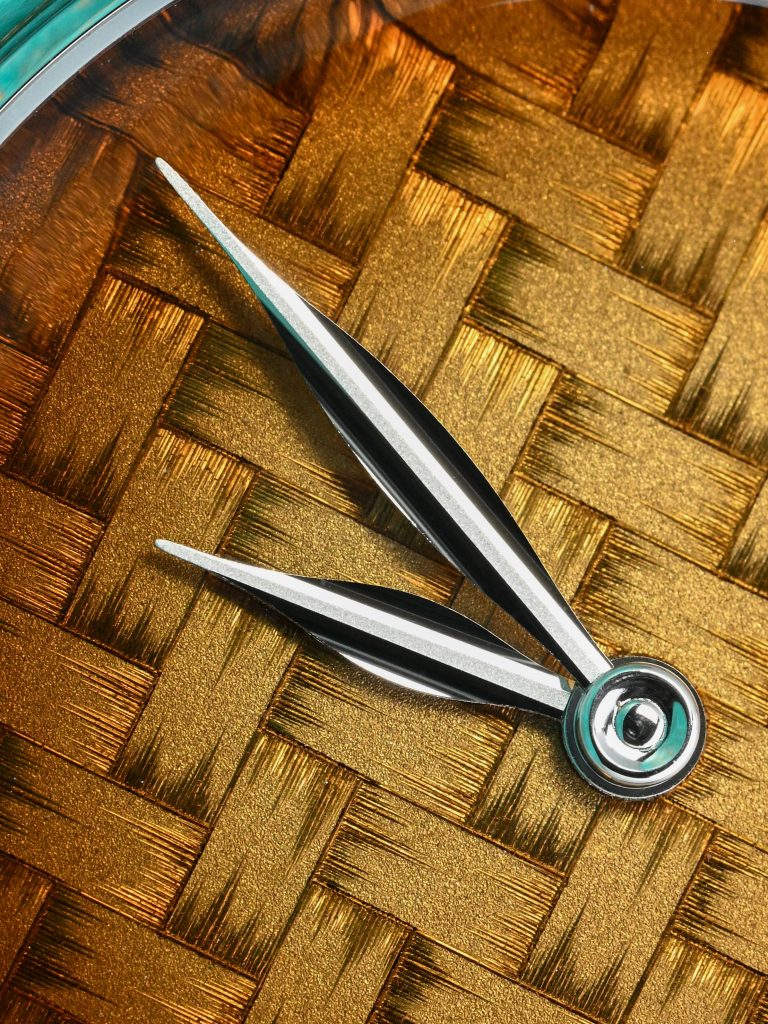
The tea-leaf hands are just as thoughtfully executed. Their broad, sculptural forms combine frosted central surfaces with sharper diamond-cut facets and borders. The frosting maintains contrast against the reflective enamel, while the polished edges define their three-dimensional shape. They are extremely legible, visually distinctive without becoming gimmicky, and represent a substantial upgrade over Selten’s previous skeletonized and fully polished handsets.
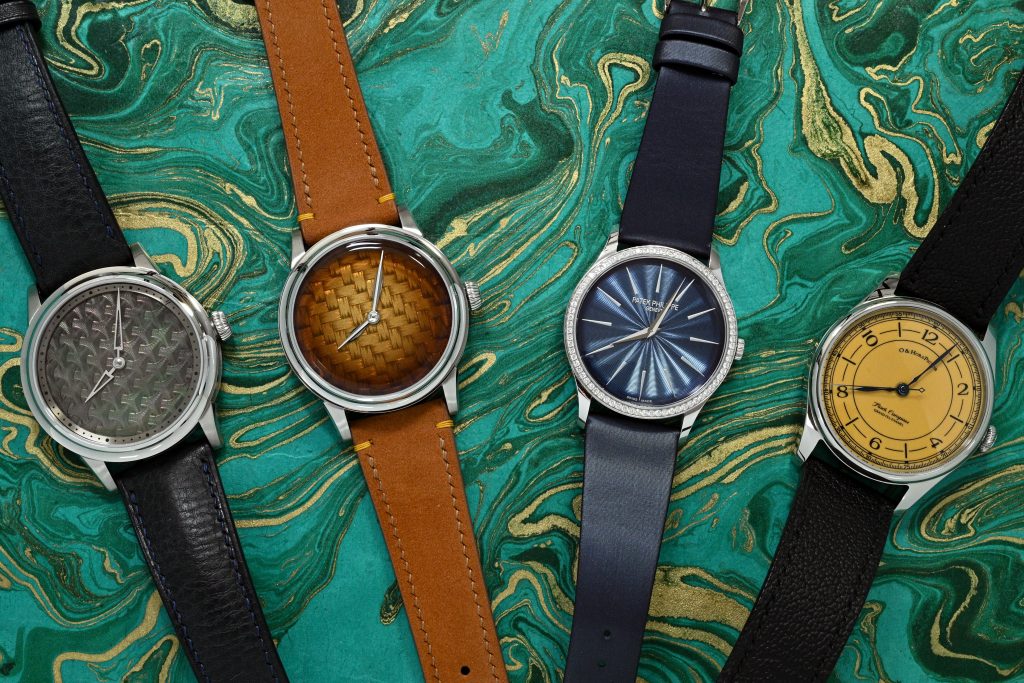
Overall, this is the best dial work Selten has done so far, and that is very high praise if you’ve seen their collection of dials. Everything comes together wonderfully, the attention to detail is excellent even on this prototype, and the dial is incredibly dynamic in person and very hard to capture properly in photographs and videos. It truly does look like woven bamboo, and the depth is just incredible.
Movement
Inside the Yum Cha is the Sellita SW200-2 M Power+, the manually wound version of Sellita’s newest SW200 generation. The name is slightly confusing. Sellita’s outgoing manually wound movement in this family was generally known as the SW210, but the company has renamed the updated manual series SW200-2 M, with the “M” identifying the manually wound architecture. This movement is only 3.35mm thick, making it particularly useful for slim watches from independent brands that do not have access to the limited number of manually wound Swiss alternatives.
Sellita describes the SW200-2 Power+ as a complete reengineering intended to retain the dimensions and case compatibility of the outgoing movement while substantially updating what is inside. The architecture includes a redesigned barrel and mainspring, revised gear-train geometry, a new regulating organ, an updated regulator system, new Incabloc shock protection and reworked bridges and mainplate components for greater rigidity. Power reserve has increased to 65 hours, compared with approximately 38 to 41 hours for the older generation. The movement in the Yum Cha is adjusted in five positions and rated to +/- 6 seconds per day.
On The Wrist
At 38mm in diameter and 44.5mm lug-to-lug, the Yum Cha falls almost exactly into my preferred dimensions for this kind of watch. The original Jui already wore beautifully on my 6.75-inch wrist, and reducing both measurements slightly makes the Yum Cha feel even more compact and traditionally proportioned.
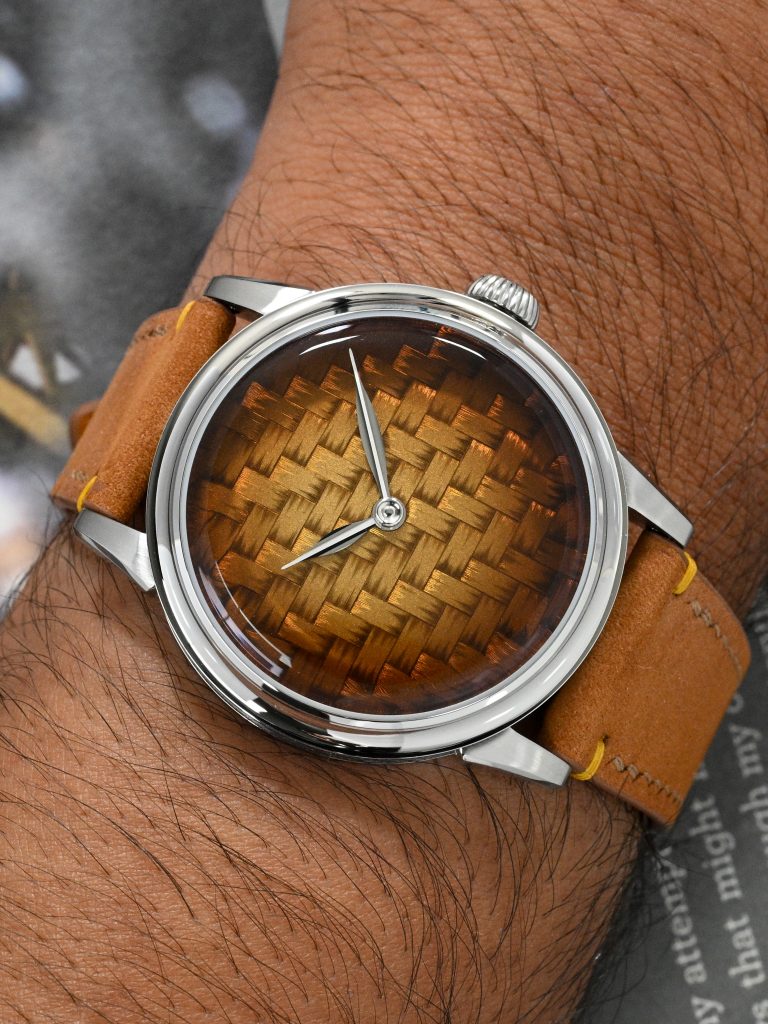
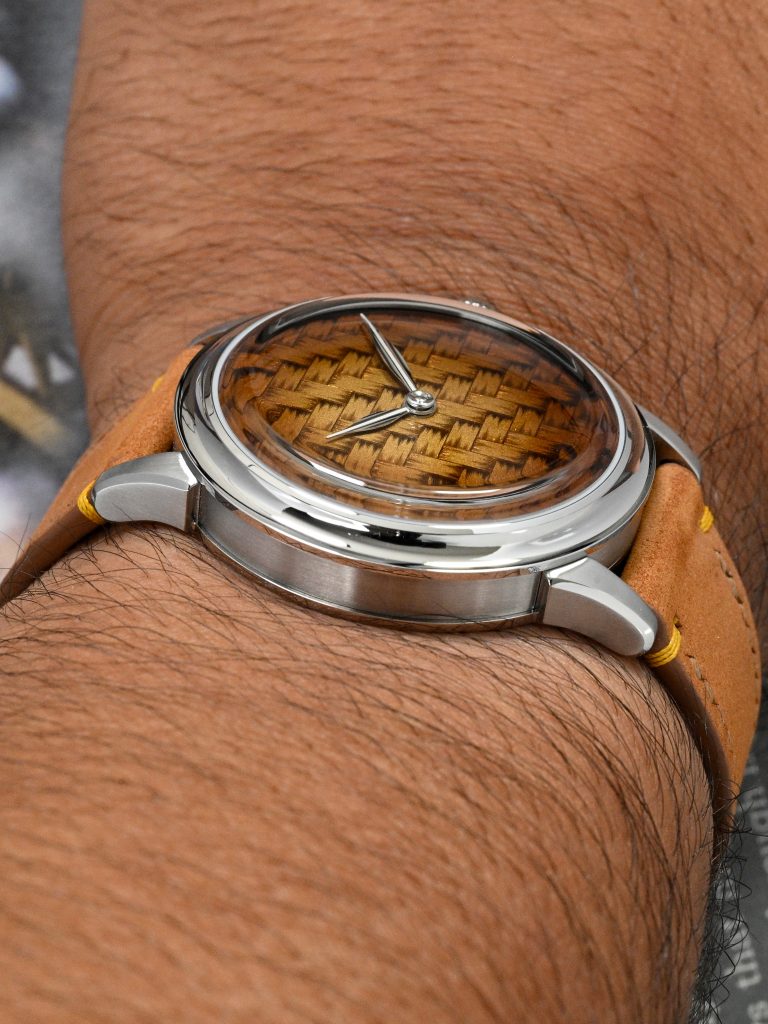
The 9.75mm total thickness is also slightly misleading in a positive way. Because 1.6mm of that figure comes from the tall crystal, the steel case itself should appear exceptionally thin from the side. The top-hat sapphire adds visual height above the bezel without making the watch feel as though a thick slab of metal is sitting on the wrist.
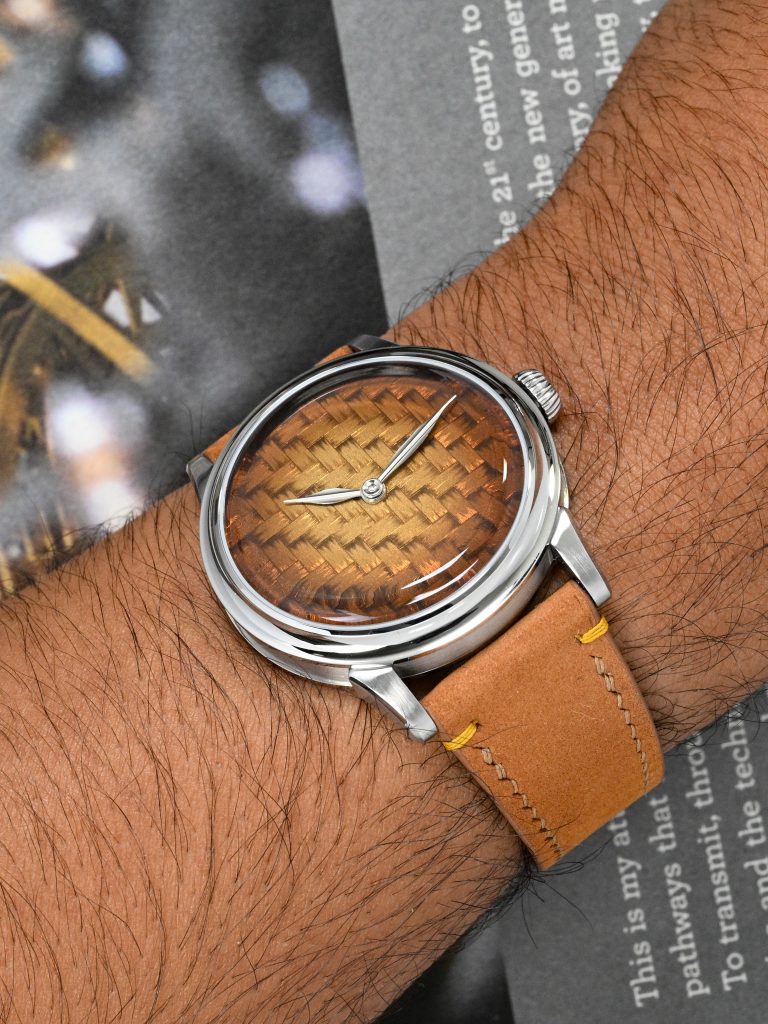
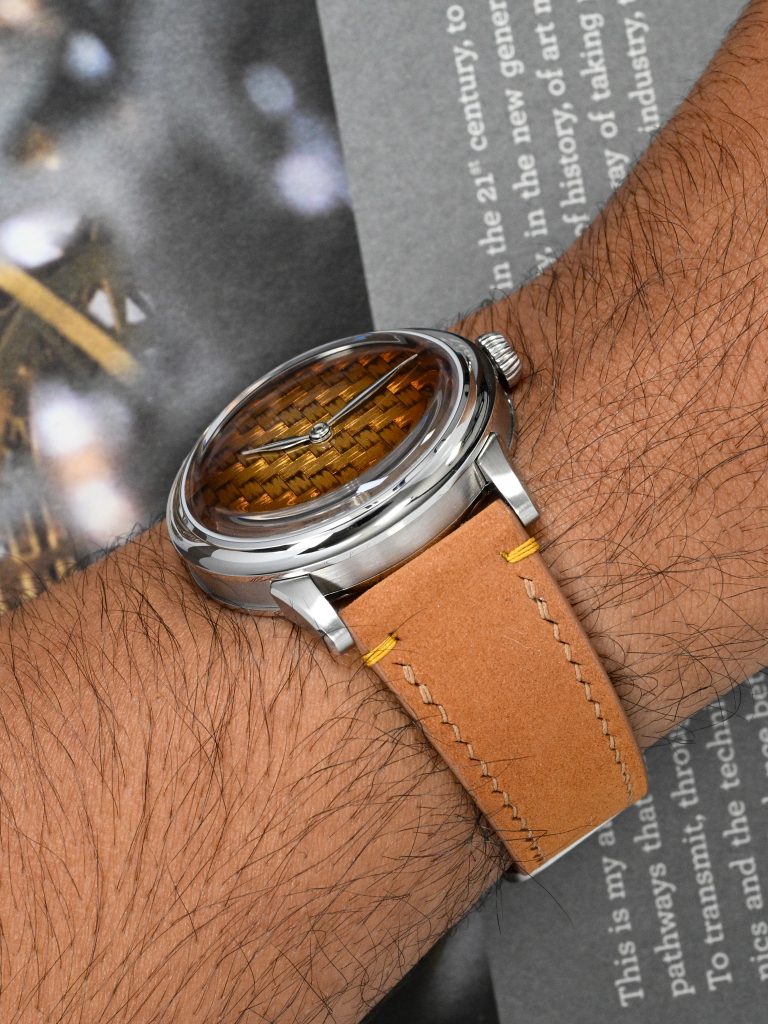
The Yum Cha is fitted to a hand-stitched tan Italian nubuck leather strap made by strap-partner HasNoBounds, paired with a brushed stainless steel pin buckle. The warm tan color makes sense against the amber dial and reinforces the appearance of aged bamboo without trying to match it exactly.
Wrapping Up
The Yum Cha is the most ambitious watch Selten and Watch Ho & Co. have created together, and arguably the most complete expression of Selten’s dial-focused identity so far. And as a consequence, it is also Selten’s most expensive watch yet.
At $4,950, it is also operating in a completely different category from the original Jui and Bauhinia editions. This is no longer an approximately $1,000 to $1,250 microbrand watch with an unusually good dial. It is a métiers d’art watch asking buyers to value hand engraving, transparent Grand Feu enamel, a high rejection rate and many hours of skilled labor. That price will naturally place it outside the comfort zone of collectors who discovered Selten through its earlier releases. The artisanal aspect, together with the incredible new hands, and the latest SW200 movement certainly elevate this watch beyond what I’m used to seeing from Selten.
As with the Jui, the final question is whether the design and story speak to you. But from a technical and craft perspective, the Yum Cha does not feel like an ordinary watch. It feels like Selten and Watch Ho & Co. found a personal story worth telling, then did the difficult work required to tell it properly. And the result is an absolutely stunning watch that I myself am very tempted to buy.