Disclaimer: This watch was sent to me to review, and I do not need to return it after my review is complete. This watch was given to me without restriction and is not contingent upon a particular outcome for my review. All opinions here are my own, and Orphic, Selten, etc. had no influence over the opinions stated here.
Orphic Project 0 Kickstarter Campaign: https://www.kickstarter.com/projects/orphicwatches/orphic-project-0-wandering-hour-watch
PS: Since writing this review and creating this video, the price of the launch was updated from $499 to $549 due to an increase in movement costs.
Video
A Brief History of Wandering Hours
According to the experts, the wandering hours complication was born in 1655, reportedly in response to Pope Alexander VII’s need for a quieter, more legible night clock while struggling with insomnia. And while he could’ve commissioned a Spring Drive watch with copious amounts of lume, what he got was a clock where instead of using conventional hands, the system presents the active hour as it travels across a fixed minute scale, creating a display that is both intuitive and mechanically unusual. It remained a fairly obscure idea, until Audemars Piguet revived it for the wrist in 1991 with the Star Wheel, a watch that reintroduced the format in a way that felt elegant, strange and immediately memorable.
Current Landscape
Urwerk would later take that same underlying concept and drag it firmly into the future. Its satellite-hour watches turned wandering hours into something more architectural, more theatrical and far more closely associated with modern independent watchmaking. At this point, the complication has also been thoroughly democratized. You can find interpretations of it in watches priced below US$500, while brands like Urwerk continue to explore it in pieces that stretch well into six-figure territory.
Audemars Piguet itself returned to the idea in 2022 with the $65,700 USD Code 11.59 Starwheel, and the watch we are looking at today seems to borrow from both Urwerk and the Starwheel, while also doing a few things that, at least conceptually, I find more appealing. I also recently reviewed the Ōtsuka Lōtec No. 5 KAI, Jiro Katayama’s unusually Japanese take on the same complication, another reminder that wandering hours can still feel genuinely fresh when the surrounding design language is strong enough.
Orphic Project 0
That brings us to the Orphic Project 0, the first release from Orphic, a new sister brand and special-projects offshoot of Selten. I have reviewed Selten’s entire catalog at this point, and it is a brand I have developed a real appreciation for, along with the very nice couple behind the brand. Project 0 takes their experience making high quality and accessible watches and applies it in a very different, and more experimental genre.
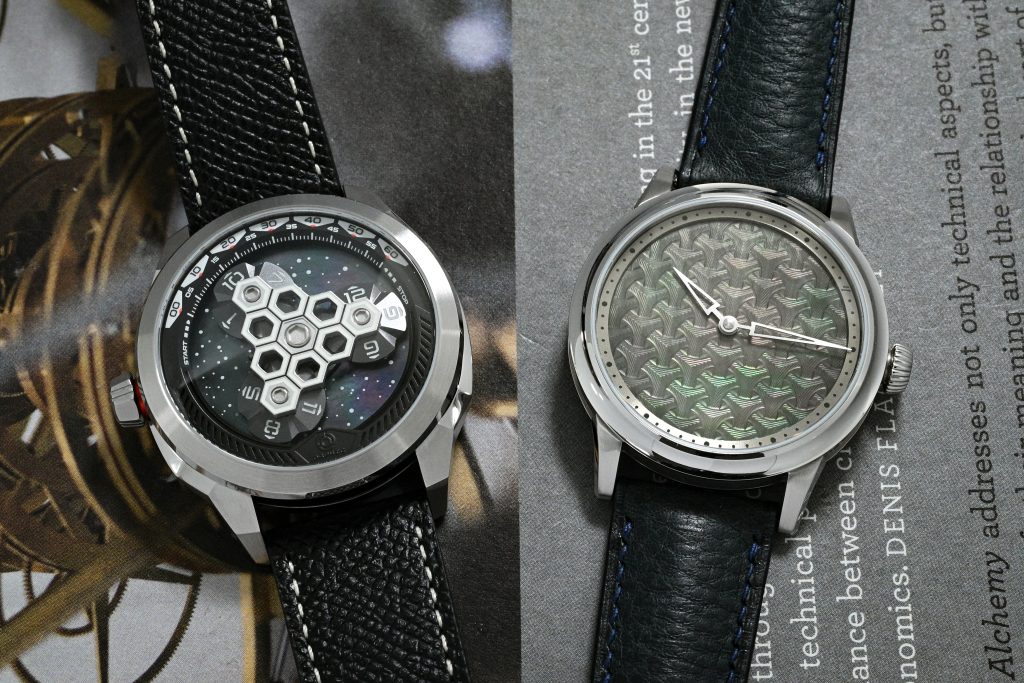
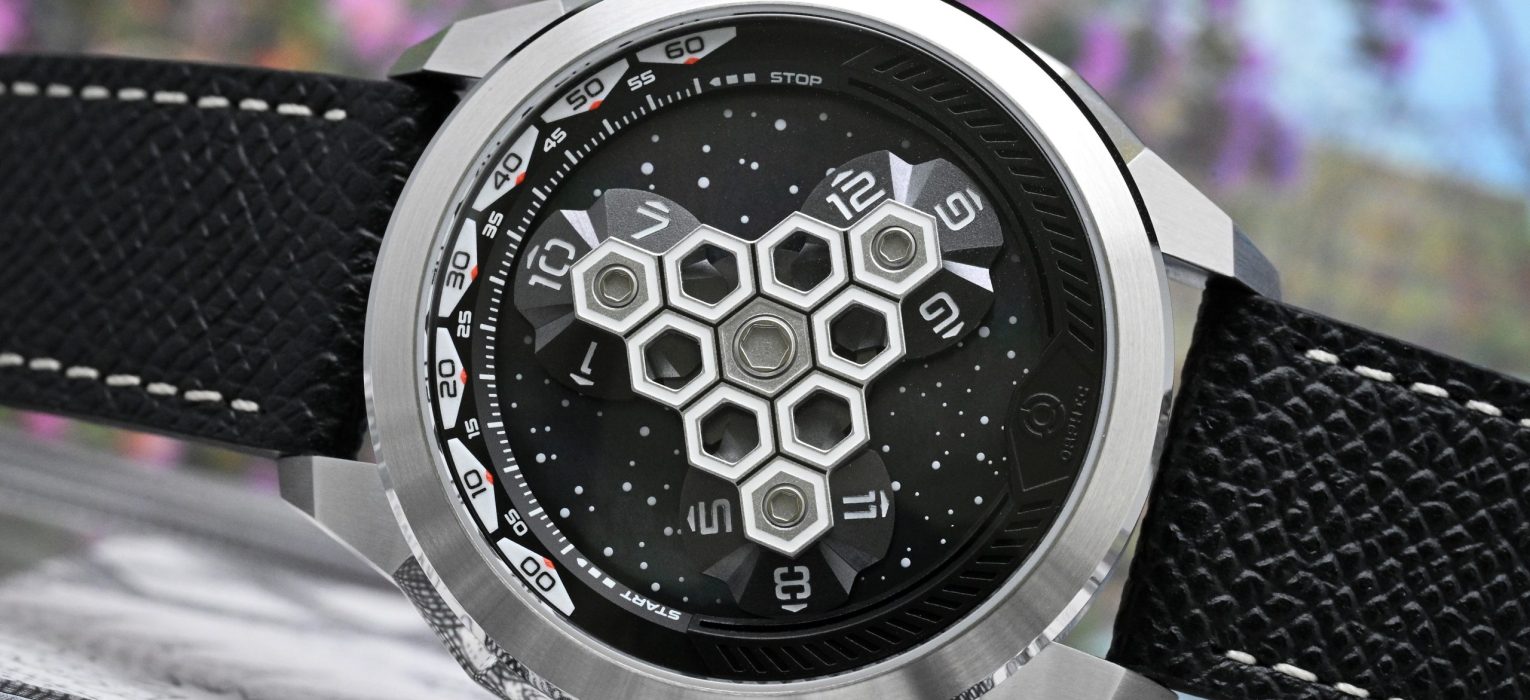
This watch is built around a James Webb Space Telescope-inspired wandering hours display, with pricing that starts at US$499 for the Super Early Bird tier and rises to US$599 at the standard Kickstarter level. For this review, I will be looking specifically at the Nebula left-hand crown version, which uses the black mother-of-pearl dial. 100 of the left hand crown versions will be made in the first batch, along with 400 right hand crowns.
Case
I mentioned the Starwheel earlier not just because it shares the same method of time display, but because a surprising amount of thought went into the case design of both watches. And as much as I dislike Audemars Piguet for most of what they do, I find the Code 11.59 case to be thoroughly impressive. The Orphic Project 0 has a similarly detailed construction, especially for a watch in this price range.
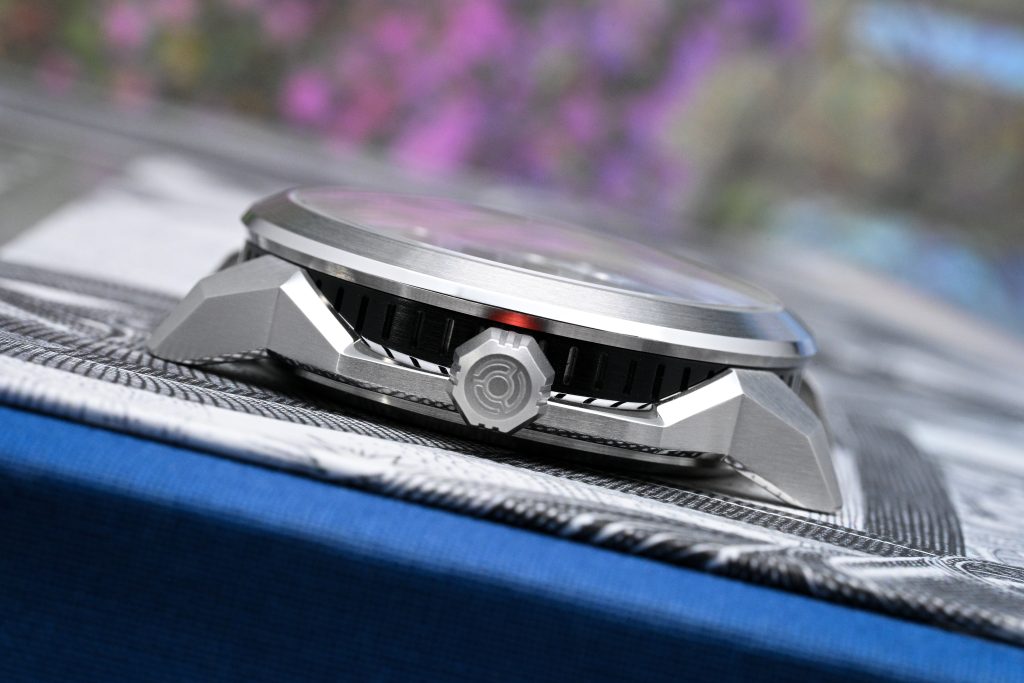
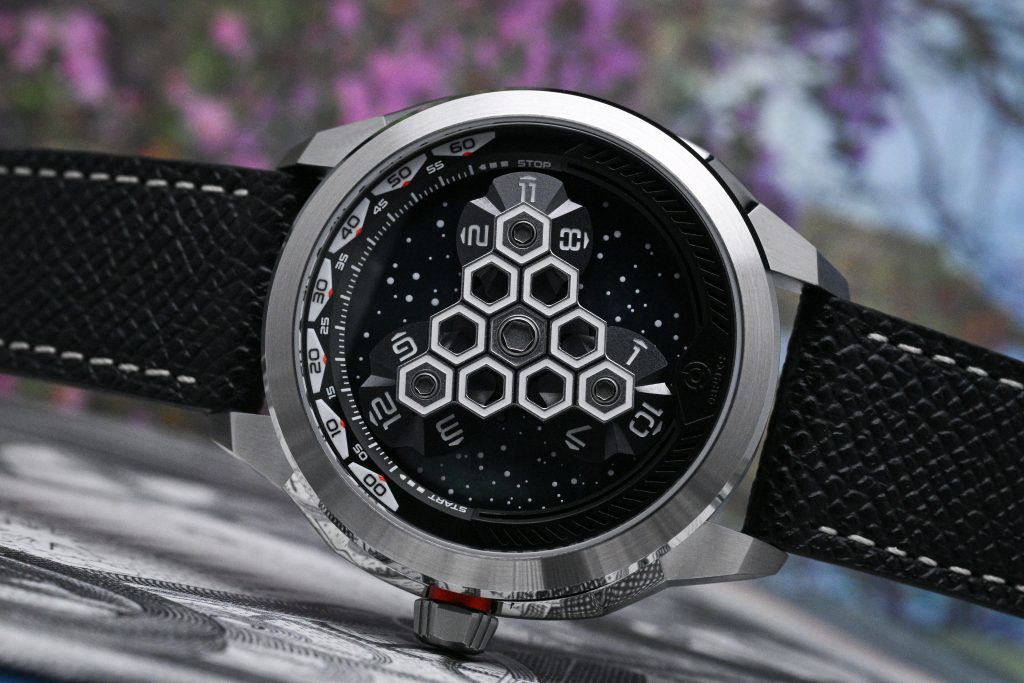
The bezel is solid steel, with a brushed top surface, a polished outer bevel, and a brushed inner bevel that tapers neatly into the mid-case. Beneath that sits a black DLC-coated band with small vertical cutouts that reveal the brushed inner case structure.
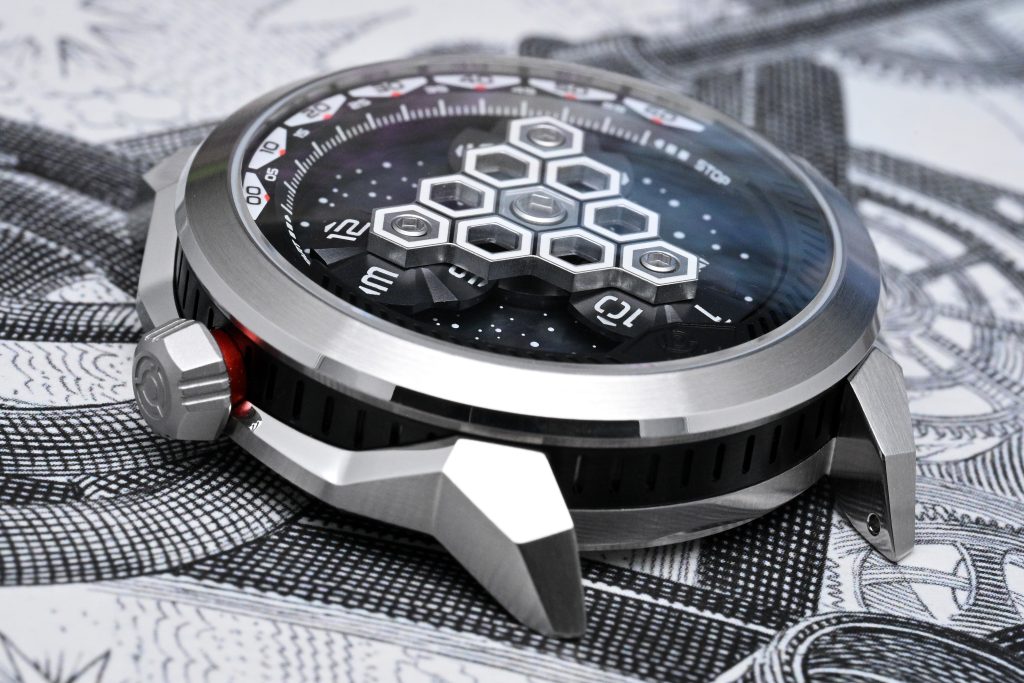
The lower section carries the angular lugs, fully brushed and framed by polished bevels along the top and bottom edges, creating the impression that the central case is floating. It is a clever visual trick, but also one that depends on careful construction and assembly. The overall result feels closer to Urwerk in genre, while borrowing some of the skeletonized case thinking of the Code 11.59.
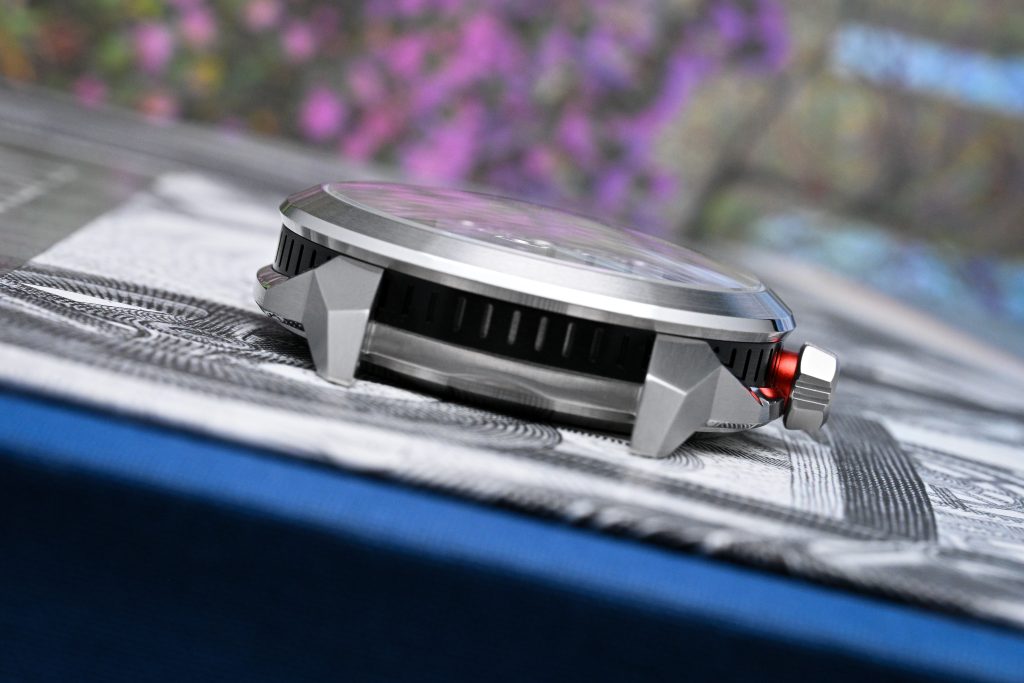
A futuristic 6mm crown at 3 o’clock follows the hexagonal theme and is paired with a high-contrast red crown tube. The watch is made entirely of stainless steel and measures 41mm at the base, 39mm across the bezel, 46mm lug to lug, 20mm between the lugs, and 12.9mm thick including the screw-down case-back section and slightly domed crystal. With 50m of water resistance, excellent finishing, and a case that is genuinely memorable, this is one of the strongest parts of the Project 0.
Dial & Lume
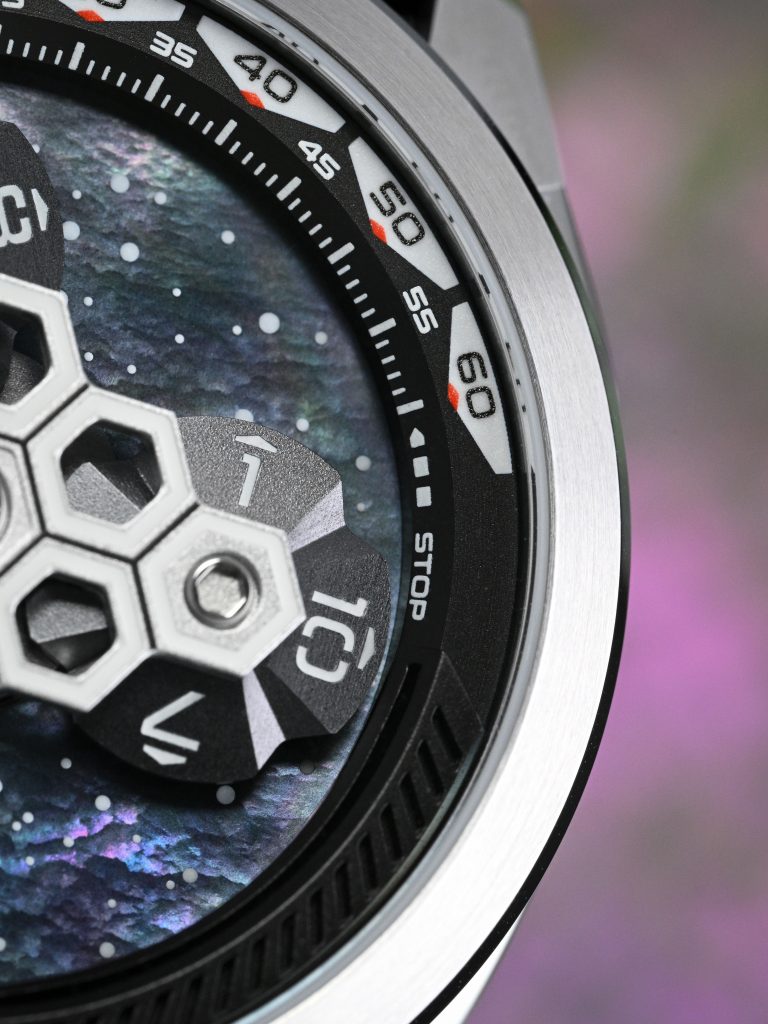
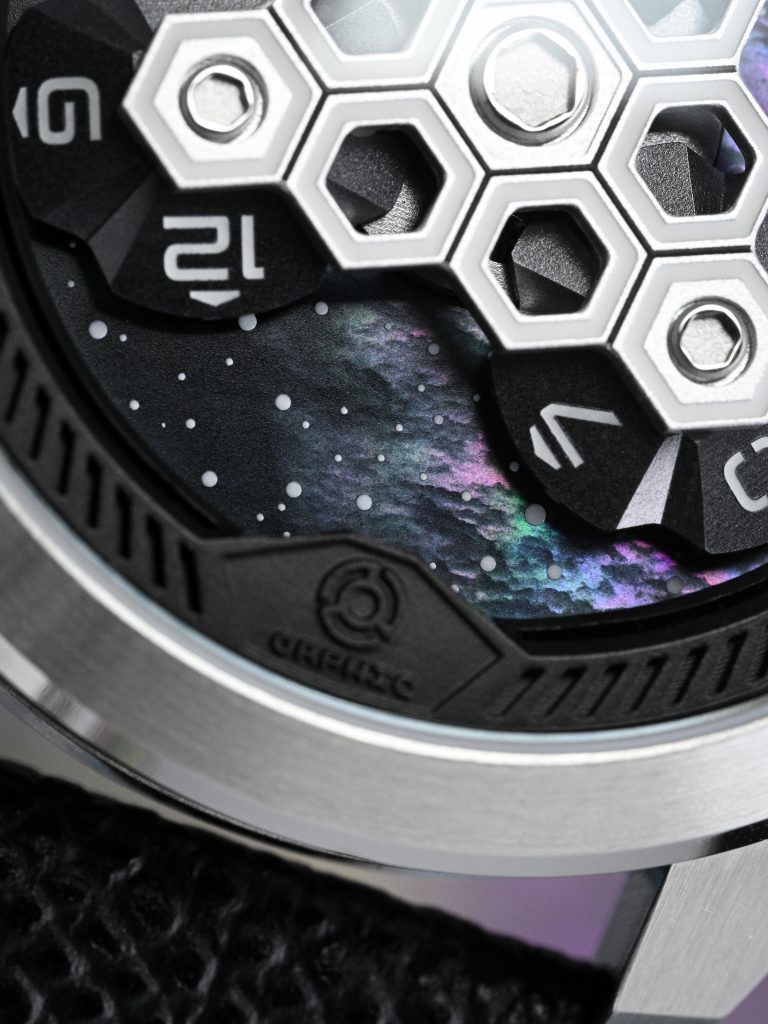
The James Webb-inspired theme is integrated directly into the dial architecture, with the hexagonal lattice structure forming the visual and mechanical core of the wandering hours display. Beneath it, the black mother-of-pearl base with scattered lumed dots creates an excellent sense of depth and motion, and it suits the futuristic character of the watch especially well.
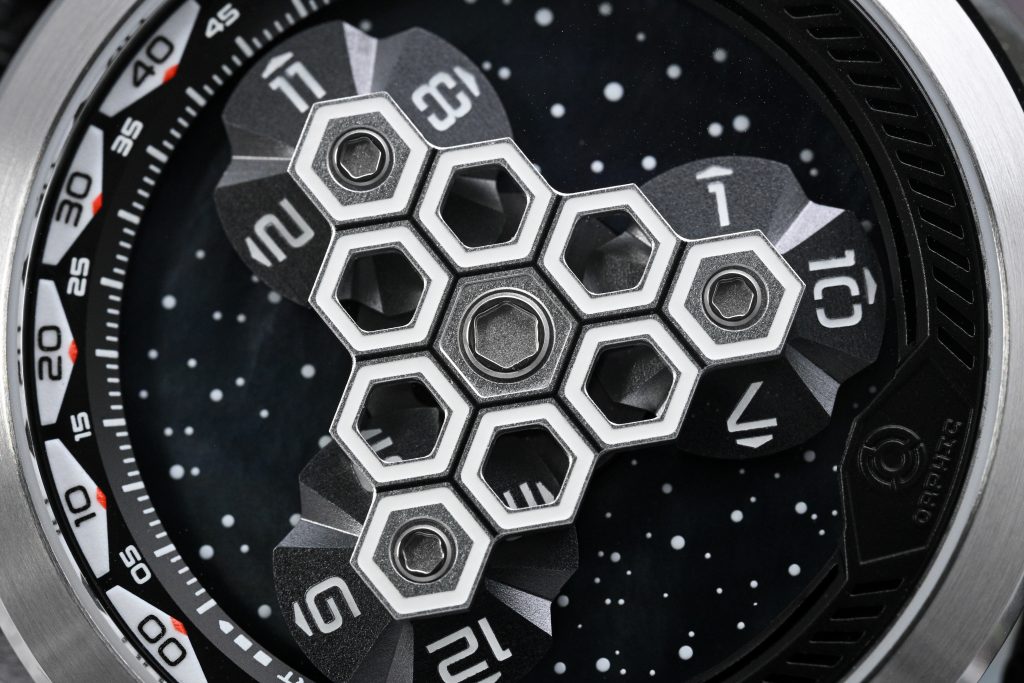
Like Selten’s better mother-of-pearl dials, this surface is highly dynamic in changing light and frustratingly difficult to capture accurately in photographs or video. Reading the watch is straightforward once you understand the format: the active hour numeral travels across the clear minute track in the upper hemisphere of the dial, and the generously sized markings, along with the floating hour numerals, keep the display more legible than its unusual layout might suggest.
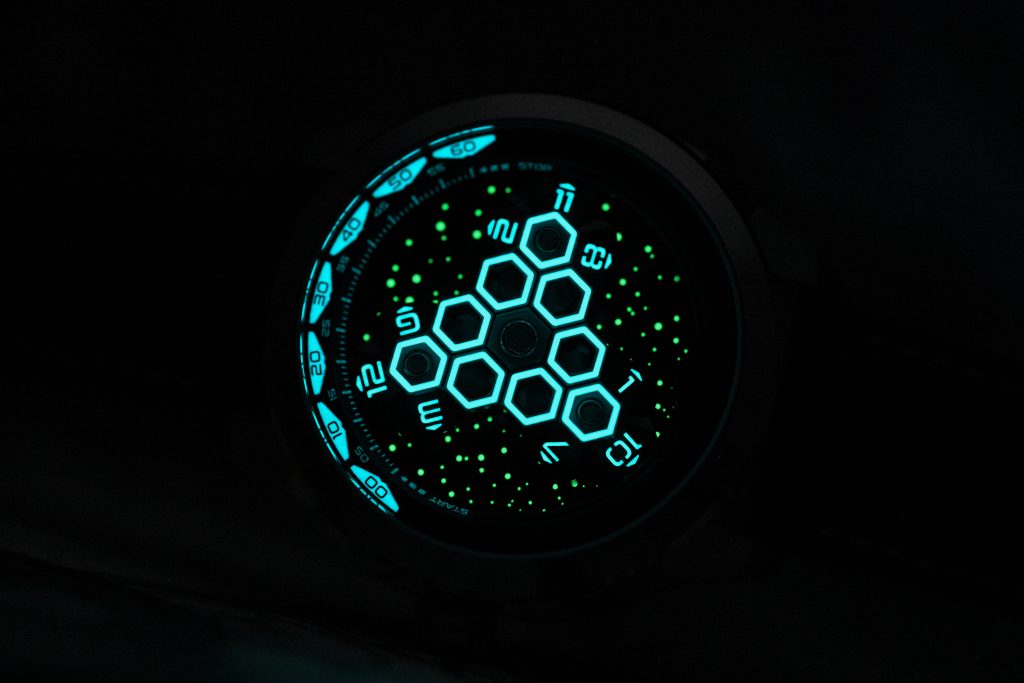
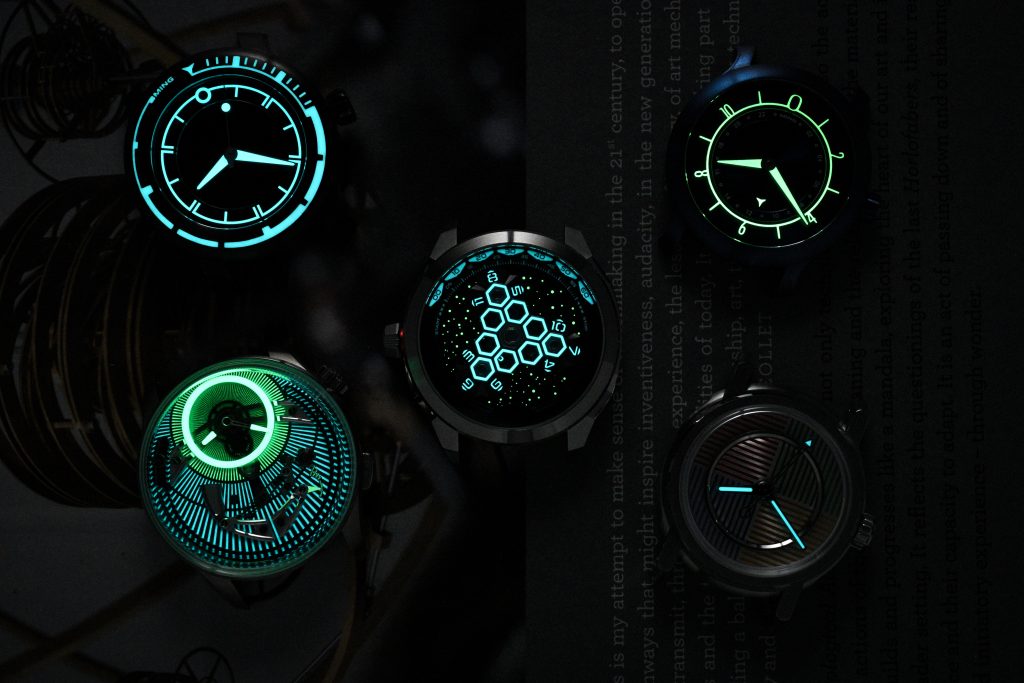
The lume also lives up to what you would expect from a watch with such a future-facing design. The entire lattice structure is lumed, along with the hour numerals and minute markings, and even the small star-like dots across the mother-of-pearl base glow, although naturally with less intensity because of their limited surface area.
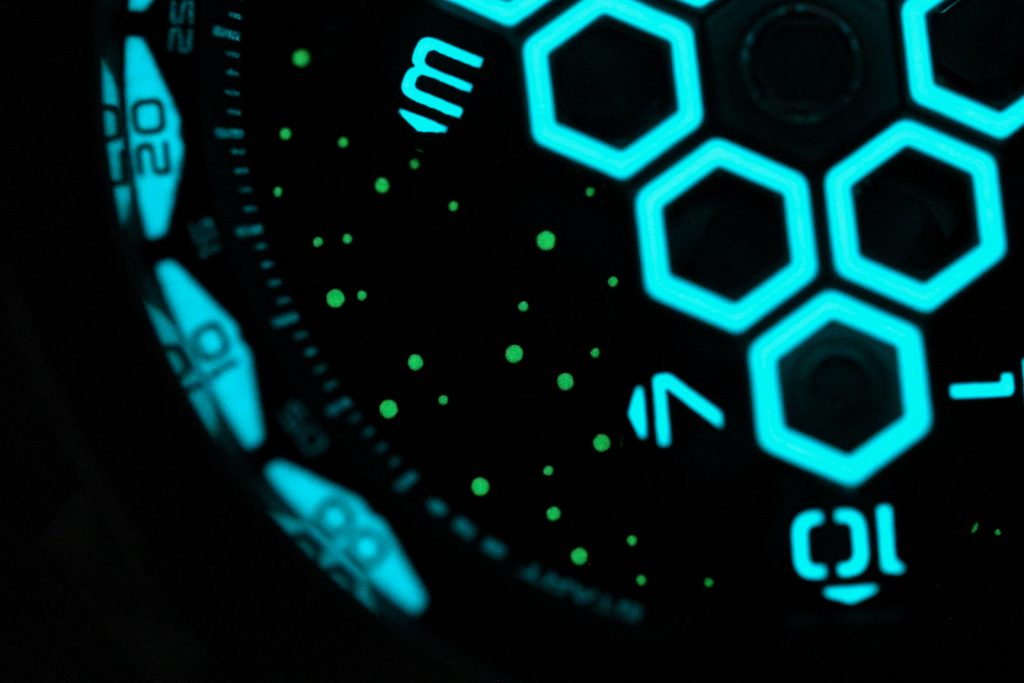
The overall effect is excellent, and frankly, this feels like exactly the kind of watch Pope Alexander VII needed when he was complaining about nighttime legibility. I compared its lume against a few other watches, and the Project 0 performed very well.
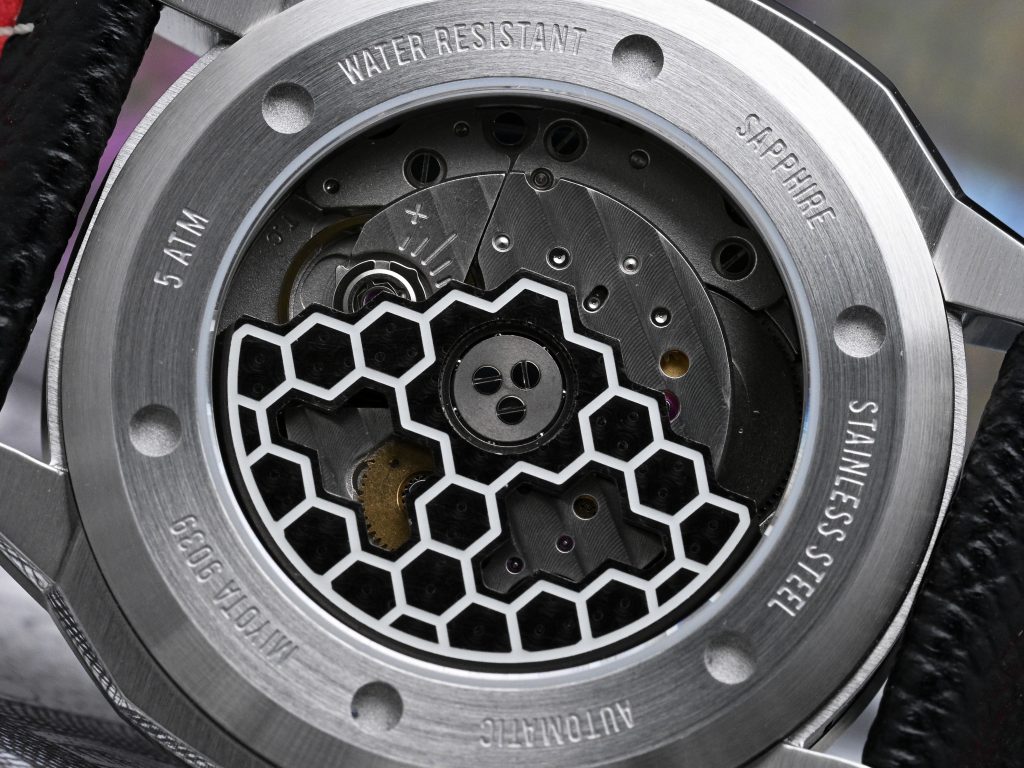
The display is driven by a modified Miyota 9039, a movement I have always liked and have no complaints about here. Even the custom rotor is lumed, which is entirely unnecessary, but also extremely awesome and very welcome, and it will feature thermally blued screws.
And earlier I mentioned that this watch does a few things more sensibly than the Starwheel, and by that I was primarily referring to the inclusion of a central seconds hand on the Starwheel, which I find to harm the overall cohesion of the design. The purpose of this display mechanism is to do away with traditional hands, and I much prefer this simpler layout.
On The Wrist
On my 6.75″ wrist, it wears very well. The 39mm bezel and 41mm case base give it a balanced footprint, and the compact 46.15mm lug tip to lug tip measurement should make it suitable for a wide range of wrist sizes. At 12.90mm thick, it is not especially slim on paper, but it wears thinner than that number suggests because roughly 1.5mm comes from the gently domed crystal and another 2mm from the screw-down case-back section.
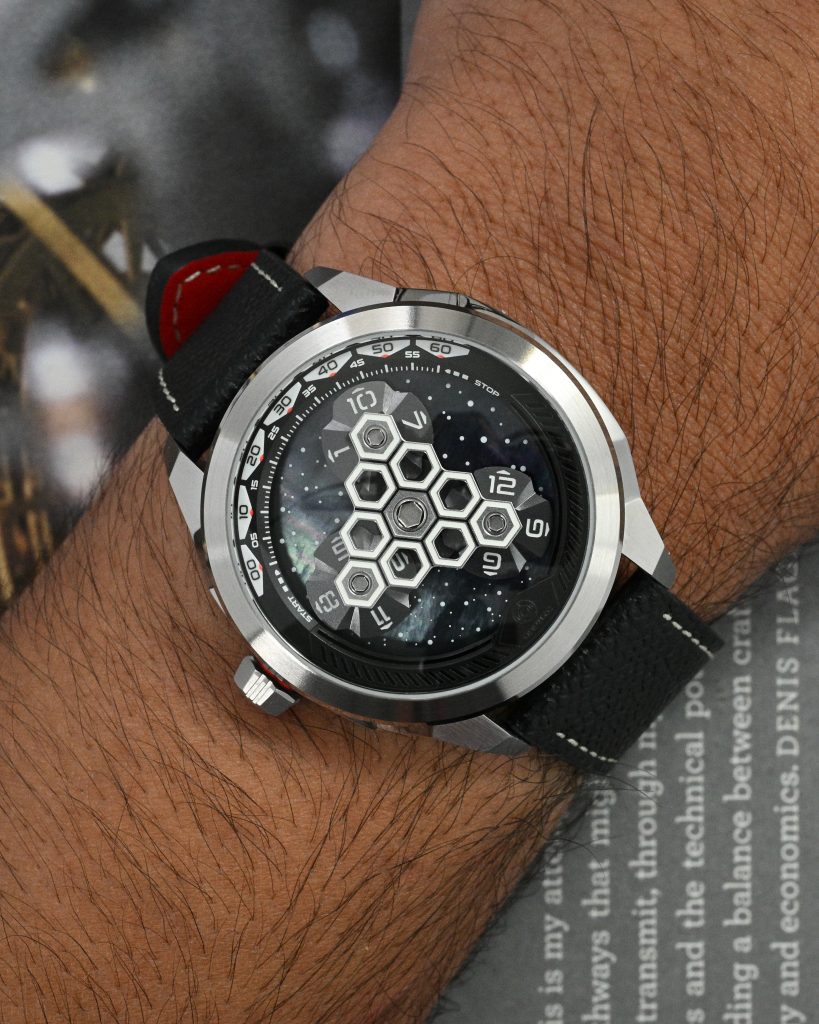
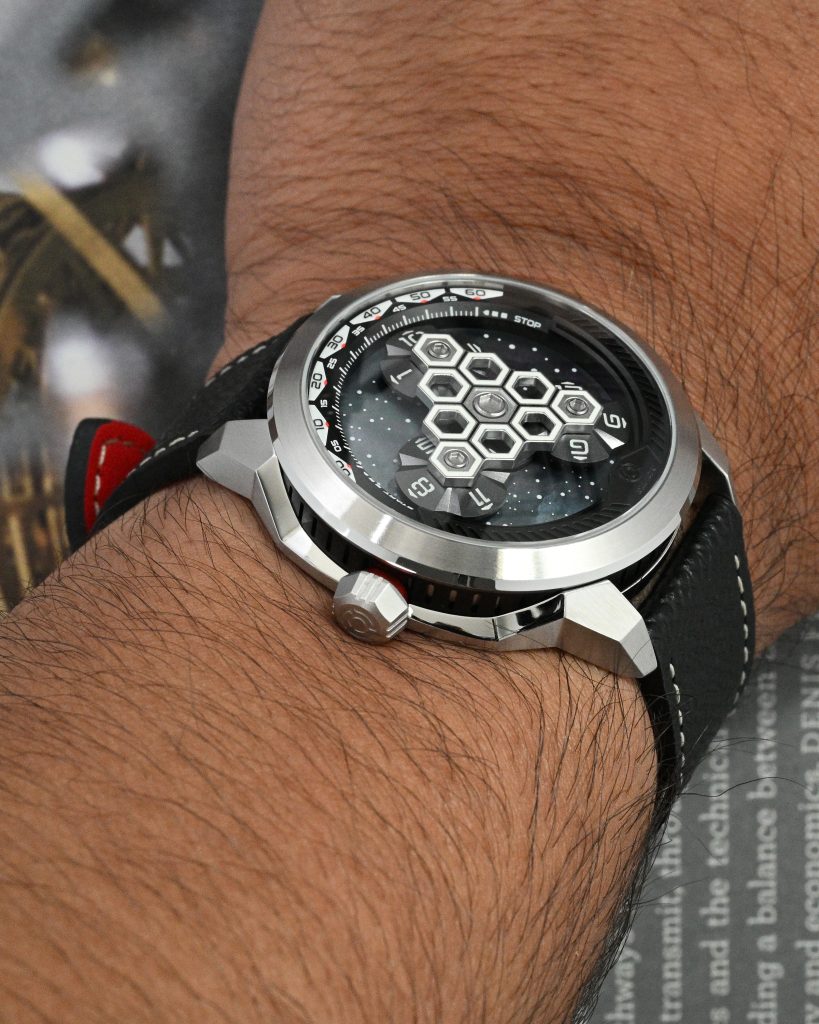
The watch weighs around 80g on the included leather strap, which is comfortable, well made, and fitted with a buckle that continues the broader design language of the case. That said, this is probably the one area where I would critique the decision. A more modern strap material, perhaps a thick technical fabric, canvas, or even a bespoke rubber strap designed specifically for the watch, would have suited the futuristic character of the Project 0 better. Still, the supplied strap is excellent in isolation, and the choice is hardly a deal breaker.
Wrapping Up
From a build quality, finishing and value standpoint, I think Orphic has delivered. And since this is still an early production unit, I would expect the final watches to be a little more refined again. I have always liked the wandering hours complication as a more creative way to experience time on the wrist, and anyone who has followed my reviews for a while will know that I tend to gravitate toward watches like this over more conventional designs. So the Project 0 is very much my kind of watch.
At the Kickstarter pricing, I think this is a very compelling proposition for anyone who appreciates the design language, especially with how generously and thoughtfully the lume has been integrated throughout the watch, which obviously makes me like it even more. That said, I would still advise caution with any Kickstarter project, even if it were my own. I own several Selten watches and think highly of the person behind the brand, but crowdfunding always carries some risk. In this case, the timeline appears reasonable, Selten has an excellent delivery record, and based on what I have seen here, I do not think backers will be disappointed with what they receive.