Disclaimer: This watch was sent to me to review, and I do not need to return it after my review is complete. This watch was given to me without restriction and is not contingent upon a particular outcome for my review. All opinions here are my own, and O&HoraPictor had no influence over the opinions stated here.
O&HoraPictor Yellow Track: https://www.horapictor.com/product/yellow-track/
Video
Review
It wasn’t too long ago that enamel dials were something you mostly associated with old-world pocket watches or five-figure independents, and then anOrdain came along and quietly blew that assumption up. They didn’t just make enamel more accessible, they helped create a whole new lane for enthusiasts who wanted artisanal watches without having to sell a kidney. Then, it was only a matter of time before other small brands stepped in to feed this massive demand, like Vitreum and even Selten. And now you’ve got O&HoraPictor operating squarely in that same increasingly successful space: affordable enamel dials, low volume production, and designs that feel aimed directly at the enthusiasts.
From what I’ve been able to find, the brand didn’t start life under that name. Originally, they were known as Orodol, and the early pitch leaned heavily into the bespoke side of the hobby, offering custom enamel work and made-to-order dials. They’ve now rebranded as O&HoraPictor, a name that’s also their mission statement. “Hora” for time, “Pictor” for painter; so the idea is “painter of time”, with the “O” serving as a nod to their earlier Orodol identity. The result is a brand that’s very young and still building its track record, but one that clearly wants to be taken seriously on the strength of its dial work.
And that brings us to the watch here: the Yellow Track, priced at $1,665 USD. It is expensive enough that you expect real skill and real finishing, but still within reach for someone who wants to experience enamel without treating it like a once-in-a-lifetime purchase. The brand appears to be operating out of Hong Kong, and while there’s always going to be a little extra scrutiny that comes with a newer name and a less-established footprint, the work itself is what matters most.
So, let’s take a look at what’s being offered here…
Case
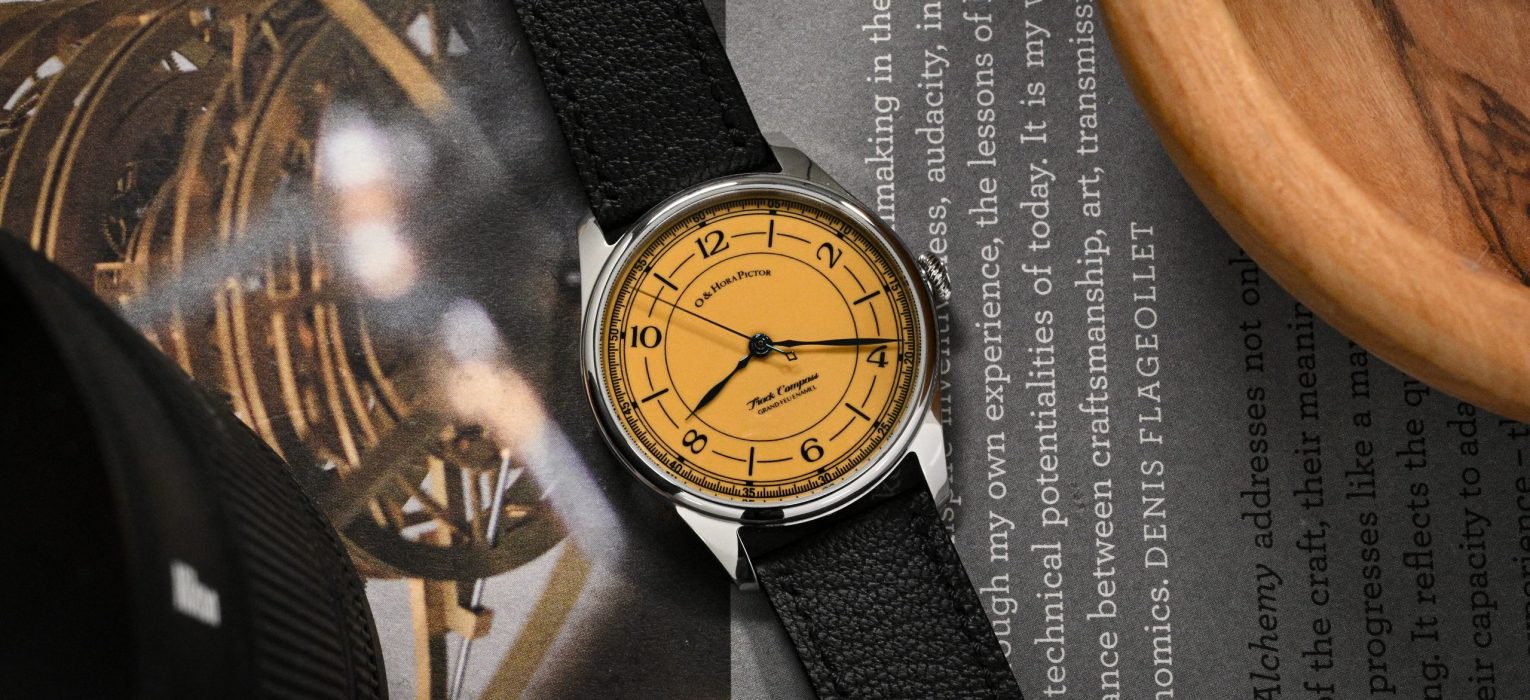
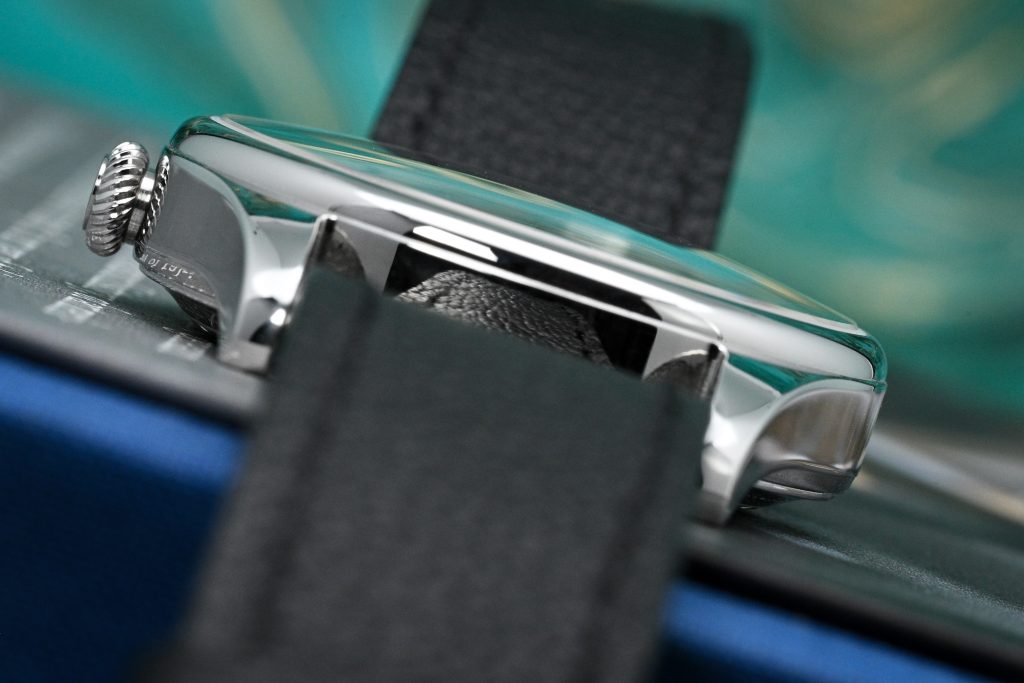
The case of the Yellow Track doesn’t try to reinvent the wheel, and feels pretty familiar on all fronts. In terms of proportions, I measured it at 38mm in diameter, 45.15mm lug-to-lug, and 11.30mm thick, and that thickness figure includes the roughly 1mm gently curved sapphire crystal. Lug width is 20mm, which makes shopping for straps easy. It is made entirely of stainless steel, with a fairly simple overall silhouette. The mid-case is fully polished, and it flows into lugs that curve down quite dramatically toward the wrist. The top surfaces of the lugs are polished as well, so the case leans more dressy than sporty in terms of finishing.
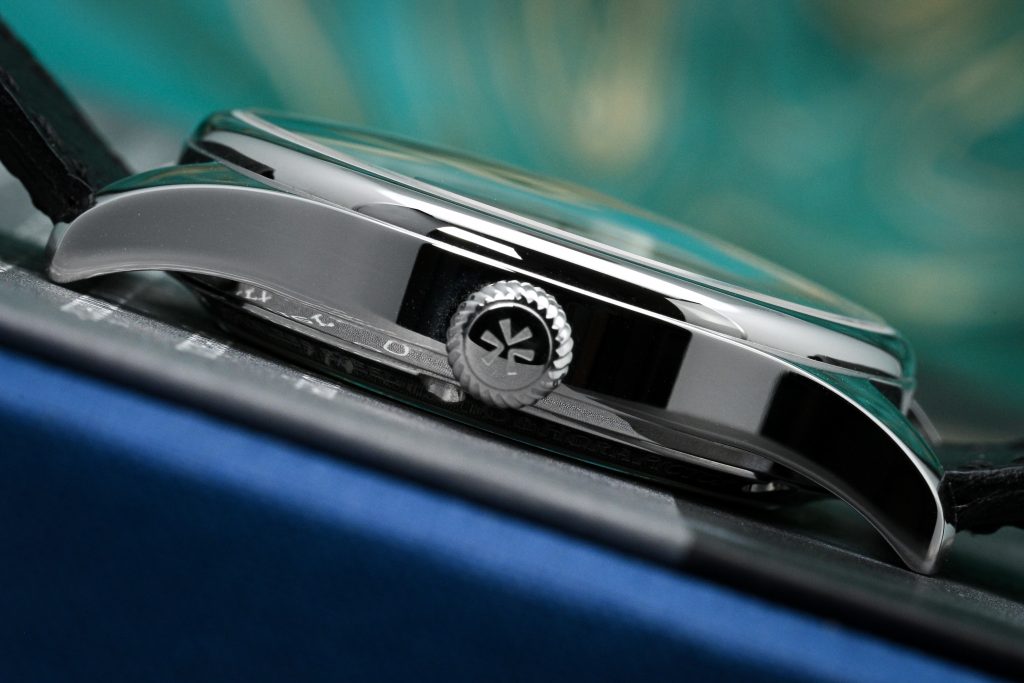
You then get a thin, rounded, polished bezel that neatly frames the crystal. The sapphire itself has a gentle curve and, importantly, a healthy amount of anti-reflective coating. That matters more than you might think when you combine crystal curvature with a dial that’s meant to be stared at, because without decent AR you end up fighting glare instead of appreciating what’s inside.
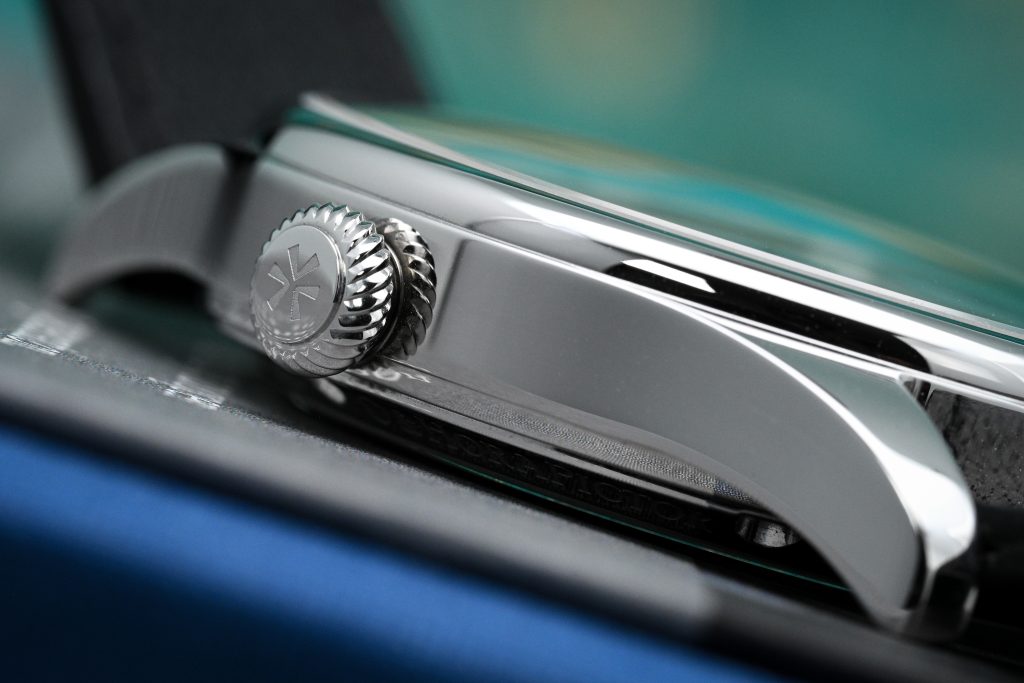
At 3 o’clock there’s a 5.5mm push-pull crown that’s signed and finished nicely. The knurling has this rounded, slightly asymmetric character that honestly reminds me a bit of F.P. Journe. In use it’s a touch slippery and soft, but is sufficiently ‘grippy’ for operation, and visually it’s a great match for the polished case.
Flip the watch over and you’ll find a screw-in caseback, also polished, with a fairly large sapphire exhibition window to show off that very attractive rotor. Water resistance is 50 meters, which feels entirely appropriate for a watch like this. Overall, it’s a clean, well-proportioned case that doesn’t have much design identity of its own, but that’s par for the course with many artisanal, dial-centric brands.
Dial
The whole point of a watch like this is the dial, and with enamel it helps to understand what you’re actually paying for. A grand feu enamel dial is essentially a glass dial: finely ground enamel powder is applied to a metal blank, then fired in a kiln at very high temperatures until it melts, flows, and fuses into a hard, glossy (or in some cases matte) surface. The process is repeated in multiple layers and firings to build depth and stability, and every cycle introduces risk: dust, bubbles, hairline cracks, warping, or slight color shifts can ruin a dial and send it back to square one.
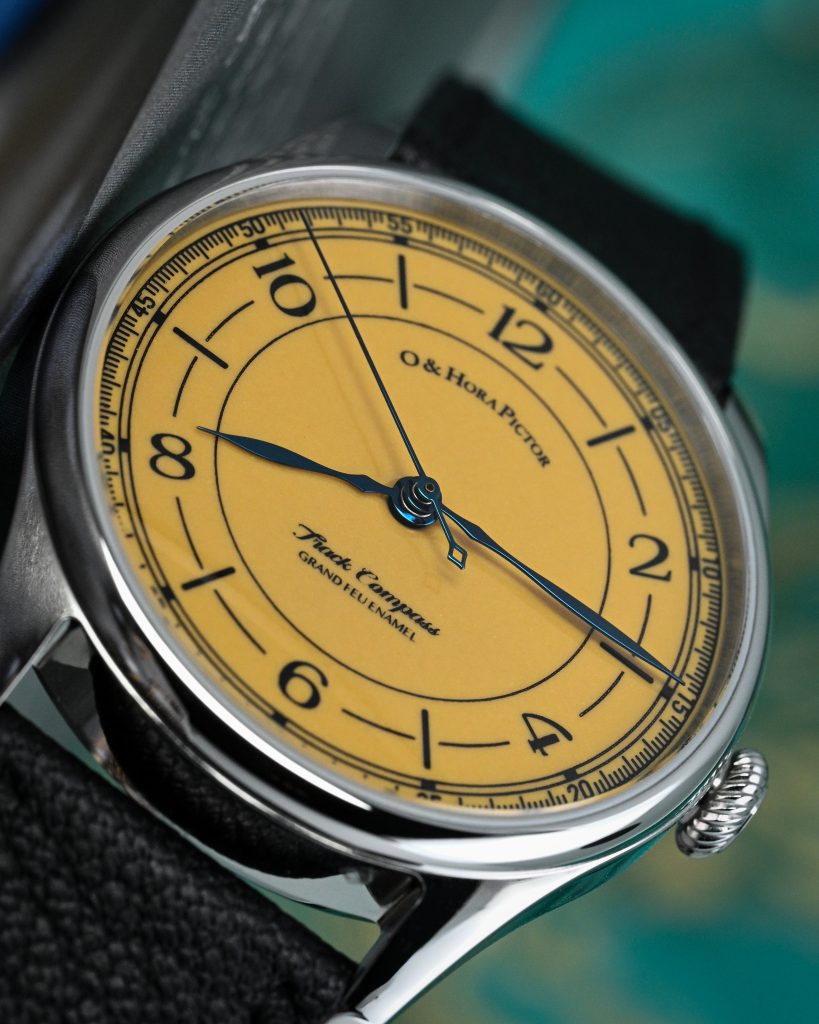
In this case (pun intended), the Yellow Track uses an opaque enamel, and they describe the dial as being made with a dry-sifting technique. In other words, enamel powder is sifted evenly onto the dial base before firing, and after firing they say it settles into a uniform, matte surface rather than the deep gloss you might associate with some grand feu work. They also frame their enamel work more broadly as a multi-step process involving repeated firings at around 800°C (they mention at least eight cycles), and mention that their dials are hand polished before the pad printing step.
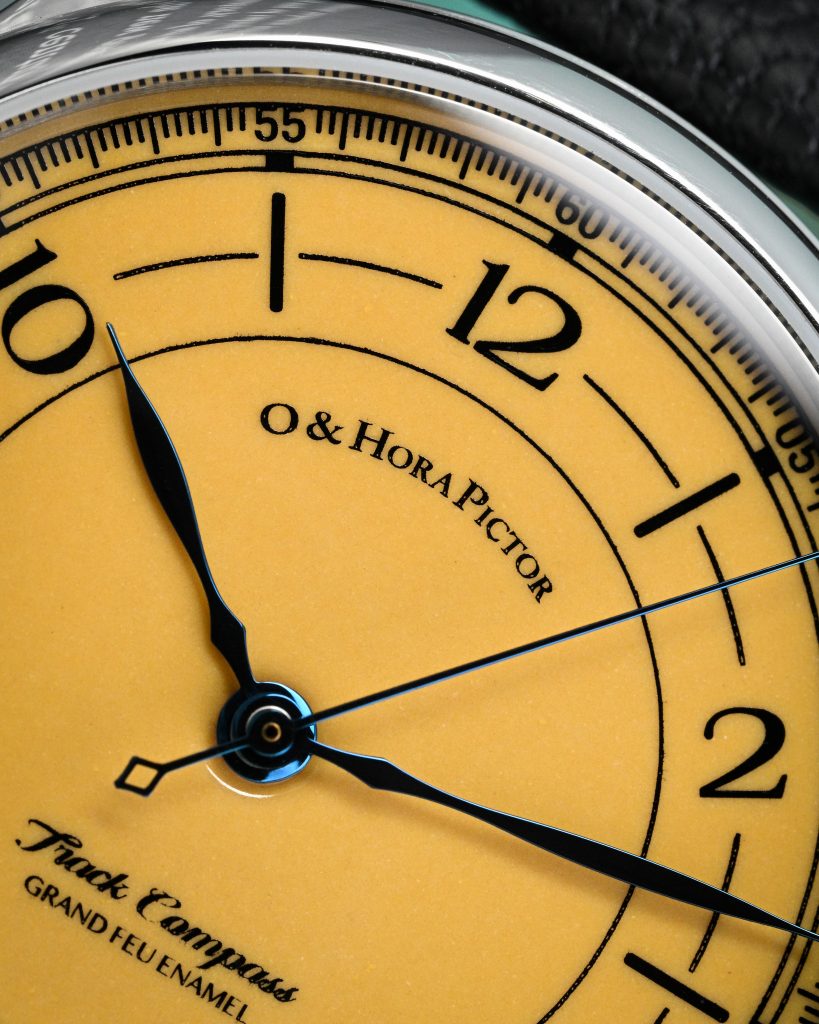
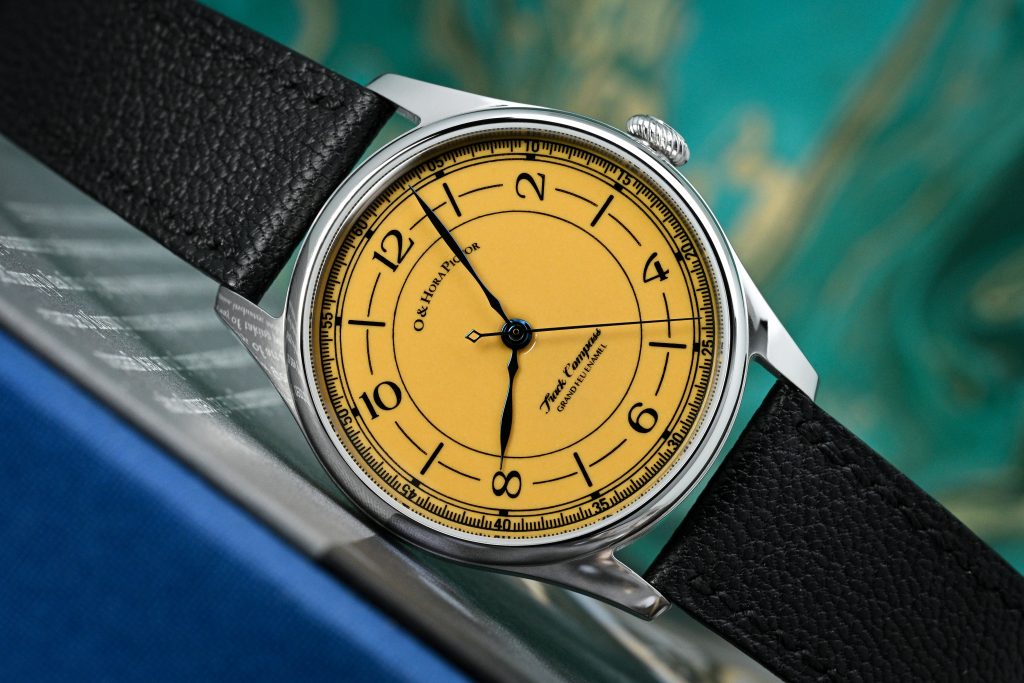
Design-wise, the dial takes a very practical, almost sports-watch-like approach to timekeeping, which I find very appealing. You get a highly legible outer track packed with fine graduations for fractions of a second, distinct markings for every minute, clearer emphasis at five-minute increments, and then a really satisfying sector-style layout that organizes everything into clean, readable zones. It’s symmetrical, purposeful, and manages to gently tread the line between artistic and practical. And for whatever reason, the overall vibe also reminds me a bit of Laurent Ferrier, but because it has that same calm, disciplined “precision instrument” energy, and it even faintly echoes the visual language of Ferrier’s collaboration with Phillips, that also played with similar ideas of sectors, tracks, and artisanal restraint.
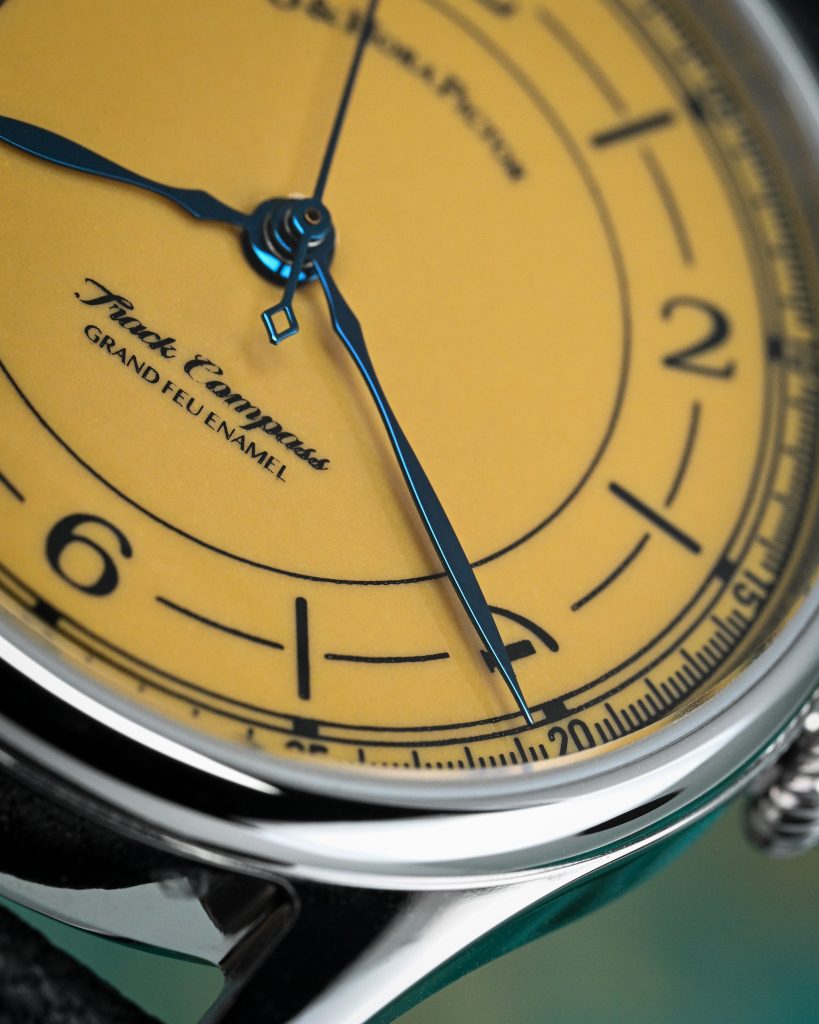
Then there’s the handset, which is absolutely a big part of the magic here. It’s a genuinely distinctive set of hands: slender, stylized, and almost old-world in character. It feels like something you could drop onto a 100-year-old pocket watch without it looking out of place. They’re thermally blued and they’ve done an exceptional job, because the color is rich and even, and the hands look perfect even under macro scrutiny.
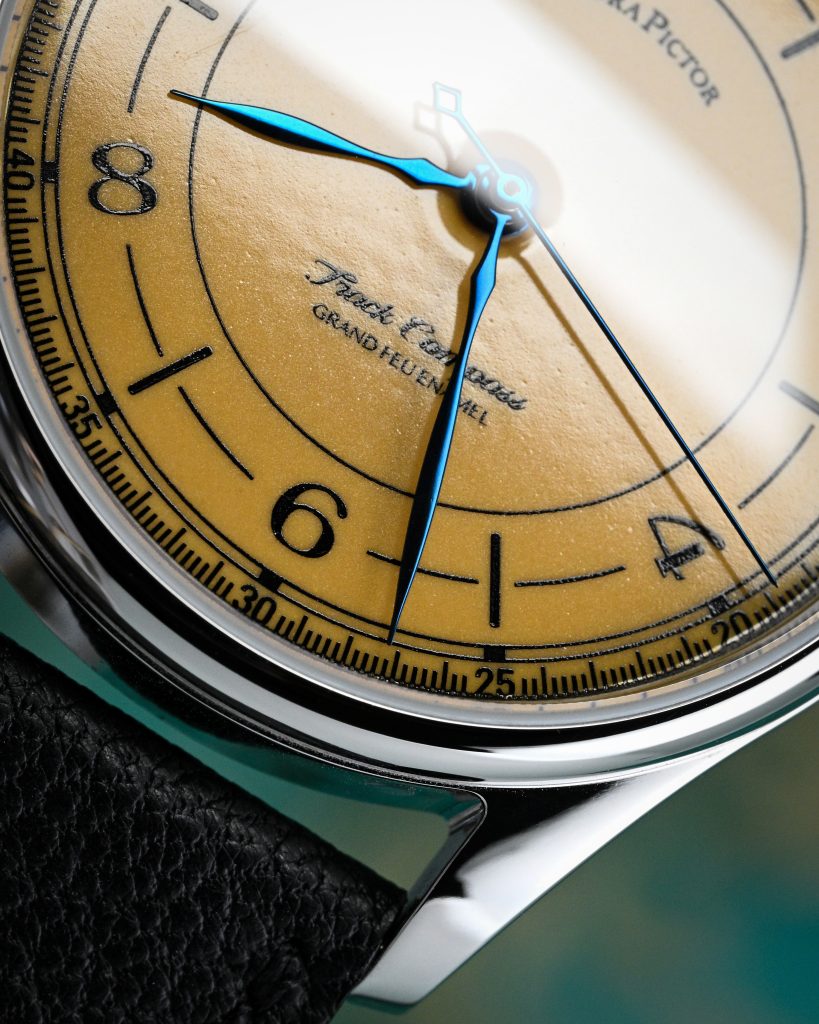
Overall, the dial is the reason you buy this watch. That yellow opaque enamel base is bold without being garish, the symmetry and sector-like structure give it real design discipline, and the hands add a layer of charm and personality that you don’t see too often. It all comes together in a way that’s both beautiful and, somehow, still quite utilitarian.
Movement
Inside you’ll find a Sellita SW200-1 in Elaboré grade, and it’s no secret at this point that I don’t love this movement. To be clear, that has very little to do with performance The SW200-1 is a perfectly competent, widely serviceable workhorse, and when things work well it can run beautifully for years. But from my own experience, a frustratingly large fraction of the SW200-equipped watches I’ve owned or reviewed have eventually succumbed to the familiar windmilling rotor issue, or developed some degree of hand-winding fussiness that makes the movement feel less refined than it should.
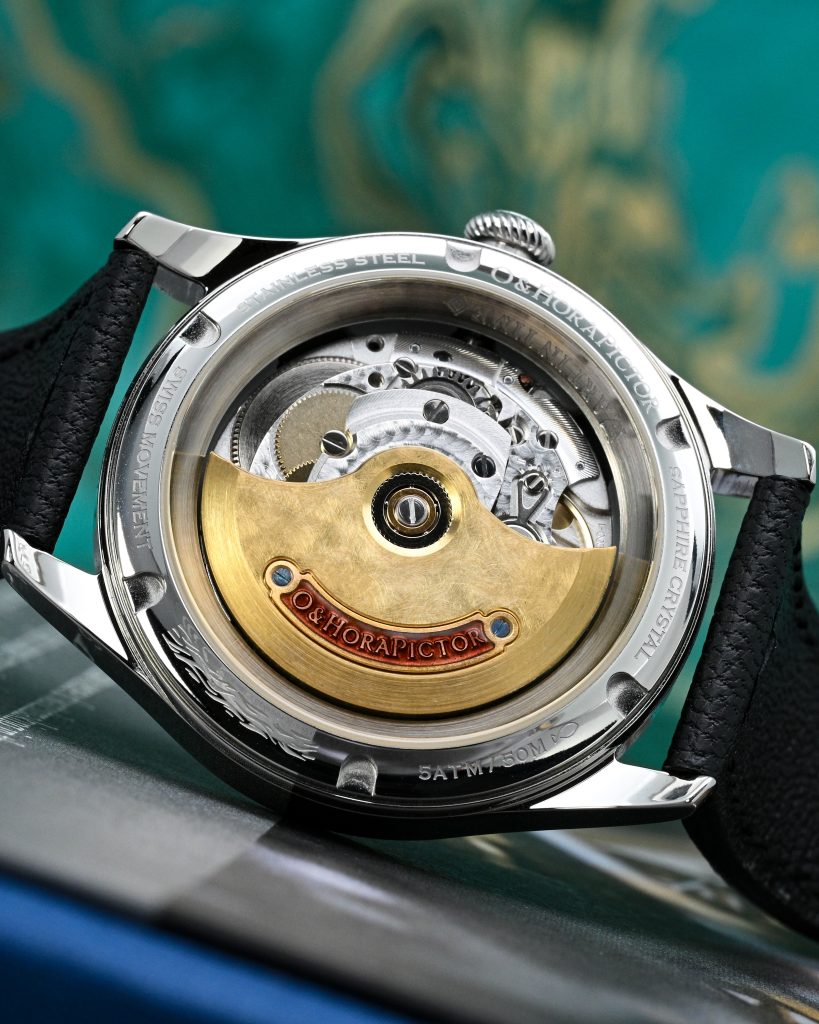
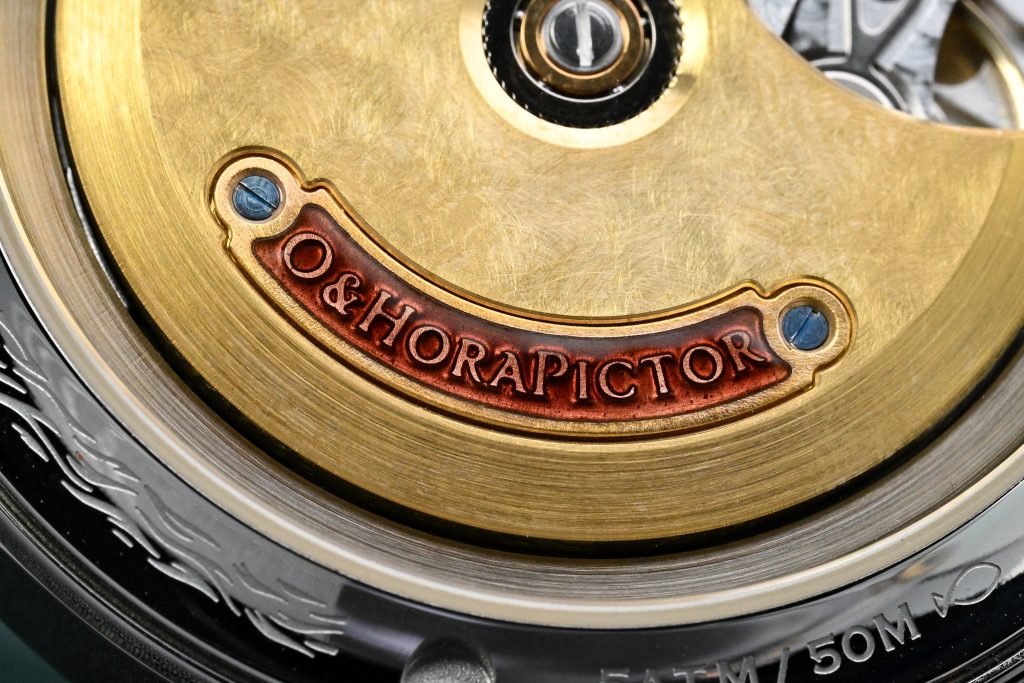
From an aesthetic standpoint, it is very well executed here. The Elaboré finishing is a lot nicer than most alternatives in this price range, and the display-back presentation is genuinely thoughtful. The movement sits with a nicely judged concave spacing to the case, which keeps it from feeling too small relative to the case. The rotor is the standout though: gold-colored, with brushed surfaces and an almost hand-hammered/distressed texture that looks incredible. They went further with an enamelled red nameplate, secured by thermally blued screws, and that mix of color, texture, and craft feels perfectly on-brand for an enamel-focused brand. I was informed by the brand that the finishing quality of these screws is not up to their current standards, and that they have improved their finishing since making this prototype.
In use, it performed well: beating at roughly +5 seconds per day, which is good for an Elaboré SW200-1. There’s also a ghost date position here, which isn’t something I fuss about too much, but I know people feel strongly towards this. Still, the execution and presentation do a lot of heavy lifting here.
On The Wrist
On the wrist, it lands squarely in that Goldilocks zone that’s very hard to argue with. The 38mm case diameter and 45.15mm lug-to-lug feel tailor-made for a watch in this genre, striking a balance that works across a wide range of wrist sizes, and on my 6.75″ wrist it fits perfectly. It has enough presence to show off the dial work, but it isn’t oversized or overly ‘vintage’. Thickness is similarly well executed. At 11.30mm, and about 1mm of that is the slightly domed crystal, so it tends to look and wear slimmer than its measurements.
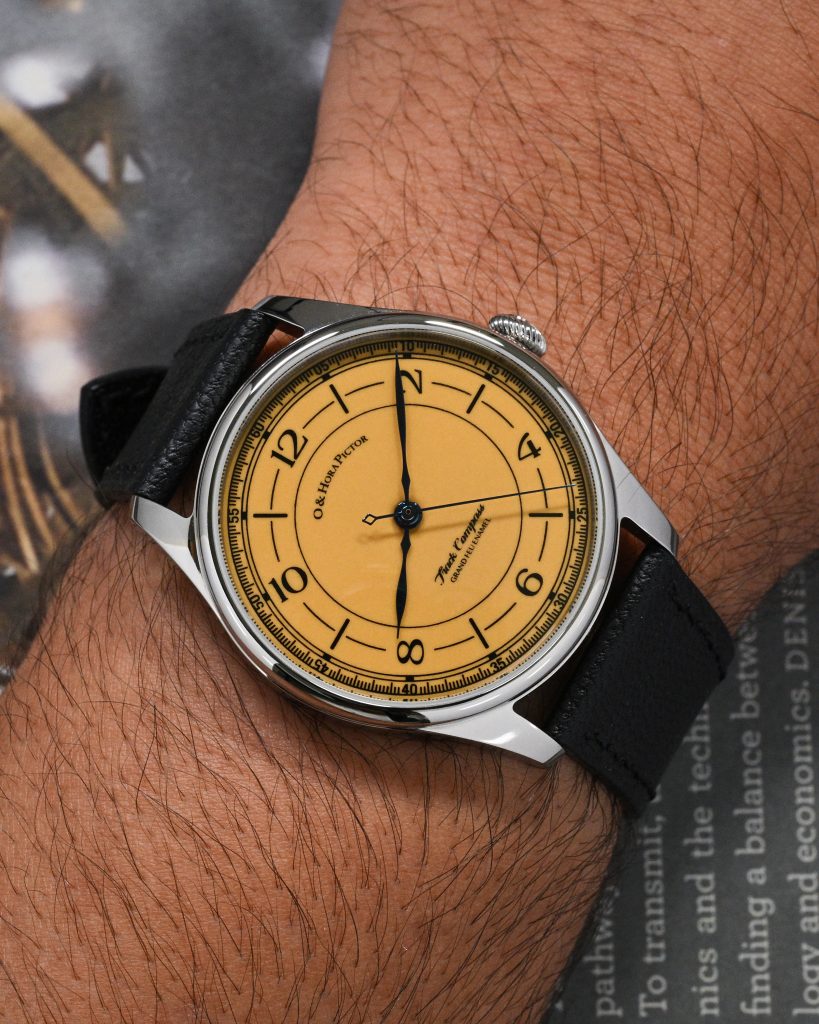
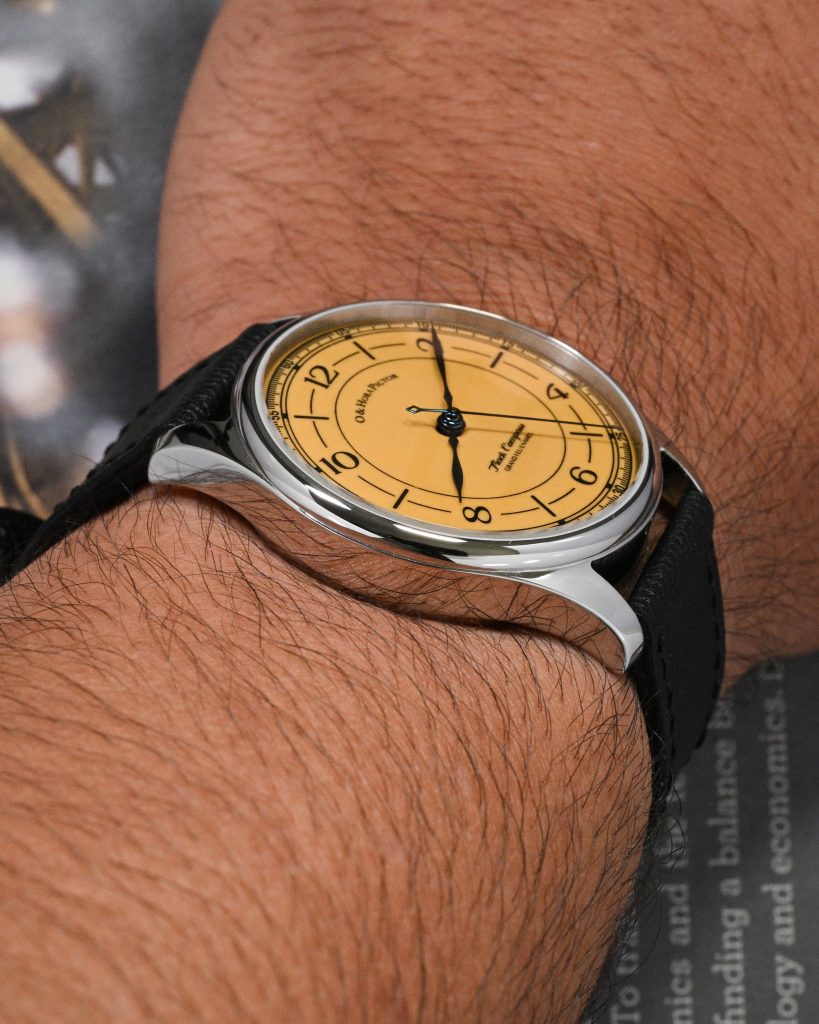
The comfort is helped a lot by the way the lugs curve down and hug the wrist, and the included leather strap is better than I expected. It required no break-in, feels premium right out of the box, and it’s finished off with a well designed signed buckle, rather than the generic hardware. Taken together, it is simply a very comfortable watch: excellent proportions, a case that sits naturally, and a strap that feels like a effort (and money) was put into its selection.
Wrapping Up
The “attainable enamel” genre is still relatively new, but it’s growing quickly, and it’s already packed with strong contenders. At $1,665, the Yellow Track sits in a tough segment, yet it makes a convincing case for itself, largely on the strength of its dial design and the quality of its yellow enamel execution. The Elaboré-grade Swiss movement will also appeal to a lot of buyers, and the rotor design and finishing are genuinely standout details that show real effort. If you want something that feels artisanal, with a dial that leans slightly dressy but remains practical and sporty, all housed in a well-proportioned case, the Yellow Track deserves a spot on your shortlist.