Disclaimer: this video/review was not sponsored by MING or any other entity.
Video
MING 17.03 Ultra Blue GMT – Why now?
At this point, my relationship with MING probably qualifies as a problem. I have owned, reviewed or photographed nearly every major branch of the 17 series: the 17.01, 17.06 Slate, 17.06 Copper, 17.09 Blue, 17.09 Burgundy, 17.09 Massena Lab Honey, 17.09 Massena Lab Black, and 17.09 WCS. But the one family that had somehow escaped me was the 17.03 GMT.
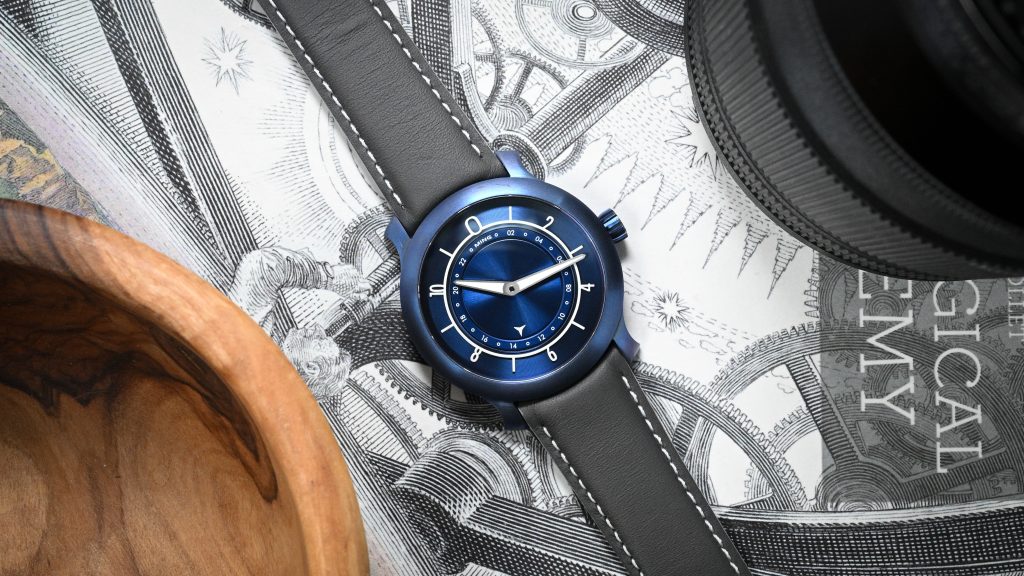
That felt like an odd gap, because the 17.03 is one of the more interesting early MING references. It sits between the original 17.01 and the more mature 17.09, while introducing a GMT display that feels very much like a MING solution. The Ultra Blue was released in 2018 for the brand’s first anniversary, limited to just 25 pieces, and I wasn’t able to get one when it launched.
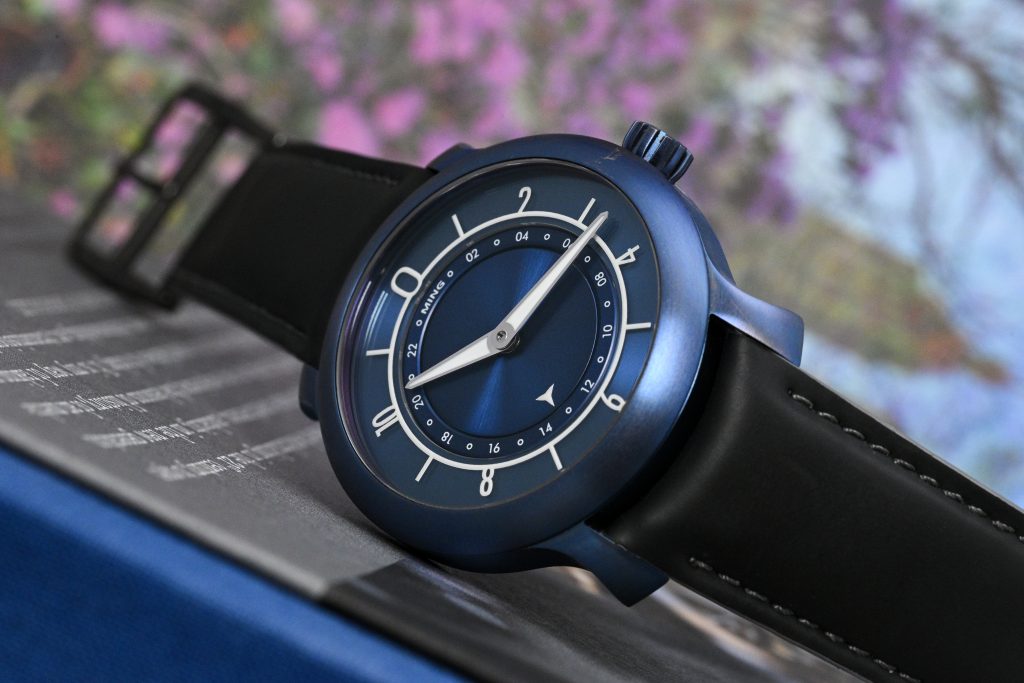
So when I recently had the chance to buy this example pre-owned, I jumped at it. It closes the last major gap in my 17 series experience, and it happens to be the exact shade of blue that makes my decision-making much weaker. That said, this is a pre-owned watch that is over 7 years old, so there are signs of wear, and some particles on the dial that should be attributed to the adventurous life this watch has led and not to the brand’s abilities.
Let’s check it out!
Case
Heat-blued titanium cases are quite rare in watches, and the obvious reference point is De Bethune. The DB28 Kind of Blue made thermally oxidized blue titanium feel like a modern independent watchmaking achievement, and the broader Kind of Blue family remains the clearest high-end comparison. The process is conceptually simple but difficult to execute: heat changes the oxide layer on titanium, and that changes how the metal reflects light. But on a full case, consistency becomes much harder because edges, recesses, surface preparation, part geometry, and timing all affect the final color.
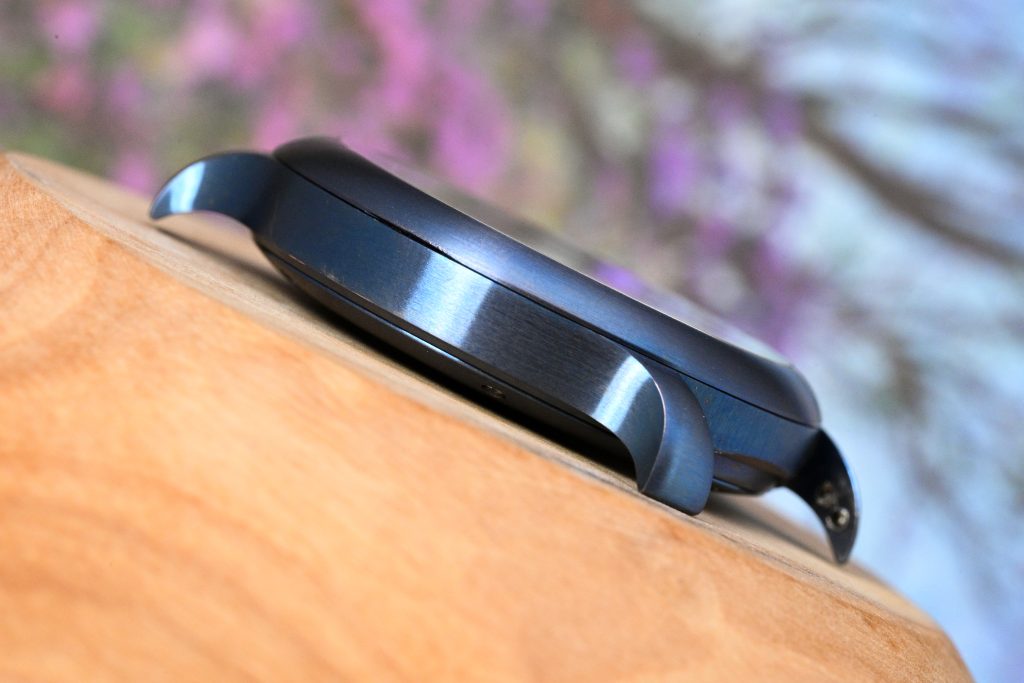
That is why so few brands do this at the case level. It is difficult to standardize, difficult to refinish invisibly, and polarizing. A lot of collectors do not like colored cases because wear shows more clearly. Scratches and high-contact areas can reveal the underlying titanium, and some of the original color can fade with use. I understand that concern. But these things just don’t bother me anymore…
Zelos has explored similar territory through heat-colored Ti-mascus and crystallized titanium cases, where the material pattern and thermal coloration work together. H2O also deserves mention as an early enthusiast-brand adopter of heat-colored titanium / Ti-mascus cases. Wicked Watch Co has used oven-heated Ti-mascus external components, and Schaumburg has experimented with thermally colored case components, though not full cases in the same way. And with Chinese OEM suppliers now offering more exotic materials like crystallized titanium, Ti-mascus, ZirCuTi, and other proprietary titanium alloys, this space is becoming more accessible.
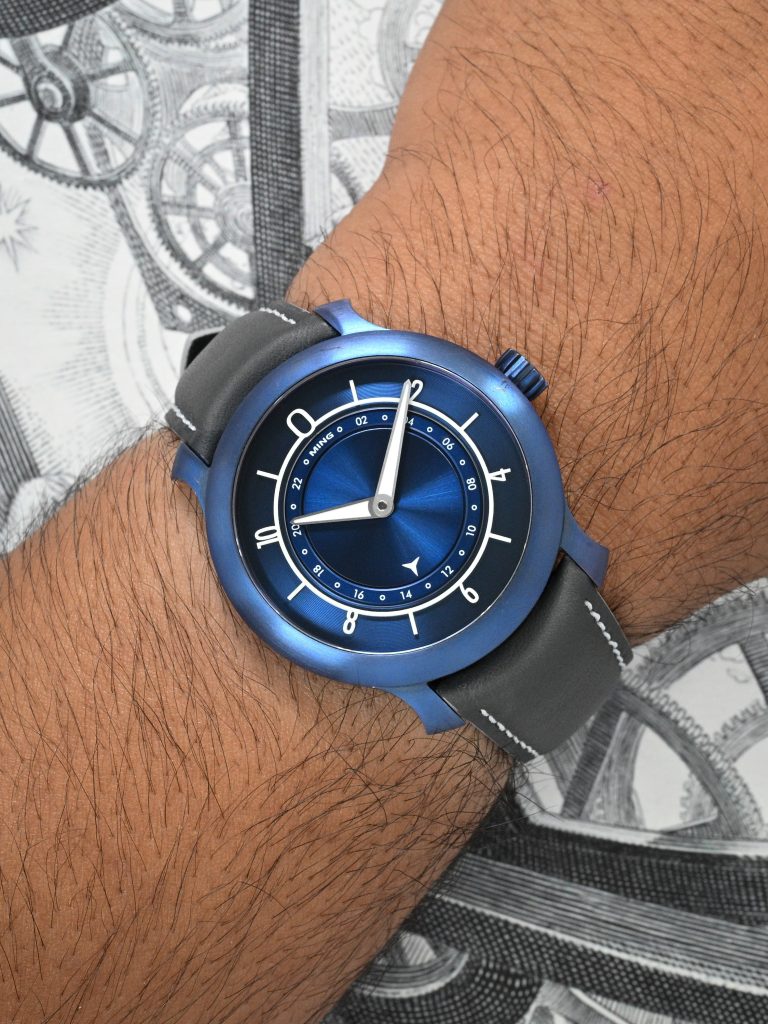
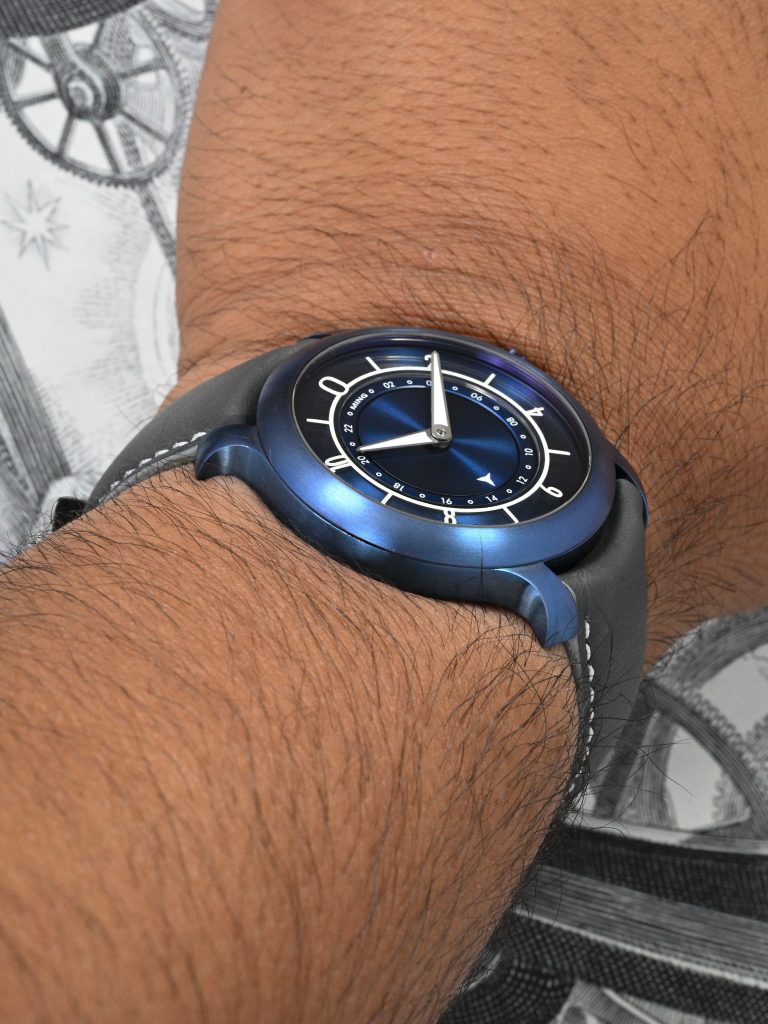
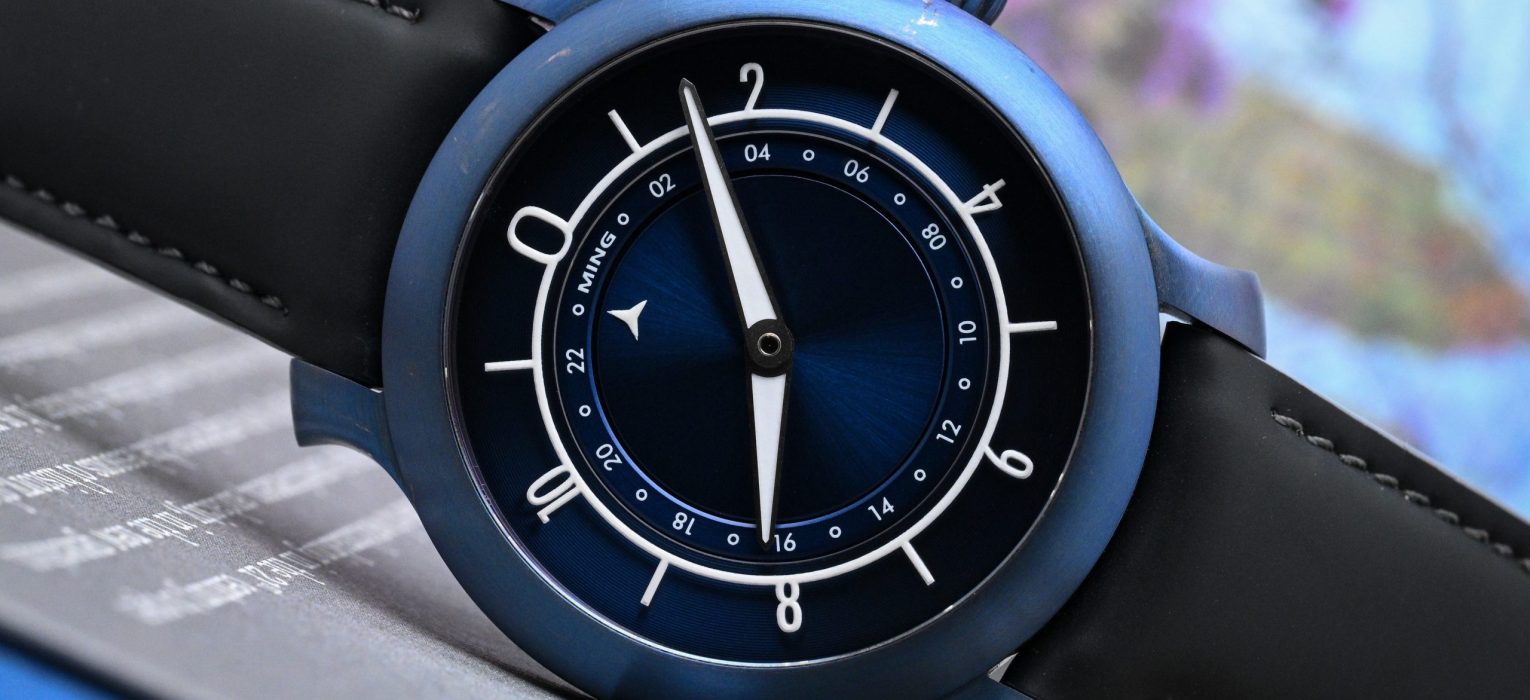
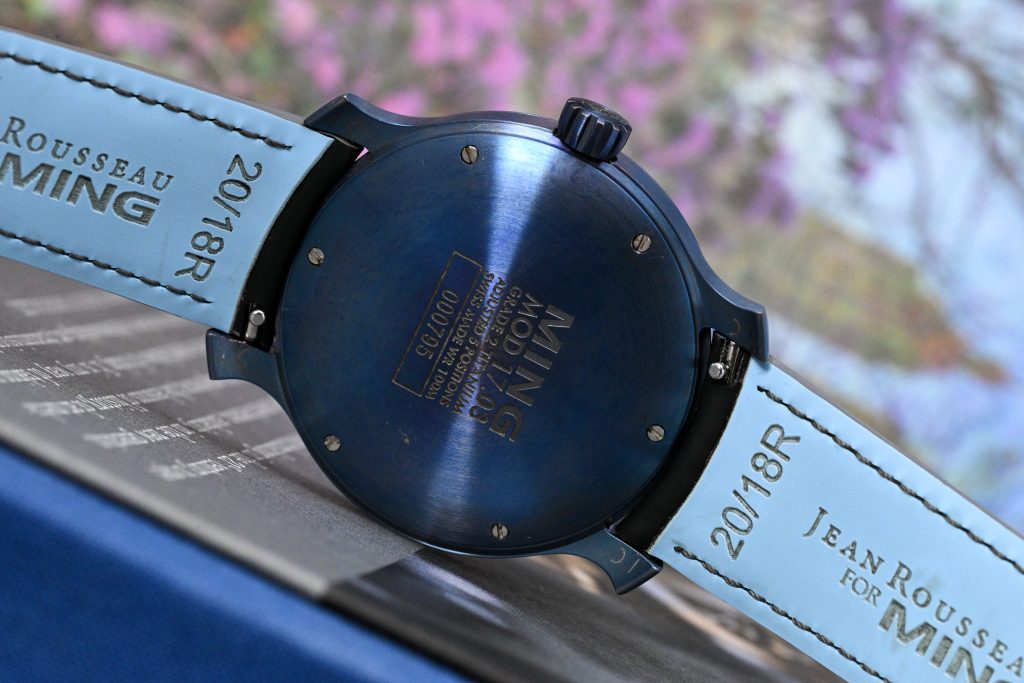
But the Ultra Blue is different. Ming Thein thermally blued all 25 grade 2 titanium cases himself, including the bezel, mid-case, case-back, crown, and buckle. The MING logo on the crown was also engraved by hand. My measured dimensions are 37.8mm in diameter, 43.5mm from lug tip to lug tip, 9.5mm in overall thickness, with a 20mm curved lug width, 5.4mm push-pull crown, and 100m water resistance. On my 6.75″ wrist, it fits almost perfectly, and weighs in comfortably at 38g for the head alone, and 52g on a rubberized leather MING strap with a steel buckle.
Design & Lume
The sunburst metallic blue center is exactly the kind of blue I like, and it works beautifully against the more irregular tones of the heat-blued titanium. The case shifts between deep blue, purple, cyan, and darker grey-blue tones, while the dial remains more controlled and metallic.
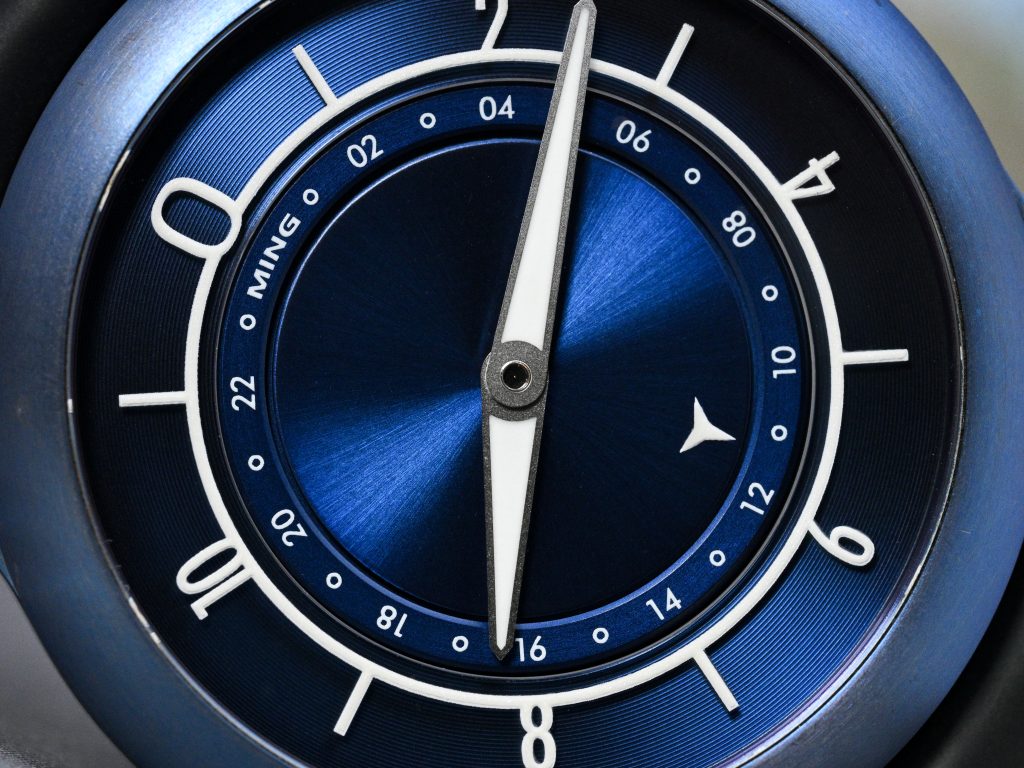
I also really like this era of MING design. The sapphire donut ring sits above the dial and carries the luminous numerals and markers, creating subtle shadows over the radial pattern beneath it. The matte blasted hands have large lume-filled recesses, and unlike some newer MING designs, the hour and minute hands have a clear length-based distinction. The GMT display is also clever, avoiding a conventional central GMT hand and integrating the 24-hour indication into the dial architecture. And I’ve seen at least a few microbrands copy this design/style over the years since this watch was released.
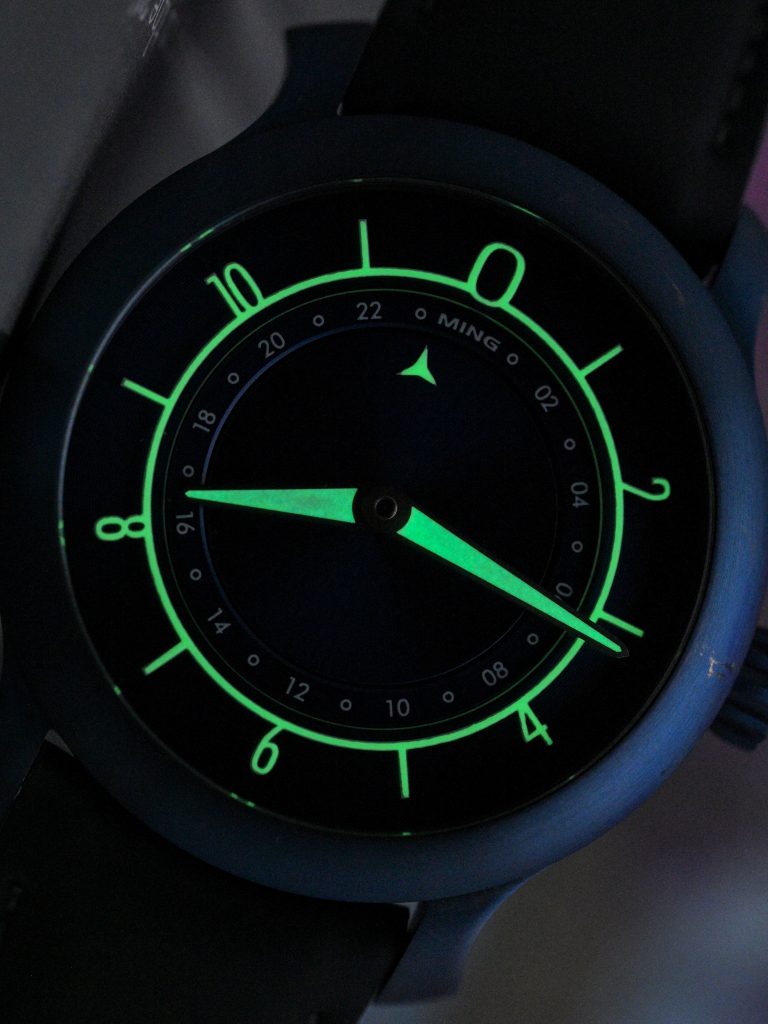
The lume is not as powerful as the MING 18.01, and it is not as bright as the Globolight XP applications on some of my Christopher Ward watches. But it is still very good, with sufficient brightness, good longevity, and an even glow between the hands and indices, which is something I miss on some modern MING watches.
Movement
The 17.03 Ultra Blue uses the Sellita SW330-1, which is now slightly dated given the existence of the SW330-2 with its improved power reserve and reduced tendency for GMT hand drift. But the SW330-1 remains a very good movement in use. Winding and setting feel smoother and more refined than a basic SW200, and it suits the watch well. This is not a movement-driven watch, and the solid case-back feels appropriate.
Conclusion
The 17.03 Ultra Blue feels even more interesting today because of the recently released MING × J.N. Shapiro 37.06 Lightning. With that watch, Ming Thein is back with a blowtorch, thermally coloring grade 2 titanium guilloché dials that are hand-turned by Josh Shapiro. The execution is far more elaborate, the dial work is more ambitious, and the collaboration itself is obviously a very different kind of project. But the underlying idea feels connected: using heat, titanium, and controlled unpredictability to make each watch feel visually distinct.
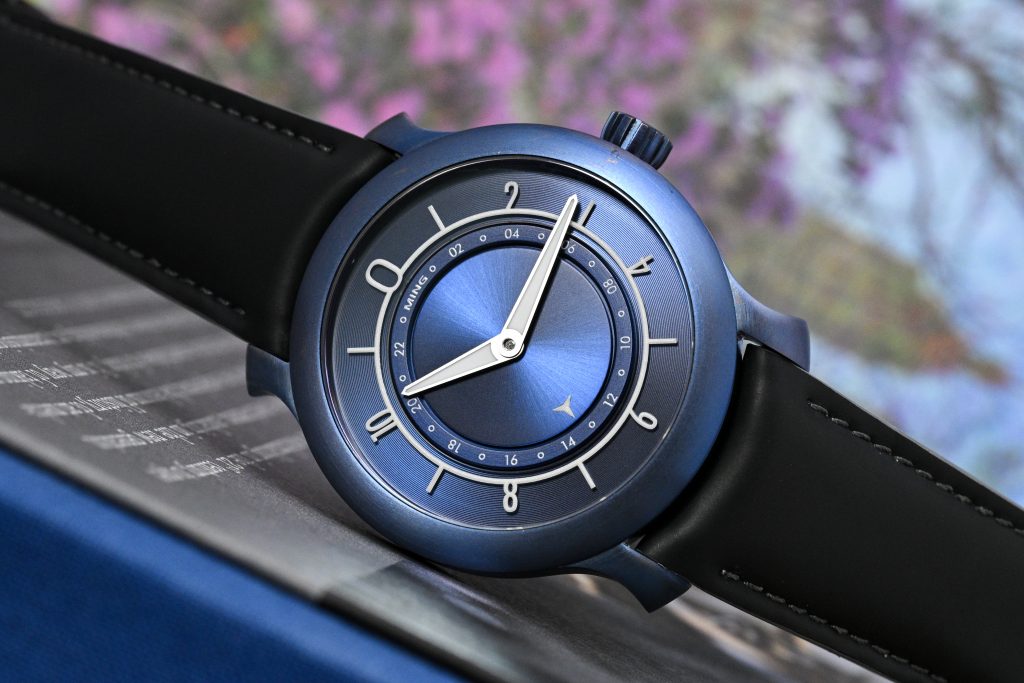
Seen through that lens, the 17.03 Ultra Blue feels like an early expression of that same creative instinct. Here, the canvas was not a guilloché dial, but the entire case and buckle, each thermally blued by Ming himself. It also feels like a great reminder of how much value there can be in picking up a pre-owned MING watch, especially from the years when the brand seemed to strike a particularly good balance between quantity, quality, and specialized design. That is a hard mix to find in MING’s lower price tiers today, and it makes this 25-piece Ultra Blue feel even more special to me now than it did when it was released.