Disclaimer: this video/review was not sponsored by Kiwame Tokyo or any other entity.
Video
Review
Kiwame Tokyo is a new Japanese microbrand based in Asakusa and founded by Masami Watanabe, who has worked in the watch industry for more than 30 years, initially importing European luxury watches into Japan and later working with smaller independent brands.
The messaging is built around Japanese culture, local identity, restrained design and “honest watchmaking”. The watches are released periodically in moderately sized batches, and there is already a reasonable amount of hype developing around the brand.
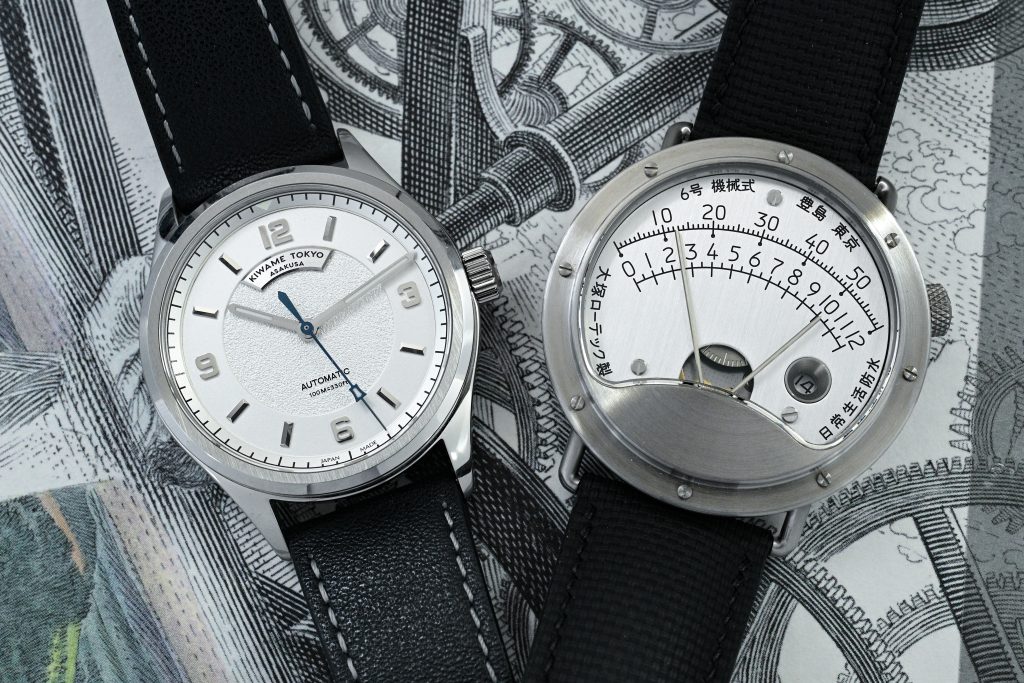
A lot of this reminds me of Kurono Tokyo during its early years. The romantic presentation of Japanese design, limited availability and independent-watchmaker-style allure all follow a very successful formula. And if you look at their website, Kiwame appears to be trying a little too hard to recreate that experience, but I also cannot fault a brand for learning from something that has worked extremely well.
There is also a strange Karl-Leimon connection (also a Japanese micro-brand)… Kiwame’s original models (Usuki and Kurutsuki) appear remarkably similar to the Karl-Leimon Classic Field in design and specifications, although I have found no confirmed relationship between the brands. But maybe there’s a connection that I’m missing and someone will fill me in on the details…
This is the Iwao Ginkai, priced at $690 USD. And a lot of people seem to be gravitating towards this brand, because I’ve been seeing them all over social media these past few months. Let’s check it out!
Case
It has a stainless steel case measuring 37.5mm in diameter, 45.4mm from lug tip to lug tip and 9.8mm thick, with a 20mm lug width. The unsigned push-pull crown measures 5.85mm, and the watch weighs 66g on its leather strap.
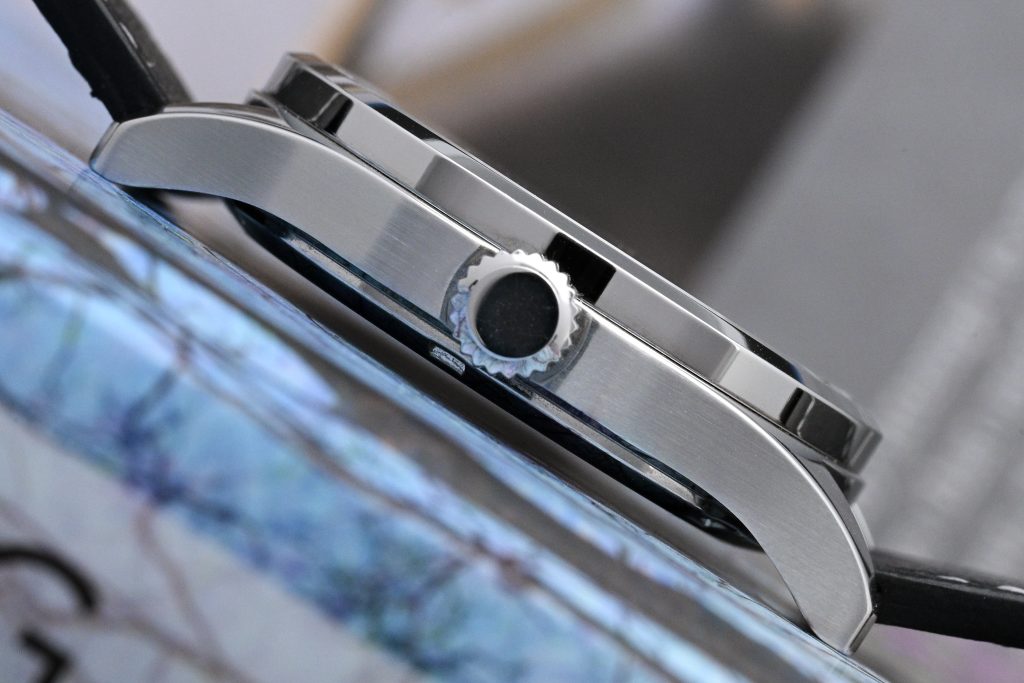
The case design itself is simple, but the proportions and execution are very good. Its thickness is distributed evenly between the bezel, mid-case and case-back, allowing it to feel slimmer than the measurements suggest. Brushed and polished surfaces are applied cleanly, and the transitions are appropriately sharp.
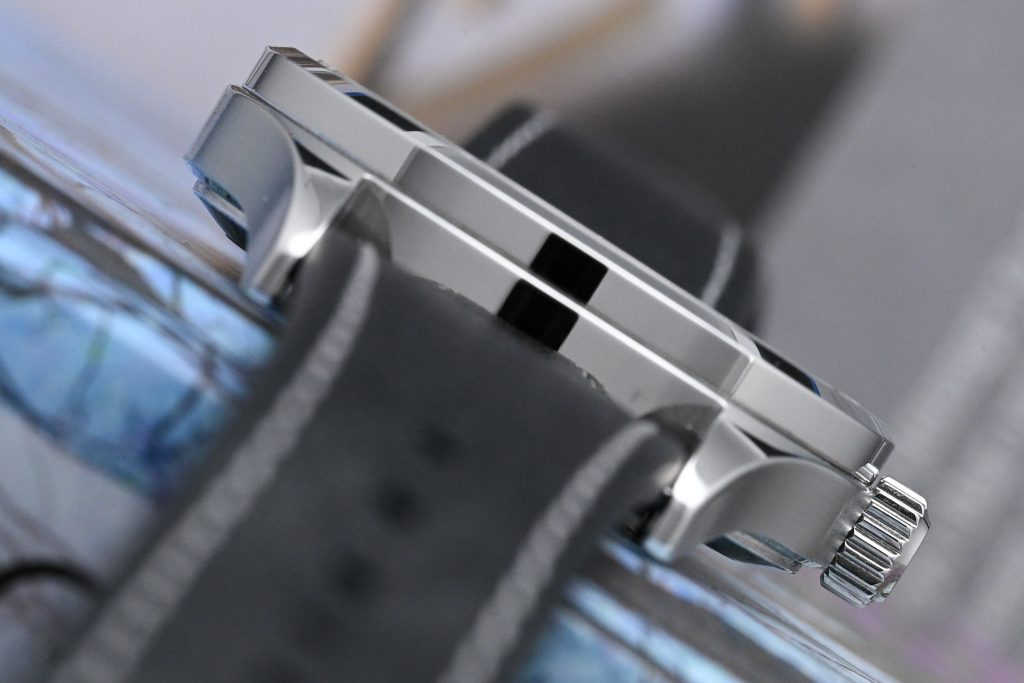
A flat sapphire crystal with effective anti-reflective coating makes it legible, and also easy to photograph. The solid caseback is fairly simple, with laser-engraved artwork and specifications, and the 100m water-resistance rating is practical for an everyday watch despite the lack of a screw-down crown.
Dial
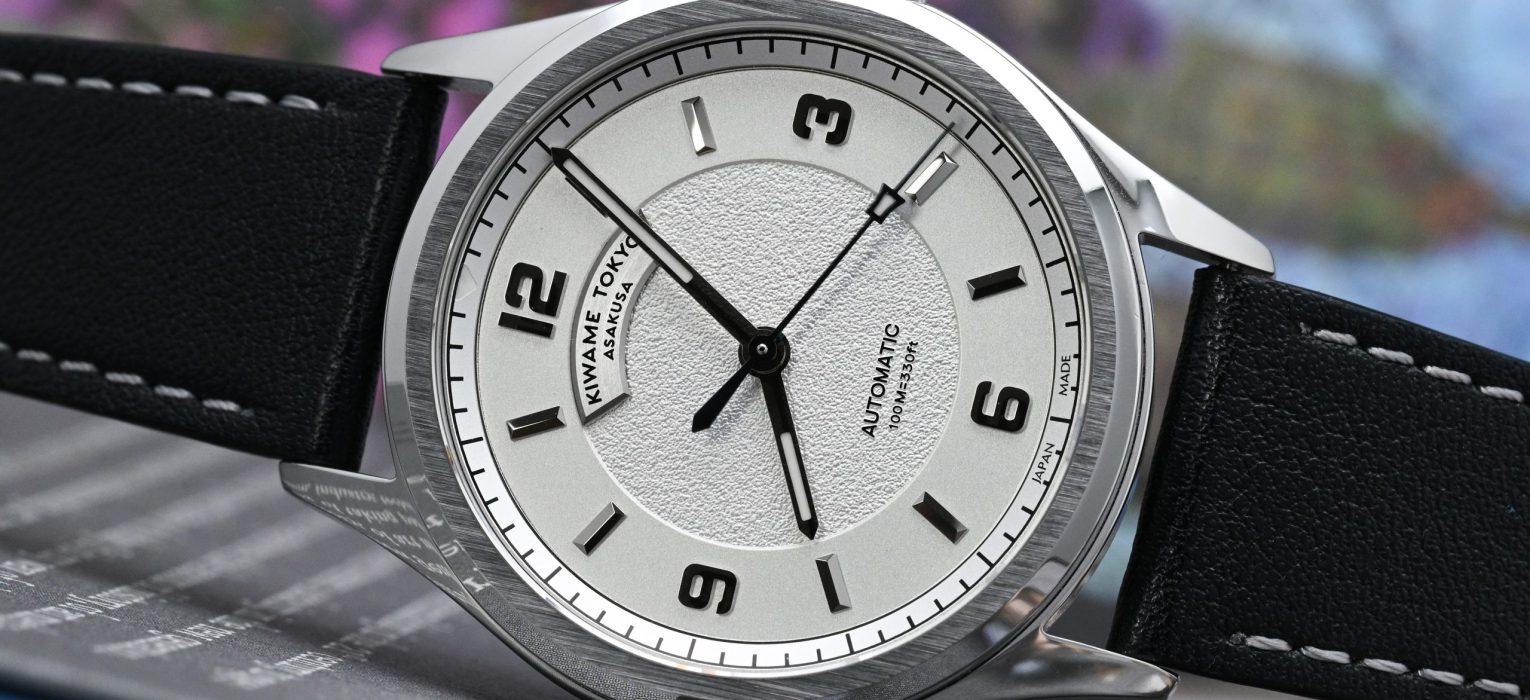
The Ginkai dial is where most of the watch’s character is concentrated. A heavily textured central section is surrounded by a smoother satin-finished section and a raised and angled chapter ring, creating a noticeable contrast between the three surfaces. Applied Arabic numerals at the cardinal positions alternate with faceted baton markers, while a sloped chapter ring carries the printed minute track.
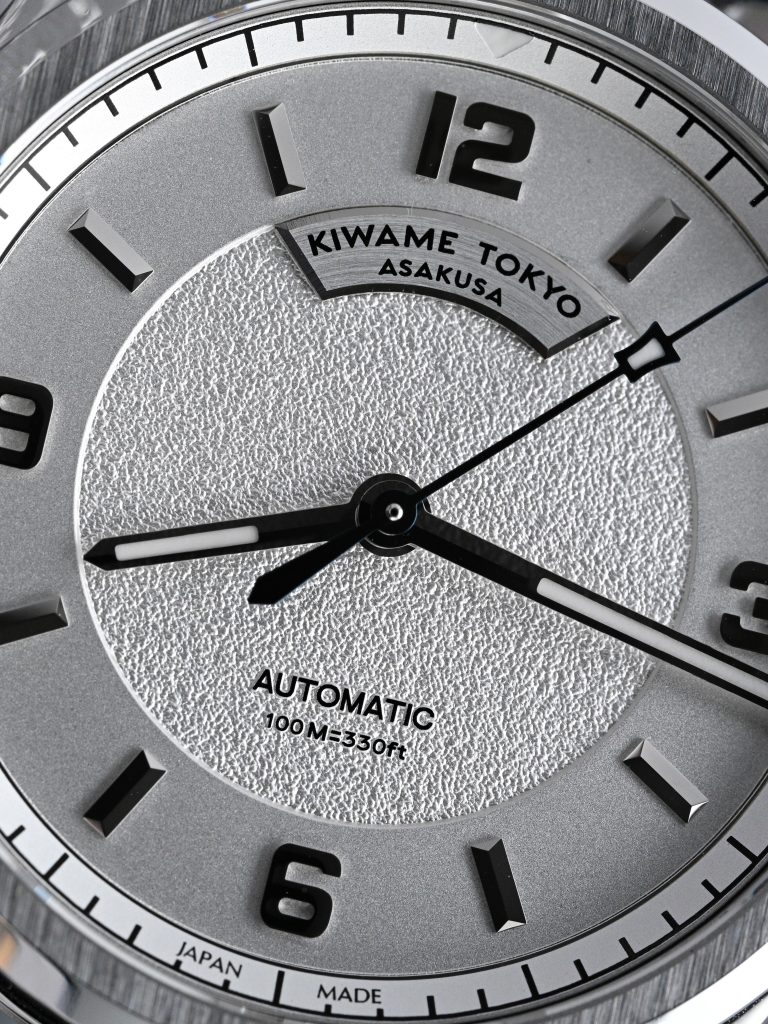
The polished furniture catches light easily against the silver-gray dial, but the layout remains restrained and well organized. There is enough variation in texture, height and finishing to make the dial interesting under a macro lens or loupe, which is not always the case at this price. The arched Kiwame nameplate at 12 o’clock adds some of the independent-watchmaker-style character the brand is clearly trying to cultivate. It is a small detail, but it gives the upper half of the dial more structure and prevents the branding from looking like another line of printed text.
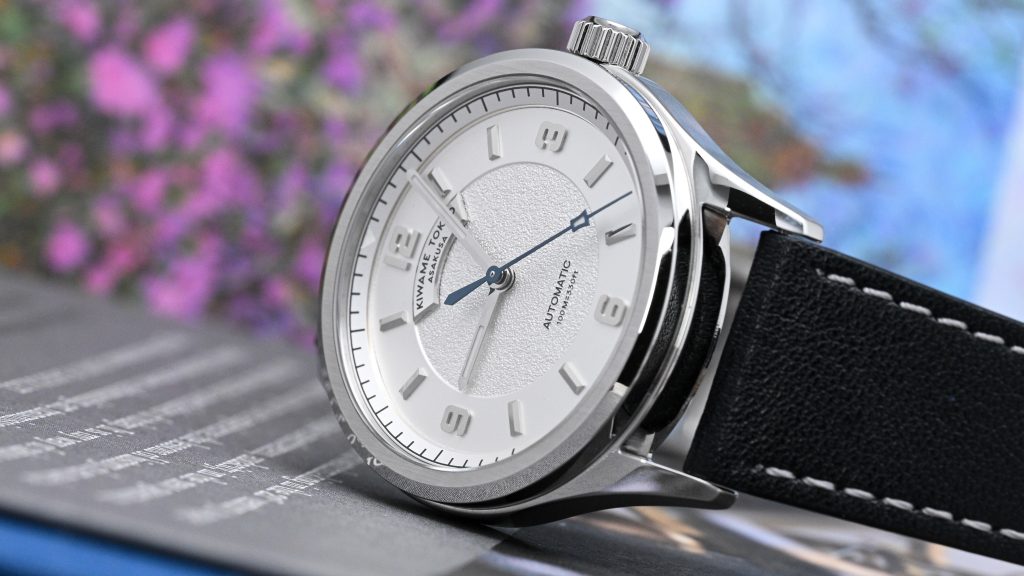
The hour and minute hands are relatively simple faceted designs with luminous inserts, but the thermally blued seconds hand is much more distinctive. Its shape is supposedly based on the roof of Asakusa’s Kaminarimon gate. The execution is quite good. Depending on the light, the hand shifts between bright blue, dark navy and almost black, adding a controlled amount of color to an otherwise neutral dial.
Lume
The lume is mediocre. It is limited to the hour and minute hands and small printed triangular marker on the chapter ring, and all of these fade relatively quickly.
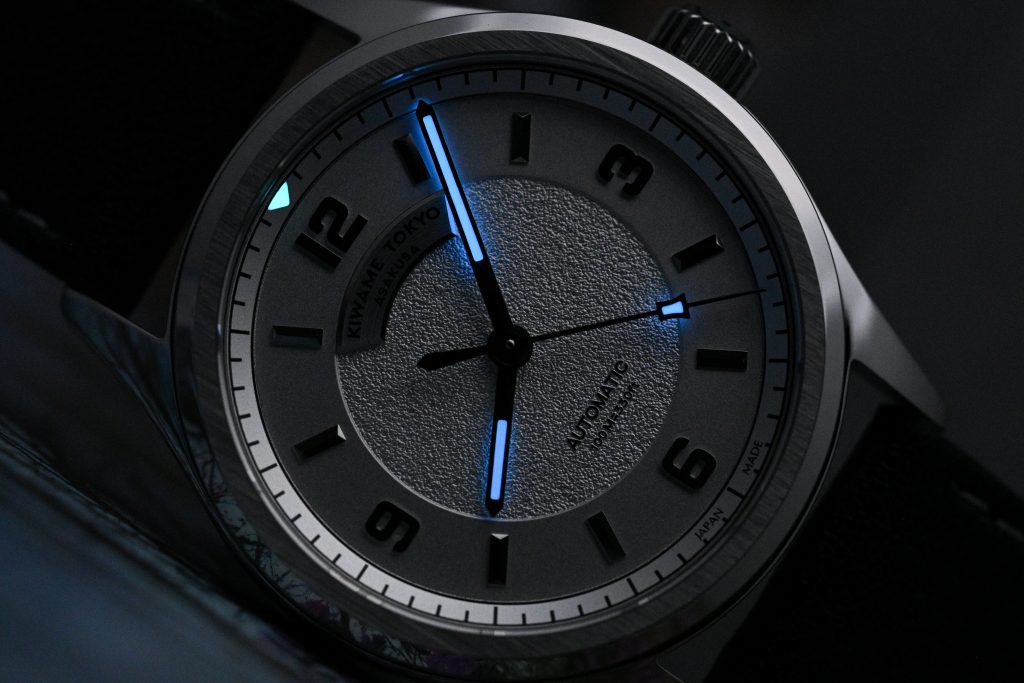
The application is enough to provide basic orientation for a short period after entering darkness, but this is not a watch I would recommend for anyone strongly invested in nighttime legibility.
Movement
This watch is powered by the Miyota 9039. I consider it one of the best movement choices for watches below $1,000, alongside the La Joux-Perret G100, although the latter remains less common since it is relatively new to market. The Miyota is thin, reliable and relatively easy to service, and it allows the Iwao to avoid the unnecessary thickness and phantom date position associated with cheaper movement options. Performance from this example has also been very good, running within roughly +/- 5 spd.
On The Wrist
The 37.5mm diameter and 45.4mm lug-to-lug measurement fit my 6.75-inch wrist very well. The case sits flat, feels light and wears thinner than its stated height because of how evenly the thickness is distributed. Unlike many Kurono Tokyo watches, the Iwao does not feel overtly dressy. The textured dial, stronger case proportions, 100m water resistance and more casual strap place it firmly in the everyday-watch category. It can work with formal clothing, but it does not look misplaced in a more casual setting.
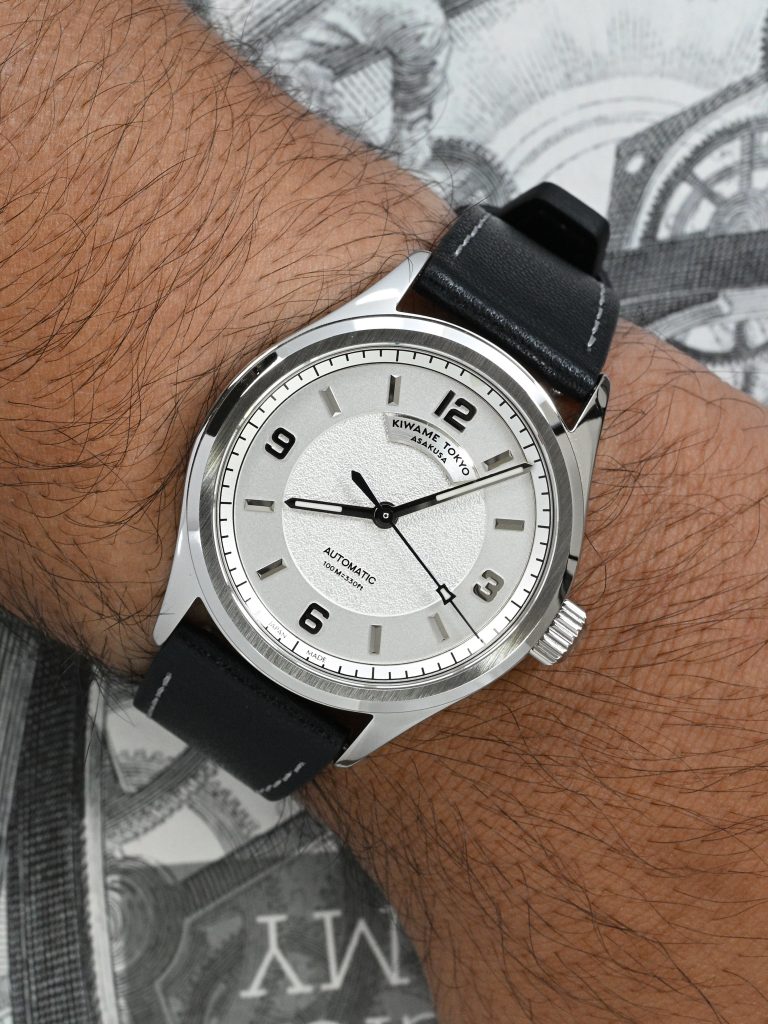
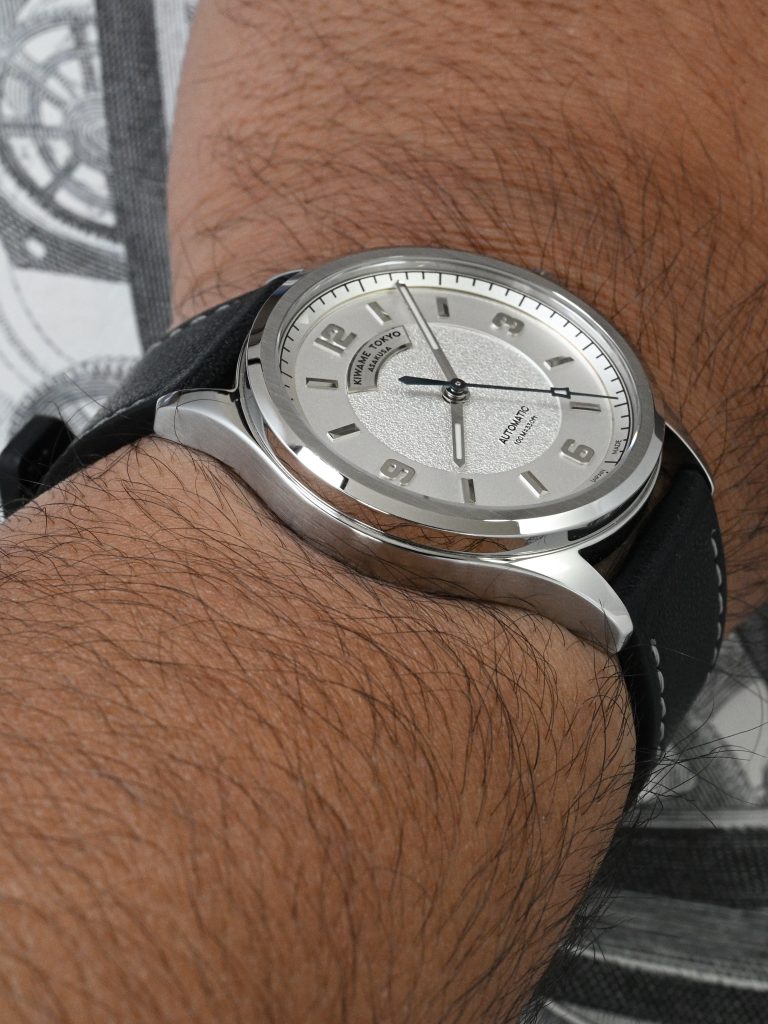
Kiwame also offers a bracelet for an additional $195. I generally prefer watches on bracelets, but I do not feel particularly compelled to buy this one because the Ginkai already looks very natural on leather. The bracelet also uses a fairly dated clasp design without tool-free micro-adjustment, which makes the additional cost harder to justify.
Wrapping Up
The Kiwame Tokyo Iwao Ginkai is a well-proportioned and well-executed everyday watch with a particularly good dial, a sensible movement and enough unusual details to distinguish it from the large number of microbrands around this price.
The brand’s presentation is more complicated. There is a lot of Japanese romanticism, controlled scarcity and independent-watchmaker-style messaging, and the resemblance to Kurono Tokyo’s early formula might put off some potential customers. There are also the unexplained similarities between Kiwame’s original models and the Karl-Leimon Classic Field, although my interest in that connection is mostly driven by blatant curiosity.
But marketing only carries a watch so far, and I think the Iwao Ginkai is impressive enough that it does not need to rely so heavily on the story or messaging. It is a very high-quality watch with a clean and confident design identity, and I am not surprised that each release sells out quickly or that Kiwame is rapidly building a customer base among watch enthusiasts around the world.