Disclaimer: this video/review was not sponsored by Arken or any other entity.
Video
Who is Arken?
Arken is a young British microbrand founded by Kenneth Lam, who is said to have began the brand after years of enthusiast-level interest in watches, Seiko modding, and design experimentation. The brand’s first major release was the Instrumentum, a full-titanium tool watch that immediately established Arken’s design language: technical, angular, practical, and unusually well specified for the money. Since then, the brand has built a small but very enthusiastic following around watches that tend to sell out almost immediately, which is both frustrating and a pretty clear sign that the market is paying attention.
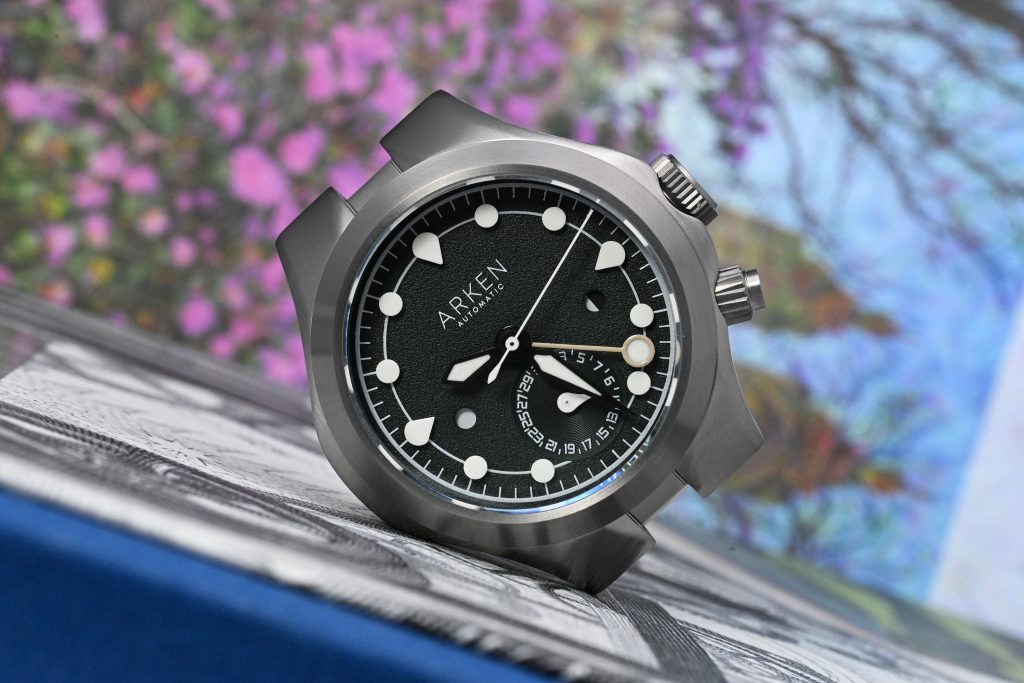
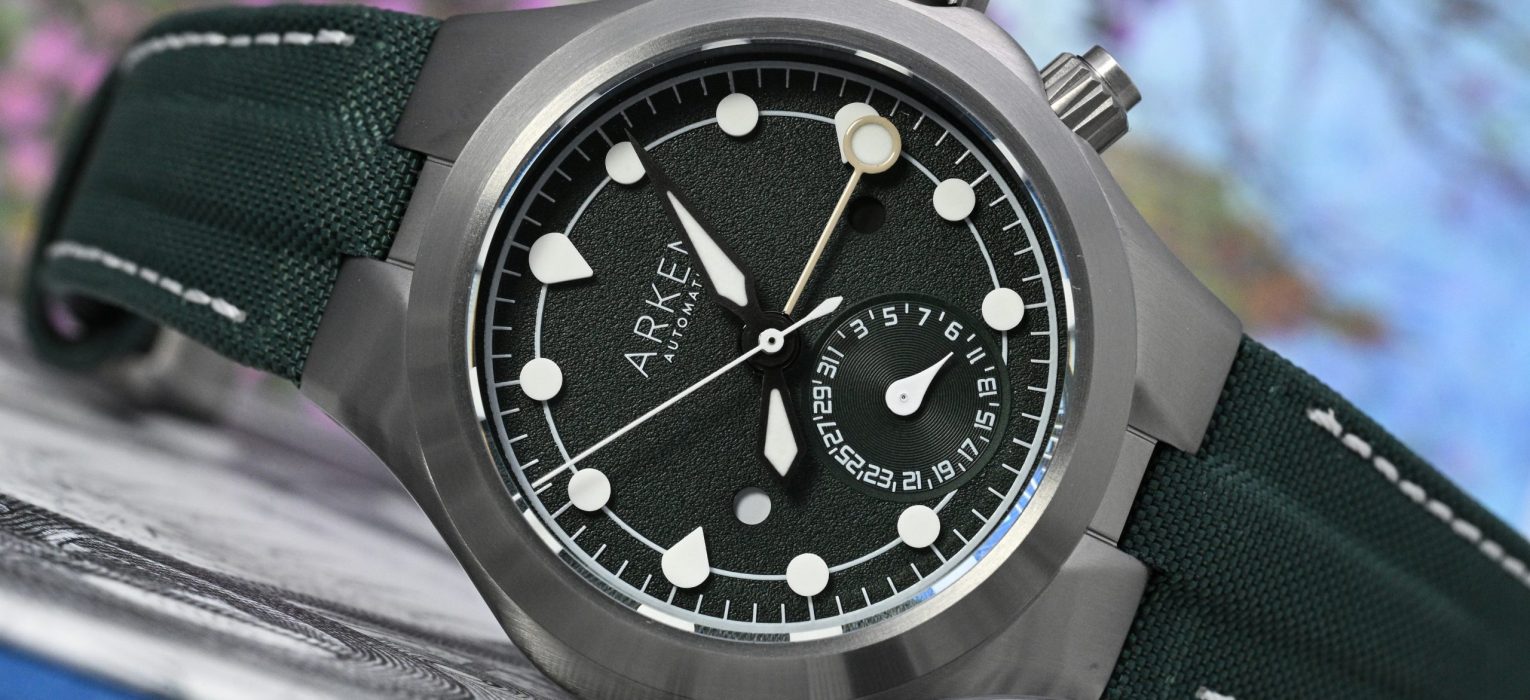
The Alterum is the brand’s second major platform, and in many ways, the watch that pushed them from being another promising microbrand into something more interesting. This Sage Grey version was priced at $995 USD including tariffs, and I was lucky enough to get one during the first drop. The second drop which was an open window pre-order is also now closed. Given how quickly these sold out, that already says a lot about where Arken sits with enthusiasts right now. But I wanted to see for myself what the hype was all about.
Let’s check it out!
Design & Build Quality
The Alterum is a very clean design, and while there is some Vacheron Constantin Overseas Dual Time Everest familiarity in the overall stance, strap integration, crown layout, and date sub-dial at 6 o’clock, I don’t think it comes across as a lazy copy. It feels more like homage in the proper sense: familiar inspiration filtered through a watch that still has its own identity.
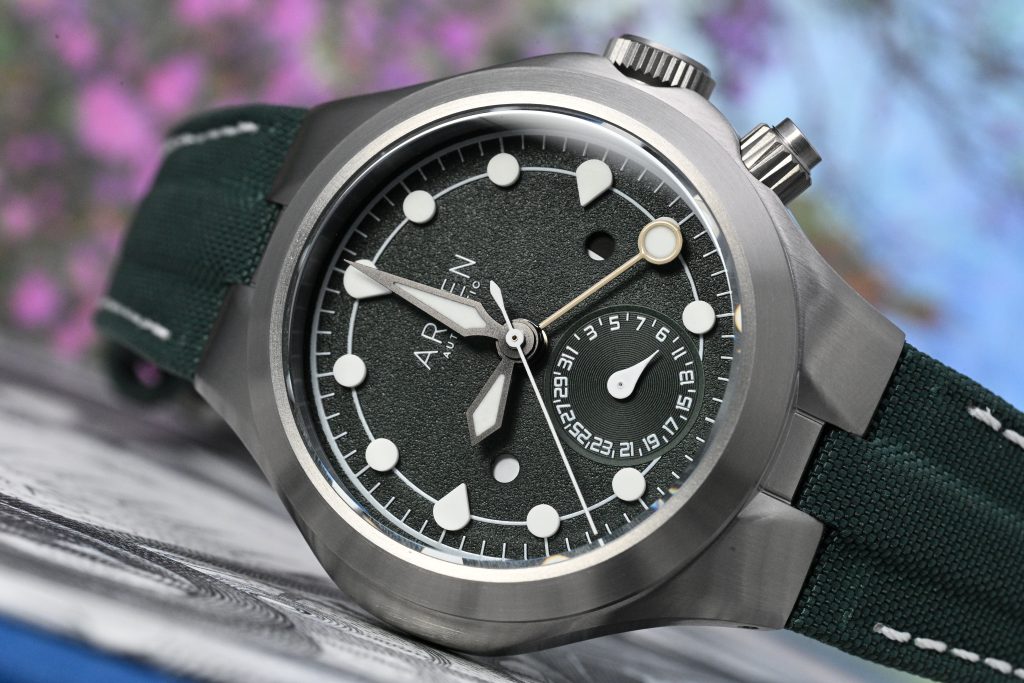
The titanium case measures around 38mm across the bezel, 41.5mm across the outer ears, 46.5mm from spring bar to spring bar, and 13.5mm thick. The screw-down crown at 3 o’clock measures 7.35mm, while the screw-down date corrector at 4 o’clock measures about 5mm. On this strap, the watch weighs roughly 70g.
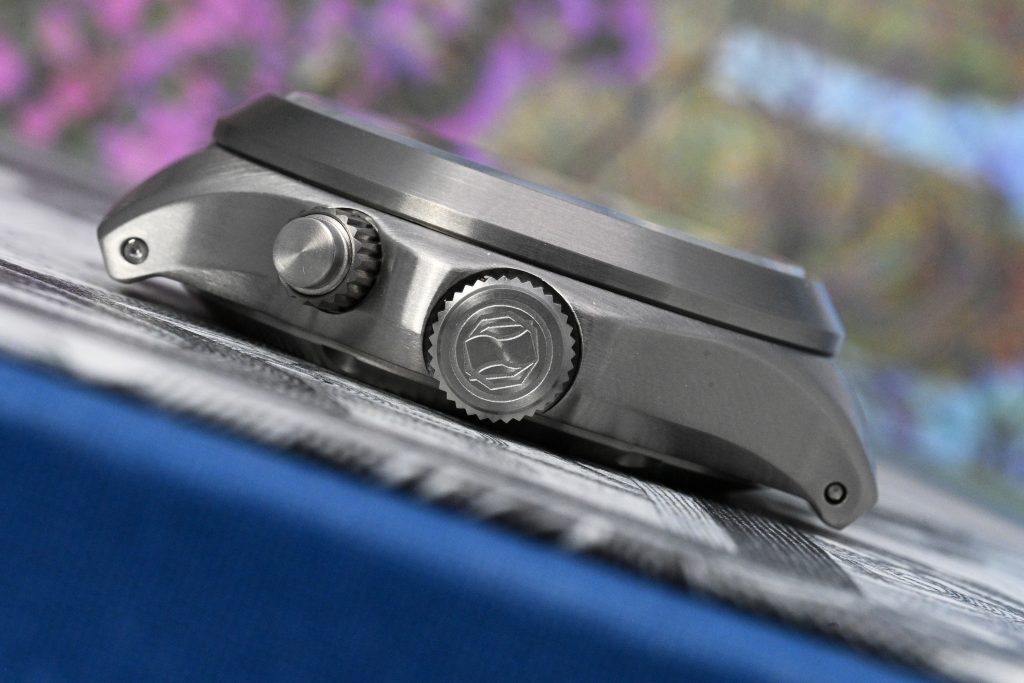
The build quality is excellent. The dial printing is crisp, the hands are cleanly finished, the 3D lume elements are precisely shaped, and I couldn’t find dust, debris, or obvious QC issues anywhere. The only real drawback, if I had to nit-pick, is the proprietary strap system, because the strap’s floating keeper is a bit too large and moves around more than I’d like.
Bespoke Module & Movement
The Alterum is powered by a modified Miyota 9015 with Arken’s bespoke dual-time module. This is not a conventional 24-hour GMT. Instead, it uses a 12-hour second time-zone hand, paired AM/PM indicators, and a pointer date adjusted through the screw-down corrector at 4 o’clock.
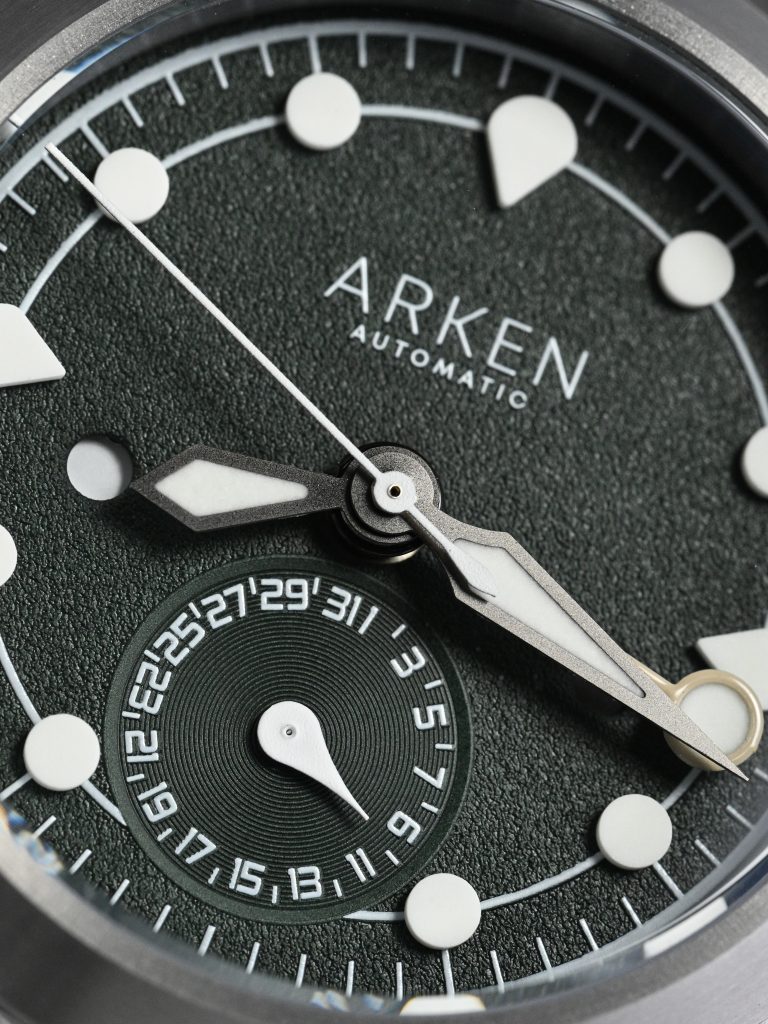
The obvious question is why they didn’t use the Miyota 9075. The main answer is likely timing: this module predates the broad availability of the 9075, so they developed the Alterum around the thinner and proven 9015. But even if the 9075 had been available, it would not have been a direct shortcut. The 9075 is built around a 24-hour GMT display and independently jumping local hour hand. To create the Alterum’s exact layout, Arken would still need to convert that into a 12-hour home-time display, add two AM/PM indicators, and retain the pointer date architecture.
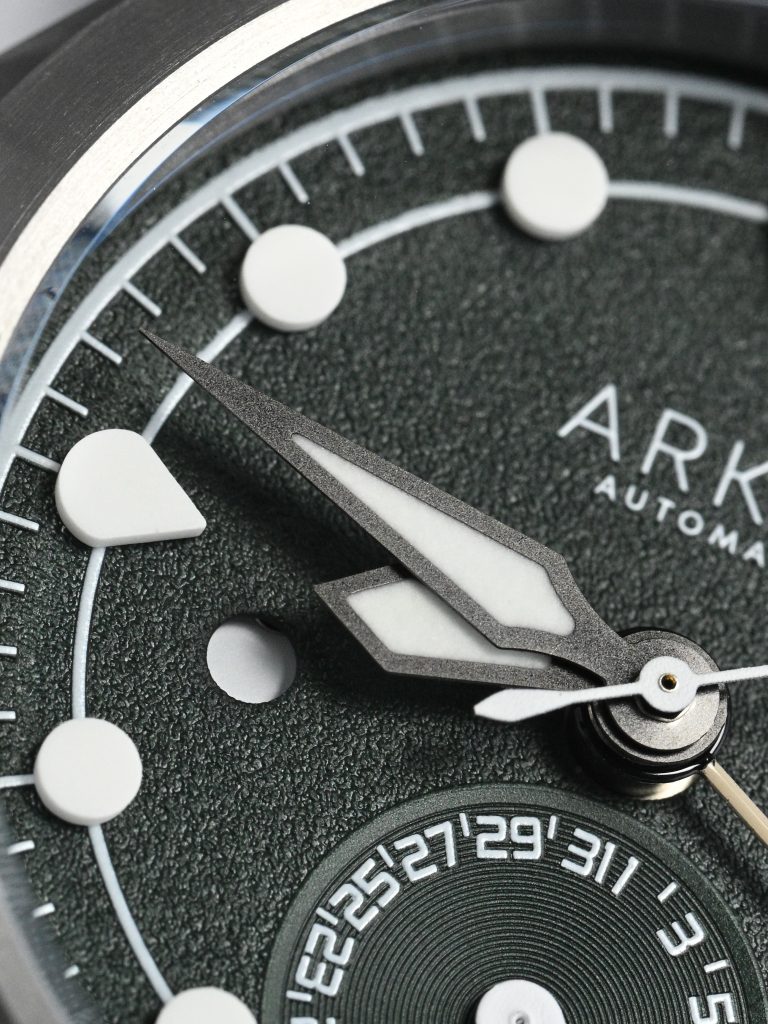
In spirit, this sits in the same genre as Patek Philippe’s Travel Time and Vacheron Constantin’s Dual Time complications: two central hour displays, day/night context, and a travel-oriented date. But here, that idea is executed through a clever affordable module rather than an integrated high-end calibre.
Amazing Lume
The lume is one of the strongest parts of the Alterum for me, and it also plays a major role in giving the dial its sense of depth. The large applied lume blocks are are integral to the architecture of the dial. They sit proud of the surface, catch the light well, and give the watch a more layered and technical look than a flat printed dial would have.
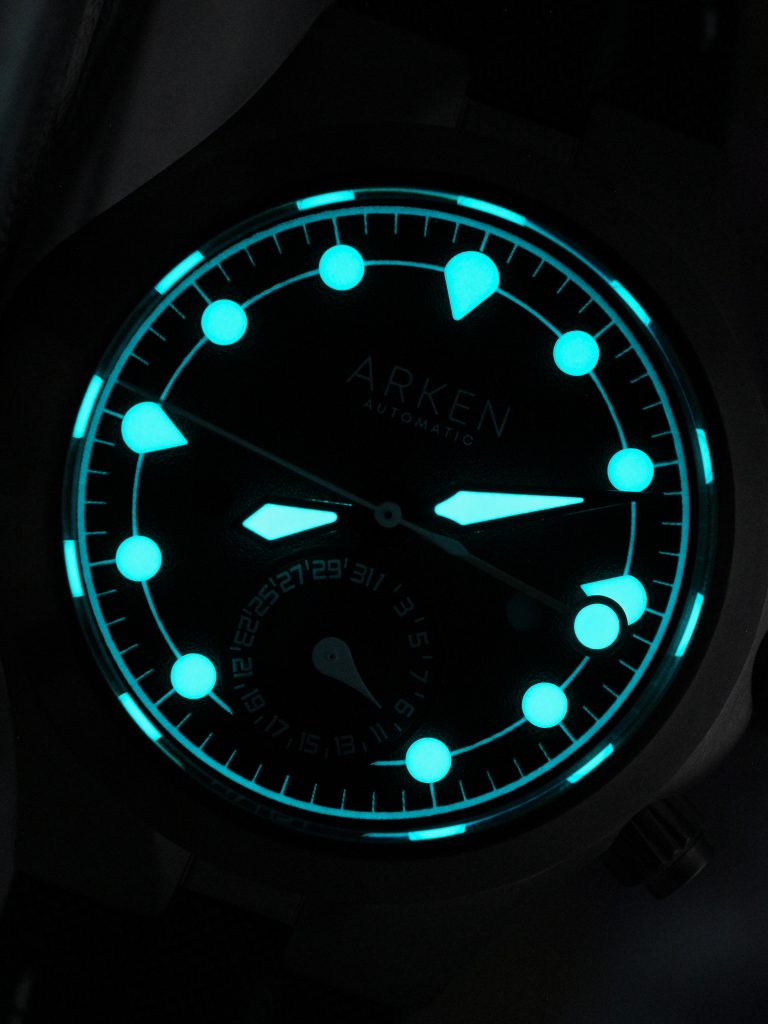
Execution is very good. The blocks are cleanly shaped, evenly finished, and free from the rough edges or distortions you sometimes see on larger luminous elements. The hands and other lumed components are also reasonably well calibrated to the hour markers, so the dial looks cohesive in the dark rather than feeling like a mix of mismatched luminous materials.
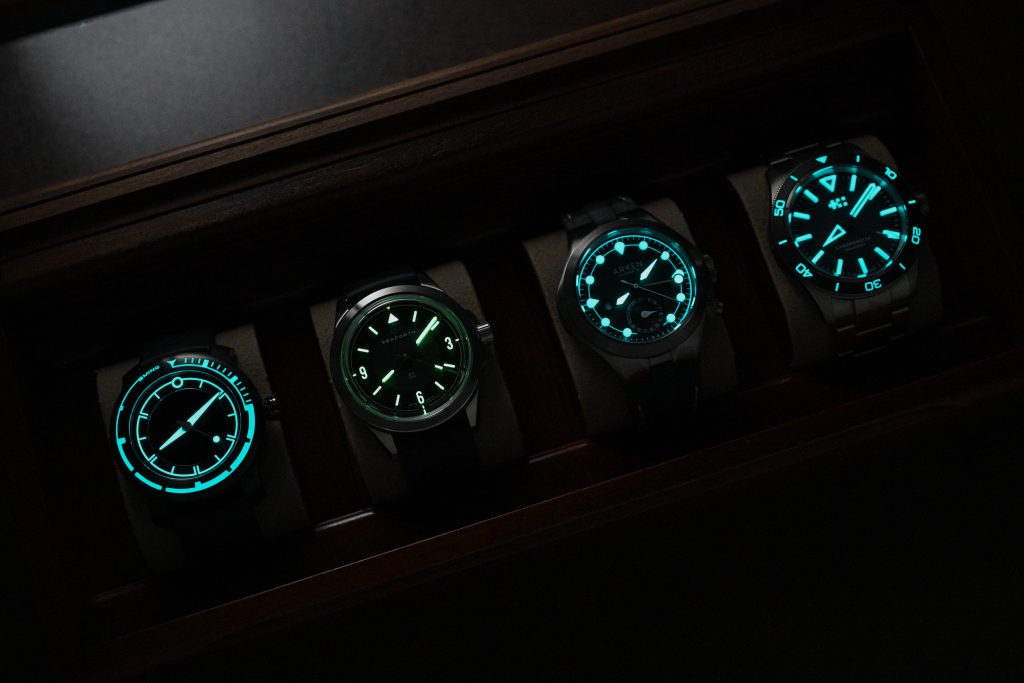
Performance is strong too. I compared it against some of my better-lumed watches, including the MING 18.01 H41 and Christopher Ward Trident Lumière, and the Alterum holds up surprisingly well.
Conclusion
The Arken Alterum is one of those watches where the hype makes sense once you handle it. The proprietary module is interesting, the titanium case is well designed, the lume is excellent, and the overall quality control is far better than I expected for the price. More importantly, the watch feels properly built rather than merely assembled from a strong spec sheet.
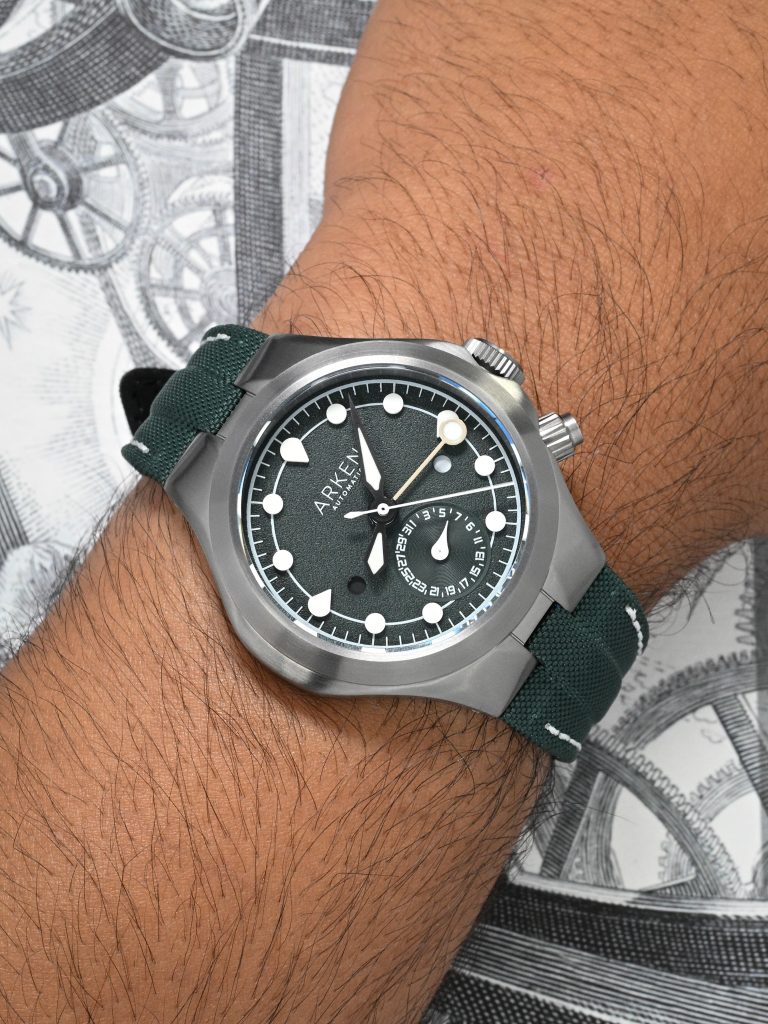
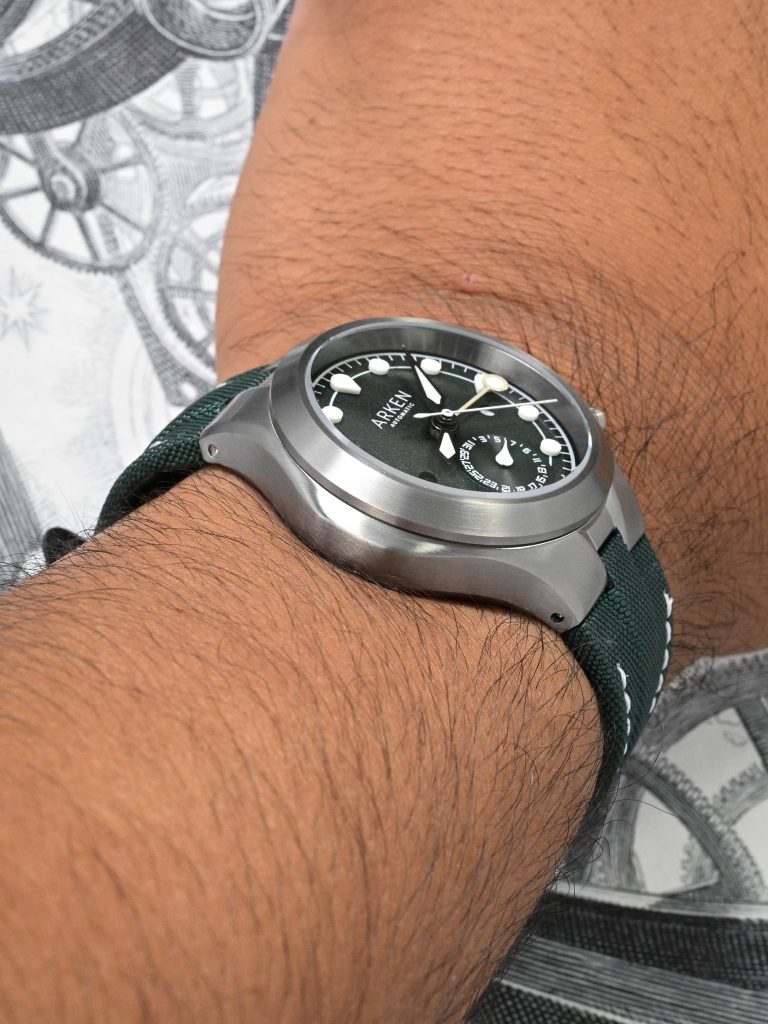
It is not perfect. The proprietary strap system means the strap experience matters a lot, and on my example, the oversized floating keeper is one of the few things I would change. The integrated strap also makes the watch wear larger than the case dimensions suggest, so wrist span matters more than the headline measurements.
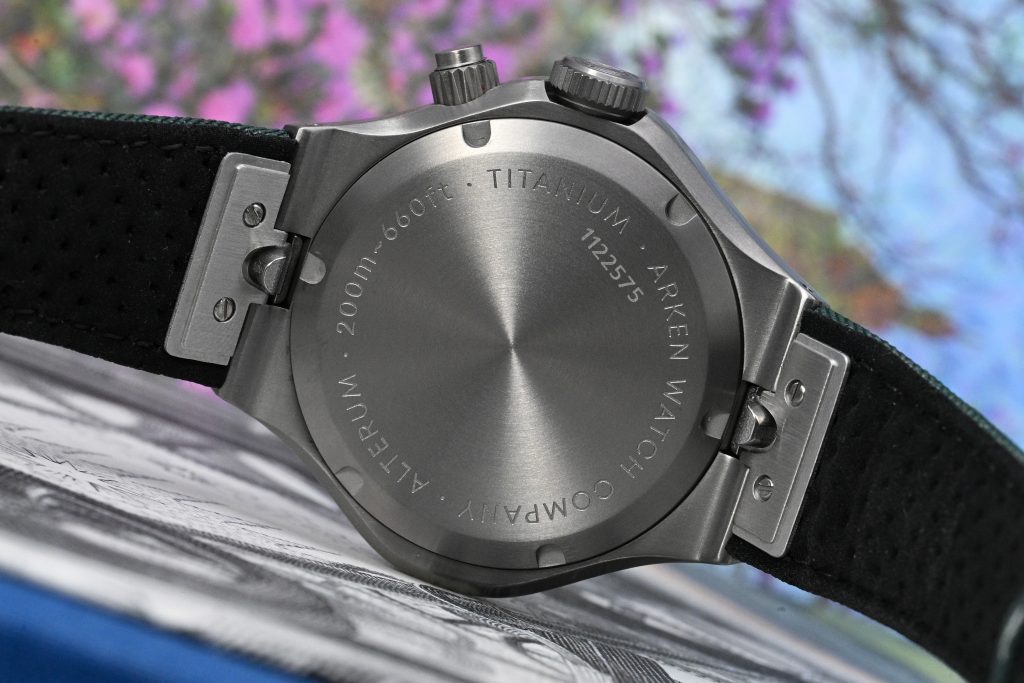
But taken as a whole, this is a very compelling watch. At $995 including tariffs, the Alterum delivers a surprisingly high-end overall experience on the wrist. The hype is entirely justified, and I’m genuinely looking forward to seeing what Arken does next.