Disclaimer: this video/review was not sponsored by Peacock or any other entity.
Video
Reconsidering Chinese Watchmaking
Chinese watches have carried a bad reputation for decades, and honestly, a lot of that was justified. Unreliable movements, poor build quality, awful quality control and derivative design language were all real problems for a long time. But continuing to judge Chinese watchmaking only through that older lens means missing what has changed over the last decade.
The reality is that Chinese manufacturing is already embedded in the Swiss watch industry. Many mid-tier Swiss luxury brands rely on Chinese suppliers, or their own Chinese manufacturing, for components. Chinese CNC can be exceptional when sourced correctly (your iPhone is a great example of this), and each supplier offers different quality grades. Microbrands have been my proxy for this for years, and the better ones now produce cases, bracelets and clasps that often exceed what some mid-tier Swiss brands deliver. This is primarily because bigger conglomerate brands will often select a lower quality grade of component to price optimize at scale, whereas it is easier for a micro-brand to go with a higher quality grade and settle with smaller margins. I’m not a fan of AliExpress homages, but a San Martin case or bracelet can easily embarrass a Hamilton costing two or three times more.
Witness This
Chinese tourbillons have their own baggage. I’ve handled a few over the years and was rarely impressed beyond the basic fact that someone could make a tourbillon for a few hundred dollars. Macro photography usually ended the conversation for me quickly. The Arcturus tourbillon I reviewed years ago, powered by a Peacock movement, looked fine and worked fine, but up close it explained exactly why it was a $1000 watch. On the other end of the spectrum, I have reviewed and photographed a couple of tourbillons, like the Carl F. Bucherer Double Peripheral Heritage Tourbillon and the Sartory Billard CT12 Cronotempvs Tourbillon, both ‘Swiss Made’ and closing in on six figure territory.
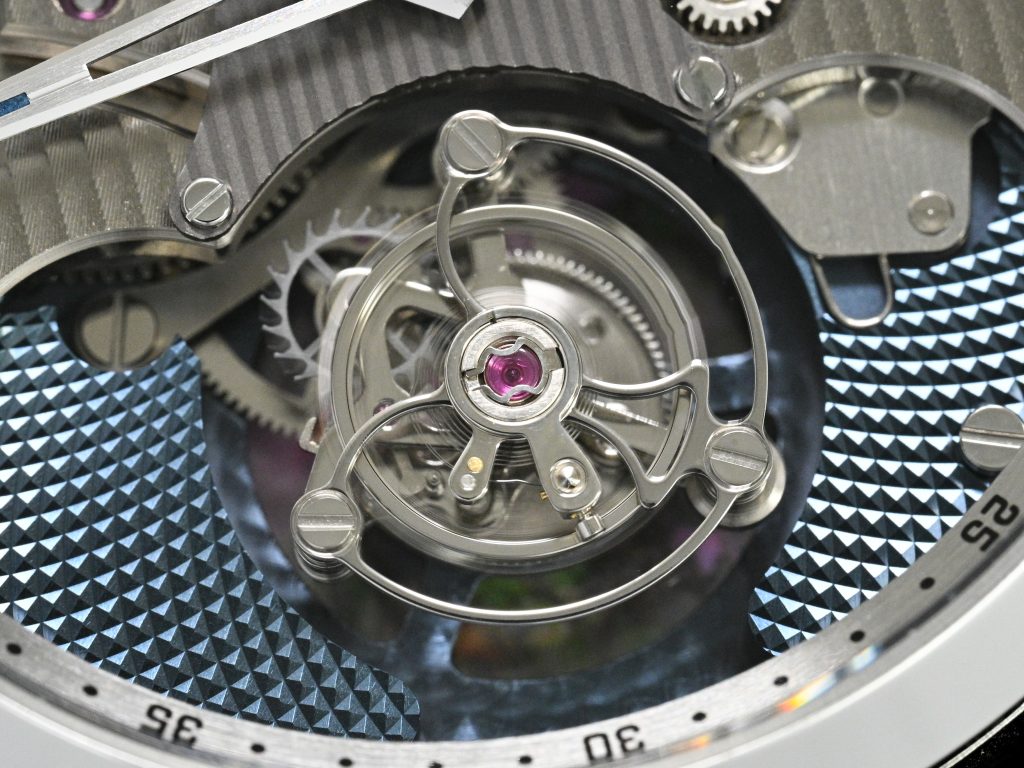
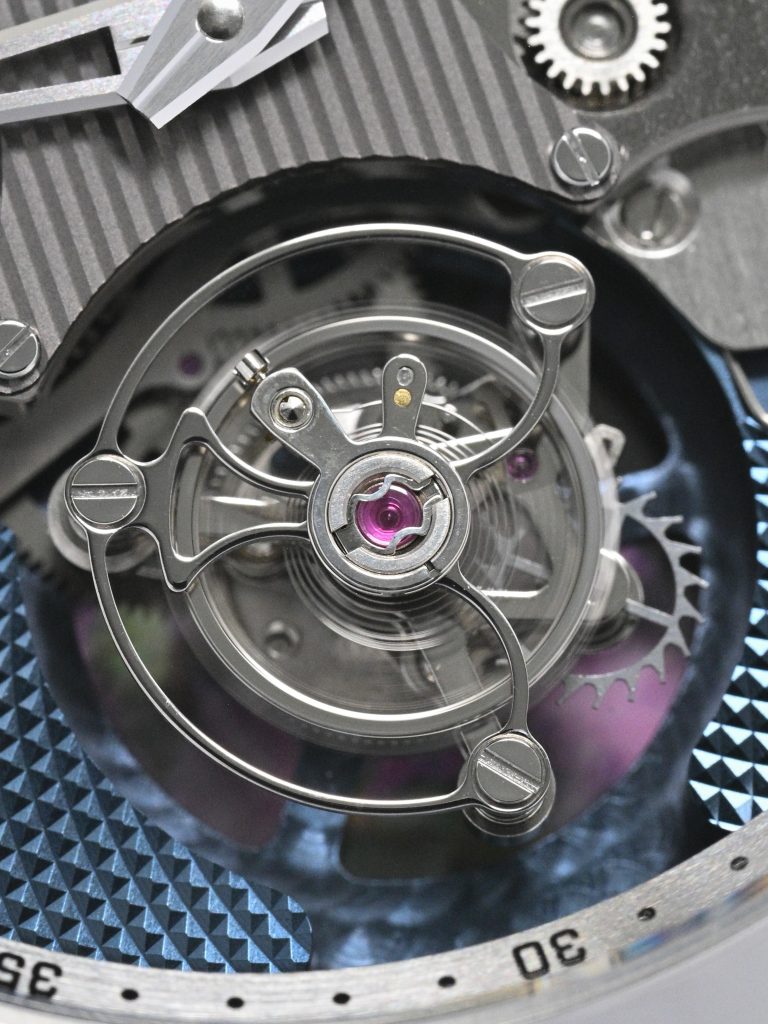
And to be fair, Peacock is not a new brand pretending to be a manufacturer either. It traces its roots to Dandong watchmaking in 1957, and its tourbillon catalog now spans everything from the basic SL5200 supplier caliber to the PAX9610A ultra-thin/free-sprung movement and the PAX9611 central tourbillon. The Witness uses the PAX9612, a more presentation-focused 6 o’clock tourbillon architecture that appears closer to the older SL5003DT lineage than the SL5200.
Case & Wearability
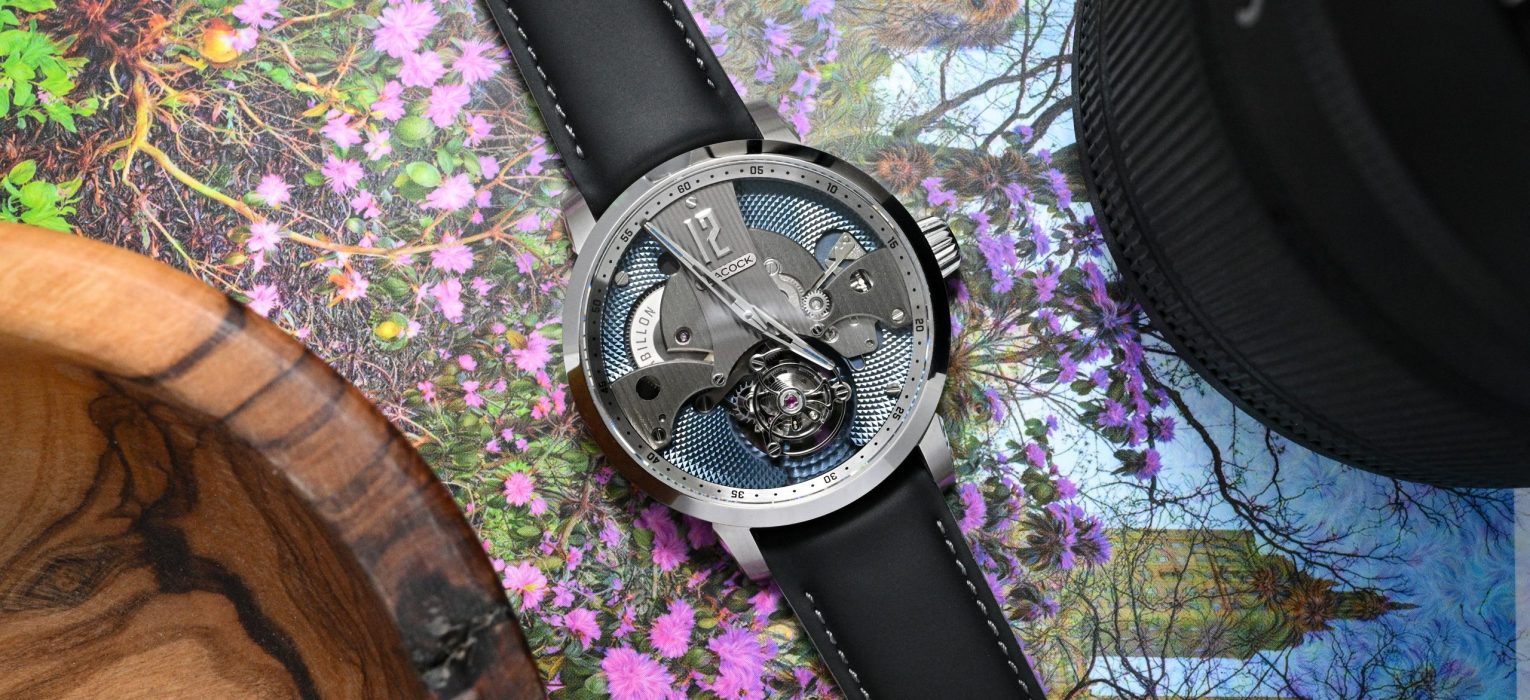
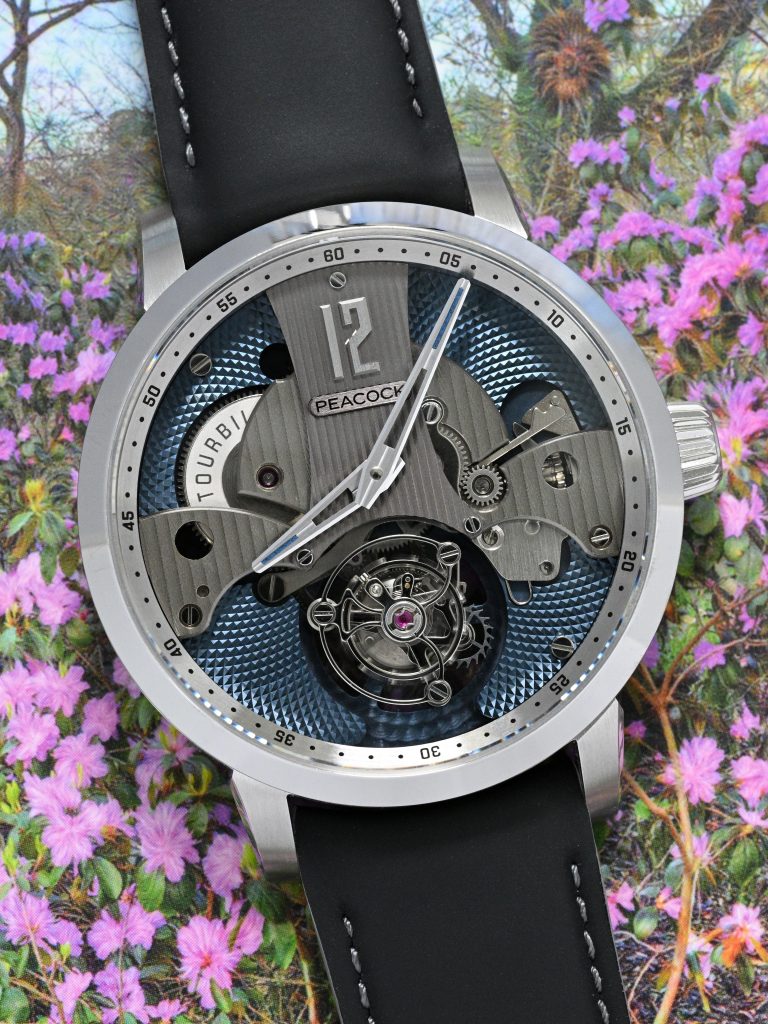
This watch measures 40.80mm in diameter, 48.3mm lug tip to lug tip and 11.2mm thick, with a 6.5mm signed push-pull crown, curved 20mm lugs and 50m water resistance. It weighs 63g head only, and 79g on this MING rubber strap with a steel keeper-less buckle. And the case is all 904L stainless steel. Peacock, I witness you loud and clear.
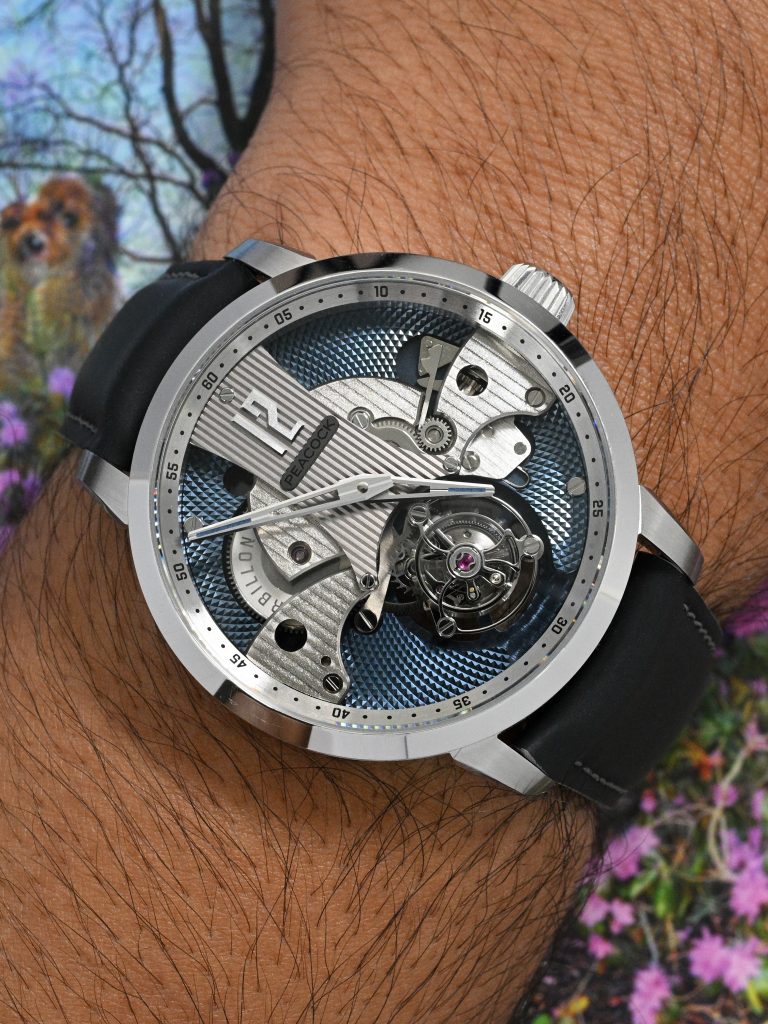
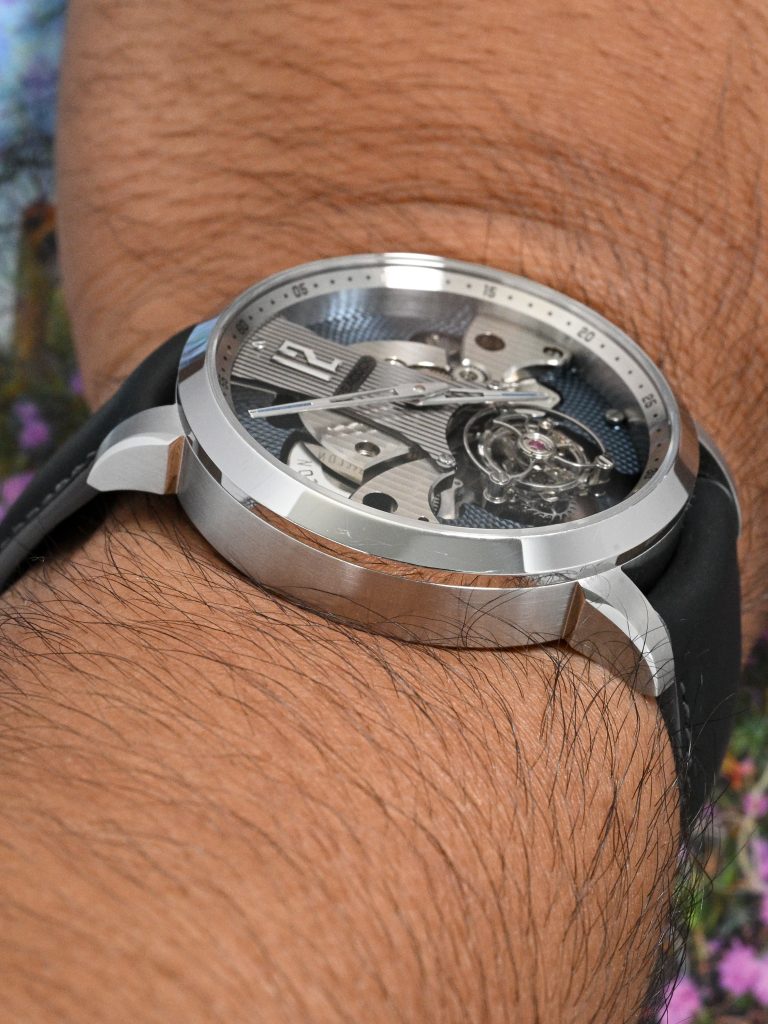
The proportions are slightly large for this kind of watch, but entirely manageable. The mid-case is about 6.5mm, with the remaining height distributed well between bezel and caseback, so it sits flat and comfortable on my 6.75” wrist. Stylistically, it reminds me of the Armin Strom Gravity Equal Force Ultimate Sapphire, particularly in how it combines open-worked mechanics with guilloché platines. But surprisingly, I think the Peacock wears slightly better, because the Armin Strom wears larger than expected.
Dial, Guilloche & Finishing
I admire Peacock for attempting this open-worked layout because it leaves very little room to hide poor execution. The brand says the dial or platine is engine-turned by hand, and I’ve seen promotional videos showing this. But I’m skeptical, especially after writing about guilloché and reviewing Atelier Wen Perception pieces where the human error is much more obvious.
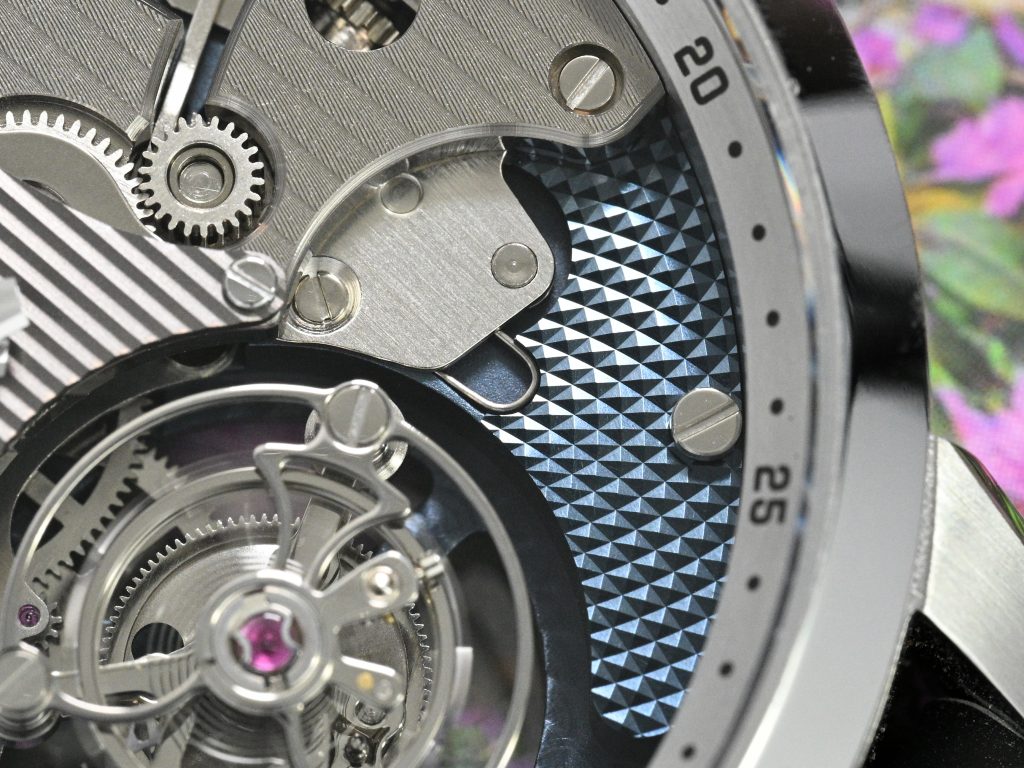
This Peacock is shockingly precise and feels more CNC-like to me. If it is genuinely hand turned, then I happily apologize and I believe Peacock deserves real credit. Either way, the result is excellent, with strong depth and light play.
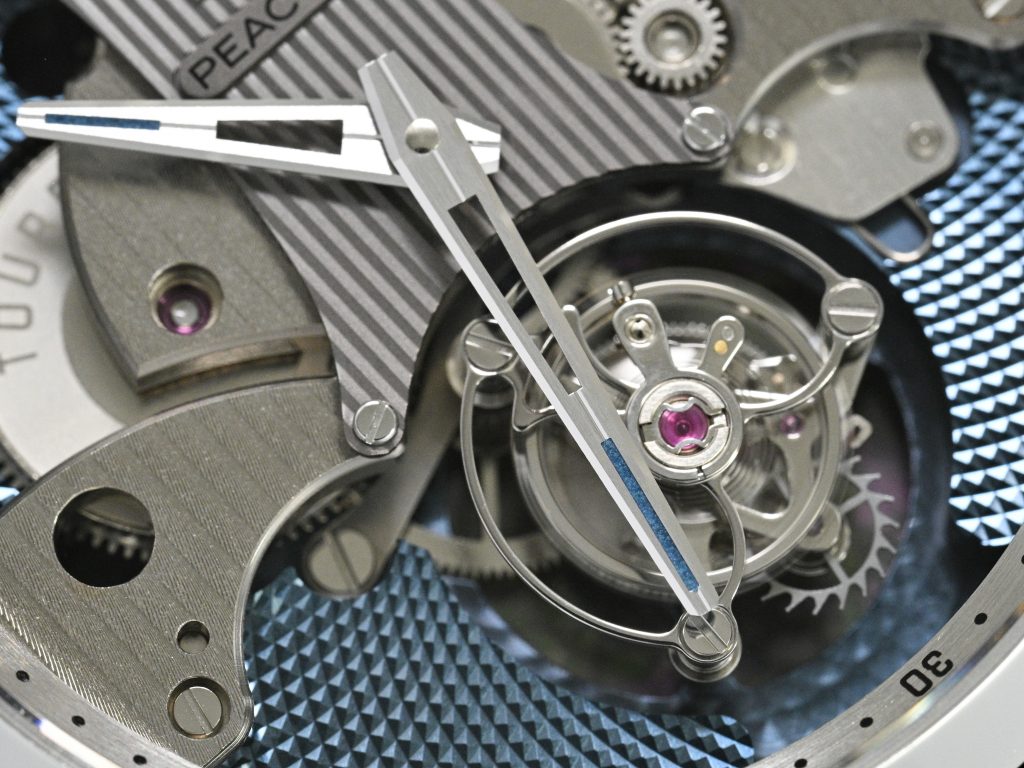
The hands are sharply cut, well machined and clean under macro. The slightly vertically offset hand stack creates useful asymmetry, and the minute dots expand near the bottom and compress toward the top to account for that layout, which I find to be appealing. There is lume on the blued sections of the hands, but the lume is extremely weak and its best we pretend this watch has no lume at all.
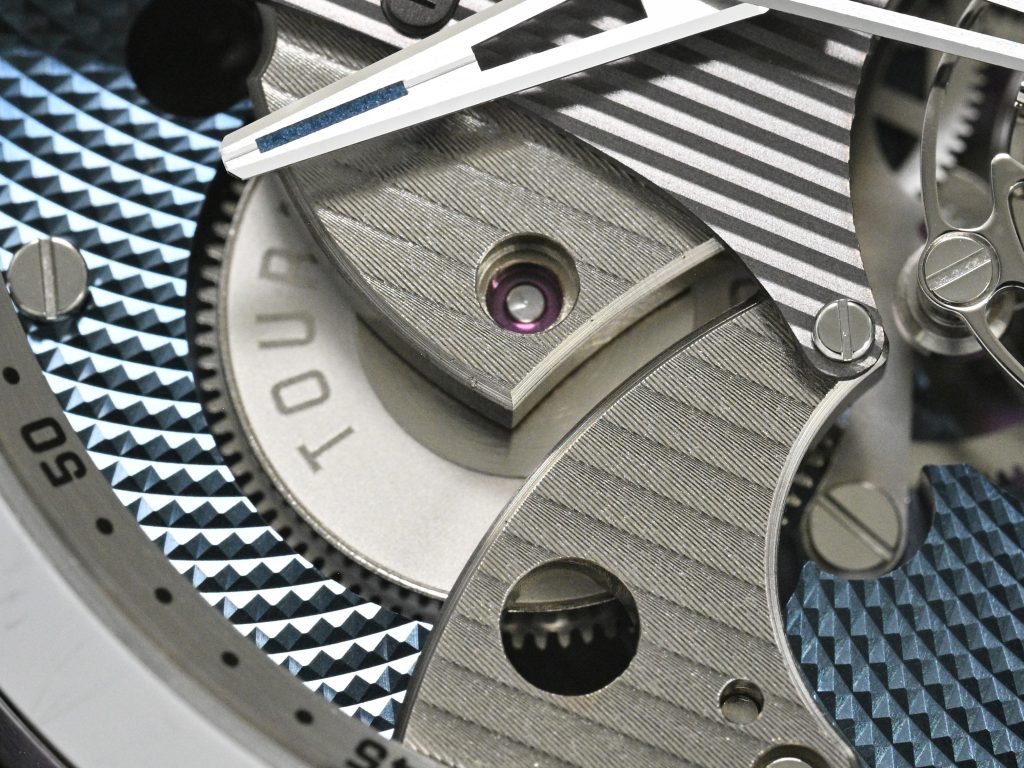
The rest is not high-independent finishing, but the black-polished screws, machine-cut anglage, Chinese-style Côtes de Genève, patterned vertical plate, applied 12 and nameplate are impressively clean. Peacock, consider your excellent work formally witnessed.
Movement
The tourbillon cage and escapement are where Peacock has clearly tried to move beyond the cheap-tourbillon category. The Etachron-style regulator is an eyesore if you are a movement purist, but at this price I cannot complain, and Peacock’s newer free-sprung tourbillon direction is encouraging. My cage is clean with only minor dust/debris, and the watch is running around +7 seconds per day after 2–3 months with no issues.
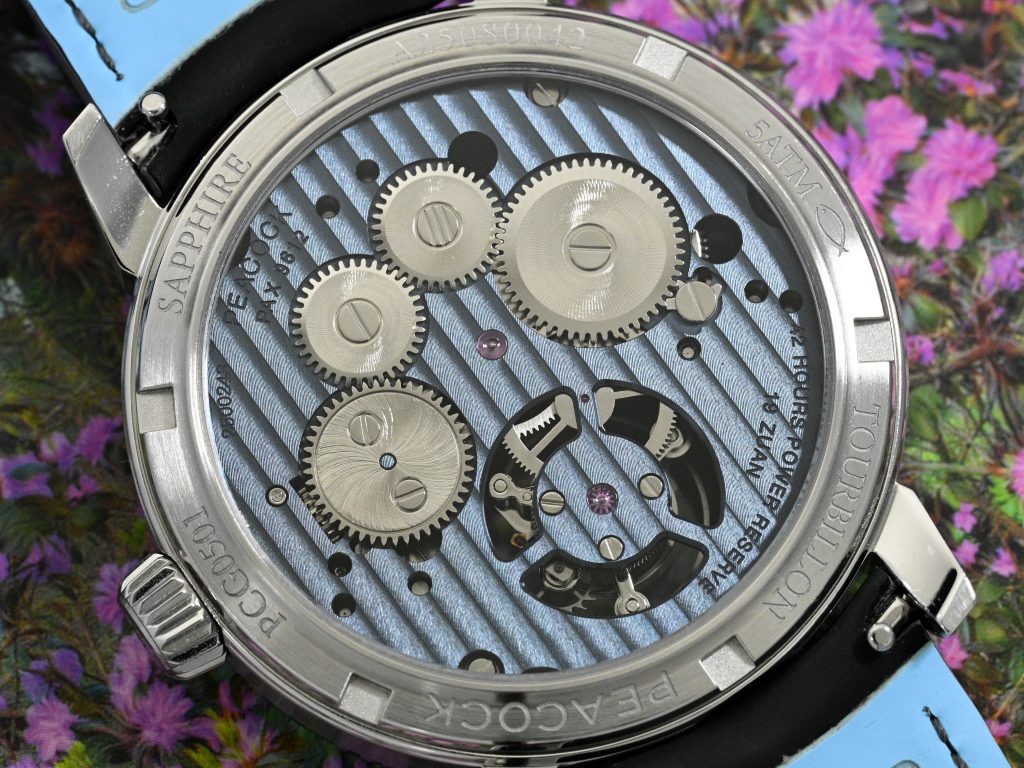
The caseback shows more machine-finished components, with Chinese-style Côtes de Genève and some wheel finishing that does not feel Swiss in the traditional sense, but has its own tactile almost-hand-engraved-looking quality.
Verdict
This is not haute horology like a $100,000 Breguet tourbillon, and I do not have the tourbillon experience of someone who lives with these complications constantly. But I have extensively photographed a few pieces, so I have some sense of what no-budget tourbillon execution looks like.
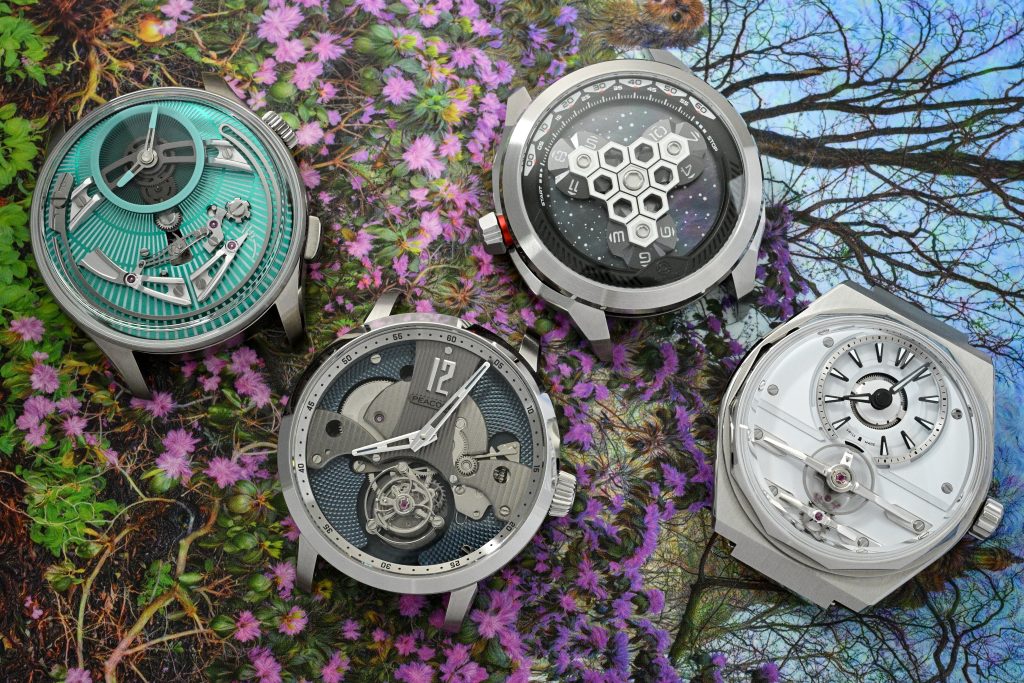
And my takeaway is that this Peacock feels much closer to a $10,000 Horage tourbillon experience than a $400 Chinese tourbillon. Time will tell on reliability, but that should apply to Horage too. And since I have been unusually positive about this watch, I should clearly state that I bought this myself, have no relationship with Peacock, and any praise here is entirely my own.