Disclaimer: This watch was sent to me to review, and I do not need to return it after my review is complete. This watch was given to me without restriction and is not contingent upon a particular outcome for my review. All opinions here are my own, and 1776 Atelier, Hour Precision had no influence over the opinions stated here.
1776 Atelier Mount Vernon: https://1776atelier.com/watches/mount-vernon-aventurine
Hour Precision: https://hourprecision.com
Klok Work: https://www.instagram.com/klokworkllc
Video
Review
1776 Atelier is one of the more compelling young American independents to emerge in the past couple of years because they’ve built their brand around the harder, less glamorous work of actually advancing the state of American watchmaking. The name is doing some of that signaling up front. “1776” is an overt nod to the country’s origin story, but it’s also a mission statement: build capability here, expand what can be made here, and do it in a way that collectors can realistically participate in.
The brand was founded by Jason Lu, a self-taught watchmaker who has spent years learning by proximity, absorbing ideas from accomplished watchmakers and engineers across the U.S. and Germany, including time spent around the DK Precision Mechanics ecosystem. I’ve also met Jason in person, and what stood out immediately was how humble he is. He’s extremely passionate about watches, but is especially motivated to build great watches while creating as much value in America as possible. And that humility isn’t performative: after about twenty minutes of pestering him, I realized he’s doing far more than the public-facing role. He handles most of the hand finishing, something that isn’t emphasized on the brand’s website, but feels very much worth mentioning in this category of watchmaking.
The other half of the story is Zach Smith. I’ve been following Zach on Instagram for years, and he’s earned a deep level of respect from me because his approach to “making stuff in America” is refreshingly practical too. He’s an engineer, a Certified WOSTEP watchmaker, and a manufacturer. Zach runs Hour Precision, but he’s also a formal partner to Jason within 1776 Atelier, and his work has helped bring all of the brand’s watches to life, including their excellent new release, the Montpelier.
If you ask me, there’s a real difference between building an “artisanal” watch in America for $70,000-$100,000 and building a sustainable watch brand that meaningfully elevates the state of watchmaking here: for both the people making these components and the people buying the watches. I think creators like Jason Lu, Zach Smith, Roland Murphy at RGM, and brands like SeL may ultimately do more to reshape American watchmaking than a boutique maker catering to the 1% of the 1%…but hey, that’s just my opinion.
Within the current lineup, the Mount Vernon is the brand’s most successful product, and it feels a bit like an appetizer for what’s coming. It’s where you can start to see how real value is created when components are manufactured domestically; and then finished correctly, beautifully, and at a price that doesn’t automatically exclude most serious enthusiasts.
The watch on hand here is the Mount Vernon Aventurine, fitted with upgrades including American Gun Scroll Engraving (+$1600) on the movement (done by Klok Work, also in the United States) and Triple Snailing (+$375) on the crown and ratchet wheels, bringing the total price of this configuration to $6,075. The standard Mount Vernon, with more traditional finishing and no engraving, starts at $3,900, and even in that form, the movement still carries a meaningful amount of hand work, and looks genuinely impressive for the category.
Let’s check it out!
Movement
I typically discuss the movement towards the end of my reviews, but with this piece, the movement is the reason you buy this watch, the movement shows off what the brand does best, and the movement gives you a true taste of what the brand can do. Powering the watch is the hand-wound Caliber 621.1788, built on the familiar Unitas/ETA 6498 architecture: a big, simple, traditional layout that is still the foundation of some of the most impressive indie watches on the market today. It runs at 3Hz with a 48-hour power reserve, and keeps the classic small seconds at 6 o’clock.
The main-plate and bridges are manufactured in Ohio by Zach, with Hour Precision functioning as the brand’s in-house movement manufacturing capability, while the majority of the hand finishing is executed by Jason in Texas (with some overlap in duties, since Zach is also a watchmaker).
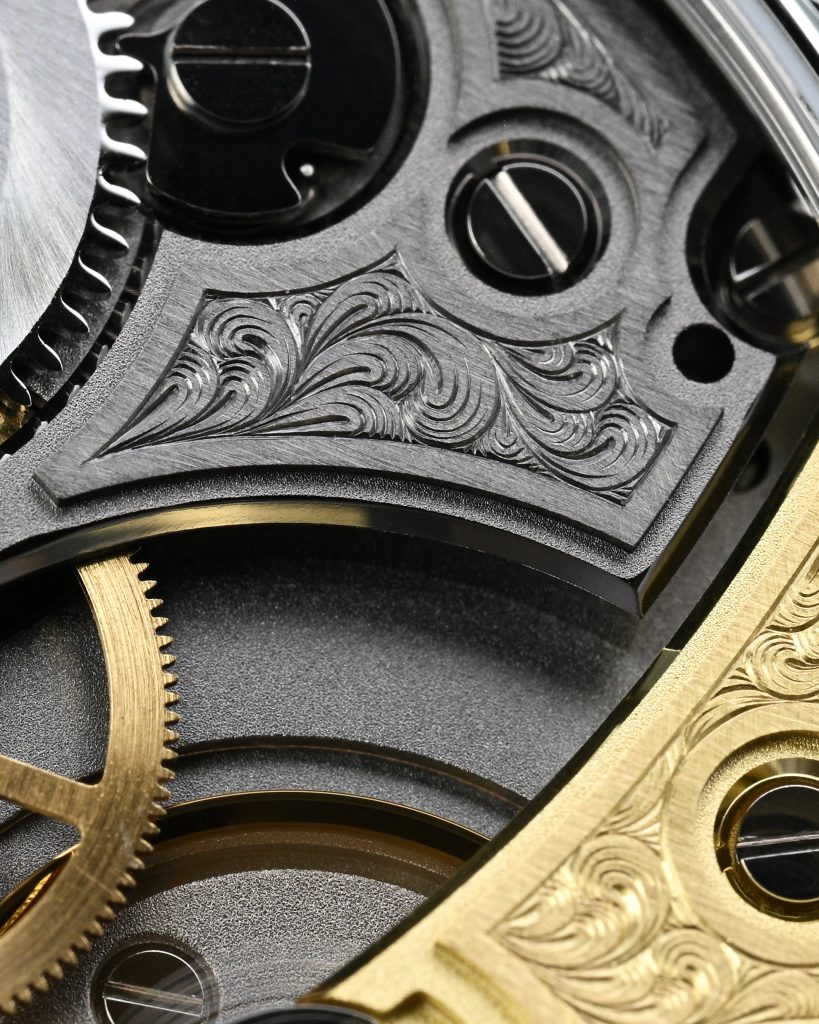
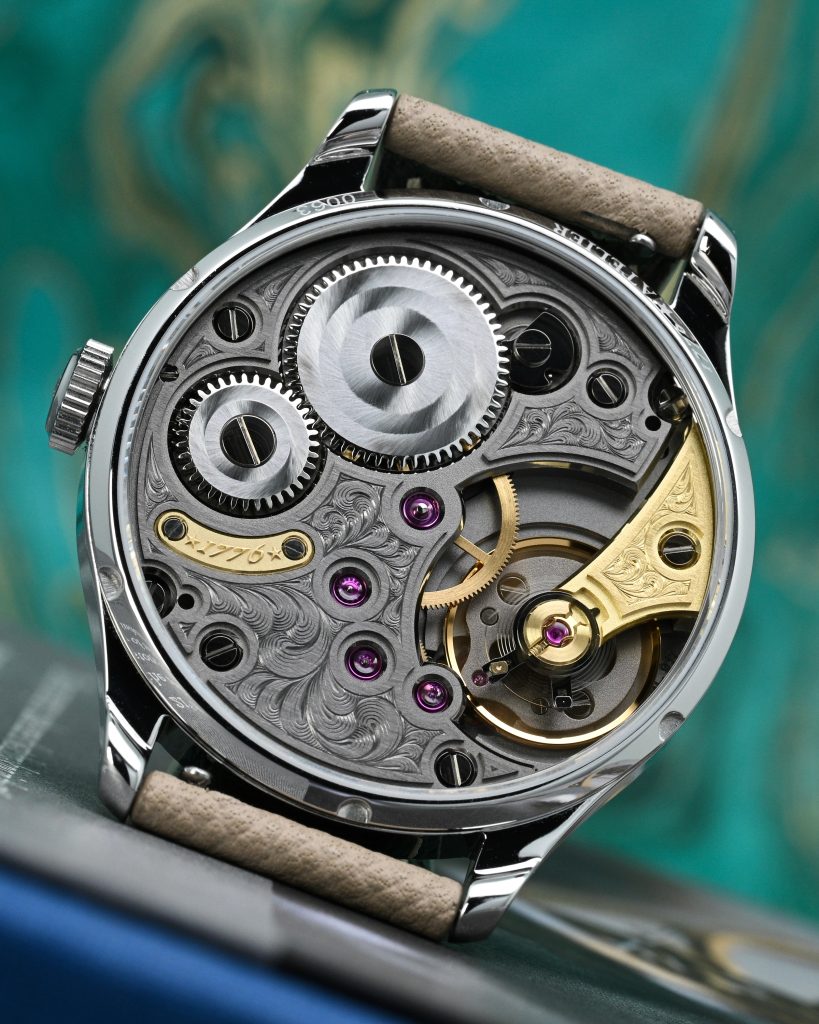
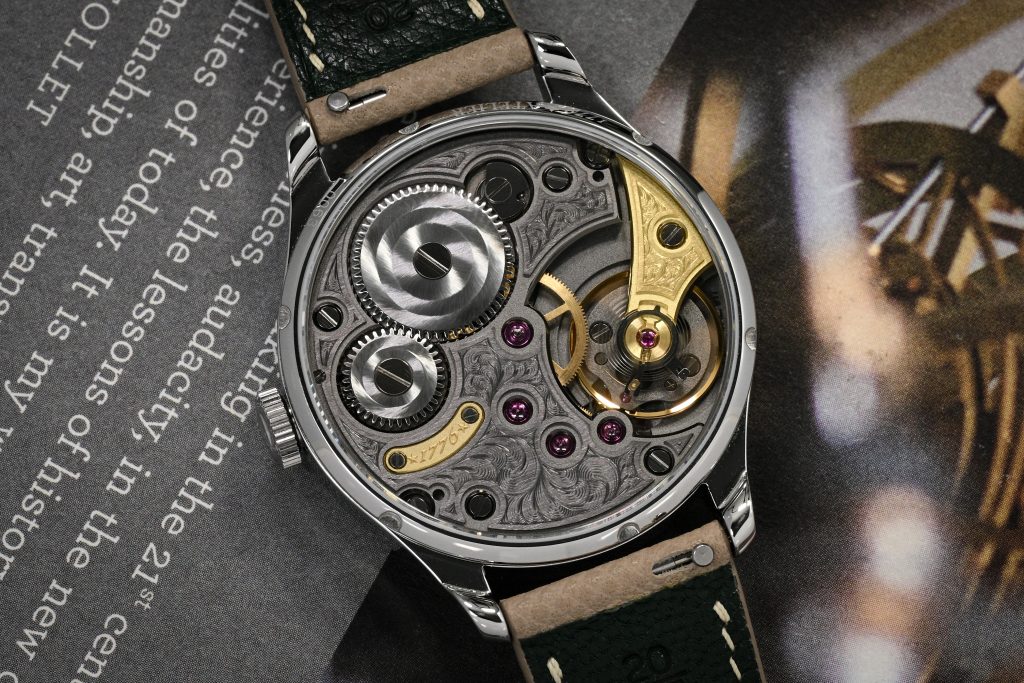
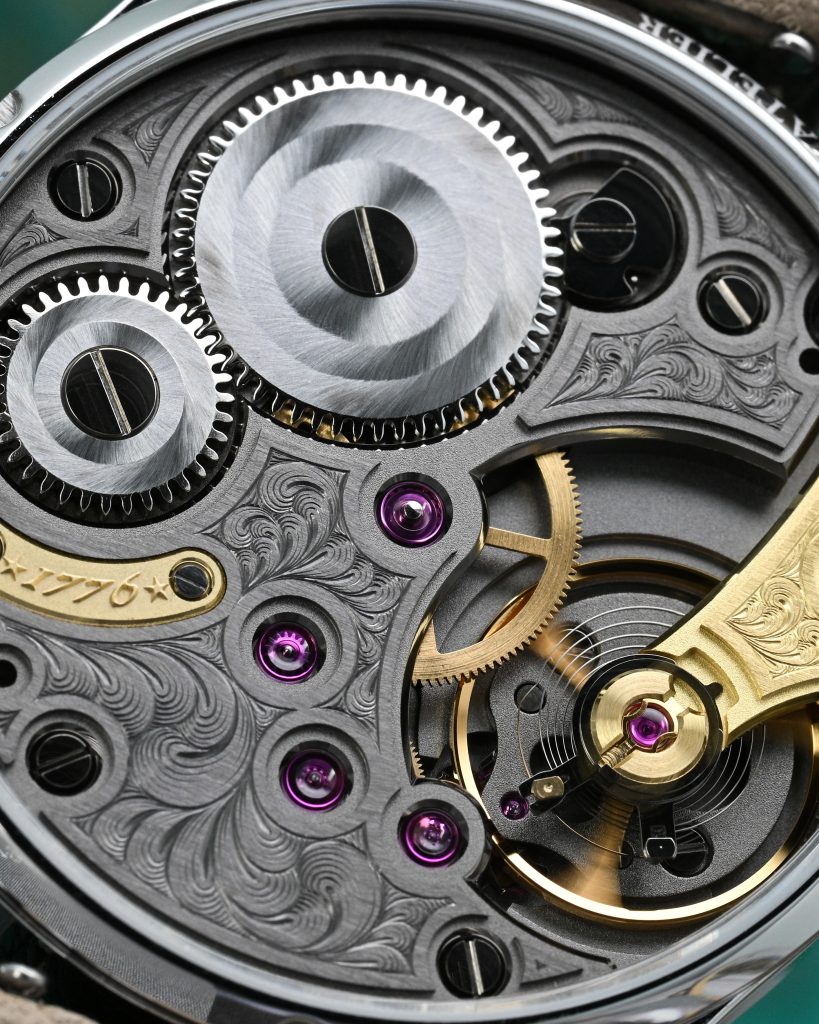
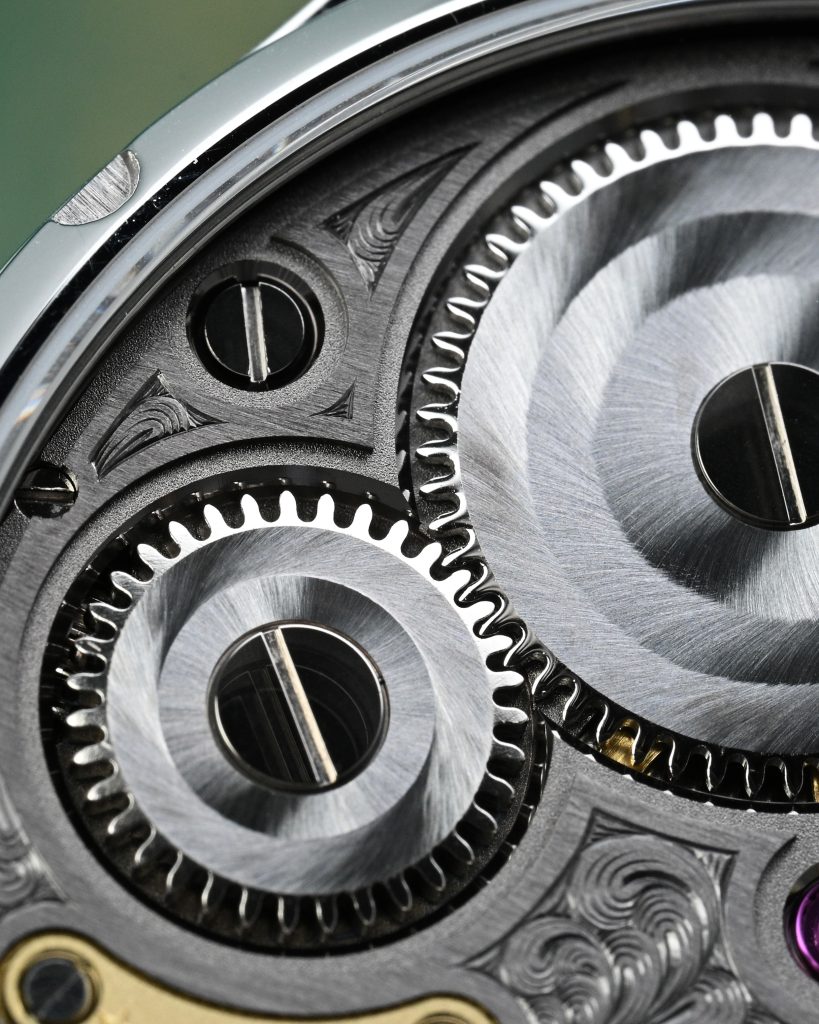
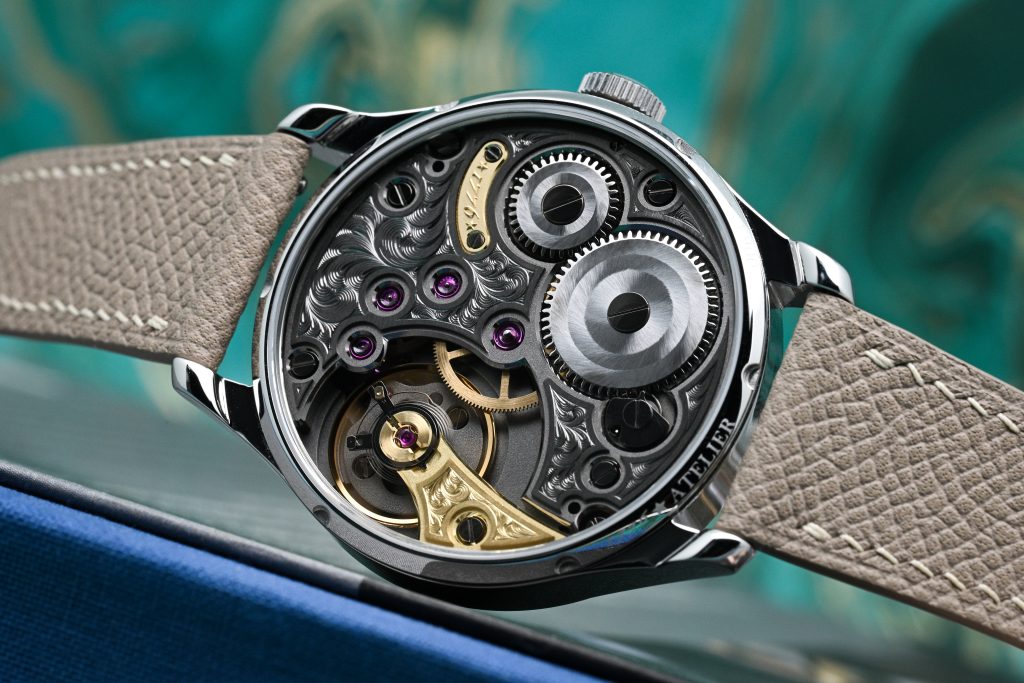
Visually, the movement leans hard into contrast: with a black rhodium main-plate, paired with rose gold-finished elements including the balance bridge, nameplate, and parts of the gear train. All the screws are black polished, and even though the dial is made of Aventurine, the movement delivers a more dynamic visual experience. There is also hand-executed anglage on all exposed edges, graining on the gear train and a matte finished movement base.
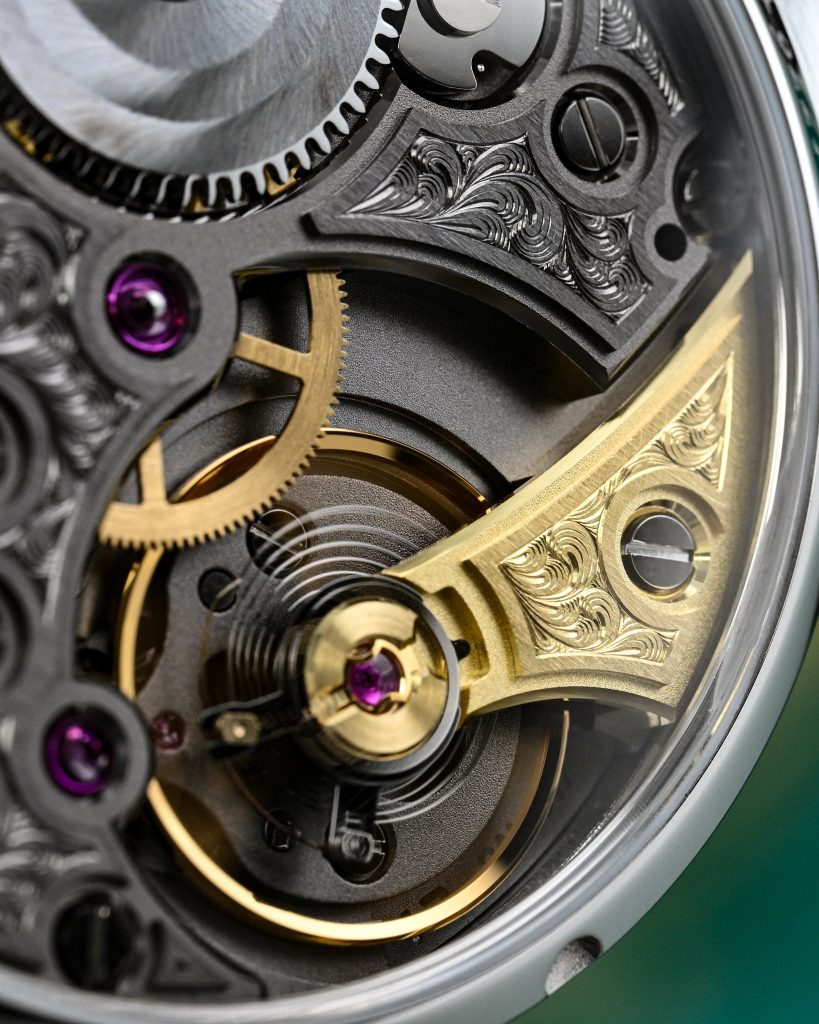
Here, the most notable aesthetic upgrade is the American Gun Scroll engraving option. The team described that pattern as taking roughly two to two and a half full days of engraving work, carved scroll-by-scroll so each example ends up slightly unique.
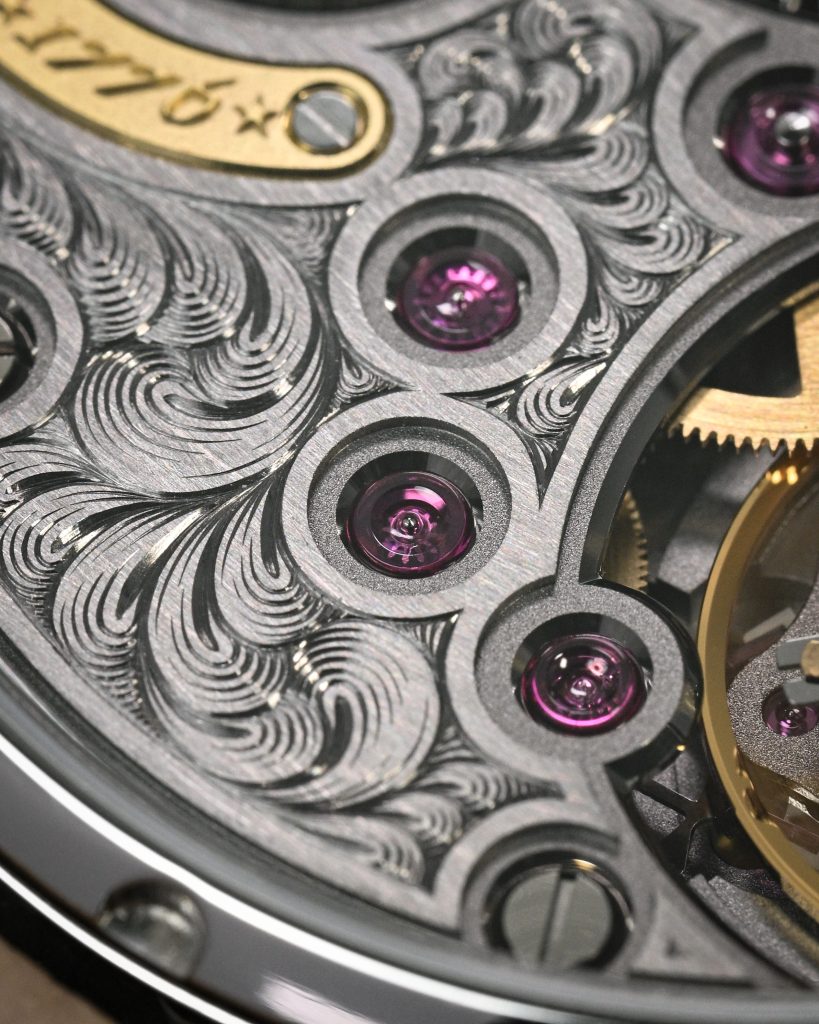
Beyond the engraving itself, the finishing details are where the movement starts to feel more serious than its price might suggest: there are three interior angles that are executed entirely by hand using traditional methods.
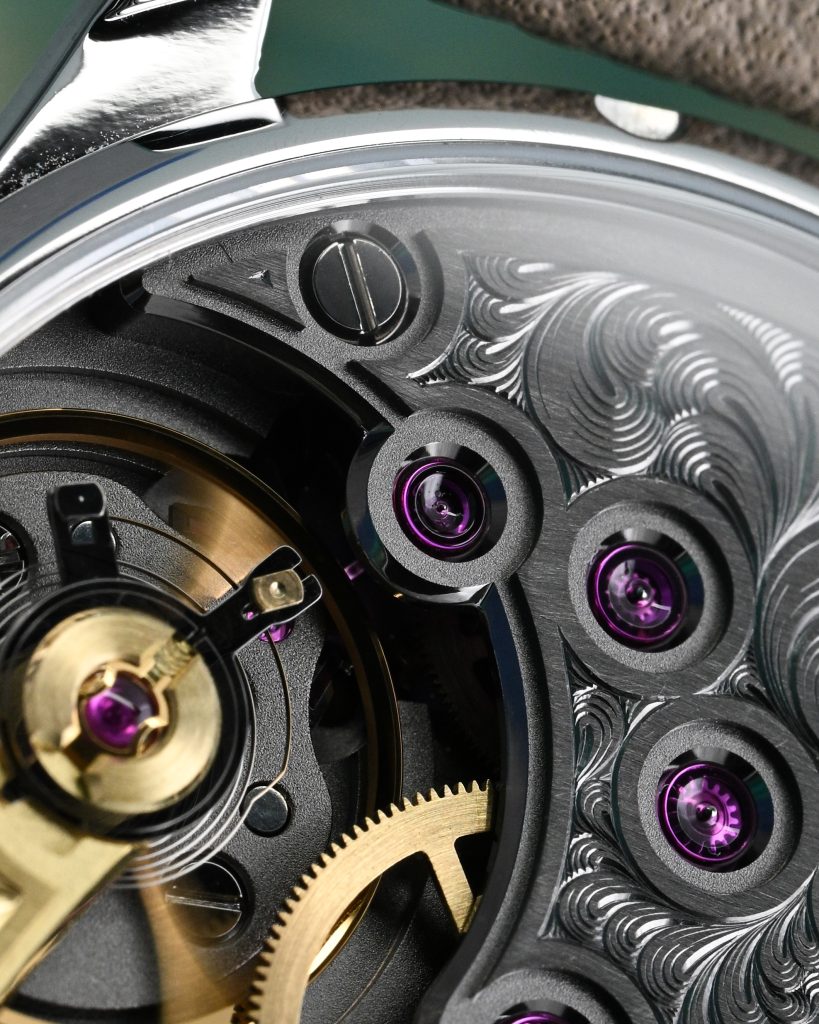
The separation between finishes is also deliberately emphasized, including a contrast between mirror-polished bevels and adjacent surfaces that are kept satin or frosted and sharply defined. And that creates an incredible sense of depth and detail, particularly when looking at it up close. Finally, this piece features snailing on the winding wheels, with polished teeth – triple snailing to the ratchet wheel and the crown wheel remains double-snailed due to its size. In terms of timekeeping, this movement was running at a very healthy and accurate +3 spd.
And importantly, this isn’t where the story ends. 1776 has already shown what it can do when it steps beyond the familiar 6498 template with the Montpelier, which brings a more intricate, proprietary architecture to the table, a skeletonized three-quarter bridge and balance bridge, and a finishing spec that reads like a clear step up from the Mount Vernon while still leaning on the same core strengths: Hour Precision’s manufacturing capability and Jason’s bench work. But this time also enlisting DK Precision Mechanics. Even more ambitious is what they’re developing in parallel: the brand has been openly working toward its own free-sprung balance, and has gone a step further by experimenting with a star-shaped balance design, which is a remarkably bold endeavor for a team this small.
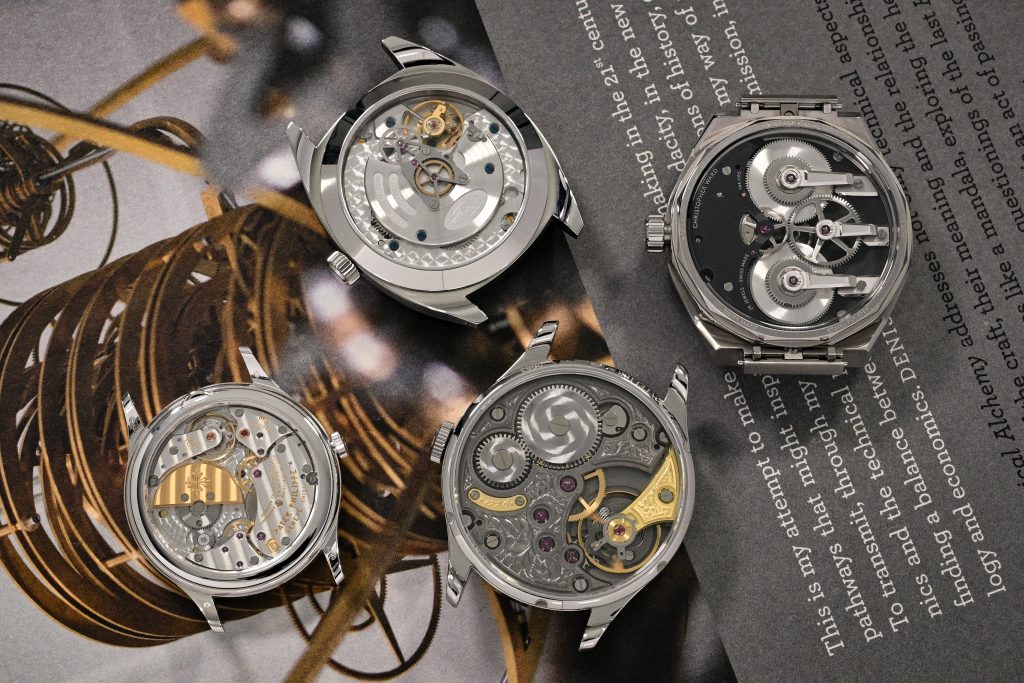
Since there won’t be any lume comparisons here, I thought it would be interesting to put this movement beside some other beautiful movements, such as the Patek Philippe Cal. 240, Habring A11GSP and Christopher Ward CW003. The Mount Vernon certainly makes a compelling case with just how attractive it looks, and even makes the Habring look a bit dull in comparison, even though I absolutely adore that movement.
Case
I measured the case to be 40.25mm in diameter, 48.5mm lug-to-lug, and 11.3mm thick, with a 20mm lug width, dimensions that make it a bit large for the genre it is in, but yet comfortable and surprisingly well balanced. This Swiss Made case is made entirely of stainless steel and feels solid and well-constructed. Where some brands use the case as a signature design element, 1776 Atelier plays it safe here. The silhouette is traditional and, in profile and proportion, reminiscent of watches like Laine’s V38, down to the fully polished, classically styled execution.
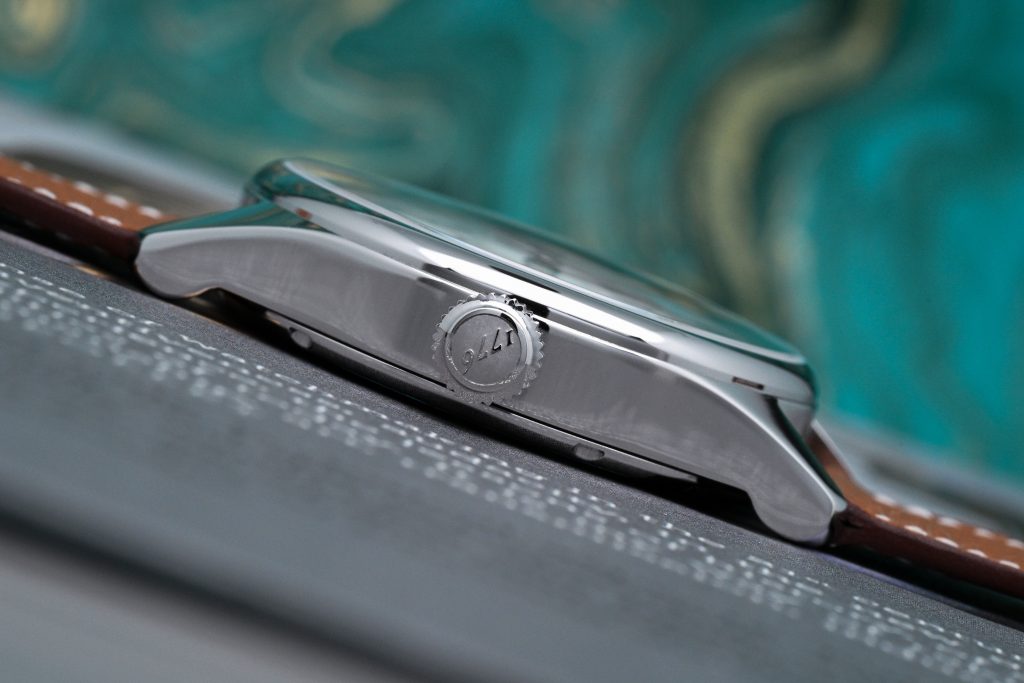
It’s a clean, dressy package: no sculpted mid-case, no contrasting brushing, and little in the way of distinctive geometry. The build quality and finishing is well done, but it feels more selected than designed. The 6.5mm push-pull crown at 3 o’clock is sized appropriately and signed. And while the design may not break new ground, it is handled competently. A domed sapphire crystal with anti-reflective coating keeps the dial clear, and the screw-in exhibition case-back shows off a movement that usefully fills the case footprint perfectly. Water resistance is 30 meters: unremarkable, but typical for this style of watch.
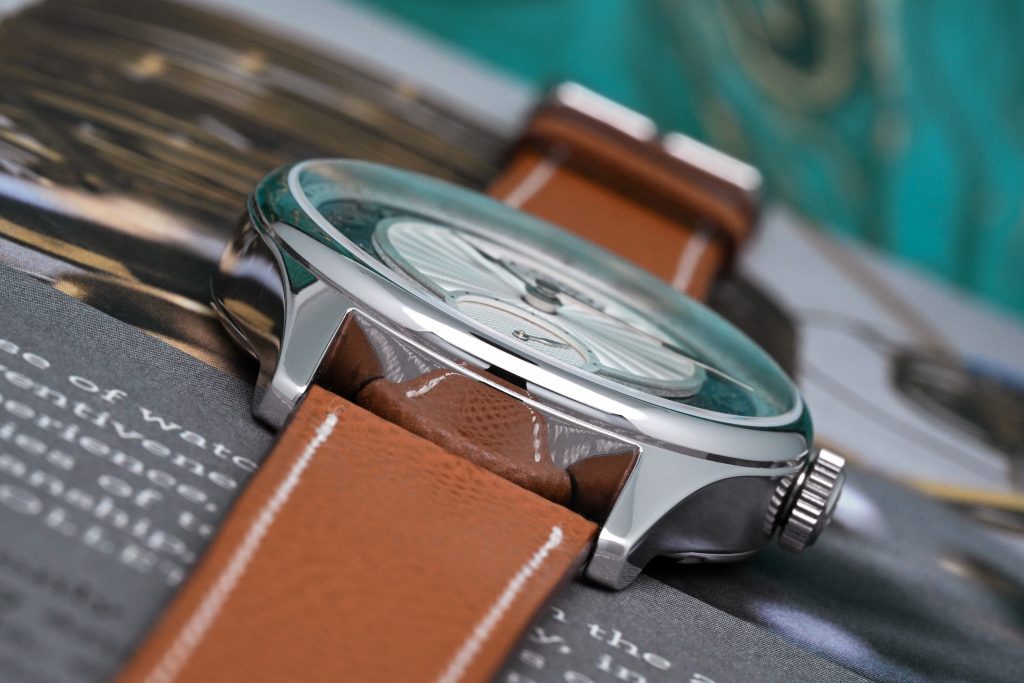
If you want the case to feel more personal, they offer hand case engraving as an up-charge, turning the otherwise conservative exterior into something genuinely one-off; but I believe the skill, effort and costs associated with hand engraving a case deserves a customer who will truly appreciate it.
Dial
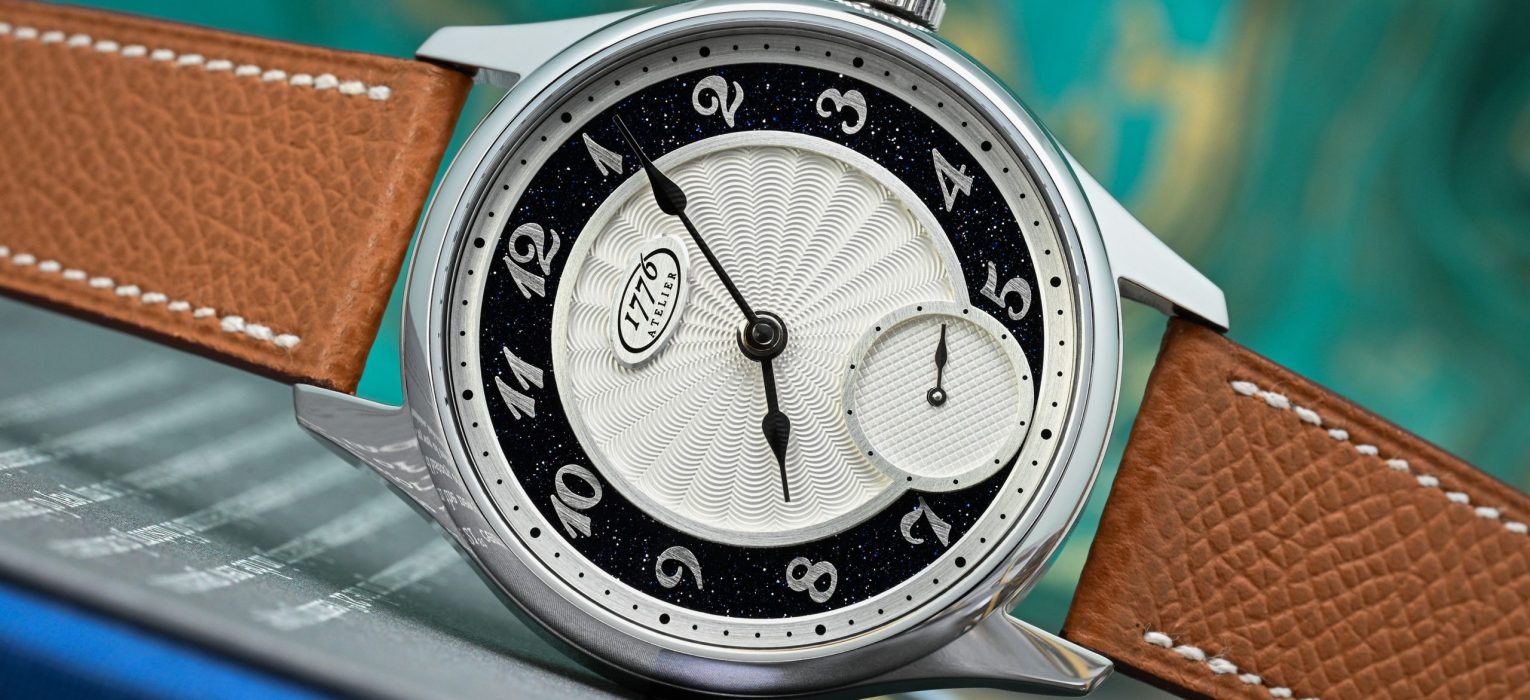
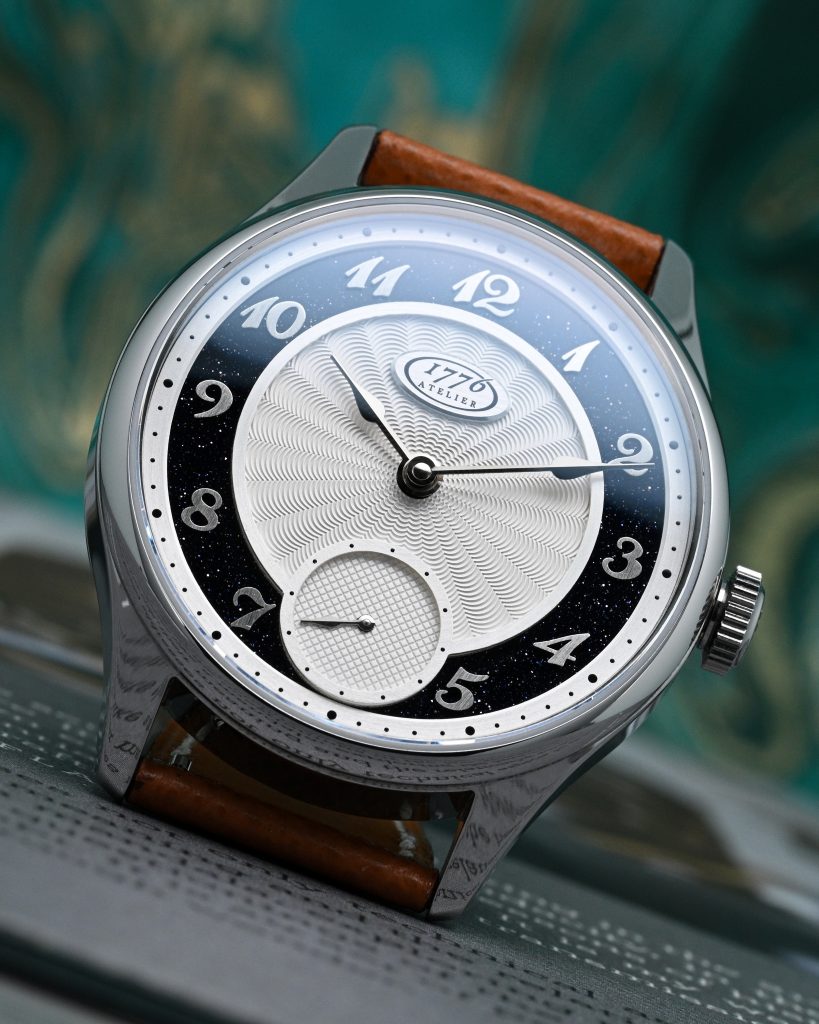
The dial design follows the well-trodden formula of independent watchmaking: a guilloché inner dial, small seconds at six o’clock, Breguet numerals, and an applied nameplate beneath twelve. That said, it is a very attractive layout, and perhaps why it has become somewhat of a classic template for watchmakers. This particular piece features their Aventurine and guilloché dial combo.
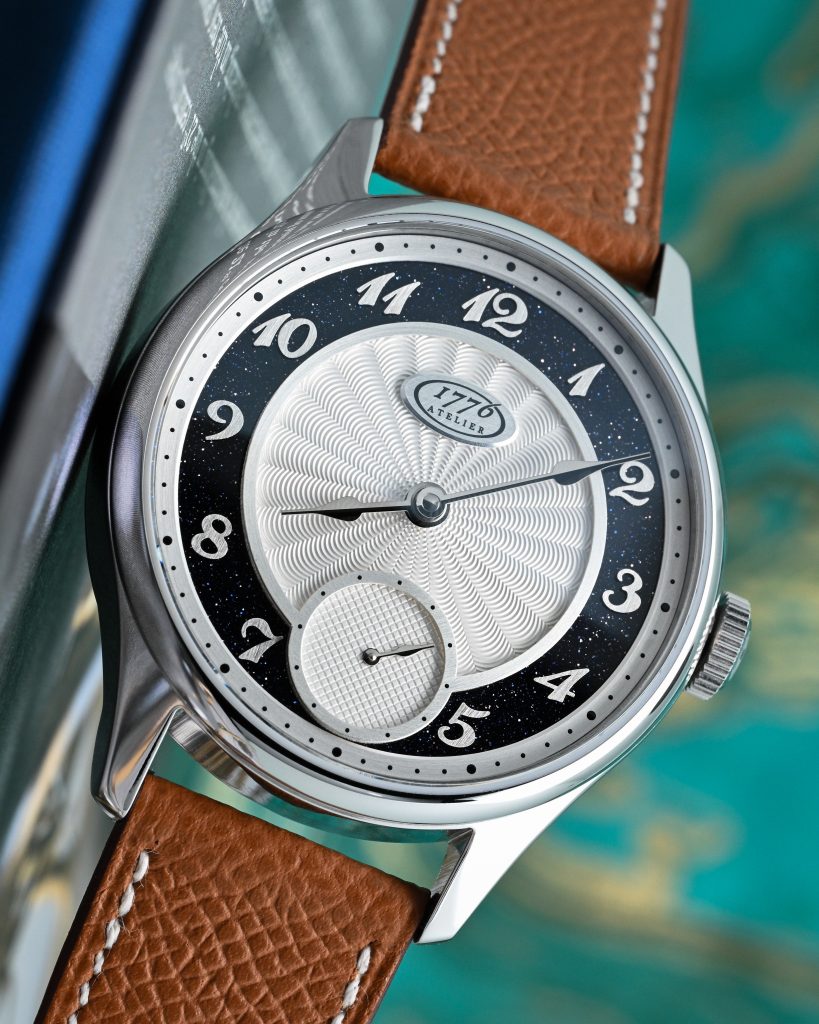
Both the dial and hands are sourced from Germany, though I can easily imagine these components being produced locally as the brand matures and develops more domestic capability – we’ve already seen Zach Smith and Hour Precision deliver a beautiful hand set for Cornell Watch Company. The dial itself is very well executed, with a pleasing contrast between the cosmic Aventurine outer ring and the inner white guilloché, which, while stamped rather than hand-turned, looks crisp and consistent.
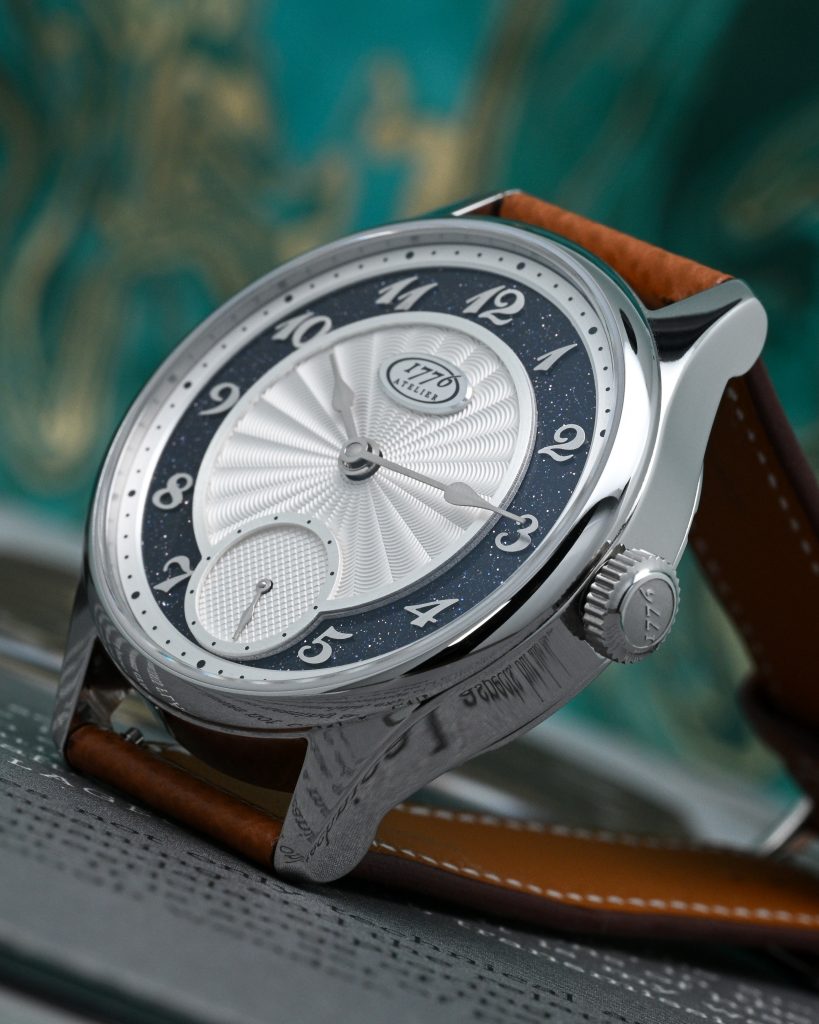
The two sections are divided by a brushed and raised metal ring, adding dimensionality alongside the bold applied Breguet numerals, which are vertically brushed and sharply cut. The small seconds subdial at six o’clock features its own distinct stamped guilloché pattern, framed by another brushed ring for visual continuity, while a raised, brushed minute track wraps up the composition with legible markings for minutes and five minute increments. Together, the layered textures, finishes, and elevations create depth and character, making the dial far more engaging than its conventional design might suggest.
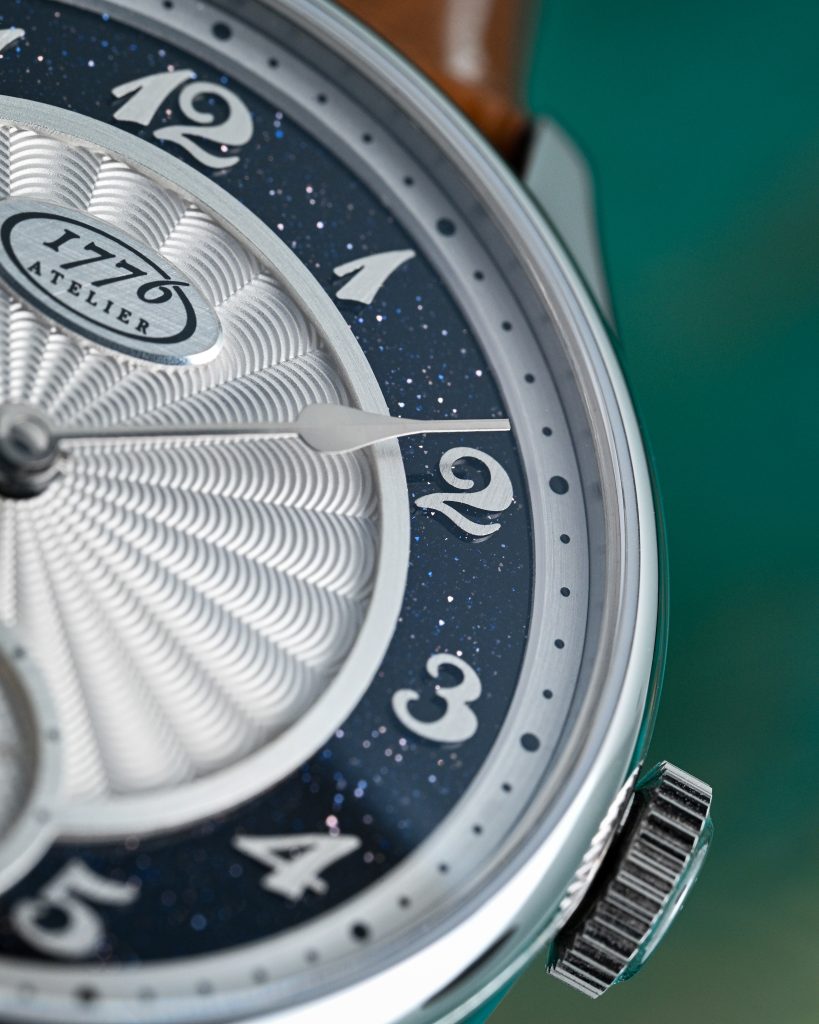
The handset is nicely finished with distinct facets that help with legibility, though I do wish the hour and minute hands extended a touch further; with the hour hand closer to the edge of the guilloché center and the minute hand out to the minute track for sharper legibility. Still, they don’t feel undersized in practice and remain easy to read. The brand’s logo is pad-printed on an applied nameplate under twelve, a familiar but well-executed finishing touch. Overall, the attention to detail and quality control on the dial is very good, and I like that the brand has quite a few options to choose from, with various combinations of materials, textures, and styles.
On The Wrist
On my 6.75-inch wrist, the watch’s 40.25mm diameter and 48.5mm lug-to-lug dimensions work reasonably well, sitting flat and balanced without feeling oversized. That said, given the dressy and traditional nature of the watch, I think trimming 1 to 1.5mm off the diameter and 2 to 3mm off the lug span would have made it noticeably more versatile and wearable for a wider range of wrist sizes. But since this watch is based on the 6498 architecture, there’s only so much smaller they can go without having to completely redesign the movement or choose a much smaller base like the ETA 7001, which would likely introduce a lot of empty space.
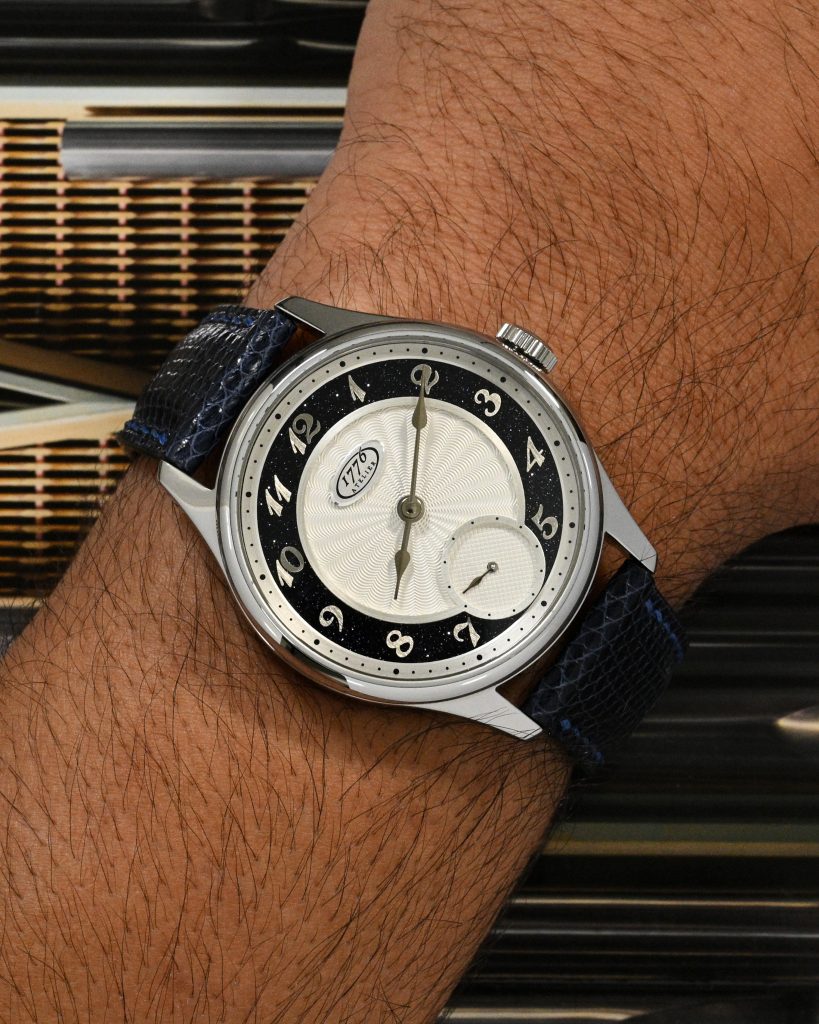
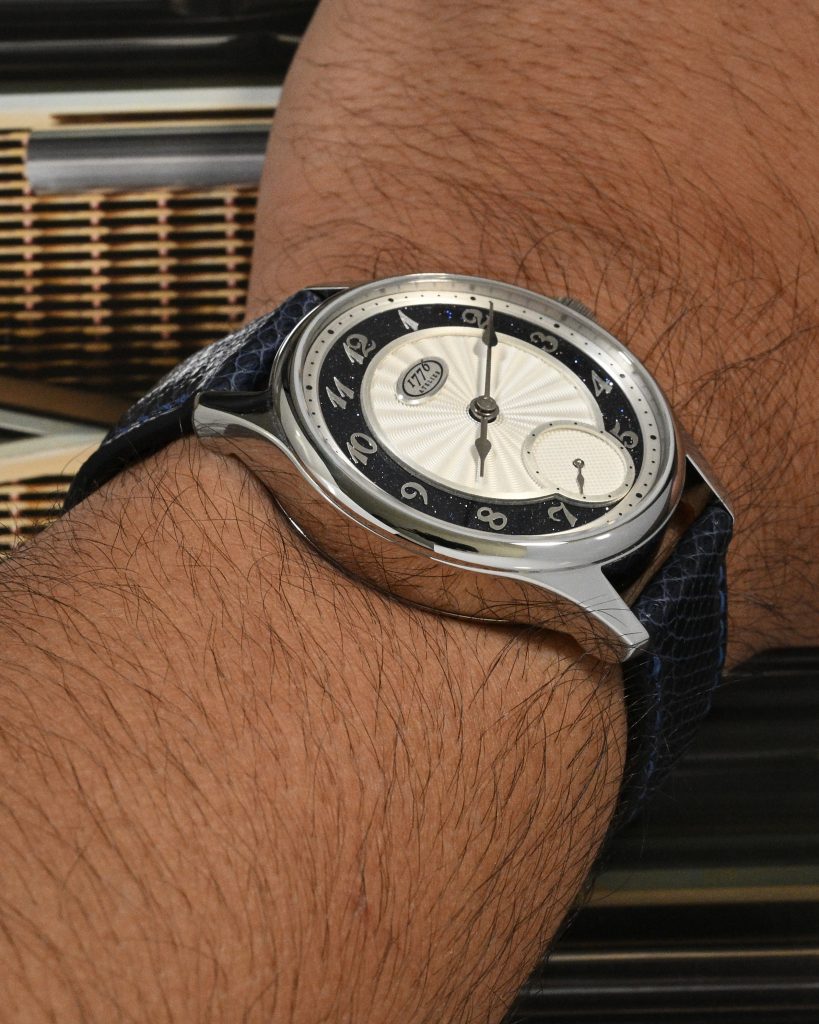
In its current form, I would hesitate to recommend it for wrists smaller than 6.25 inches, as the lugs might start to overhang. The 11.3mm overall thickness feels well-proportioned, though shaving off around 1mm could be nice, especially since it’s a manual-wind watch without any extraordinary water resistance.
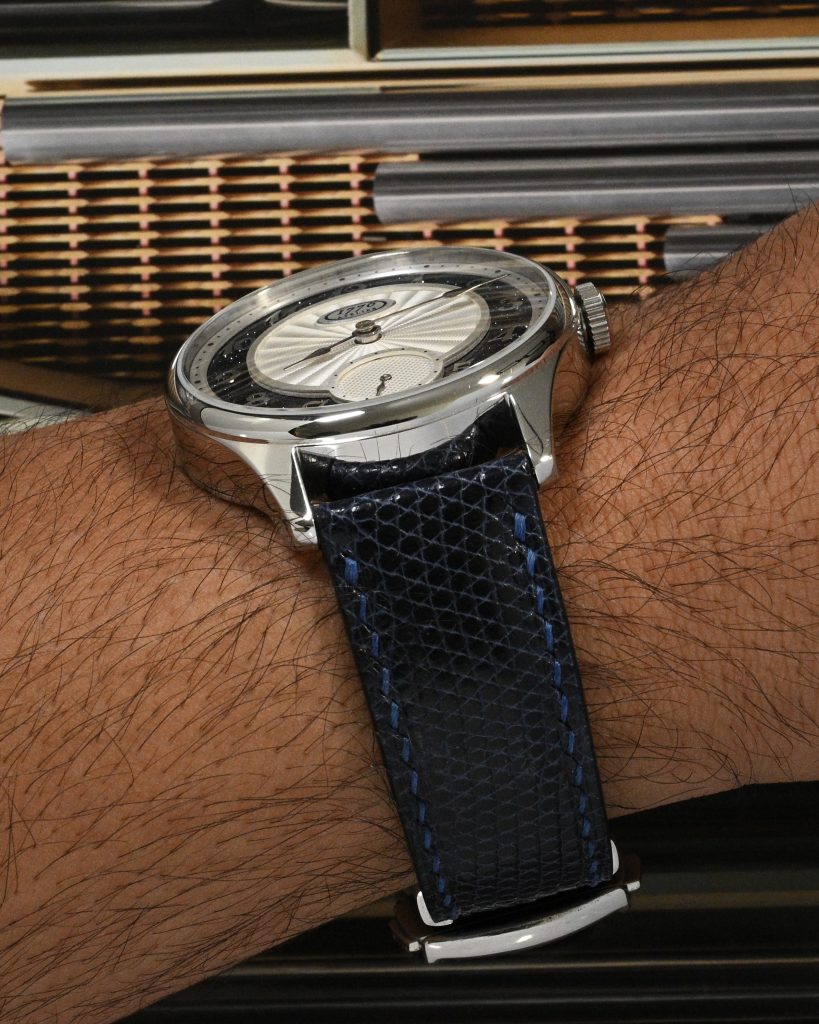
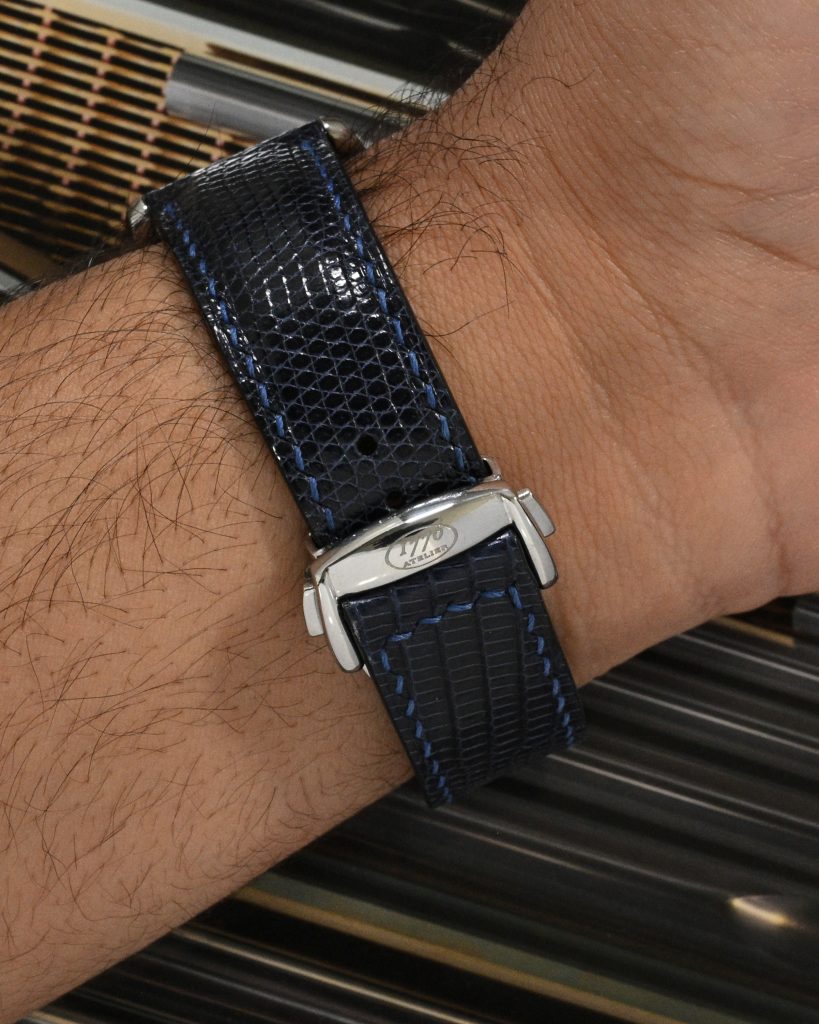
1776 Atelier offers a variety of American-made straps, and the one supplied with this watch is very nice, paired with a signed deployant clasp. The deployant is of a familiar Omega-style design, feels robust and secure, and the overall presence and comfort on the wrist is excellent.
Wrapping Up
The Mount Vernon isn’t trying to reinvent the dress watch – the case and dial are handsome and well executed, but the design language is fairly conventional, and it won’t satisfy someone chasing novelty in form or layout. Where this watch earns its keep is the movement. The finishing quality, the thought put into the components, and the overall visual coherence on the back are legitimately impressive for the category, and it’s the part of the watch that most clearly communicates what 1776 Atelier is about. Just as importantly, it feels like a preview: the Mount Vernon reads as a stepping stone, and the Montpelier already suggests what this team can do when given a bit more room to create.
And that’s why 1776 remains one to watch (pun intended). Building a sustainable, scalable, practical watch brand in America is a very different challenge than making aggressively artisanal pieces for a tiny sliver of collectors, and 1776 Atelier appears to be aiming for the former without losing the craft. If they stay disciplined and keep executing at this level, they have all the ingredients and the talent to become a meaningful part of modern American watchmaking.