Disclaimer: this video/review was not sponsored by MING or any other entity.
Video
Review
MING recently unveiled what might be one of the most impressive feats of watch engineering I’ve seen this year: a single-piece, laser-sintered Grade 5 titanium mesh bracelet composed of nearly 1,700 sub-components, resulting in a surreal, futuristic piece of wrist architecture. And if you’re looking for a sports GMT to pair with that remarkable bracelet, the new 37.11 Odyssey fits the brief perfectly, built in Grade 2 titanium on the same case platform as the GPHG 2025 award winning 37.09 Bluefin diver but bringing a few fresh ideas of its own.
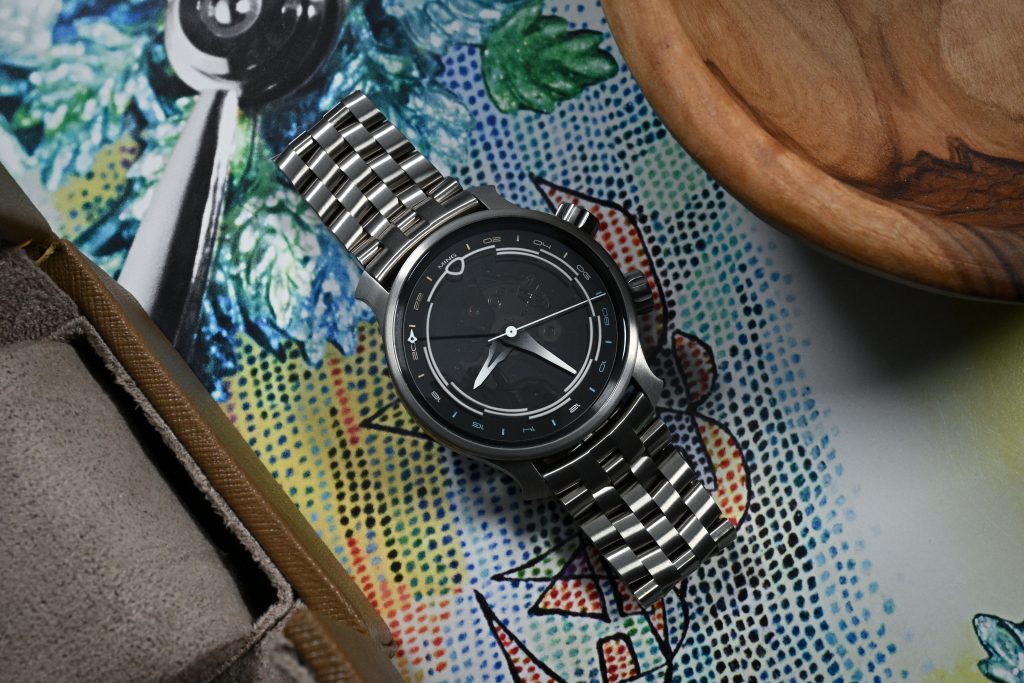
Pricing starts at 4,950 CHF on the Slate rubber strap, 5,500 CHF on the Grade 2 Titanium Universal Bracelet, or 5,950 CHF with that extraordinary Polymesh bracelet I just mentioned, but unfortunately for U.S. buyers, current tariffs push those numbers to roughly $6,900 to $8,300 USD through Collective Horology.
Let’s check it out!
Case
The case of the 37.11 Odyssey feels immediately familiar, measuring 38mm across, 44mm lug-to-lug, and 12.4mm thick including its dramatically curved top and bottom sapphire crystals, all rendered in fully satin-finished Grade 2 titanium.
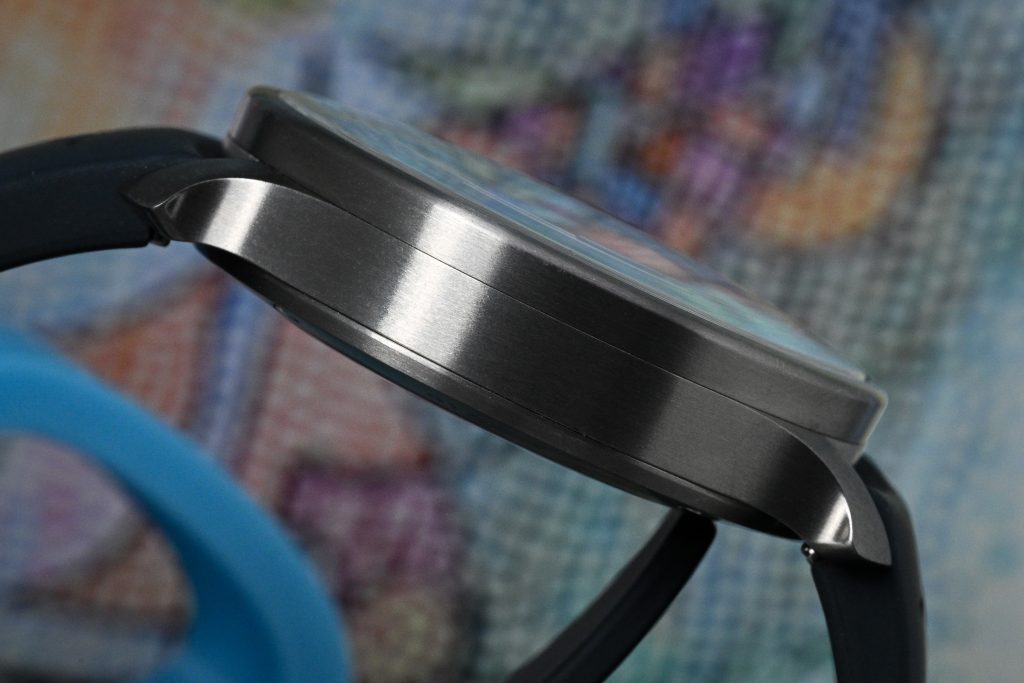
I personally would’ve loved a few polished accents to break things up, but the muted, sporty aesthetic seems appropriate, and it feels like a relative to the the 37.02 Ghost.
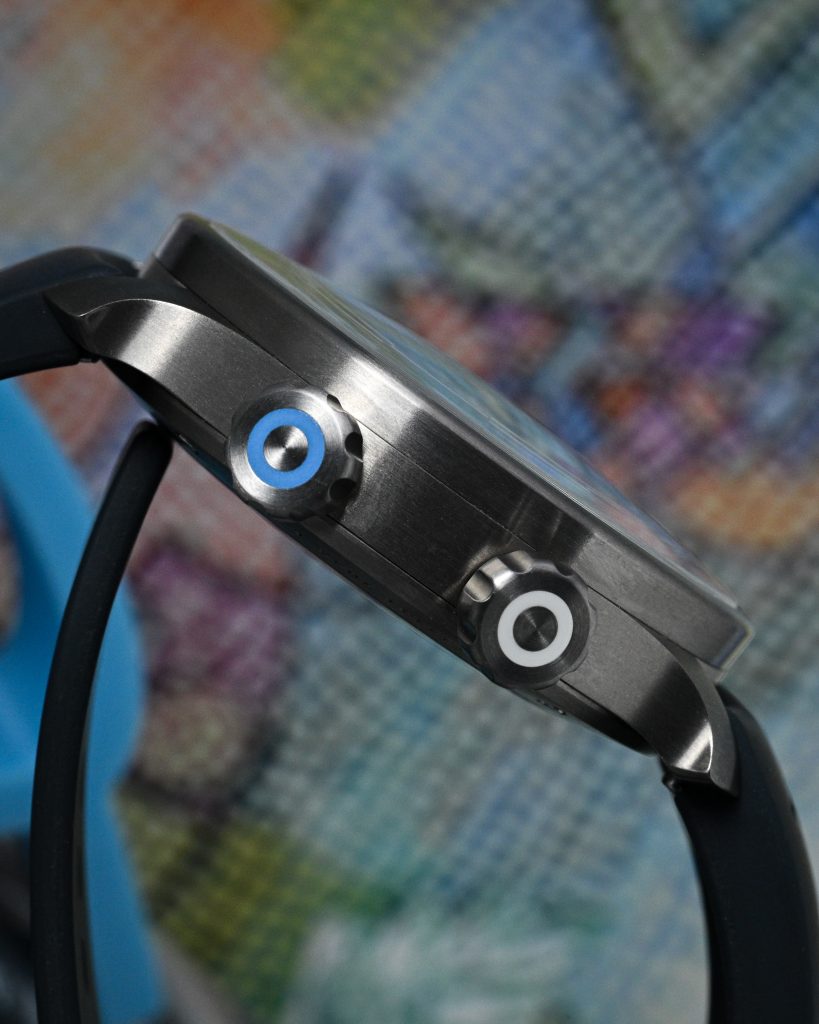
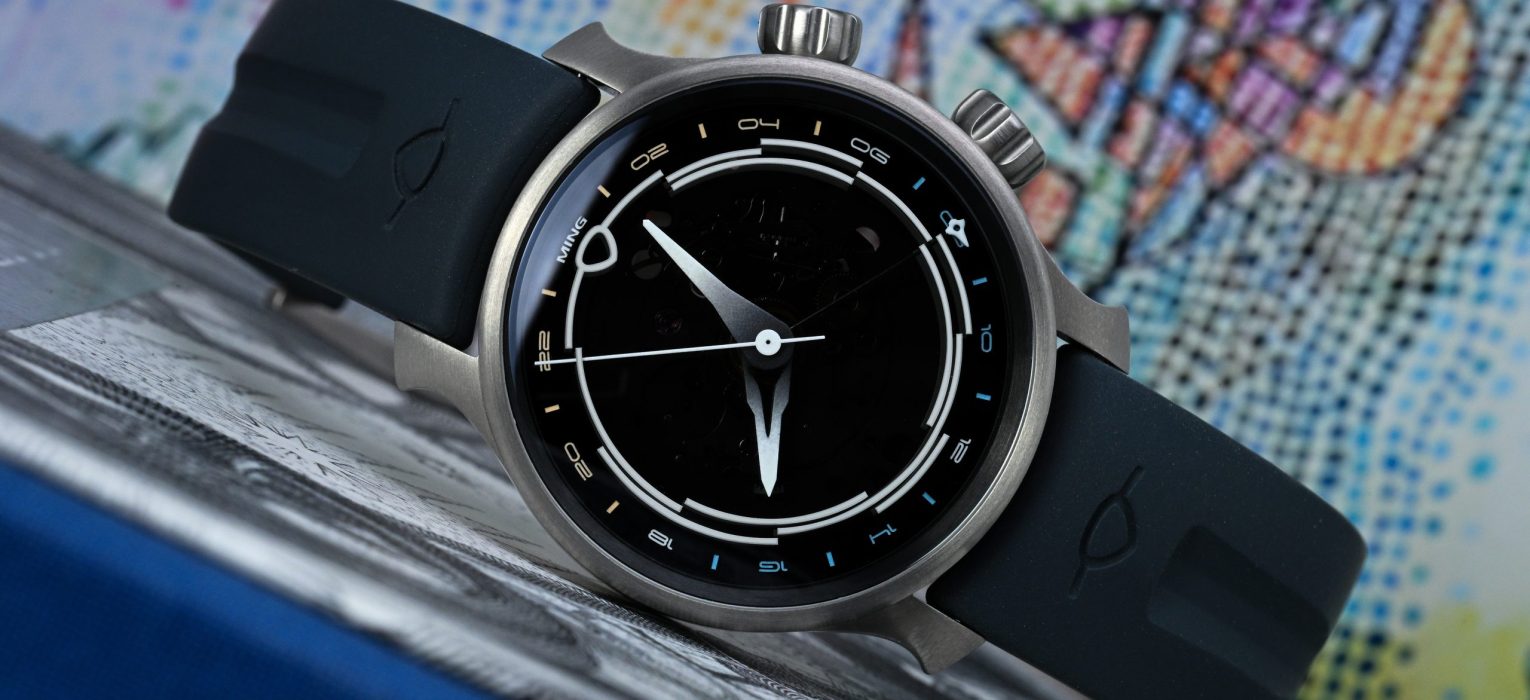
It mirrors the 37.09 Bluefin’s case almost exactly, though its 600m rating is traded for 300m and the addition of a GMT complication. The twin 6.5mm crowns are a highlight: the 4 o’clock crown controls a 24-click, bi-directional ball-bearing GMT mechanism that rotates the smoked sapphire dial, and the action is genuinely one of the best I’ve felt; it’s also not screw-down, so you can technically fidget with it at 299.9m underwater, if you’re inclined to do so. The main crown is screw-down and includes a red safety band to signal when it’s open, which is a thoughtful design element carried over from the original 18.01 diver.
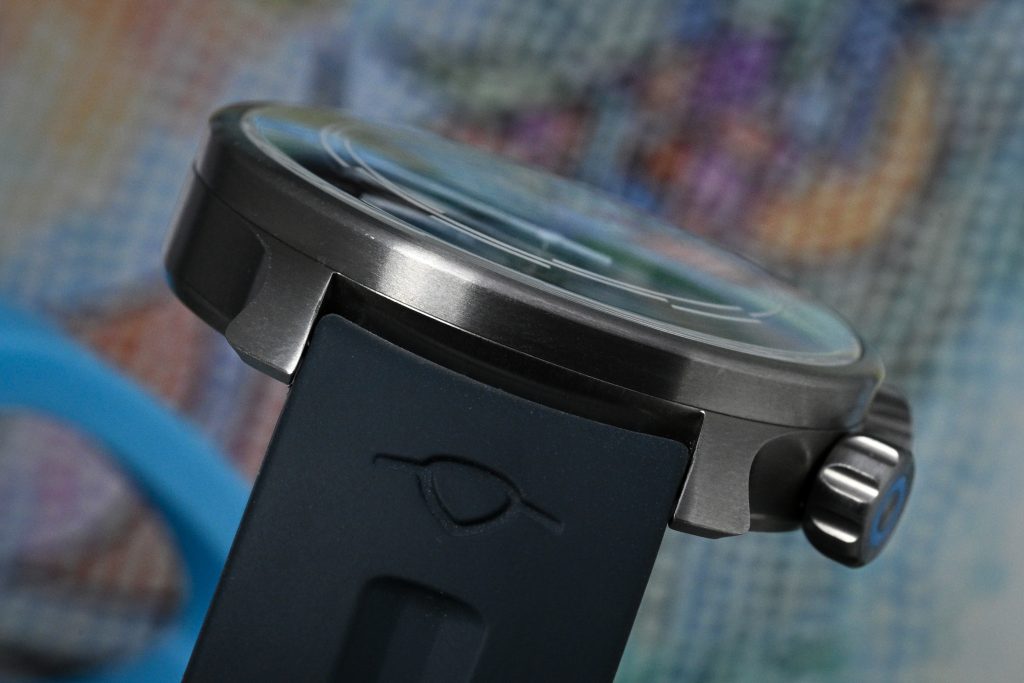
Despite the listed thickness, the Odyssey wears more like an 11mm slab-sided case thanks to that tall, heavily curved AR-coated crystal. Flip it over and the curved exhibition case-back mirrors the top crystal perfectly, secured with screws and contributing to the watch’s solid 300m water-resistance rating.
Dial
The dial takes the same “dial-as-bezel” concept from the Bluefin and gives it a GMT twist, using a smoked sapphire base that reveals just the right amount of the SW330 beneath while shifting from nearly opaque to deep black depending on the light.
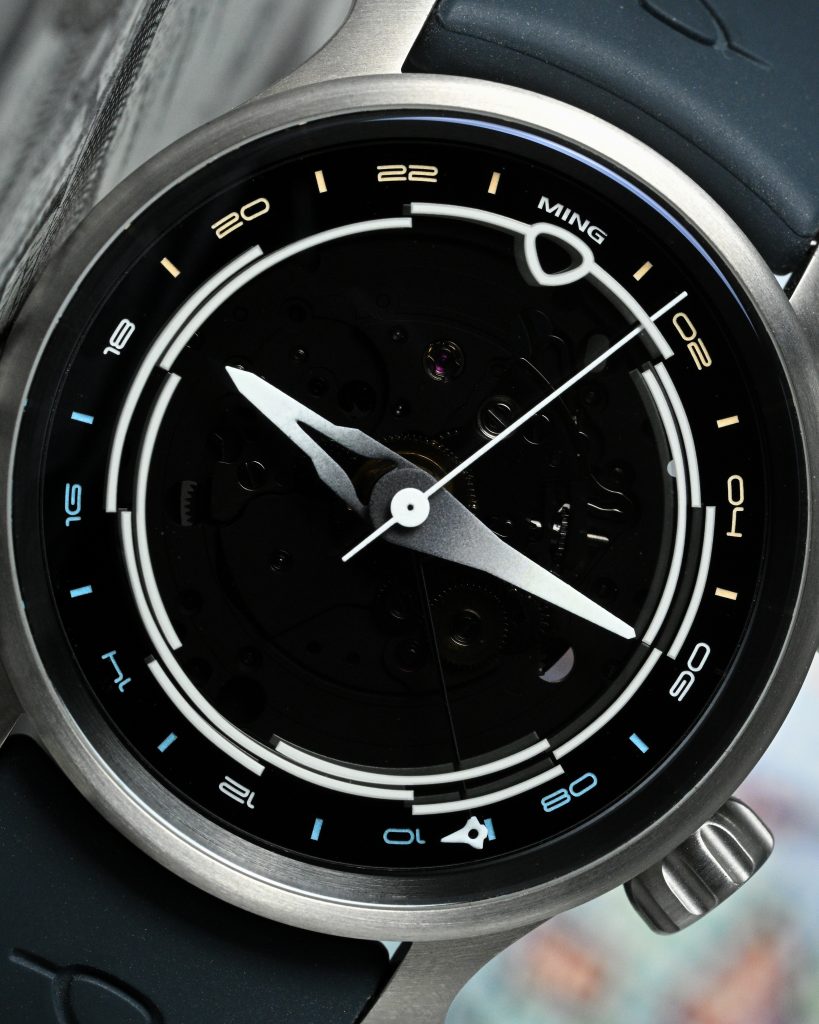
This entire smoked sapphire layer sits on a ball-bearing mechanism that rotates in 24 bi-directional clicks, with the outer numerals rendered in light blue for daytime hours, pale yellow for nighttime, and white for the cardinal points.
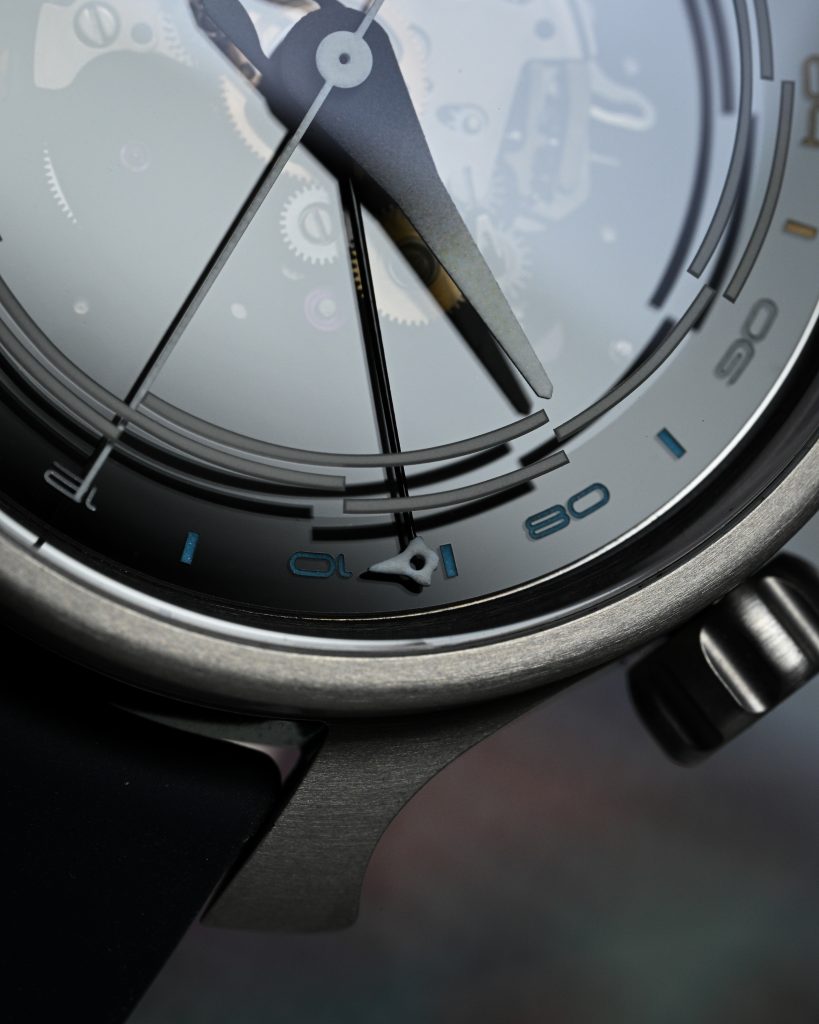
The GMT hand, with its slim stem and lumed, spacecraft-like tip, fits the Odyssey name perfectly, and the hour and minute hands follow the same space-faring aesthetic with a new gradient finish that even carries through to their lume. The seconds hand is more conventional in design and is painted white and is lumed.
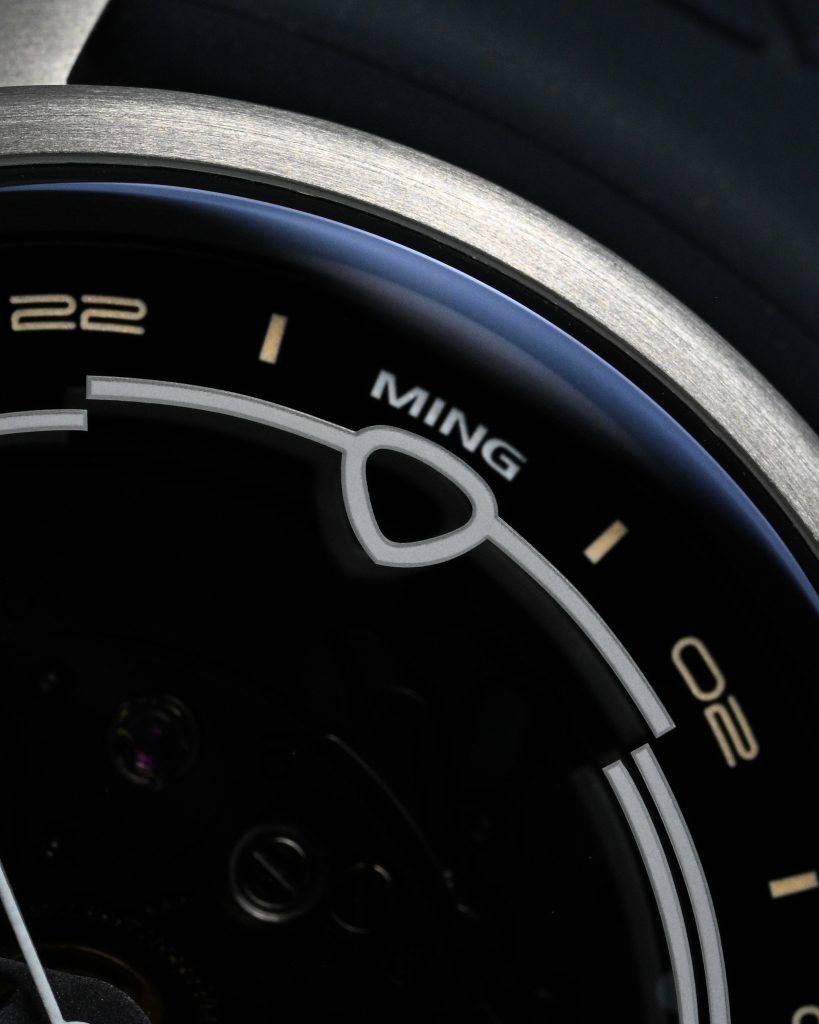
Floating above everything is the brand’s signature ring of etched numerals on the underside of the curved sapphire crystal, filled with their Polar White lume. It all feels distinctly MING yet pushes into bolder territory with those dramatic hand shapes, and the combination of layered sapphire, color transitions, and tight finishing makes the dial wonderfully dynamic on the wrist.
Lume
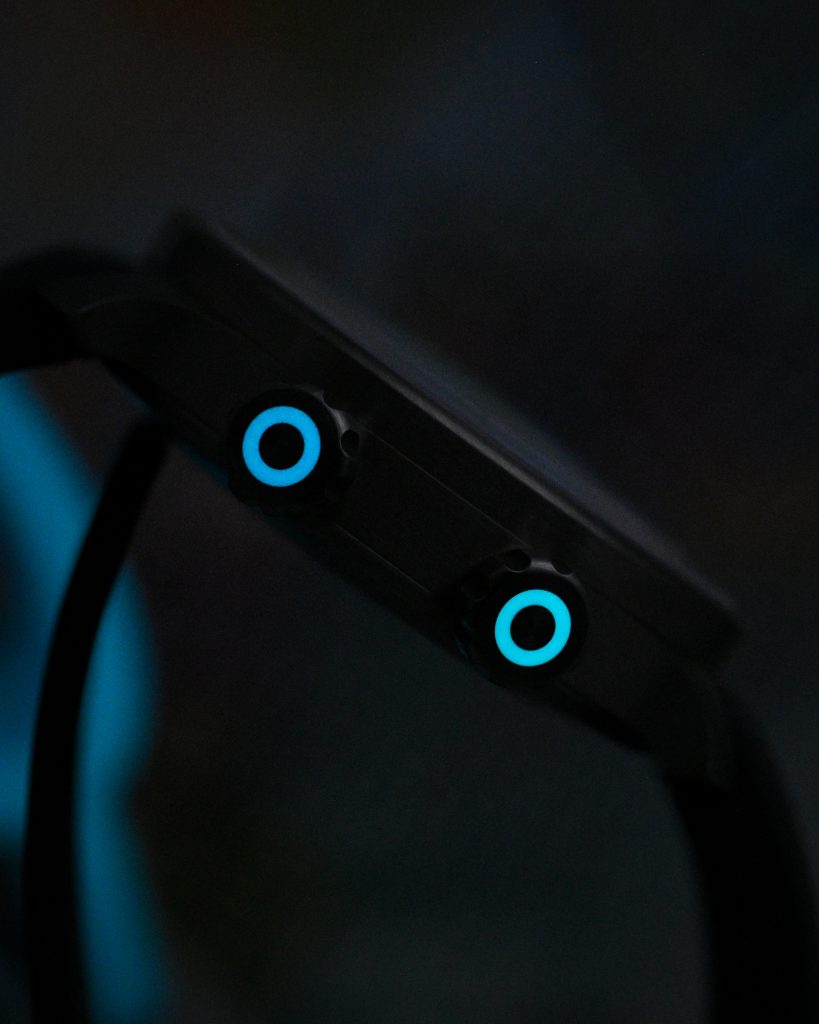
The Odyssey brings together many of MING’s signature lume design elements, including the Polar White lume filled into the hour-marker rings etched beneath the top sapphire, the bi-color blue and orange lume on the smoked sapphire dial GMT disc, the new gradient-lume hands, and even two lumed crowns.
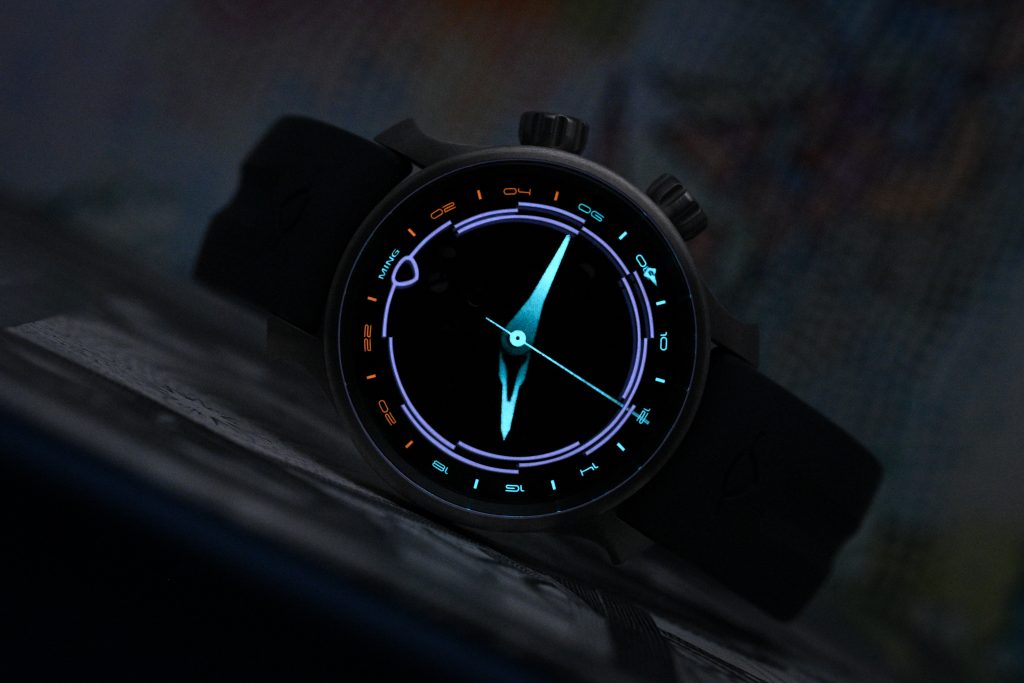
But despite the striking visual appeal, real-world performance is surprisingly weak, with only the hands and the daytime portion of the GMT disc staying legible at night. The orange lume fades almost immediately, followed by the Polar White, which looks surreal but still lacks the brightness I’d hope for, and the orange, while gorgeous, is purely decorative.
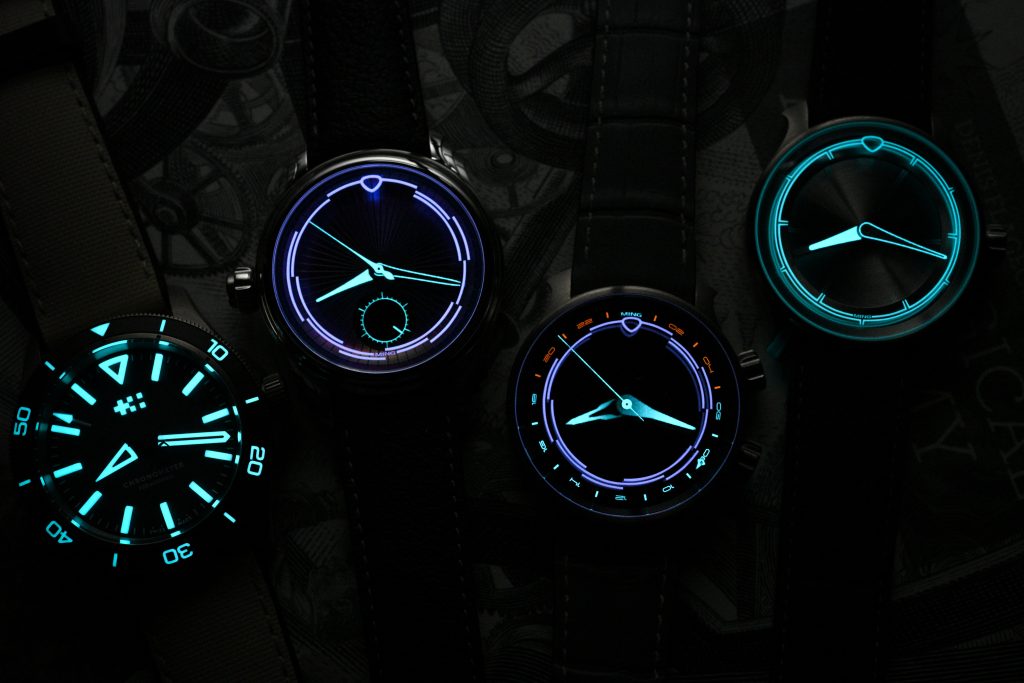
Compared against my MING Iris, Ghost, and the lume-heavy Christopher Ward Lumiere, the Odyssey and the Iris are clearly the dimmest of the group, which is disappointing if you’re a lume enthusiast.
Movement
The Odyssey is powered by the Sellita SW330, the GMT variant of the SW300, a long-established caller-style GMT found (in either its ETA2893 or SW330 incarnation) across many mid-tier luxury Swiss watches like the Breitling Avenger.
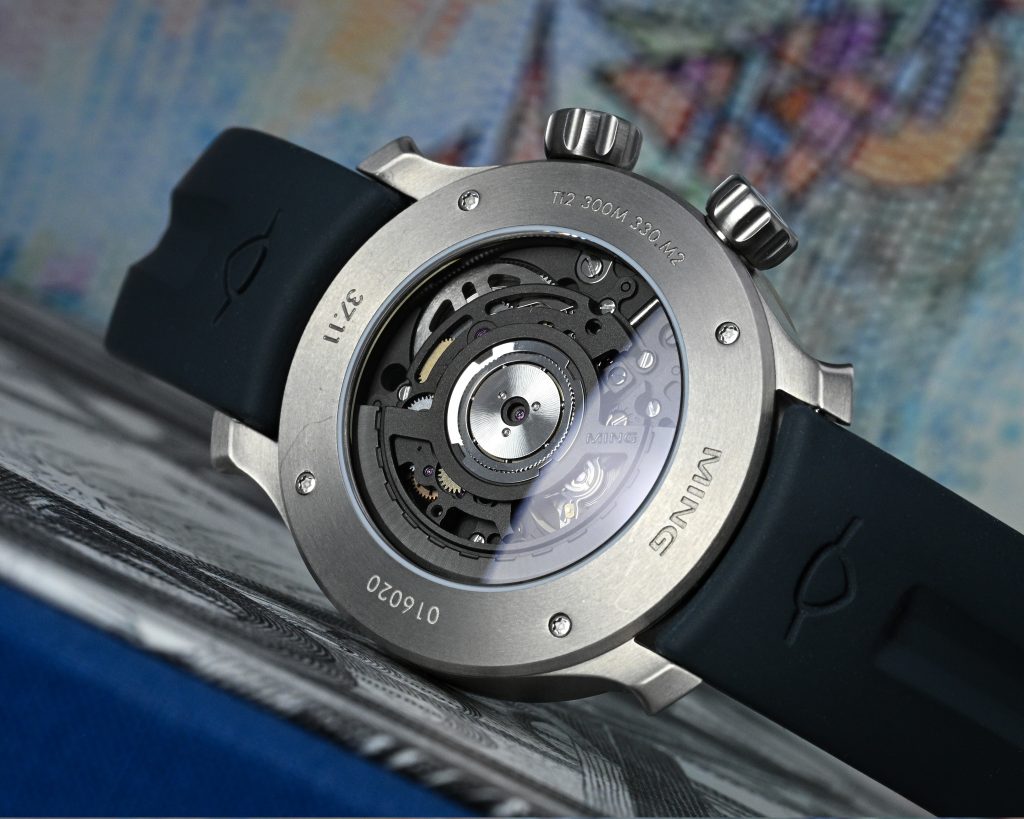
While larger brands have moved toward their own “true GMT” calibers, independents are mostly limited to caller GMTs or the Miyota 9075, a disruptive and affordable option, but one that lacks the refinement of the SW300 family and can occasionally suffer from GMT-hand misalignment.
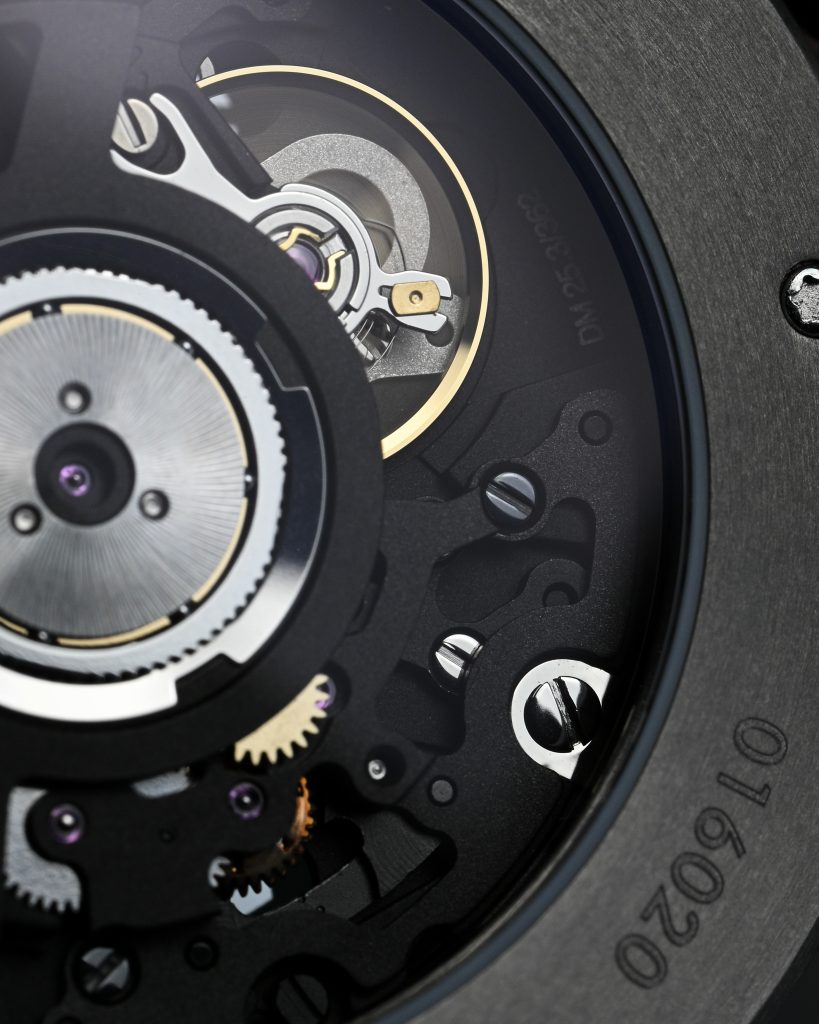
At around $7,000, I can’t blame watch enthusiasts for wanting more from a GMT watch, but MING has tried to elevate the experience with an anthracite-coated, skeletonized movement treatment similar to what appears in the Bluefin and Ghost. Still, a COSC-certified version of the movement could have added meaningful value, especially for a sports-oriented watch that, unusually for MING, includes a seconds hand. That said, the prototype I tested kept solid time at roughly +6 seconds per day.
On The Wrist
Wearability has always been one of MING’s strongest attributes, and the Odyssey continues that trend. Every MING I’ve tried, from the 35mm Project 21 pieces to the larger 42mm Series 20 models, has worn exceptionally well. I measured the Odyssey at 38mm in diameter, 44mm lug-to-lug, and 12.4mm thick including its dramatically curved top and bottom crystals, with a feather-light 41g head weight; on my 6.75″ wrist, these proportions feel ideal, and the compact lug span makes it suitable for even smaller wrists.
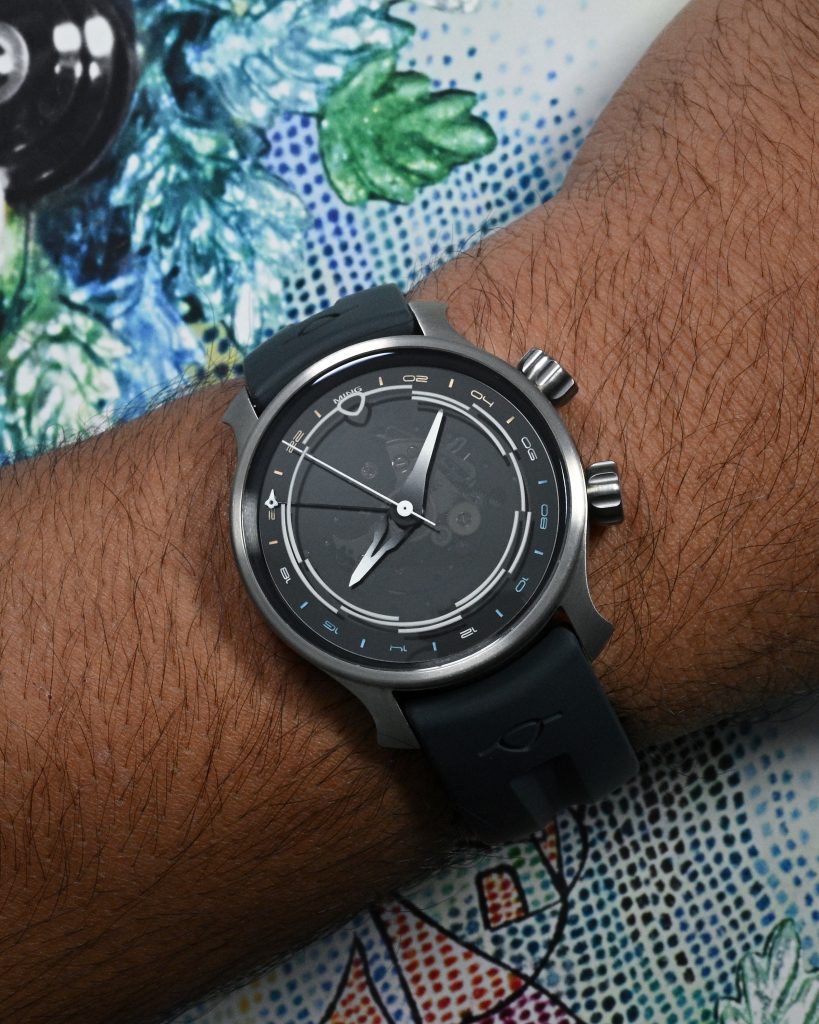
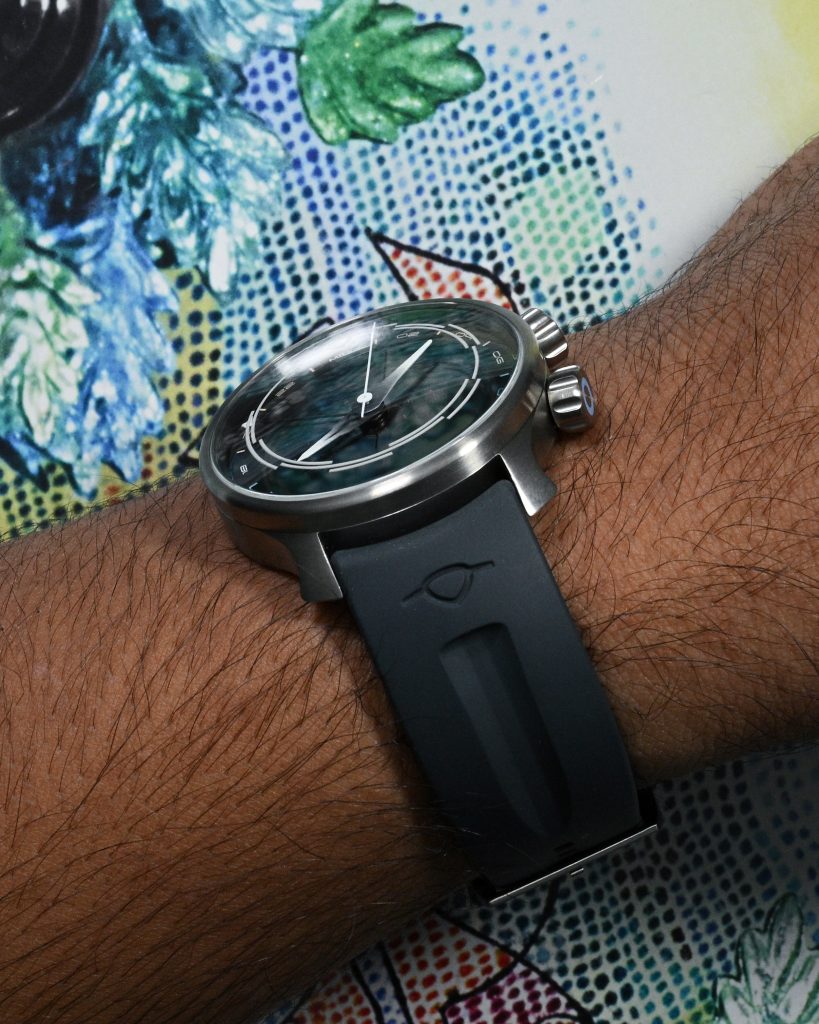
I’ve gravitated toward MING’s rubber straps in recent years because they’re excellent: well-contoured, secure, and offering an almost Oysterflex-like comfort, and the Slate version included with this watch will add another 20g to the package.
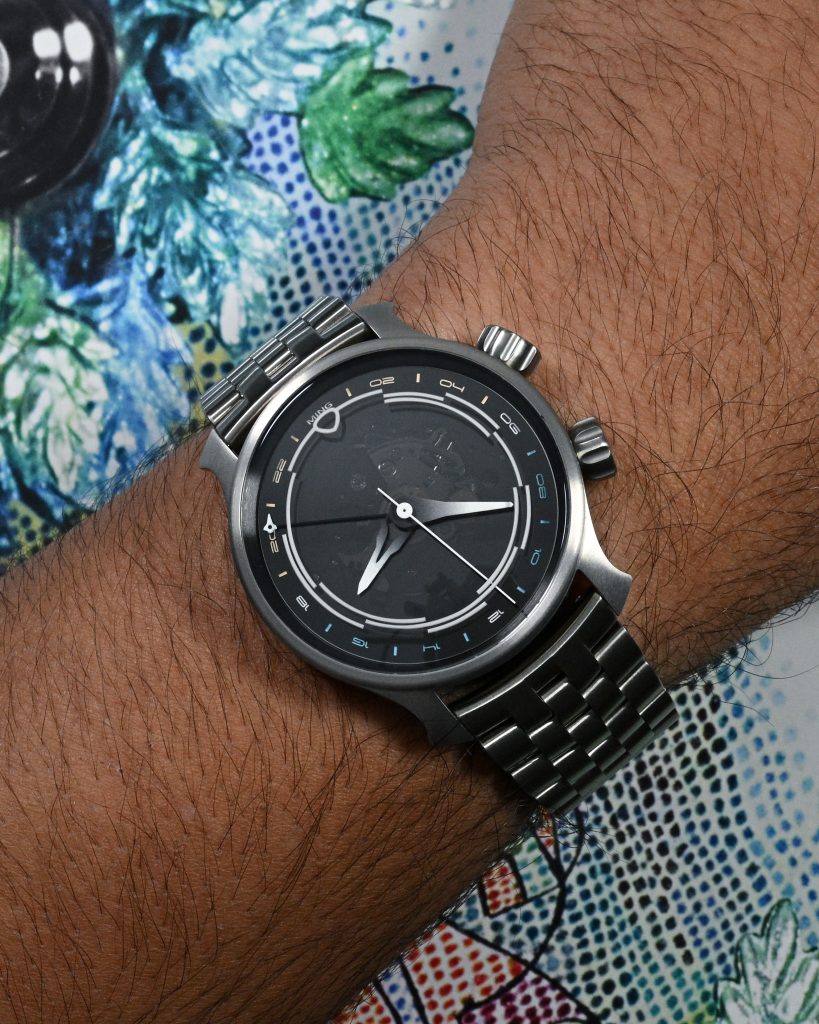
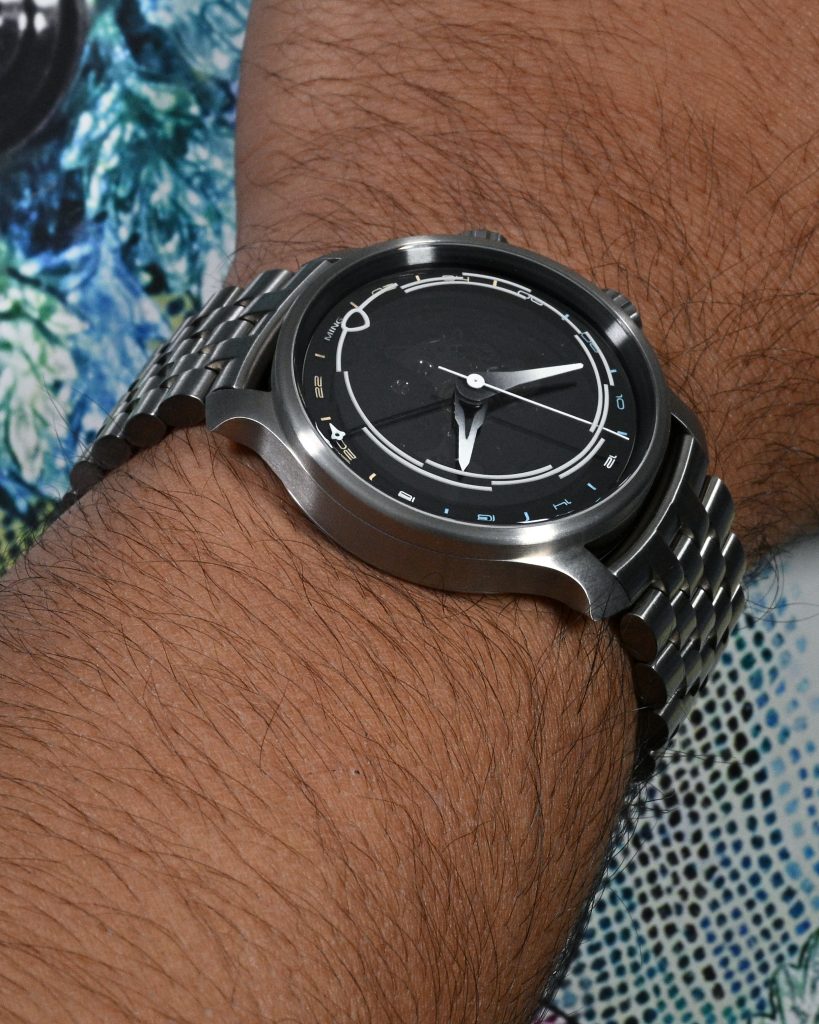
The optional Grade 2 titanium bracelet (an additional 42g), a refreshed take on their first-generation Universal Bracelet, is also comfortable and thoughtfully built with half links and quick-release bars, though it lacks micro-adjustment, and raises the price to around $7,600 (in the US). And while the numbers might suggest a chunky watch, it wears closer to an 11mm piece thanks to the crystal shaping, so thickness isn’t something I’d worry about.
Wrapping Up
It’s no secret that I’m a long-time MING fan, few brands manage to consistently keep me excited about this hobby, and I genuinely enjoy owning, wearing, and talking about their watches. The Odyssey brings together many of the traits I love: full titanium construction, a smoked sapphire dial, an intricately executed case, and excellent ergonomics. And priced identical to the 37.09 Bluefin, a watch I consider well worth its asking price, the Odyssey’s 4,950 CHF (about 6,900 USD after tariffs) seems logical for a titanium GMT built on the same design DNA.
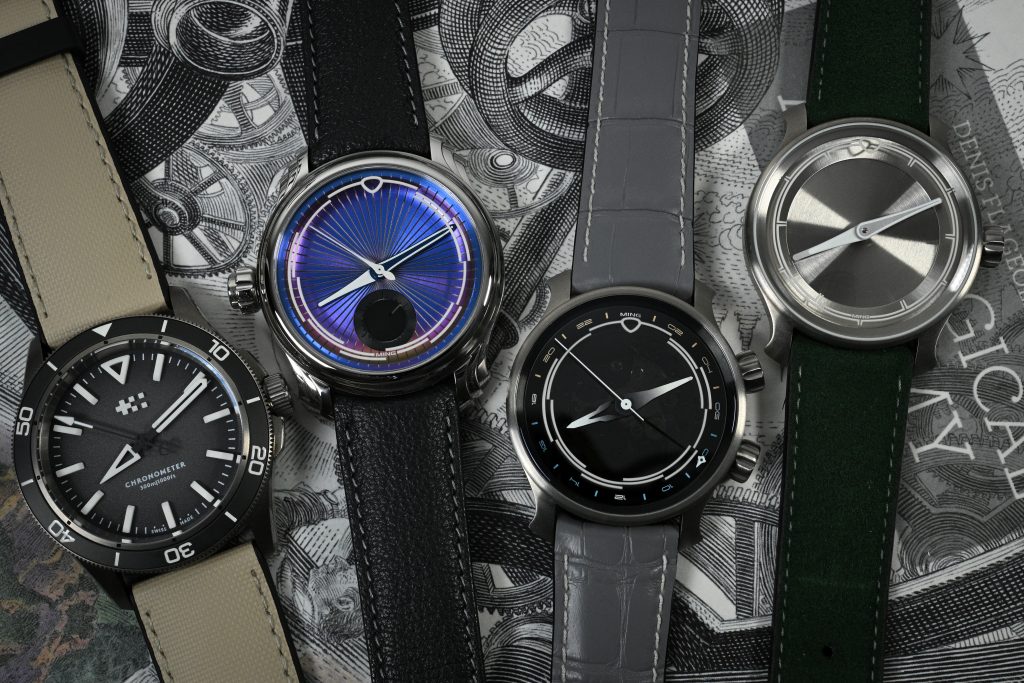
But if I had to be picky, I would have loved to see Grade 5 titanium with more contrasting finishes, stronger lume to match the design ambition, or perhaps deeper movement customization to set it apart from the rest of the catalog. But personal preferences aside, the Odyssey offers a compelling mix of originality and familiar MING character, making it a standout left-field addition for collectors who’ve already covered the basics and want a taste of something else.