Disclaimer: This watch was sent to me to review, and I do not need to return it after my review is complete. This watch was given to me without restriction and is not contingent upon a particular outcome for my review. All opinions here are my own, and Nordic Marine Instruments had no influence over the opinions stated here.
Nordic Marine Instruments LUNØR Shore Grey: https://nordicmarineinstruments.com/products/lunor-shore-grey?variant=50606385856759
Video
Review
A few years ago, I was particularly fond of moonphase watches. I owned both the Series I and Series II moonphase watches from MING, reviewed the Selten moonphase collection, and even acquired a rather expensive Sarpaneva. Unfortunately, none of them stuck around for very long. Whether it was the somewhat disappointing lume on the MINGs, the thoroughly underwhelming movement in the Sarpaneva, or other shortcomings, I eventually lost interest in the complication.
So when the $1098 Nordic Marine Instruments LUNØR ($899 on the leather strap only) came along for review, I was quite excited to give moonphase watches another chance, particularly since it appeared to address some of my biggest issues with those earlier watches.
Nordic Marine Instruments is a relatively young brand established in 2022, with its origins tied to Mick Jørgensen of WatchBandit, Travis Tan of RZE, and Christopher Waluga, an architect turned watch designer who has become the creative force behind the brand. Mick brought his experience with watch enthusiasts and retail, Travis contributed his manufacturing and engineering expertise from RZE, and Christopher brought a design philosophy rooted in architecture.
The brand’s first watch was the Nordhavnen, a relatively conventional but thoughtfully designed sports watch. This was followed by the Østersøen in 2023, a more affordable, Miyota-powered dive watch that found great success on Kickstarter. The Søværn followed, introducing the angular case architecture that eventually became the foundation for the LUNØR.
Throughout these collections, the emphasis has been on Nordic-inspired design, dependable movements, excellent specifications, and increasingly interesting dial treatments. The LUNØR takes this formula in a different direction, introducing a complication that is typically associated with dress watches into something much more practical and sporty.
Let’s check it out!
Case
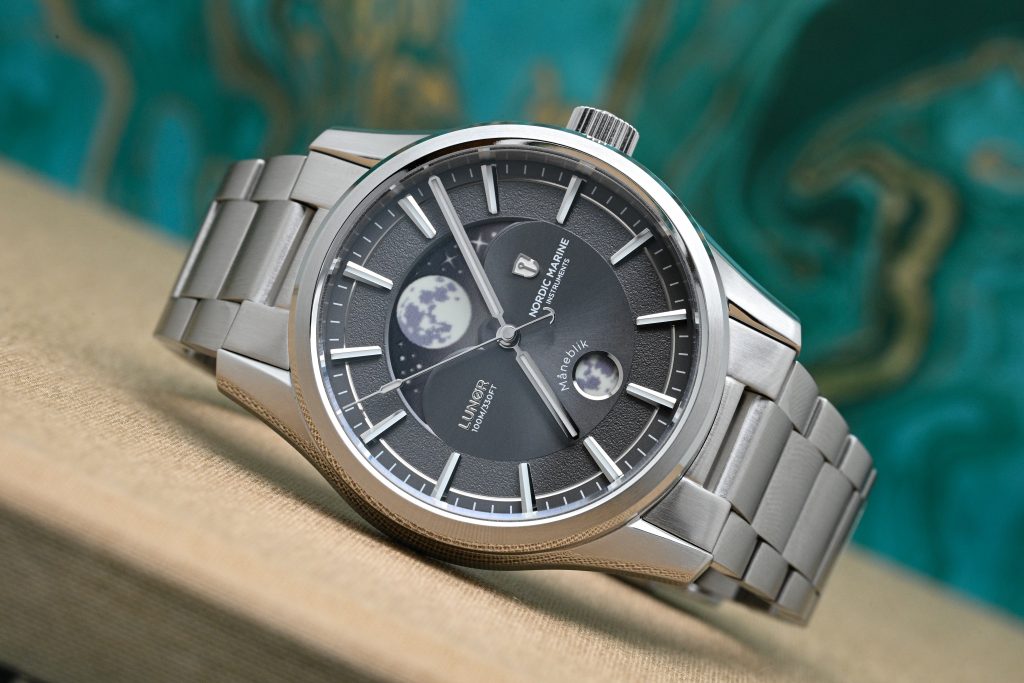
The first thing that caught my attention was the case design. There is a very familiar aesthetic here, reminiscent of Grand Seiko’s 62GS case architecture and certain vintage TAG Heuer Carrera designs. The straight lugs, broad angular surfaces, generous bevels, and smaller polished transitions create a similar visual language. Unlike those largely bezel-free designs, however, the LUNØR has a prominent bezel that gives it a slightly different profile. I wouldn’t call this a copy of either design, but rather a well-executed interpretation of a familiar aesthetic.
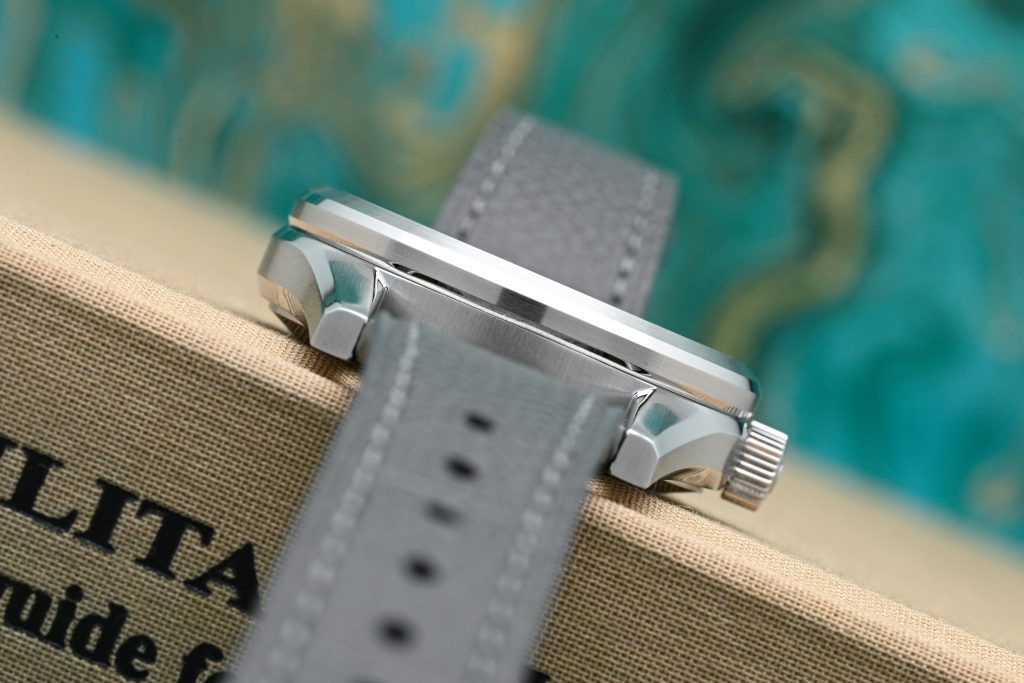
The case finishing is excellent, and easily comparable to some of the best microbrands I’ve reviewed. The transitions between brushed and polished surfaces are particularly well executed, with clean edges, consistent finishing, and an overall fit and feel that comes across as considerably more luxurious than the price might suggest.
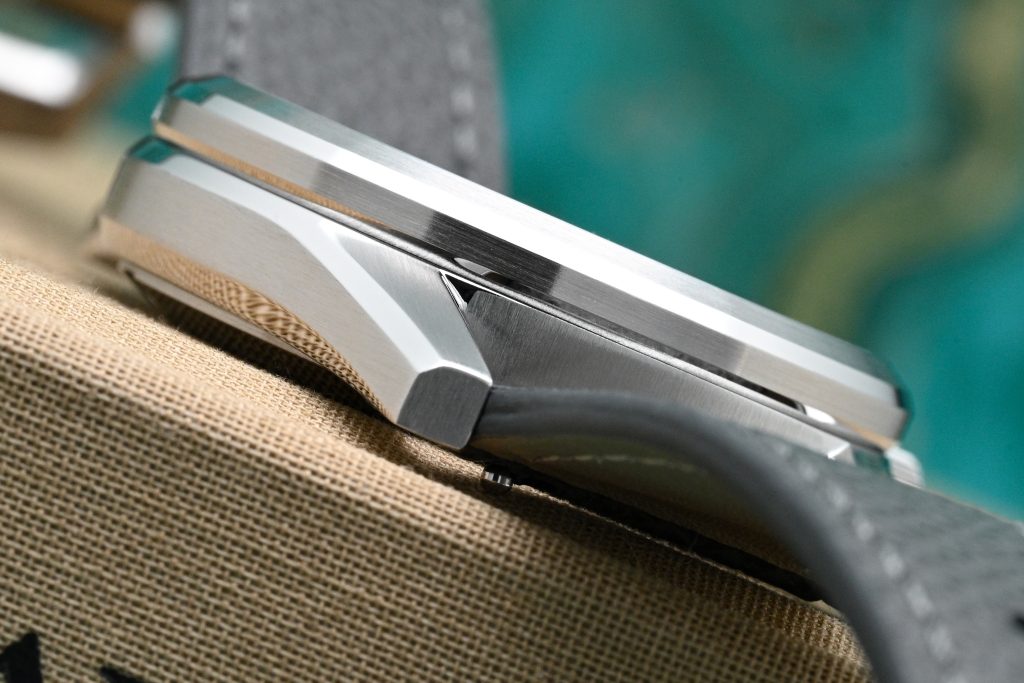
I measured the stainless steel case at 39.7mm in diameter, 48mm from lug tip to lug tip, and 11.8mm in overall thickness. The signed screw-down crown measures 6mm, and the lug width is 20mm. Water resistance is rated to 100m.
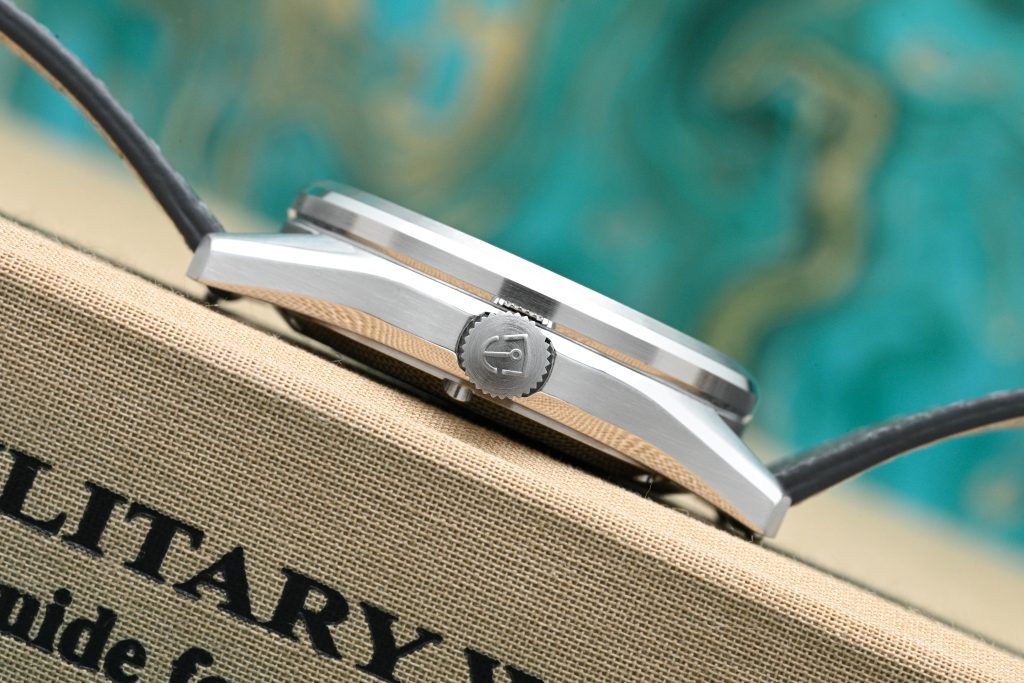
The bezel is relatively tall when viewed from the side, but the watch itself is not particularly thick. These proportions make sense when you consider the additional moonphase mechanism sitting above the Miyota base movement, and I think NMI has done a good job of accommodating this without making the case unnecessarily bulky.
Bracelet & Wearability
One detail I particularly appreciate is how the bracelet’s end links integrate into the case. Straight, angular lugs like these can be surprisingly difficult to pair with a bracelet without interrupting the design, and I think NMI has done an excellent job here. In fact, I prefer how the end links transition into this case compared to some of Grand Seiko’s implementations of similarly styled lugs.
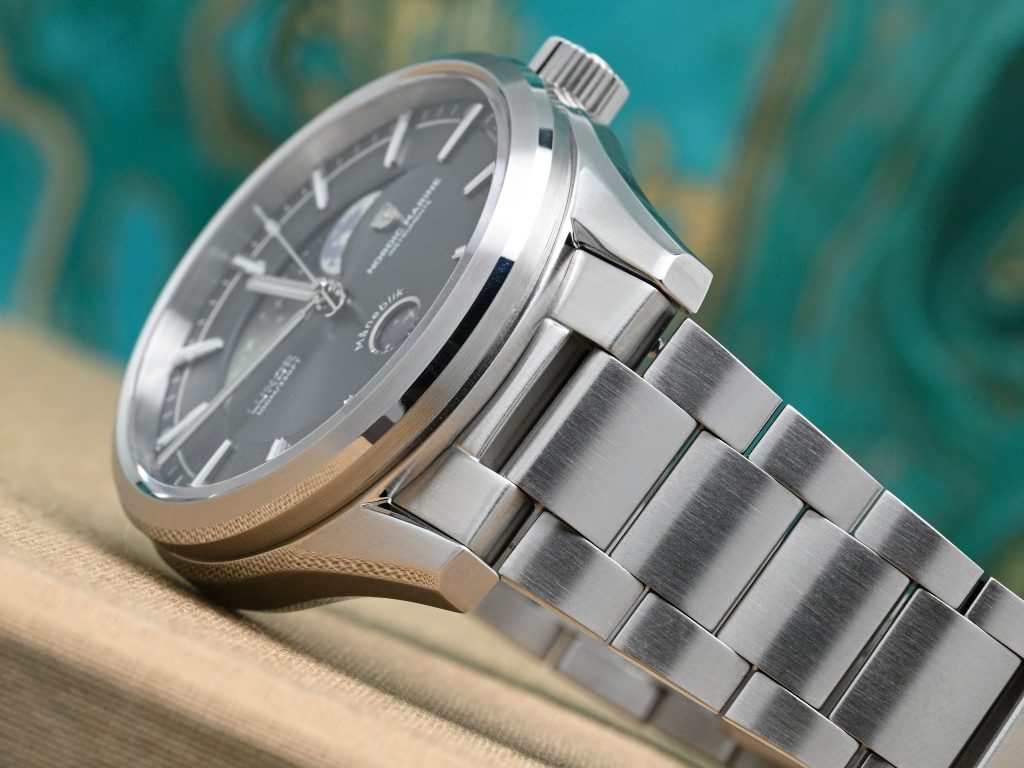
The bracelet itself is very well made, with screw-based links that make sizing straightforward and a useful on-the-fly micro-adjustment system. The buckle on the strap is also non-generic, but its finishing isn’t quite at the same level as the case and bracelet, and this is one area where there is some room for improvement.
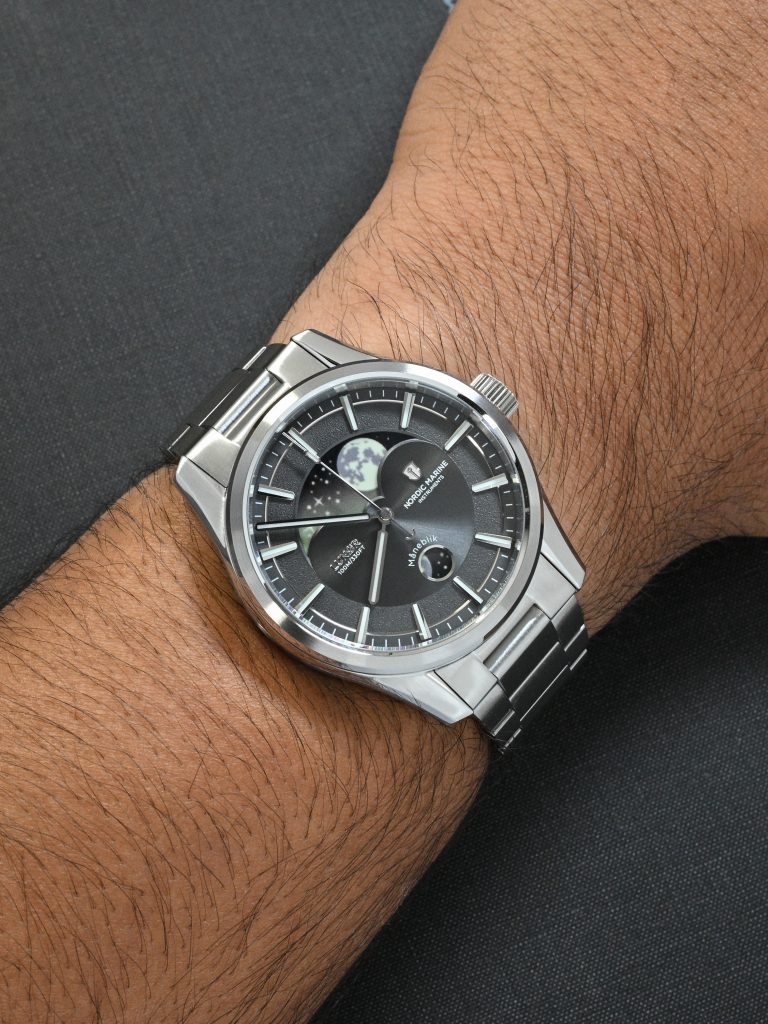
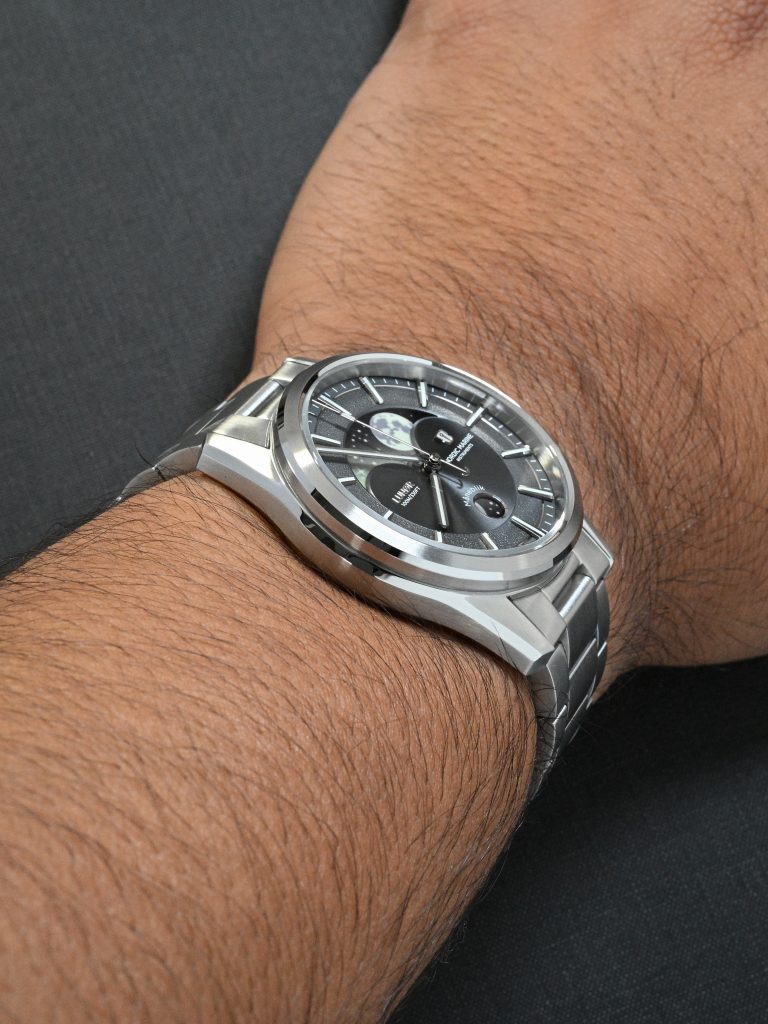
The watch head weighs 70g, increasing to 146g on the bracelet sized for my 6.75-inch wrist. Despite the relatively long lugs, I found it extremely comfortable, particularly on the bracelet. The proportions, articulation, and overall balance make this an easy watch to wear for extended periods.
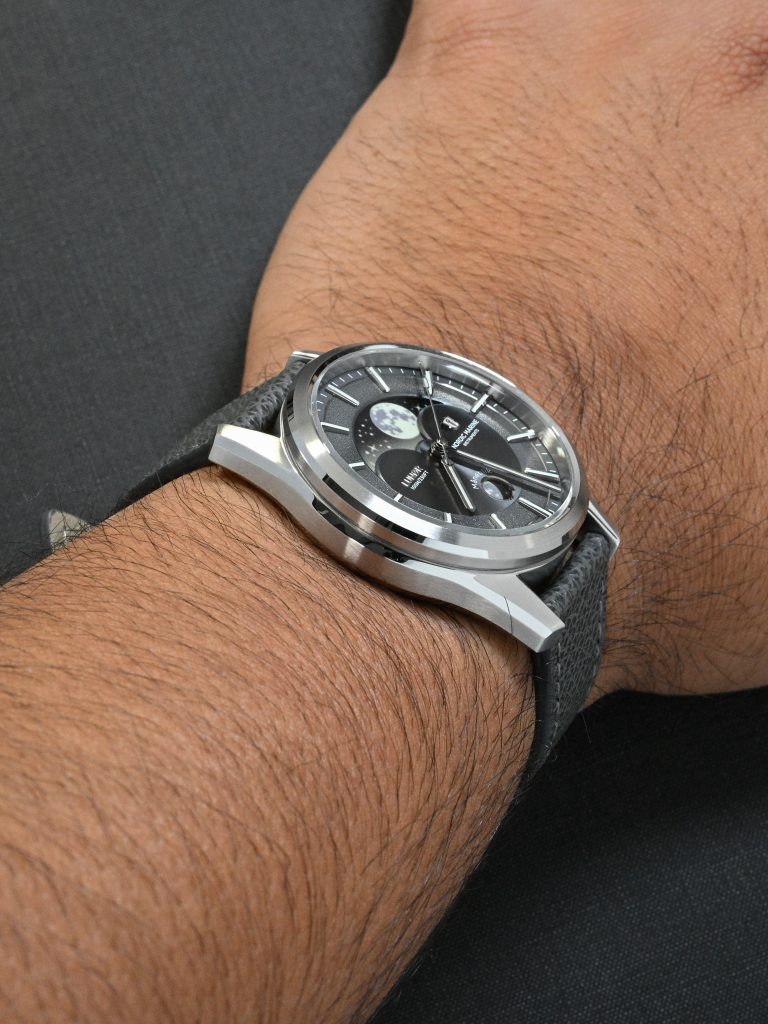
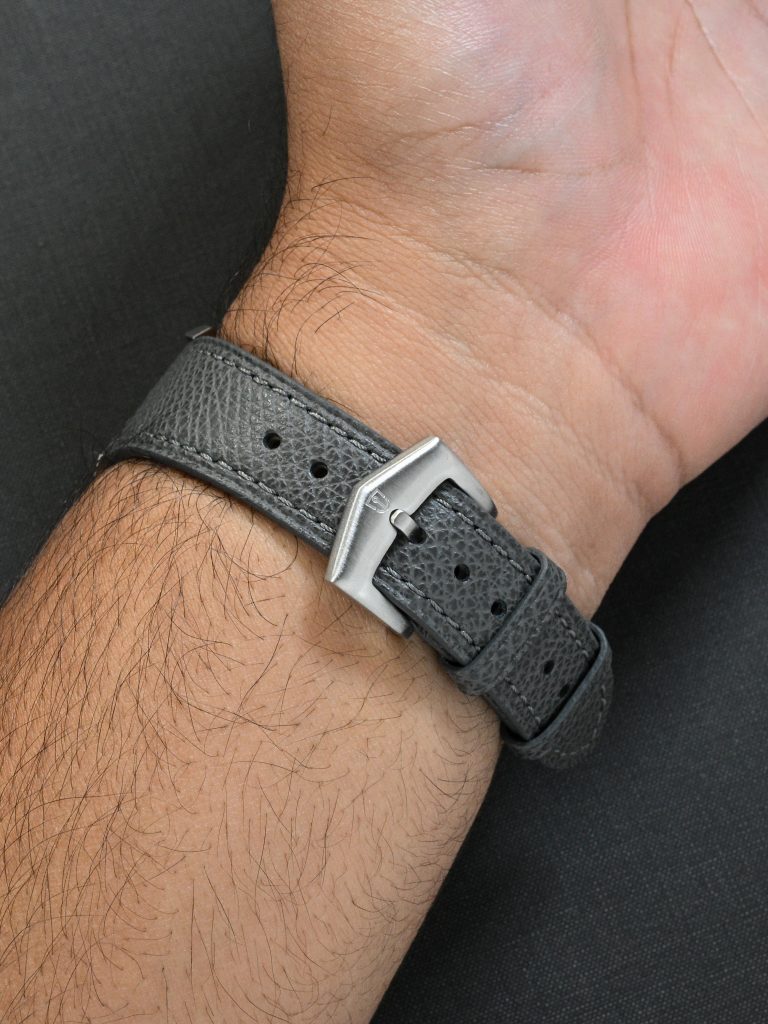
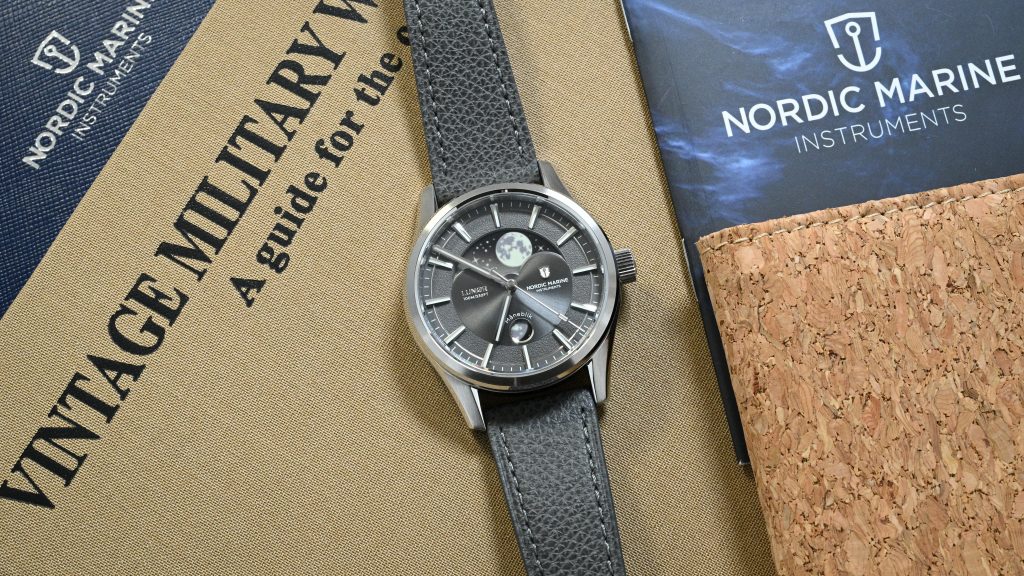
The included Italian Epsom leather strap is of surprisingly good quality; something I don’t often get to say about stock straps. The packaging itself is also very nicely done. I rarely spend much time discussing packaging, but the overall presentation here is worth acknowledging.
Dial
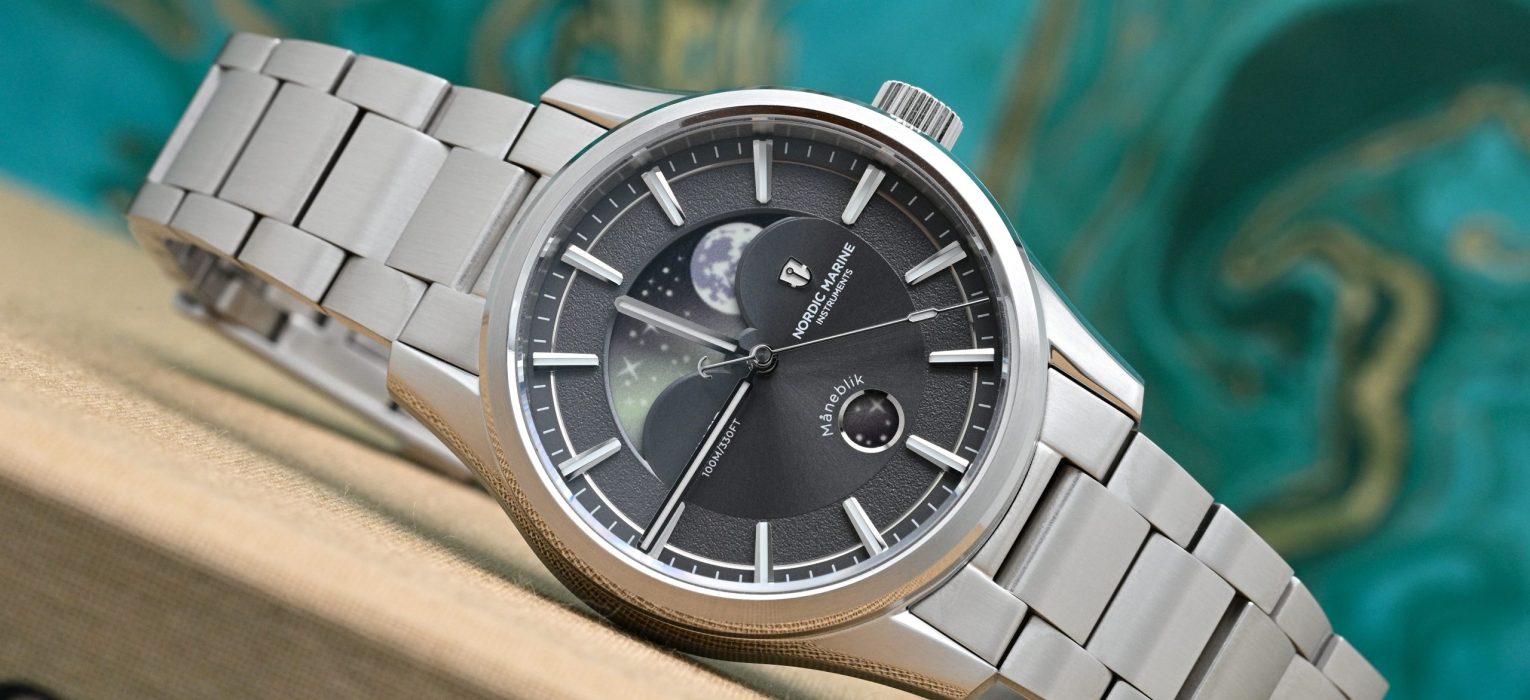
Of course, the real attraction is the dial and its unusual double-aperture moonphase display. The larger opening occupies the upper half of the dial, while a smaller aperture at six o’clock, called Måneblik, provides a second view into the same rotating moonphase disc.
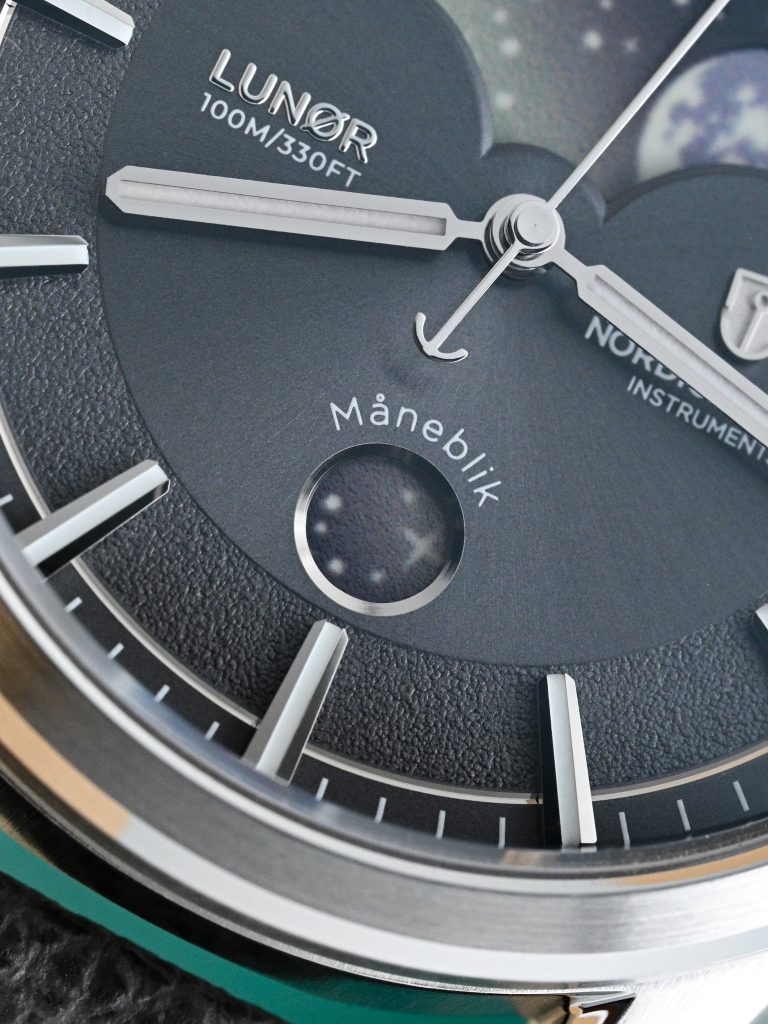
Måneblik is derived from the Danish words for moon and glance, and NMI describes the two apertures as representing views of the moon from the Northern and Southern Hemispheres. Mechanically, however, these aren’t two independent complications. Both windows reveal different portions of the same disc, with the smaller aperture providing an additional reference for the lunar cycle while also adding visual balance.
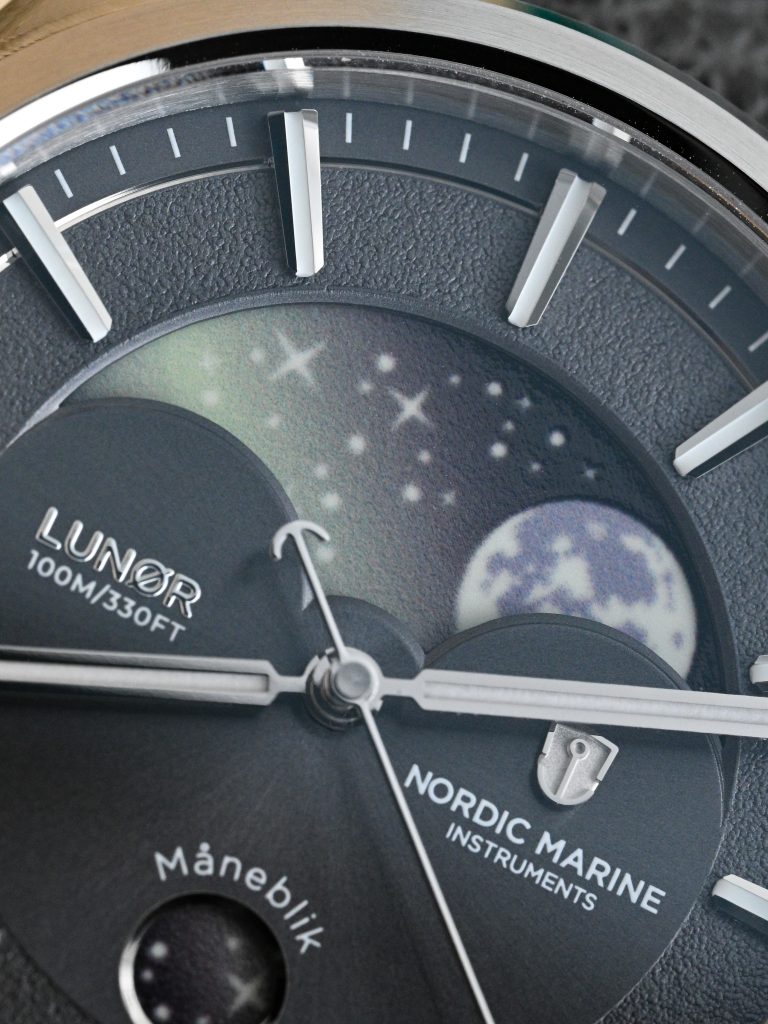
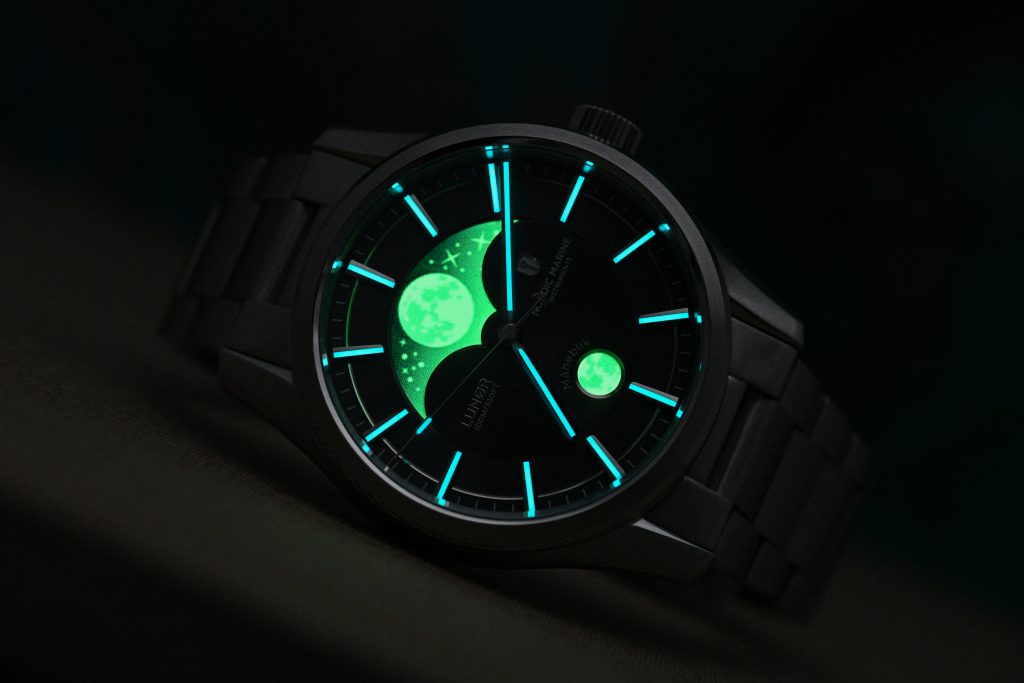
Instead of leaving the space between the moons empty, NMI has filled it with a luminous representation of the aurora borealis. As the disc rotates through its lunar cycle, the moon gradually gives way to this glowing pattern, ensuring that the display remains visually interesting even when the moon itself is not visible.
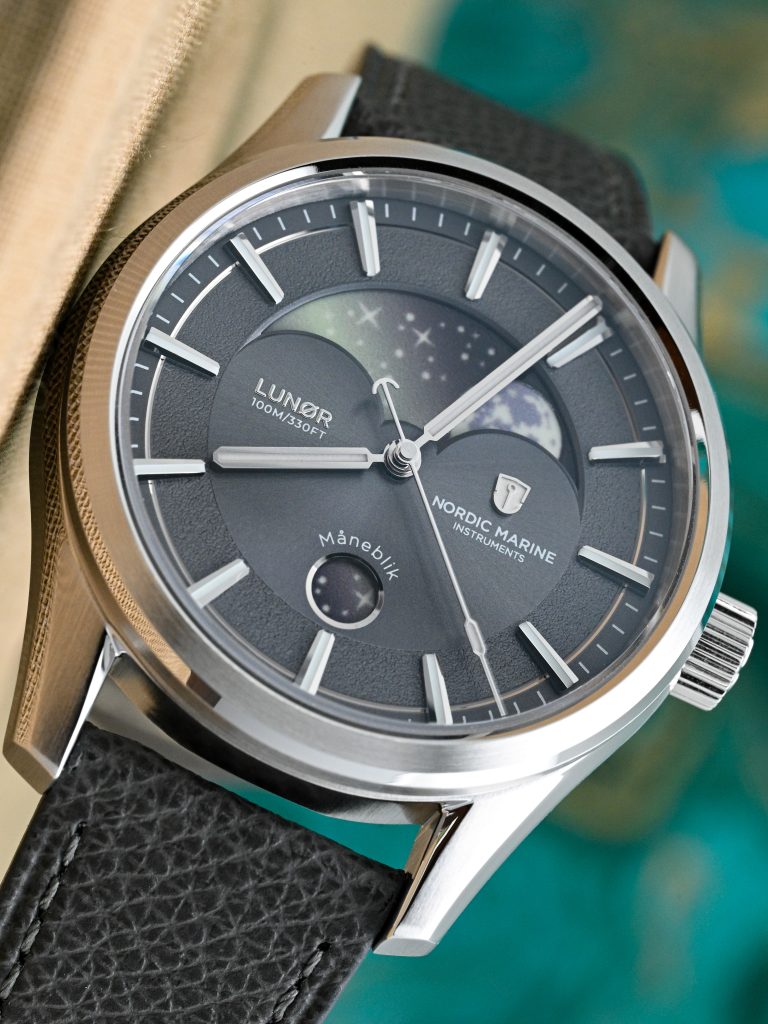
The dial construction is nicely layered, with contrasting surface finishes, applied indices, and polished details surrounding the apertures. There is quite a lot going on visually, but the symmetry and relatively restrained handset prevent it from becoming excessively busy.
Movement
Powering the watch is a modified Miyota 9015 automatic movement, with a custom moonphase mechanism using a 59-tooth driving system to approximate the 29.5-day lunar cycle. I have absolutely no complaints about this choice. In fact, I prefer Miyota’s 9000-series movements to many alternatives in this price category, particularly because of their slim architecture, dependable operation, and suitability as a foundation for additional complications.
Lume
As you might have guessed, this is probably my favorite aspect of the entire watch, and one that I was particularly excited to test. The hands and indices use blue BGW9 Super-LumiNova, while the moonphase disc incorporates green C3 lume for the moons and aurora. The result is a genuinely beautiful display in darkness, with the two apertures creating an unusual amount of visual depth and character.
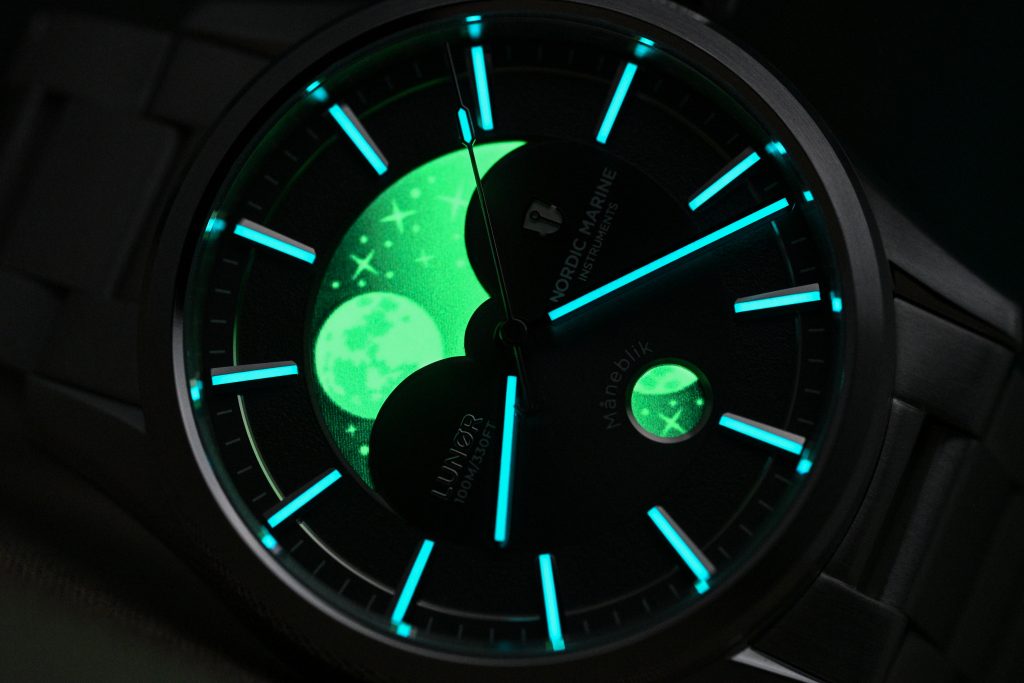
There are some physical limitations here. The hands and indices are relatively slim, so there is only so much luminous material they can accommodate, and the printed moonphase disc faces similar constraints. Nevertheless, NMI has done a terrific job with what is available.
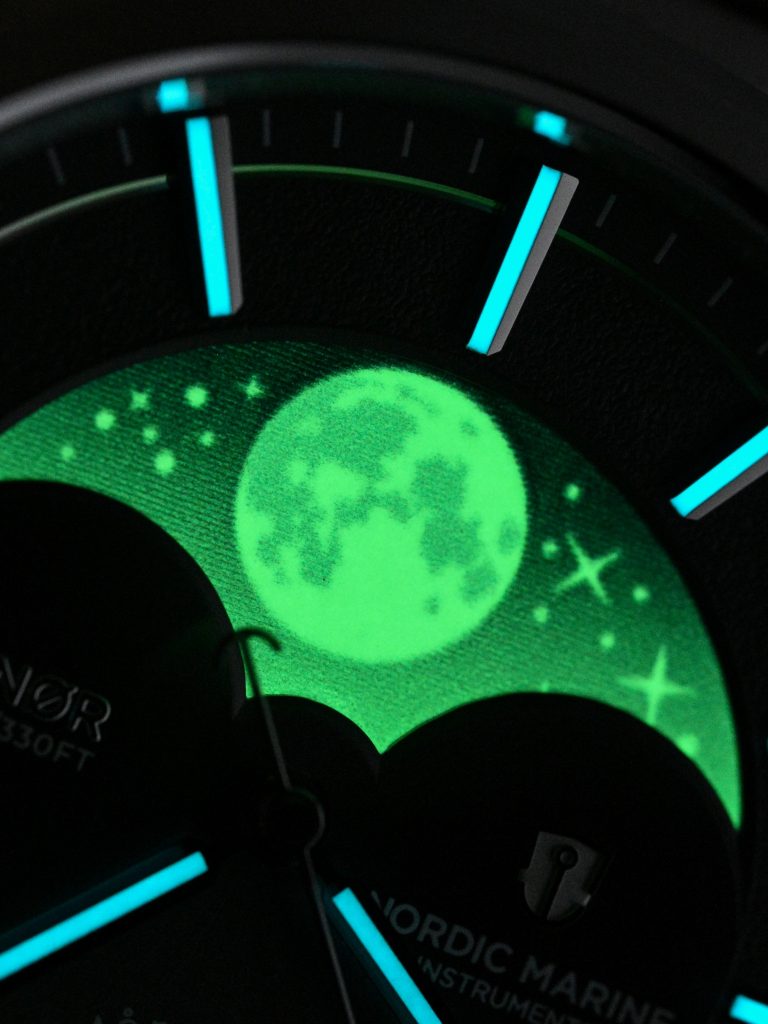
I compared the LUNØR against several other watches in my collection, and it held its ground remarkably well. Both the initial brightness and sustained performance were far better than I expected, particularly considering the relatively delicate luminous elements.
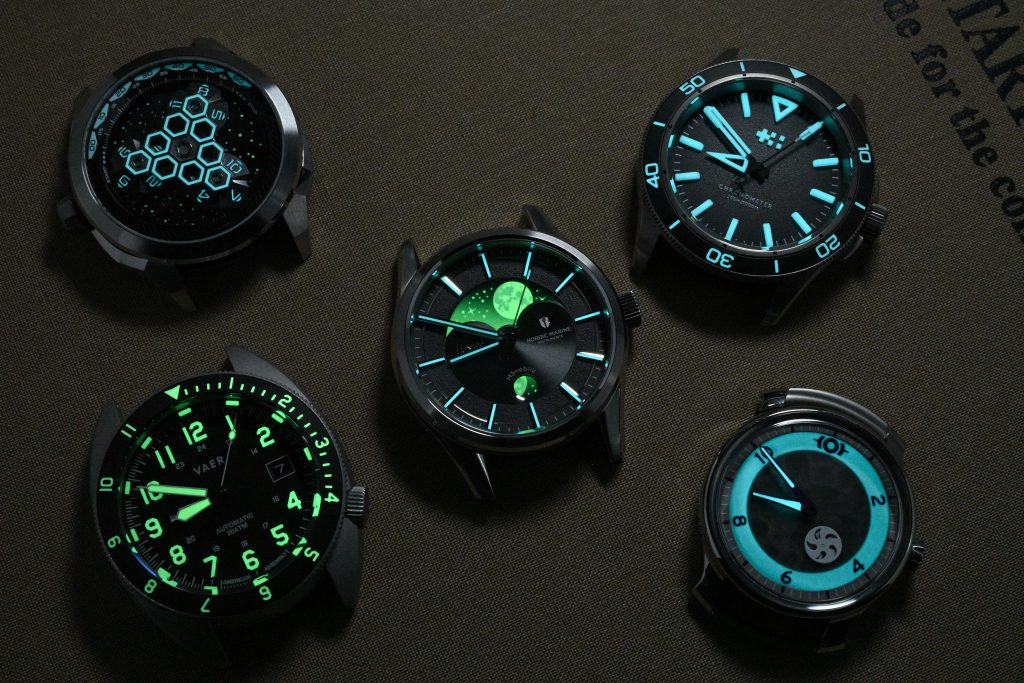
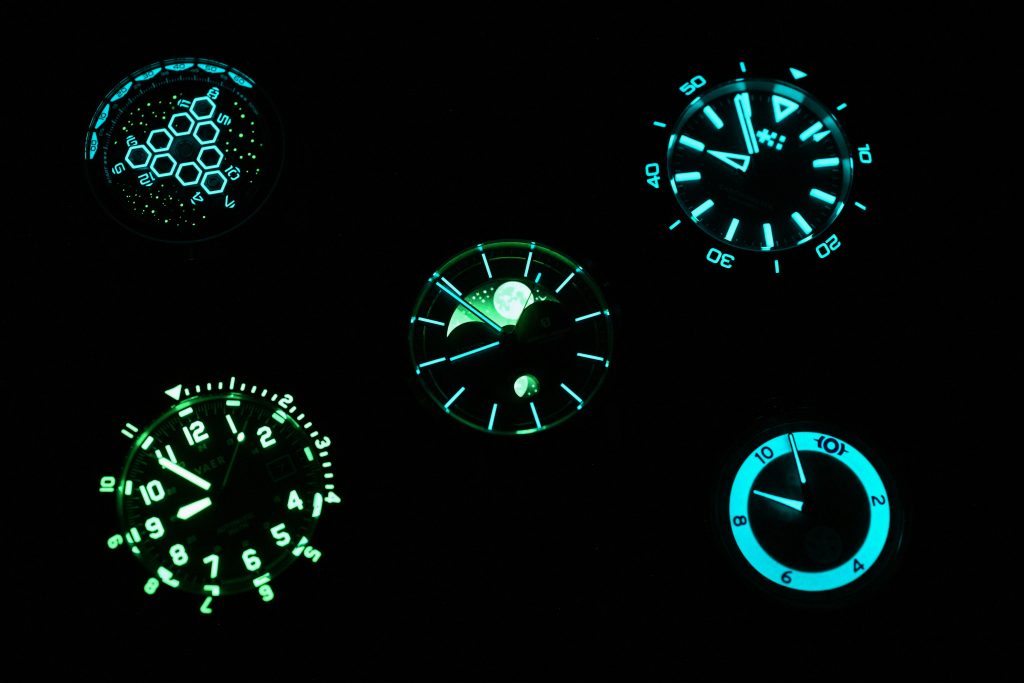
This is especially satisfying given my previous experiences with considerably more expensive moonphase watches. The LUNØR manages to offer a genuinely interesting luminous display without compromising the legibility of the actual timekeeping elements.
Wrapping Up
What I appreciate most about the LUNØR is that the moonphase isn’t being used to distract from an otherwise ordinary watch. Even without the complication, the case finishing, bracelet, wearability, and overall construction would make this a compelling offering. The moonphase is creatively designed, while the excellent lume makes it particularly enjoyable after dark. The movement is sensible, the proportions are comfortable, and the few shortcomings, primarily the clasp finishing, are relatively minor.
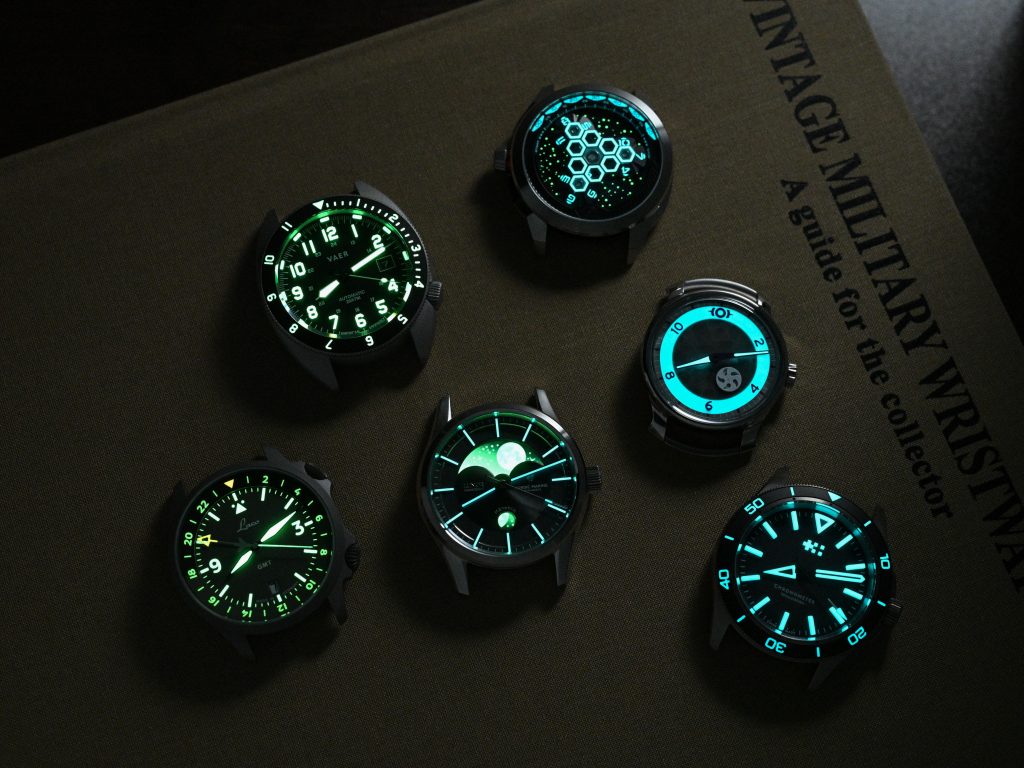
I’ve spent considerably more money on moonphase watches that ultimately left me disappointed. The LUNØR isn’t necessarily more sophisticated than any of them, but it feels like a great overall package at an excellent price. And for me, that makes it a particularly enjoyable return to a complication I had almost forgotten about.