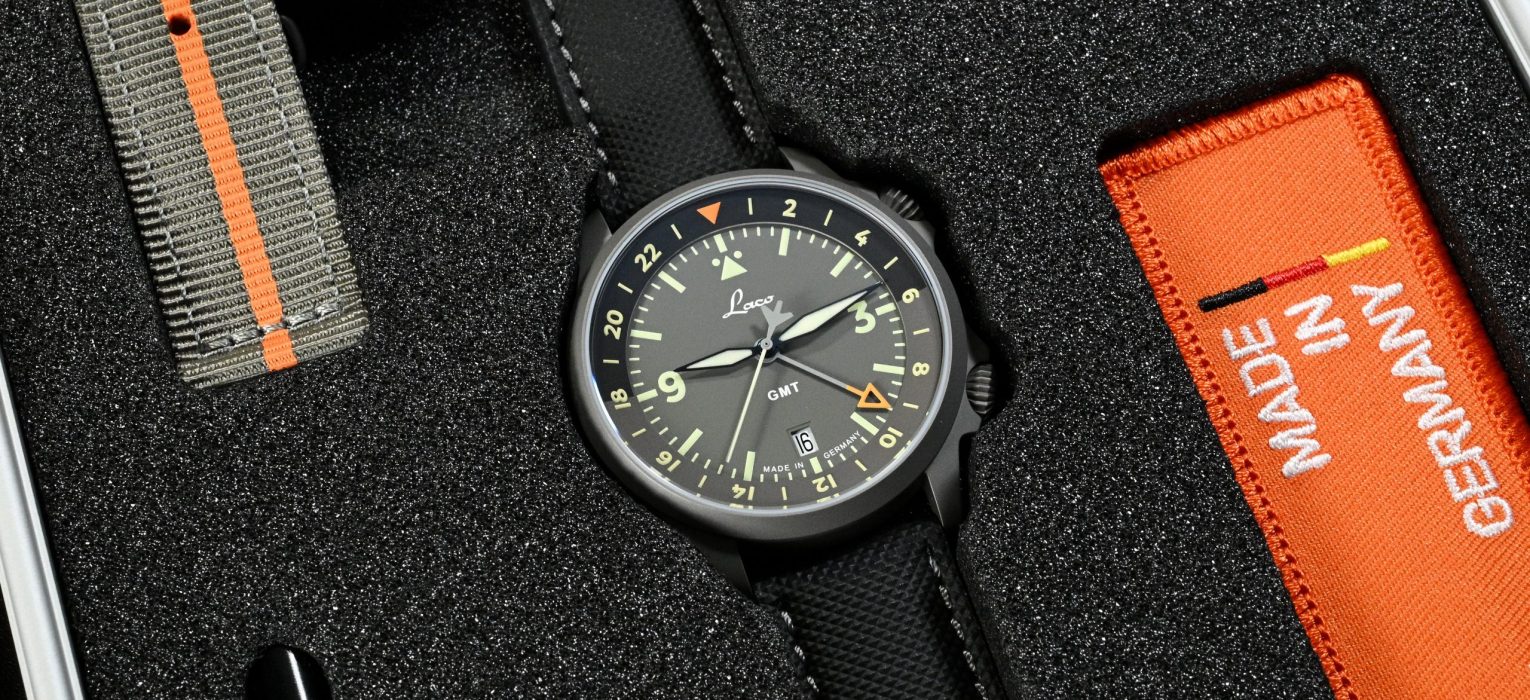
Disclaimer: this video/review was not sponsored by Laco or any other entity.
Video
Laco
Laco has an interesting problem for a watch brand with more than a century of history: the watches most closely associated with its name are also capable of limiting its design evolution. Founded in Pforzheim in 1925 as Lacher & Co., Laco eventually became one of five manufacturers selected to produce the enormous 55 mm Beobachtungsuhren, or B-Uhren, used by the German Luftwaffe during the Second World War. These watches helped establish the design language we now broadly associate with Flieger watches, but Laco’s history extends well beyond their dials.
Through its relationship with Durowe, Laco had genuine movement-manufacturing credentials, with its B-Uhren using the German-made Durowe Caliber 5. After the war, Laco rebuilt, manufactured hand-wound and automatic movements and chronometers. Modern Laco is obviously a very different operation, now relying on Swiss and Japanese base movements, but it continues to assemble, regulate and test watches in Pforzheim.
And while Laco could probably survive indefinitely making recreations of its historic pilot watches, the Frankfurt GMT shows that it is not afraid to move beyond them, and I think that’s a difficult thing to do successfully. And looking at how popular the 43mm version of this watch was, I think it is safe to say that Laco pulled it off.
Let’s check it out!
Case
The Frankfurt originally arrived as a substantial 43mm watch, but this newer 40mm version feels much more appealing to me. I measured the case at 39.85mm in diameter, 46.7mm from lug tip to lug tip and just 11.8mm thick overall, including the sapphire crystal and case-back. The lug width is a convenient 20mm.
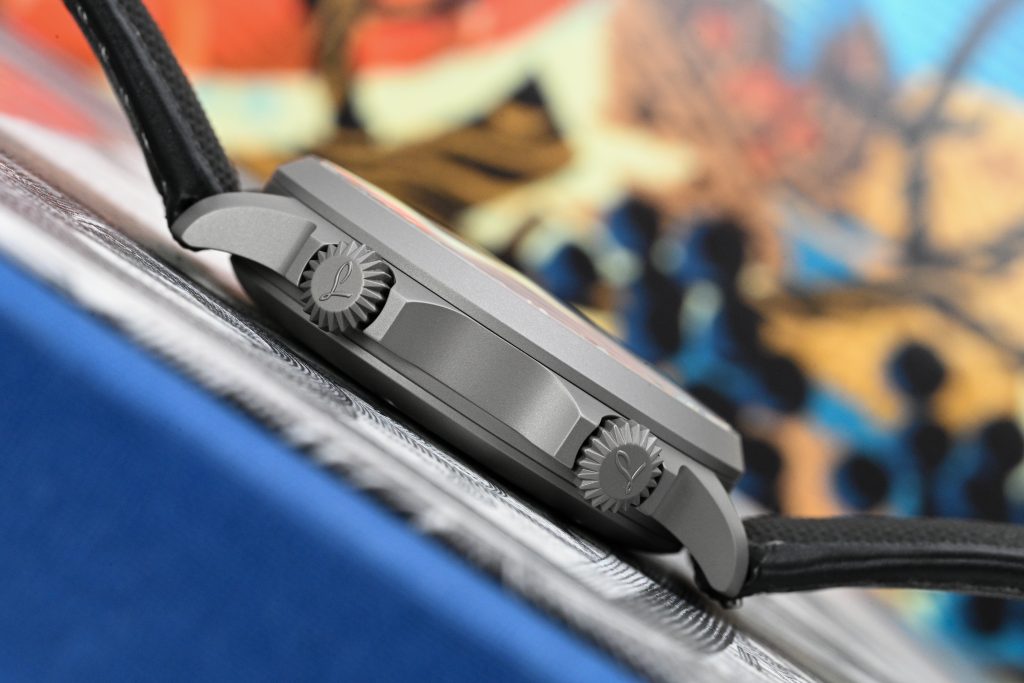
The design is simple, but perfectly executed for this genre of watch. The entire stainless-steel case has a matte, very dark grey finish that almost gives it the appearance of titanium. There are no elaborate polished bevels or decorative surfaces here, but the finishing itself is excellent, as is the overall fit and build quality.
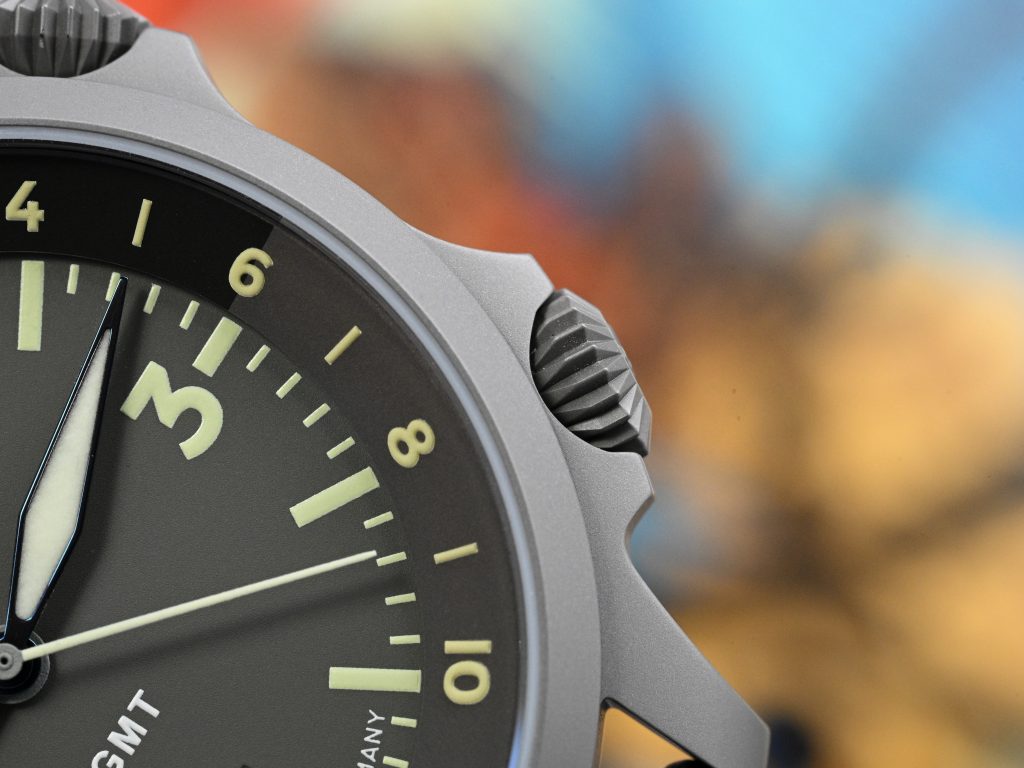
Two screw-down crowns sit on the right side and measure approximately 6mm each. Their deeply machined design gives them incredible grip, and they are fantastic to operate. The watch is also rated to 200m of water resistance, which is impressive for what is a pilot-style tool watch.
On The Wrist
On my 6.75-inch wrist, it wears exceptionally well. The 46.7mm span and restrained thickness keep it compact, and I think the watch itself could comfortably work on significantly smaller wrists too. I also have to mention the supplied strap because I am very rarely impressed by factory straps, even on watches costing significantly more.
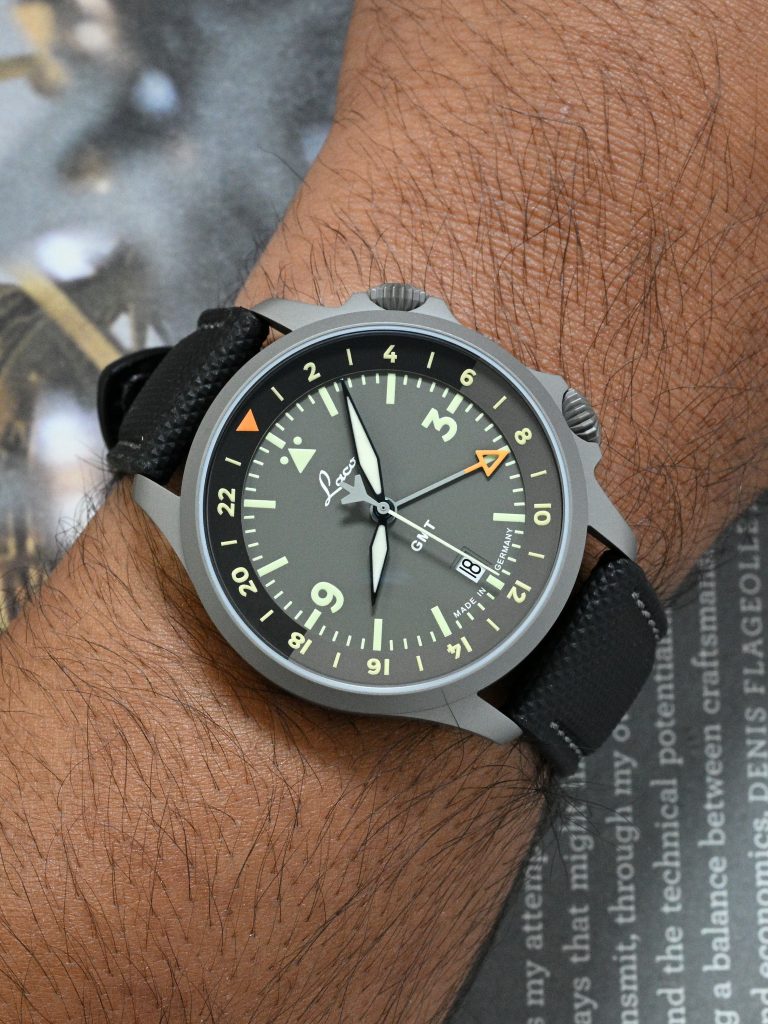
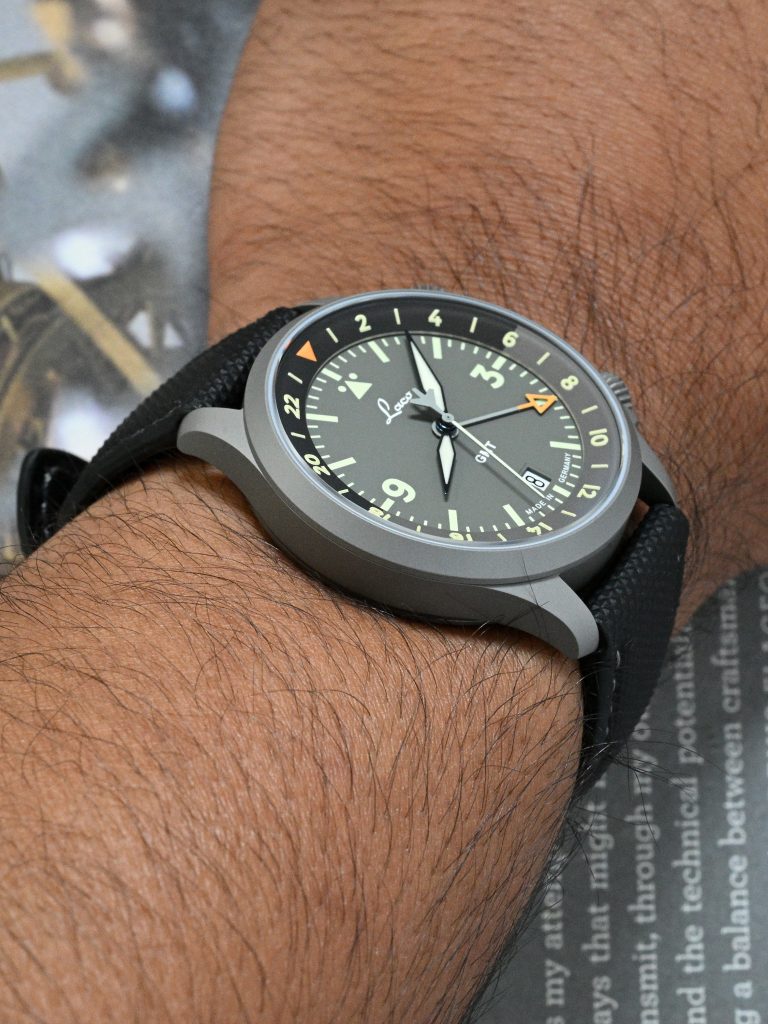
This one is great. It has a soft leather lining, a sailcloth-like outer texture, and excellent stitching and construction. There is no taper, but I actually prefer that here since it suits the Frankfurt’s rugged tool-watch aesthetic. The buckle is somewhat generic in design, but it is nicely finish-matched to the case and carries the Laco logo, so I cannot be too critical.
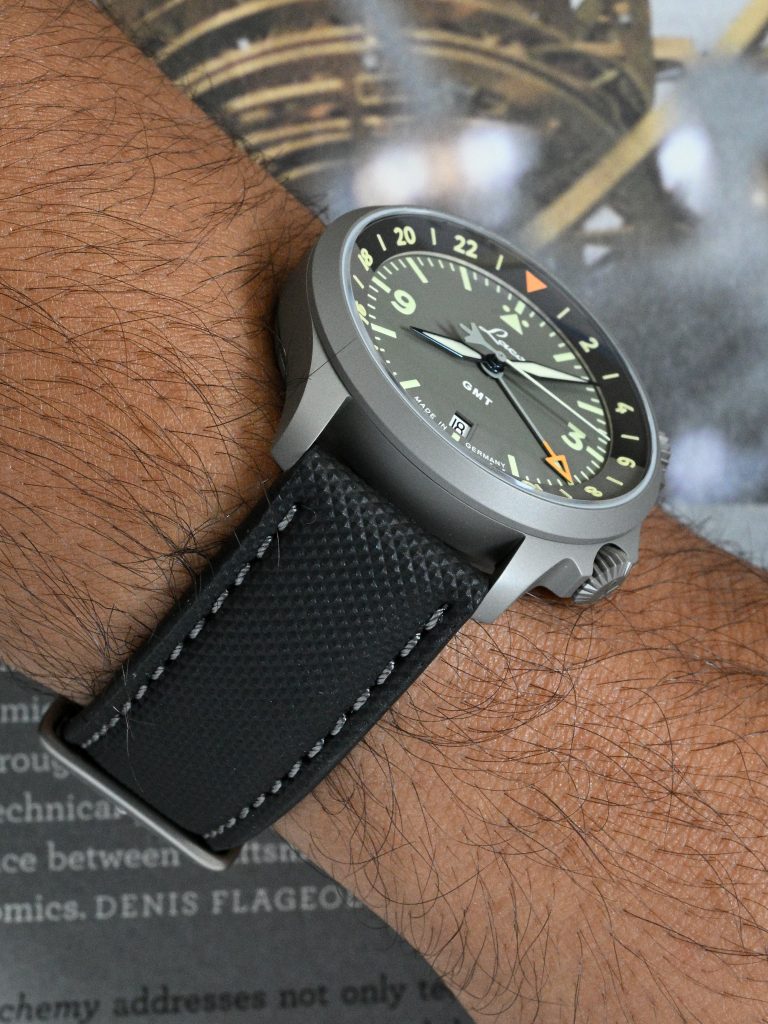
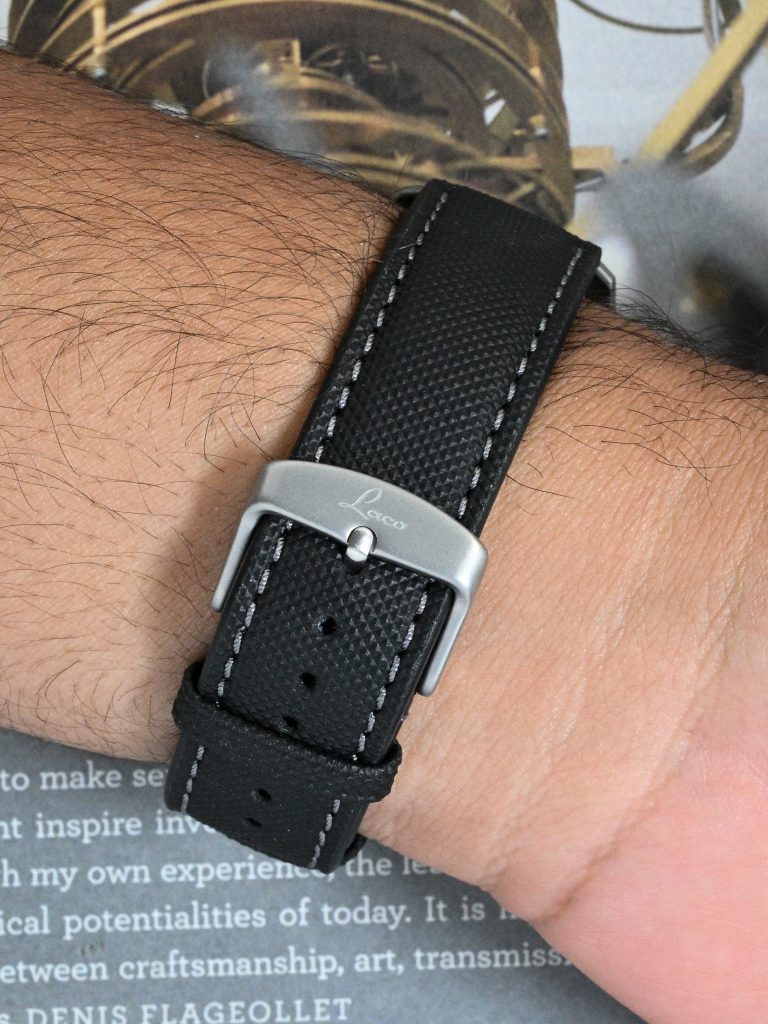
My only real concern is length: I am already using the second hole on my wrist, so while the watch should fit much smaller wrists, the supplied strap might not.
Dial & Lume
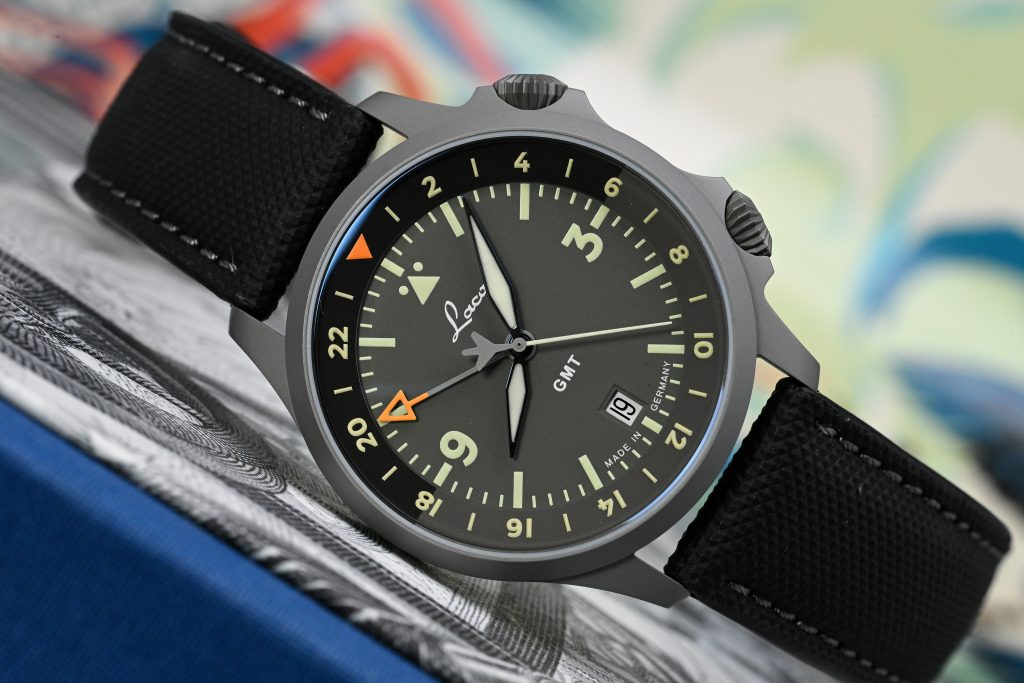
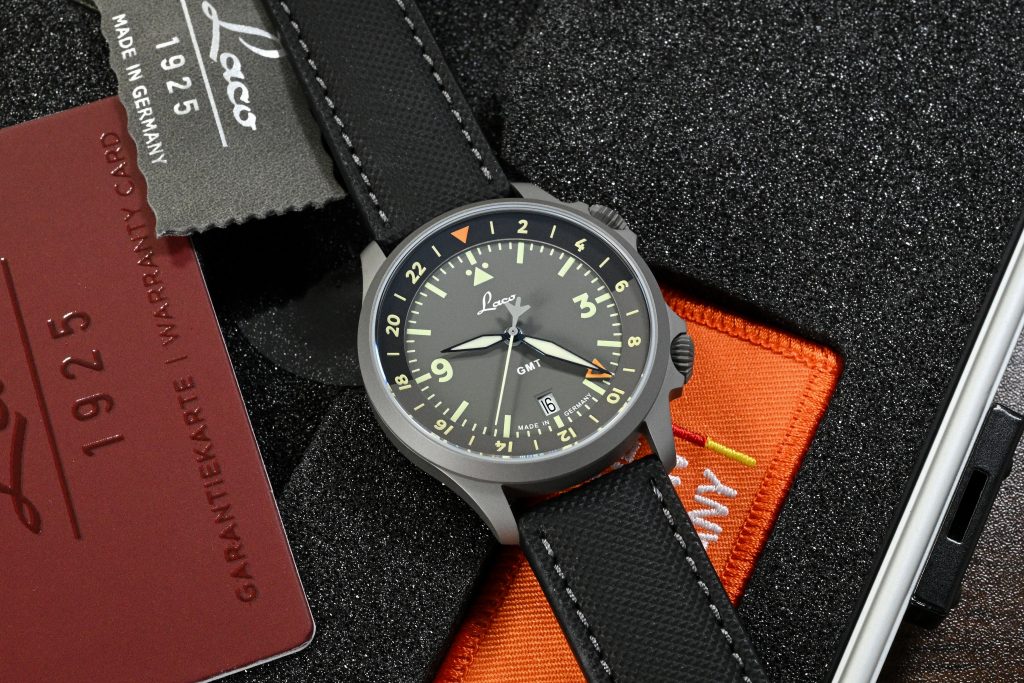
A bi-color internal rotating bezel carries the 24-hour scale and is operated using the screw-down crown at 2 o’clock. It rotates bidirectionally through 48 audible and tactile clicks, and the action is satisfying. The numerals, intermediate markings and orange triangle are all lumed. Moving inwards, you have a cockpit-clock-inspired dial that still makes its heritage obvious. There is a traditional Flieger triangle at 12 o’clock, Arabic numerals at 3 and 9, rectangular markers for the remaining hours and intermediate minute markings around the dial.
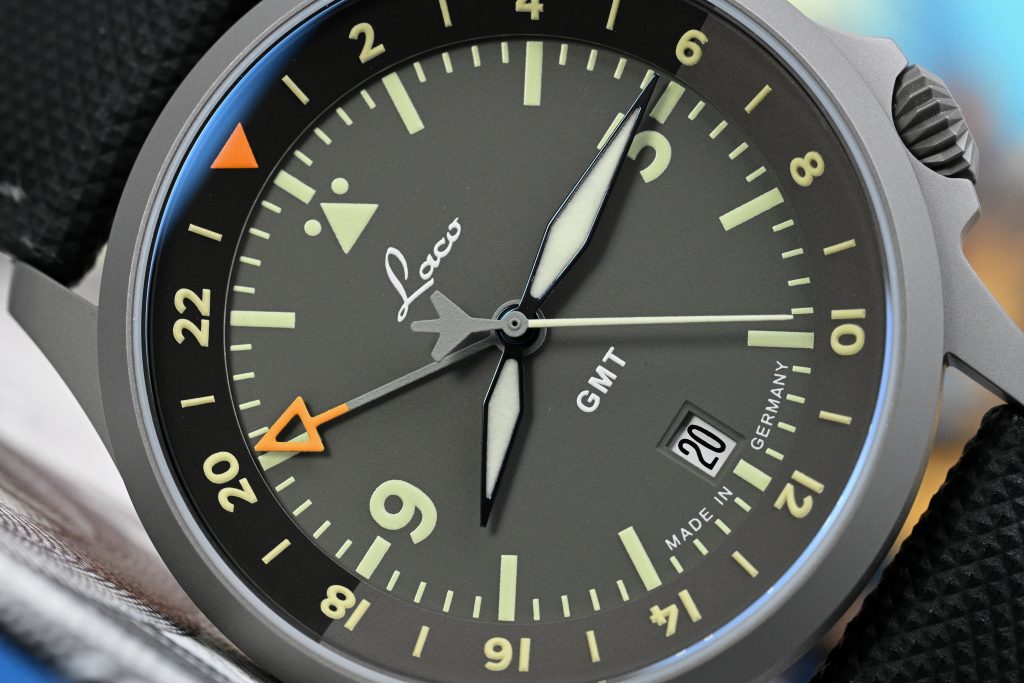
A date sits at 6 o’clock. I usually prefer no-date watches, but when a date is necessary, 6 o’clock is my preferred location. If I had one criticism, I would have liked the date wheel matched to the grey dial. That said, I am sure plenty of people will prefer the additional contrast and legibility of the white date.
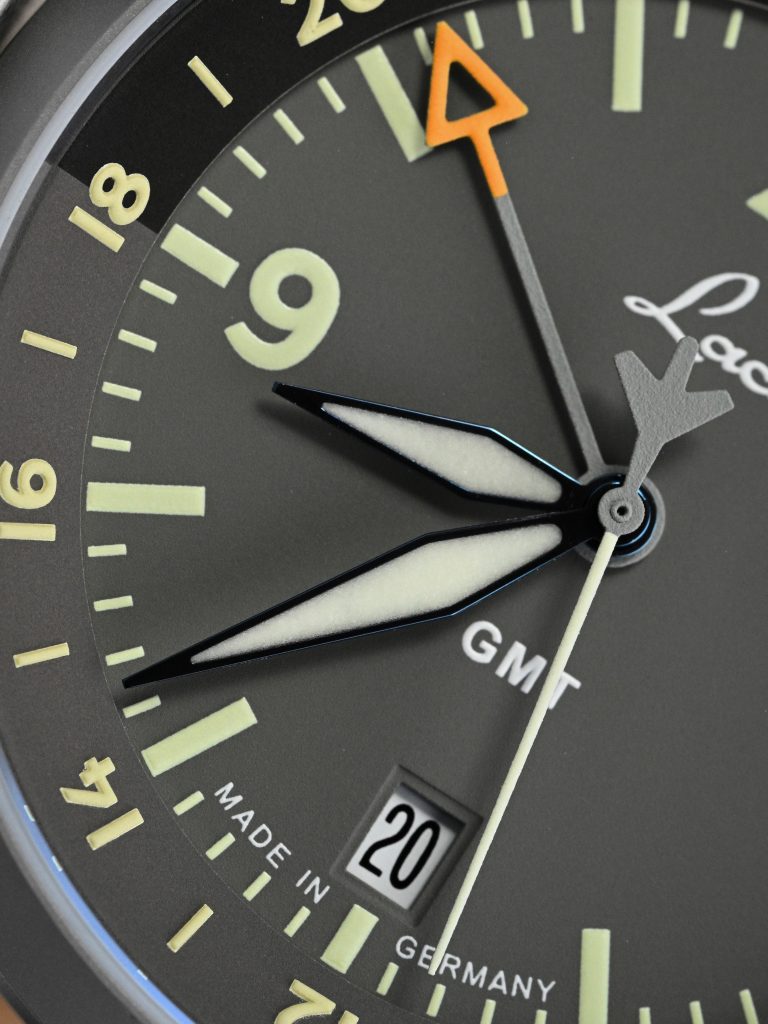
The thermally blued hour and minute hands are gorgeous and very well executed. The skeletonized orange GMT hand is similarly well proportioned and easy to read. Even the seconds hand receives a small airplane-shaped counterbalance. That sounds like something that could become gimmicky, but here it works surprisingly well.
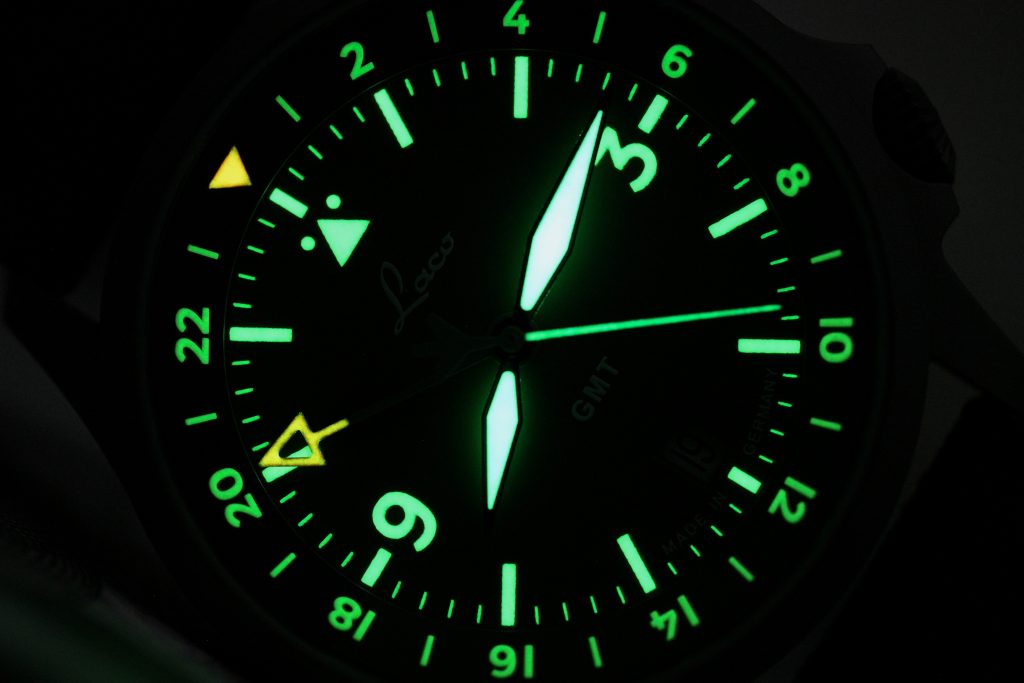
All of the hands are lumed, and the lume performance throughout the watch is excellent. Between the hands, dial markers and rotating 24-hour bezel, the Frankfurt remains remarkably functional at night too.
Movement
Inside is the elaboré-grade Sellita SW330-2. Anyone familiar with my reviews will know that I am a big fan of Sellita’s SW300 family. They are thin, proven, widely serviceable movements, and I would much rather see a good execution of an SW330-2 than an exotic movement chosen purely to make the specifications sheet more interesting.
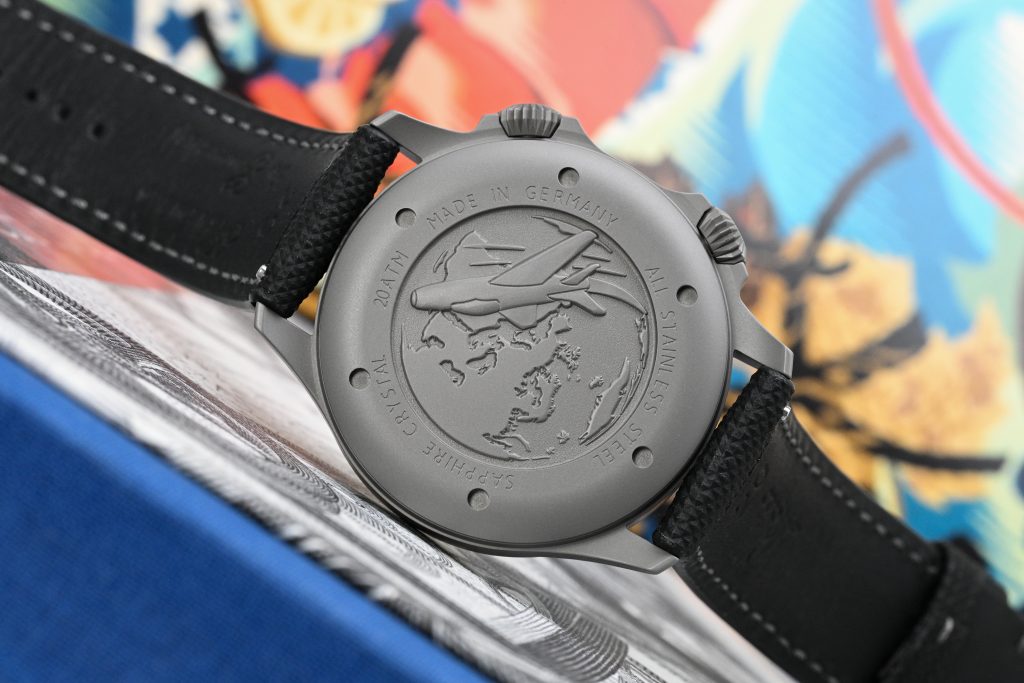
GMT purists love to point out that this is a caller GMT, where the 24-hour hand adjusts independently rather than the local hour hand. Personally, this does not bother me, and from speaking with other enthusiasts, I suspect it matters considerably less to many buyers than online discussions suggest.
Beyond Heritage
Laco can produce extremely faithful Flieger watches, and unlike most companies making them, it has legitimate historical authority to do so. But heritage can easily become a creative constraint, and I see too many big brands that fall into this trap.
The Frankfurt retains the qualities that made those watches successful: excellent legibility, purposeful design and an instrument-like aesthetic. But twin screw-down crowns, an internal GMT bezel, 200 meters of water resistance, excellent lume and a modern 40mm case make it very obviously a contemporary tool watch.
I also appreciate that Laco continues to serve enthusiasts at relatively accessible price points. Many historically significant watchmakers have steadily migrated further upmarket, turning their heritage into something enthusiasts increasingly admire from a distance. At $2,220 USD, the Frankfurt certainly isn’t inexpensive, but it remains attainable compared with watches from many of Laco’s historic contemporaries.