Disclaimer: this video/review was not sponsored by Audemars Piguet or any other entity.
Video
Review
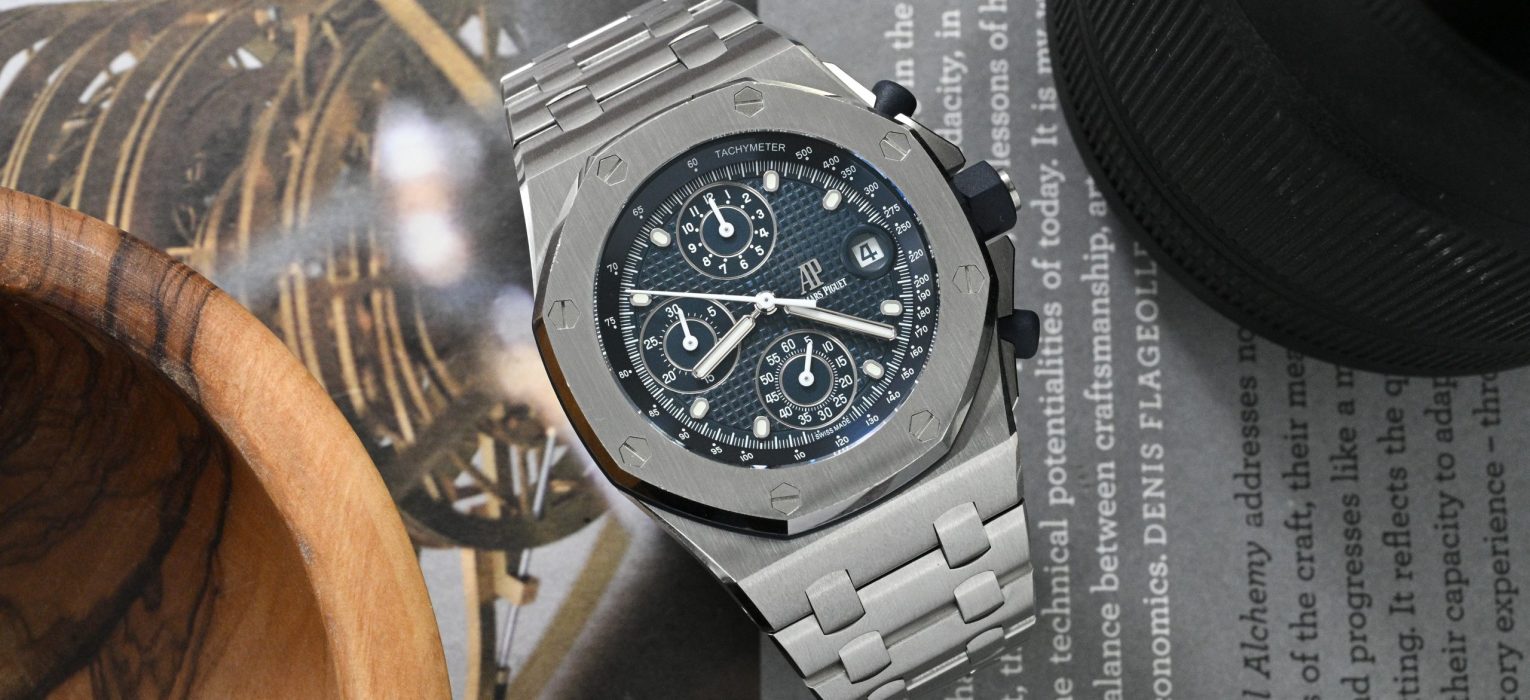
Today, we’ll be looking at the Audemars Piguet Royal Oak Offshore Chronograph reference 26238ST, or the modern steel “Beast”, that traces its design directly back to the original Royal Oak Offshore from 1993.
The original Offshore was designed by Emmanuel Gueit (who is back in the spotlight lately with his design work for the brand Dennison), who took Gérald Genta’s Royal Oak and pushed it in the opposite direction. If the 1972 Royal Oak Jumbo was thin, elegant, architectural, and quietly radical, the Offshore was thick, aggressive, rubber-accented, and intentionally excessive. The shared ingredients were obvious: octagonal bezel, exposed screws, integrated bracelet, Tapisserie dial. But the personalities could not have been more different.

When the Offshore debuted, it caused an immediate scandal. The story goes that Genta himself stormed into the AP booth at Basel and accused them of ruining his Royal Oak. Whether every detail of that story is perfectly accurate or not, the reaction makes sense. The Offshore was enormous for its time, and AP’s own history records that Genta later described it as a “sea elephant”.
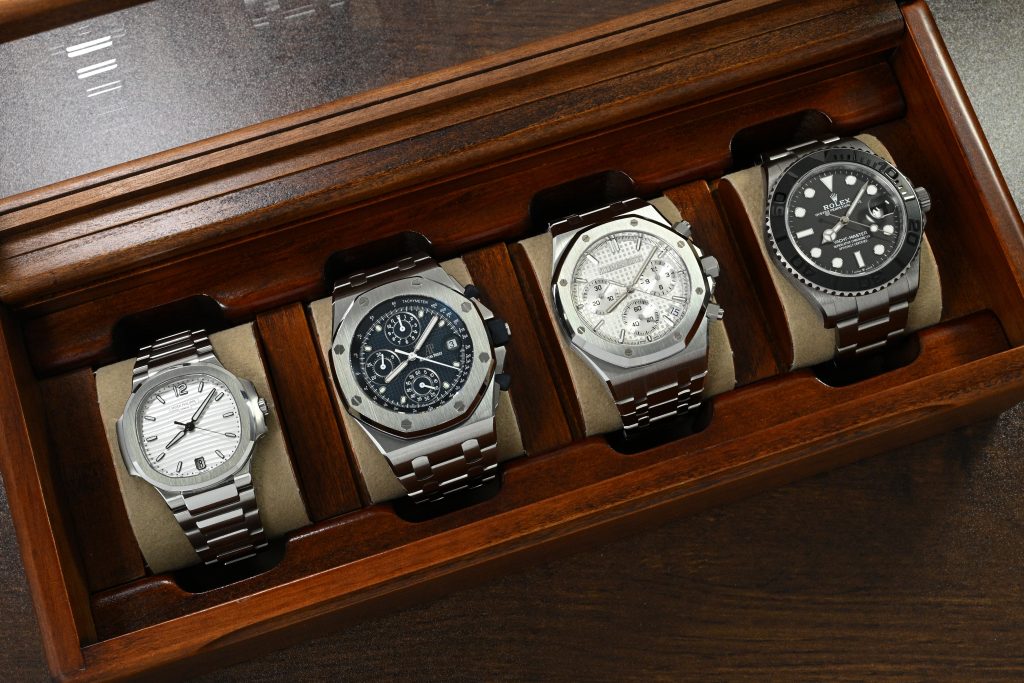
But history was kinder to the Beast than its critics were. The Offshore eventually became a phenomenon, helped push the industry toward oversized luxury sports watches, and for a period in the 2000s, even outsold the Royal Oak. That is what makes this watch interesting: it began as sacrilege, and somehow became an icon. And thanks to all the hype surrounding all variants of the Royal Oak, Audemars Piguet gets away with charging a staggering $51,400 USD for this beast.
Let’s check it out…
Case
The case is stainless steel, 42mm in diameter, 15.3mm thick, and rated to 100m of water resistance. But there is no way around this fact: this watch is huge. The 42mm measurement is taken across the bezel, and that number does not communicate how this watch actually wears. Once you add the crown, chronograph pushers, crown guards, and the visual mass of the bracelet, the effective presence feels much closer to a typical 44mm or 45mm watch.

I measured the case at 48.3mm from spring bar to spring bar, but even that measurement needs context because the bracelet is part of the structure. Based on how the first links articulate, I think you need a wrist span of at least 56mm to wear this watch without obvious gaps between your wrist and the minimum articulating shape of the watch and bracelet.
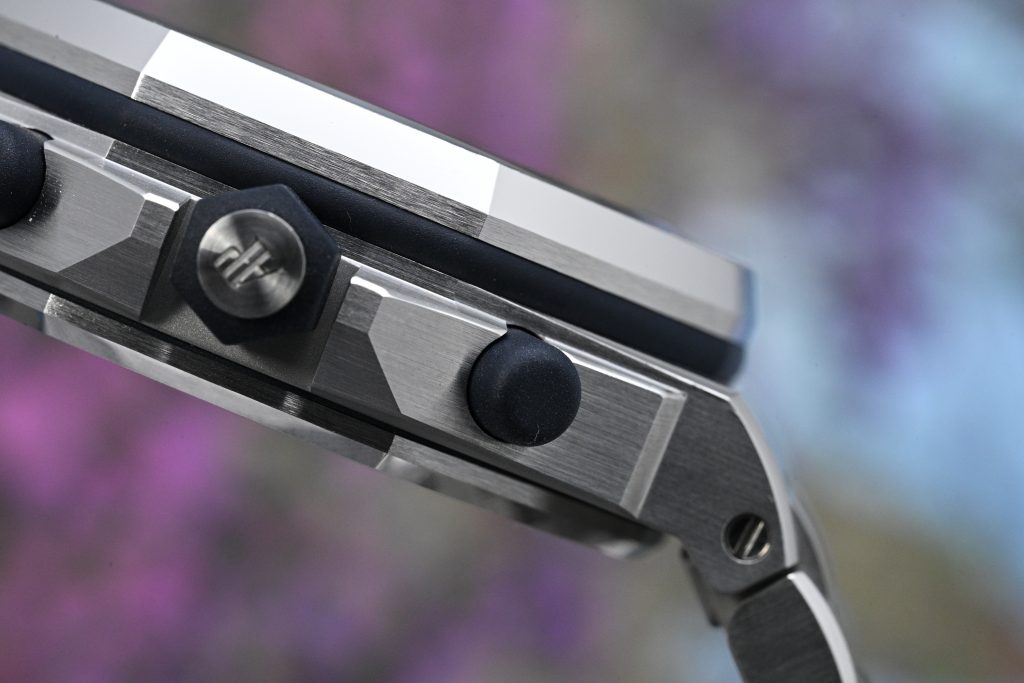
The case profile doesn’t do much to visually reduce the thickness either. I measured roughly 7mm for the mid-case and 5.75mm for the bezel, so the watch reads as a stacked, armored object. But that was the point. Gueit’s own design brief was not to make a graceful Royal Oak chronograph. It was to make something bold, assertive, and deliberately far removed from the Jumbo’s original elegance.
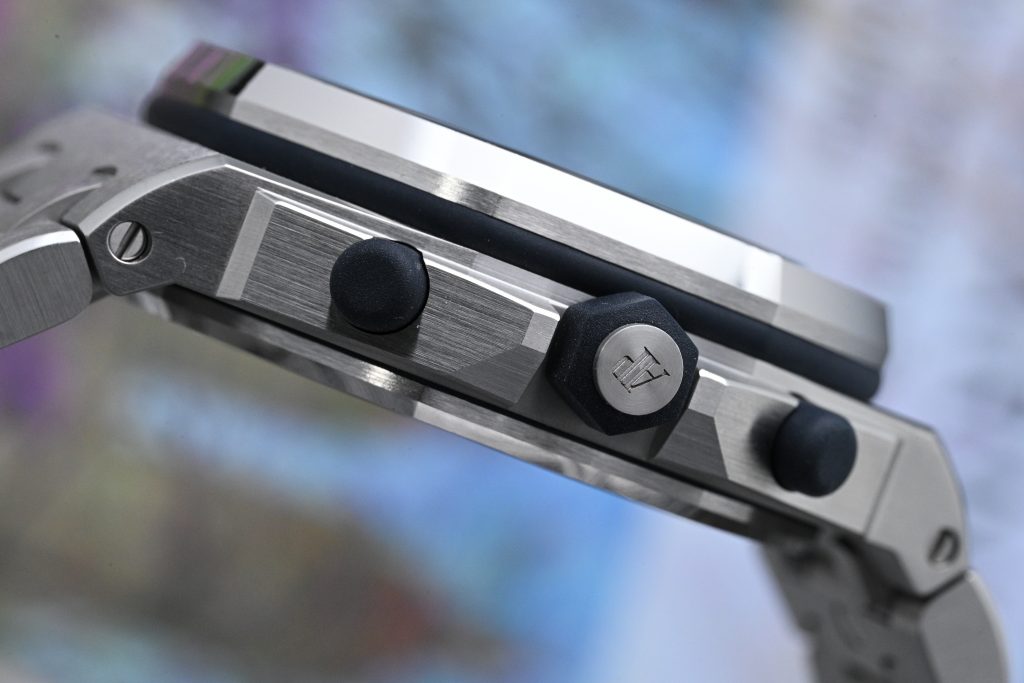
The finishing is excellent, as expected from AP: broad brushed surfaces, polished bevels, tight transitions, and a bezel that still carries the Royal Oak grammar clearly. But this example had a disappointing real-world issue. Three months after being purchased new from an AP boutique, one of the bezel screws came undone and was lost, along with the corresponding screw on the other side of the case. AP fixed it, but for a roughly $50k watch with minimal use, that is difficult to excuse. And the service time for a small issue like this was not ideal either.
Dial
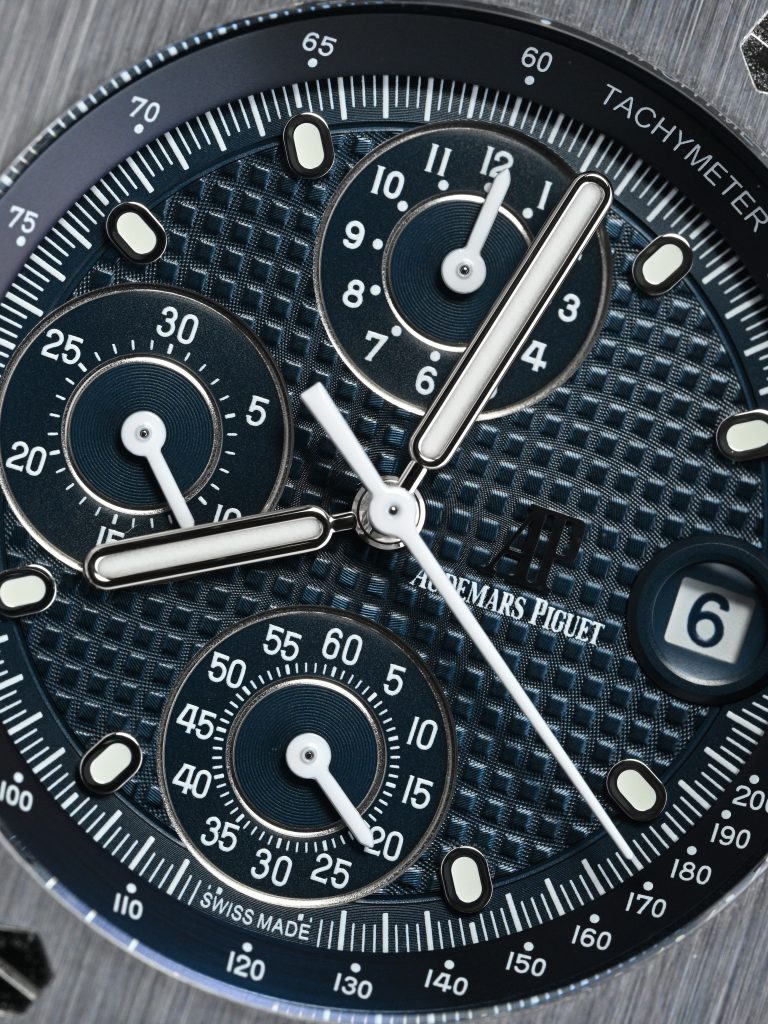
AP uses a blue Petite Tapisserie dial here, not the larger Méga Tapisserie most people associate with later Offshore models. That matters because the original 1993 Beast also used Petite Tapisserie, so this modern reference feels visually closer to the first Offshore and, indirectly, to the 1972 Royal Oak.

The Tapisserie story is also worth understanding. The original Royal Oak dials were made by Stern using guilloché copying machines, a pantograph-style system that traced an enlarged pattern and mechanically engraved a reduced version into the dial blank. This produced the small truncated pyramids and tiny diamond-shaped recesses that give the dial its shimmer. AP later brought this know-how in-house after Stern’s integration into Richemont and the decline of that external supply chain.
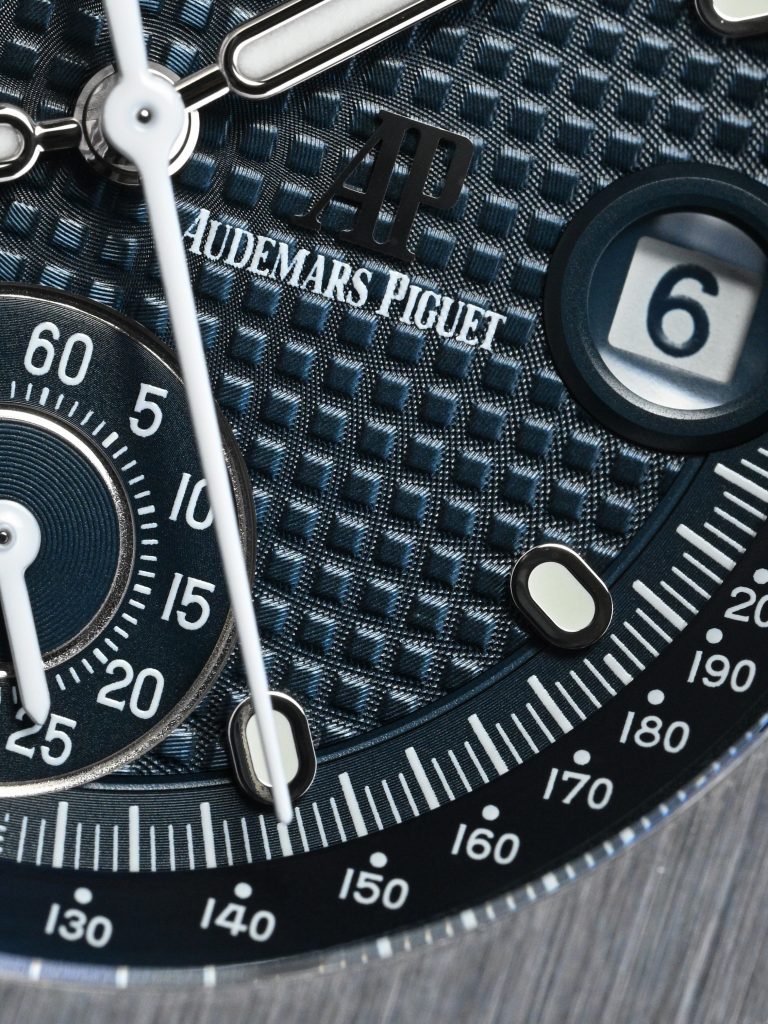
AP distinguishes between Petite and Grande Tapisserie as guilloché patterns, while Méga Tapisserie was historically obtained by stamping and reserved for the Offshore. Since this specific watch uses Petite Tapisserie, it is very likely made using AP’s guilloché-copying process rather than stamped, though I have not found AP stating that this exact 26238ST dial is cut on a pantograph.
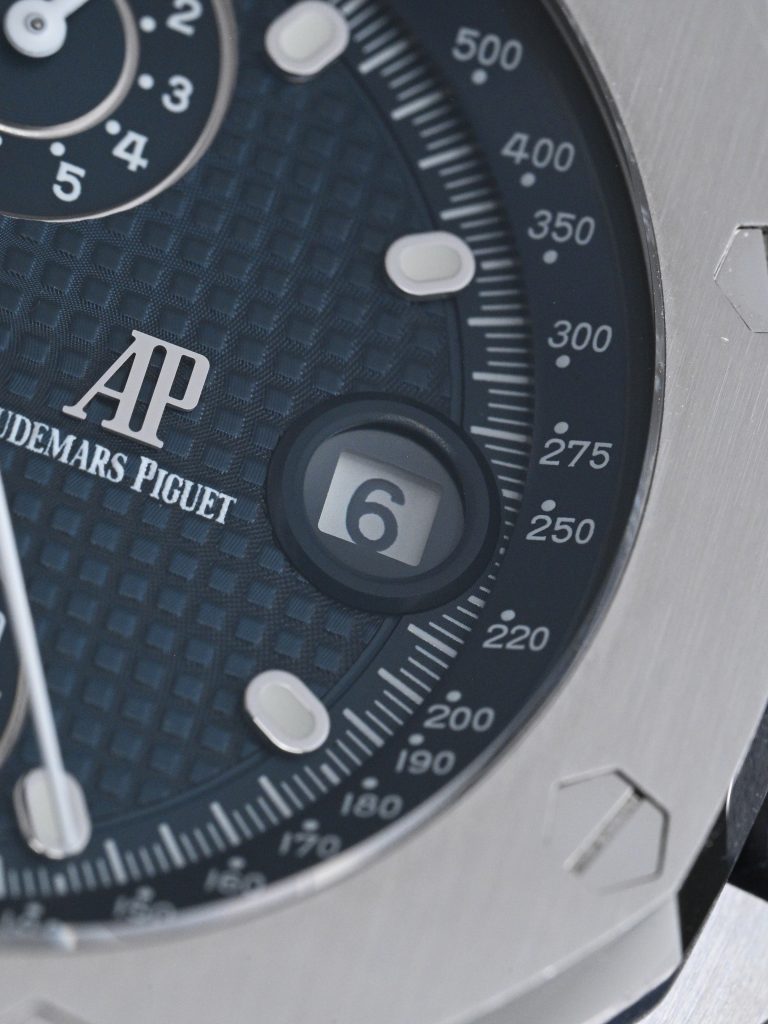
Visually, the dial is excellent. The 12-9-6 chronograph layout is something I have not spent much time with recently, since the industry has moved toward more symmetrical layouts over the last five to seven years. I used to dislike this configuration because it immediately reminded me of the Valjoux 7750, but seeing it again on an iconic Offshore feels right. The integrated magnifier in the date window is also a genuinely cool detail, and historically tied to the original’s much deeper modular date placement.
Lume
The lume is mediocre. That is not especially surprising, because most Royal Oaks and Nautilus watches are not exactly lume monsters, but it still deserves to be said.
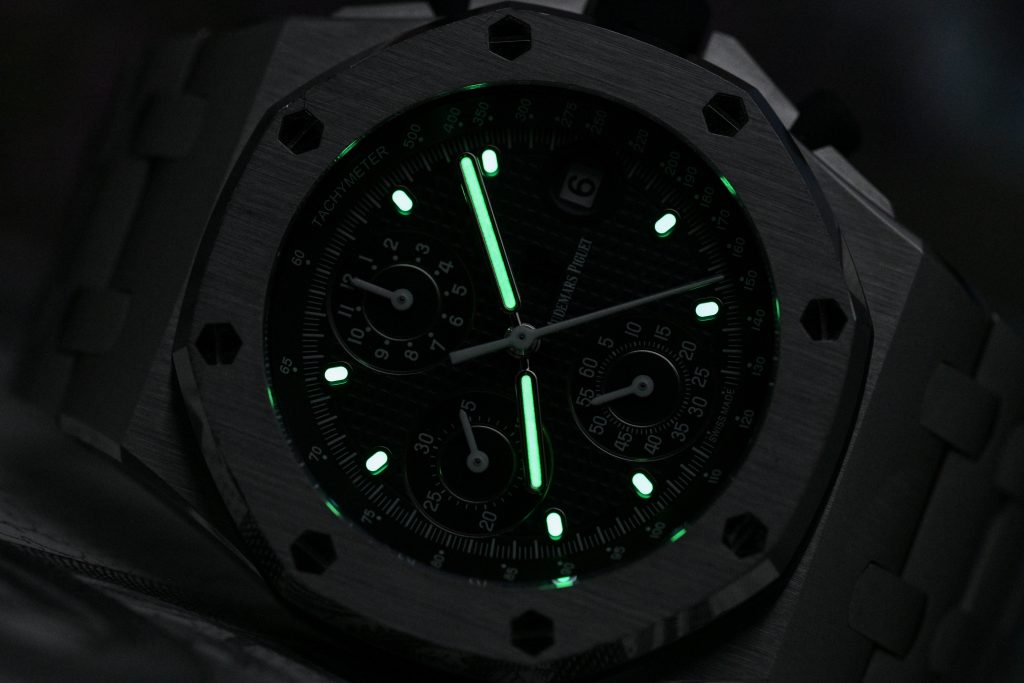
The hands and applied markers are legible enough in low light after a charge, but this is nowhere near a modern Rolex, and very far from what some modern microbrands are doing. Christopher Ward, for example, routinely delivers far stronger luminous performance at a tiny fraction of the price.
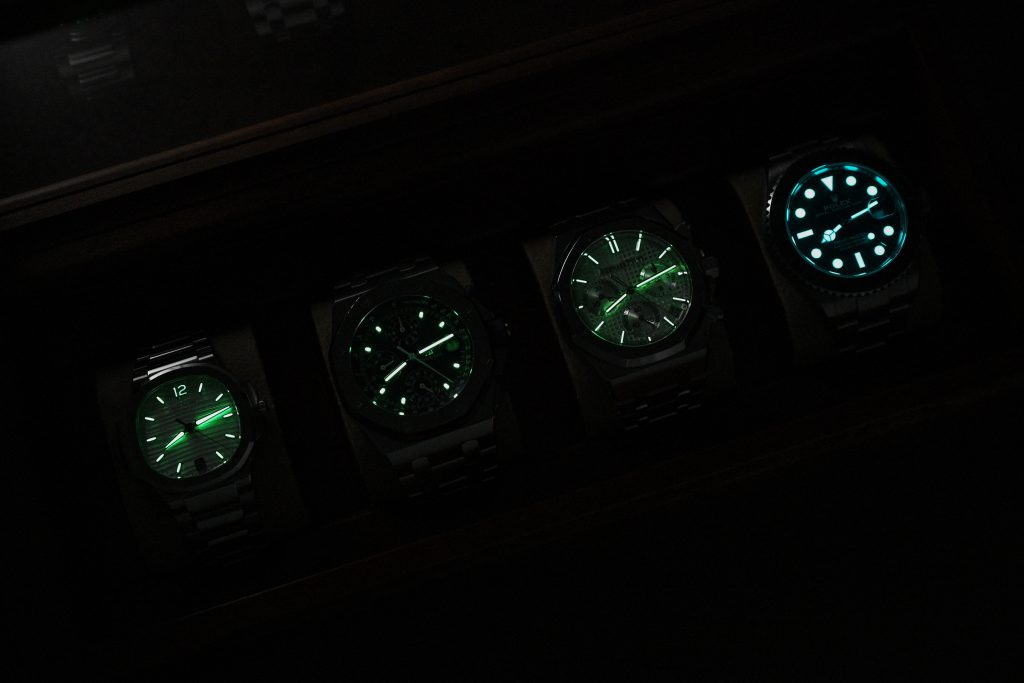
To be fair, the Offshore is not trying to be a practical dive watch, even with 100m of water resistance. The lume exists more as a functional supplement than a defining feature. But at this price level, “barely adequate” still feels like the verdict.
Movement
Inside is AP’s Calibre 4404, a self-winding integrated flyback chronograph derived from the 4401 family. It has a column wheel, vertical clutch, flyback function, 70-hour power reserve, 4 Hz frequency, 40 jewels, and 433 components. Mechanically, this is a major evolution from the original Offshore, which used a JLC base with a Dubois Dépraz chronograph module.

The operation is excellent. The chronograph pushers feel robust, the flyback action is satisfying, and the whole movement gives the watch a more credible technical foundation. This is the movement the Beast should probably have had for a long time.
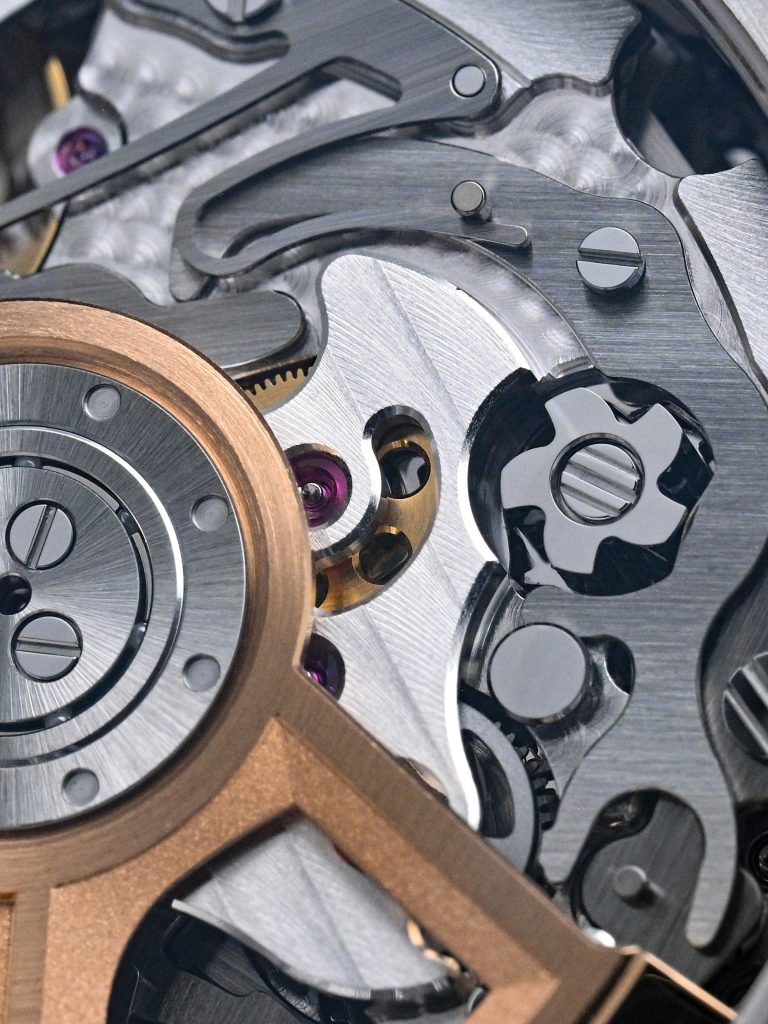
That said, the finishing leaves me conflicted. It is clean, modern, and industrially well executed, with broad decorative finishing and a gold rotor, but I don’t see much evidence of human intervention or elevated hand-finishing. For a watch near $50k, I would have liked to see something more refined than the average high-quality entry-level luxury movement from brands like H. Moser & Cie., Schwarz Etienne, or Le Temps Manufacture (LTM).

But with a watch like this, I suspect the buyer is not primarily shopping for haute horlogerie finishing. The movement is technically appropriate, robust, and enjoyable to operate. It just does not make the strongest emotional argument through the caseback.
On The Wrist
Sized for my 6.75-inch wrist, this watch weighs an incredible 235g. The bracelet starts around 27.5mm at the case and tapers to about 18mm at the clasp, so there is a surprising amount of taper, but the links are thick, the head is heavy, and the wrist presence is unlike almost anything else.


There is no micro-adjustment or on-the-fly adjustment, which I think is a real crime in 2026, especially on a watch this heavy. AP does include an irregular 1.5 link, so you have some ability to refine the fit, but this is still not the kind of clasp system I expect at this price.
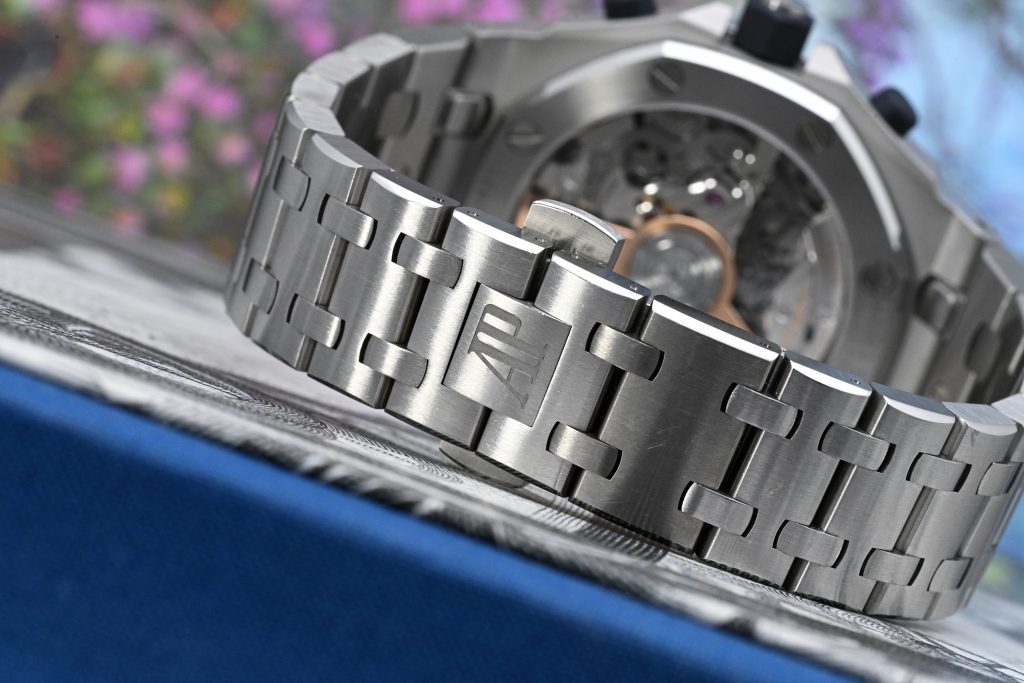
My wrist span lets me wear it without looking too ridiculous, but even with compatible dimensions, I’m not sure this is a watch I would personally wear often. It requires a very particular kind of person to enjoy something this bold. The owner of this watch is exactly that person, and he absolutely loves it.
Wrapping Up
The modern Beast is not a Royal Oak for someone who wants subtlety. It is not elegant in the Jumbo sense, and it does not try to be. It is the Royal Oak language pushed into a louder, heavier, more muscular form.
That tension is what makes the watch historically important. The Jumbo and the Beast are polar opposites that somehow share the same design vocabulary. One helped define the luxury sports watch. The other helped define the oversized luxury sports watch.

I respect this watch a lot more after spending time with it. I don’t think it is perfect: the lume is weak, the bracelet needs better adjustability, the movement finishing could be more elevated, and the bezel screw issue on this example is hard to overlook. But as an object, the Beast still does exactly what it was designed to do. It dominates the wrist, challenges good taste, and makes the original Royal Oak feel almost delicate by comparison. And for a watch that was once treated as heresy, that is a pretty remarkable legacy.