Disclaimer: this video/review was not sponsored by Oliver Gallaugher or any other entity.
Video
Review
If you’ve followed this little corner of independent watchmaking for long enough, you know how often the interesting stories are not happening inside huge manufactures, but around individuals trying to get an idea into production with almost no safety net. The O.G Deep Space Blue is exactly that kind of watch. Oliver Gallaugher does not actively manufacture the components himself, and this is very much an outsourced watch, but talking to him does not make it feel corporate or detached. It feels home grown, stubborn, and full of the blood, sweat and tears required to make something like this real.
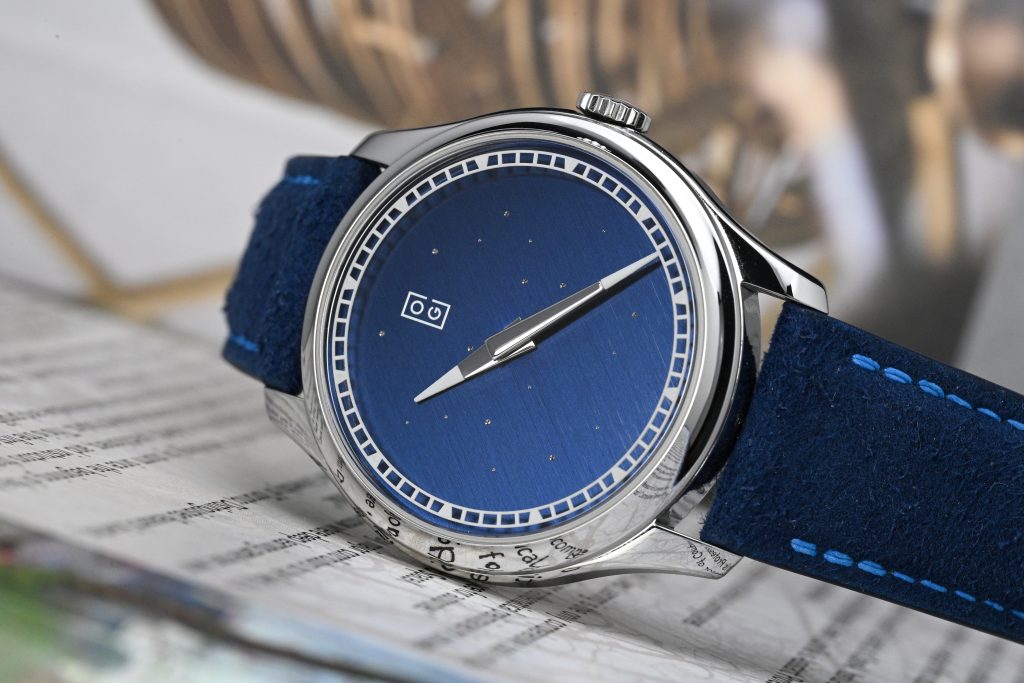
The asking price for his second offering, the Deep Space Blue, is $12,800 USD, with delivery quoted at 8-12 months. That is a bold ask for a watch most collectors have never heard of, but in the world of bootstrapped independents, it is unfortunately not unusual. Oliver self-funded the project, used pre-orders to start production, and has already completed one successful ten-piece Deep Space release. The site previously mentioned 35 pieces, but Oliver told me this Deep Space Blue run will be limited to 10, with a few preorder slots still available at the time of this review.
Let’s check it out!
Case
I measured the 904L stainless steel case at 38mm in diameter, 43.5mm lug-to-lug, 9mm thick, with a 20mm straight lug width and a narrow but wide 5.75mm signed push-pull crown at 3 o’clock. The crown is easy to grip and operate, which matters on a manually wound watch.
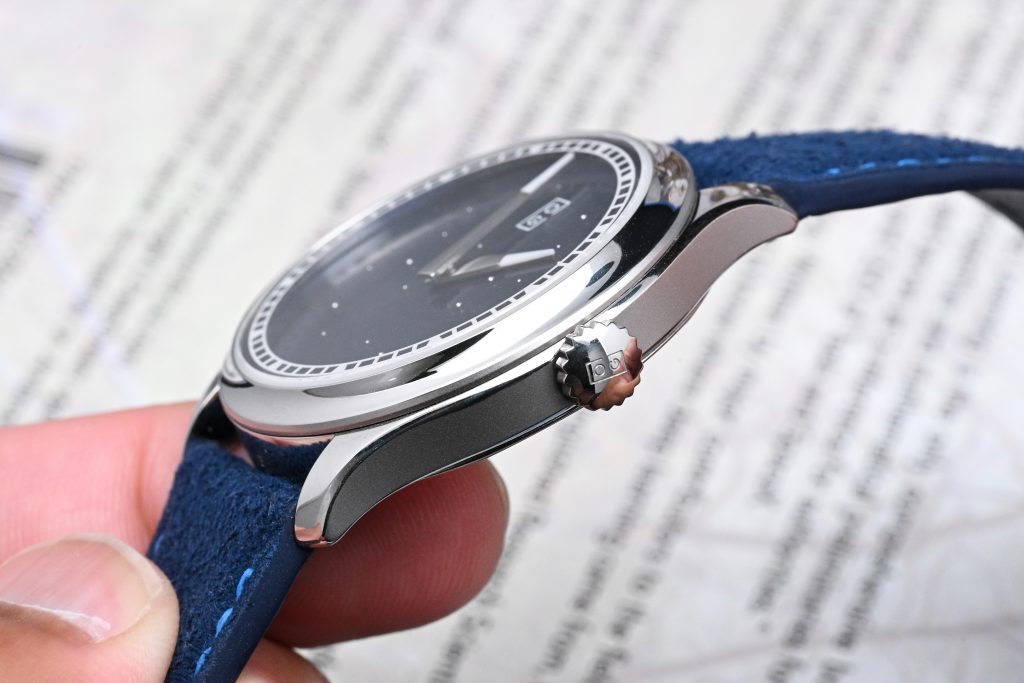
The case, hands, and buckle are made in China by Atmoz, and I like that Oliver is transparent about this. When a watch is primarily outsourced, it is good to know who is doing what, especially as enthusiasts become more familiar with specialist component manufacturers.

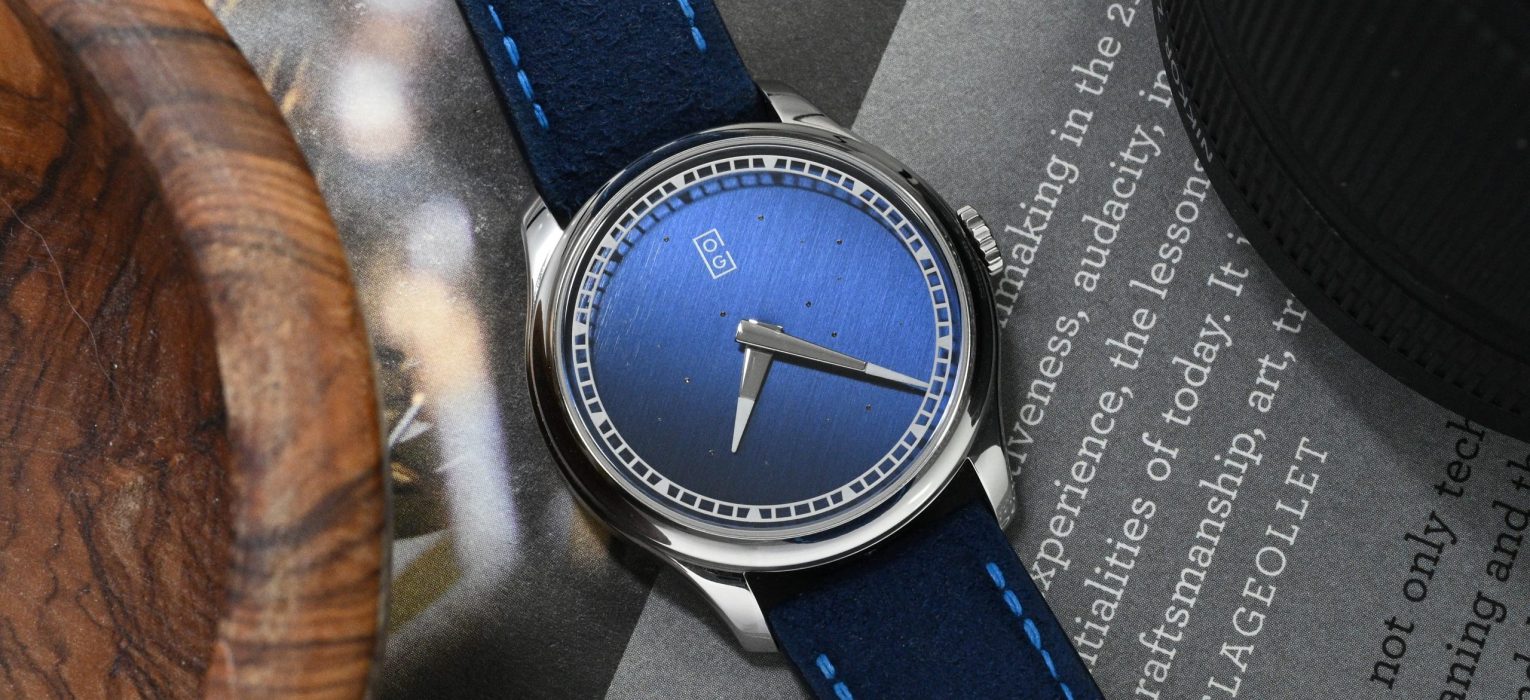
The build quality and finishing are excellent. The 4.5mm midcase is elegantly bevelled, the concave bezel helps reduce visual height, and the polished and blasted surfaces give the case enough relief to feel slimmer than the numbers suggest. It is shockingly light at 55g on the included strap, while still feeling properly made. This watch is rated to up-to 50m of water resistance.
Dial
The dial is made in Germany by Cador, and this is where the Deep Space Blue most clearly explains itself. The base is finely brushed, then given a custom blue lacquered coating before each star pattern is engraved and rhodium finished.
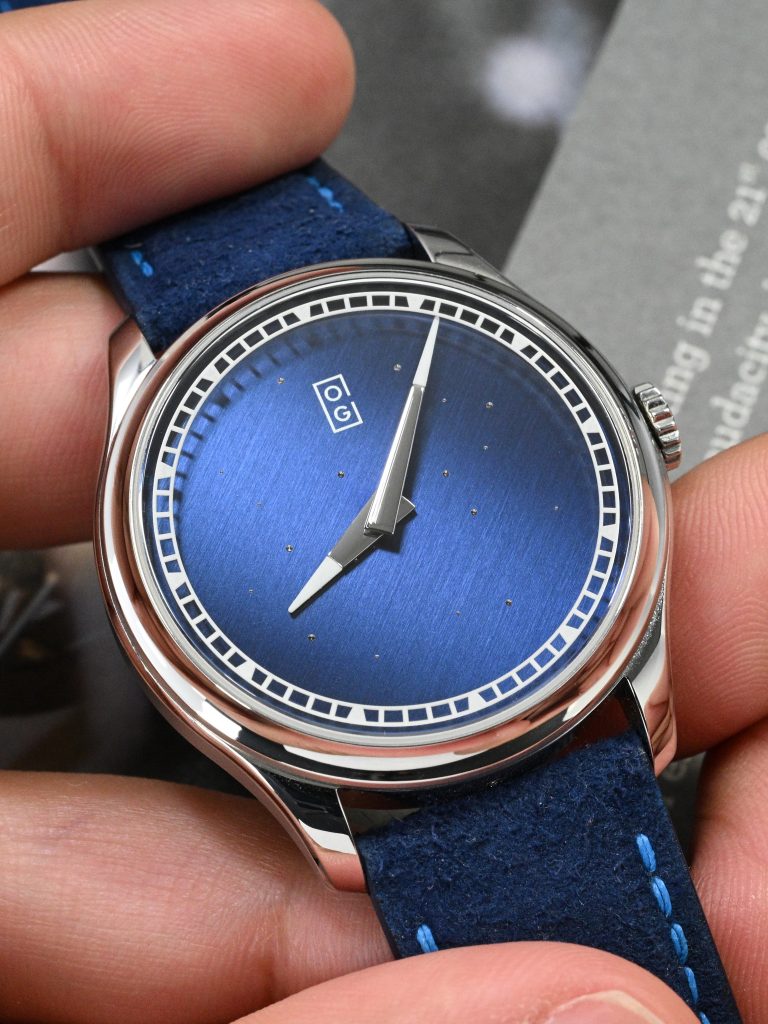
The dynamic effect comes from how the brushed surface and engraved stars interact with light. As the watch moves, the dial channels reflections diagonally, causing the stars to flash and fade across the blue surface. It is a simple idea, but the execution is surprisingly convincing in person.
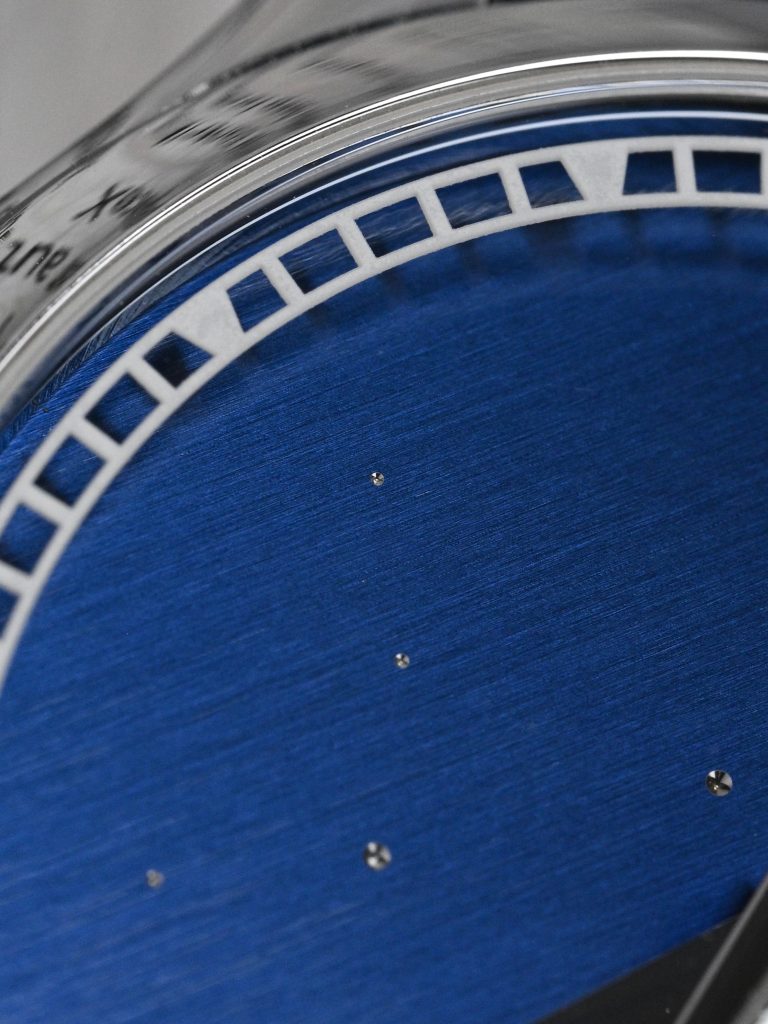
Each dial can also be personalized. O.G can use astronomical simulation to recreate the night sky from a specific date, time, and location, then use that arrangement to inspire the engraved star pattern. At one point I believe even De Bethune did something like this, but I’m not sure if they offer that as an option anymore.
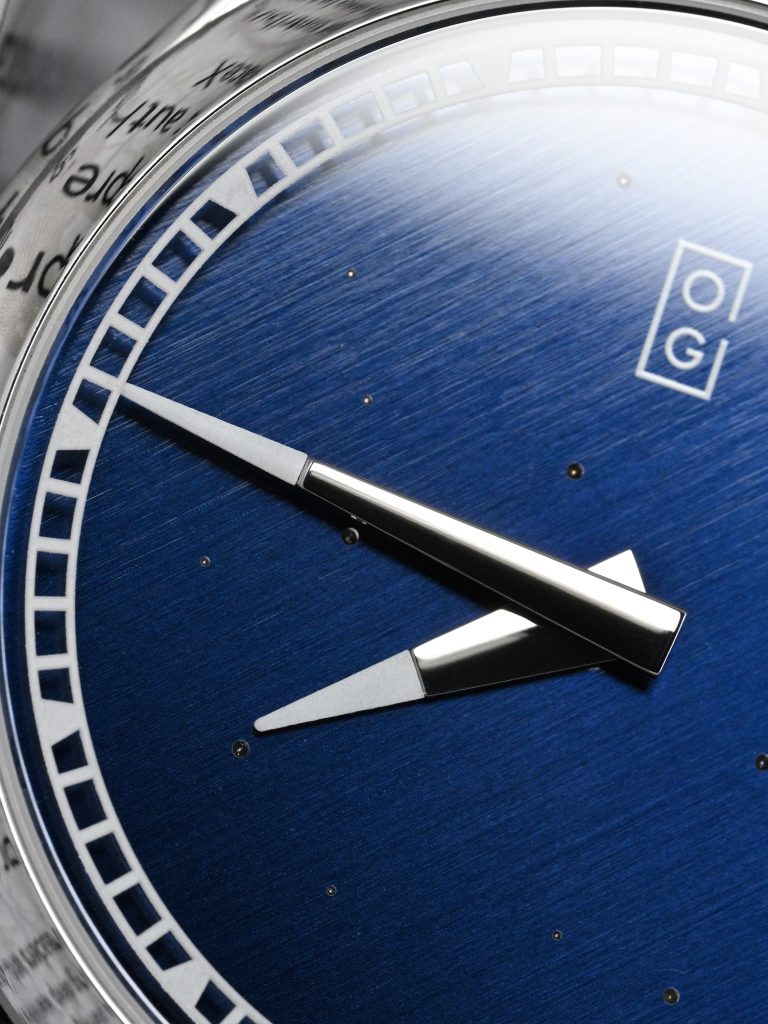
The large sculptural hands are also worth mentioning here because they affect the wearing experience. Just like the case, they are made from 904L stainless steel, which is unusual since hands are typically brass, and because they are so large, they had to be hollowed from underneath to reduce weight. The hidden center pinion and precisely fitted ceramic luminous tips make them look clean and expensive, and I suspect the handset alone was not cheap to achieve.
Lume
The lume is one of the more impressive parts of the watch, because the hand and crystal systems feel properly calibrated to each other. The minute track is not printed on the dial. It is engraved into the sapphire crystal and filled with Grade X1 Super-LumiNova, while the hour and minute hands use molded 3D luminous ceramic tips.
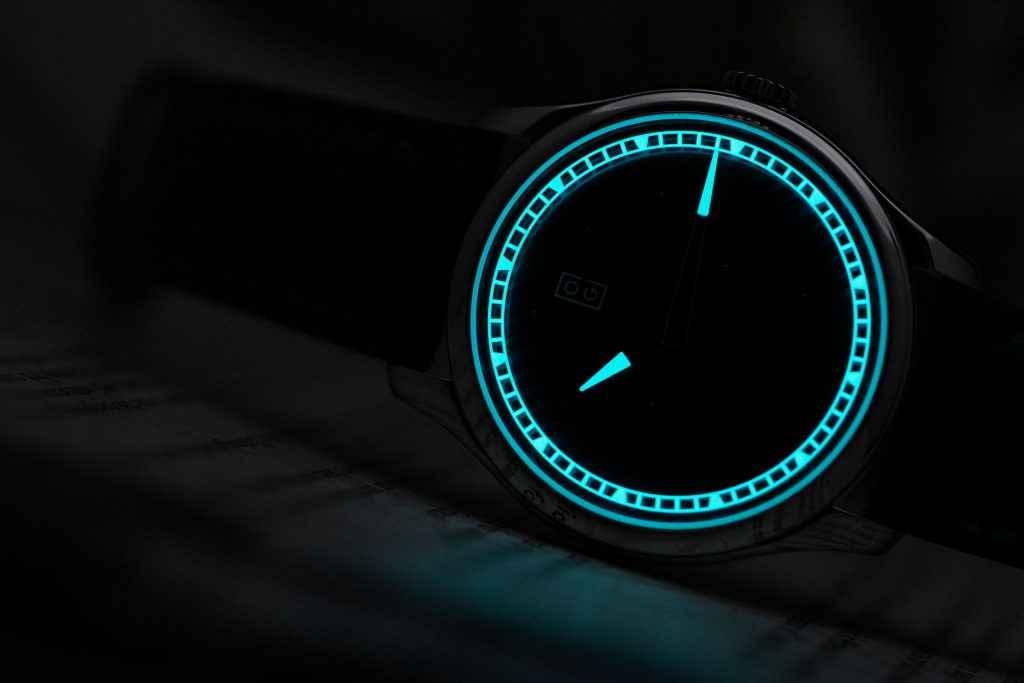
That sounds straightforward but I’ve reviewed plenty of watches where this is entirely overlooked, and Oliver mentioned that this took extensive prototyping. The challenge was finding the right crystal thickness and the right amount of lume inside the engraved markings so the crystal-borne lume would behave with similar potency to the ceramic luminous tips on the hands.
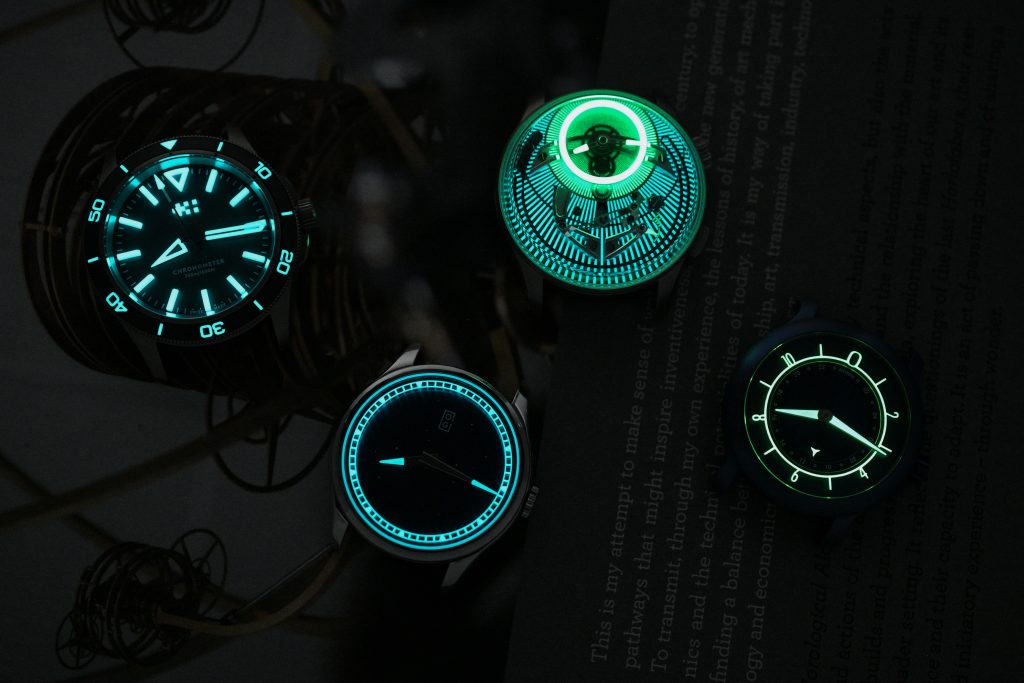
In practice, that effort shows. The dial-side glow is excellent, with a balanced amount of brightness and very good longevity. I compared it against some of my best-lumed Christopher Ward watches (and an older generation MING), and the Deep Space Blue held up surprisingly well. The hands remain the strongest points, but the sapphire track does not feel weak or like an afterthought.
Movement
The Deep Space Blue uses the LTM5000-G, a 3.3mm-thick manually wound movement made by Le Temps Manufactures in Switzerland. It has a 4Hz beat rate, 60-hour power reserve, variable-inertia balance, and a time-only display with hours and minutes. It is refreshing to see a new movement in a watch like this, rather than another familiar off-the-shelf calibre.
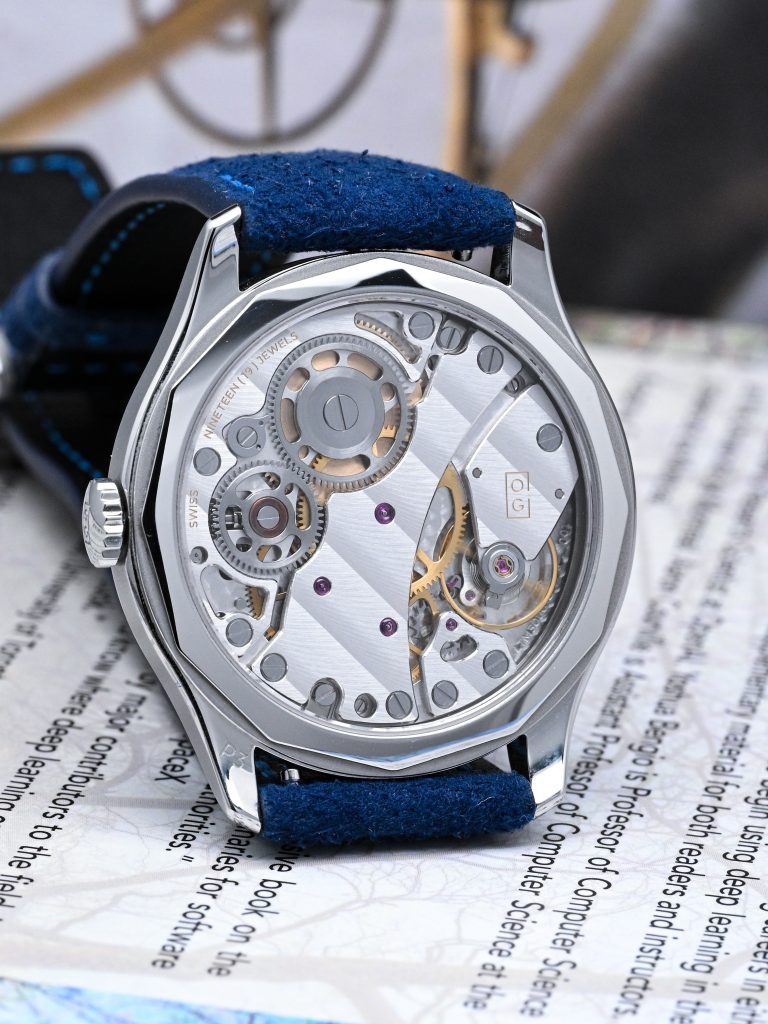
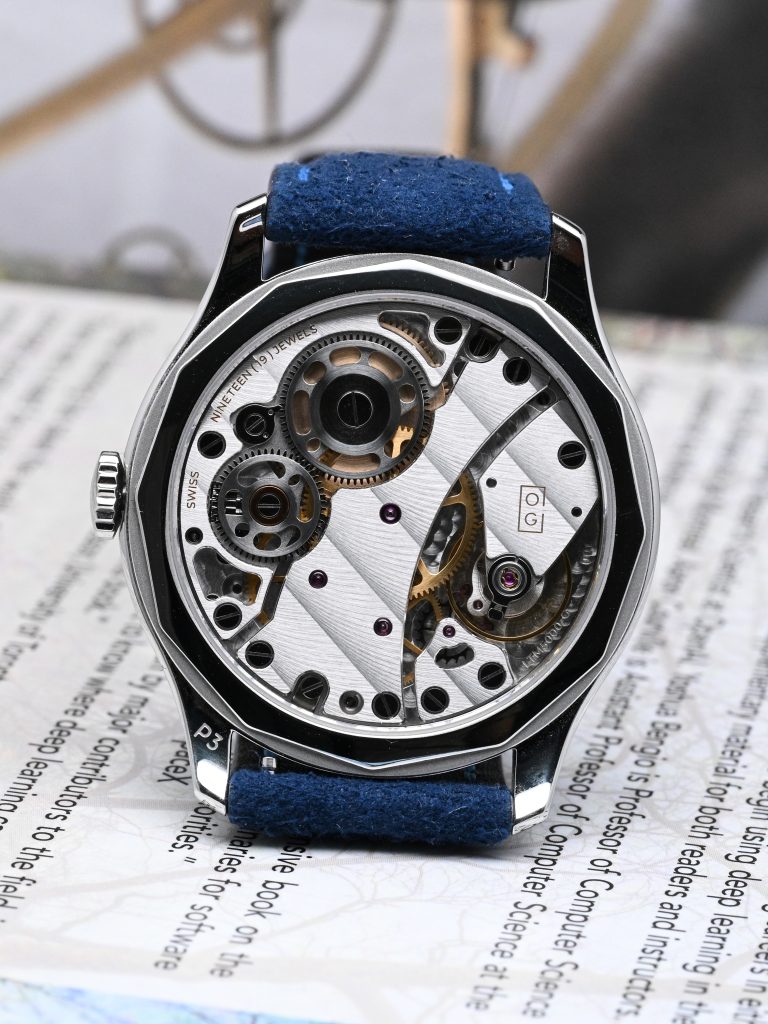
LTM is a bold choice for a watch in this price category. They typically work confidentially for high-end brands, and their public work includes movements for Byrne, Cartier’s calibre 070 Tank Normale, Niton’s Prima, and Universal Genève’s new UG-110 micro-rotor. At one point, SJX mentioned that Berneron’s calibre 215 was also manufactured by LTM, but that might be the only mention of this connection, so I wouldn’t treat that connection as fact just yet.
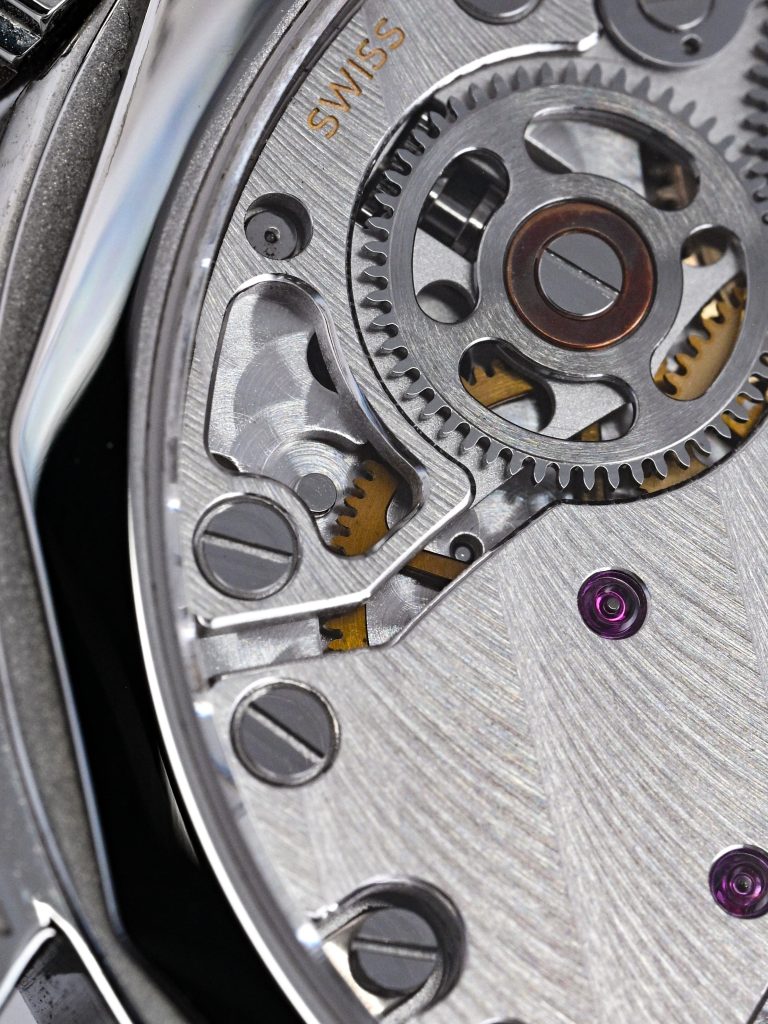
On this watch, the movement feels butter smooth to wind and operate. Up close, the finishing is very good, with polished anglage, striping, perlage, and attractive semi-skeletonized architecture. I recently photographed two Audemars Piguet chronographs priced around 45-50k USD, and those machine-finished movements did not look worlds apart from this.
On The Wrist
On my 6.75-inch wrist, the proportions are excellent. The 38mm diameter and 43.5mm lug-to-lug give the dial enough room to breathe, but the watch never feels oversized. The flat caseback, slim profile, and low 55g weight make it very comfortable, and the short lug span keeps it planted.
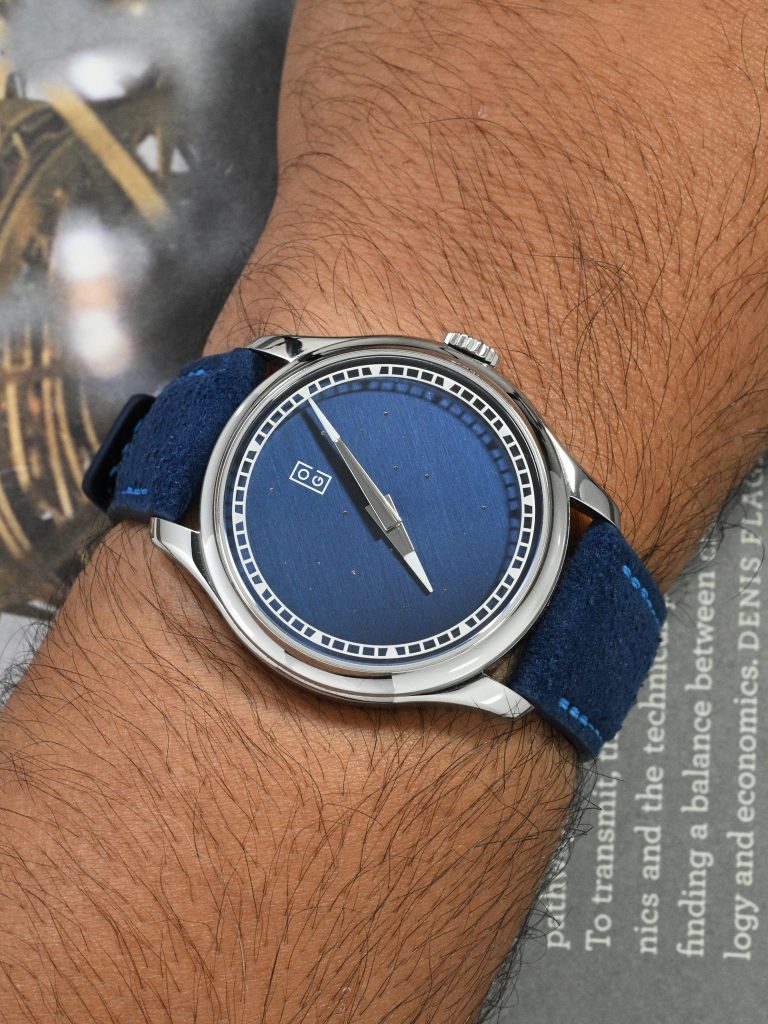
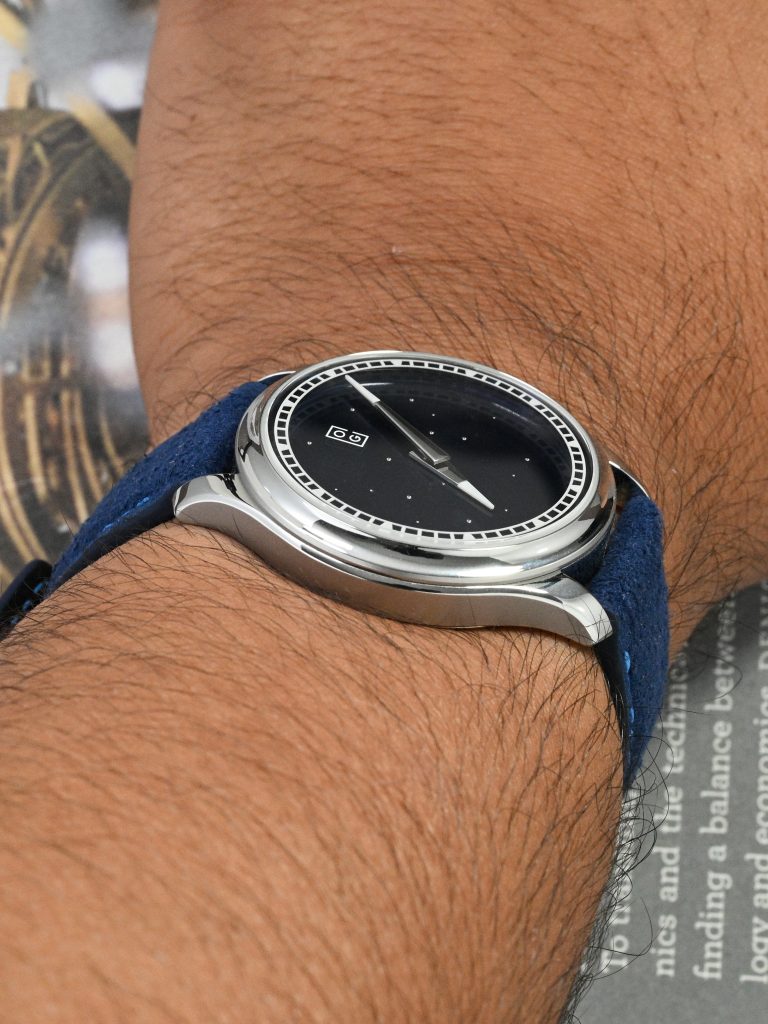
The buckle is also very well designed. It uses the same 904L steel and finishing language as the case, with polished and blasted surfaces, and Oliver mentioned that it will be refined further for the final production pieces.
Wrapping Up
The O.G Deep Space Blue is expensive, obscure, and requires patience, but it also feels like the product of real conviction. I appreciate the supplier transparency, the excellent case and handset, the thoughtful lume, and the use of an interesting LTM movement. This is not an in-house watch, but it does feel personal. And in a market full of design-by-committee ideas, that should count for something. And even though the watch is expensive, there really isn’t anything I would criticize about it – the build quality is excellent, the design is cohesive, the movement choice is excellent, and the overall presence on wrist is wonderful.