Disclaimer: this video/review was not sponsored by Alterum, Revolution Watch or any other entity.
Video
Review
The Alterum Worldtimer Horizon makes an immediate positive impression before you even understand what you are looking at. The handless display, integrated bracelet and puck-like case make it feel like an industrial design object first and a watch second. After owning one, I think that description cuts both ways, because while the Horizon remains one of the more visually memorable watches I have handled recently, some of that charm begins to fade once you start interacting with it.
Alterum is the creation of American designer Justin Walters, who built the brand around modernist ideas of reduction and simplicity, with Swiss manufacturer Roventa-Henex responsible for helping engineer and produce the watch. The most important inspiration for the Worldtimer was Frank Lloyd Wright’s Guggenheim Museum in New York. Its concentric architecture is reflected in the rotating dial, stepped bezel and even the seven grooves running across each bracelet link. The Horizon is the fourth and final interpretation of this Worldtimer design, limited to 100 pieces and priced at CHF 2,850 excluding taxes, or $3,650 through Revolution’s US store.
Let’s check it out!
Case & Bracelet
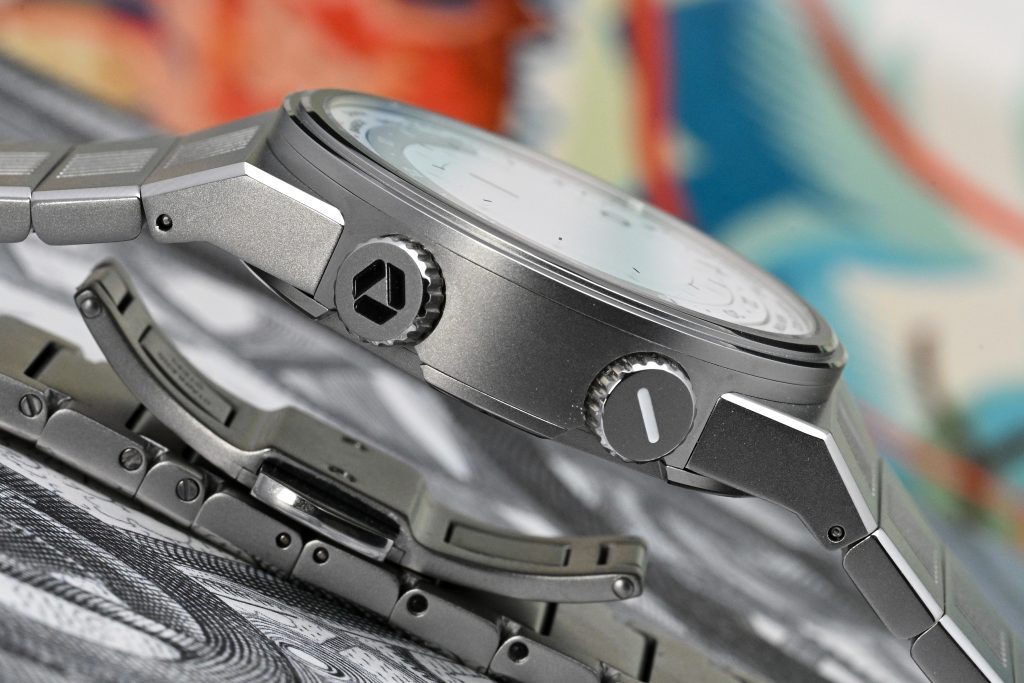
The case is simple but memorable. I measured mine at 38.75mm in diameter, 49.25mm across the fixed end links and an impressive 10.6mm thick, with two 6.1mm crowns. At 148g sized, it has substantially more heft than the dimensions suggest, but the broad, low profile distributes that weight quite well, and the watch wears and looks amazing on my 6.75″ wrist.
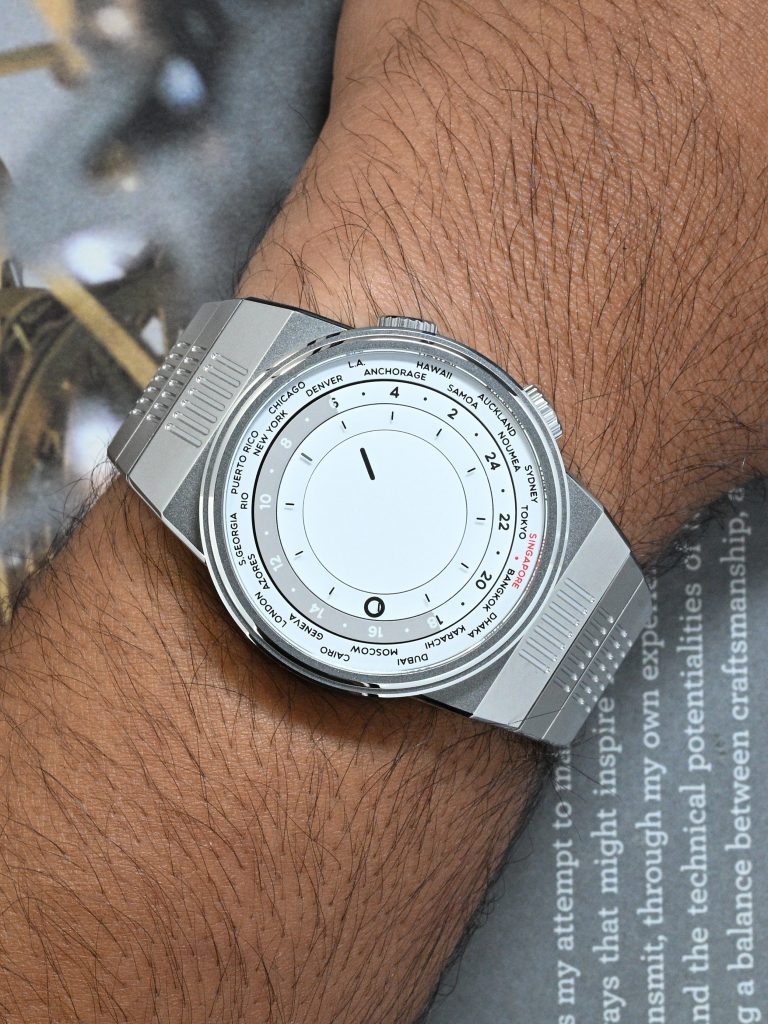
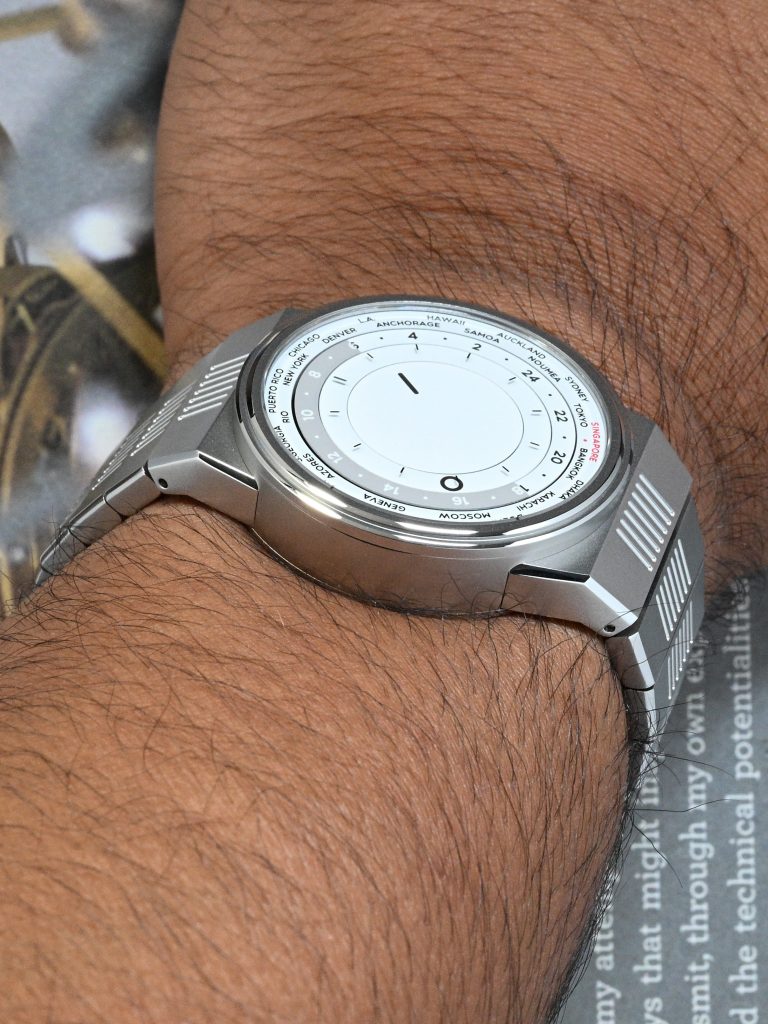
The vapor-blasted surfaces are interrupted by some nicely executed polished bevels, while the integrated bracelet tapers from 23.5mm to 17mm. Between that aggressive taper, the articulation and deeply grooved links, there is a distinctly 1970s character to it. It is unusual without being overly complicated, and the finishing throughout is quite good.
Worldtimer Dial
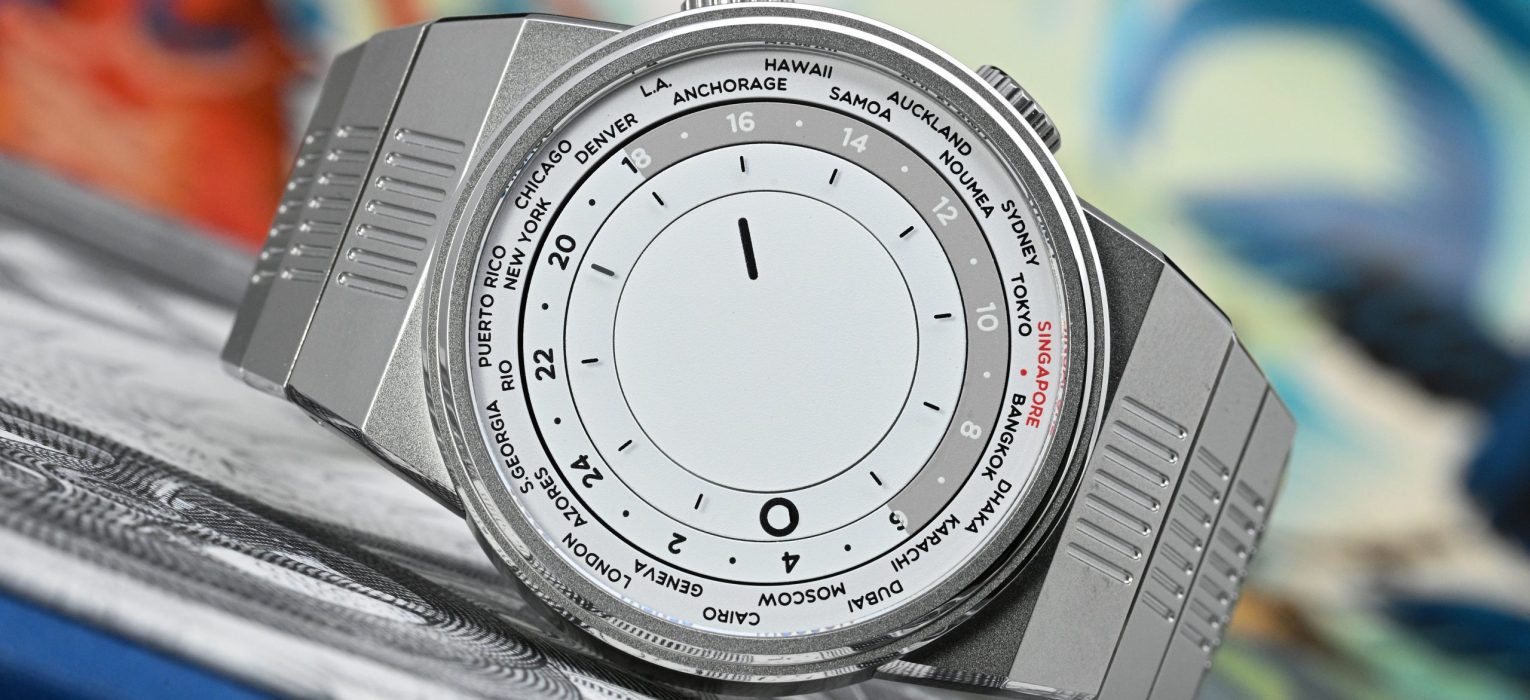
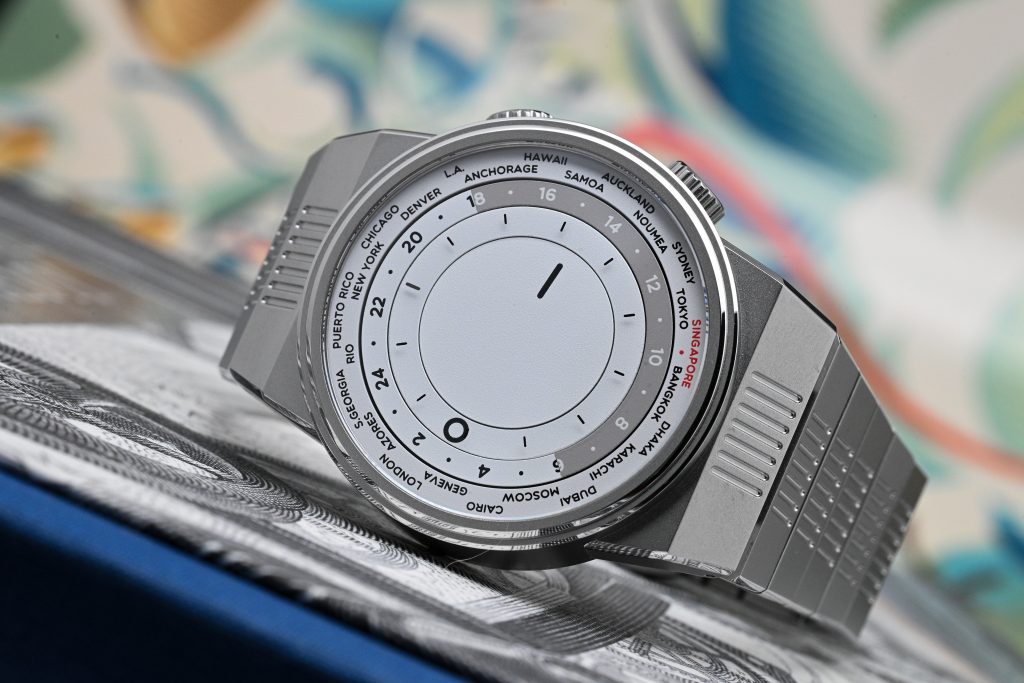
The Horizon is probably the cleanest expression of the design. A stark white dial is paired with black markings, while “Singapore” appears in red as a tribute to Revolution and its role in bringing Alterum to market.
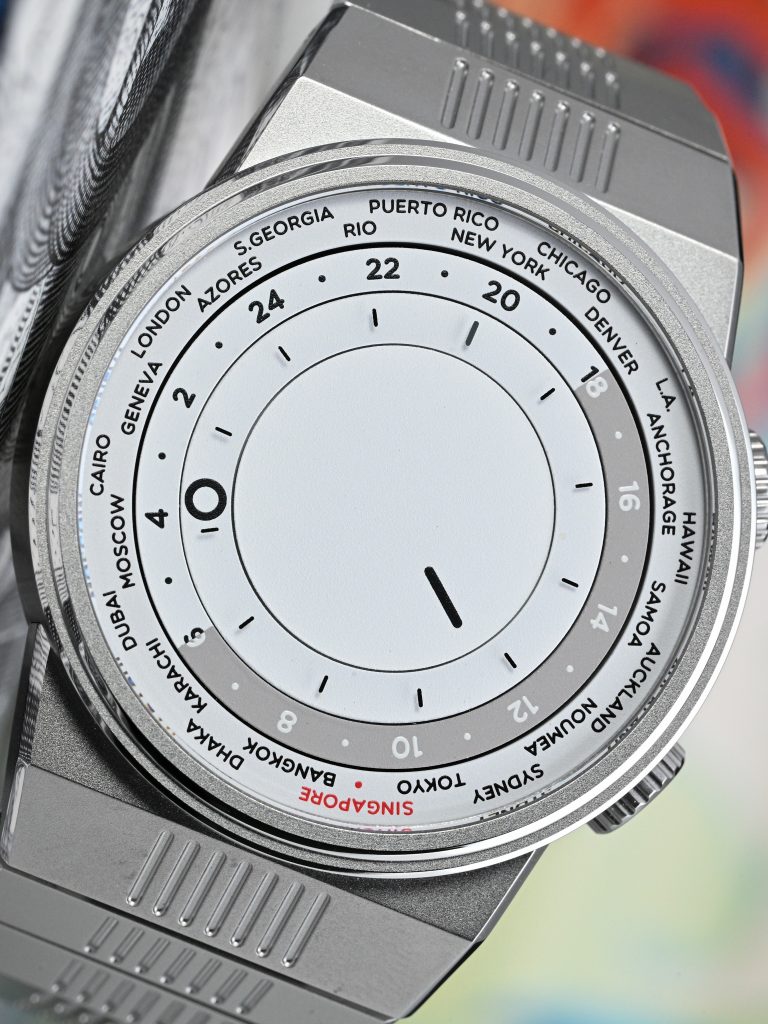
Instead of conventional hands, four concentric rotating elements display the time. The central line indicates minutes, the next disk displays the local hour, followed by a 24-hour day/night display and finally the outer city ring. Once you understand the layout, it is surprisingly intuitive.
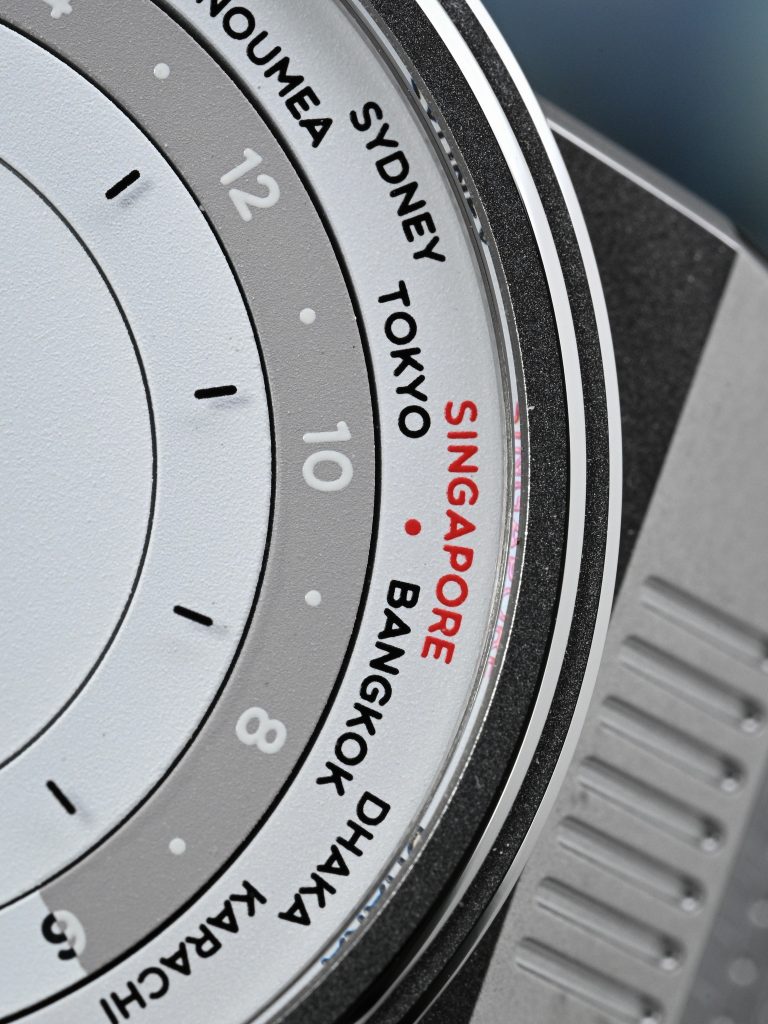
A second crown independently rotates the city disk in either direction. Align a city with its corresponding time on the 24-hour ring and the other time zones can then be read around the dial.
Movement
Underneath is a Sellita SW330-2 GMT movement. The architecture has been adapted to drive these rotating displays instead of a conventional GMT hand, while the date and central seconds are eliminated.
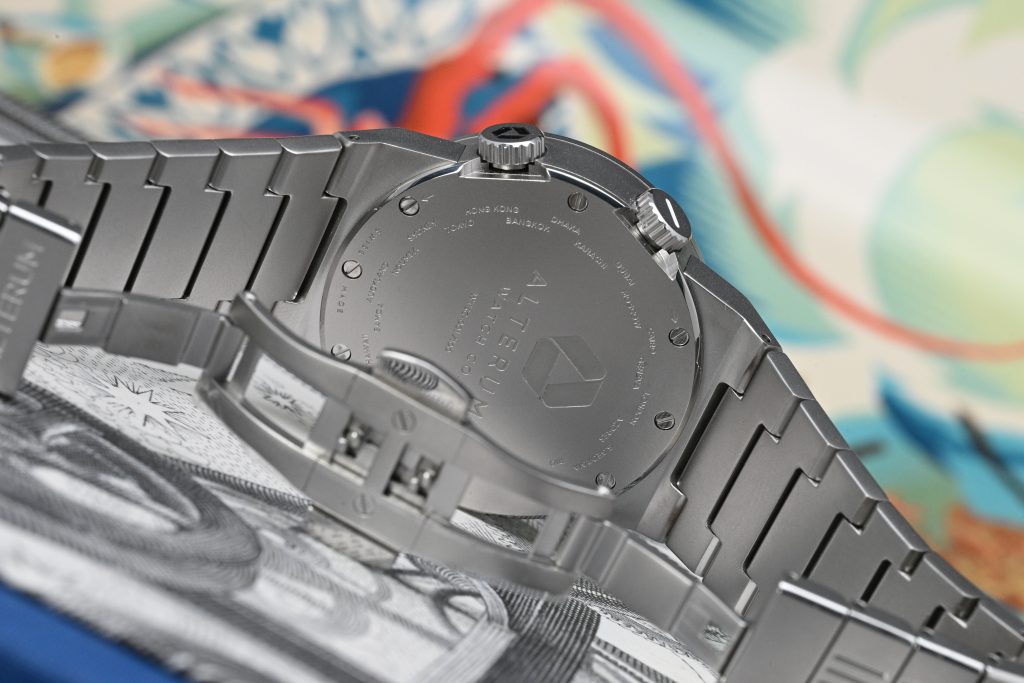
Unfortunately, operating the watch is also where my biggest criticisms begin. Both crowns are recessed enough that I find them awkward to access and difficult to manipulate. More disappointing is the crown controlling the city disk, which has a surprisingly unrefined operating feel for a watch whose entire identity encourages interaction with that display.
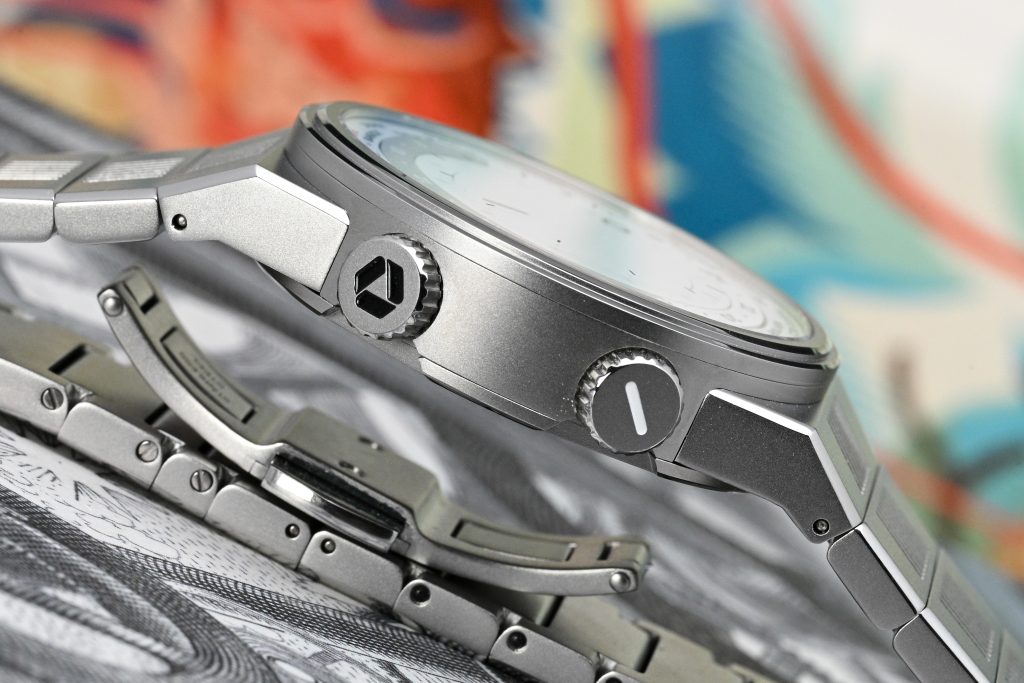
I’ve also noticed alignment issues with the rotating disks. Getting everything perfectly centered can require some back-turning and fiddling with the crown. I cannot say definitively that the additional mass of the disks is responsible, but replacing lightweight hands with substantially larger rotating components could plausibly make normal drivetrain play or backlash far more noticeable. On such a geometrically precise design, small misalignments stand out.
Wrapping Up
And that really summarizes the Horizon for me. From a distance, it is exceptional. On the wrist, the compact proportions, unusual bracelet, white concentric dial and restrained finishing create something genuinely distinctive. But the closer I scrutinize it, and particularly the more I operate it, the more the execution struggles to live up to the strength of the design.
I also think the MSRP is simply too high. At $3,650, the expectations for tactile refinement become considerably harder to excuse. The market response appears to support some of that hesitation: nearly ten months after launch, the 100-piece Horizon remains available, while the similarly priced 100-piece Los Angeles and New York editions launched in December 2024 are also still listed for sale.
That does not make the Worldtimer a bad watch. I still find it fascinating, original and wonderful to look at. But ultimately, this is a design object that I enjoy considerably more to look at, than operate.