Disclaimer: this video/review was not sponsored by Christopher Ward or any other entity.
Video
Review
You’ll come across great watches that make their case through complication, and others through originality. The Christopher Ward Twelve 660 is interesting because it does almost the opposite: it takes a design we already know, removes nearly everything that can be removed, and somehow ends up feeling more complete.
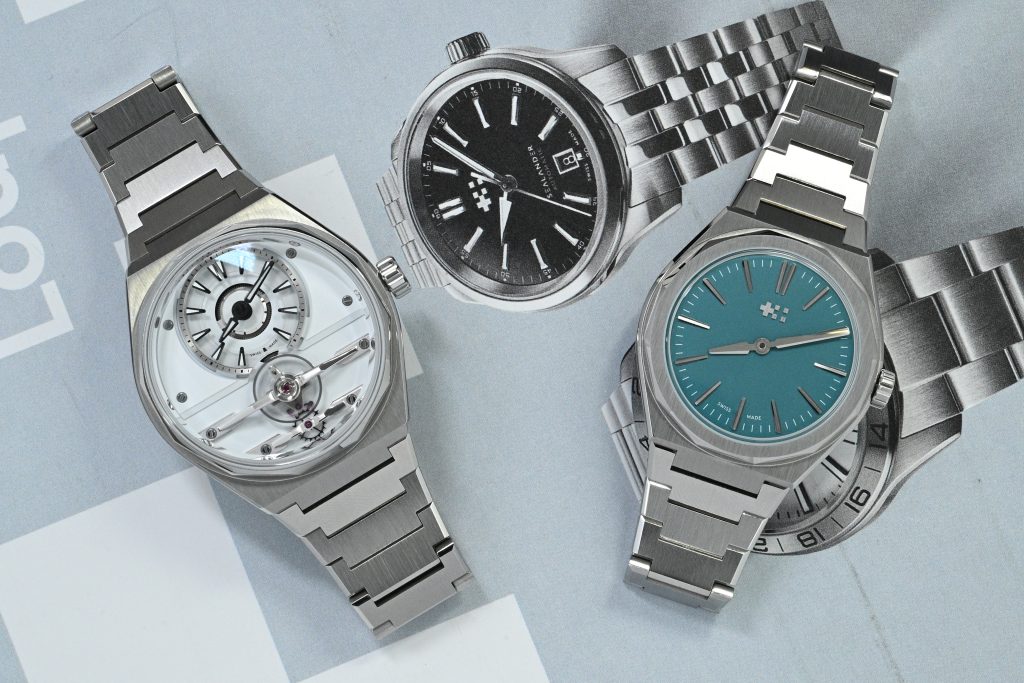
I say this because Christopher Ward has attracted a fair amount of criticism lately for designs that people consider too imitative. I understand where some of that comes from. The original Twelve was not a radically original integrated-bracelet watch, and its dial in particular shared obvious visual similarities with the Czapek Antarctique. But I disagree with the more cynical framing that Christopher Ward is somehow trying to disguise those influences. The company has been unusually open about the watches and designers that inspire its work. When the Twelve launched in 2023, Christopher Ward positioned it within the lineage of 1970s sports-luxury watches, while contemporary coverage noted that the brand openly referenced several of those influences.
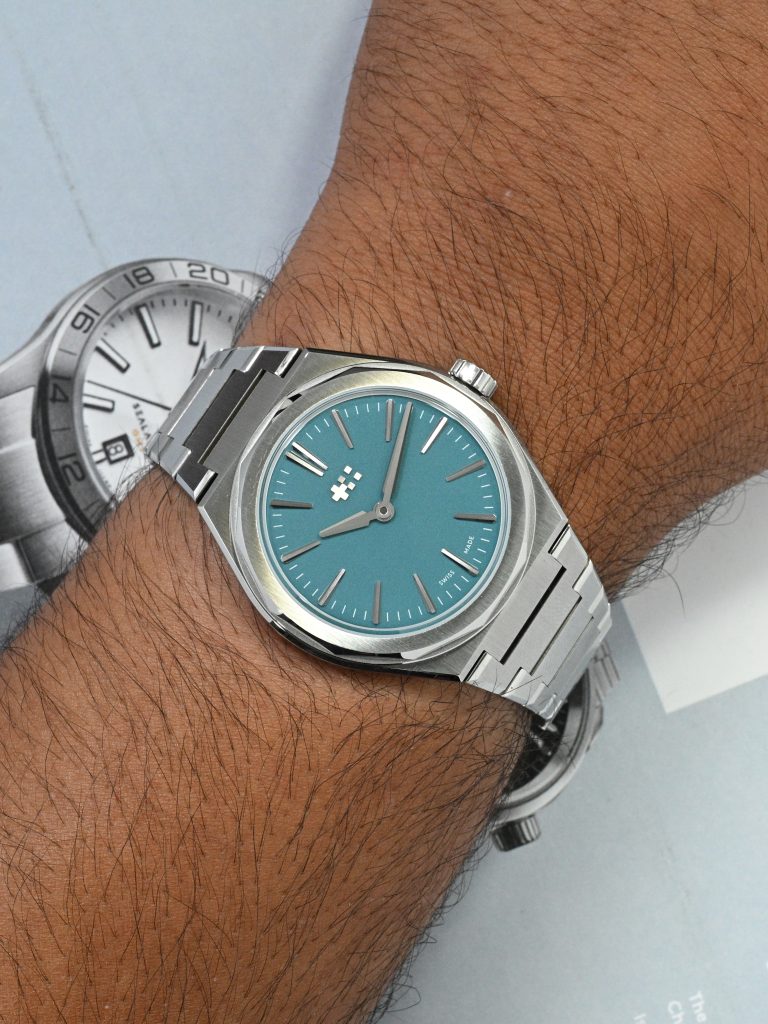
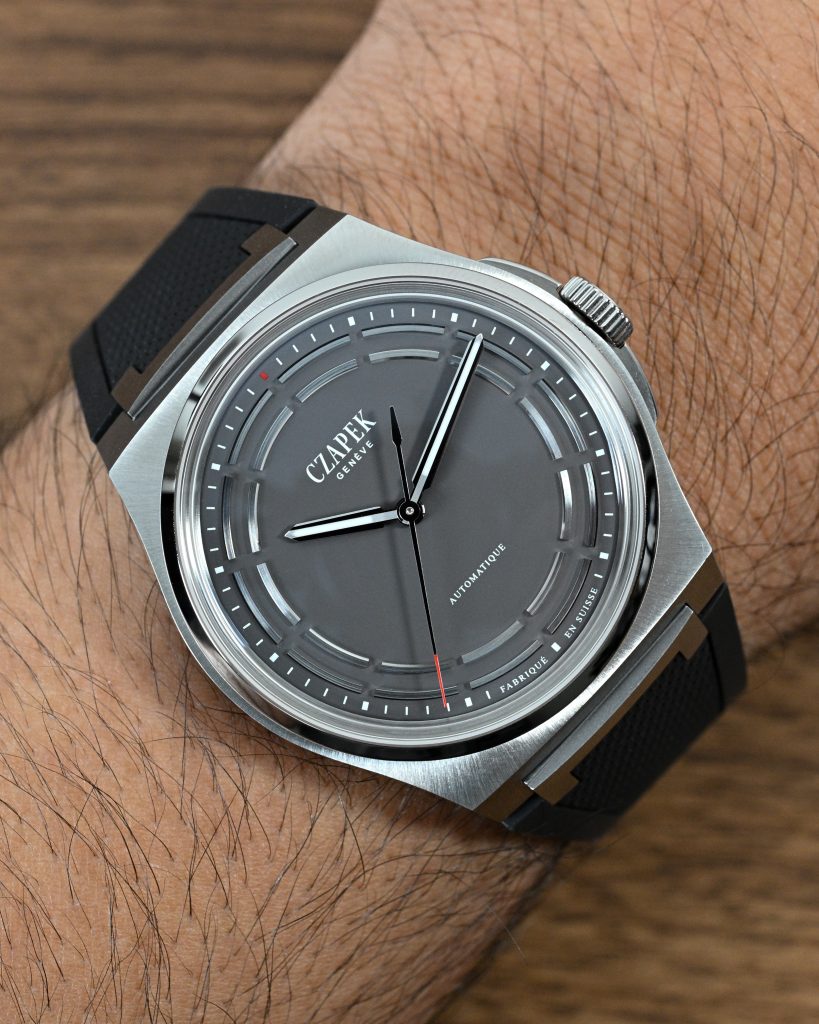
The Czapek comparison is also more complicated than the word “copy” suggests. Adrian Buchmann joined Christopher Ward as senior designer in 2015 (the same year the Czapek & Cie brand was launched). He contributed to design of the Czapek Antarctique, and also designed the Twelve. So yes, I think the first Twelve looked closer to the Antarctique than I would have preferred, particularly around the dial, but treating the relationship as though two unrelated design teams arrived at suspiciously similar watches ignores an important part of the story. And in my opinion, neither watch is an exercise in reinventing the wristwatch. They are modern interpretations of an established category.
And the Twelve 660 is where Christopher Ward finally seems comfortable enough with the Twelve to stop decorating it.
Twelve 660: Christopher Ward’s Jumbo
To me, the 660 is Christopher Ward’s equivalent of the Royal Oak Jumbo, or perhaps the simple time-only Nautilus. I do not mean that literally, and I am certainly not arguing that a $2,035 Christopher Ward occupies the same universe of history, movement construction or finishing. I mean it philosophically.
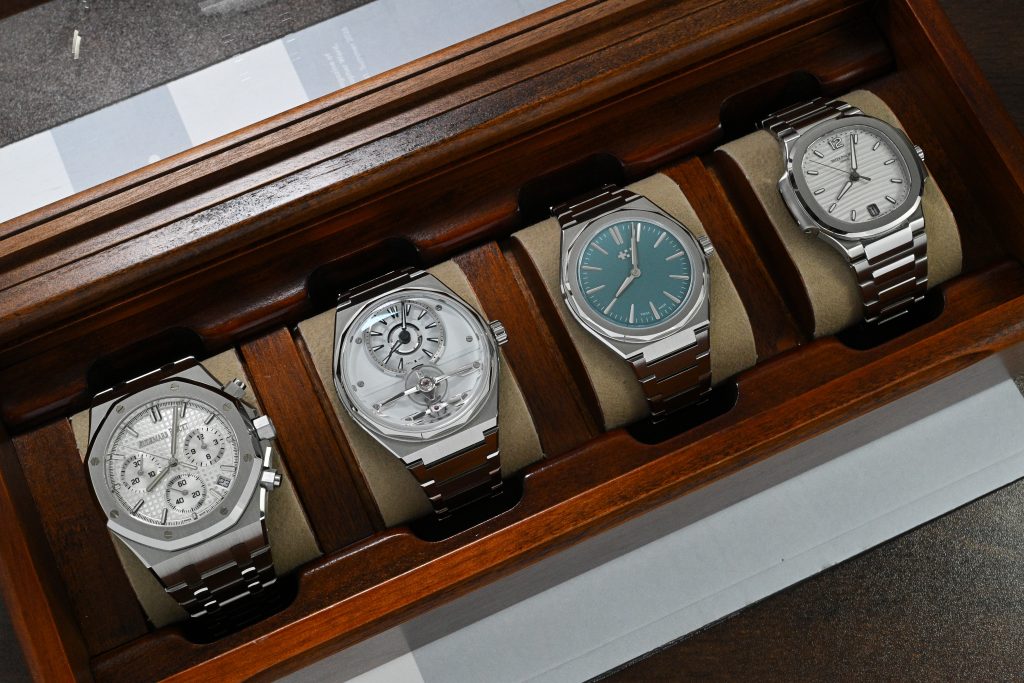
Those watches are compelling because almost nothing distracts from the architecture: thin case, integrated bracelet, simple dial and strong proportions. The watch becomes an exercise in shape, surface and how metal wraps around the wrist. And those were critical aspects of the design when Gerald Genta created those two pieces wrist jewellery that also happened to be watches.
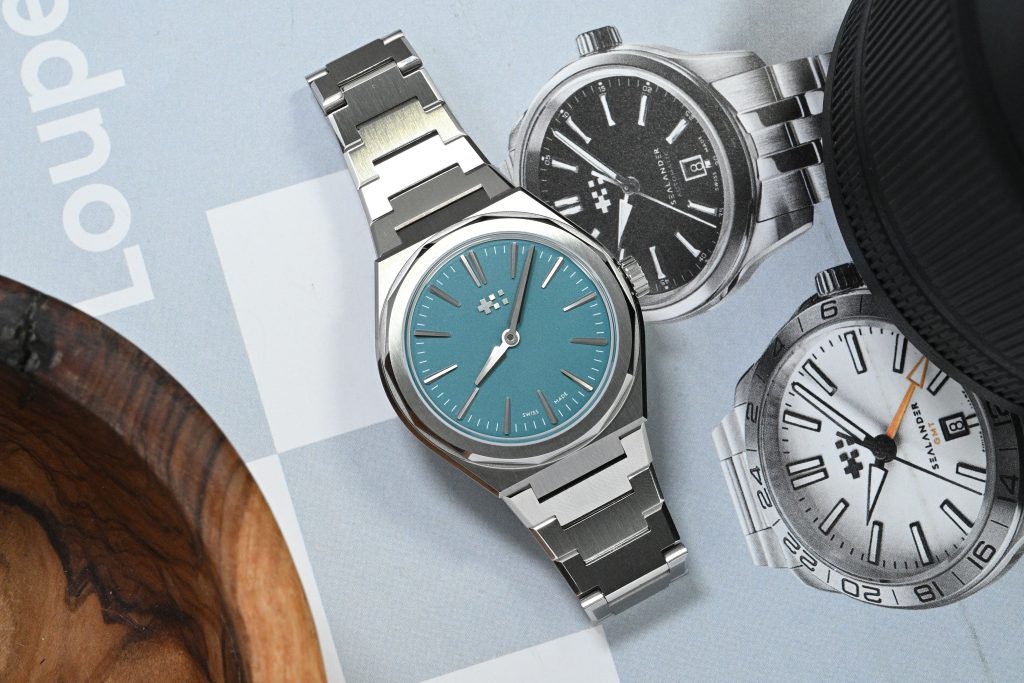
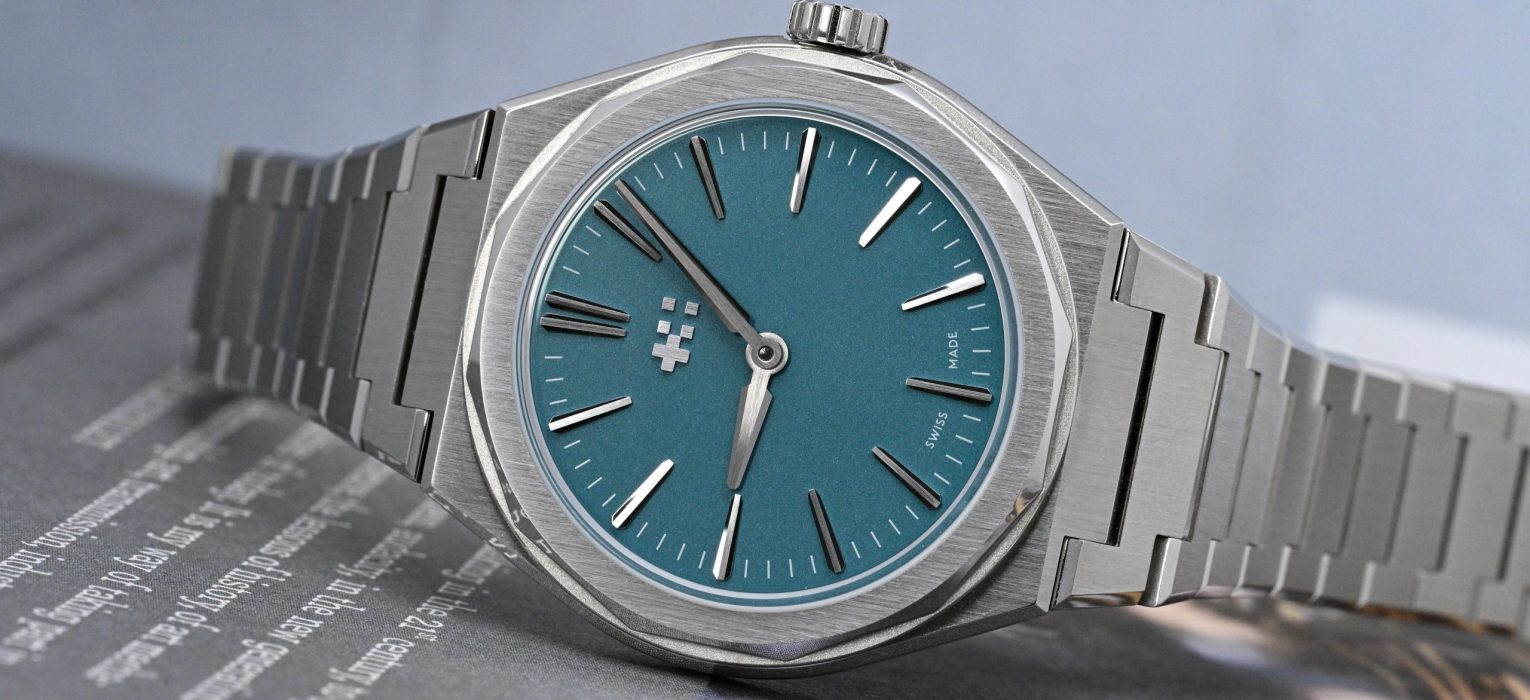
The 660 approaches the Twelve the same way. Gone are the automatic movement, date, seconds hand, crown guards and heavily textured dial. What remains is the 12-sided bezel, angular case, bracelet and a simple two-hand display. The Twelve X and C12 Loco are better demonstrations of Christopher Ward’s technical ambition, but the 660 may be the purest expression of the Twelve as industrial design.
Case & Bracelet
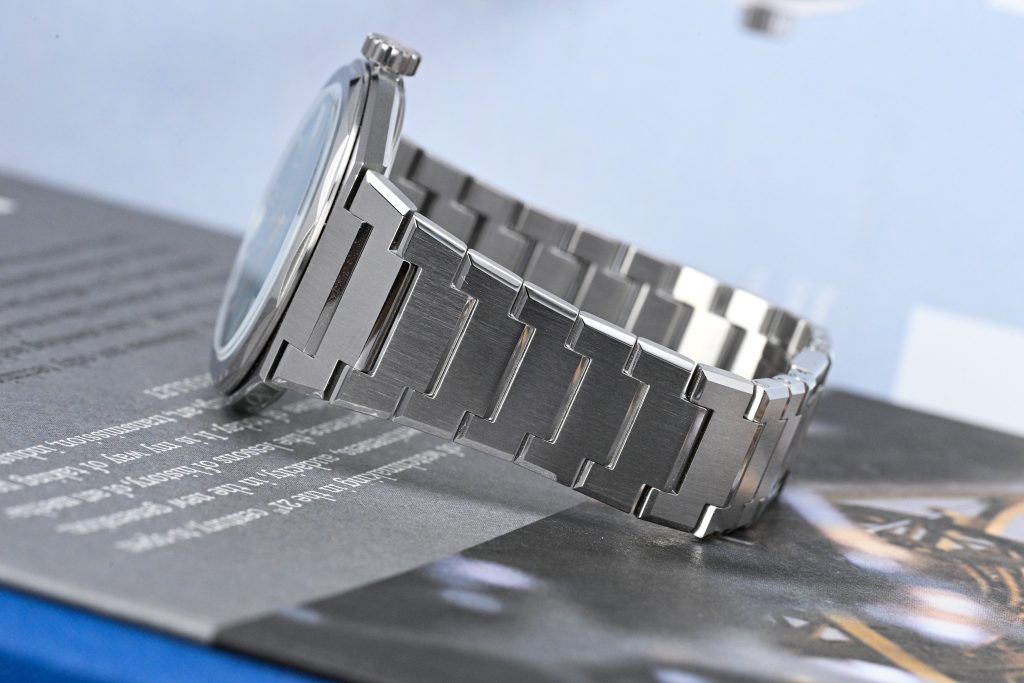
I measured the case to be 37.90mm across the case, roughly 43mm across the case at the end-link extremes, and 6.9mm in total thickness including both sapphire crystals. The push-pull crown measures a practical 5.5mm. Those numbers are impressive, but the more important part is how little the watch feels like a conventional head sitting on a bracelet. The case and bracelet almost dissolve into one another.
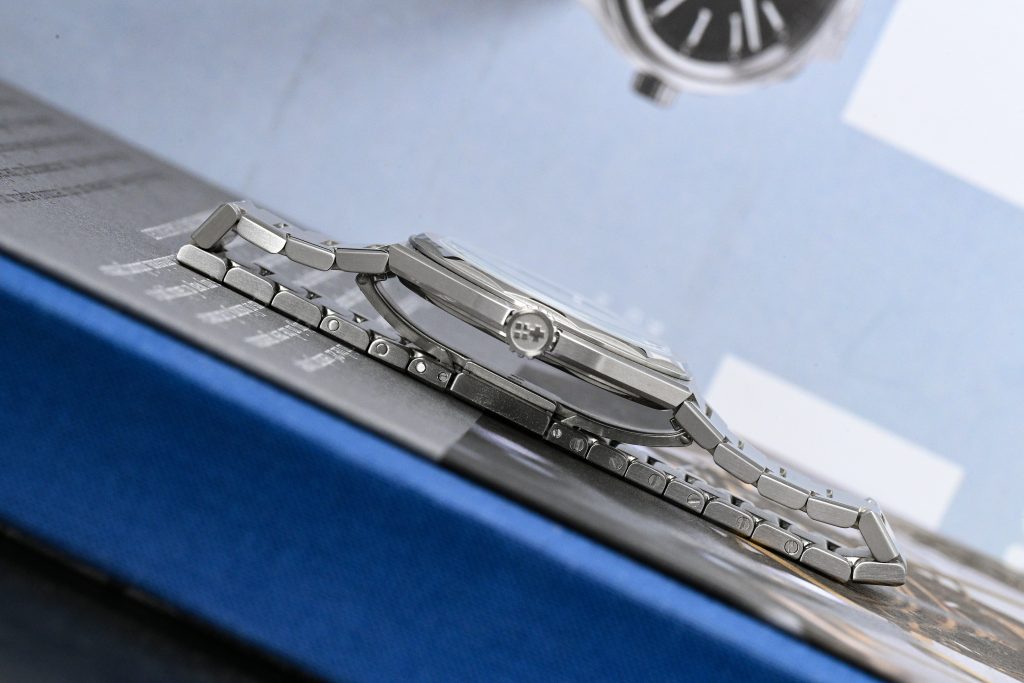
This watch has a maximum rigid span of approximately 49.5mm, so I think you need a wrist span of around 46mm for the bracelet to drape naturally. On my 6.75-inch wrist it is excellent. If you prefer the presence of a Royal Oak Chronograph, Offshore, C12 Loco, or generally larger integrated-bracelet watches, this may feel too delicate. That is very much the point.
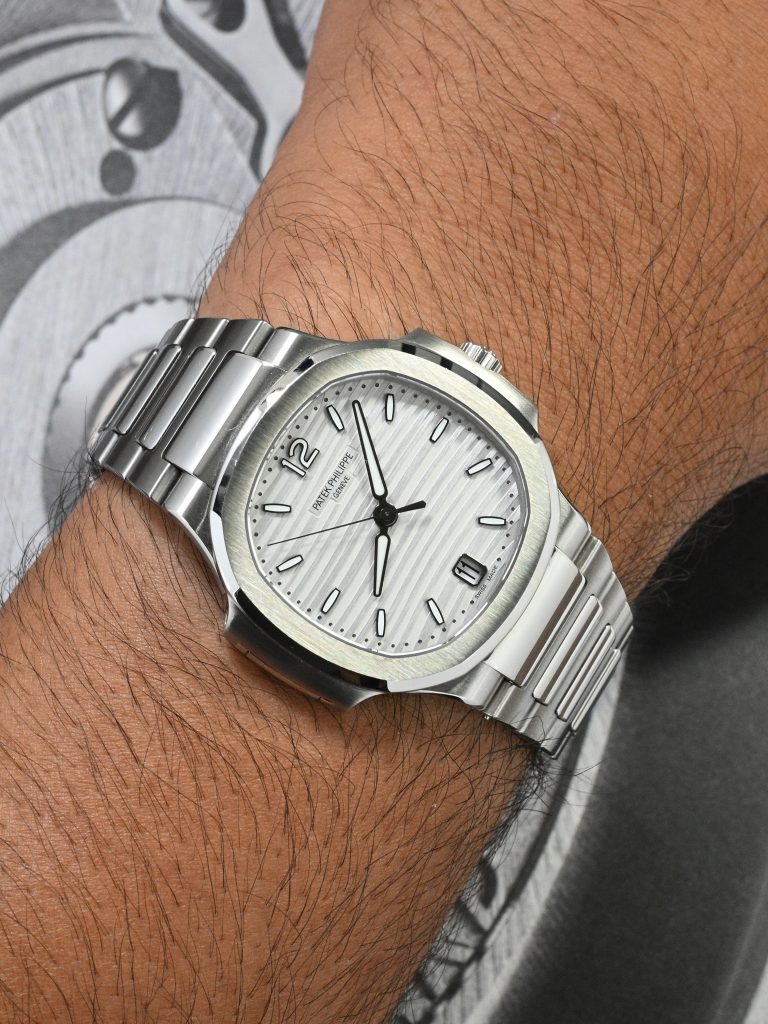
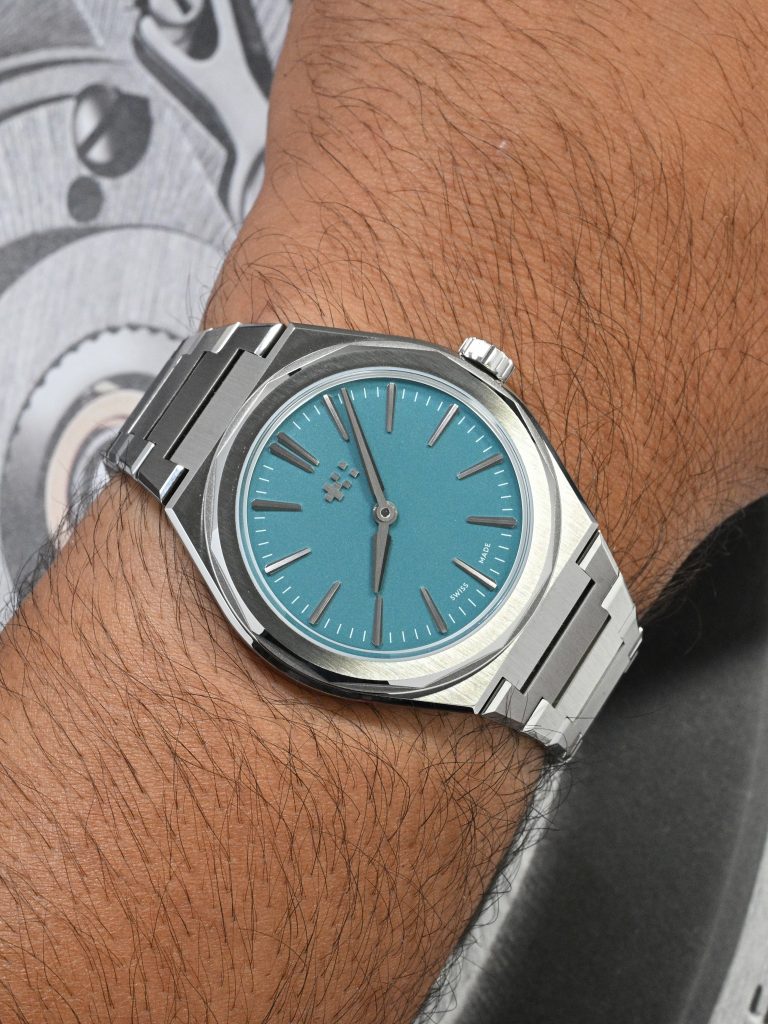
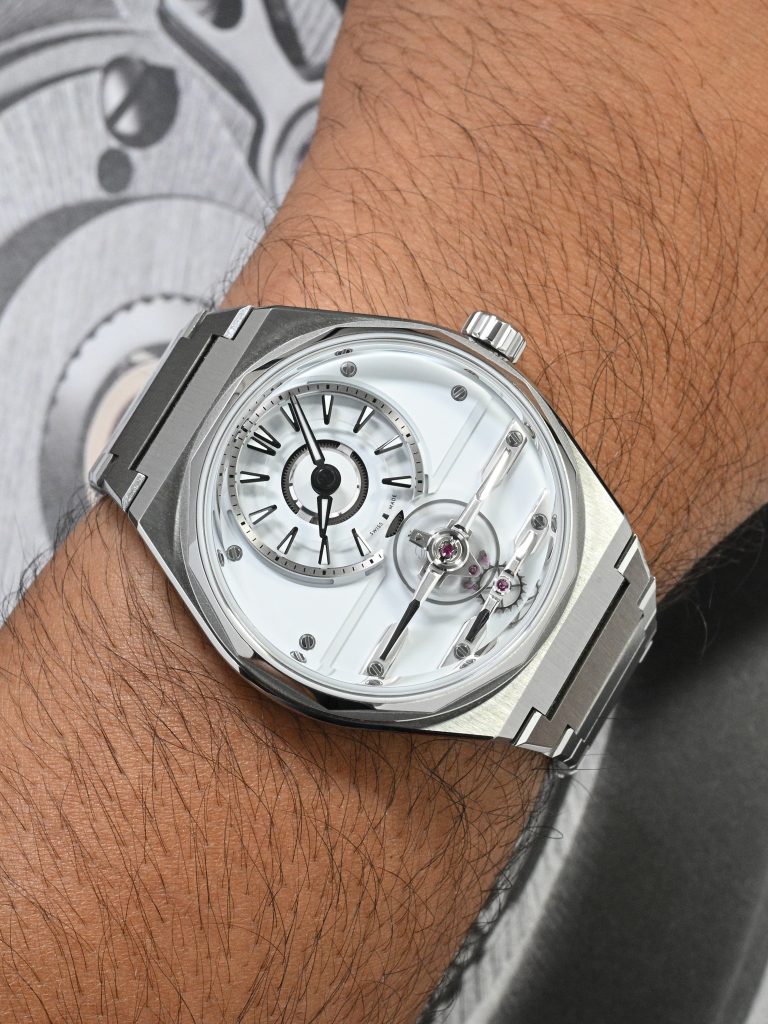
The bracelet tapers from approximately 23mm at the case to around 16mm at the twin-button deployant clasp, and the links are noticeably slimmer than those on my C12 Loco. The watch weighs just 86g sized for my wrist. There is unfortunately no on-the-fly micro-adjustment, the clearest practical compromise here, but because the watch is so light I can wear it slightly loose without finding it irritating.
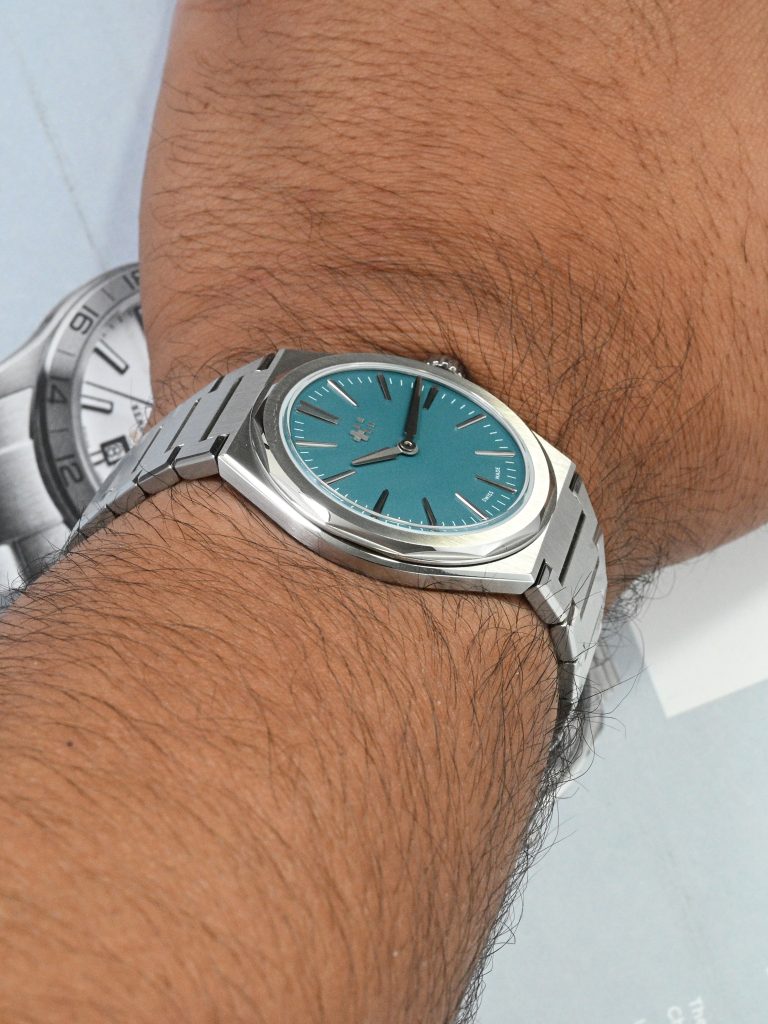
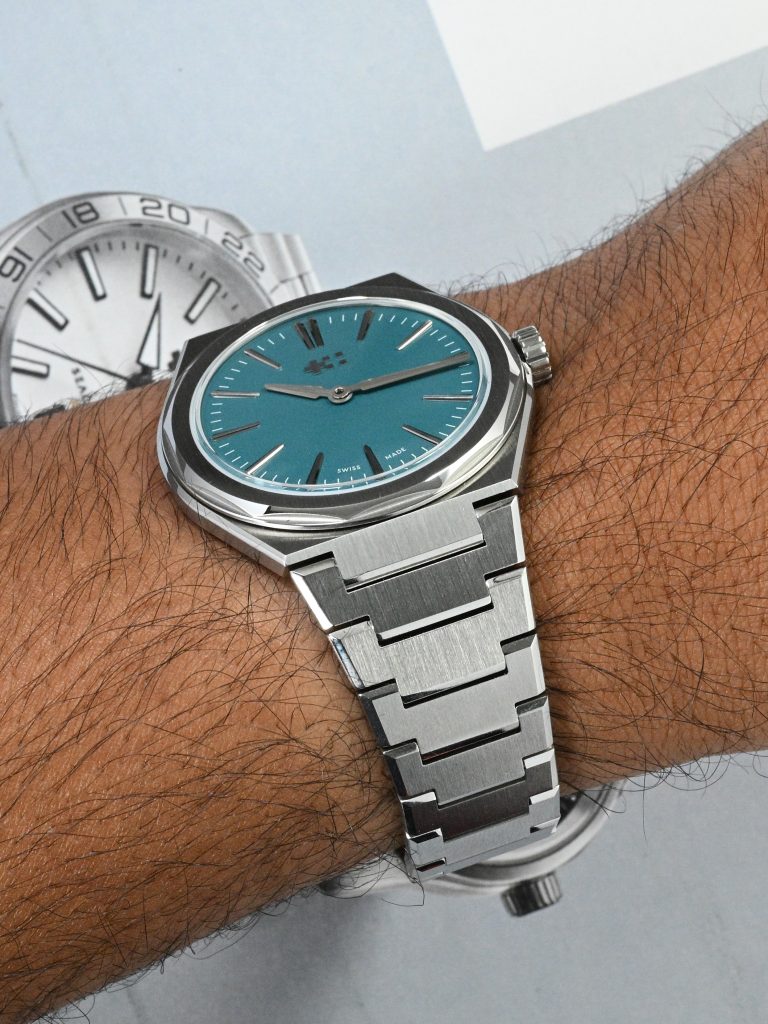
Water resistance is only 30m, another reminder that this is more sports-luxury than sports watch.
The case finishing is excellent, as I have come to expect from Christopher Ward. Brushed surfaces, polished bevels and that 12-sided bezel provide enough visual interest that makes an already slim watch appear even slimmer.
Dial
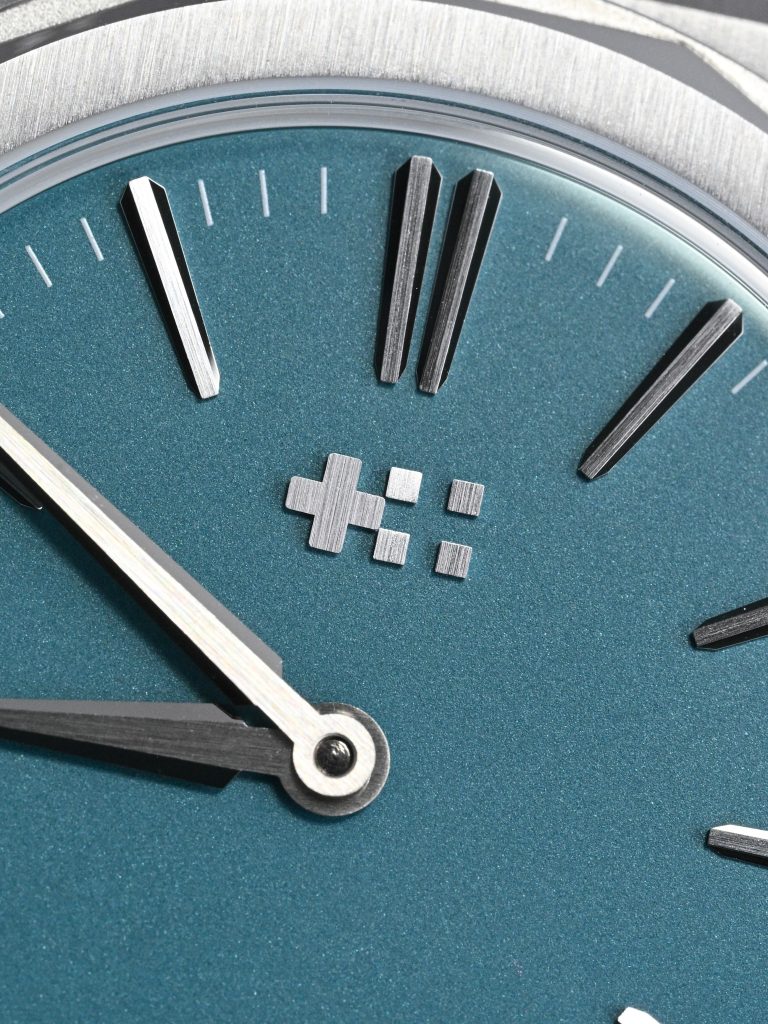
The teal-green dial is easily my favorite of the four 660 variants. It is much quieter than the patterned dials of the original Twelve, but I think that restraint is exactly what this watch needed. There is a fine grained texture beneath the clear lacquer, while the applied markers and hands combine broad brushed surfaces with polished facets. The result is extremely legible and catches enough light to stay interesting without turning the dial into jewelry.
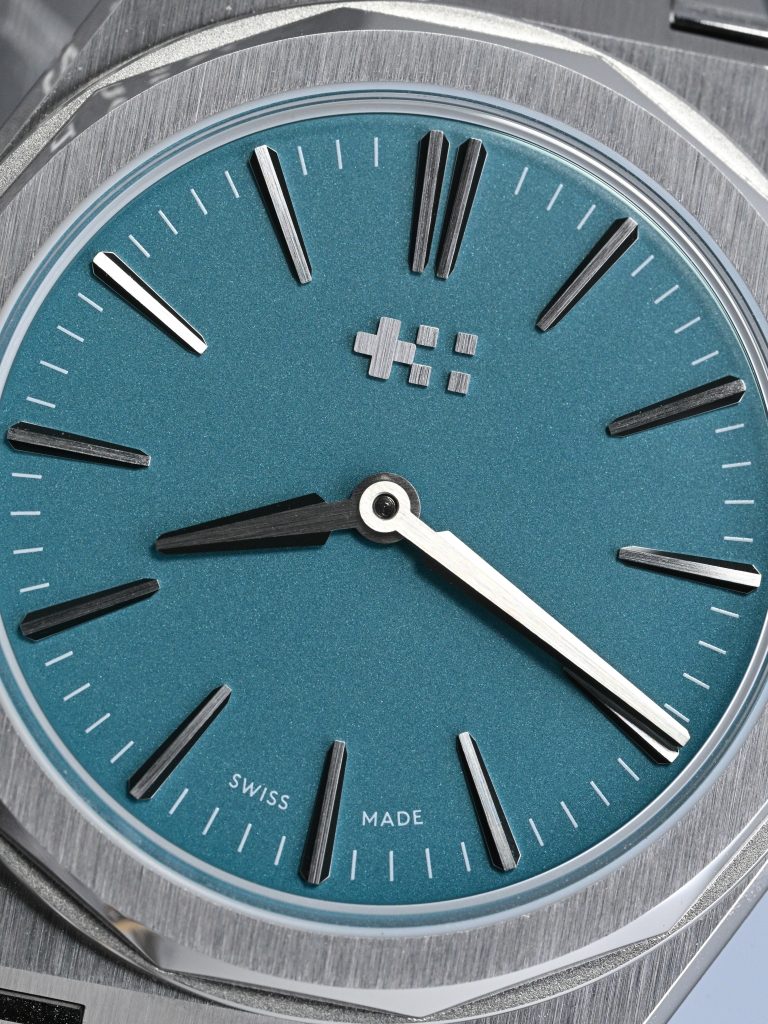
More importantly, nothing interrupts the symmetry. No date window. No running seconds. Very little text. The dial exists to support the case rather than compete with it, and I think that changes the character of the Twelve as much as the thinness does.
Movement
The biggest surprise is probably on the back. The Sellita SW210-1 is hardly exotic. It is a common, manually wound Swiss movement running at 4Hz with roughly 42-45 hours of power reserve. But Christopher Ward has done a lot here.
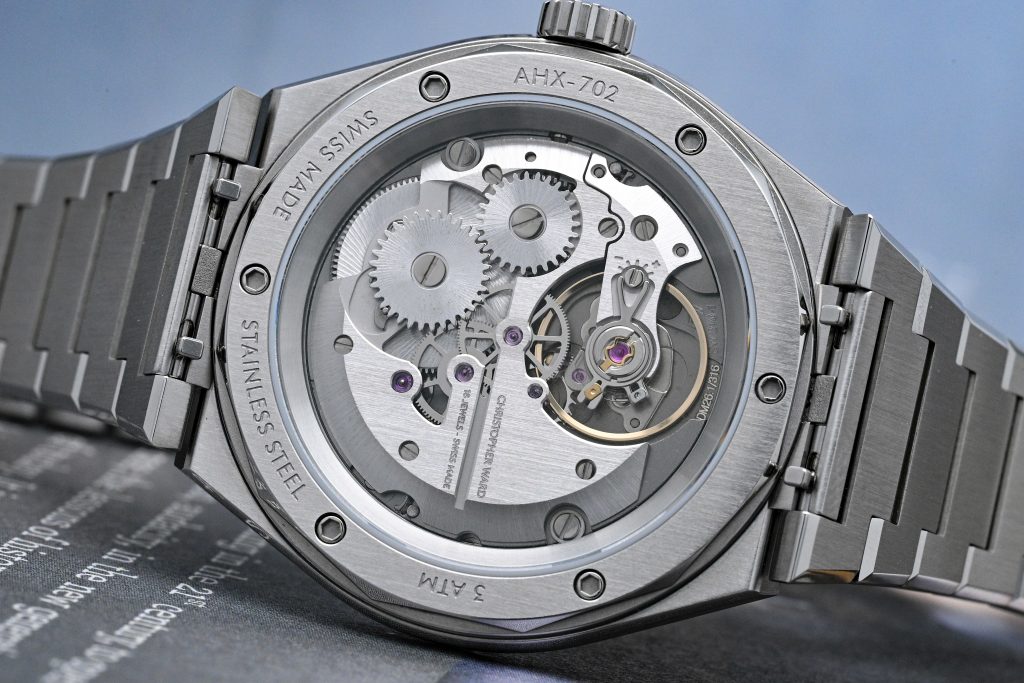
The train bridge has been substantially opened up, exposing far more of the gear train, while the movement combines vertical brushing, sandblasted surfaces, polished accents and sunray-finished wheels. The result is industrial rather than traditionally luxurious, which suits this watch perfectly. You can actually follow the mechanical architecture instead of staring at a large slab of generic bridgework.
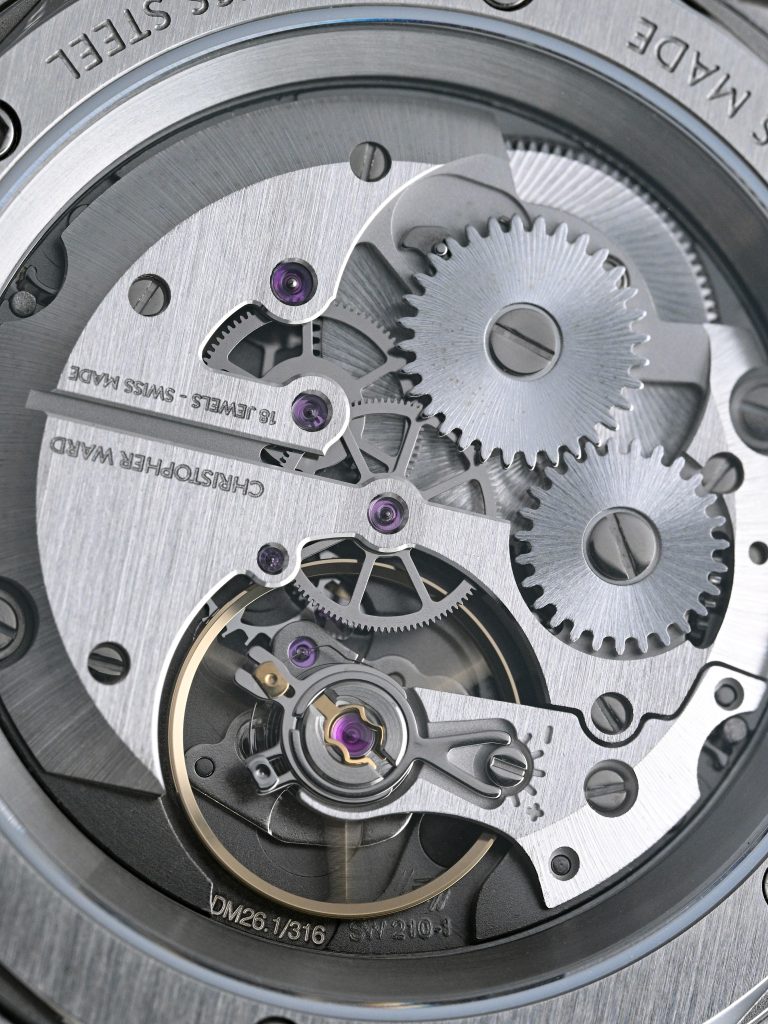
At this price, I find it remarkably well considered. The comparison that immediately comes to mind is MING’s treatment of the same movement family in the 27.01 and 27.02, watches that retailed for well over $4,000 several years ago. I am not saying the finishing is equivalent, but the philosophy feels similar: take a familiar movement and redesign the visual experience enough that the display back earns its existence.
Wrapping Up
At $2,035 on bracelet at the time of writing, the Twelve 660 is one of my favorite Christopher Ward watches because it feels like the point where the brand stopped trying to impress you with complexity for a great price (which I obviously love in my C12 Loco), but instead sought to deliver a remarkably cohesive and distilled integrated bracelet watch design.
Christopher Ward did not pay me to say that, and this review is not sponsored. There is also a strange tendency online to treat anyone who enjoys this brand as though they need to defend themselves for it. I genuinely do not give a s**t. I like watches because I like watches, and somebody else’s approval has no bearing on what I see when I put one on my wrist, or what I write in these reviews.
The Twelve 660 is not the most technically impressive Twelve, nor the most complicated or visually dramatic. It is the one where Christopher Ward seems to trust the underlying design enough to let it stand on its own. Like a Royal Oak Jumbo or a time-only Nautilus, it is defined less by what was added than by what the designers had the confidence to remove.
That is why, for me, this is Christopher Ward’s Jumbo.