Disclaimer: this video/review was not sponsored by Jaeger-LeCoultre or any other entity.
Video
Review
To the best of my knowledge, Jaeger-LeCoultre wasn’t the first brand to create an alarm movement, but it is the brand I most closely associate with the complication. Vulcain is another brand that comes to mind, yet when I think of a mechanical alarm, Memovox is always the first one I think of. This Polaris II E870 isn’t even JLC’s first attempt at combining an alarm with a dive watch, but it is the one that lodged itself firmly in my memory after I encountered it years ago at a Jaeger-LeCoultre museum exhibit. Even by early-1970s standards it felt unusual: bold colors, technical, and a little odd in the best way possible. I remember being immediately drawn to the case, the dial, and the sheer improbability of an alarm-equipped professional dive watch.
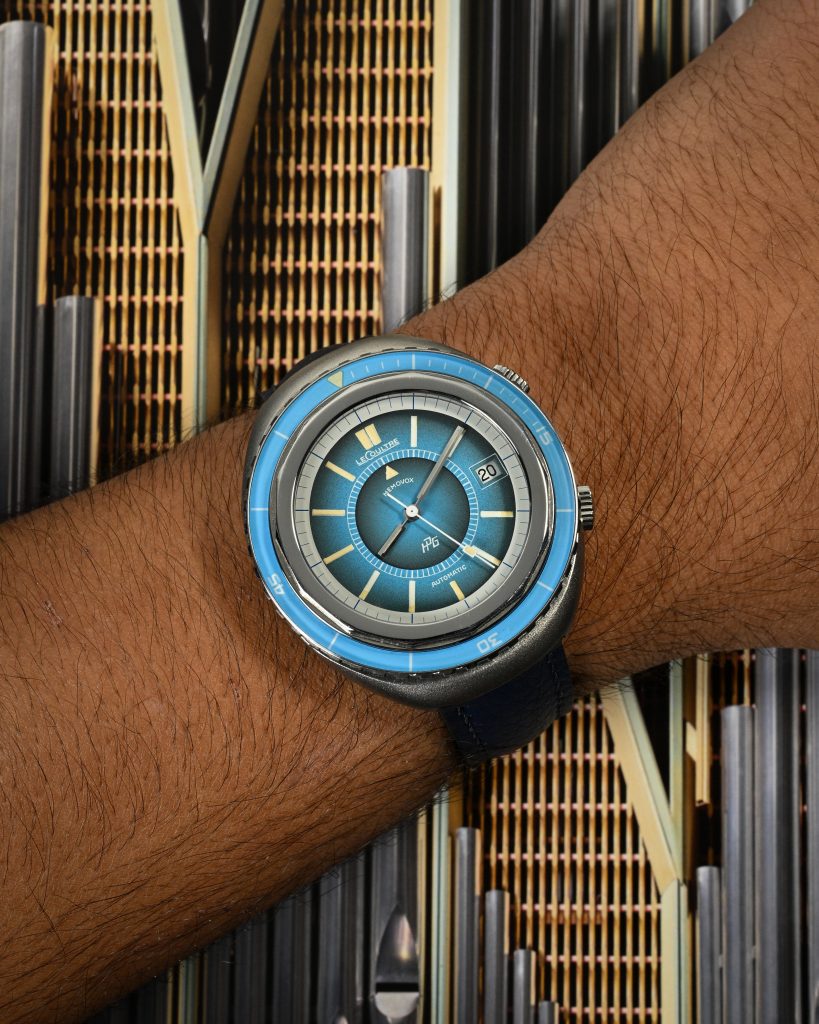
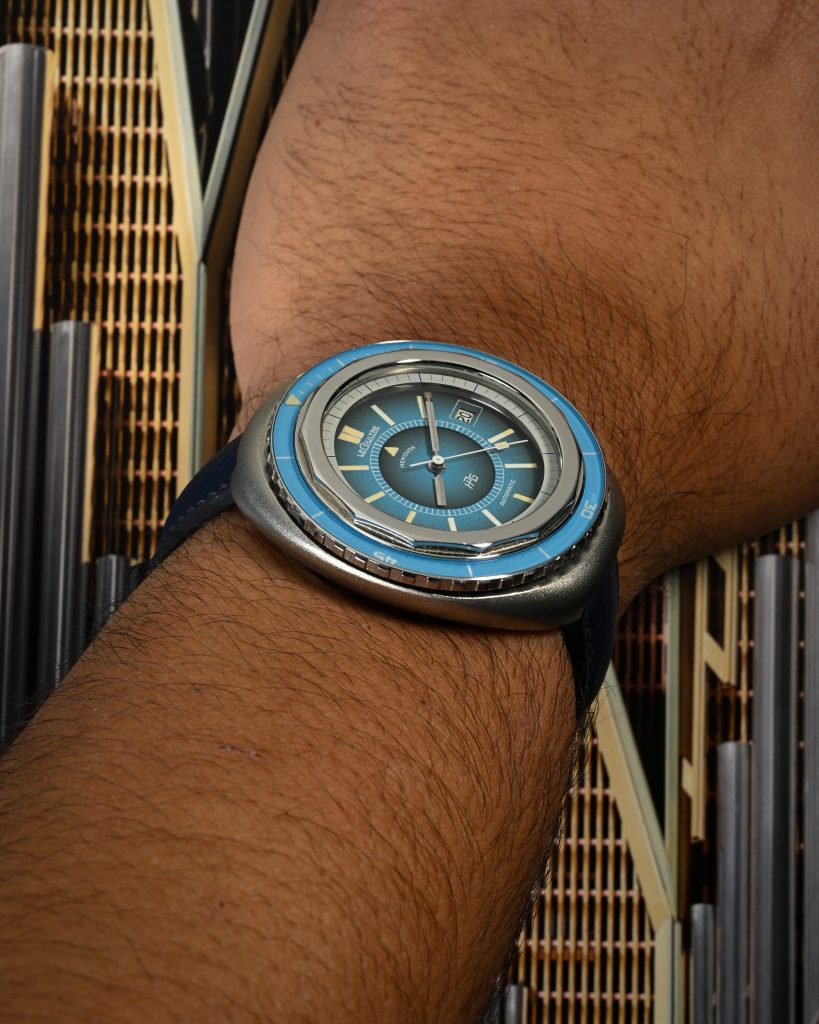
Because this is a relatively rare vintage piece that most people are unlikely to come across, a conventional, structured review feels a bit pointless. So I framed this as more a collection of observations, loosely organized, rather than trying to score it against modern expectations. The Polaris II was launched in 1970 and remained in production for roughly five years, with total output reportedly limited to around 1,120 pieces. This blue dial version was a US-market special and is thought to be the most common of the three variants, alongside grey and red dials that were supposedly destined for Europe. It replaced the earlier Polaris E859 produced between 1965 and 1969, of which approximately 1,700 examples were made. Originally the watch was rated to 100 meters of water resistance, though my Jaeger-LeCoultre service documentation no longer specifies a rating, so I treat that figure as historical rather than practical.
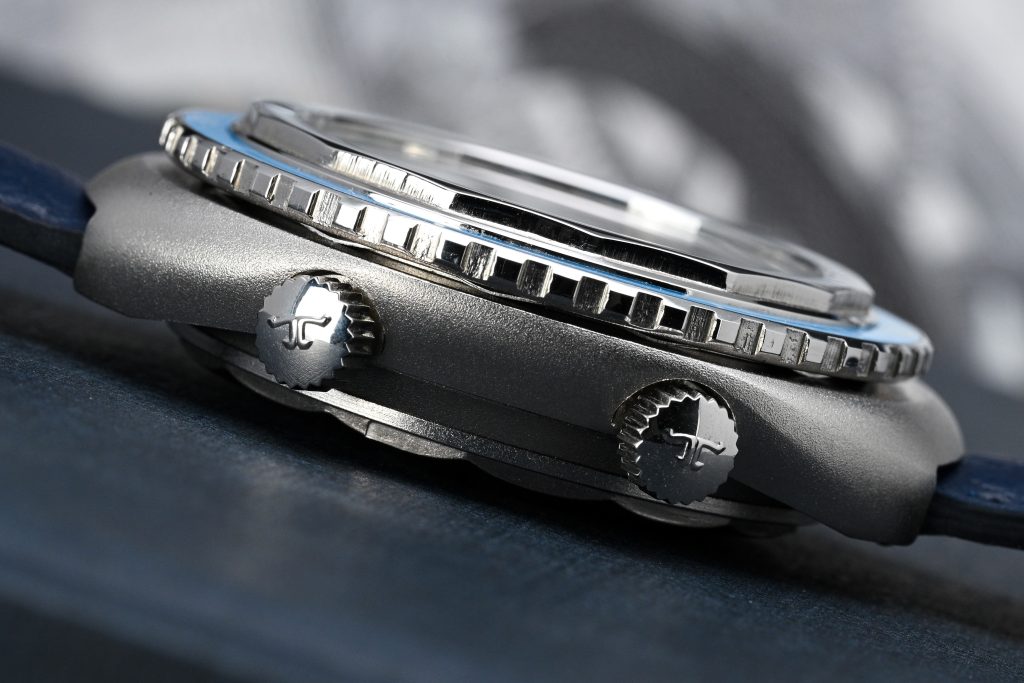
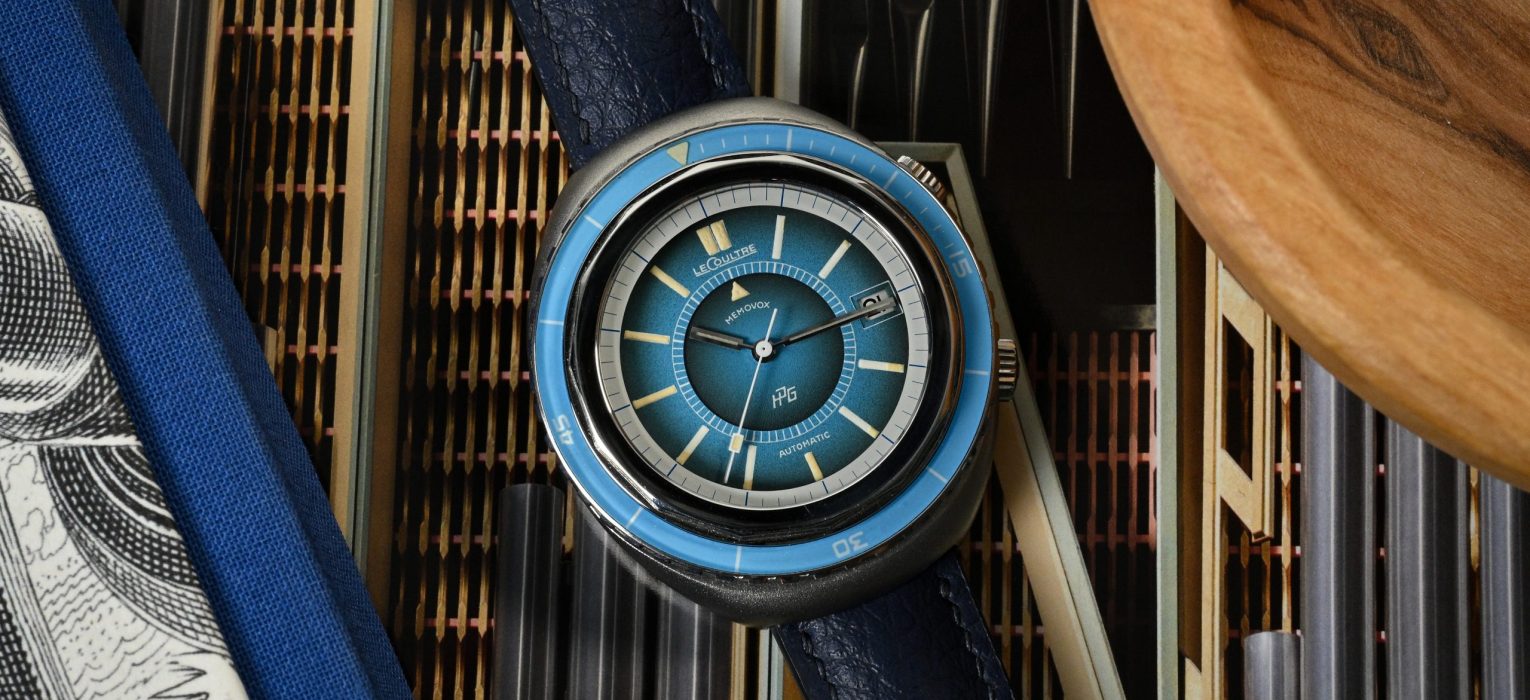
On the wrist, the Polaris II wears far larger than you might expect from a watch of this era. I measured the case at 42.5mm in diameter, about 49.5mm lug-to-lug, or closer to 44mm if measured across the hooded lug spring bars, and a substantial 15mm thick. The entire case is stainless steel with a predominantly matte or bead-blasted finish, broken up by brushed and polished accents around the bezel and crown areas that keep it from feeling flat or utilitarian. The twin crowns are each 5.3mm wide, signed with the JLC logo, though I suspect they may date from a prior service; neither is screw-down, with the upper crown operating the alarm and the lower serving as the standard winding and setting crown. Lug width is an uncommon 19mm, and while the watch originally came on a JLC-signed NSA bracelet, which is increasingly hard to find, you can still track down an unsigned NSA example for around $400 if you’re patient. Head-only, on this Delugs rubberized leather strap, the watch weighs roughly 93 grams.
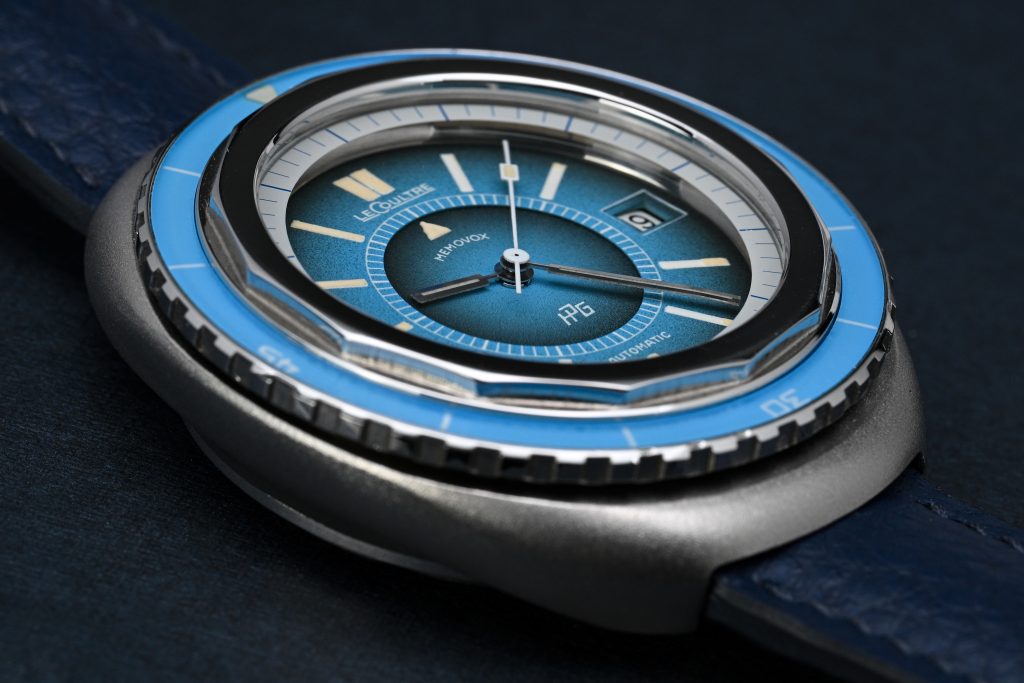
The bezel is a 120-click bi-directional unit with an acrylic cap and clearly defined markings, and its action is genuinely impressive for a watch that’s more than half a century old. It feels tight, deliberate, and surprisingly modern. The only remaining functional luminous element on the entire watch is the triangle at 12 o’clock on the bezel insert; the rest of the tritium on the dial has long since lost its potency. Speaking of the dial, this is where my particular example really stands out.
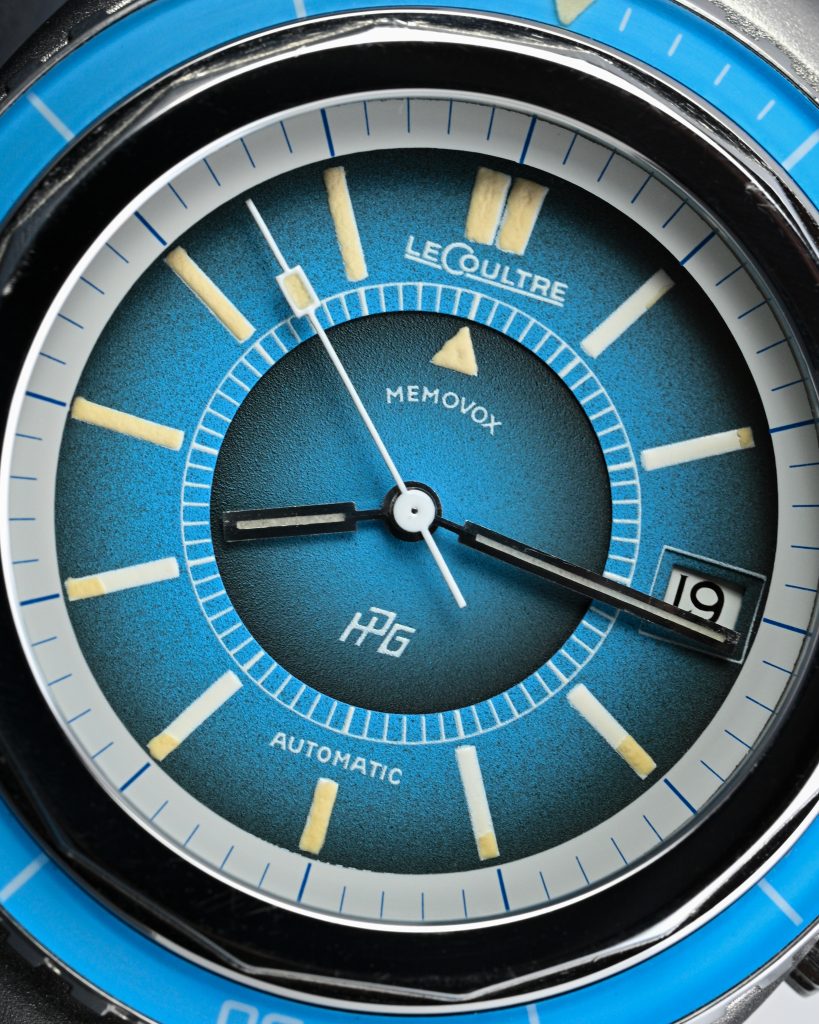
Unlike many E870s on the market, this one appears to retain all original components in exceptional condition. The fumé blue base layer is rich and even, topped by a raised chapter ring that adds real depth, and all the original tritium hour markers remain intact, if no longer luminous. The inner rotating alarm disc allows you to set the alarm via a triangular pointer, with “Memovox” printed below it, and “HPG” above: Jaeger-LeCoultre’s High Precision Guarantee designation for watches regulated to their highest standards at the time. The date window at 3 o’clock is particularly well executed, with sharply cut facets and a crisp, highly legible date wheel that feels thoughtfully integrated rather than an afterthought.
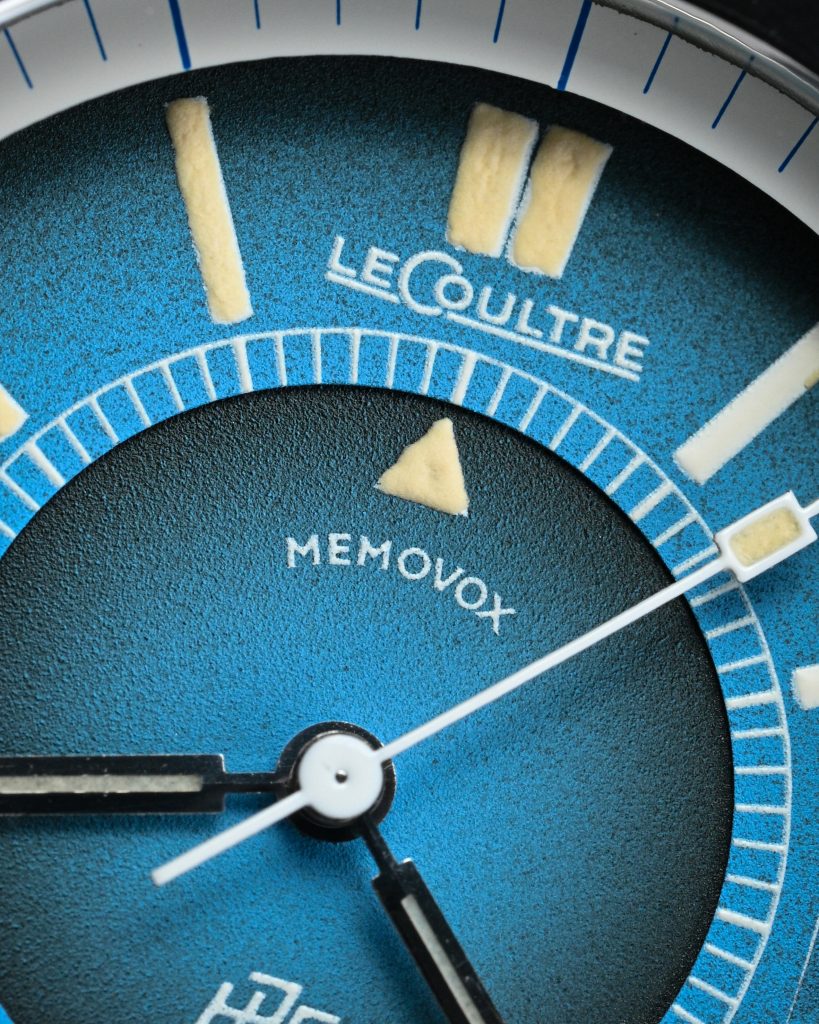
What makes the Polaris II especially compelling is how radically different JLC’s approach to dive watches was compared to its contemporaries. While other brands leaned into timing bezels and legibility alone, JLC bet heavily on the alarm complication as a core functional feature for divers, and that decision still defines the watch today. Powering it is the Jaeger-LeCoultre Calibre 916, known as the Speedbeat, an automatic alarm movement produced for roughly a decade before being replaced by the Calibre 919. It was JLC’s first alarm calibre to use a high-frequency 4Hz balance for improved precision, and notably the first automatic alarm watch to feature a free-rotating rotor rather than a bumper system.
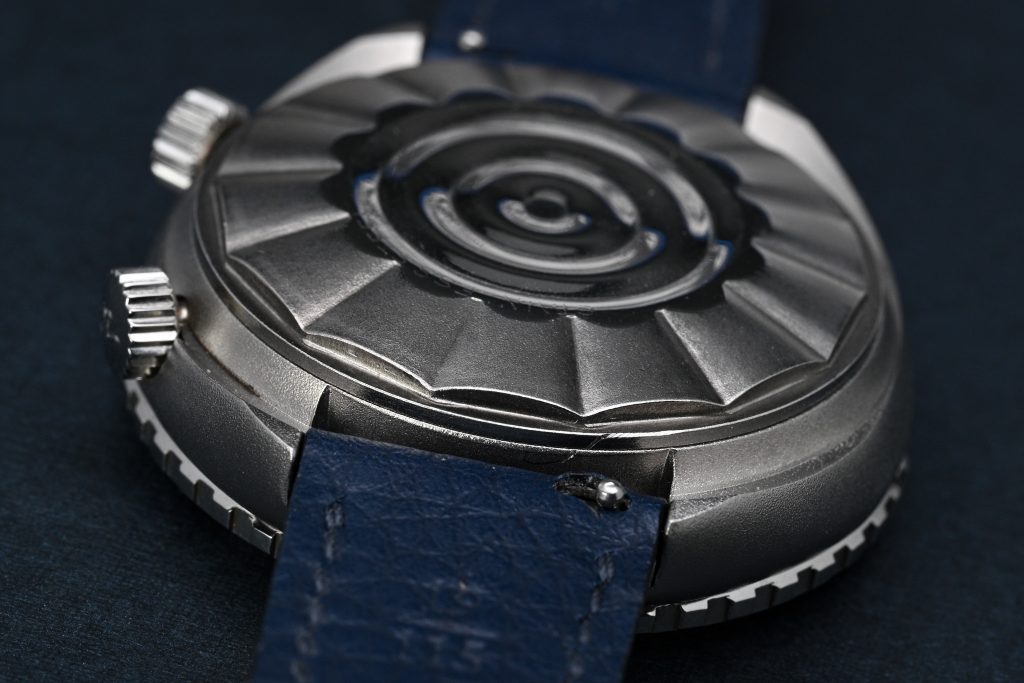
As with other Memovox calibres, the alarm hammer strikes a protrusion on the back plate, producing its distinctive buzzing sound. Even when the alarm isn’t wound, the hammer can still rattle freely against this protrusion, which is a pretty unusual experience. In the 916, that protrusion passes through an oversized hole in the center of the rotor, an arrangement that’s as mechanically interesting as it is audible. The case-back itself features a striking engraved motif, and I’ve often wondered whether it was purely aesthetic or partially intended to enhance the acoustic properties of the alarm.
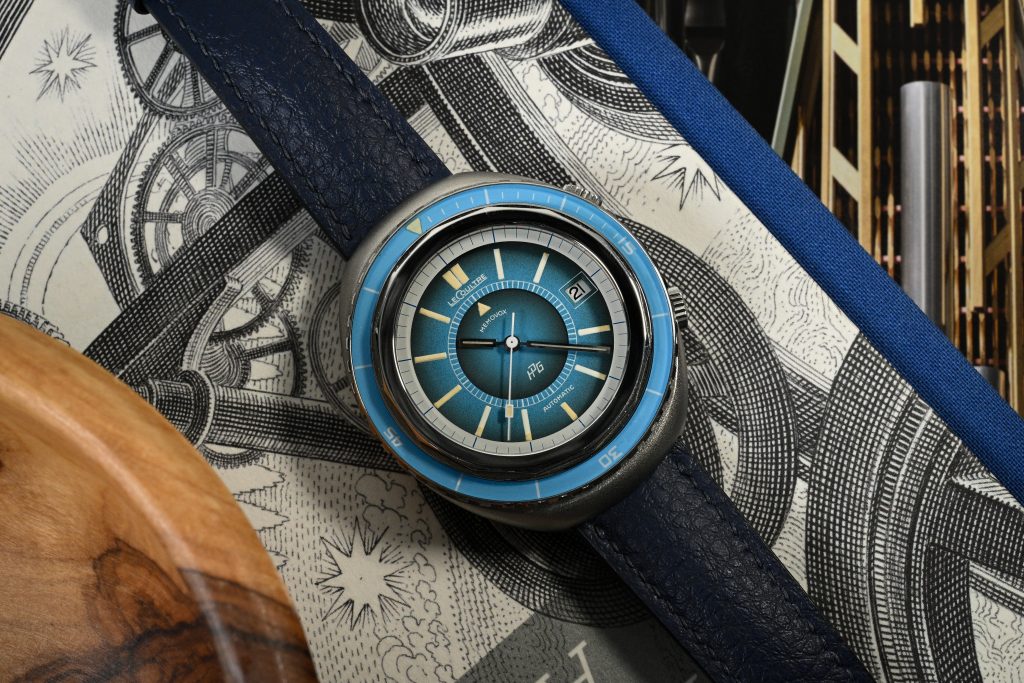
The movement uses a double-barrel architecture, with one barrel dedicated to timekeeping via automatic winding and the other manually wound for the alarm. The Calibre 916 was also supplied as an ébauche to Girard-Perregaux, where it became the GP080 Gyromatic Alarm, underscoring just how advanced it was for its time. On the wrist, the alarm is loud, brash, and almost startling… nothing like the refined chime of a minute repeater, and absolutely unapologetic about it. It vibrates through the case and into your arm, lasts a surprisingly long time, and makes sure you notice it. Even though my JLC serviced example doesn’t quite reach the original 45-hour power reserve, that feels entirely acceptable given the age and complexity of the movement. What remains is a watch that feels purposeful, unconventional, and unmistakable: it is a serious dive watch built around an alarm complication, executed with conviction, and still unlike almost anything else more than fifty years later.